




Continue this wave
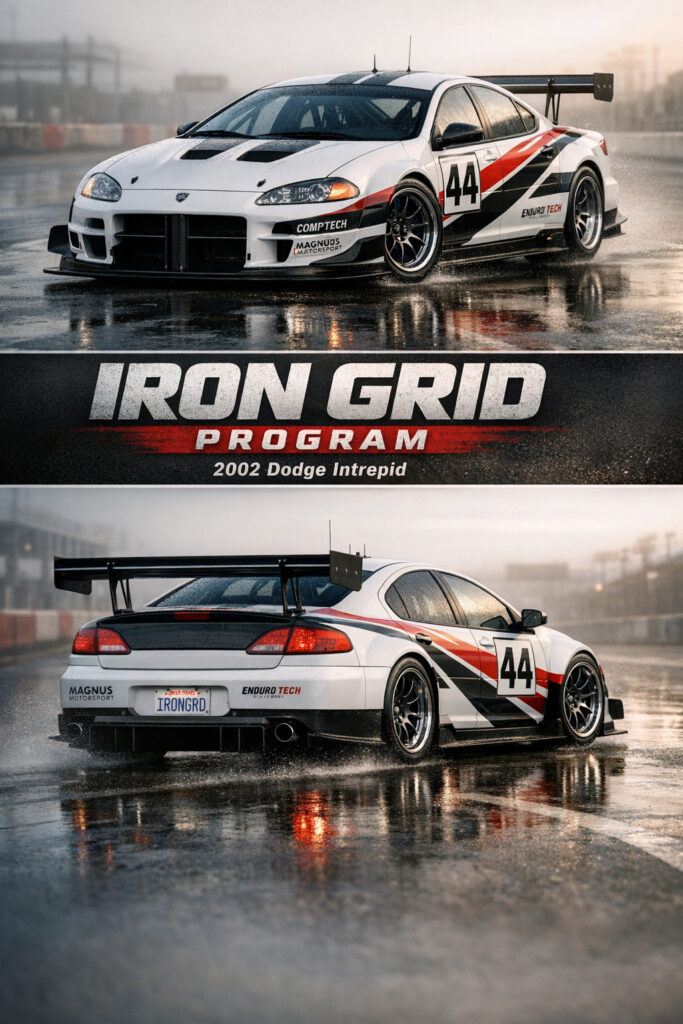
2002 Dodge Intrepid
10 photos
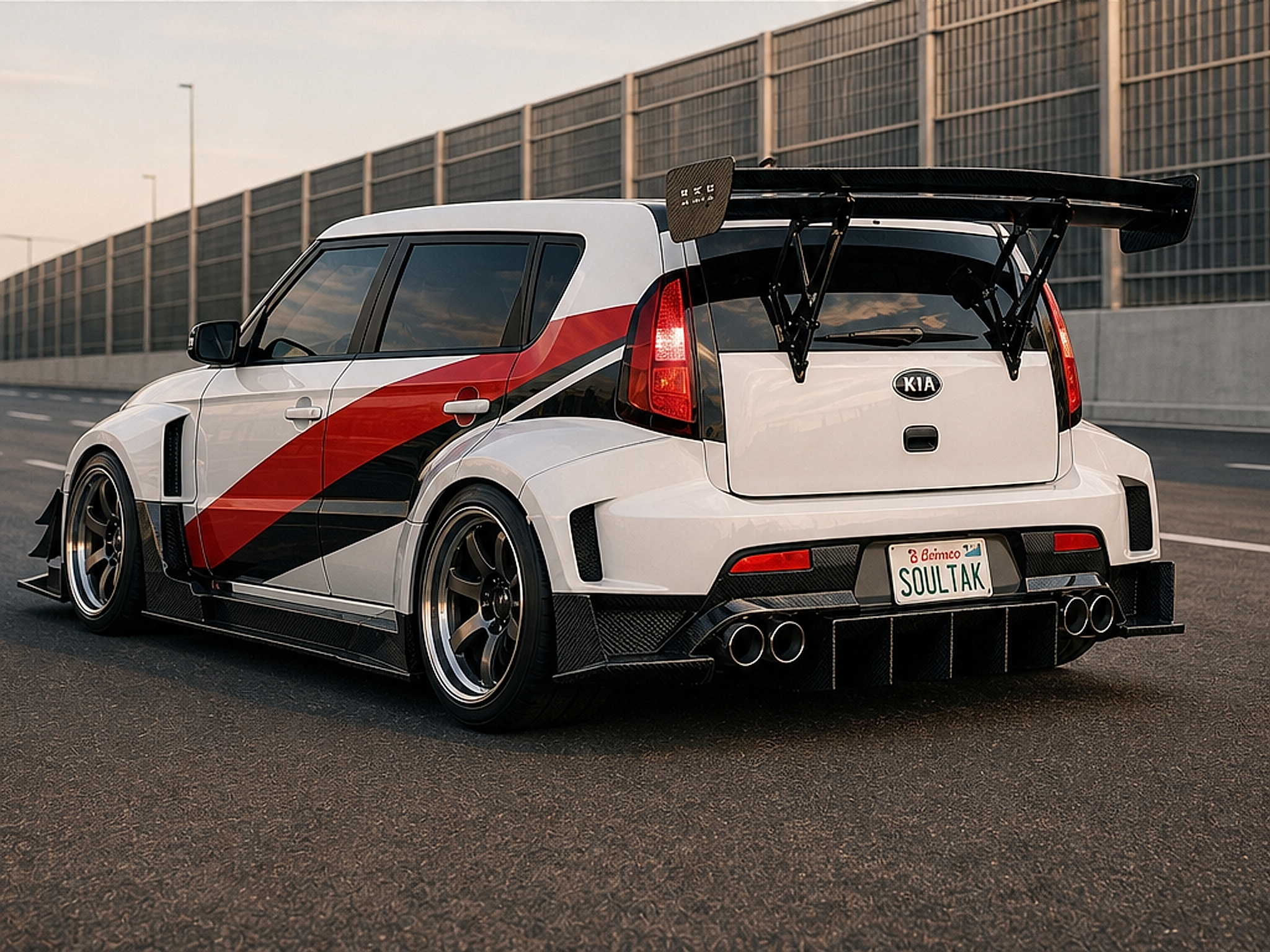
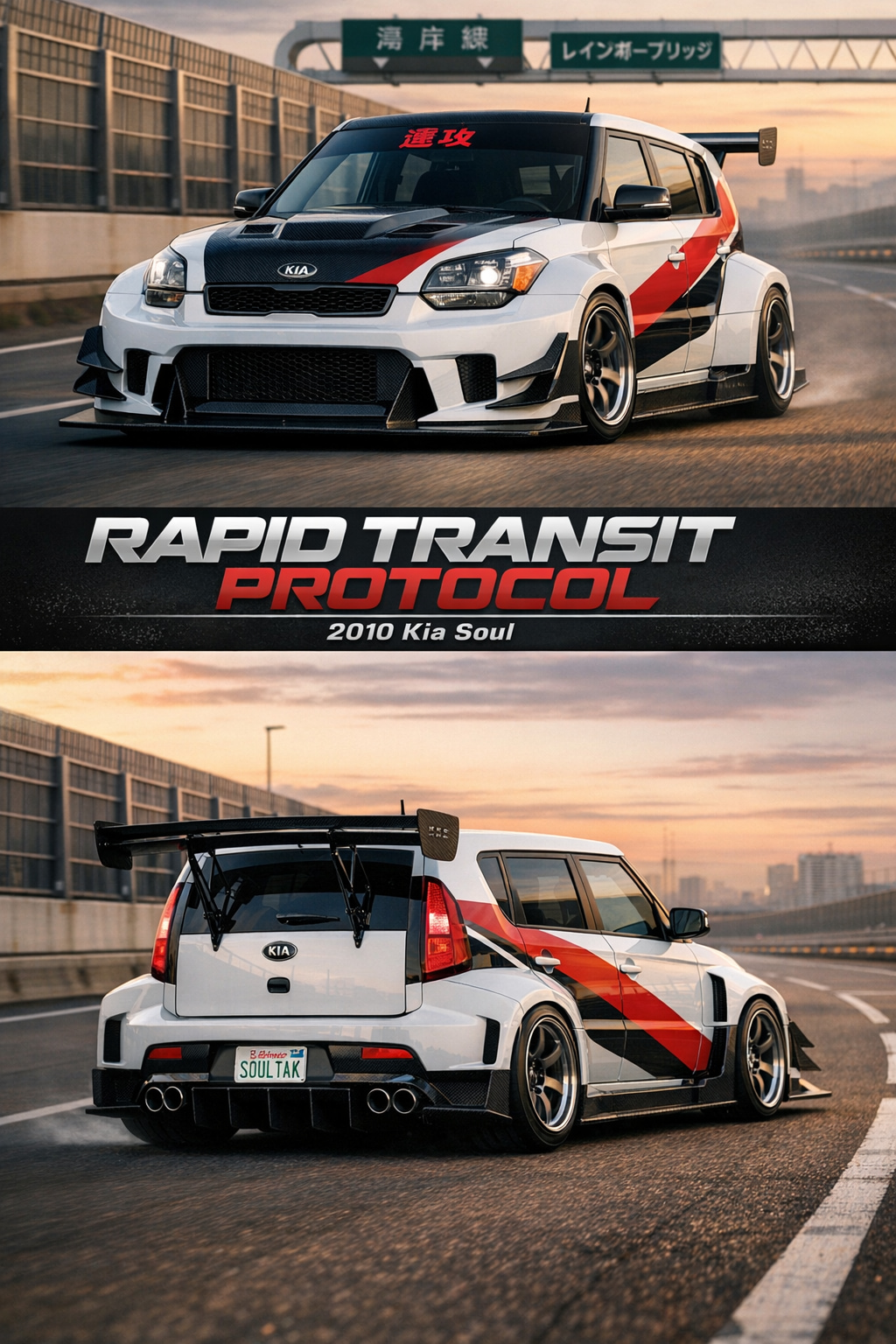
The Rapid Transit Protocol reimagines the 2010 Kia Soul as a high-speed Wangan time attack machine, flawlessly balancing aggressive aerodynamic innovation with the Soul’s distinctive boxy silhouette. Extensive widebody modifications extend the fenders by up to 180mm, sculpting complex convex and concave profiles that channel airflow to reduce drag and generate ground-effect downforce. Carbon fiber aero components—including a bulged hood with staggered NACA ducts, a deep front splitter with dive planes, and a multi-strake rear diffuser—work in harmony to maintain stability during sustained runs above 250 km/h on Japan’s expressways.
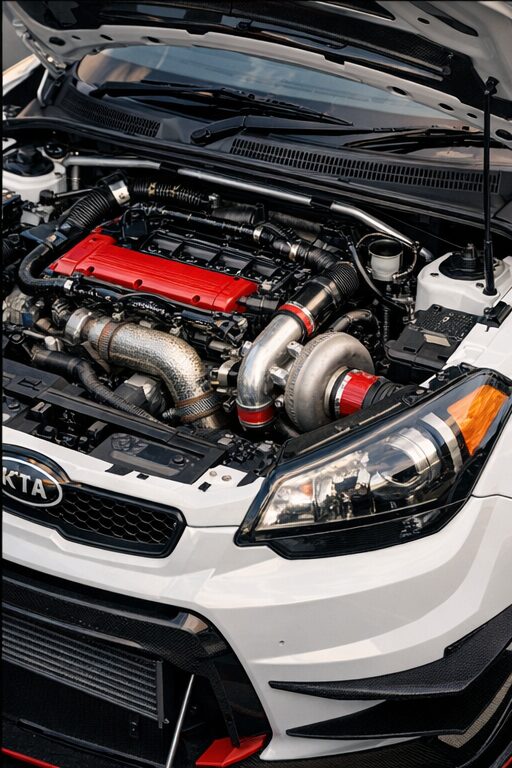
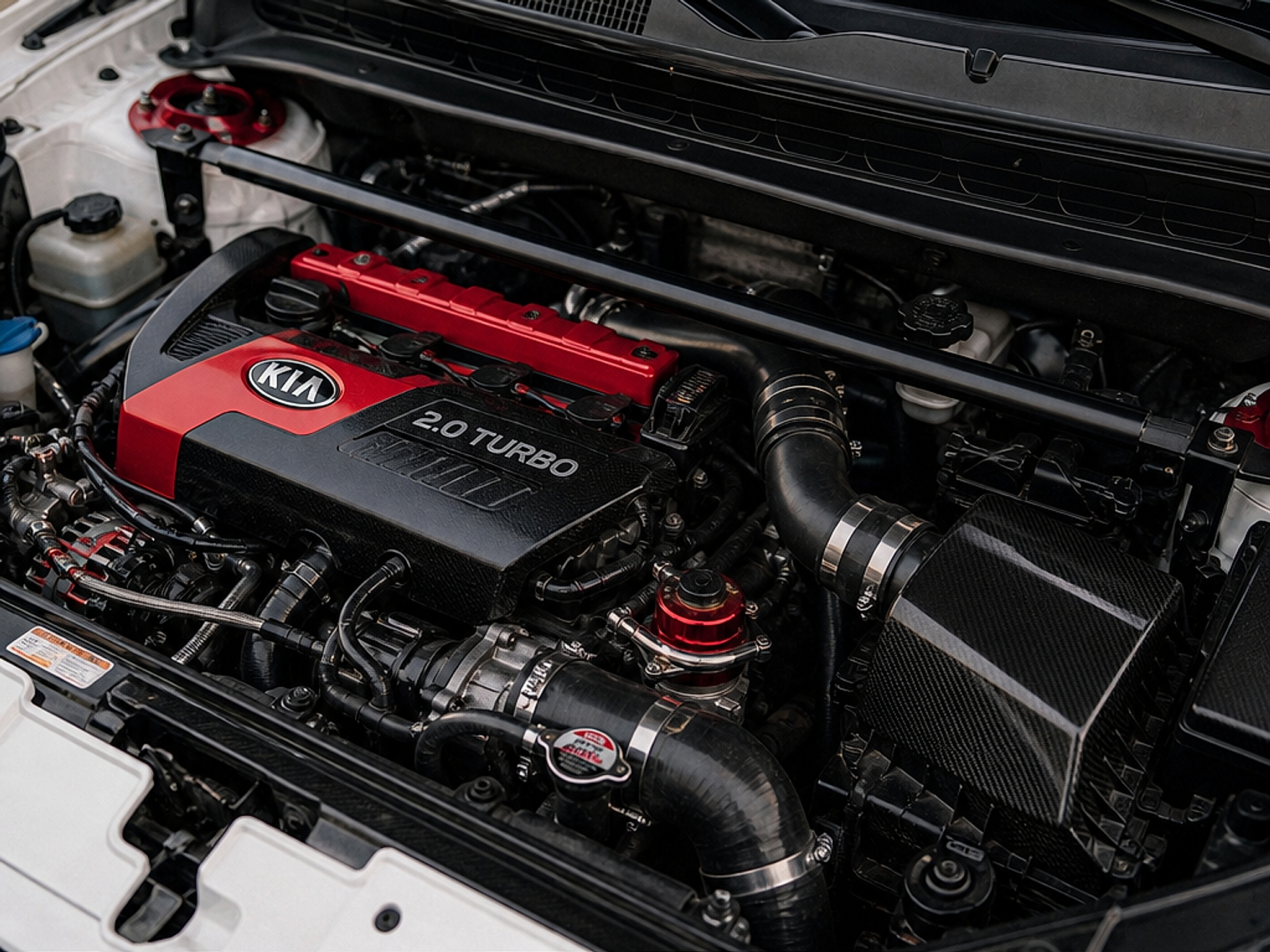
Beneath the skin, a turbocharged 2.0L inline-4 is paired with a rally-inspired sequential paddle-shift gearbox, torque vectoring, and enhanced cooling systems optimized by active aero ducts. Wheel and tire setups are meticulously chosen for maximum grip and thermal endurance, with widened tracks supporting ultra-low profile semi-slicks on forged alloys. This build transforms an everyday hatchback into a precise, street-legal weapon engineered for the unique demands of Japan’s high-speed time attack culture.
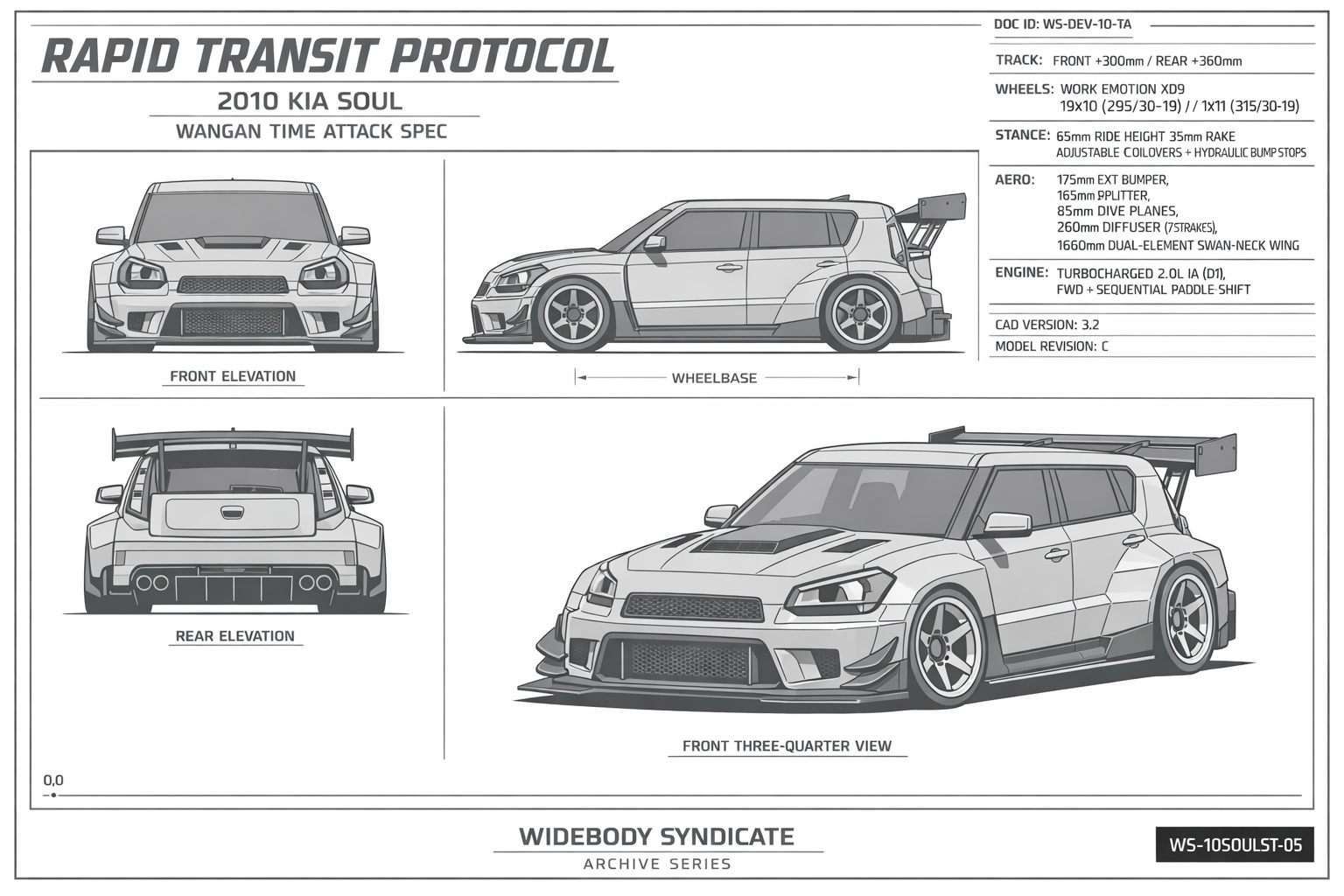 Inspect drawing ↗Open blueprint study →
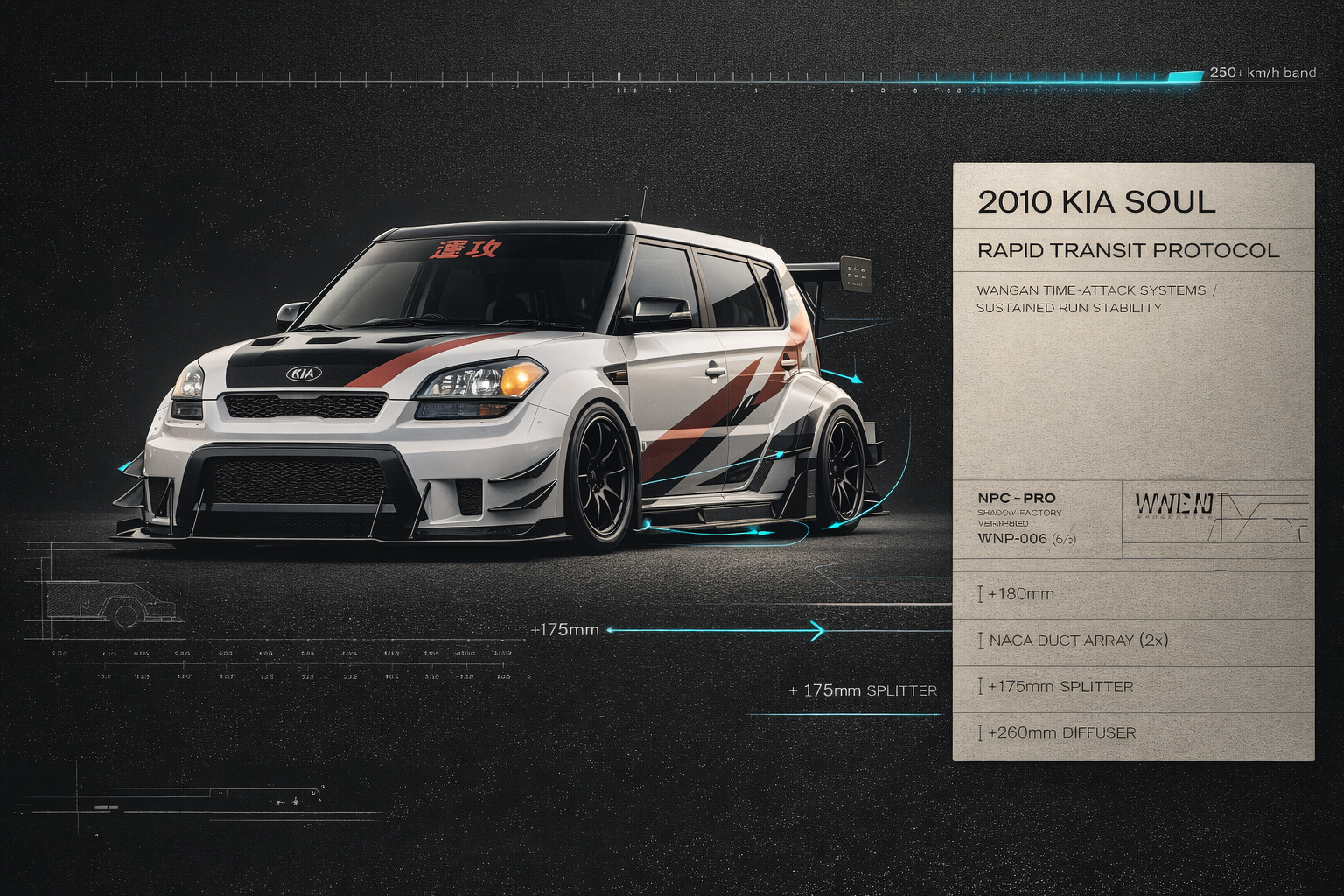 Inspect poster ↗
Fictional engineering concept
2010 Kia Soul
Upgraded turbocharged 2.0L inline-4 with direct injection and enhanced cooling
Sequential paddle-shift gearbox adapted from rally development for rapid ratio changes
Front-wheel-drive layout with advanced torque vectoring
Brake-by-wire system integrated for precise modulation during high-speed runs
Full-width composite front bumper with 165mm deep trapezoidal splitter and dual dive planes
Carbon fiber hood bulge with dual staggered NACA ducts and rear extraction channel
Seven-strake full-width rear diffuser extending 260mm behind rear axle
Dual-element 1660mm wide GT wing mounted on carbon fiber swan neck pylons
2010 Kia Soul
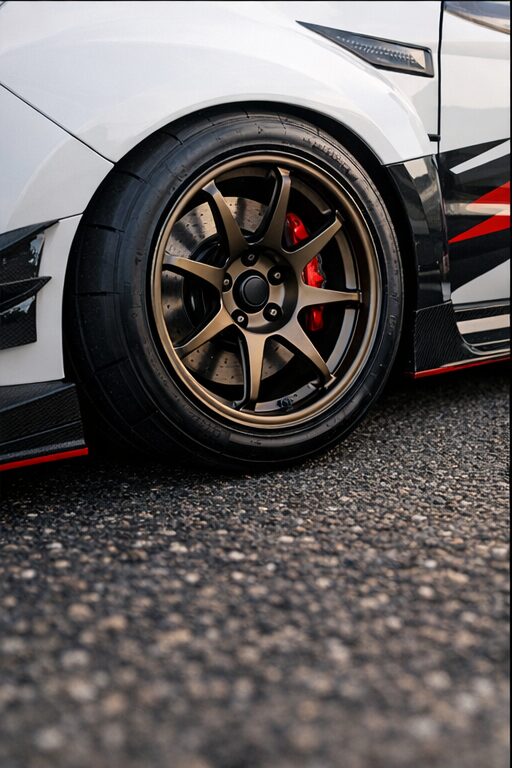
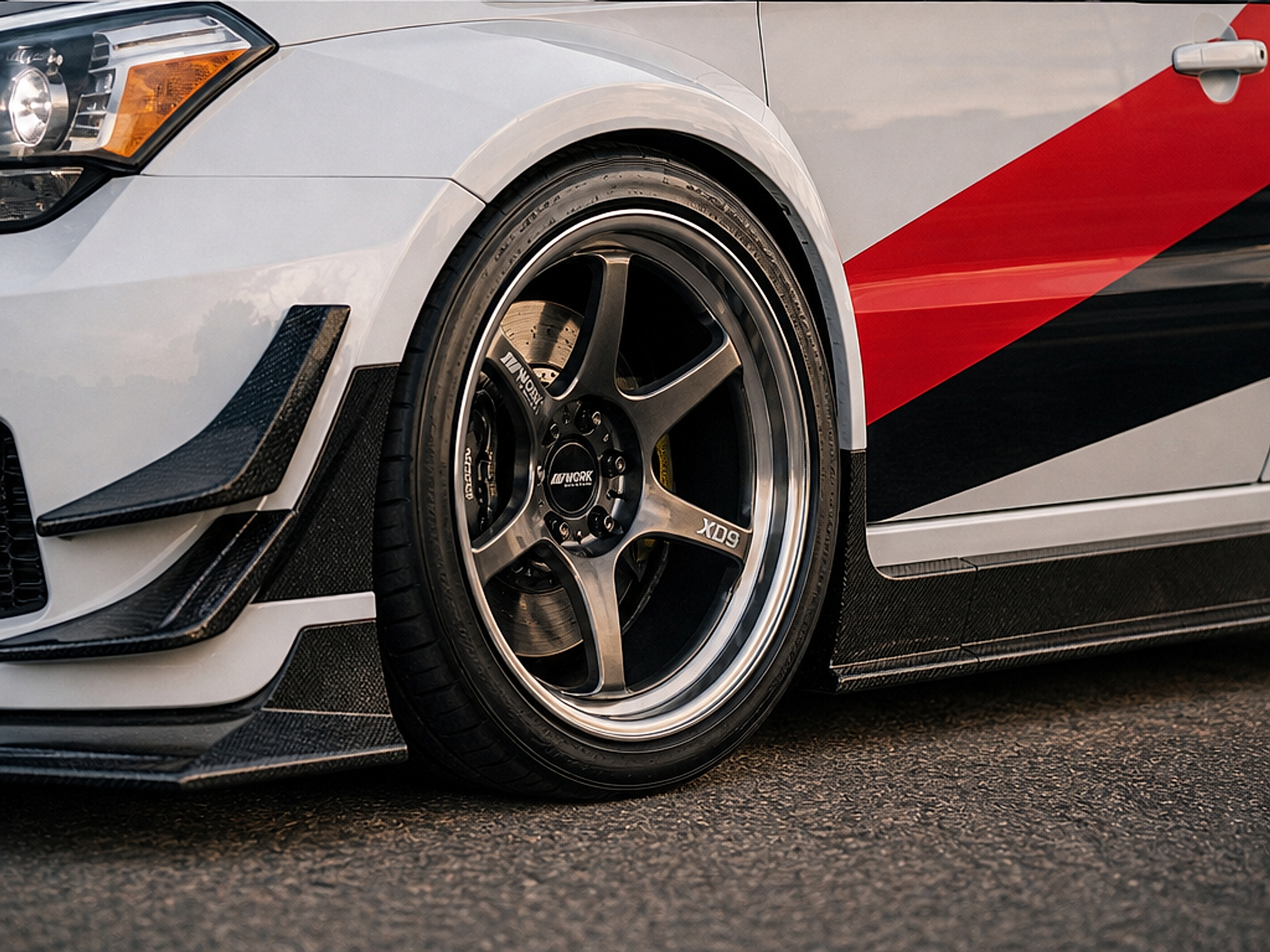
Front: 19x10 Work Emotion XD9 forged alloys wrapped in 295/30-19 Bridgestone Potenza RE-71R semi-slicks
Rear: 19x11 wheels with 315/30-19 high-stability semi-slick tires
Front and rear tracks widened by 300mm and 360mm respectively
Ultra-low profile tires optimized for expressway grip and thermal endurance
Carbon fiber reinforcements embedded within widebody arches to withstand aerodynamic and suspension loads
Monocoque carbon fiber hood panel featuring integrated NACA ducts and air extraction channels
Composite front bumper fabricated to incorporate splitter and brake cooling ducts seamlessly
Custom forged wheels and suspension components designed to accommodate widened track and low ride height

Choose an available edition, then select its size and finish.
Continue this wave
2002 Dodge Intrepid
Different origins. NPC Cars
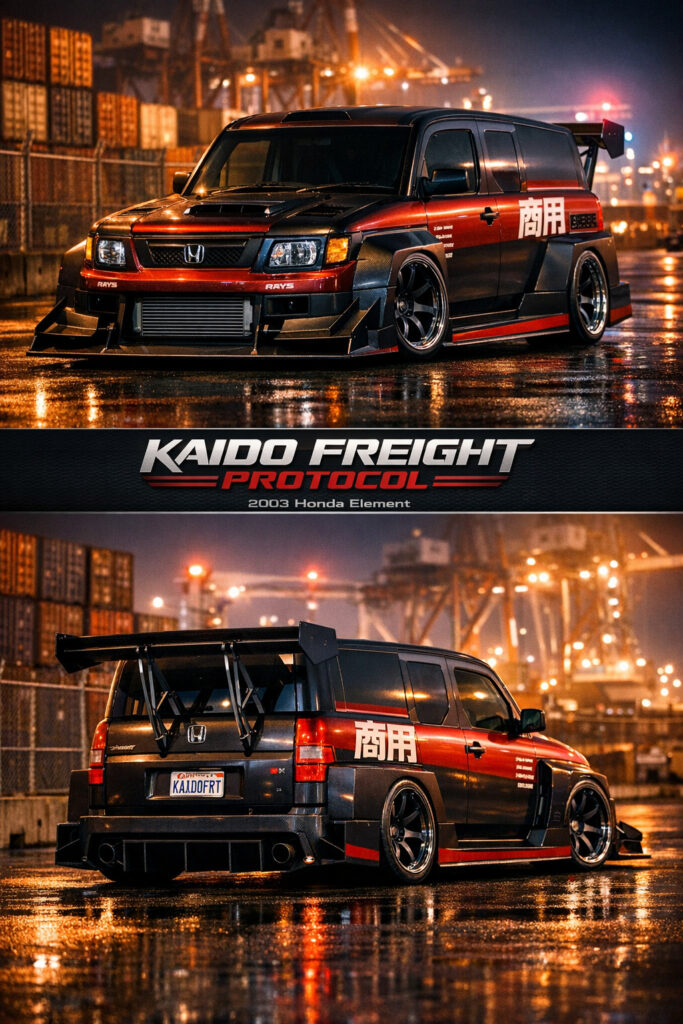
2003 Honda Element
 Continue the exhibitionNPC to ProLook, we all know the usual suspects that rule the tuner scene, but this batch?Build 1 of 6↗