
WS Widebody Syndicate
Phantom Vector Program

R296

Phantom Vector Program

2011 Hyundai Elantra

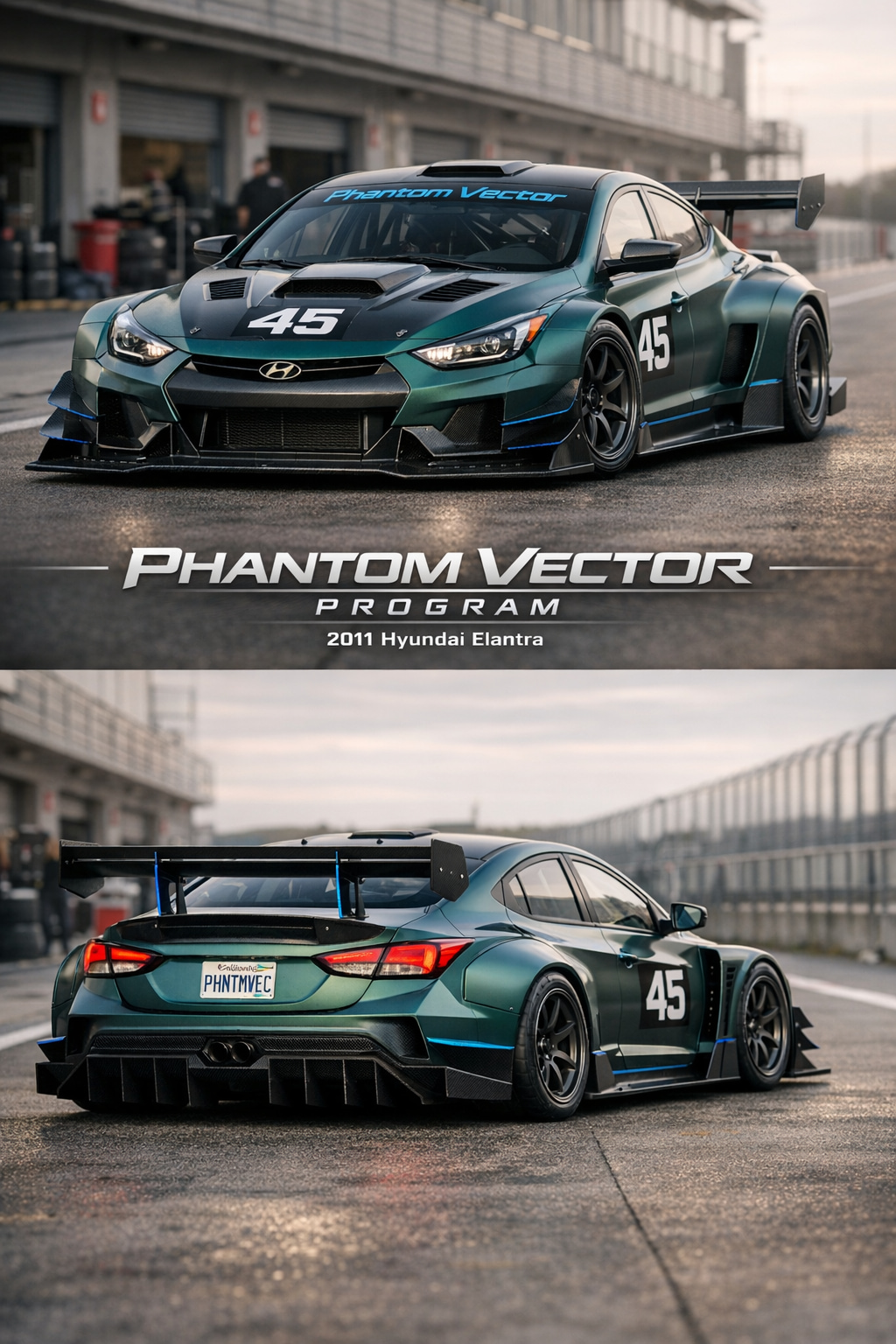
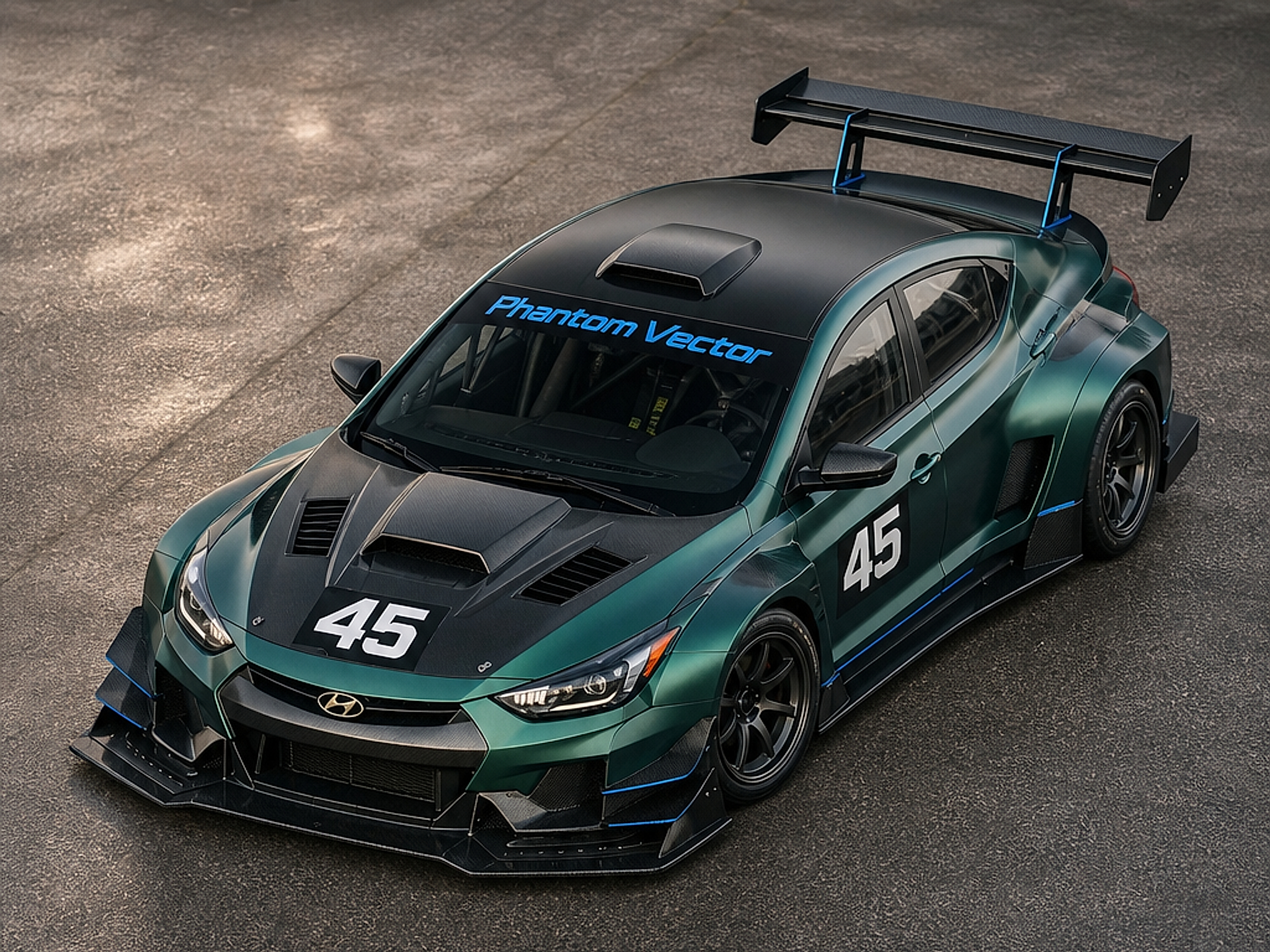
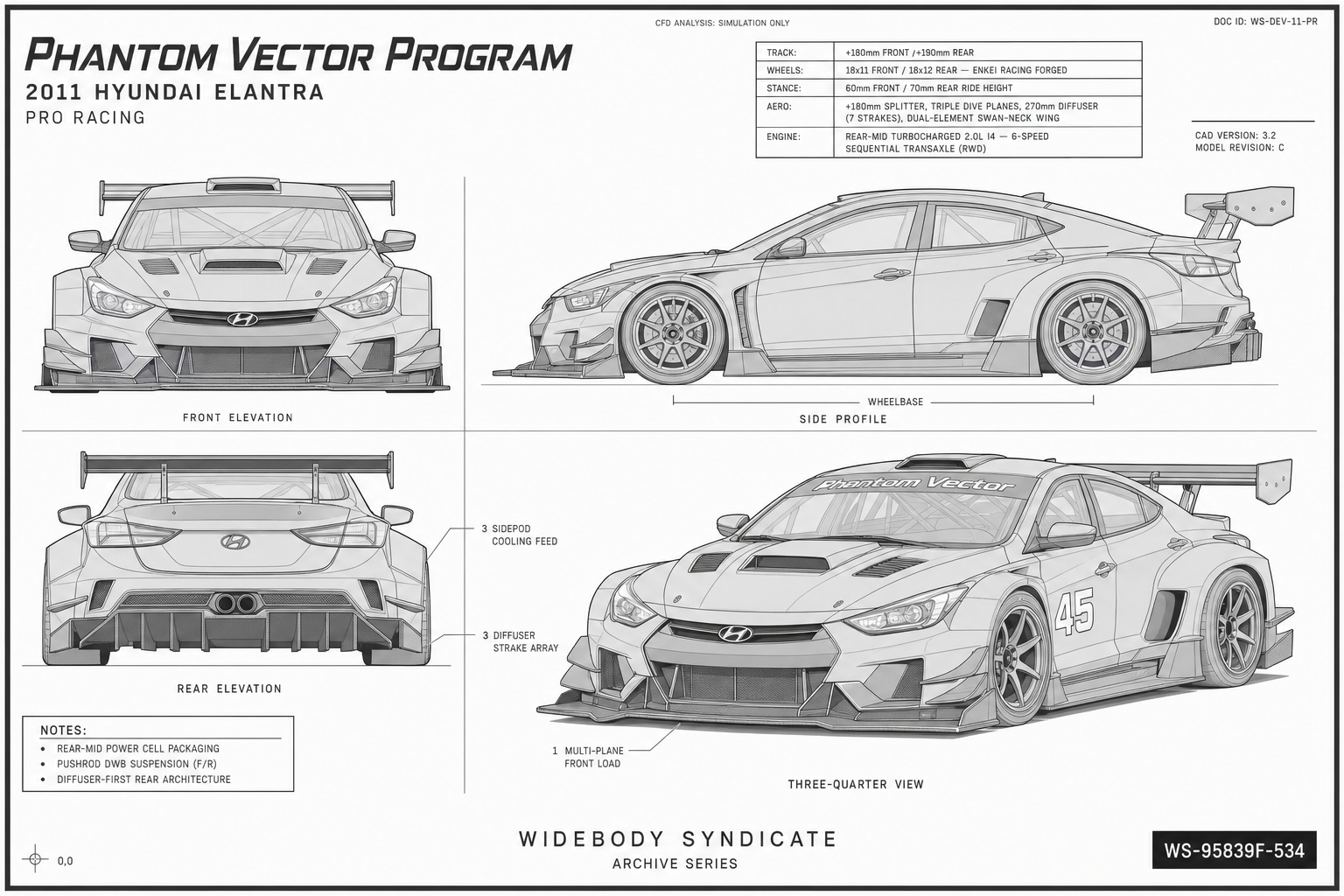
Phantom Vector Program takes the 2011 Elantra’s familiar greenhouse and uses it as the only “street car” reference point in an otherwise open-rule prototype. The body is re-authored into squared-off, vented widebody volumes with proper sidepod cooling, a layered splitter with multi-plane management, and a rear floor that’s built around diffuser volume instead of bumper cosmetics.

Under the skin, it’s the kind of mechanical betrayal that makes the concept work: a rear-mid turbo four on a sequential, pushrod double-wishbones at both ends, and track width pushed out until the car reads like a compact LMP silhouette. It’s still recognizably Elantra in profile—just engineered like it’s supposed to run long stints at full aero load.
Share Release X FB

Image studies from every angle.

6 curated frames · swipe / tap to inspect

Comparison Shots

Engineering Artifacts

The technical study and collectible interpretation of one build, preserved together.

01
Technical DrawingBlueprint archive
Phantom Vector Program blueprint
02
Phantom Vector Program Collector EditionCollector artifact
Phantom Vector Program Collector Edition

A presentation-grade collector artifact created for this release and preserved as part of the Widebody Syndicate archive.

Platform

2011 Hyundai Elantra

2011 Hyundai Elantra

The 2011 Hyundai Elantra marks a pivotal moment for compact sedans with its sharp, fluidic sculpture design language and class-leading aerodynamic efficiency. Built on Hyundai’s J4 platform, this Elantra offers a mid-sized footprint with a well-balanced chassis that prioritizes comfort and efficiency without sacrificing sharp dynamics. Its lightweight yet rigid body structure laid a solid foundation for tuning versatility, making it a sleeper pick for enthusiasts who crave a practical daily driver with hidden potential.

HyundaiElantra2011
View Platform

Aero Package

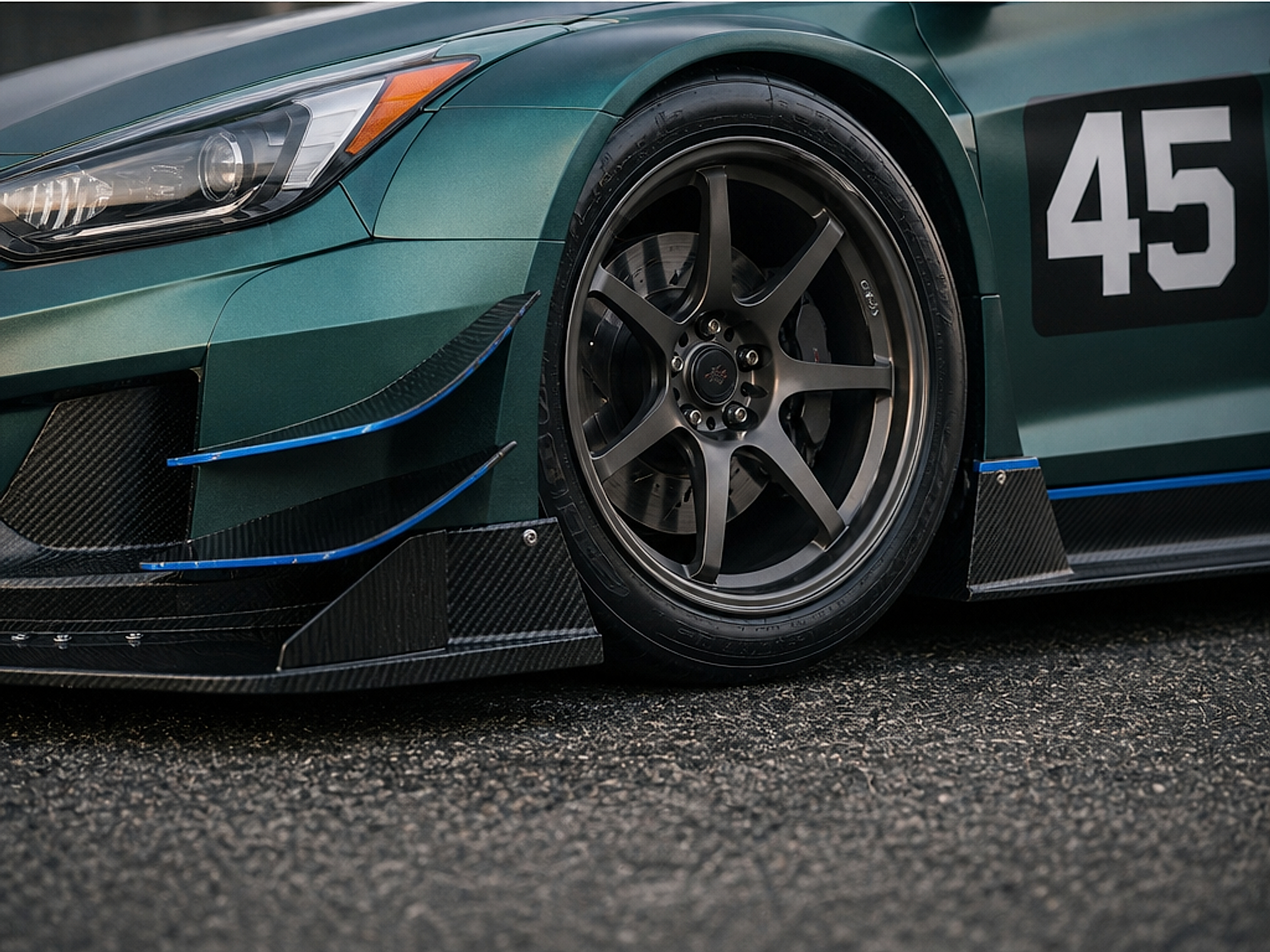
Layered carbon splitter projecting +180mm with triple dive planes per side (100mm tall, 20° outward)
Carbon hood with recessed central intake (530x320mm) and twin heat extractors (350x90mm)
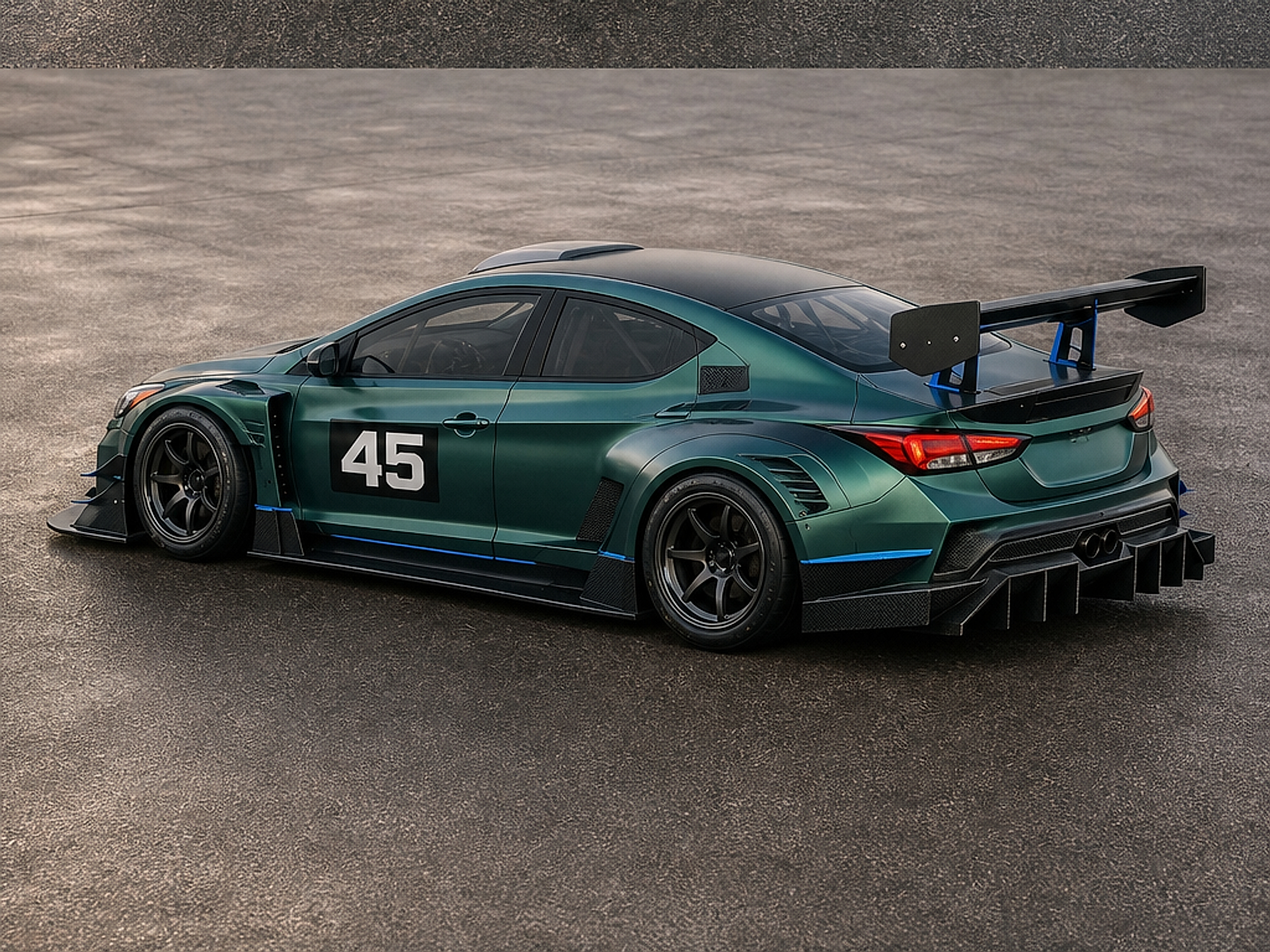
Extended side skirts forming a 75mm aero shelf with a 140mm concave acceleration channel
Venturi diffuser dropping 270mm with seven 115mm strakes across ~1400mm width
Dual-element rear wing (1680mm span) on swan-neck pylons, ~820mm above deck, adjustable AoA/camber

Chassis

Set on a European endurance pit lane at dawn, the car reads like a test-day prototype: low, wide, and busy with cooling exits. The scene suits the build’s intent—long stints, heavy braking zones, and aero balance adjustments made with a wrench, not a menu.

Wheels & Tires

Enkei Racing forged: 18x11 front, 18x12 rear in matte gunmetal
Slicks: 330/680R18 front and rear (staggered wheel width for balance and carcass support)
Race brake package with splitter-edge inlet ducts and fender-exit management for rotor temps

Powertrain

Rear-mid mounted turbocharged 2.0L inline-four tuned for endurance response and thermal stability
6-speed sequential transaxle with motorsport clutch and flat-shift strategy
Exhaust-forward rear packaging to preserve diffuser volume and reduce underfloor disruption
Motorsport ECU with data logging focused on boost control, EGT management, and traction calibration

Fabrication Notes

Bespoke rear-mid chassis cell tied into a reinforced safety structure and suspension pickup points
Pushrod suspension packaging with inboard dampers for reduced unsprung mass and cleaner aero
Functional ducting: sidepod intercooler routing, hood extraction, and controlled rear exit paths
Panel strategy in carbon composite with serviceable fasteners for quick pit-lane access

×

Design Philosophy

Phantom Vector Program takes the 2011 Elantra’s familiar greenhouse and uses it as the only “street car” reference point in an otherwise open-rule prototype. The body is re-authored into squared-off, vented widebody volumes with proper sidepod cooling, a layered splitter with multi-plane management, and a rear floor that’s built around diffuser volume instead of bumper cosmetics.

Under the skin, it’s the kind of mechanical betrayal that makes the concept work: a rear-mid turbo four on a sequential, pushrod double-wishbones at both ends, and track width pushed out until the car reads like a compact LMP silhouette. It’s still recognizably Elantra in profile—just engineered like it’s supposed to run long stints at full aero load.

Platform+
2011 Hyundai Elantra

2011 Hyundai Elantra

The 2011 Hyundai Elantra marks a pivotal moment for compact sedans with its sharp, fluidic sculpture design language and class-leading aerodynamic efficiency. Built on Hyundai’s J4 platform, this Elantra offers a mid-sized footprint with a well-balanced chassis that prioritizes comfort and efficiency without sacrificing sharp dynamics. Its lightweight yet rigid body structure laid a solid foundation for tuning versatility, making it a sleeper pick for enthusiasts who crave a practical daily driver with hidden potential.

HyundaiElantra2011
View Platform
Aero Package+

Layered carbon splitter projecting +180mm with triple dive planes per side (100mm tall, 20° outward)
Carbon hood with recessed central intake (530x320mm) and twin heat extractors (350x90mm)
Extended side skirts forming a 75mm aero shelf with a 140mm concave acceleration channel
Venturi diffuser dropping 270mm with seven 115mm strakes across ~1400mm width
Dual-element rear wing (1680mm span) on swan-neck pylons, ~820mm above deck, adjustable AoA/camber

Chassis+

Set on a European endurance pit lane at dawn, the car reads like a test-day prototype: low, wide, and busy with cooling exits. The scene suits the build’s intent—long stints, heavy braking zones, and aero balance adjustments made with a wrench, not a menu.

Wheels & Tires+

Enkei Racing forged: 18x11 front, 18x12 rear in matte gunmetal
Slicks: 330/680R18 front and rear (staggered wheel width for balance and carcass support)
Race brake package with splitter-edge inlet ducts and fender-exit management for rotor temps

Powertrain+

Rear-mid mounted turbocharged 2.0L inline-four tuned for endurance response and thermal stability
6-speed sequential transaxle with motorsport clutch and flat-shift strategy
Exhaust-forward rear packaging to preserve diffuser volume and reduce underfloor disruption
Motorsport ECU with data logging focused on boost control, EGT management, and traction calibration

Fabrication Notes+

Bespoke rear-mid chassis cell tied into a reinforced safety structure and suspension pickup points
Pushrod suspension packaging with inboard dampers for reduced unsprung mass and cleaner aero
Functional ducting: sidepod intercooler routing, hood extraction, and controlled rear exit paths
Panel strategy in carbon composite with serviceable fasteners for quick pit-lane access

×Design Philosophy+

Phantom Vector Program takes the 2011 Elantra’s familiar greenhouse and uses it as the only “street car” reference point in an otherwise open-rule prototype. The body is re-authored into squared-off, vented widebody volumes with proper sidepod cooling, a layered splitter with multi-plane management, and a rear floor that’s built around diffuser volume instead of bumper cosmetics.

Under the skin, it’s the kind of mechanical betrayal that makes the concept work: a rear-mid turbo four on a sequential, pushrod double-wishbones at both ends, and track width pushed out until the car reads like a compact LMP silhouette. It’s still recognizably Elantra in profile—just engineered like it’s supposed to run long stints at full aero load.

Part of
Wave 50

Group 7 Grocery-Getters

We got tired of watching the same halo cars hog all the pit lane attention, so we did the only reasonable thing: we turned the background traffic into the main event. This release is our love letter to the cars you ignore in the parking lot, now wearing full open-rule prototype hardware like they were born with it.

Explore Wave 50 → 6 Builds

Keep Exploring

The archive is always growing. New releases, waves, and blueprints added regularly.