
WS Widebody Syndicate
Project Phantom Streamline

R299

Project Phantom Streamline

1999 Nissan Silvia S15

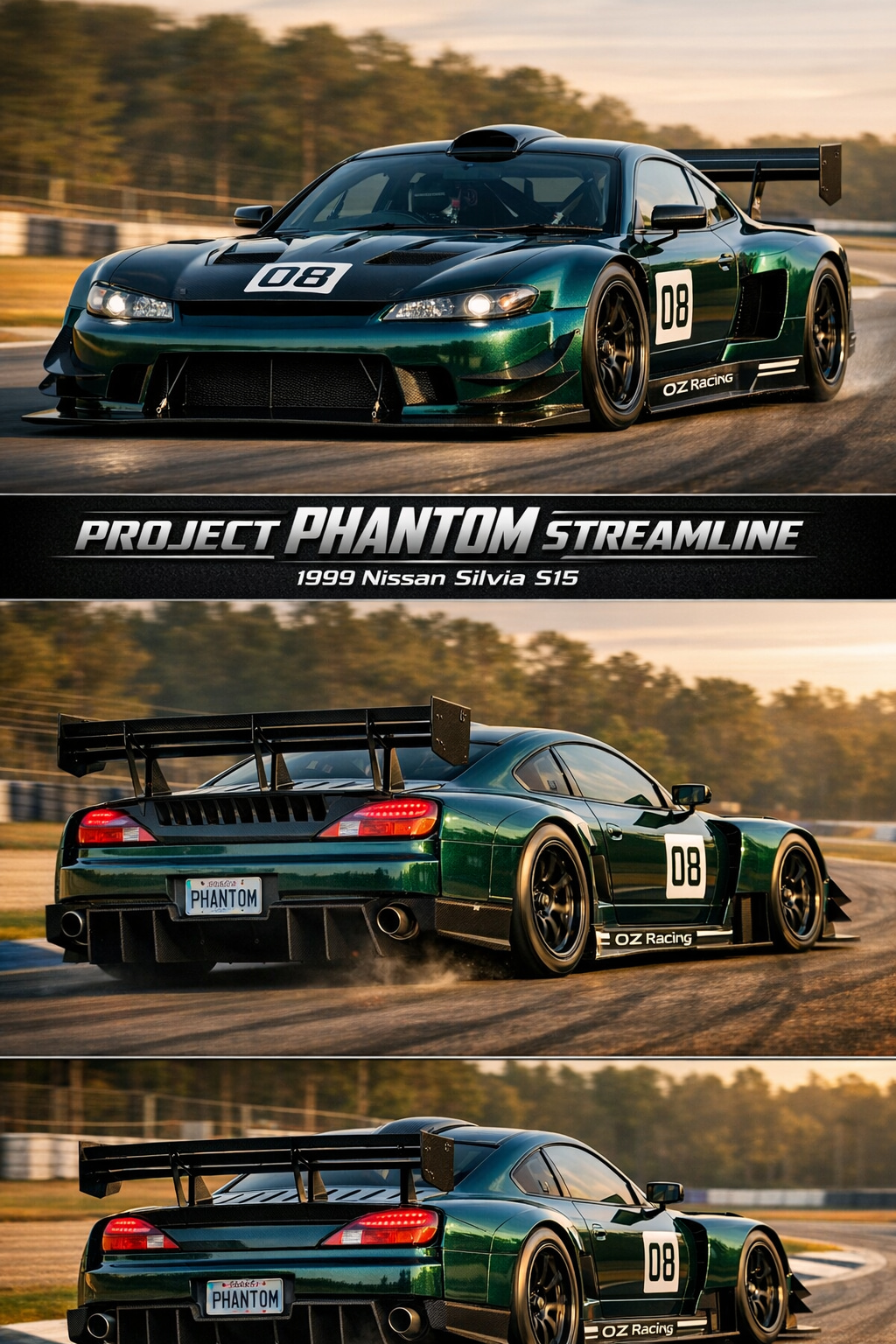
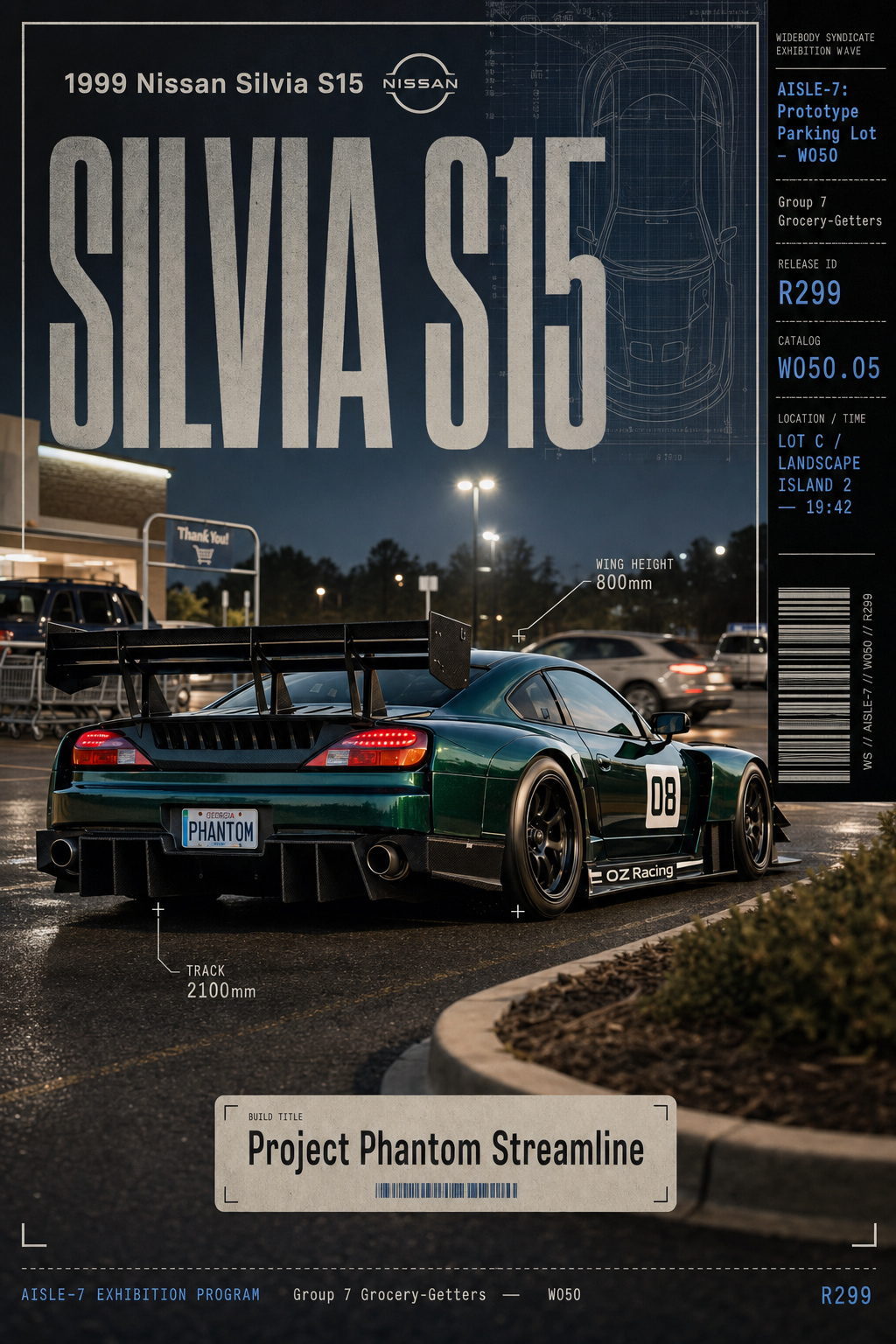
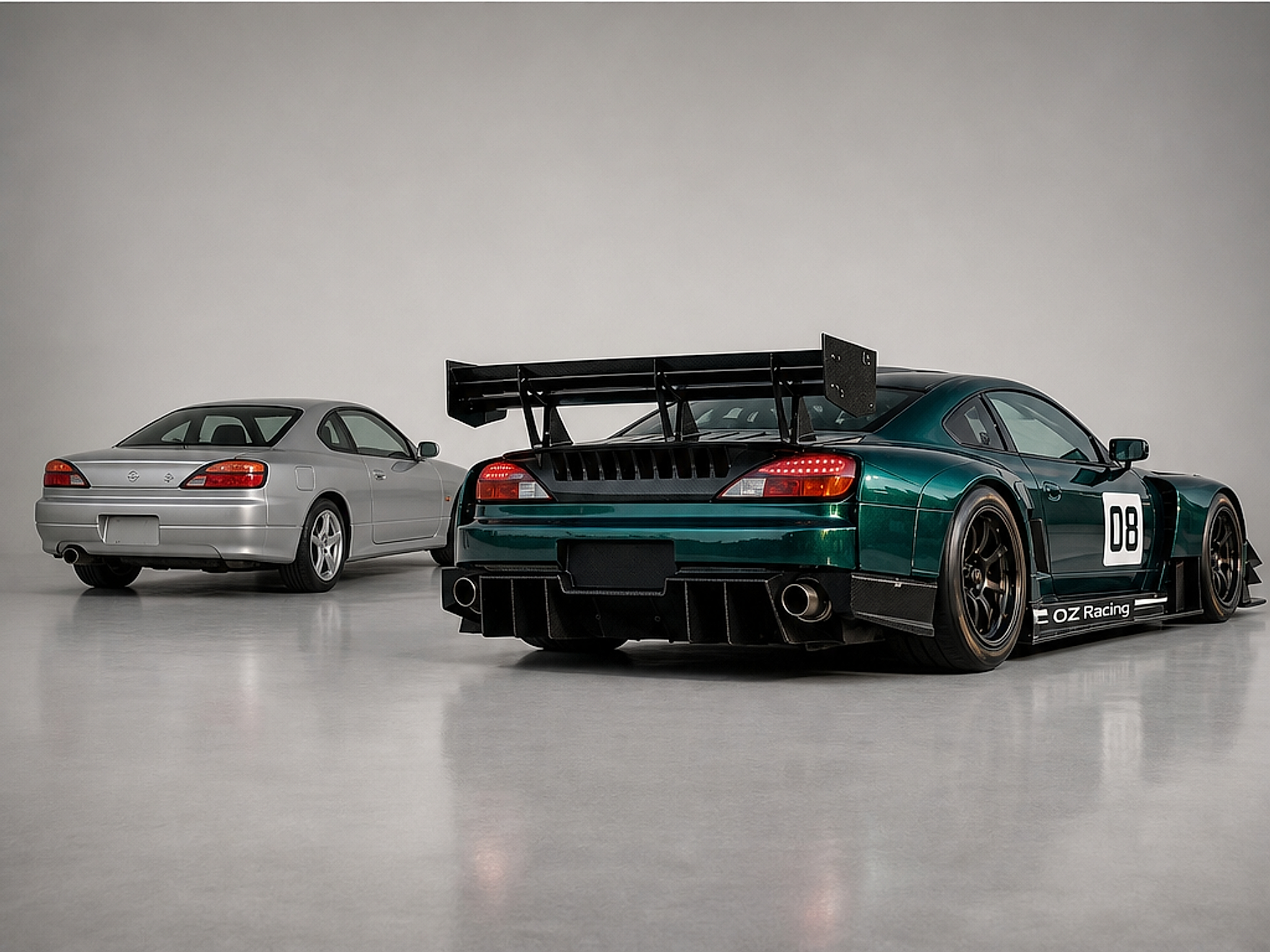
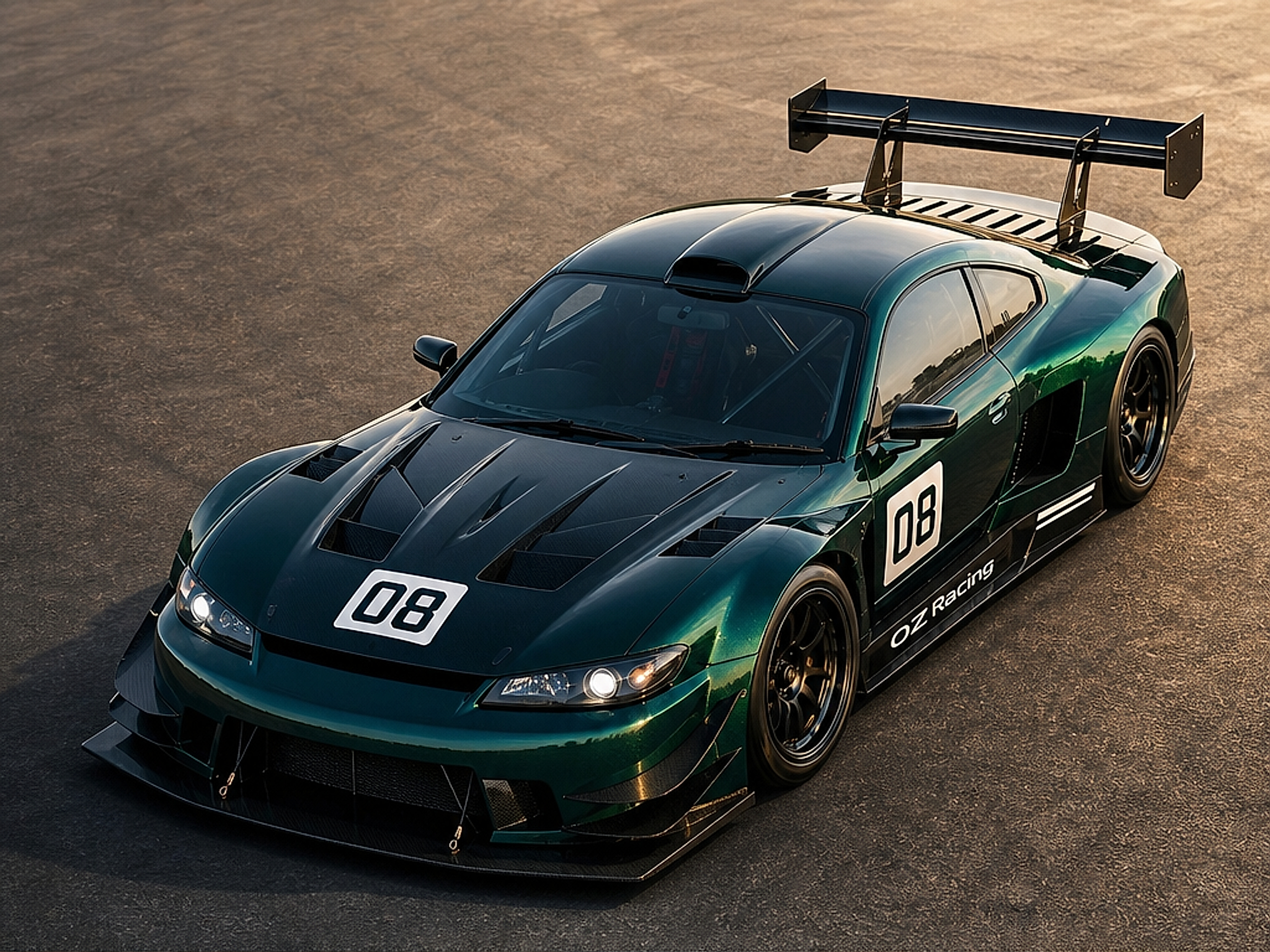
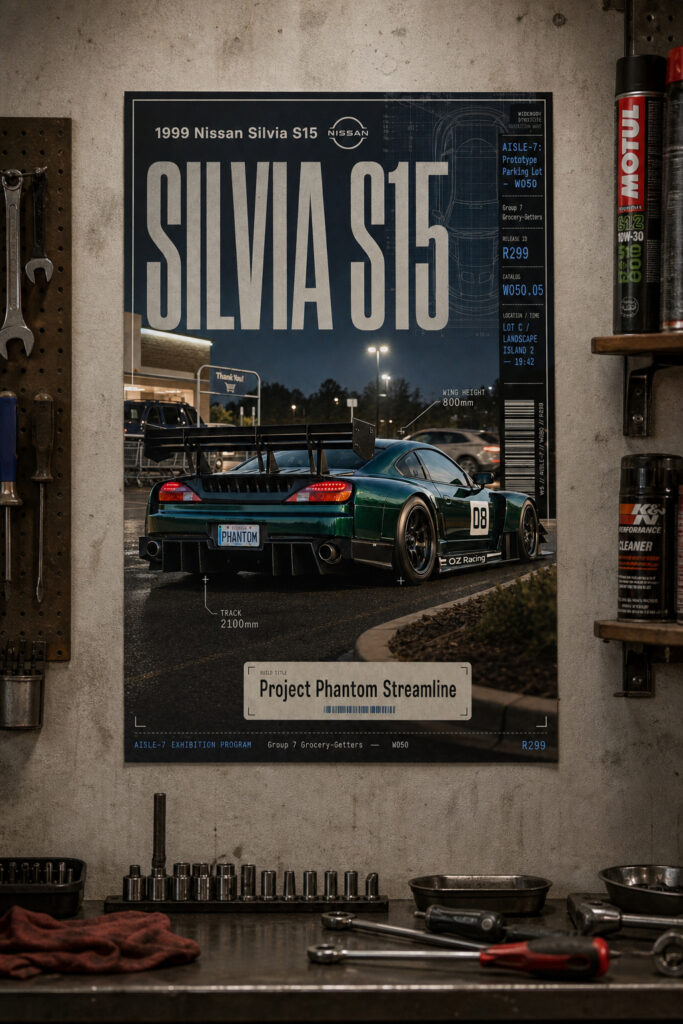
Project Phantom Streamline treats the S15 silhouette like a homologation sketch that escaped into an unlimited rulebook. The stock proportions are still readable—headlights, greenhouse, roofline—but everything underneath is re-scaled to prototype math: 2100mm track, squared-off arches, and sidepod cooling that makes the doors look like fairings rather than bodywork.

It’s a believable alternate motorsport program built around downforce first, temperature control second, and nostalgia last. Exposed ducts, a vented carbon hood spine feeding a roof intake, and a long rear diffuser turn the car into a ground-effect device that happens to wear Silvia skin, finished in deep emerald over sapphire to keep it feeling like a factory-backed effort instead of a cosplay.
Share Release X FB

Image studies from every angle.

6 curated frames · swipe / tap to inspect

Comparison Shots

Engineering Artifacts

The technical study and collectible interpretation of one build, preserved together.

01
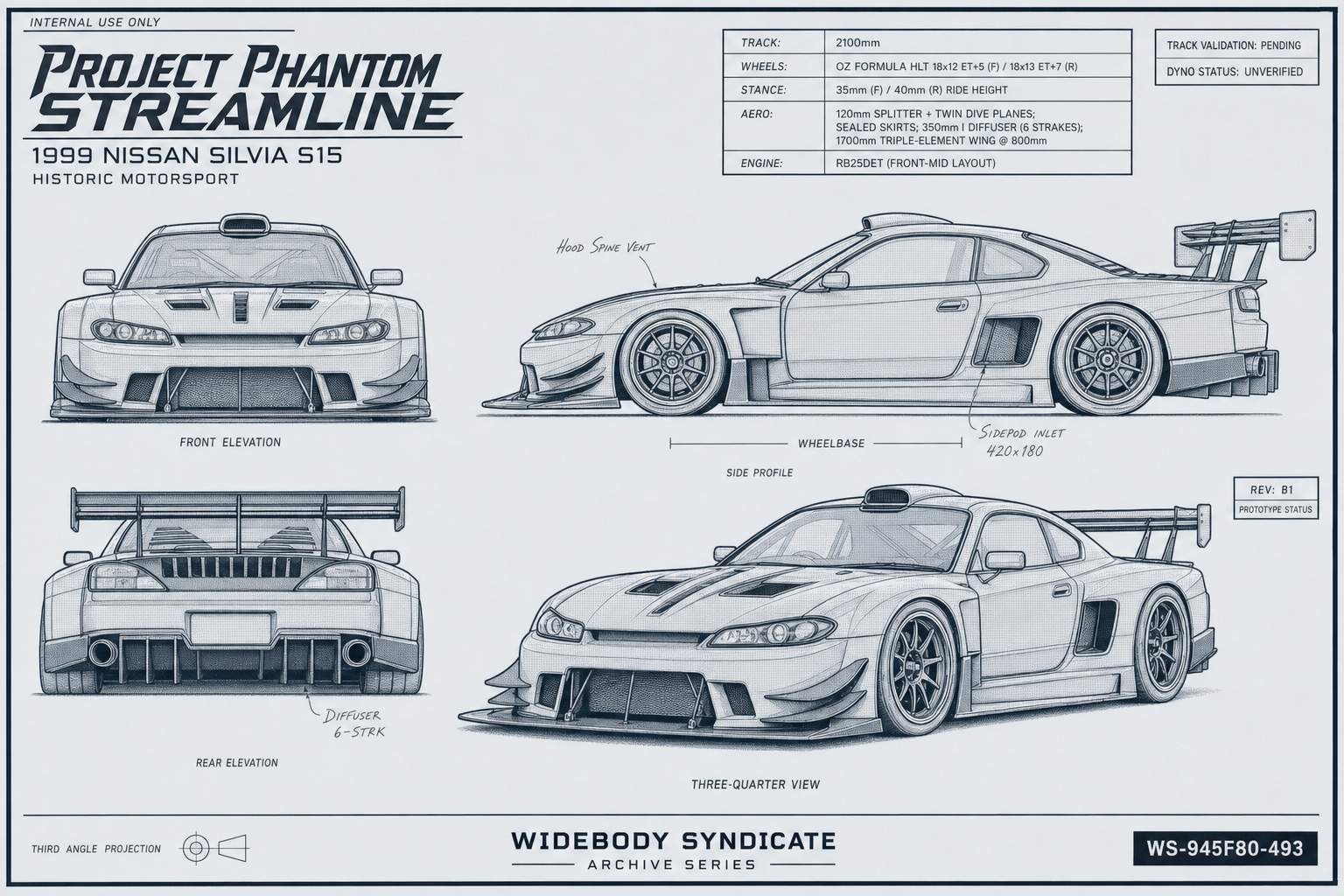
Technical DrawingBlueprint archive
Project Phantom Streamline blueprint
02
Project Phantom Streamline Collector EditionCollector artifact
Project Phantom Streamline Collector Edition

A presentation-grade collector artifact created for this release and preserved as part of the Widebody Syndicate archive.

Platform

1999 Nissan Silvia S15

1999 Nissan Silvia S15

The 1999 Nissan Silvia S15 is a quintessential Japanese sports coupe that perfectly bridges the gap between raw driver engagement and refined chassis dynamics. Celebrated for its lightweight construction, sharp steering, and balanced rear-wheel-drive layout, the S15 quickly became a favorite among tuners and enthusiasts alike. Its SR20DET turbocharged engine offers a robust foundation for both street and track builds, while the sleek, aerodynamic lines of the chassis provide a timeless silhouette that continues to inspire widebody transformations and motorsport adaptations.

NissanSilvia S151999
View Platform

Aero Package

120mm forward front splitter with twin dive planes and high-pressure brake ducting
Sealed, channeled side skirts to maintain floor pressure differential
350mm extended rear diffuser with six strakes for stable expansion and yaw control
Triple-element rear wing (1700mm span) on tall uprights with adjustable gurneys

Chassis

Road Atlanta at golden hour is the right proving ground: fast direction changes, big braking zones, and long loaded corners where cooling and aero balance show up immediately. The car is pictured mid-corner with the floor working, the wing planted, and the bodywork doing what prototype bodywork is supposed to do—manage air, not decorate it.

Wheels & Tires

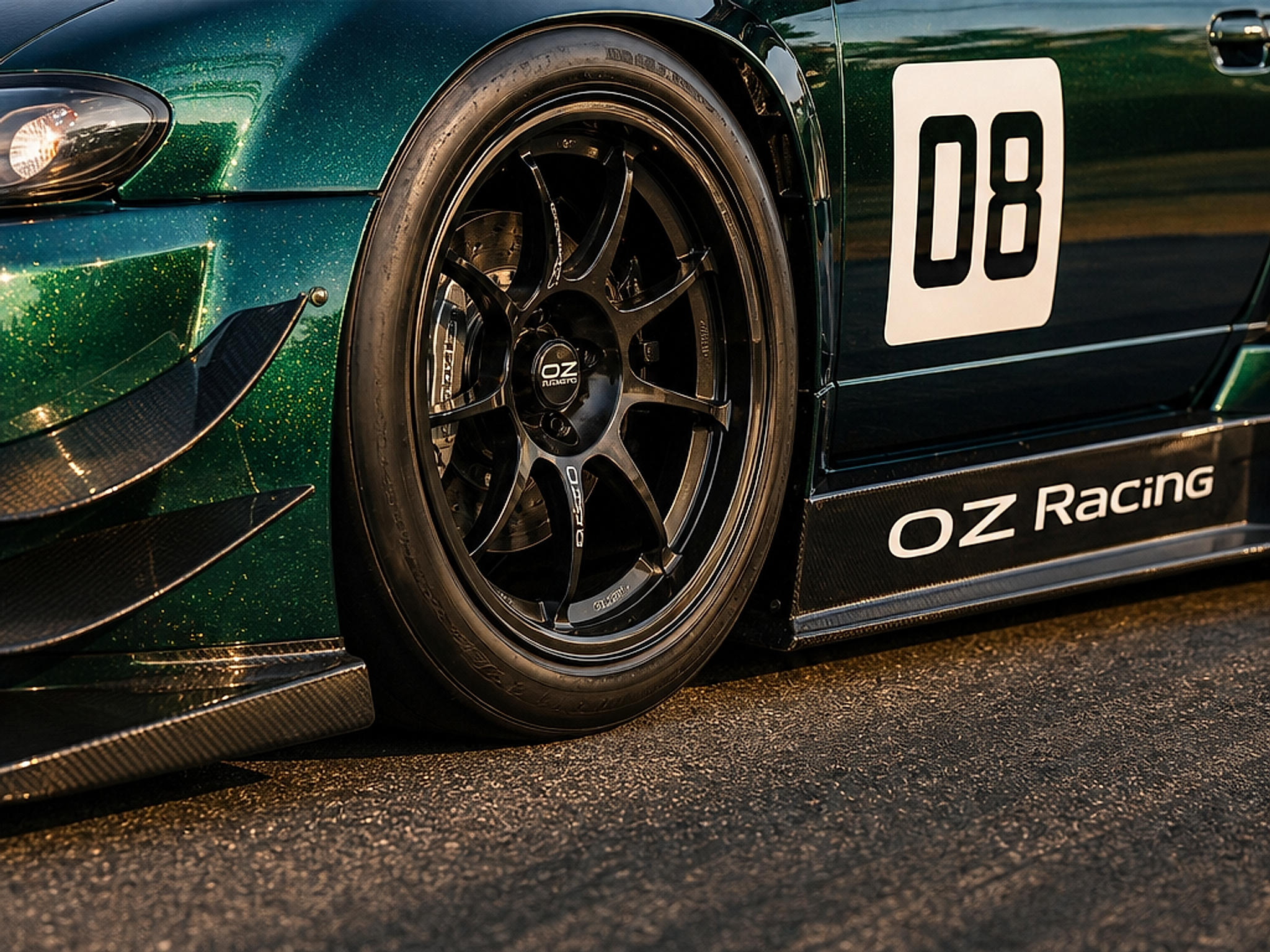
OZ Racing Formula HLT forged: 18x12 ET+5 front, 18x13 ET+7 rear
Michelin slicks: 325/40ZR18 front, 355/35ZR18 rear
Race brake package with dedicated ducting recessed behind the front arches
Static arch clearance set tight (10mm) to match stiff spring rates and aero load

Powertrain

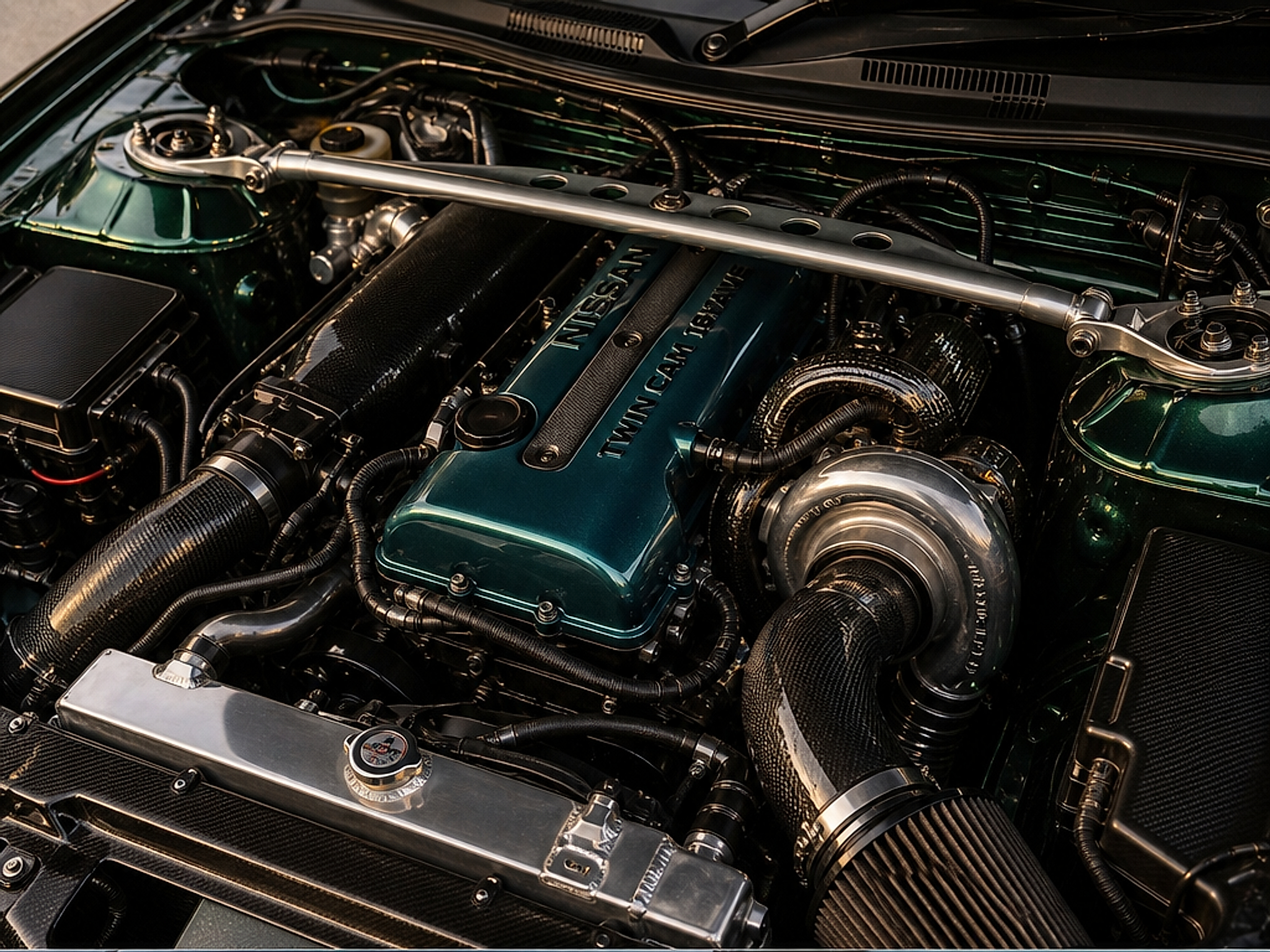
RB25DET relocated rearward for a front-mid layout and improved polar moment
Twin side-mounted radiators and dual intercooler core arrangement fed by sidepods
Side-exit exhaust ahead of the rear wheels with heat-managed routing
Track-focused calibration prioritizing sustained load, charge temps, and oil control

Fabrication Notes

Carbon composite multi-radius arch construction with reinforced mounting flanges for quick-change service
Floor and diffuser built as a matched assembly with attention to sealing and ride-height sensitivity
Ducting designed with removable panels for brake and cooling access between sessions
Rear structure reinforced to carry tall wing loads into the chassis, not the skin
×

Design Philosophy

Project Phantom Streamline treats the S15 silhouette like a homologation sketch that escaped into an unlimited rulebook. The stock proportions are still readable—headlights, greenhouse, roofline—but everything underneath is re-scaled to prototype math: 2100mm track, squared-off arches, and sidepod cooling that makes the doors look like fairings rather than bodywork.

It’s a believable alternate motorsport program built around downforce first, temperature control second, and nostalgia last. Exposed ducts, a vented carbon hood spine feeding a roof intake, and a long rear diffuser turn the car into a ground-effect device that happens to wear Silvia skin, finished in deep emerald over sapphire to keep it feeling like a factory-backed effort instead of a cosplay.

Platform+
1999 Nissan Silvia S15

1999 Nissan Silvia S15

The 1999 Nissan Silvia S15 is a quintessential Japanese sports coupe that perfectly bridges the gap between raw driver engagement and refined chassis dynamics. Celebrated for its lightweight construction, sharp steering, and balanced rear-wheel-drive layout, the S15 quickly became a favorite among tuners and enthusiasts alike. Its SR20DET turbocharged engine offers a robust foundation for both street and track builds, while the sleek, aerodynamic lines of the chassis provide a timeless silhouette that continues to inspire widebody transformations and motorsport adaptations.

NissanSilvia S151999
View Platform
Aero Package+

120mm forward front splitter with twin dive planes and high-pressure brake ducting
Sealed, channeled side skirts to maintain floor pressure differential
350mm extended rear diffuser with six strakes for stable expansion and yaw control
Triple-element rear wing (1700mm span) on tall uprights with adjustable gurneys

Chassis+

Road Atlanta at golden hour is the right proving ground: fast direction changes, big braking zones, and long loaded corners where cooling and aero balance show up immediately. The car is pictured mid-corner with the floor working, the wing planted, and the bodywork doing what prototype bodywork is supposed to do—manage air, not decorate it.

Wheels & Tires+

OZ Racing Formula HLT forged: 18x12 ET+5 front, 18x13 ET+7 rear
Michelin slicks: 325/40ZR18 front, 355/35ZR18 rear
Race brake package with dedicated ducting recessed behind the front arches
Static arch clearance set tight (10mm) to match stiff spring rates and aero load

Powertrain+

RB25DET relocated rearward for a front-mid layout and improved polar moment
Twin side-mounted radiators and dual intercooler core arrangement fed by sidepods
Side-exit exhaust ahead of the rear wheels with heat-managed routing
Track-focused calibration prioritizing sustained load, charge temps, and oil control

Fabrication Notes+

Carbon composite multi-radius arch construction with reinforced mounting flanges for quick-change service
Floor and diffuser built as a matched assembly with attention to sealing and ride-height sensitivity
Ducting designed with removable panels for brake and cooling access between sessions
Rear structure reinforced to carry tall wing loads into the chassis, not the skin

×Design Philosophy+

Project Phantom Streamline treats the S15 silhouette like a homologation sketch that escaped into an unlimited rulebook. The stock proportions are still readable—headlights, greenhouse, roofline—but everything underneath is re-scaled to prototype math: 2100mm track, squared-off arches, and sidepod cooling that makes the doors look like fairings rather than bodywork.

It’s a believable alternate motorsport program built around downforce first, temperature control second, and nostalgia last. Exposed ducts, a vented carbon hood spine feeding a roof intake, and a long rear diffuser turn the car into a ground-effect device that happens to wear Silvia skin, finished in deep emerald over sapphire to keep it feeling like a factory-backed effort instead of a cosplay.

Part of
Wave 50

Group 7 Grocery-Getters

We got tired of watching the same halo cars hog all the pit lane attention, so we did the only reasonable thing: we turned the background traffic into the main event. This release is our love letter to the cars you ignore in the parking lot, now wearing full open-rule prototype hardware like they were born with it.

Explore Wave 50 → 6 Builds

Keep Exploring

The archive is always growing. New releases, waves, and blueprints added regularly.