
R286
Rampart Sprint Protocol
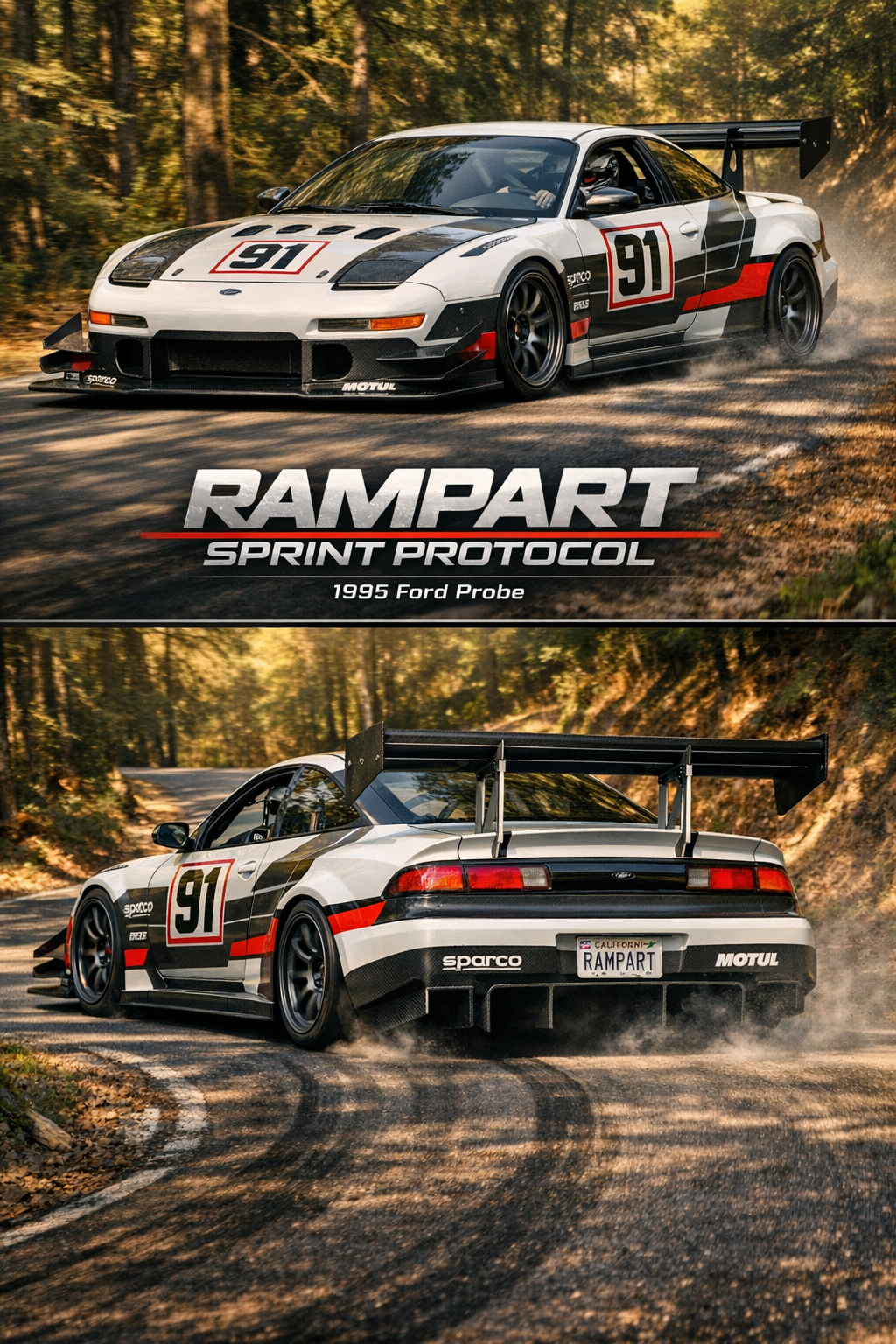
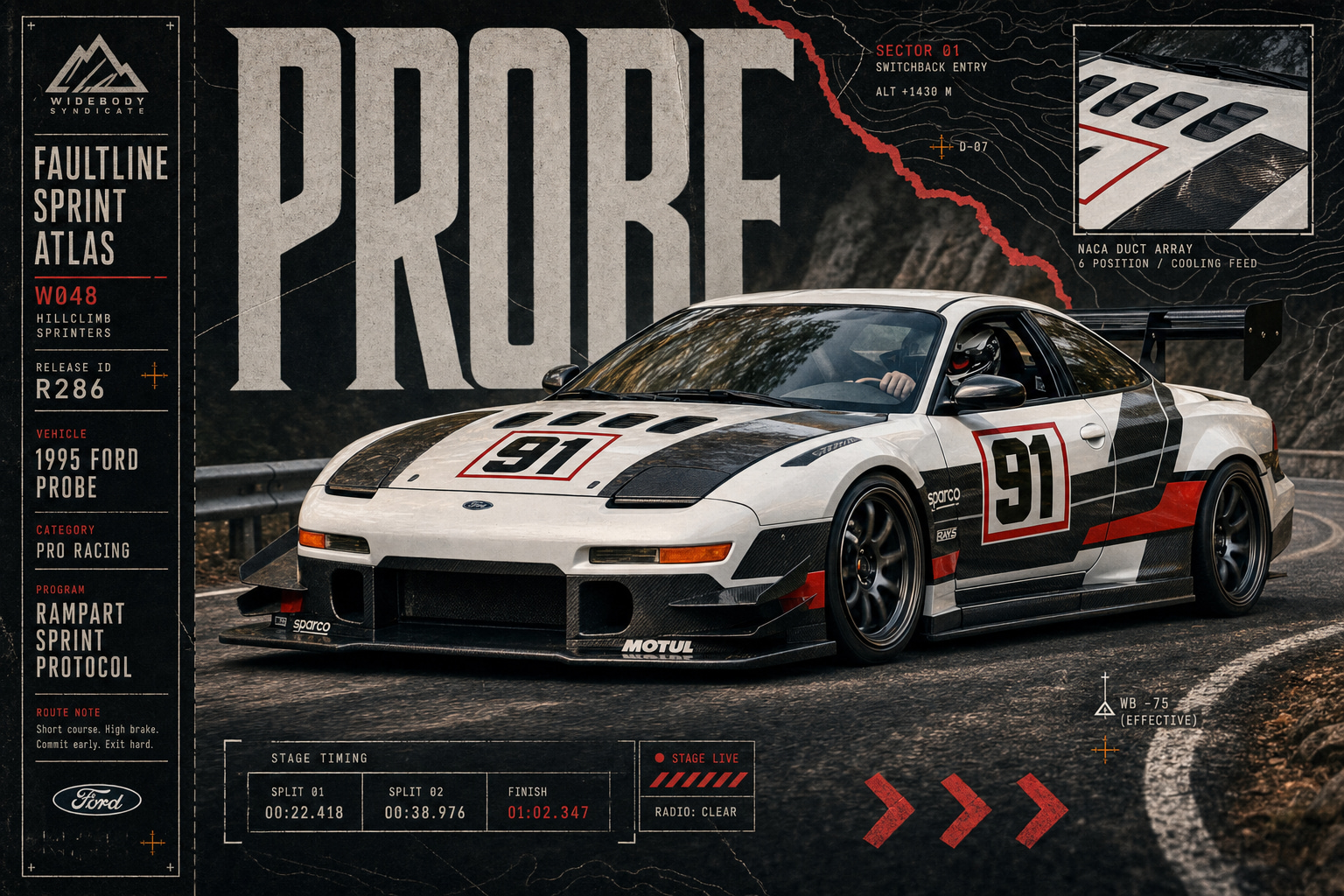
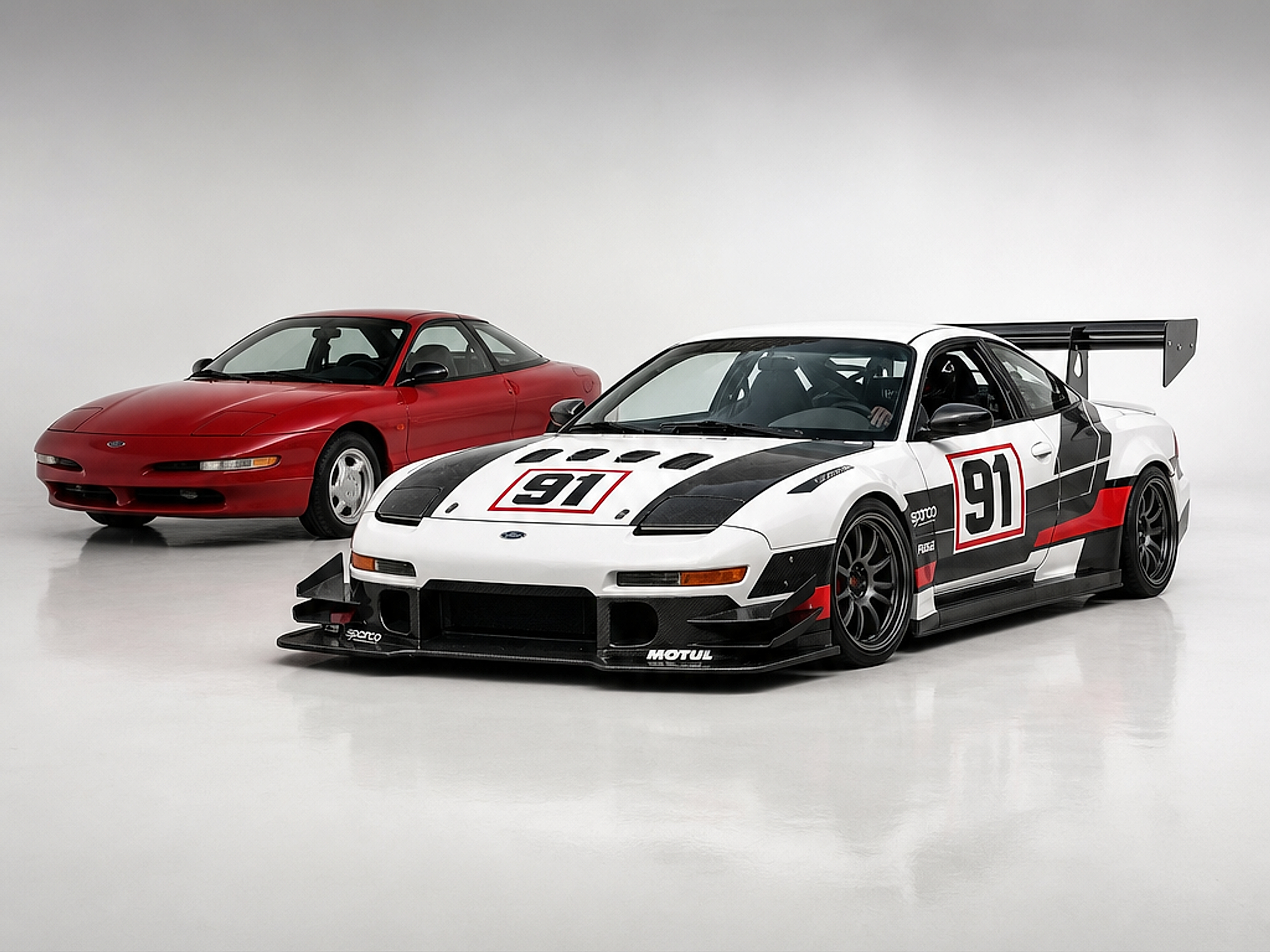
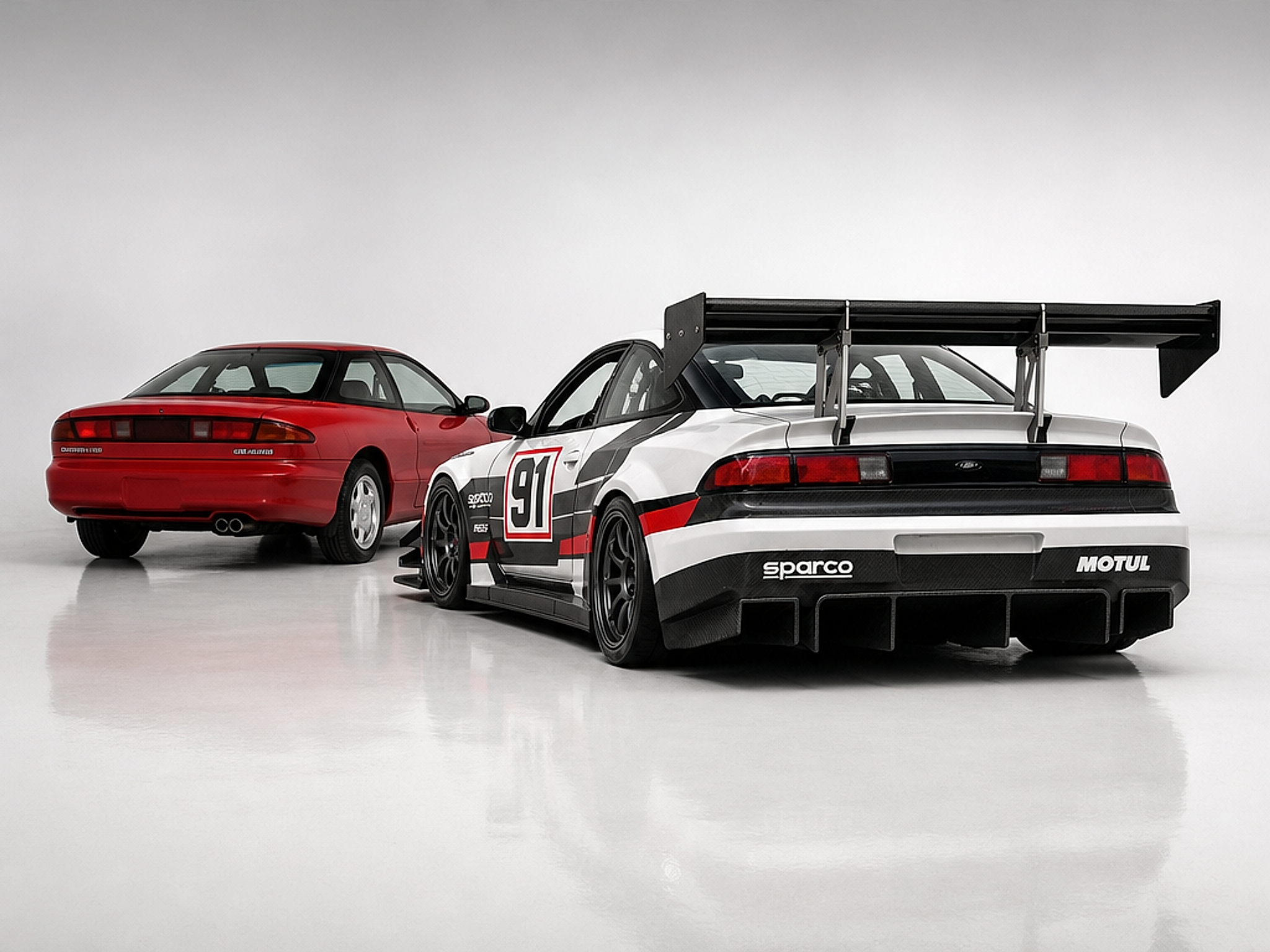
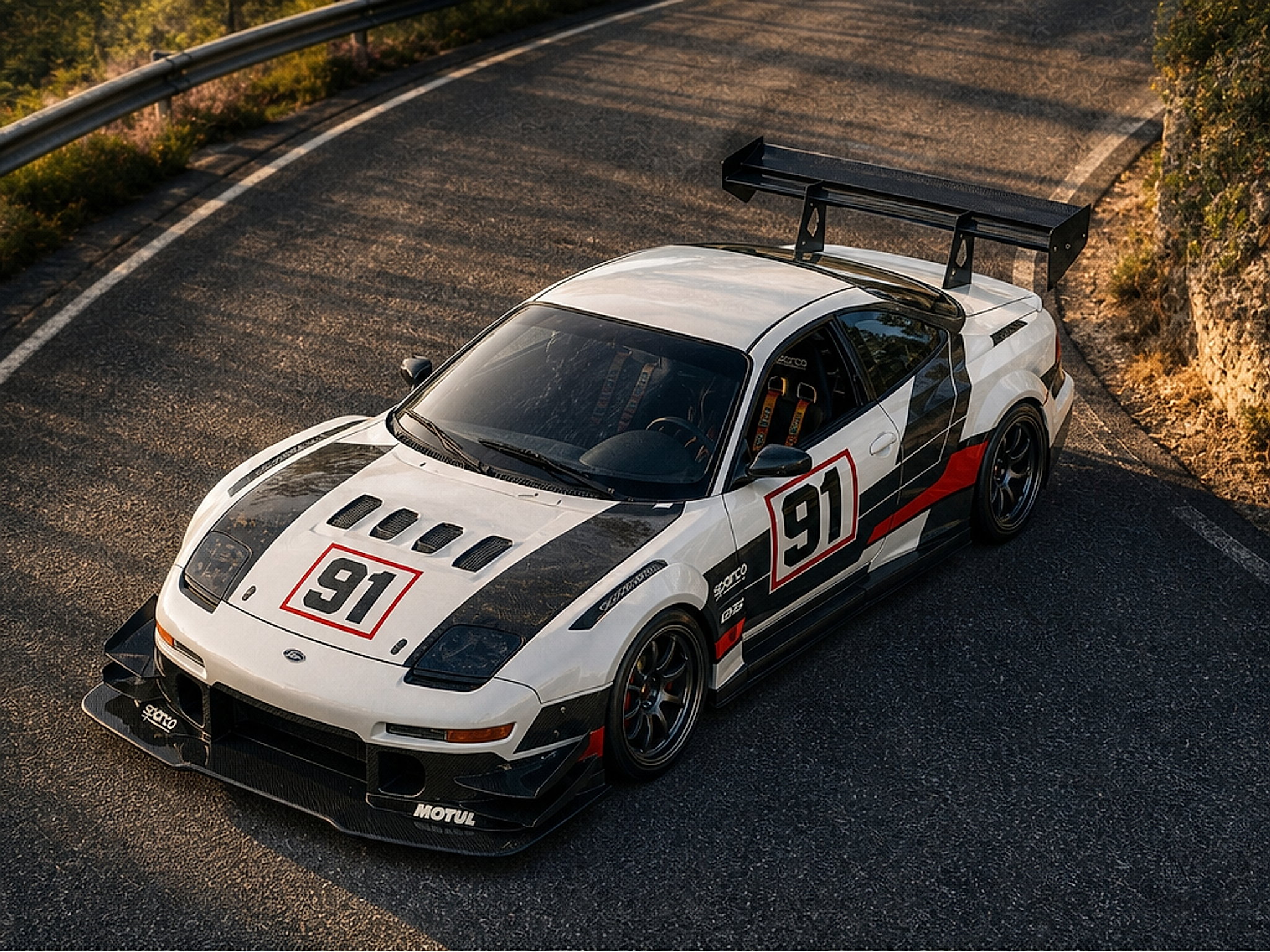
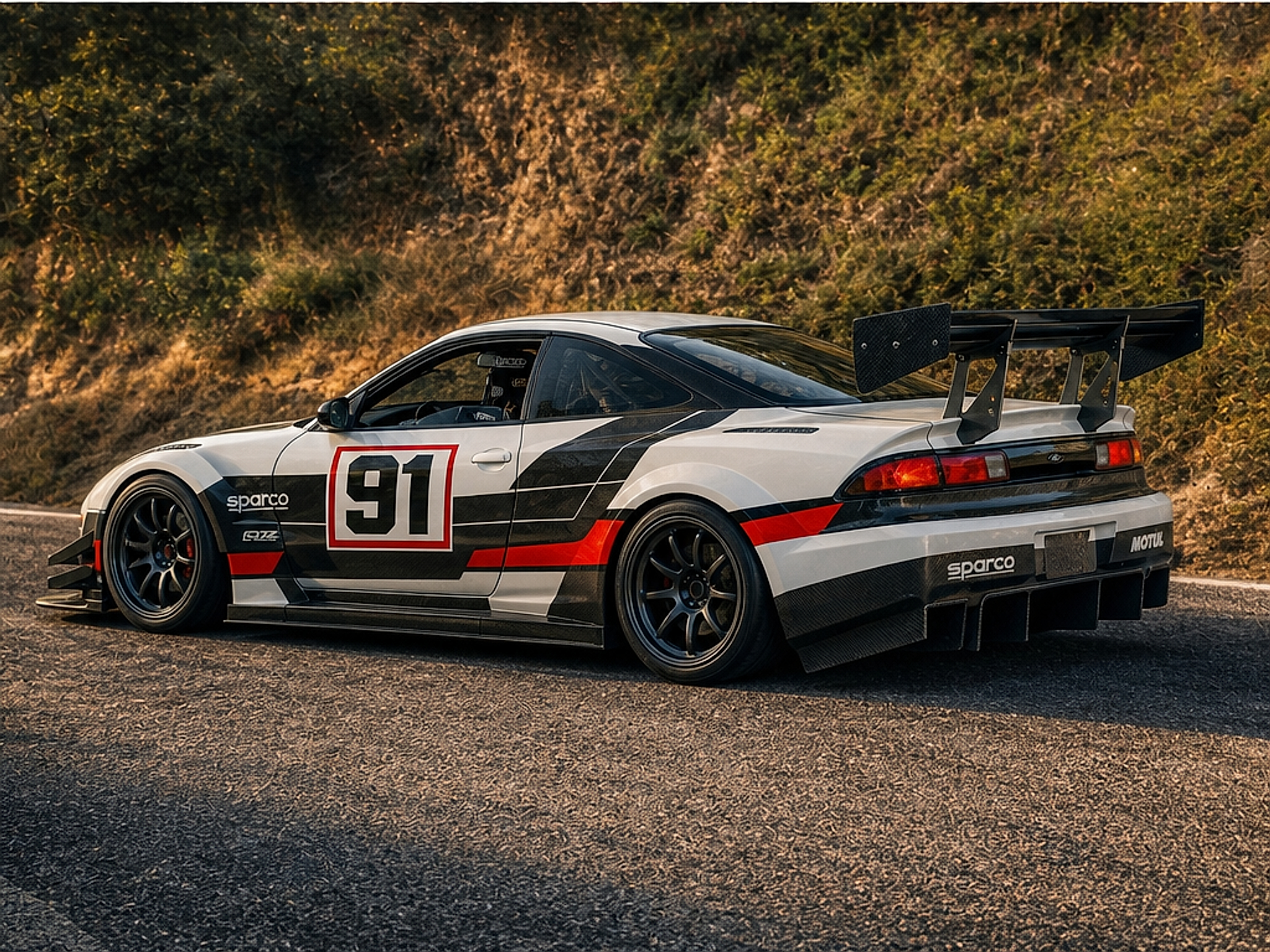
Rampart Sprint Protocol takes the forgotten ’95 Probe silhouette and rewrites it for short-course hillclimb: stubby, wide, and ruthless about changing direction. The greenhouse stays unmistakably Probe, but everything below the beltline is re-proportioned—square-shouldered carbon arches, a shortened wheelbase feel, and a forward rake that telegraphs “turn-in first, questions later.”
This isn’t nostalgia cosplay or a front-drive warm hatch in a costume. It’s a purpose-built sprint chassis with real aero surfaces, real tire, and the kind of packaging compromises you only accept when the road is narrow, the corners are blind, and the stopwatch doesn’t care what the badge used to mean.
Release Image Studies
Image studies from every angle.
Comparison Shots
Blueprint / Collector Archive
Engineering Artifacts
The technical study and collectible interpretation of one build, preserved together.
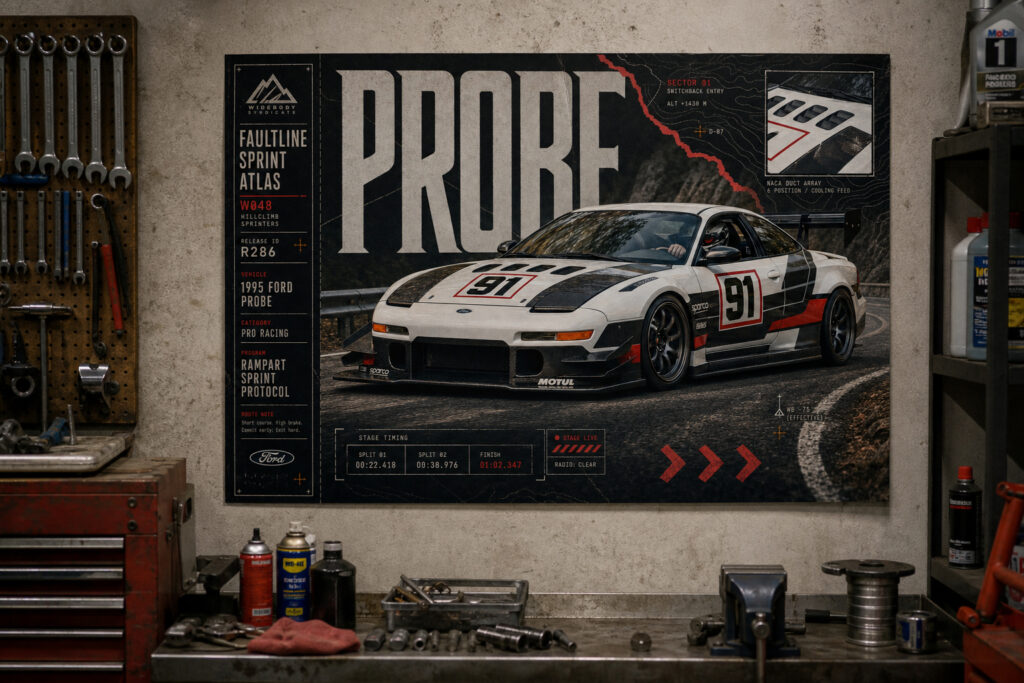
A presentation-grade collector artifact created for this release and preserved as part of the Widebody Syndicate archive.
Selected archive goods are available for collectors.
Technical Dossier
Platform
1995 Ford Probe
The 1995 Ford Probe represents a distinct chapter in ’90s Japanese-American automotive collaboration—a front-wheel-drive sports coupe born from a joint venture with Mazda, sharing its underpinnings with the MX-6. Its sleek, aerodynamic silhouette and finely tuned suspension delivered sharp handling and a driver-focused experience that stood out in an era brimming with affordable sport compacts. The Probe’s engineering emphasized balance and precision over raw power, making it a cult favorite among enthusiasts who appreciate nuanced driving dynamics wrapped in a futuristic yet understated design.
Aero Package
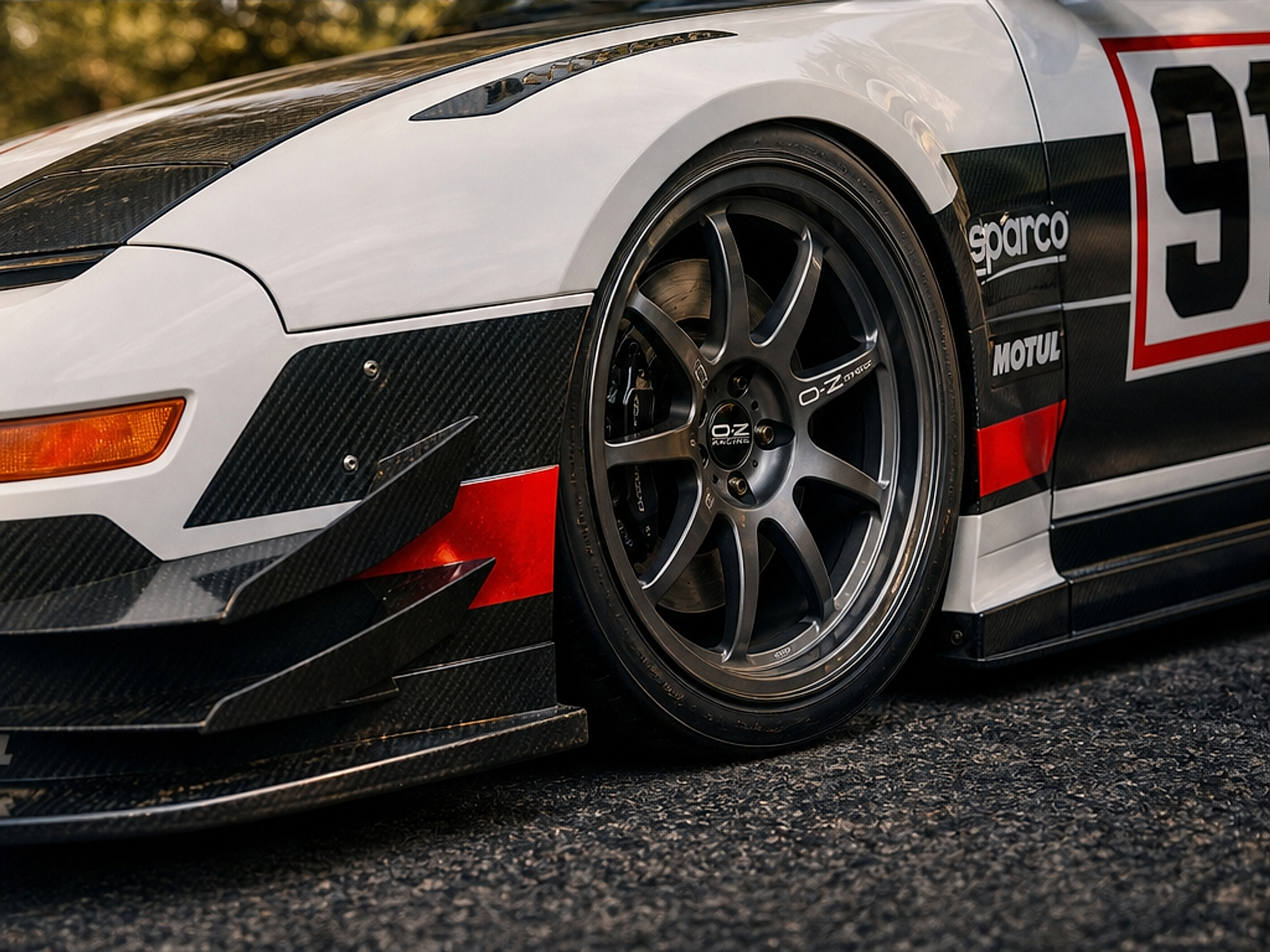
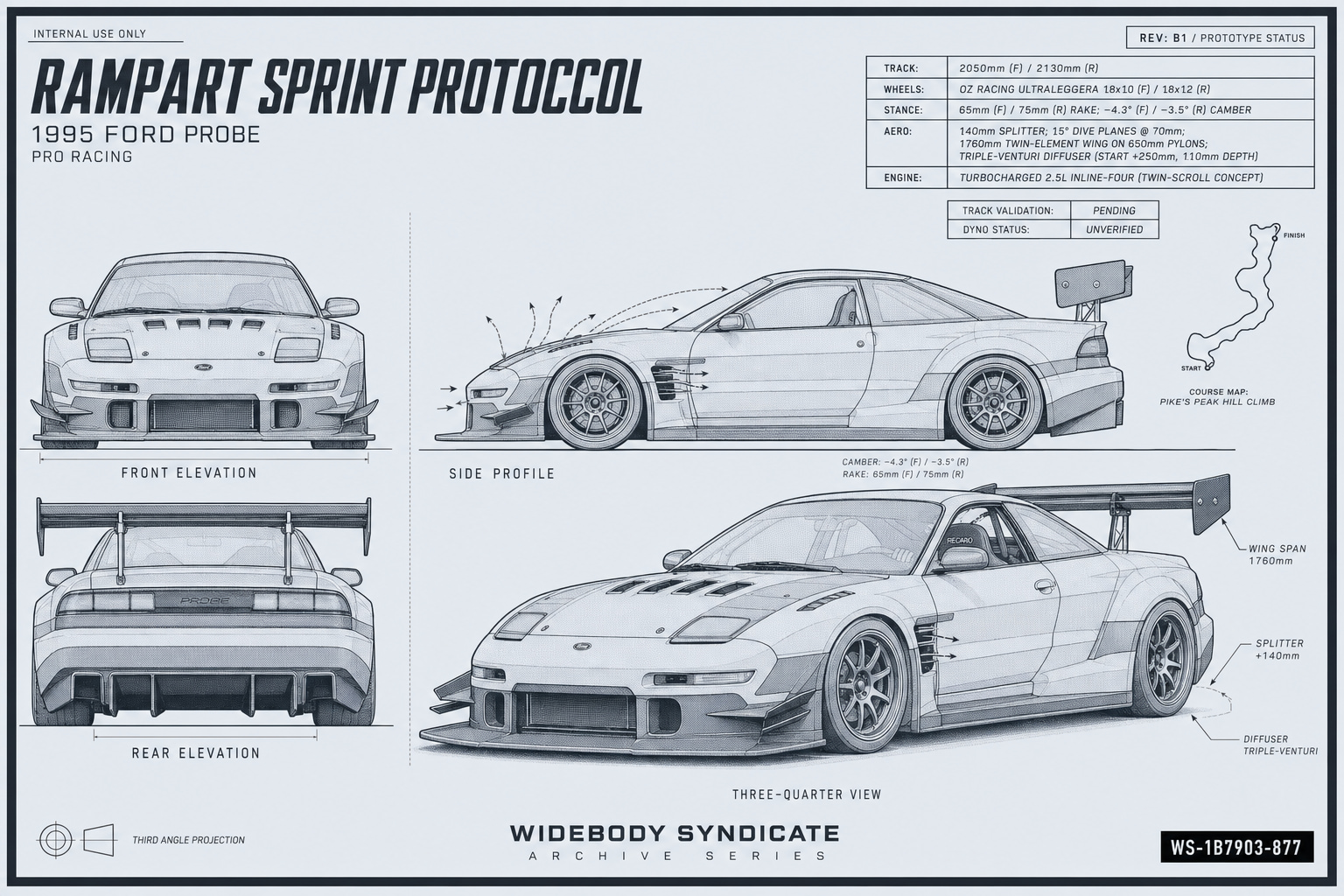
140mm flat front splitter with chassis-mounted supports
Outboard dive planes mounted ~70mm above splitter
canted for front-end authority in transitions
Triple-channel rear diffuser with vertical strakes starting ~250mm behind rear axle
Multi-element rear wing (1760mm span) on ~650mm pylons with adjustable angle-of-attack hardware
Chassis
Set for steep, narrow hillclimb tarmac where the car lives on turn-in and exits—hairpins, quick left-rights, and short straights that punish lag and sloppy aero. The setup biases front bite with a slight rake and heavy camber, then relies on rear aero stability to keep it planted when the road falls away.
Wheels & Tires
OZ Racing Ultraleggera: 18x10 front
18x12 rear in matte anthracite
295/35R18 front and 315/40R18 rear hillclimb slicks
Center-lock hub conversion to speed service and increase clamping consistency
Big brake package clearance prioritized via deep-concave wheel faces
Powertrain
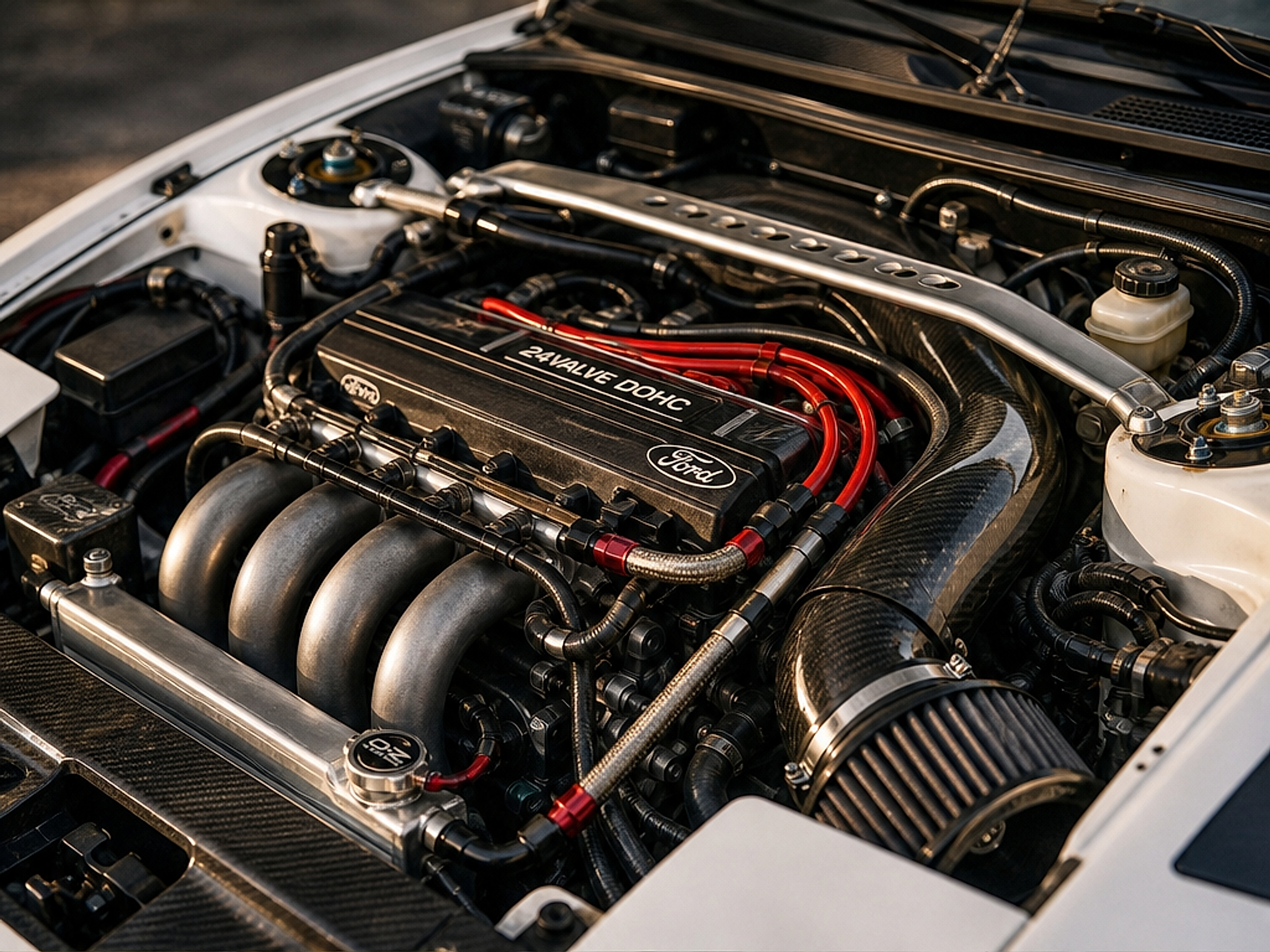
High-revving 2.5L inline-four with twin-scroll turbo sized for midrange punch out of hairpins
Front-mounted crossflow radiator with sealed ducting from bumper inlets to controlled exits
Dedicated brake cooling loops routed through fender-well ducting
Motorsport ECU calibration focused on transient response and traction management in short pulls
Fabrication Notes
Wide-track suspension pickup reinforcement and custom uprights to support double-wishbone conversion
Chassis-mounted splitter and wing load paths tied into reinforced structure
not bumper skins
Sealed aero/cooling ductwork with serviceable panels for quick event-side changes
Rear deck extension built as a structural aero platform with accessible wing hardware
Design Philosophy
Rampart Sprint Protocol takes the forgotten ’95 Probe silhouette and rewrites it for short-course hillclimb: stubby, wide, and ruthless about changing direction. The greenhouse stays unmistakably Probe, but everything below the beltline is re-proportioned—square-shouldered carbon arches, a shortened wheelbase feel, and a forward rake that telegraphs “turn-in first, questions later.”
This isn’t nostalgia cosplay or a front-drive warm hatch in a costume. It’s a purpose-built sprint chassis with real aero surfaces, real tire, and the kind of packaging compromises you only accept when the road is narrow, the corners are blind, and the stopwatch doesn’t care what the badge used to mean.
▧Platform+
1995 Ford Probe
The 1995 Ford Probe represents a distinct chapter in ’90s Japanese-American automotive collaboration—a front-wheel-drive sports coupe born from a joint venture with Mazda, sharing its underpinnings with the MX-6. Its sleek, aerodynamic silhouette and finely tuned suspension delivered sharp handling and a driver-focused experience that stood out in an era brimming with affordable sport compacts. The Probe’s engineering emphasized balance and precision over raw power, making it a cult favorite among enthusiasts who appreciate nuanced driving dynamics wrapped in a futuristic yet understated design.
⌘Aero Package+
140mm flat front splitter with chassis-mounted supports
Outboard dive planes mounted ~70mm above splitter
canted for front-end authority in transitions
Triple-channel rear diffuser with vertical strakes starting ~250mm behind rear axle
Multi-element rear wing (1760mm span) on ~650mm pylons with adjustable angle-of-attack hardware
⟡Chassis+
Set for steep, narrow hillclimb tarmac where the car lives on turn-in and exits—hairpins, quick left-rights, and short straights that punish lag and sloppy aero. The setup biases front bite with a slight rake and heavy camber, then relies on rear aero stability to keep it planted when the road falls away.
◎Wheels & Tires+
OZ Racing Ultraleggera: 18x10 front
18x12 rear in matte anthracite
295/35R18 front and 315/40R18 rear hillclimb slicks
Center-lock hub conversion to speed service and increase clamping consistency
Big brake package clearance prioritized via deep-concave wheel faces
▤Powertrain+
High-revving 2.5L inline-four with twin-scroll turbo sized for midrange punch out of hairpins
Front-mounted crossflow radiator with sealed ducting from bumper inlets to controlled exits
Dedicated brake cooling loops routed through fender-well ducting
Motorsport ECU calibration focused on transient response and traction management in short pulls
△Fabrication Notes+
Wide-track suspension pickup reinforcement and custom uprights to support double-wishbone conversion
Chassis-mounted splitter and wing load paths tied into reinforced structure
not bumper skins
Sealed aero/cooling ductwork with serviceable panels for quick event-side changes
Rear deck extension built as a structural aero platform with accessible wing hardware
×Design Philosophy+
Rampart Sprint Protocol takes the forgotten ’95 Probe silhouette and rewrites it for short-course hillclimb: stubby, wide, and ruthless about changing direction. The greenhouse stays unmistakably Probe, but everything below the beltline is re-proportioned—square-shouldered carbon arches, a shortened wheelbase feel, and a forward rake that telegraphs “turn-in first, questions later.”
This isn’t nostalgia cosplay or a front-drive warm hatch in a costume. It’s a purpose-built sprint chassis with real aero surfaces, real tire, and the kind of packaging compromises you only accept when the road is narrow, the corners are blind, and the stopwatch doesn’t care what the badge used to mean.
Part of
Wave 48
Hillclimb Sprinters
This release is our answer to the hillclimb question nobody asked politely: what happens when you build for 60 to 90 seconds of terror instead of 20 minutes of elegance? Across coupes, a sedan, a pickup, and an SUV, the logic is the same: short-course sprint engineering where rotation matters more than top speed, and cooling is treated like ammunition.
Explore Wave 48 → 6 BuildsKeep Exploring
The archive is always growing. New releases, waves, and blueprints added regularly.