


WS Widebody Syndicate
Quantum Ripper Protocol

R101

Quantum Ripper Protocol

1951 Hudson Hornet

Series Sacred Cars
Category Circuit
Wave Wave 17

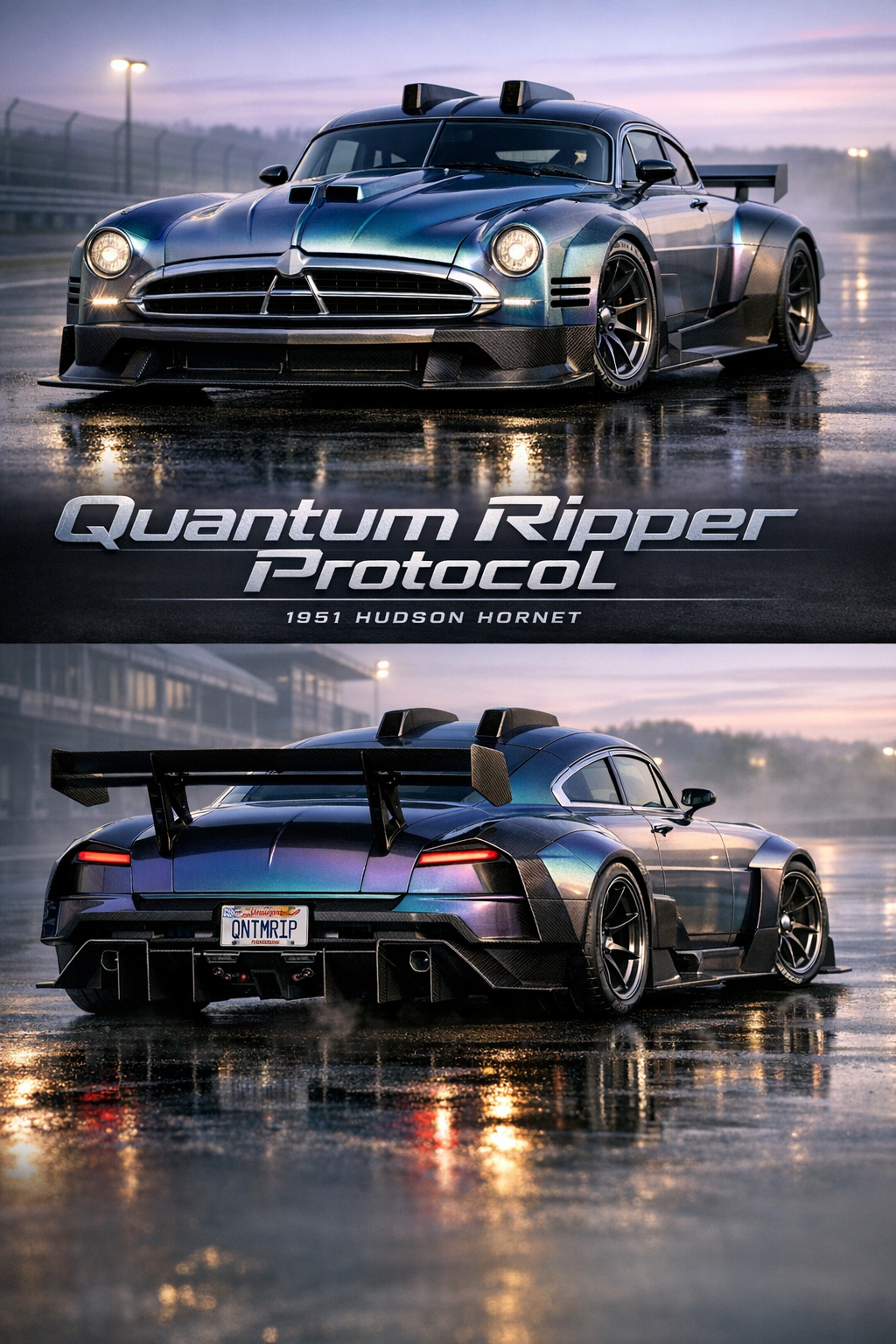
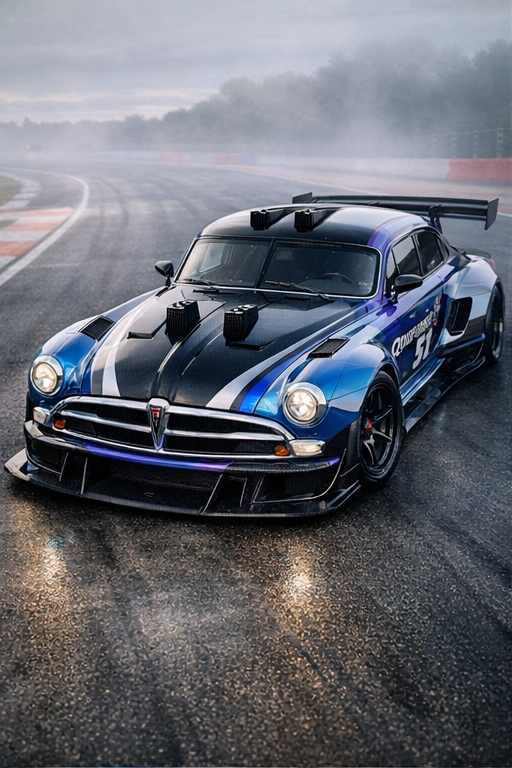
The Quantum Ripper Protocol radically reinterprets the 1951 Hudson Hornet as an electric time attack prototype that merges classic muscle with cutting-edge engineering. Its mid-mounted dual electric motors and integrated battery pack redefine weight distribution and thermal management, while the widebody chassis features meticulously sculpted cooling ducts and airflow channels to maximize cornering grip and powertrain efficiency. This build is a study in transforming a 1950s sedan into a modern track weapon, balancing heritage with advanced electric performance.

Every detail of the bodywork serves a functional purpose, from the stepped hood with vertical cooling chimneys to the ballooned rear arches housing battery cooling ducts. The active aero package, including a towering carbon fiber wing and sophisticated rear diffuser with hydraulic flaps, combines with an adjustable active suspension to deliver razor-sharp handling and stability at speed. The Quantum Ripper Protocol is a deliberate fusion of vintage American muscle ethos and next-generation electric track technology.
Share

Platform transformation, examined from every angle.

6 curated frames · swipe / tap to inspect

Comparison Shots

Engineering record. Exhibition artifact.

The technical study and collectible interpretation of one build, preserved together.

01
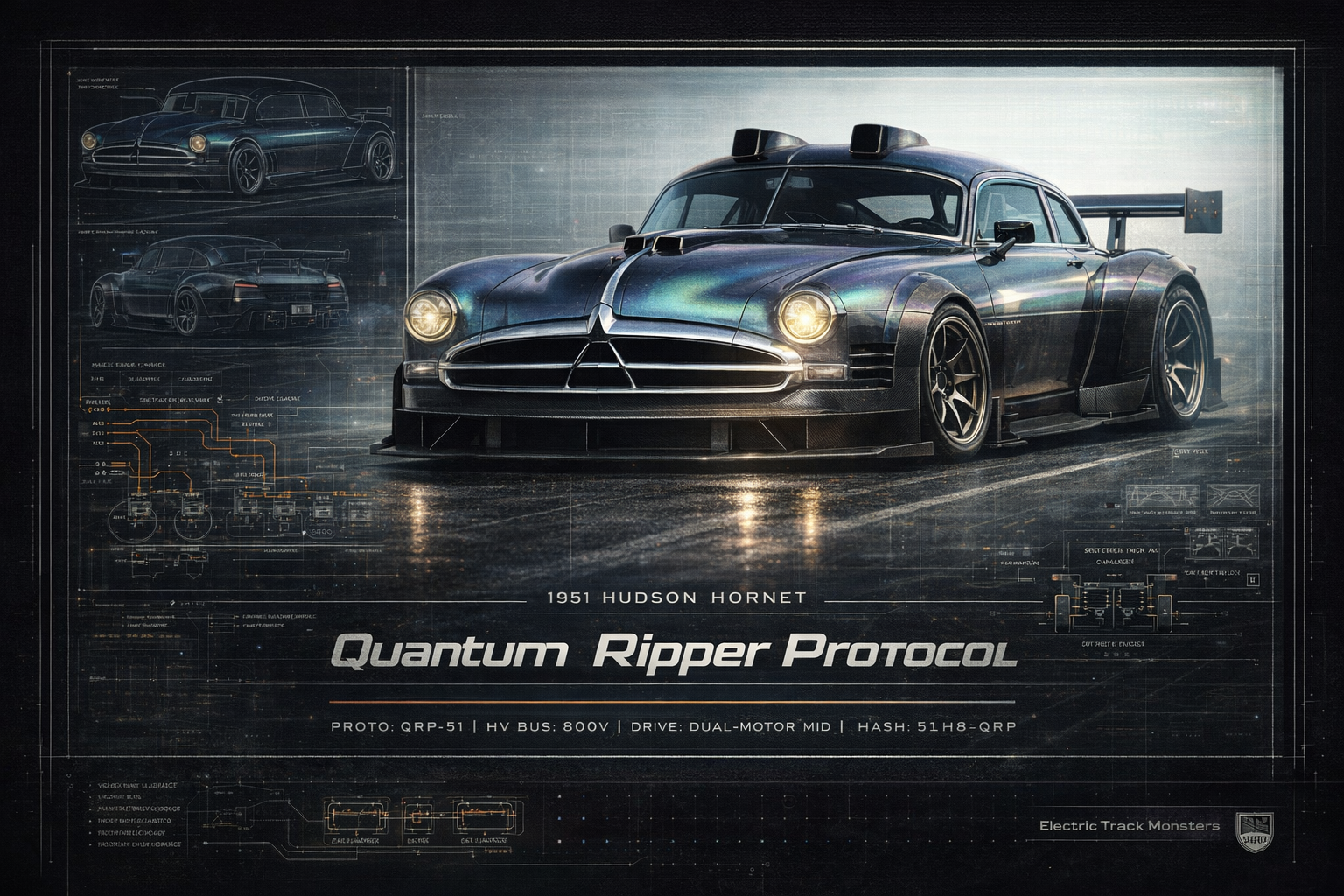
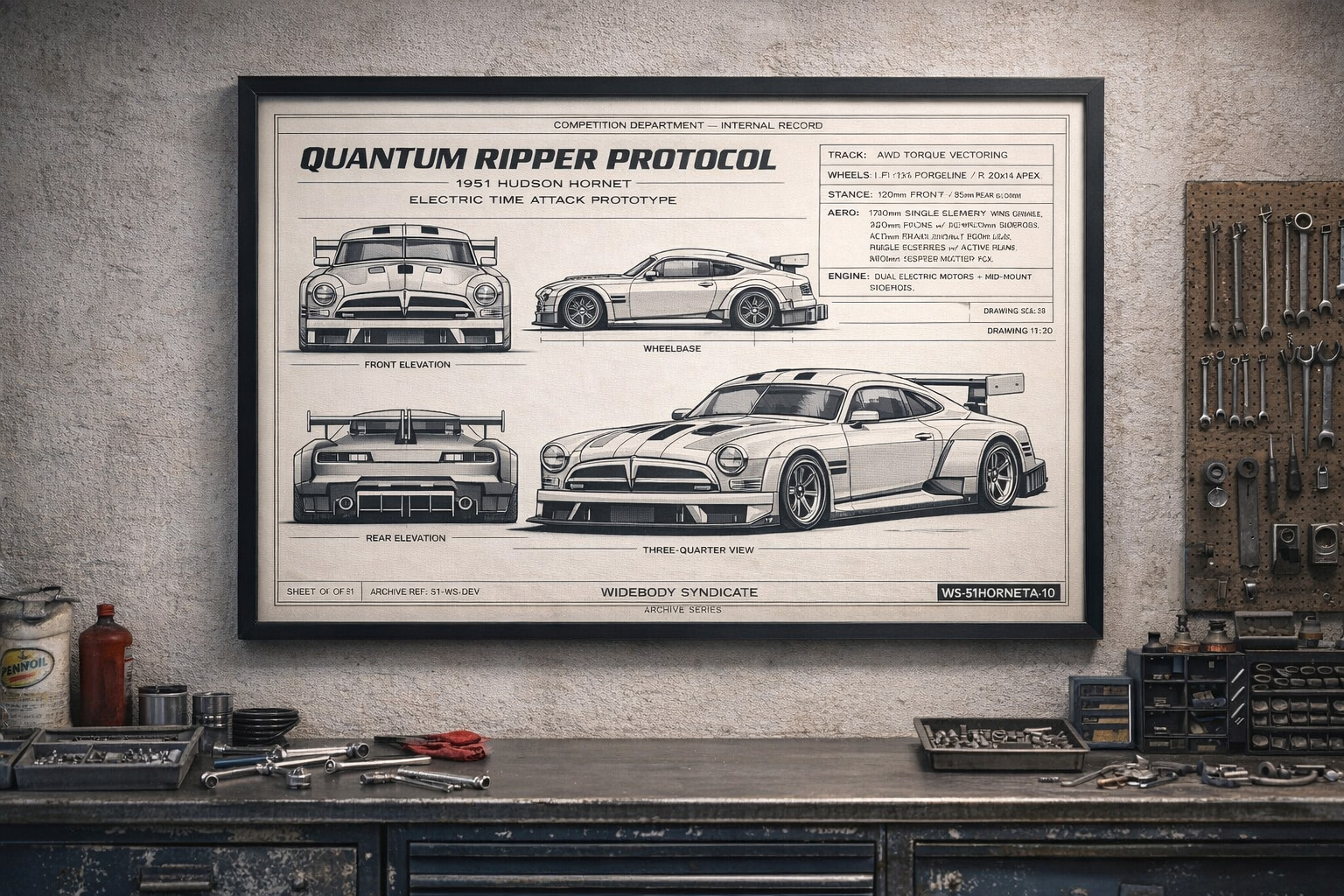
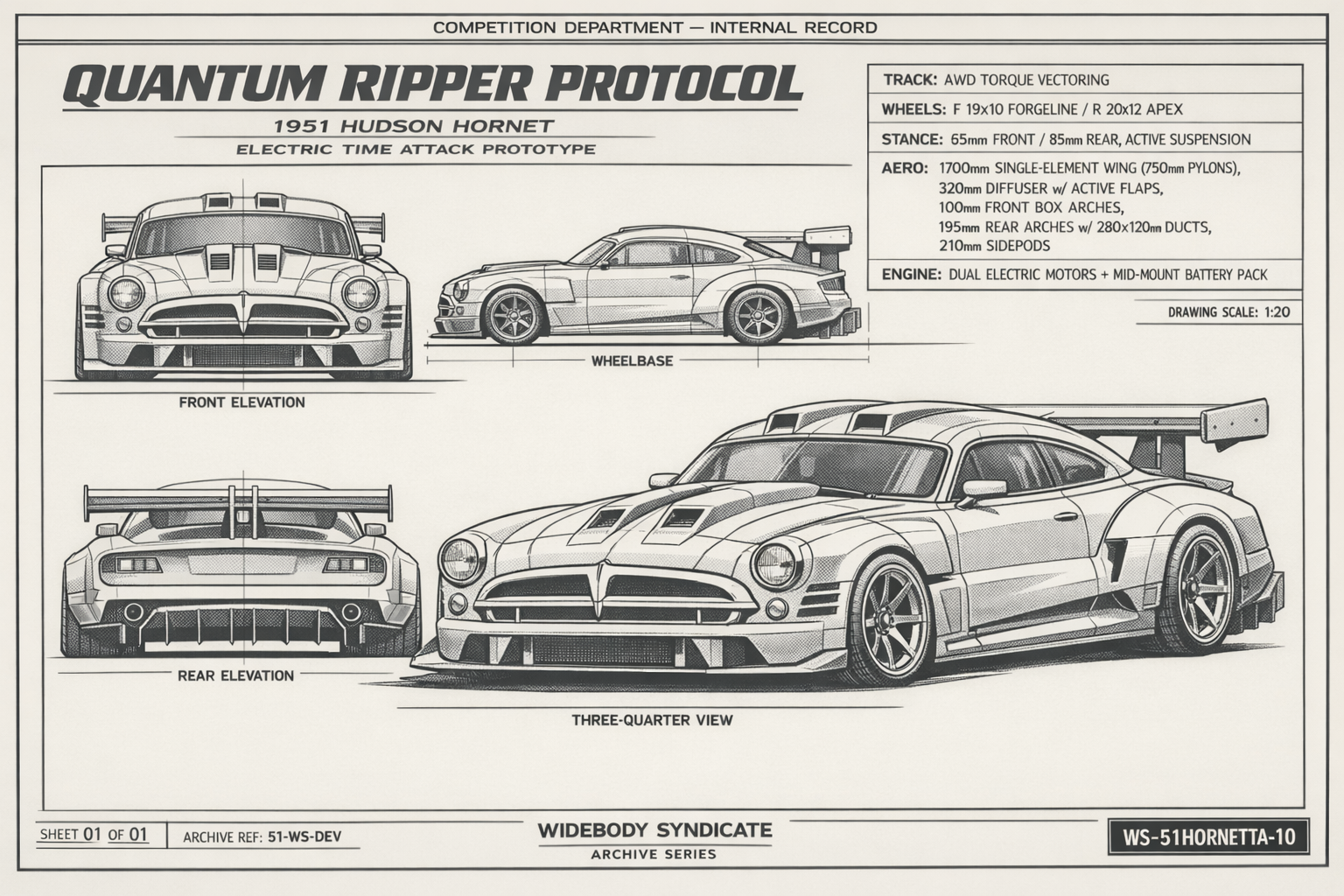
Technical DrawingBlueprint archive
Quantum Ripper Protocol blueprint
02
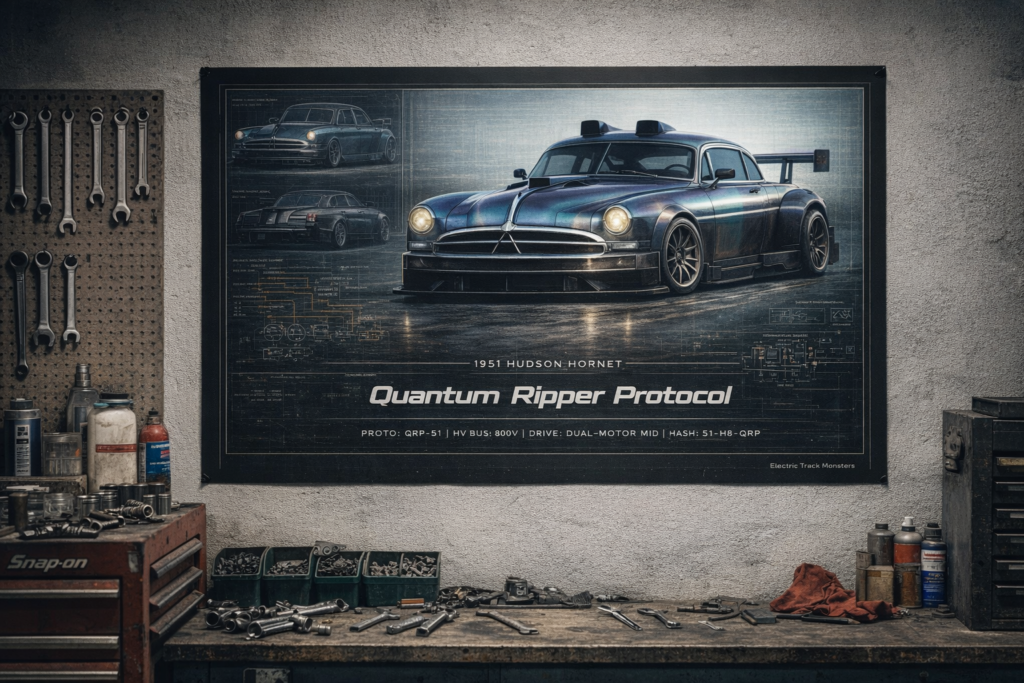
Quantum Ripper Protocol Collector EditionCollector artifact
Quantum Ripper Protocol Collector Edition

A presentation-grade collector artifact created for this release and preserved as part of the Widebody Syndicate archive.

Platform

1951 Hudson Hornet

1951 Hudson Hornet

The 1951 Hudson Hornet stands as a legendary icon of American automotive engineering, famous for its pioneering 'Step-Down' chassis design that lowered the car's center of gravity and delivered remarkable handling for its era. With a robust inline-six or optional V8 engine, the Hornet was a dominant force on the early 1950s stock car racing scene, its aerodynamically sleek full-size body blending classic American style with functional performance. This platform reflects a milestone in automotive culture where innovation met muscle, making it a revered canvas for restoration and custom projects alike.

HudsonHornet1951
View Platform

Aero Package

Large single-element 1700mm carbon fiber rear wing mounted on 750mm tall central pylons
Extensive rear diffuser extending 320mm beneath rear axle with multi-level vertical fins
Hydraulically actuated active aerodynamic flaps integrated into rear diffuser
Under-hood airflow ducts directing hot air to roof-mounted exhaust chimneys

Chassis

Purpose-built for time attack, the Quantum Ripper Protocol excels in high-speed cornering and sustained lap performance. Its aerodynamic innovations, active suspension, and torque vectoring work in concert to maintain stability and grip through technical sections and sweeping curves. The extensive cooling solutions ensure consistent thermal management, enabling the electric drivetrain to perform at peak efficiency throughout extended track sessions.

Wheels & Tires

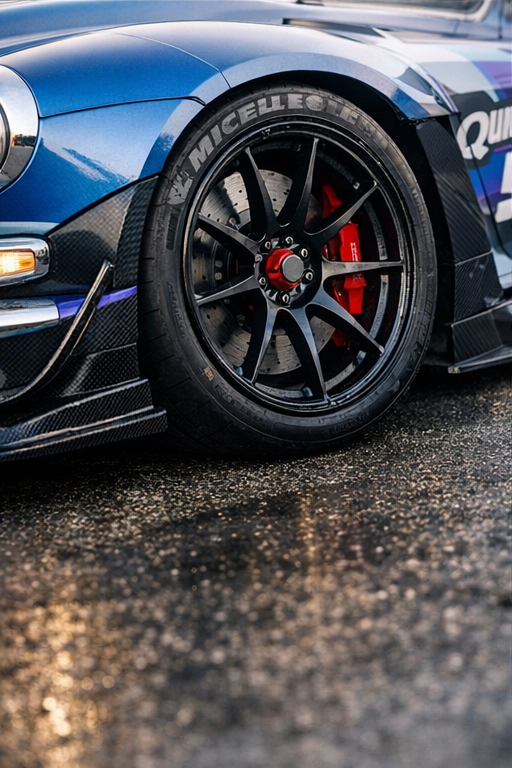
Front: 19x10" Forgeline one-piece forged wheels with 295/30R19 Michelin Pilot Sport Cup 2 tires
Rear: 20x12" Apex wheels with 335/30R20 tires optimized for electric torque delivery
Stiff active suspension with adjustable ride height: 65mm front, 85mm rear
Torque vectoring AWD system to maximize traction and cornering precision

Powertrain

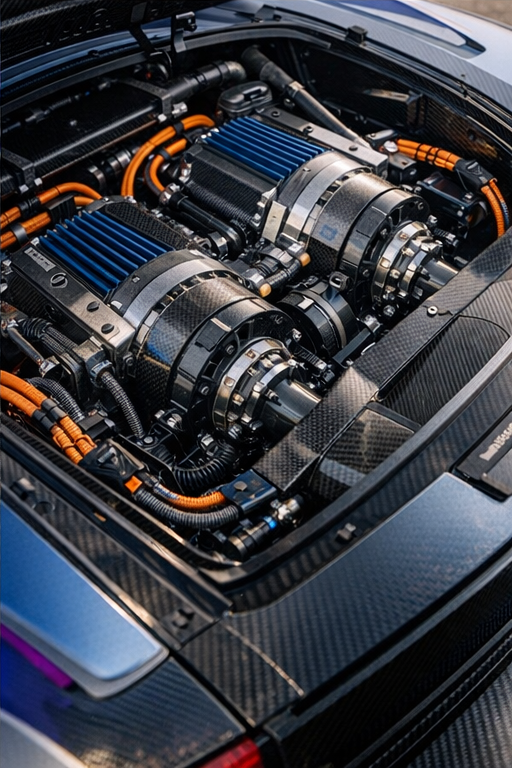
Mid-mounted dual electric motors powering all four wheels with torque vectoring
Integrated battery pack centralized beneath cabin influencing widebody architecture
Advanced thermal management through sidepod battery cooling ducts
Electric drivetrain designed for rapid torque response and sustained track performance

Fabrication Notes

Custom widebody panels featuring carbon fiber with integrated cooling channels
Stepped hood fabricated with multi-plane carbon composite to optimize airflow
Hydraulic systems installed for active diffuser flaps and adaptive suspension tuning
Battery cooling ducts seamlessly fused into sidepod extensions for efficient airflow
×

Design Philosophy

The Quantum Ripper Protocol radically reinterprets the 1951 Hudson Hornet as an electric time attack prototype that merges classic muscle with cutting-edge engineering. Its mid-mounted dual electric motors and integrated battery pack redefine weight distribution and thermal management, while the widebody chassis features meticulously sculpted cooling ducts and airflow channels to maximize cornering grip and powertrain efficiency. This build is a study in transforming a 1950s sedan into a modern track weapon, balancing heritage with advanced electric performance.

Every detail of the bodywork serves a functional purpose, from the stepped hood with vertical cooling chimneys to the ballooned rear arches housing battery cooling ducts. The active aero package, including a towering carbon fiber wing and sophisticated rear diffuser with hydraulic flaps, combines with an adjustable active suspension to deliver razor-sharp handling and stability at speed. The Quantum Ripper Protocol is a deliberate fusion of vintage American muscle ethos and next-generation electric track technology.

Platform+
1951 Hudson Hornet

1951 Hudson Hornet

The 1951 Hudson Hornet stands as a legendary icon of American automotive engineering, famous for its pioneering 'Step-Down' chassis design that lowered the car's center of gravity and delivered remarkable handling for its era. With a robust inline-six or optional V8 engine, the Hornet was a dominant force on the early 1950s stock car racing scene, its aerodynamically sleek full-size body blending classic American style with functional performance. This platform reflects a milestone in automotive culture where innovation met muscle, making it a revered canvas for restoration and custom projects alike.

HudsonHornet1951
View Platform
Aero Package+

Large single-element 1700mm carbon fiber rear wing mounted on 750mm tall central pylons
Extensive rear diffuser extending 320mm beneath rear axle with multi-level vertical fins
Hydraulically actuated active aerodynamic flaps integrated into rear diffuser
Under-hood airflow ducts directing hot air to roof-mounted exhaust chimneys

Chassis+

Purpose-built for time attack, the Quantum Ripper Protocol excels in high-speed cornering and sustained lap performance. Its aerodynamic innovations, active suspension, and torque vectoring work in concert to maintain stability and grip through technical sections and sweeping curves. The extensive cooling solutions ensure consistent thermal management, enabling the electric drivetrain to perform at peak efficiency throughout extended track sessions.

Wheels & Tires+

Front: 19x10" Forgeline one-piece forged wheels with 295/30R19 Michelin Pilot Sport Cup 2 tires
Rear: 20x12" Apex wheels with 335/30R20 tires optimized for electric torque delivery
Stiff active suspension with adjustable ride height: 65mm front, 85mm rear
Torque vectoring AWD system to maximize traction and cornering precision

Powertrain+

Mid-mounted dual electric motors powering all four wheels with torque vectoring
Integrated battery pack centralized beneath cabin influencing widebody architecture
Advanced thermal management through sidepod battery cooling ducts
Electric drivetrain designed for rapid torque response and sustained track performance

Fabrication Notes+

Custom widebody panels featuring carbon fiber with integrated cooling channels
Stepped hood fabricated with multi-plane carbon composite to optimize airflow
Hydraulic systems installed for active diffuser flaps and adaptive suspension tuning
Battery cooling ducts seamlessly fused into sidepod extensions for efficient airflow

×Design Philosophy+

The Quantum Ripper Protocol radically reinterprets the 1951 Hudson Hornet as an electric time attack prototype that merges classic muscle with cutting-edge engineering. Its mid-mounted dual electric motors and integrated battery pack redefine weight distribution and thermal management, while the widebody chassis features meticulously sculpted cooling ducts and airflow channels to maximize cornering grip and powertrain efficiency. This build is a study in transforming a 1950s sedan into a modern track weapon, balancing heritage with advanced electric performance.

Every detail of the bodywork serves a functional purpose, from the stepped hood with vertical cooling chimneys to the ballooned rear arches housing battery cooling ducts. The active aero package, including a towering carbon fiber wing and sophisticated rear diffuser with hydraulic flaps, combines with an adjustable active suspension to deliver razor-sharp handling and stability at speed. The Quantum Ripper Protocol is a deliberate fusion of vintage American muscle ethos and next-generation electric track technology.

Part of
Wave 17

Electric Track Monsters

Alright, buckle up because we just zapped a lightning bolt straight into the heart of muscle and prototype racing history. Here in our lab, we took absolute legends like the Dodge Aries and Ford Fairmont—cars that once ruled the gas hustle—and surgically rewrote their DNA for a brutal all-electric takeover.

Explore Wave 17 → 6 Builds

Keep Exploring

The archive is always growing. New releases, waves, and blueprints added regularly.