R149
Ferrara Restomod Initiative
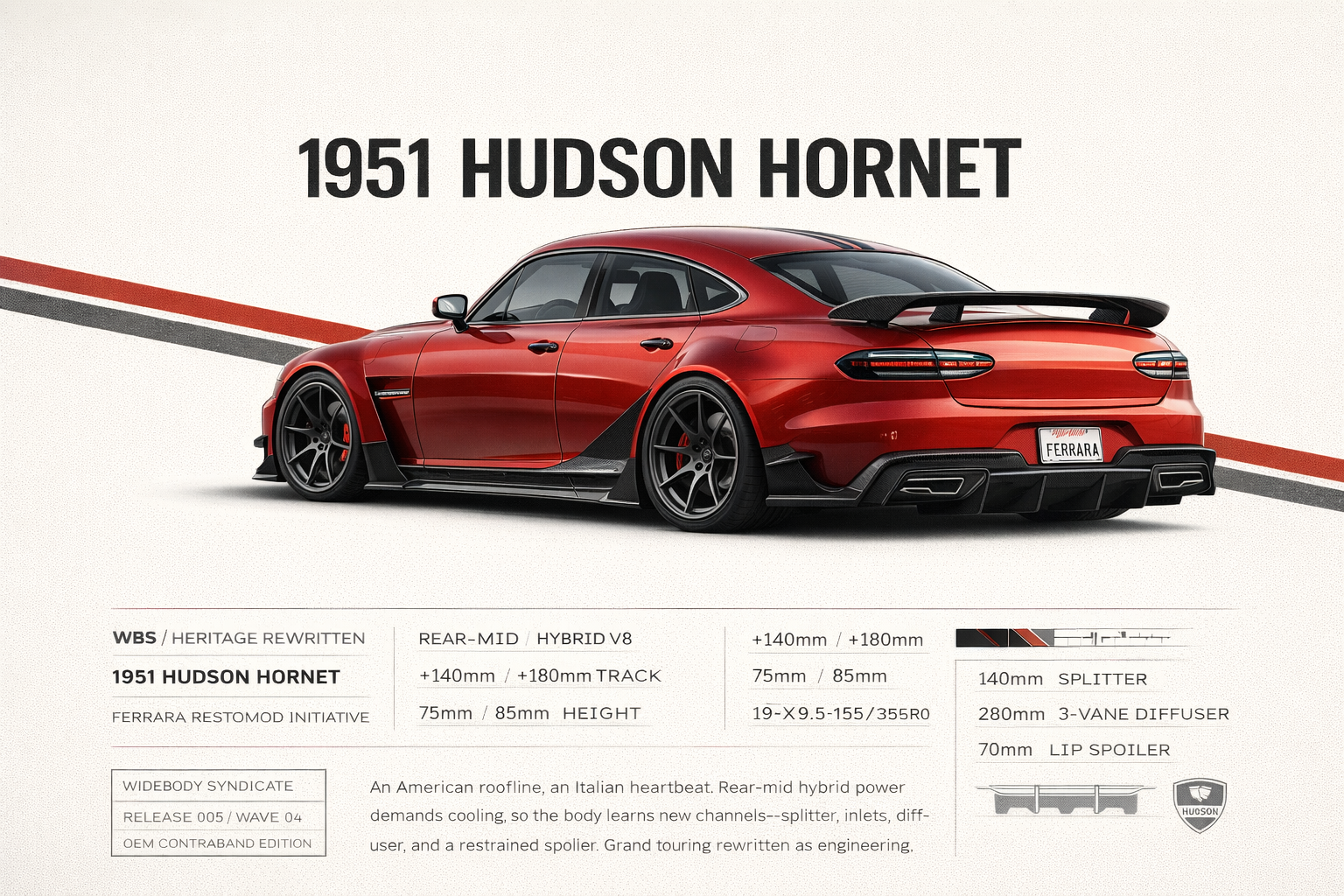
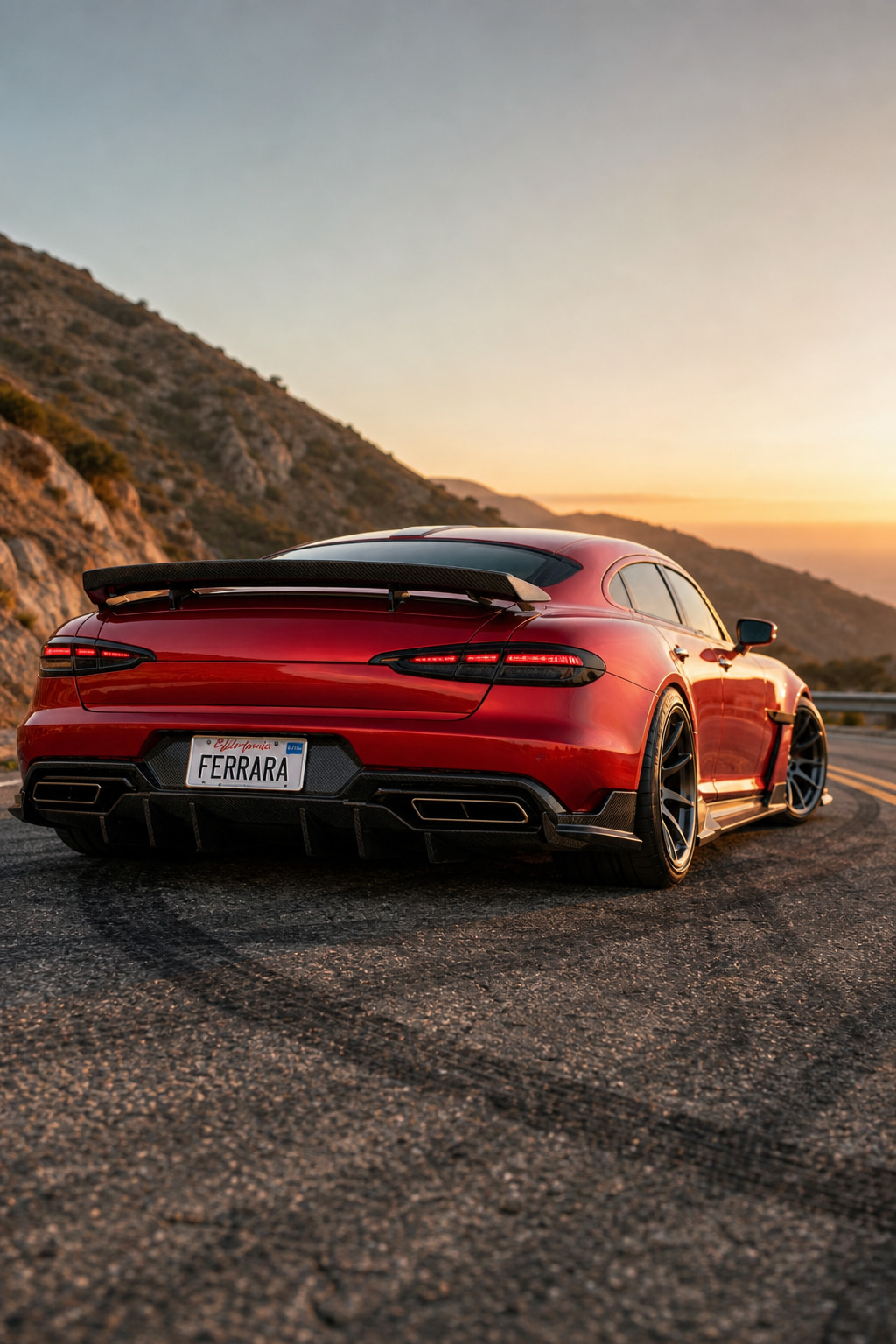
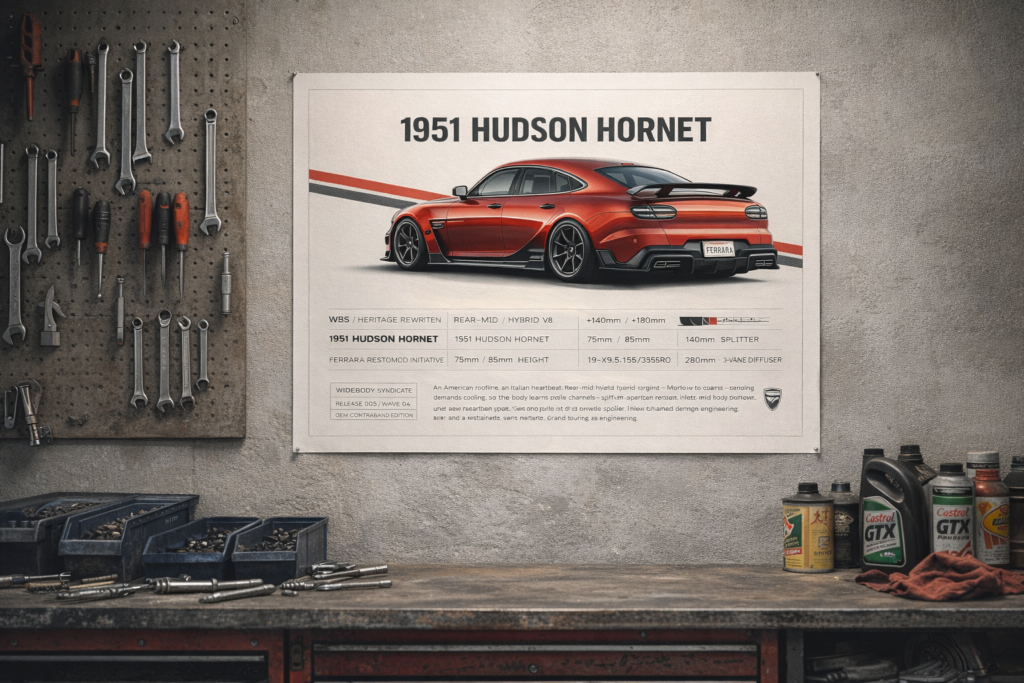
Ferrara Restomod Initiative treats the ’51 Hudson Hornet like a sacred shape: the roofline, glass, and door cuts stay honest while everything below the beltline is re-authored for modern speed. The widebody isn’t a bolt-on statement—fronts stretch 140 mm and rears 180 mm with a smooth, factory-like tension that makes the original step-down stance look even lower and longer.
Under the skin, the concept shifts the mass rearward with a rear‑mid hybrid V8 package and real cooling to match. It’s a grand tourer in the old sense—stable, quiet-fast, and built around airflow discipline—just with modern tire, brake, and aero capacity so the Hudson can live at triple-digit cruise without feeling like a museum piece on borrowed time.
Release Image Studies
Image studies from every angle.
Comparison Shots
Blueprint / Collector Archive
Engineering Artifacts
The technical study and collectible interpretation of one build, preserved together.
A presentation-grade collector artifact created for this release and preserved as part of the Widebody Syndicate archive.
Selected archive goods are available for collectors.
Technical Dossier
Platform
1951 Hudson Hornet
The 1951 Hudson Hornet stands as a legendary icon of American automotive engineering, famous for its pioneering 'Step-Down' chassis design that lowered the car's center of gravity and delivered remarkable handling for its era. With a robust inline-six or optional V8 engine, the Hornet was a dominant force on the early 1950s stock car racing scene, its aerodynamically sleek full-size body blending classic American style with functional performance. This platform reflects a milestone in automotive culture where innovation met muscle, making it a revered canvas for restoration and custom projects alike.
Aero Package
Three-plane front splitter extending ~140 mm with corner dive planes
Twin NACA hood ducts feeding front heat exchangers plus dedicated extraction vent
Extended rear deck with integrated carbon lip spoiler (~70 mm rise)
Stepped rear diffuser ~280 mm deep with triple vertical vanes
Chassis
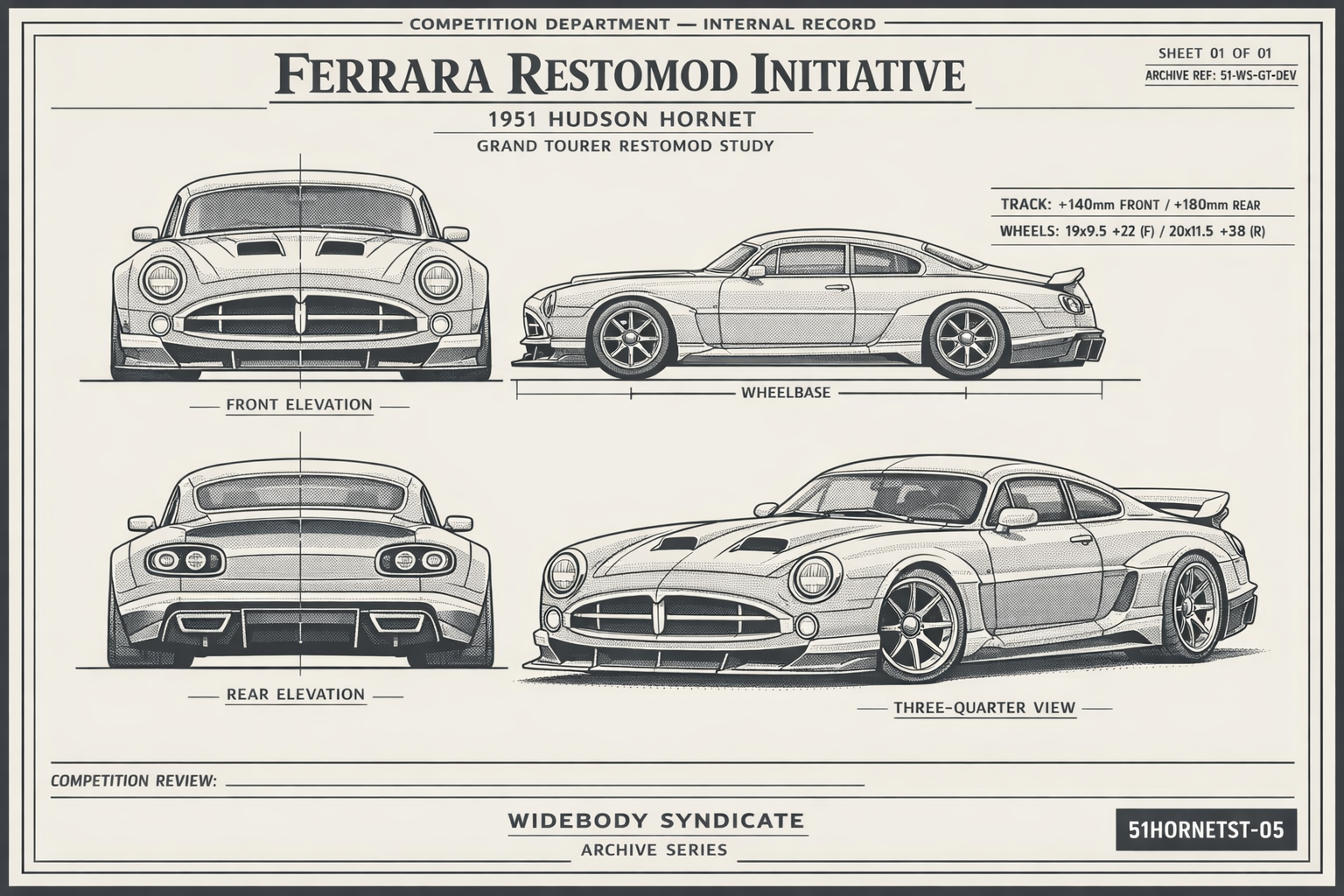
The widened stance is the headline: +140 mm up front and +180 mm out back, paired with corrected geometry for a predictable contact patch under load. Magnetorheological damping keeps the ride from turning brittle, so the car reads like a real grand tourer—calm on imperfect pavement, decisive when the road opens up.
Wheels & Tires
Front: 19x9.5 forged OZ Racing, gloss anthracite, 265/35ZR19 Michelin Pilot Sport Cup 2
Rear: 20x11.5 forged OZ Racing, gloss anthracite, 325/30ZR20 Michelin Pilot Sport Cup 2
Offsets targeted for widebody clearance (+22 front, +38 rear) with ~20 mm fender margin
Alignment baseline: -2.5° front camber, -3.5° rear camber for sustained load support
Powertrain
Rear-mid mounted twin-turbo V8 hybrid layout for mass centralization and traction
High-voltage battery pack integrated low in the chassis with dedicated thermal loop
Sidepod ducting with active exit flaps behind the rear wheels to manage temps and drag
Twin rear exhaust outlets integrated into the diffuser center section
Fabrication Notes
Custom subframe and bulkhead structure to support rear-mid drivetrain while retaining cabin proportions
Front and rear suspension pickup points revised for camber gain and widened track integrity
Carbon aero bonded/fastened with serviceable interfaces for track-side access
Heat shielding and airflow separation around sidepods to protect cabin and battery systems
Design Philosophy
Ferrara Restomod Initiative treats the ’51 Hudson Hornet like a sacred shape: the roofline, glass, and door cuts stay honest while everything below the beltline is re-authored for modern speed. The widebody isn’t a bolt-on statement—fronts stretch 140 mm and rears 180 mm with a smooth, factory-like tension that makes the original step-down stance look even lower and longer.
Under the skin, the concept shifts the mass rearward with a rear‑mid hybrid V8 package and real cooling to match. It’s a grand tourer in the old sense—stable, quiet-fast, and built around airflow discipline—just with modern tire, brake, and aero capacity so the Hudson can live at triple-digit cruise without feeling like a museum piece on borrowed time.
▧Platform+
1951 Hudson Hornet
The 1951 Hudson Hornet stands as a legendary icon of American automotive engineering, famous for its pioneering 'Step-Down' chassis design that lowered the car's center of gravity and delivered remarkable handling for its era. With a robust inline-six or optional V8 engine, the Hornet was a dominant force on the early 1950s stock car racing scene, its aerodynamically sleek full-size body blending classic American style with functional performance. This platform reflects a milestone in automotive culture where innovation met muscle, making it a revered canvas for restoration and custom projects alike.
⌘Aero Package+
Three-plane front splitter extending ~140 mm with corner dive planes
Twin NACA hood ducts feeding front heat exchangers plus dedicated extraction vent
Extended rear deck with integrated carbon lip spoiler (~70 mm rise)
Stepped rear diffuser ~280 mm deep with triple vertical vanes
⟡Chassis+
The widened stance is the headline: +140 mm up front and +180 mm out back, paired with corrected geometry for a predictable contact patch under load. Magnetorheological damping keeps the ride from turning brittle, so the car reads like a real grand tourer—calm on imperfect pavement, decisive when the road opens up.
◎Wheels & Tires+
Front: 19x9.5 forged OZ Racing, gloss anthracite, 265/35ZR19 Michelin Pilot Sport Cup 2
Rear: 20x11.5 forged OZ Racing, gloss anthracite, 325/30ZR20 Michelin Pilot Sport Cup 2
Offsets targeted for widebody clearance (+22 front, +38 rear) with ~20 mm fender margin
Alignment baseline: -2.5° front camber, -3.5° rear camber for sustained load support
▤Powertrain+
Rear-mid mounted twin-turbo V8 hybrid layout for mass centralization and traction
High-voltage battery pack integrated low in the chassis with dedicated thermal loop
Sidepod ducting with active exit flaps behind the rear wheels to manage temps and drag
Twin rear exhaust outlets integrated into the diffuser center section
△Fabrication Notes+
Custom subframe and bulkhead structure to support rear-mid drivetrain while retaining cabin proportions
Front and rear suspension pickup points revised for camber gain and widened track integrity
Carbon aero bonded/fastened with serviceable interfaces for track-side access
Heat shielding and airflow separation around sidepods to protect cabin and battery systems
×Design Philosophy+
Ferrara Restomod Initiative treats the ’51 Hudson Hornet like a sacred shape: the roofline, glass, and door cuts stay honest while everything below the beltline is re-authored for modern speed. The widebody isn’t a bolt-on statement—fronts stretch 140 mm and rears 180 mm with a smooth, factory-like tension that makes the original step-down stance look even lower and longer.
Under the skin, the concept shifts the mass rearward with a rear‑mid hybrid V8 package and real cooling to match. It’s a grand tourer in the old sense—stable, quiet-fast, and built around airflow discipline—just with modern tire, brake, and aero capacity so the Hudson can live at triple-digit cruise without feeling like a museum piece on borrowed time.
Part of
Wave 25
Heritage Rewritten
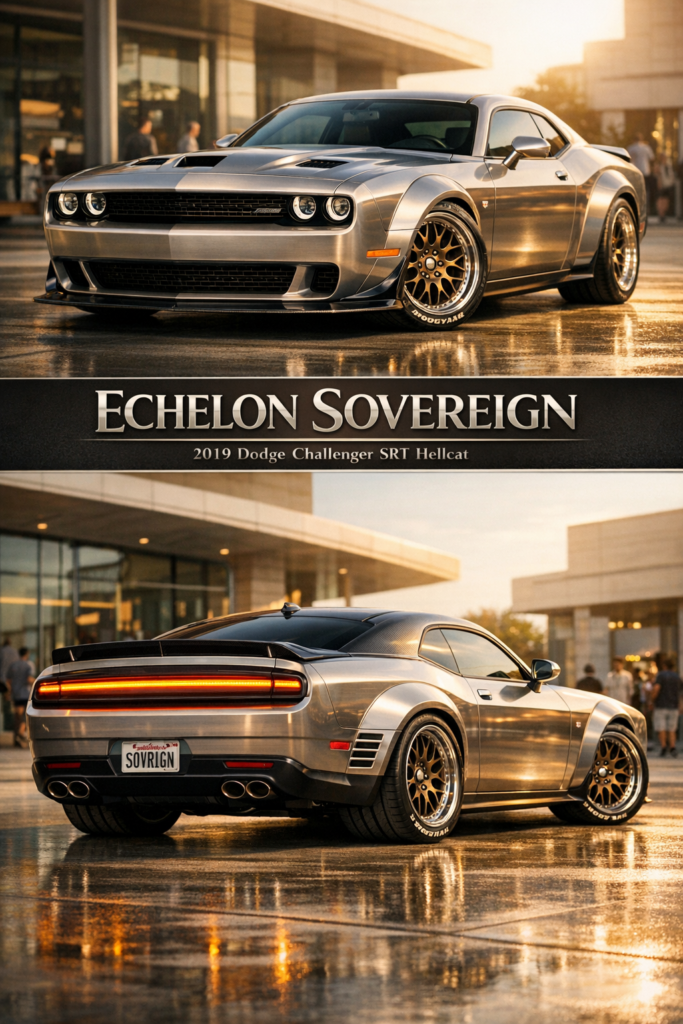
Our builds this round are a renegade parade of American muscle and legendary classics turned into aerodynamic beasts with a serious attitude adjustment. We snatched the souls of icons like the 1940 Ford Super Deluxe, the 2019 Dodge Challenger Hellcat, and the ‘51 Hudson Hornet, then strapped them into improbable but unquestionably real widebody experiments that scream speed, precision, and style.
Explore Wave 25 → 6 BuildsKeep Exploring
The archive is always growing. New releases, waves, and blueprints added regularly.