

Continue this wave

1951 Hudson Hornet
8 photos
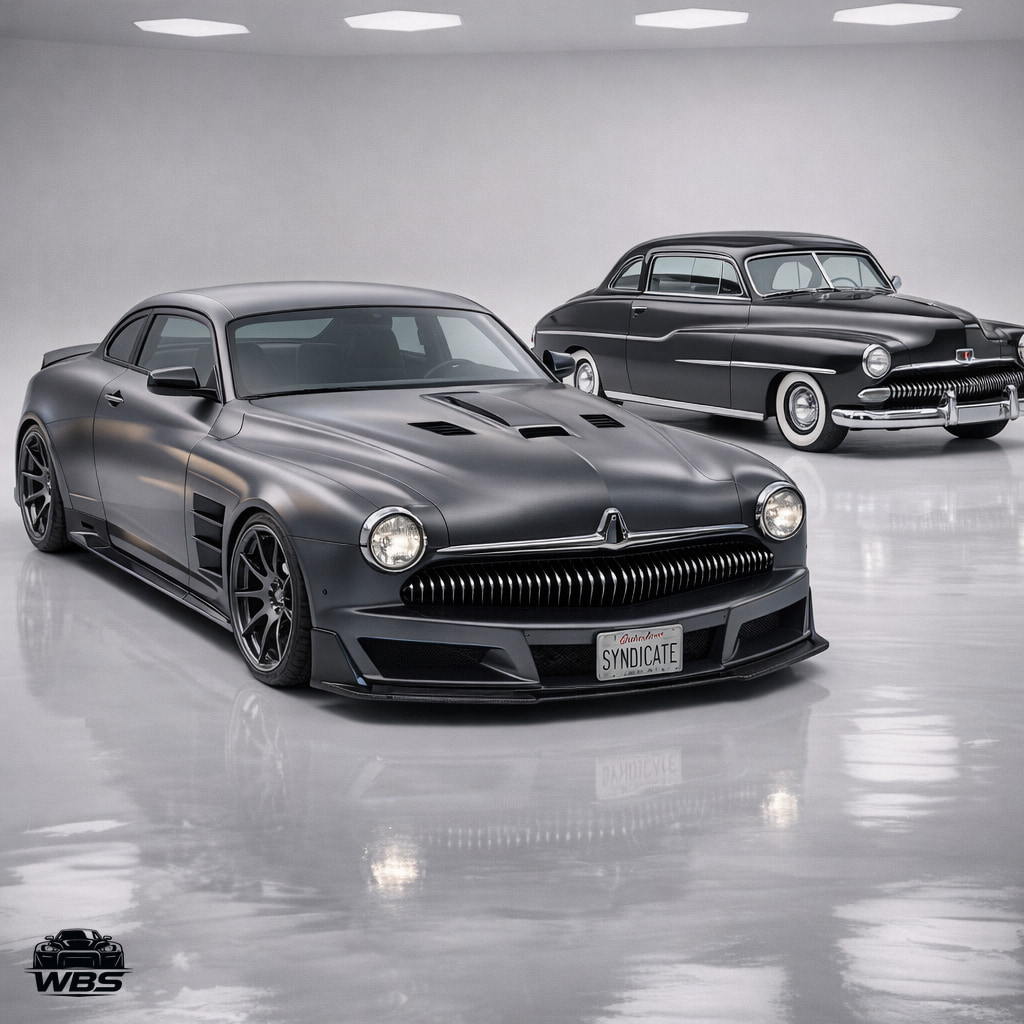
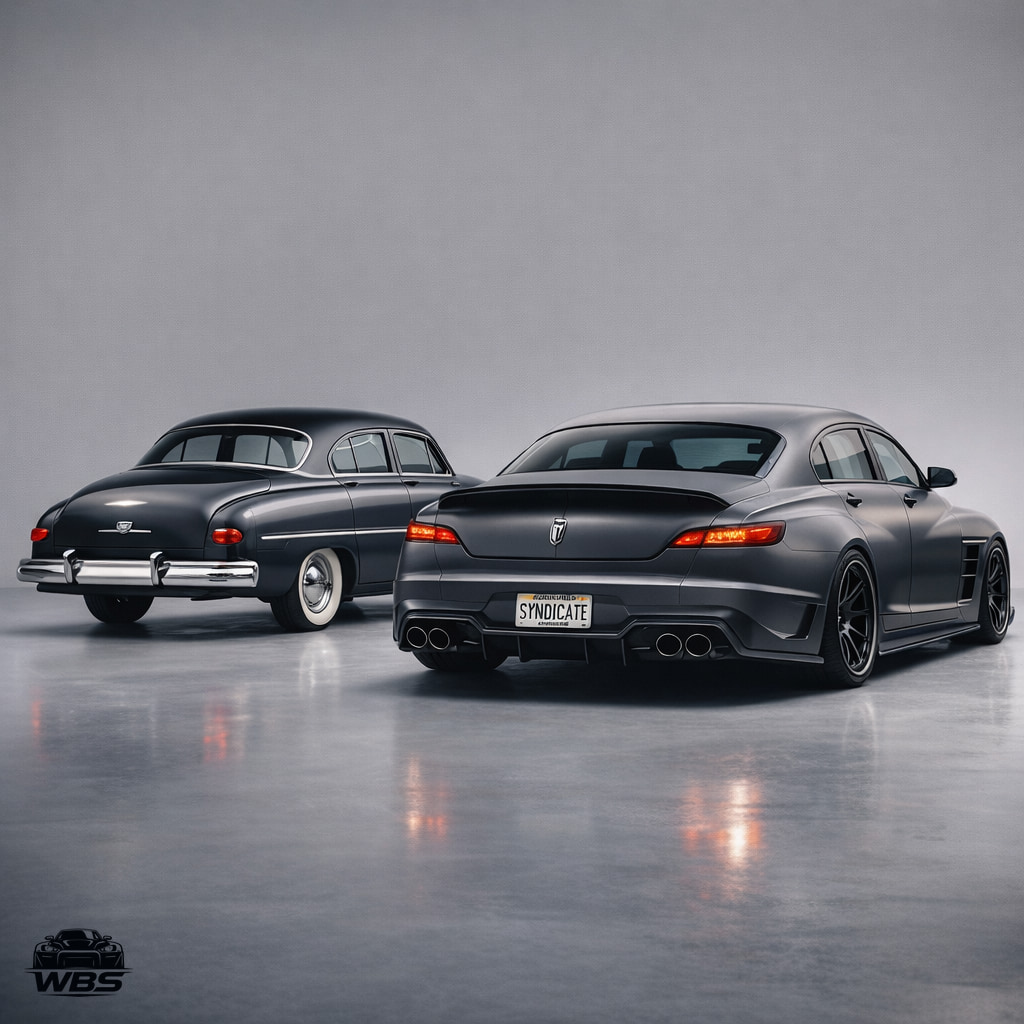
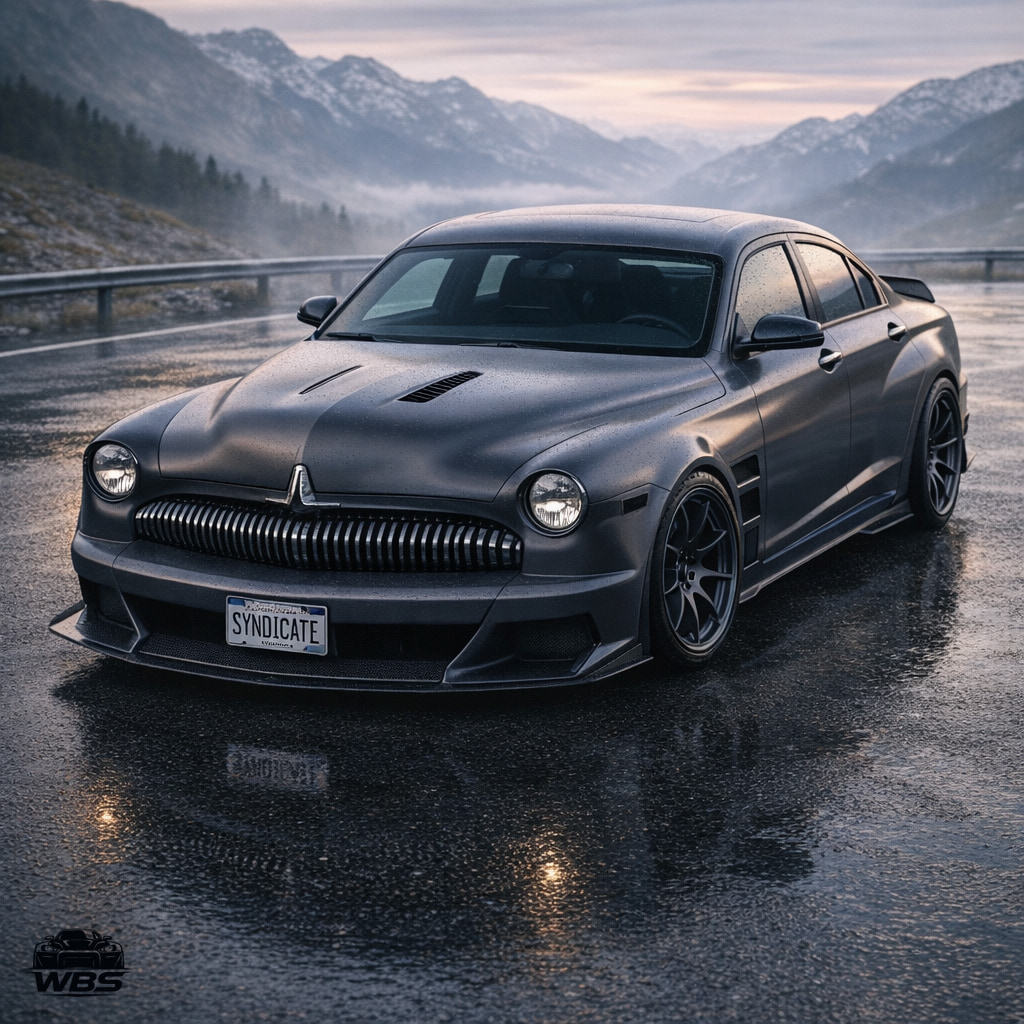
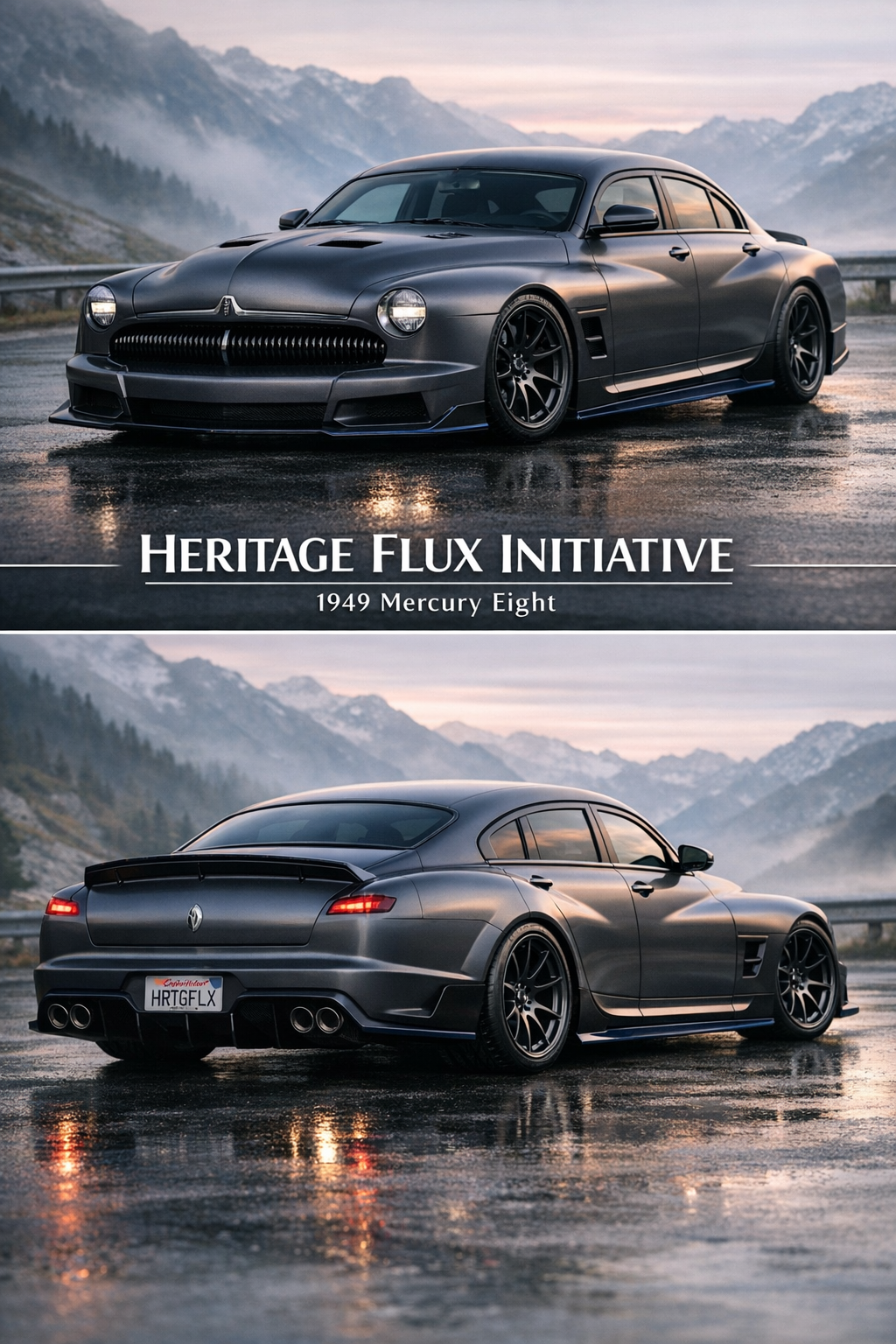
Heritage Flux Initiative treats the ’49 Mercury Eight like a sacred shape—and then engineers around it. The roofline, glass, and pillars stay unmistakably Mercury, but the body is re-skinned into a 2026 grand touring tool: wide track, modern cooling, and aero that looks molded-in rather than bolted-on. The no-chrome rule forces the surfaces to do the talking—satin slate over tight radii, carbon window surrounds, and midnight-blue edge accents that read like functional wear lines.
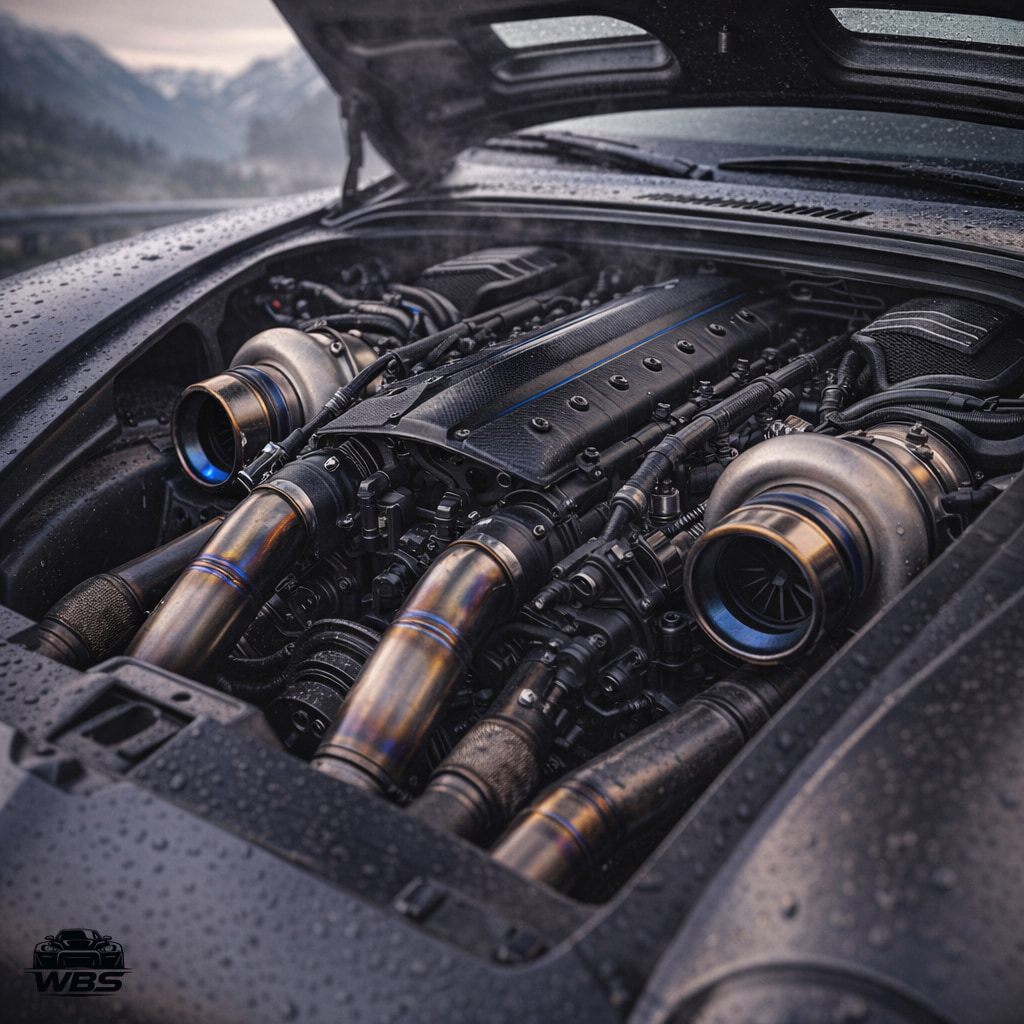
The widebody isn’t a cartoon flare job; it’s packaging. A +160mm front track and deep rear quarters make room for real tire, real brake airflow, and high-speed stability. Under the hood, the flathead is reimagined with modern heads and twin turbos—keeping the heritage block concept while giving it the thermal headroom and control strategy a contemporary GT needs.
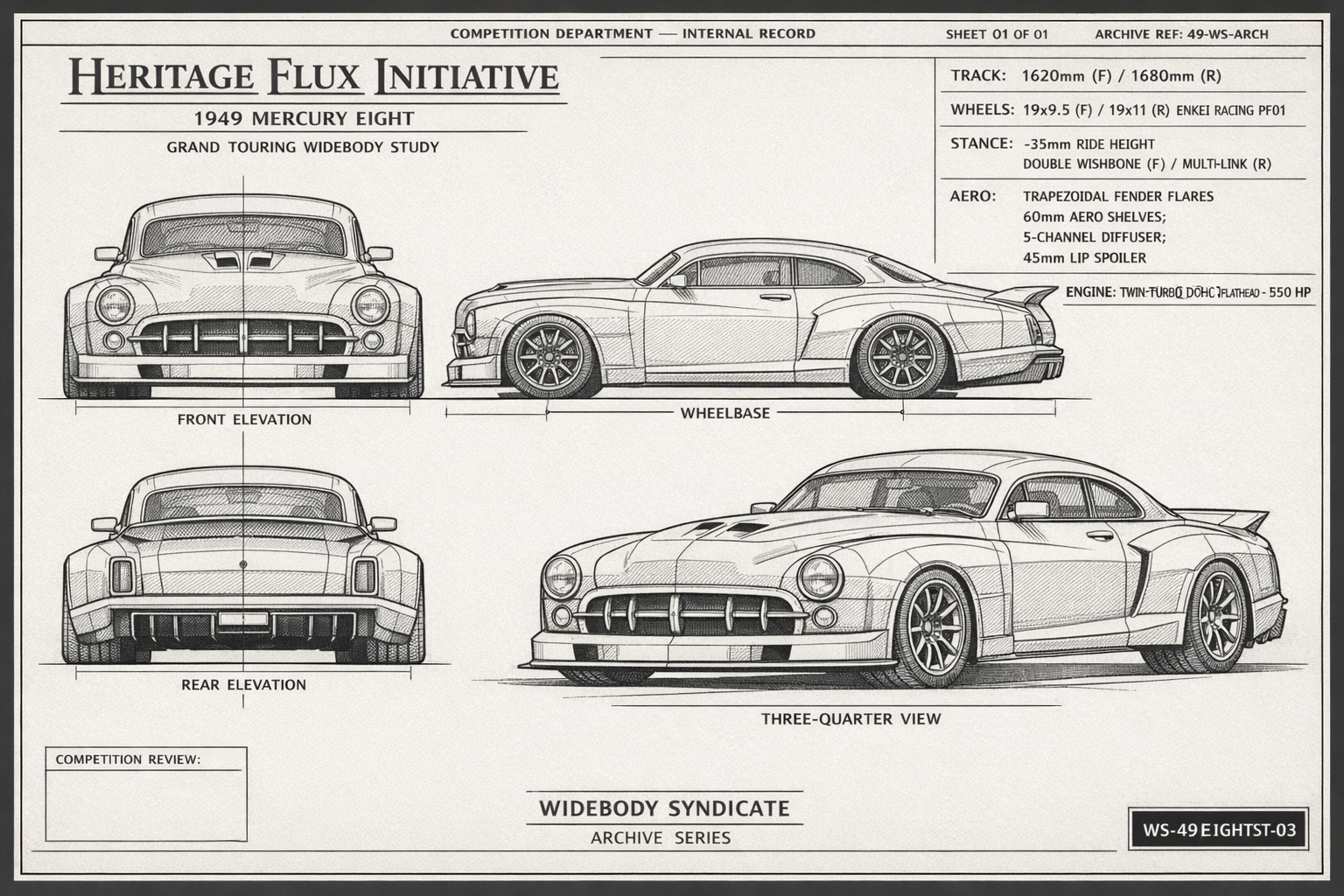 Inspect drawing ↗Open blueprint study →
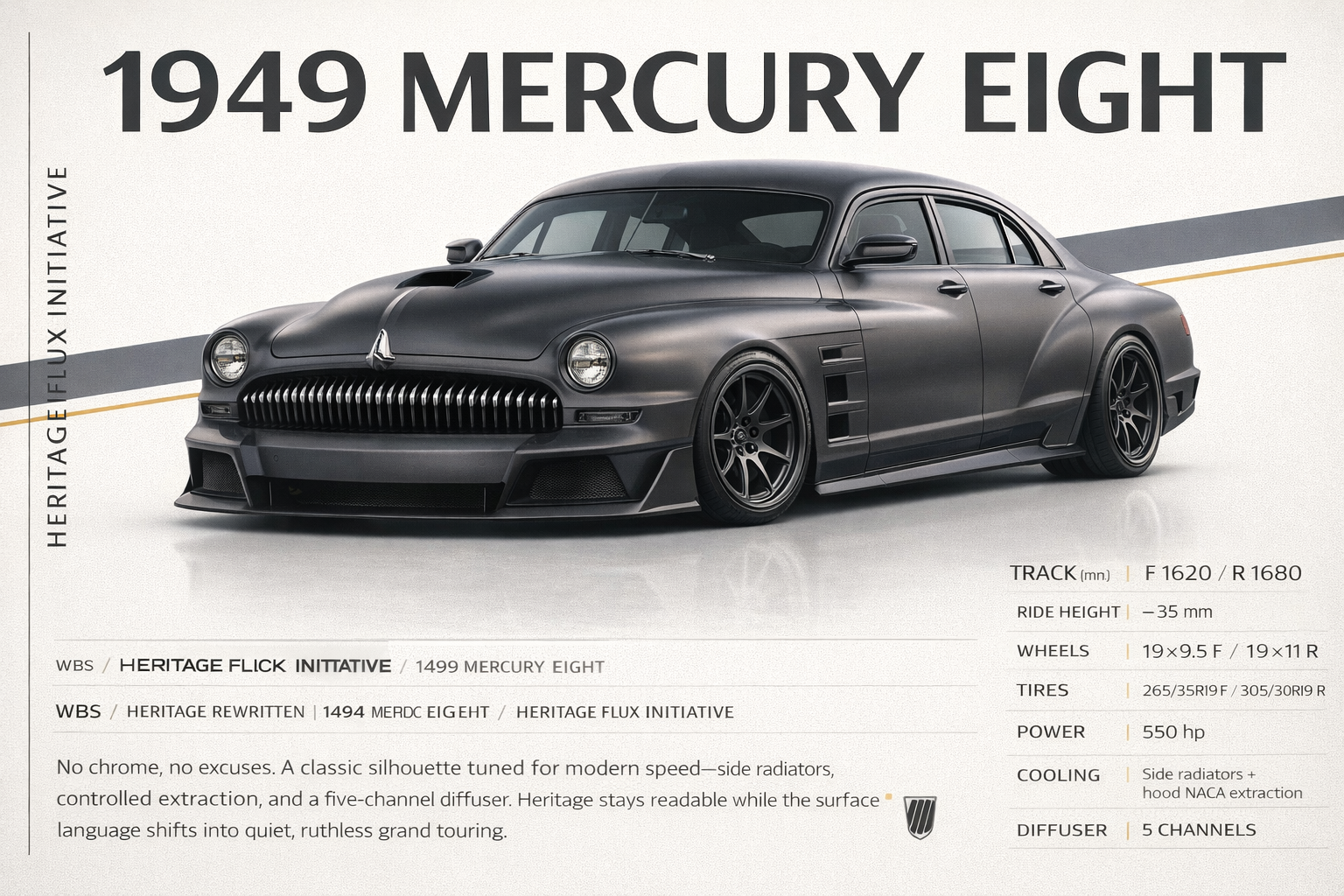 Inspect poster ↗
Fictional engineering concept
1949 Mercury Eight
Original flathead V8 architecture retained with modernized internal build and DOHC aluminum heads
Twin-turbocharging with contemporary boost control targeting ~550 hp for GT pace
Side-mounted high-flow radiators ducted through hood-side recesses for thermal stability
Dedicated oil cooling fed by splitter ducting with controlled heat evacuation through hood NACA ducts
Arch-top aerodynamic shelves acting as vortex management and brake-cooling guidance
Hood side ducting feeding side-mounted radiators; narrow NACA ducts for heat extraction
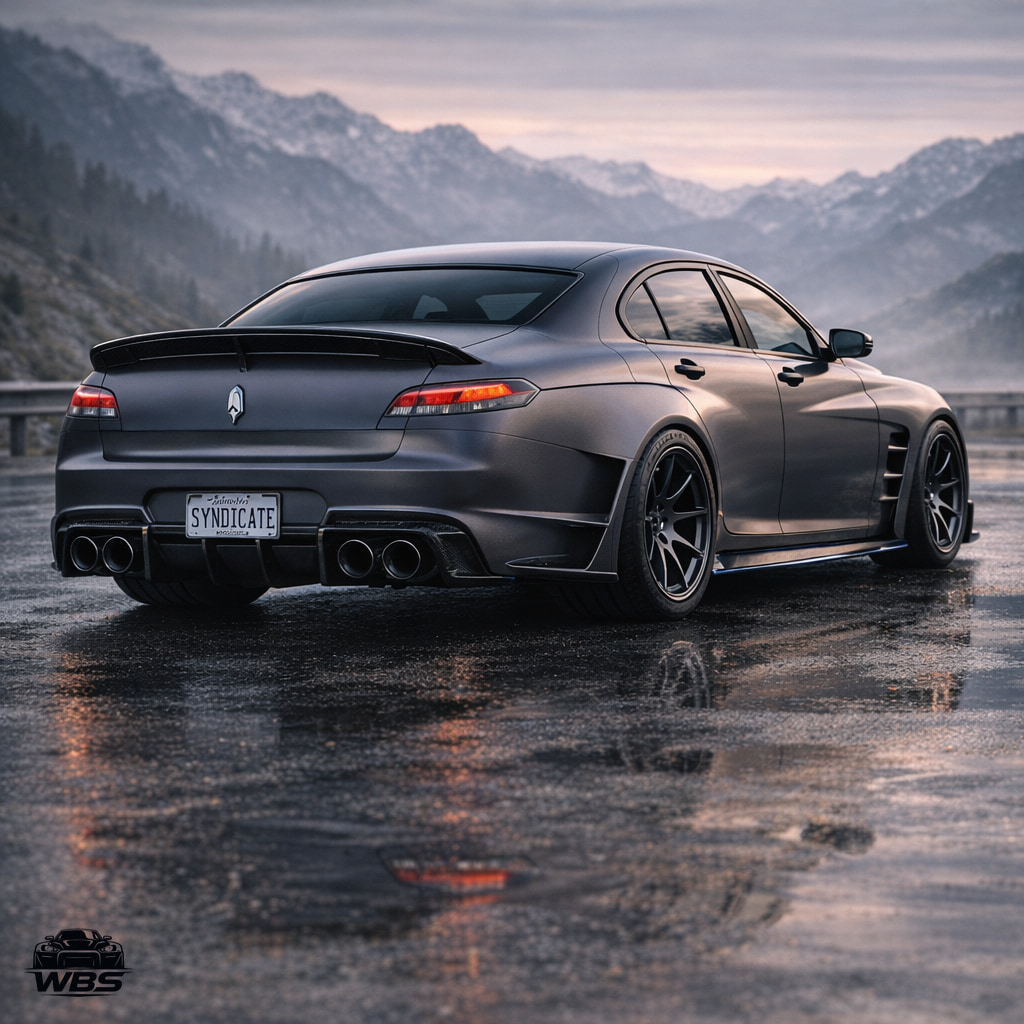
Full-width rear diffuser with five tunnels and stepped ramp for ground-effect efficiency
Subtle deck-lip spoiler integrated into the trunk extension
Vertical rear aero fences to reduce quarter-panel wake turbulence
1949 Mercury Eight
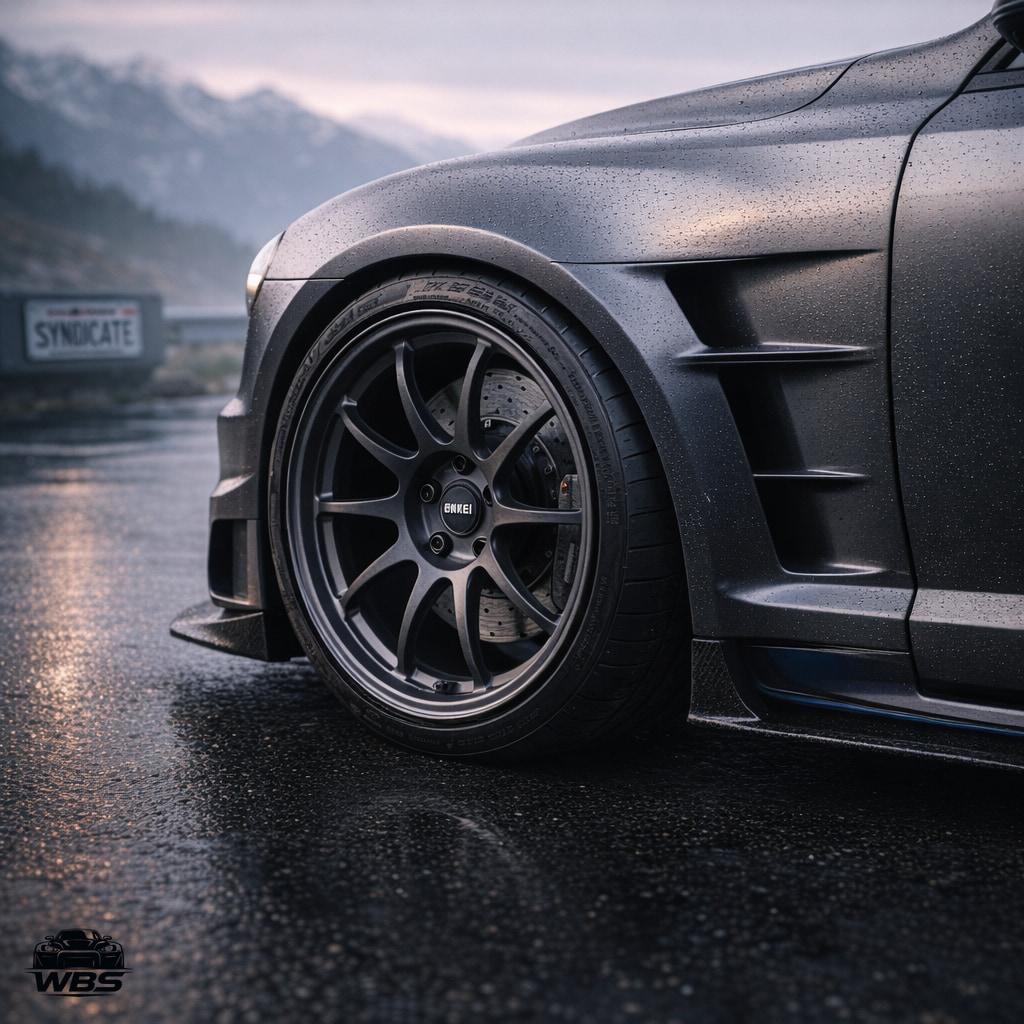
19x9.5 front forged Enkei Racing PF01 in matte anthracite
19x11 rear forged Enkei Racing PF01 in matte anthracite
Continental SportContact 7: 265/35ZR19 front
Continental SportContact 7: 305/30ZR19 rear
Clearance tuned for ~28mm arch-to-tire at full compression with optimized camber/toe
Widebody surfaces blended as continuous panels with rolled lips and controlled radii to avoid add-on flare seams
Front and rear aero features shaped as integrated geometry (shelves, channels, diffuser) to keep factory-works coherence
Underbody and diffuser strakes aligned to suspension pickup points for serviceability and strength
Titanium side-exit exhaust routed beneath rockers to reduce rear overhang mass and manage heat away from diffuser flow
Cooling duct paths sized for pressure recovery and sealed to prevent hot-air recirculation into wheelhouses
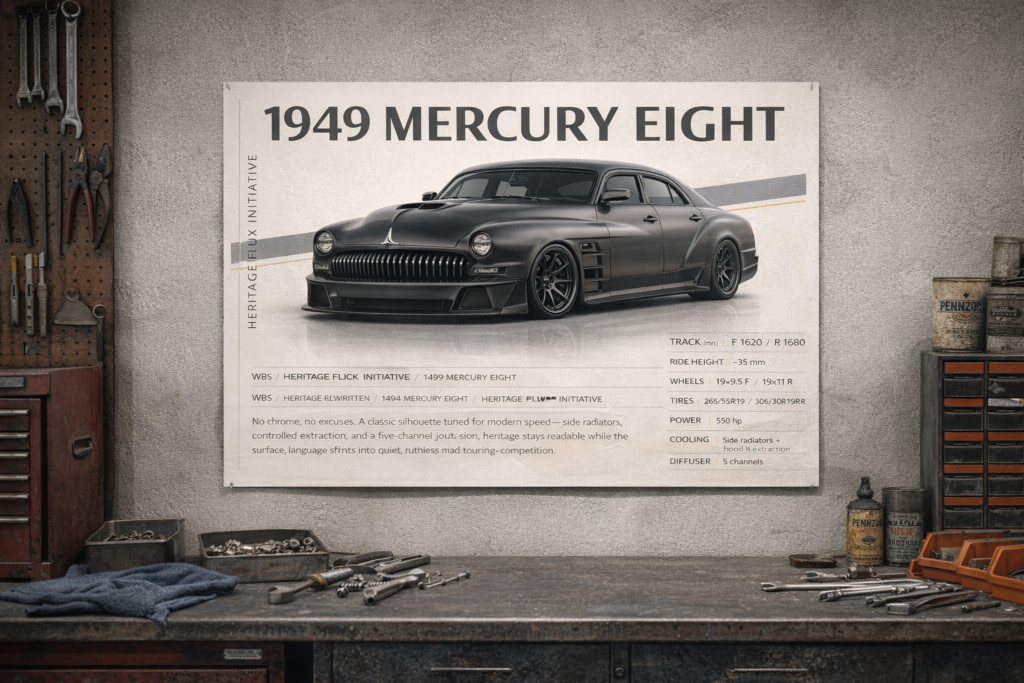
Choose an available edition, then select its size and finish.
Continue this wave
1951 Hudson Hornet
Different origins. Sacred Cars

1970 Chevrolet Chevelle SS 454
 Continue the exhibitionHeritage RewrittenOur builds this round are a renegade parade of American muscle and legendary classics turned into aerodynamic beasts with a serious attitude adjustment.Build 1 of 6↗