


R107
Stealth Cascade Initiative
2001 Nissan Sentra SE
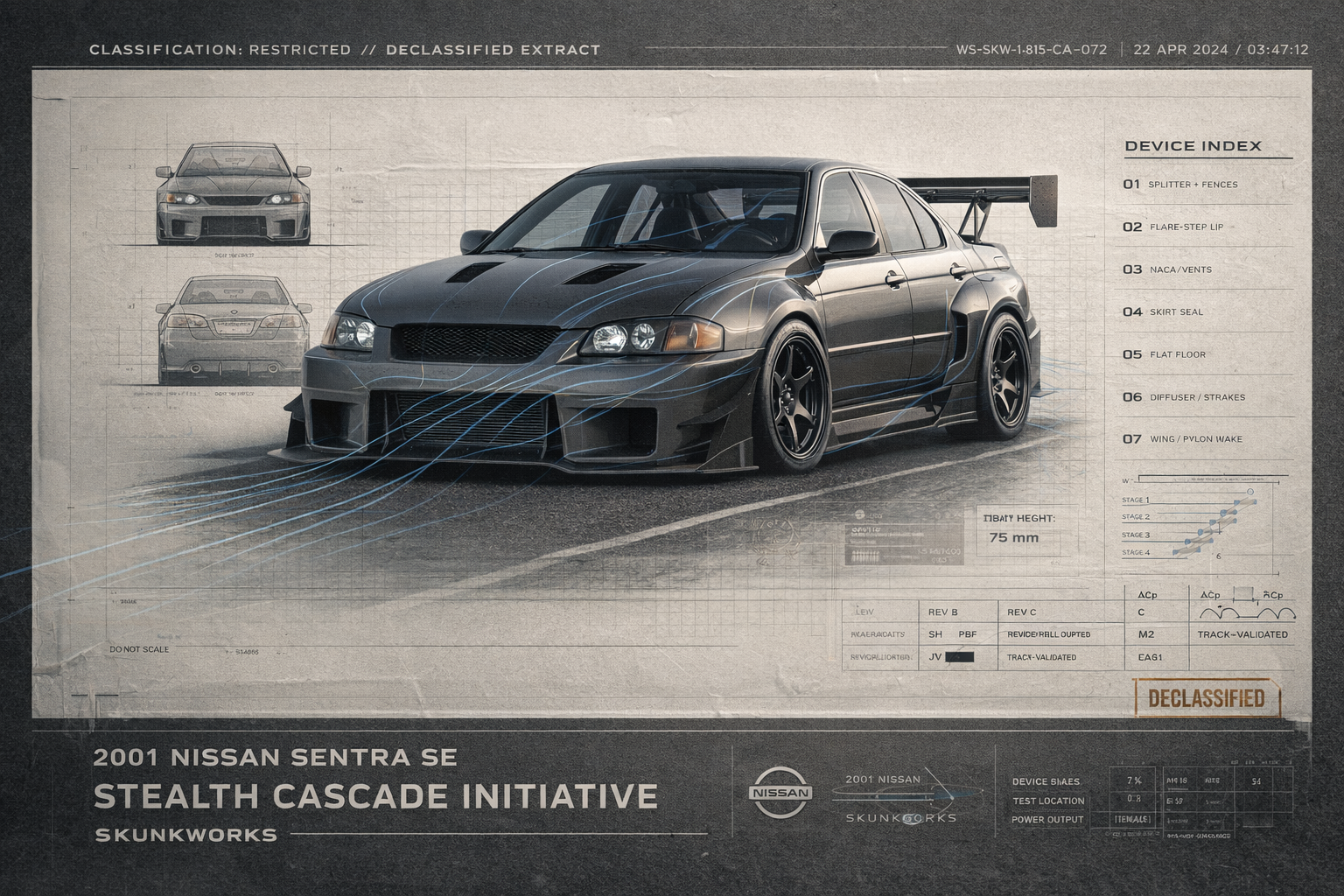
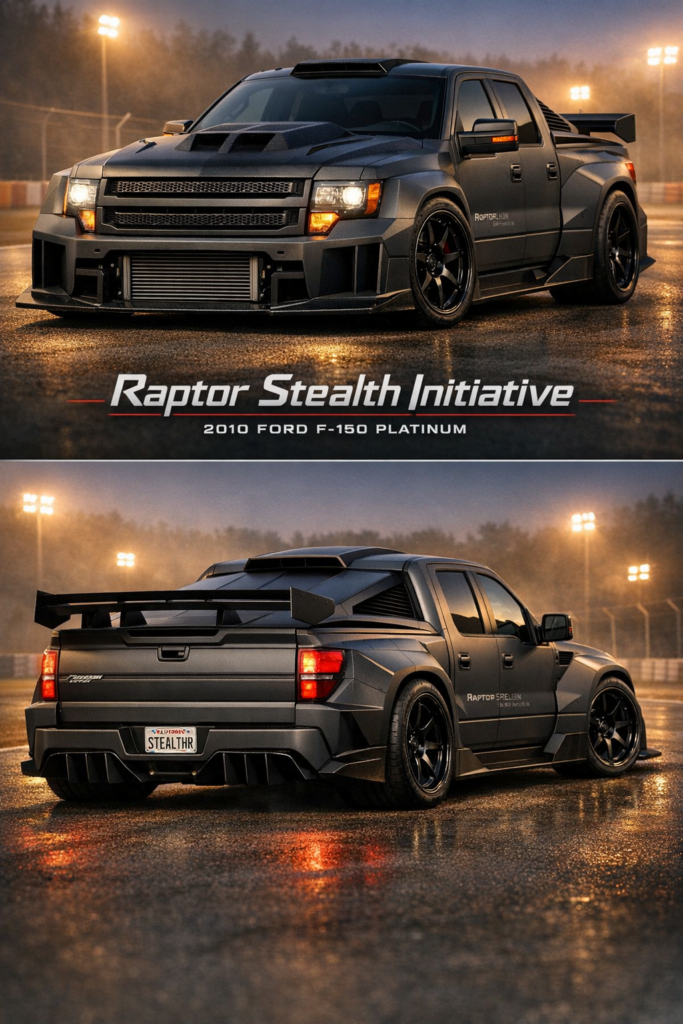
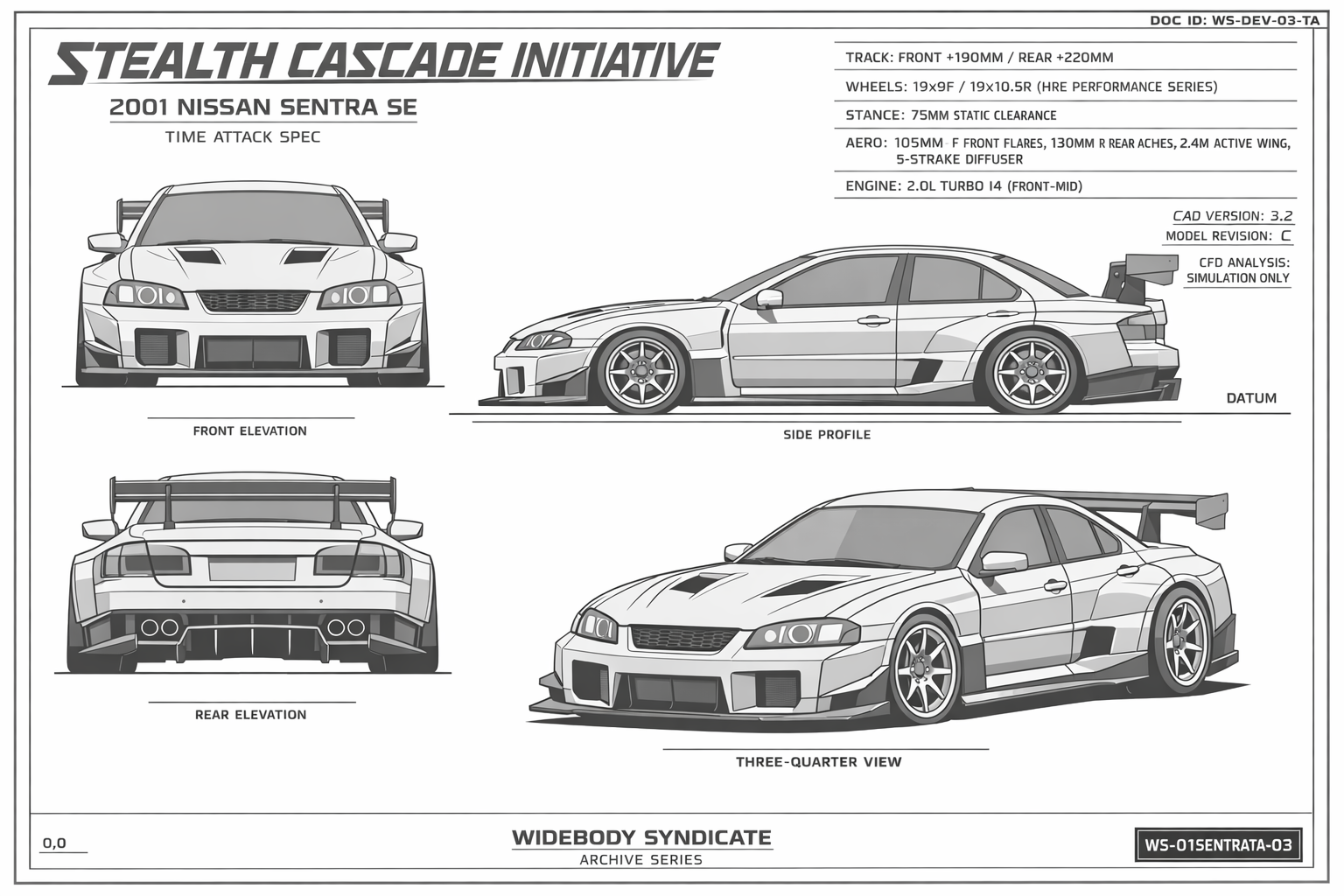
Stealth Cascade Initiative takes the humble 2001 Sentra SE and treats it like a blank wind-tunnel buck: front-mid weight placement, sealed underbody, and a widebody that isn’t just “more tire,” but an airflow management device. The stepped trapezoid flares, sharp lips, and carefully placed vents work like fences and strakes—keeping pressure where you want it, and shedding turbulence where you don’t.
The look is stealth without cosplay: matte dark gray with a cold blue flip, carbon where it matters, and geometry that reads functional from any angle. It’s still unmistakably B15 Sentra in profile—just stretched, lowered to a measured 75mm, and armed with time attack hardware that turns a commuter silhouette into a legitimate mountain-circuit problem.
Release Image Studies
Platform transformation, examined from every angle.
Comparison Shots
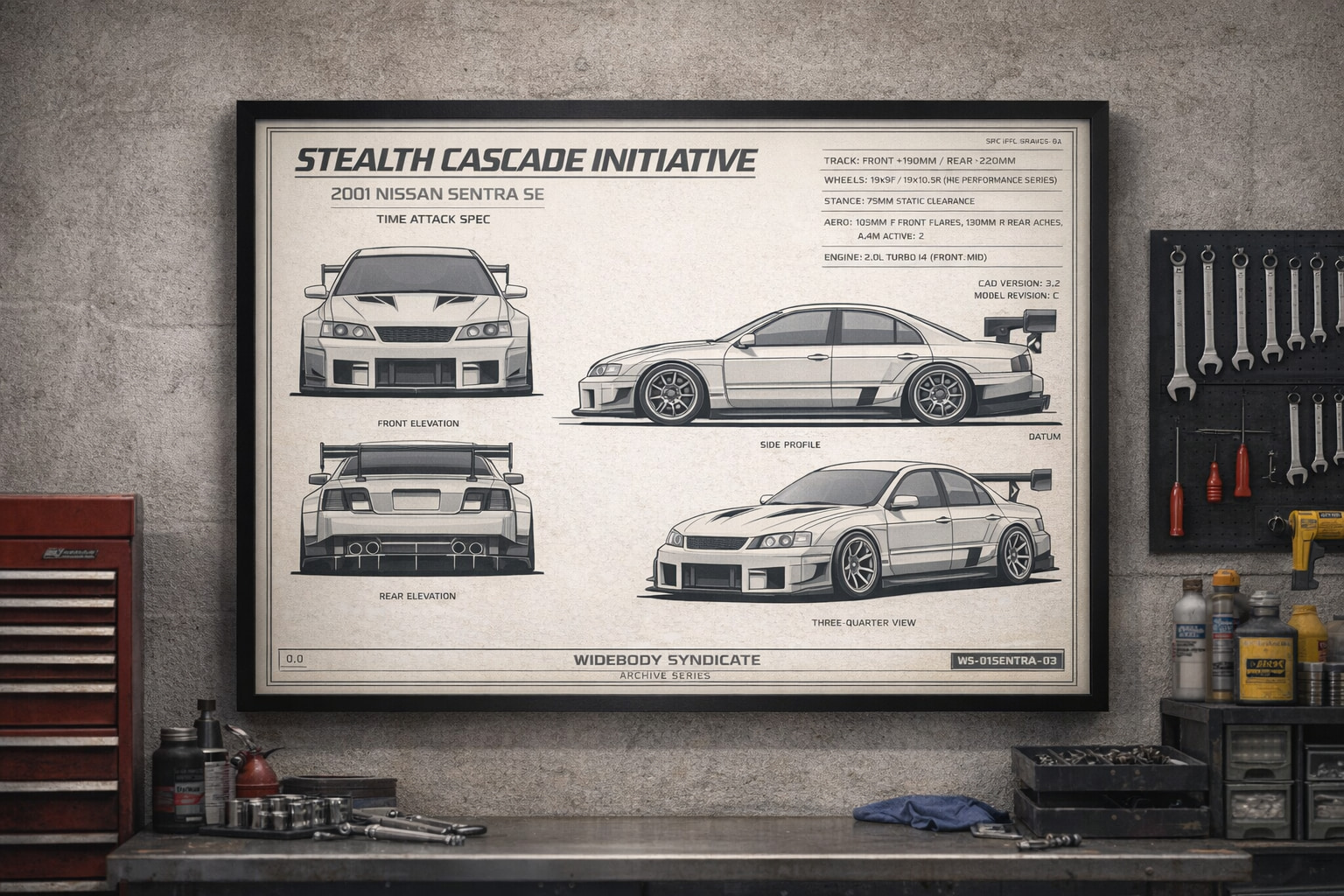
Blueprint / Collector Archive
Engineering record. Exhibition artifact.
The technical study and collectible interpretation of one build, preserved together.
Technical Dossier
Platform
2001 Nissan Sentra SE
The 2001 Nissan Sentra SE captures the practical spirit and reliable engineering of early-2000s Japanese compact sedans. Built on Nissan's B15 platform, the Sentra SE offers a balanced mix of efficiency, nimble handling, and everyday usability. Known for its straightforward design and tried-and-true drivetrain, this platform serves as an ideal base for enthusiasts who appreciate a clean, unpretentious chassis with solid suspension geometry that can handle both street driving and thoughtful modifications without losing its composed character.
Aero Package
Front splitter with integrated fences to stabilize underbody flow
Flat floor and sealed undertray feeding a multi-strake rear diffuser
Wheelhouse venting and rear haunch ducts to evacuate pressure and heat
2.4m dual-element rear wing on tall pylons with adjustable AoA and vortex-managed endplates
Chassis
Shot at sunrise on a sweeping mountain circuit road, the Sentra reads low-drag and high-load at the same time—mist hanging in the background while the aero edges catch warm light. It’s the kind of setting where brake temps, cooling efficiency, and stability through fast compressions matter more than peak dyno numbers.
Wheels & Tires
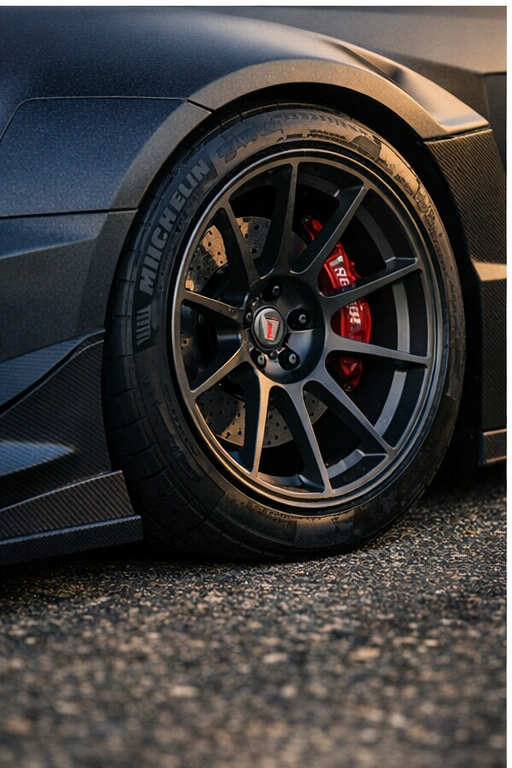
Front: 19x9 forged three-piece (HRE Performance Series), 275/35R19 Michelin Pilot Sport Cup 2
Rear: 19x10.5 forged three-piece (HRE Performance Series), 315/30R19 Michelin Pilot Sport Cup 2
Track-width increase prioritized for scrub radius control and brake cooling clearance
Powertrain
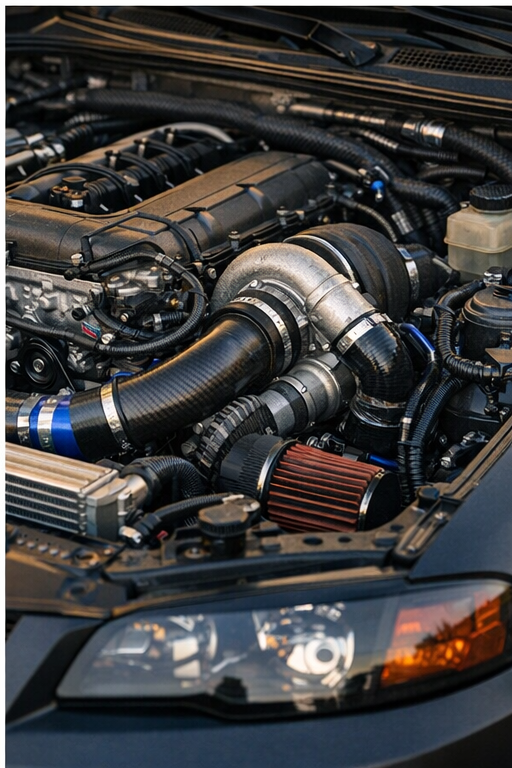
Front-mid mounted turbo 2.0L inline-four for improved polar moment and front axle load control
S-shaped ducted cooling path from hood NACA inlets to controlled exit through vents
Sidepod-assisted radiator layout for consistent temps during long uphill pulls
Side-exit exhaust ahead of rear wheels to shorten plumbing and reduce rear heat soak
Fabrication Notes
Widebody built around tire envelope and suspension travel first; surfaces then shaped for separation control
Hard-mount wing pylons tied into rear structure to handle real downforce loads
Undertray and diffuser designed as one continuous volume to prevent step-change turbulence
Ducting uses smooth-radius transitions and internal vanes to keep flow attached at high speed

Design Philosophy
Stealth Cascade Initiative takes the humble 2001 Sentra SE and treats it like a blank wind-tunnel buck: front-mid weight placement, sealed underbody, and a widebody that isn’t just “more tire,” but an airflow management device. The stepped trapezoid flares, sharp lips, and carefully placed vents work like fences and strakes—keeping pressure where you want it, and shedding turbulence where you don’t.
The look is stealth without cosplay: matte dark gray with a cold blue flip, carbon where it matters, and geometry that reads functional from any angle. It’s still unmistakably B15 Sentra in profile—just stretched, lowered to a measured 75mm, and armed with time attack hardware that turns a commuter silhouette into a legitimate mountain-circuit problem.
▧Platform+
2001 Nissan Sentra SE
The 2001 Nissan Sentra SE captures the practical spirit and reliable engineering of early-2000s Japanese compact sedans. Built on Nissan's B15 platform, the Sentra SE offers a balanced mix of efficiency, nimble handling, and everyday usability. Known for its straightforward design and tried-and-true drivetrain, this platform serves as an ideal base for enthusiasts who appreciate a clean, unpretentious chassis with solid suspension geometry that can handle both street driving and thoughtful modifications without losing its composed character.
⌘Aero Package+
Front splitter with integrated fences to stabilize underbody flow
Flat floor and sealed undertray feeding a multi-strake rear diffuser
Wheelhouse venting and rear haunch ducts to evacuate pressure and heat
2.4m dual-element rear wing on tall pylons with adjustable AoA and vortex-managed endplates
⟡Chassis+
Shot at sunrise on a sweeping mountain circuit road, the Sentra reads low-drag and high-load at the same time—mist hanging in the background while the aero edges catch warm light. It’s the kind of setting where brake temps, cooling efficiency, and stability through fast compressions matter more than peak dyno numbers.
◎Wheels & Tires+
Front: 19x9 forged three-piece (HRE Performance Series), 275/35R19 Michelin Pilot Sport Cup 2
Rear: 19x10.5 forged three-piece (HRE Performance Series), 315/30R19 Michelin Pilot Sport Cup 2
Track-width increase prioritized for scrub radius control and brake cooling clearance
▤Powertrain+
Front-mid mounted turbo 2.0L inline-four for improved polar moment and front axle load control
S-shaped ducted cooling path from hood NACA inlets to controlled exit through vents
Sidepod-assisted radiator layout for consistent temps during long uphill pulls
Side-exit exhaust ahead of rear wheels to shorten plumbing and reduce rear heat soak
△Fabrication Notes+
Widebody built around tire envelope and suspension travel first; surfaces then shaped for separation control
Hard-mount wing pylons tied into rear structure to handle real downforce loads
Undertray and diffuser designed as one continuous volume to prevent step-change turbulence
Ducting uses smooth-radius transitions and internal vanes to keep flow attached at high speed
×Design Philosophy+
Stealth Cascade Initiative takes the humble 2001 Sentra SE and treats it like a blank wind-tunnel buck: front-mid weight placement, sealed underbody, and a widebody that isn’t just “more tire,” but an airflow management device. The stepped trapezoid flares, sharp lips, and carefully placed vents work like fences and strakes—keeping pressure where you want it, and shedding turbulence where you don’t.
The look is stealth without cosplay: matte dark gray with a cold blue flip, carbon where it matters, and geometry that reads functional from any angle. It’s still unmistakably B15 Sentra in profile—just stretched, lowered to a measured 75mm, and armed with time attack hardware that turns a commuter silhouette into a legitimate mountain-circuit problem.
Part of
Wave 18
Skunkworks
We just jammed a fighter jet’s DNA into everything that even remotely resembles a pickup or SUV. Our builds aren’t just widebodies—they’re aerodynamic missiles masquerading as street-legal speed demons.
Explore Wave 18 → 5 BuildsKeep Exploring
The archive is always growing. New releases, waves, and blueprints added regularly.