
WS Widebody Syndicate
Skyfire Vector Program

R105

Skyfire Vector Program

2004 Chevrolet Cavalier LS Sport Sedan

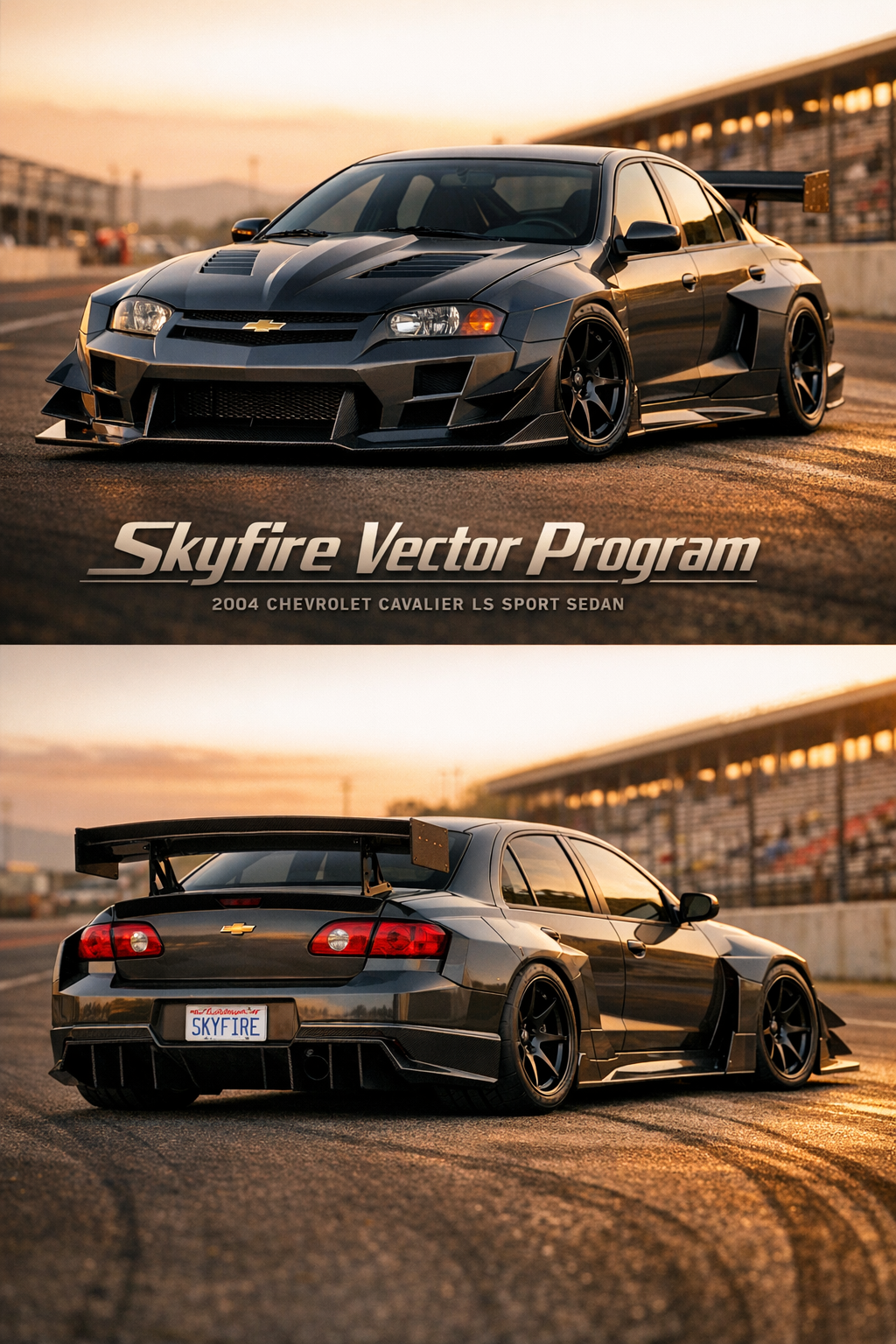
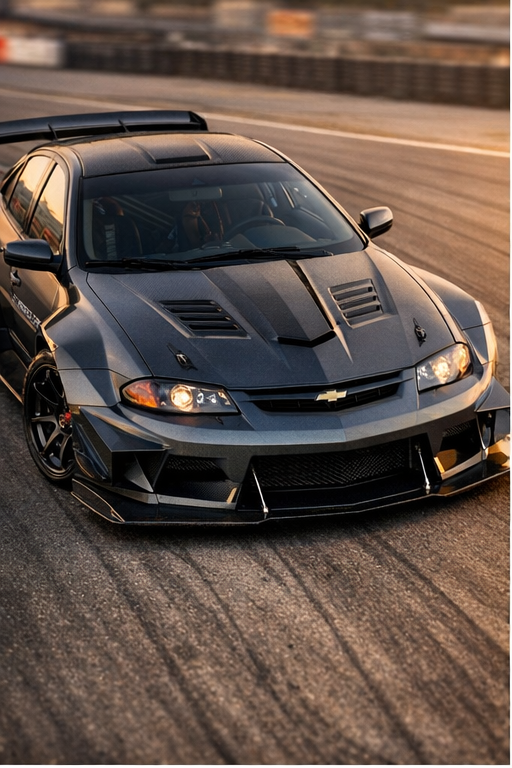
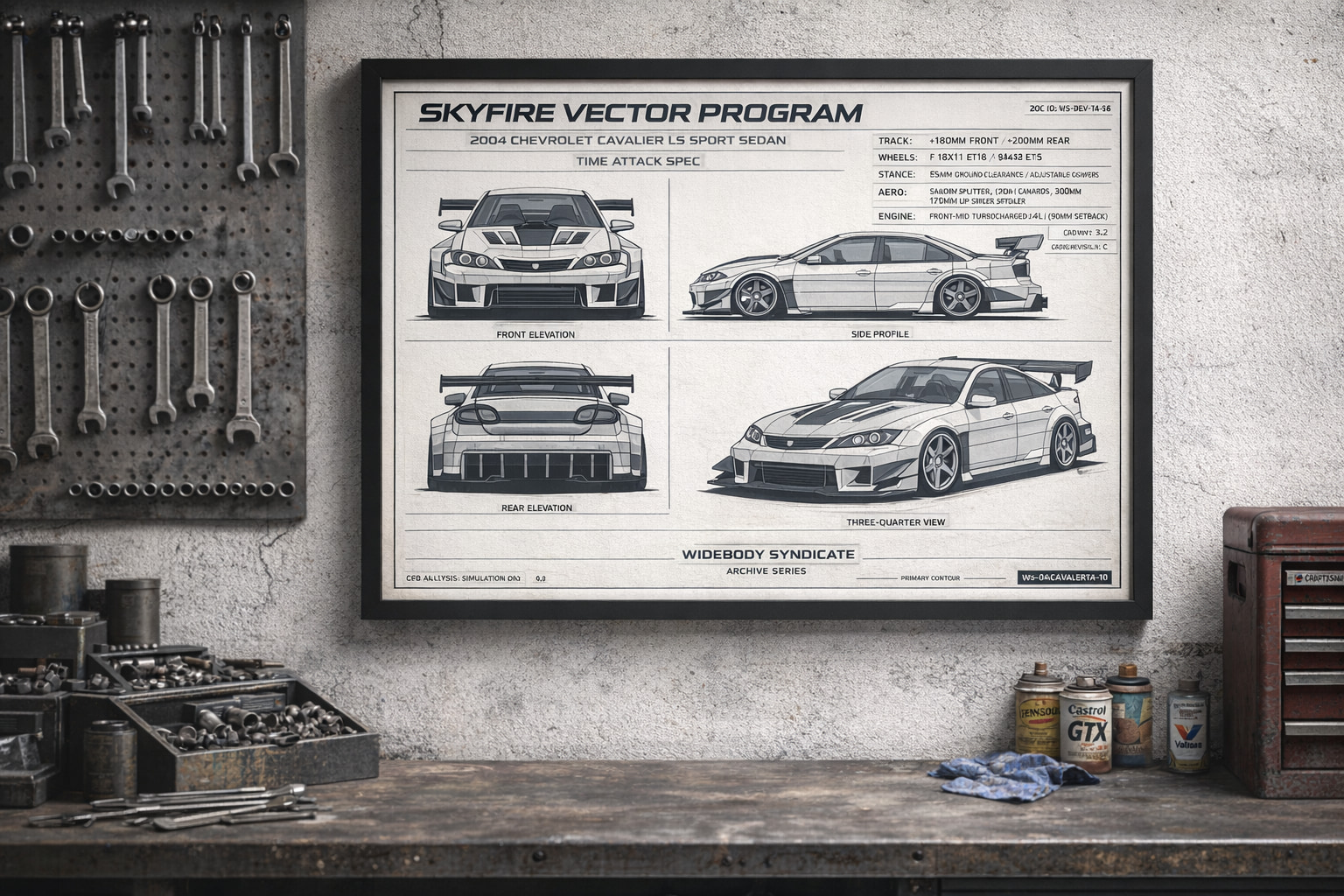
Skyfire Vector Program takes the most anonymous J-body spec sheet and treats it like an Unlimited-class problem: widen it until the tires fit, then build aero that actually works at speed. The Cavalier’s sedan roofline stays recognizable, but everything below the beltline gets re-authored into sharp, panel-like surfaces—big brake ducts, real heat extraction, and a splitter/canard layout aimed at front-end authority instead of parking-lot drama.

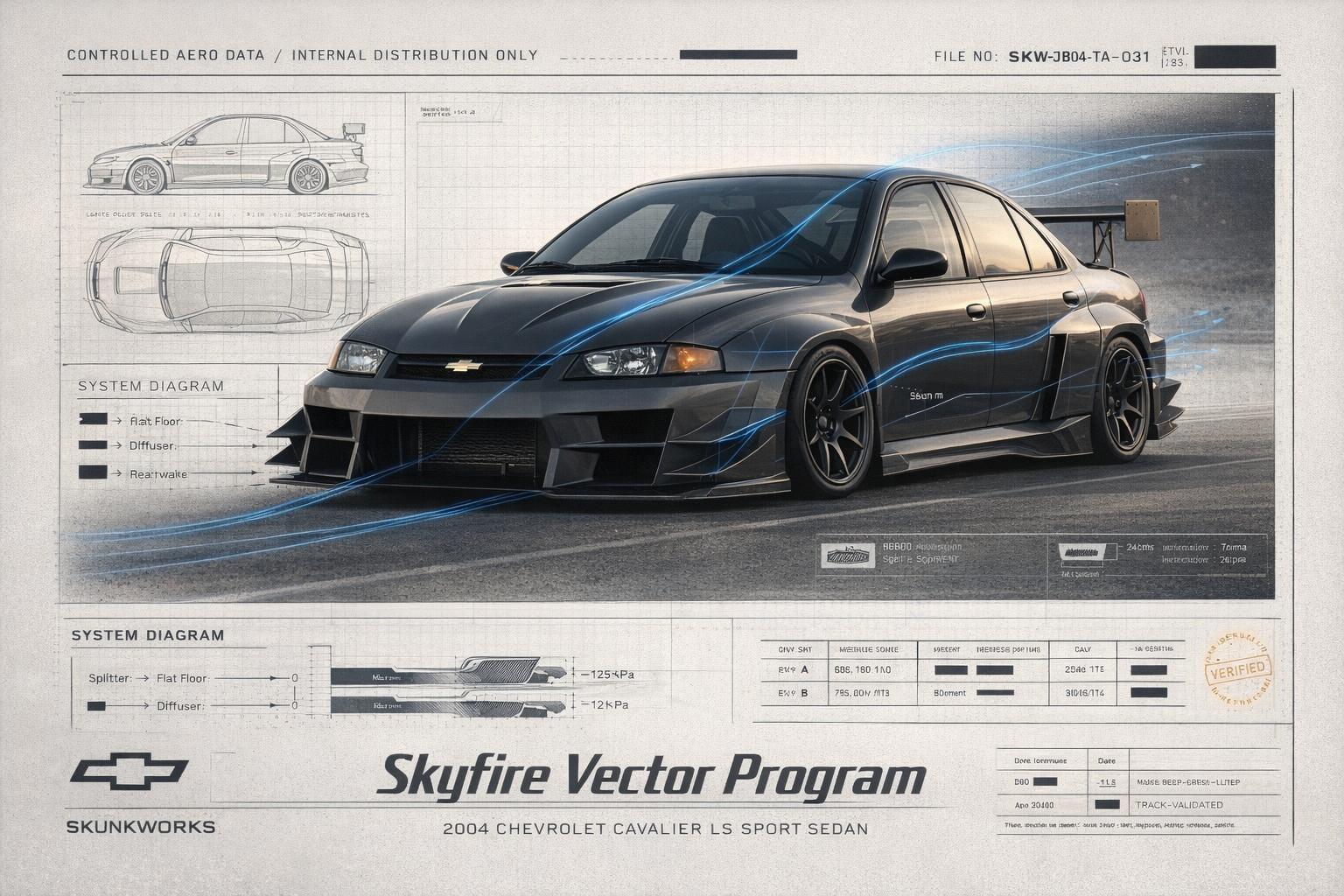
Under the skin, the concept leans on believable Time Attack priorities: track width, cooling capacity, and packaging that survives repeated hot laps. A front-mid 2.4L turbo layout shifts mass rearward, the sidepod intercoolers shorten charge piping, and the underbody is treated as a system—splitter to flat floor to deep diffuser—so the car isn’t just loud in photos, it’s stable when the data logger says 140 mph.
Share

Platform transformation, examined from every angle.

6 curated frames · swipe / tap to inspect

Comparison Shots

Engineering record. Exhibition artifact.

The technical study and collectible interpretation of one build, preserved together.

01
Technical DrawingBlueprint archive
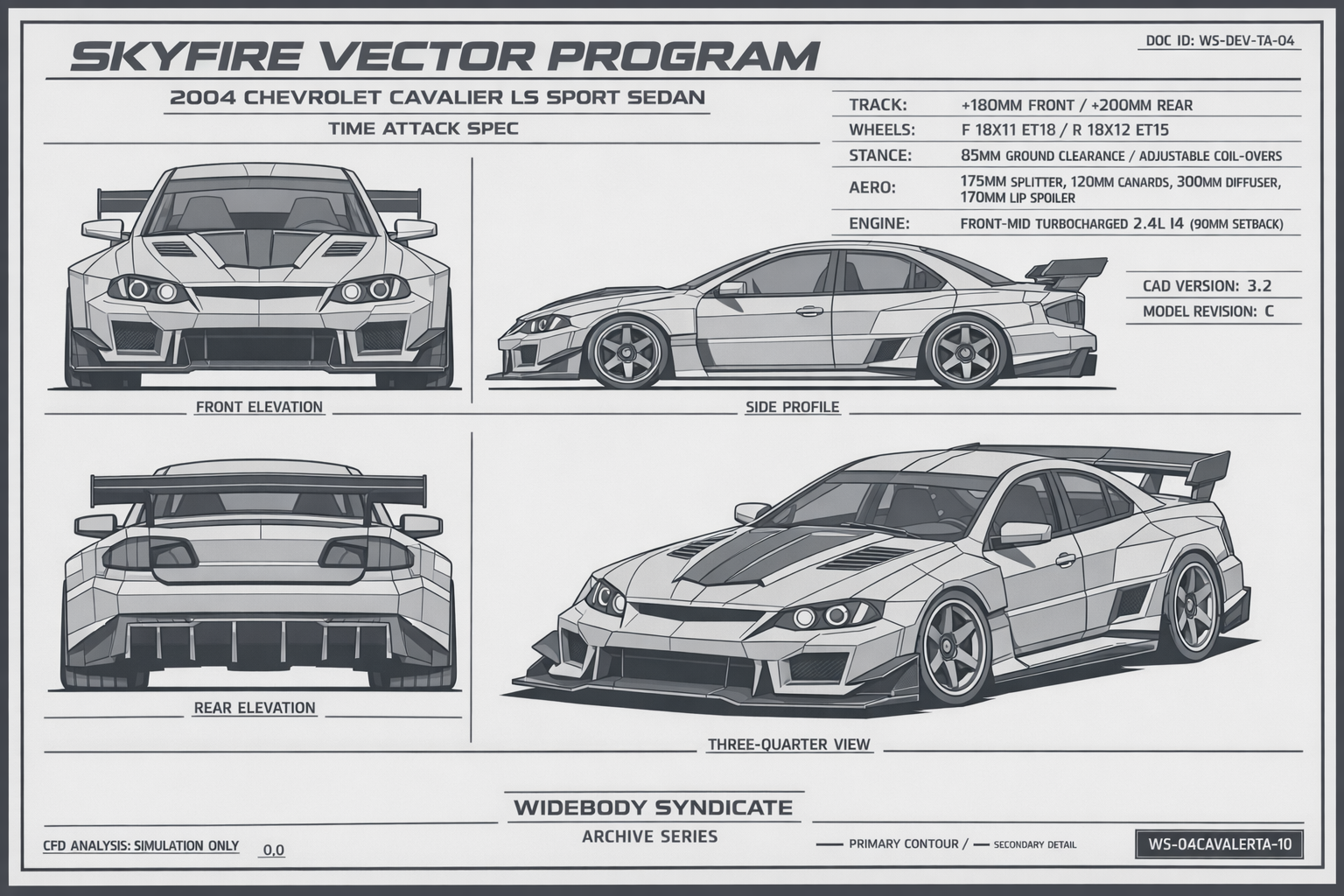
Skyfire Vector Program blueprint
02
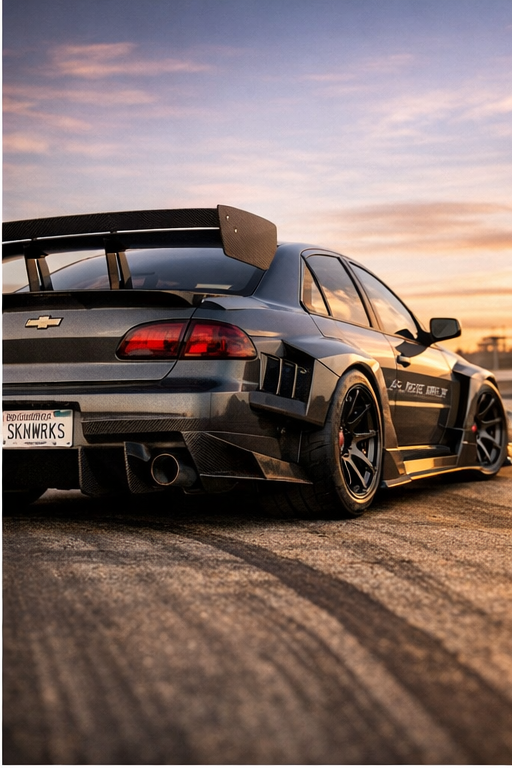
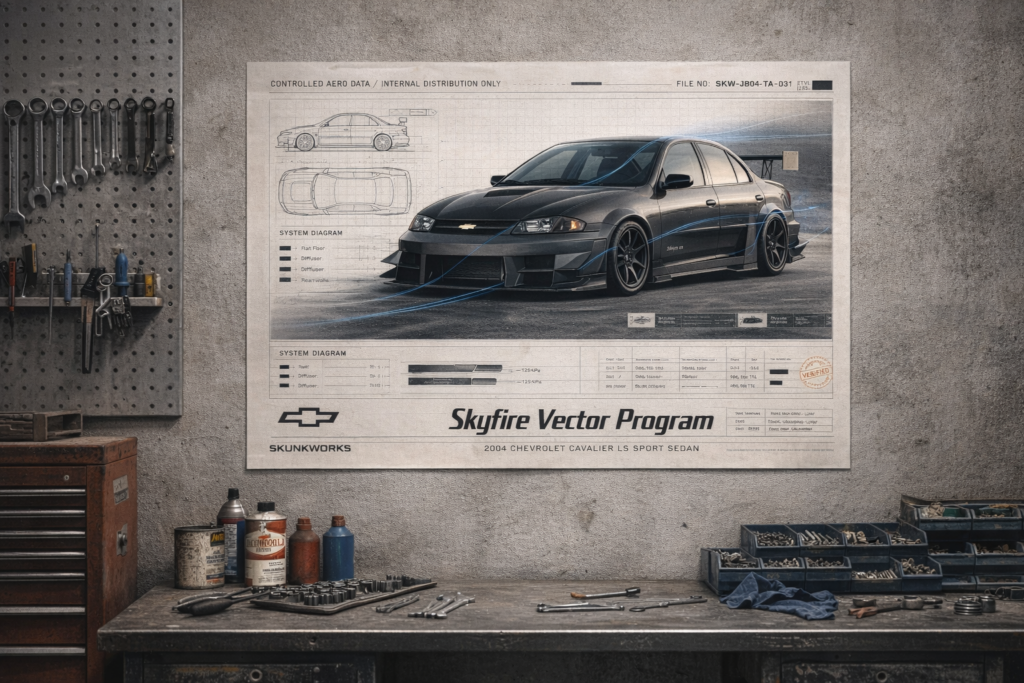
Skyfire Vector Program Collector EditionCollector artifact
Skyfire Vector Program Collector Edition

A presentation-grade collector artifact created for this release and preserved as part of the Widebody Syndicate archive.

Platform

2004 Chevrolet Cavalier LS Sport Sedan

2004 Chevrolet Cavalier LS Sport Sedan

The 2004 Chevrolet Cavalier LS Sport Sedan stands as a quintessential early-2000s compact sedan, embodying Chevrolet's take on practical, everyday driving with a sporty edge. Grounded on a front-wheel-drive platform with a straightforward suspension setup, it offers a no-nonsense driving experience that prioritizes reliability and accessible performance over flash. While unassuming in its factory form, the Cavalier’s balanced proportions and clean lines make it a blank canvas for creative tuning and customization within enthusiast circles, especially where value meets style.

ChevroletCavalier LS Sport Sedan2004
View Platform

Aero Package

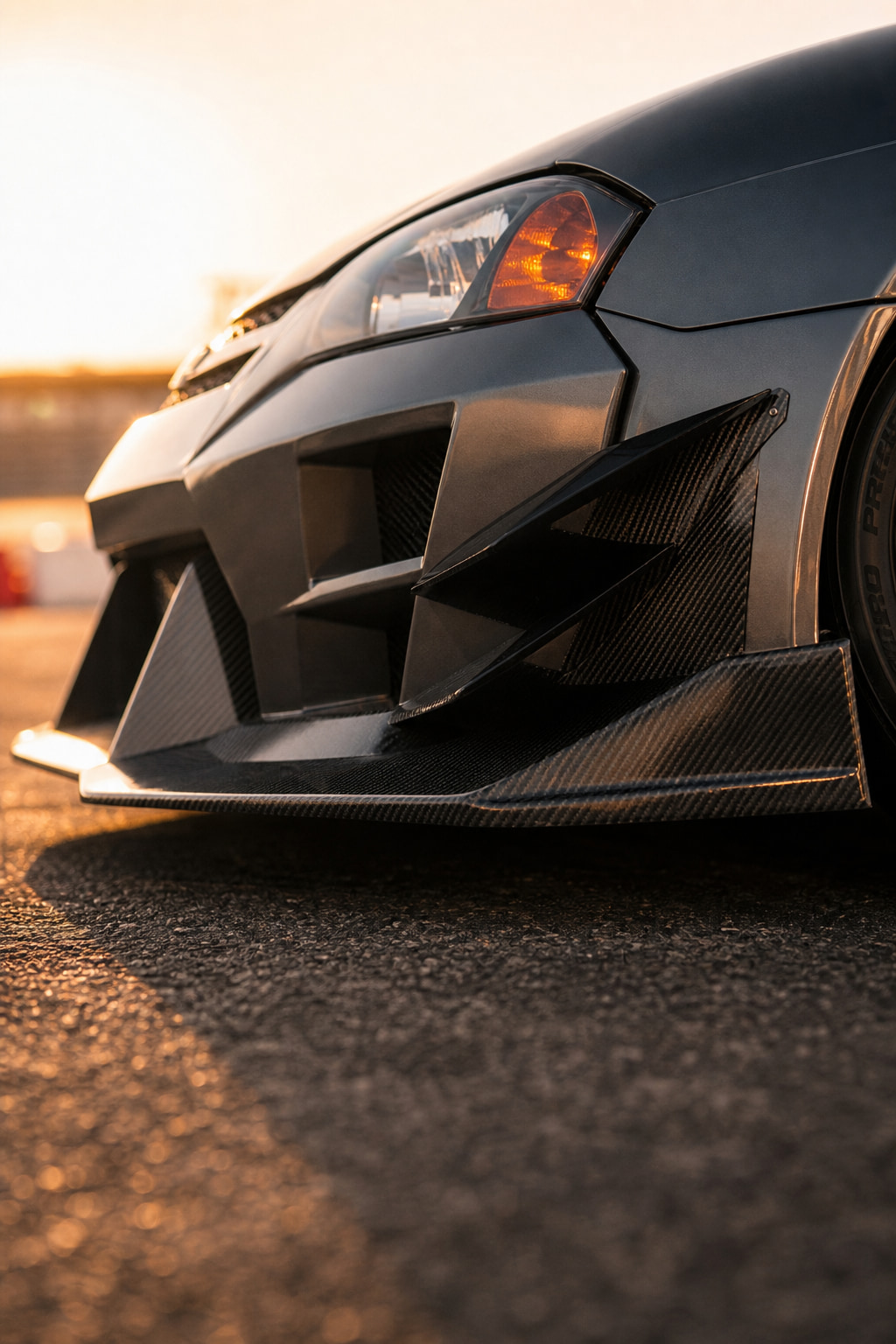
175 mm forward splitter with multi-plane leading edge and reinforced mounting points
Inward-angled canards (30°) for front-end bite and yaw stability at speed
Flat-floor integration concept feeding a deep rear diffuser with six vertical vanes
Trunk-lid extension with forged-carbon lip spoiler to clean separation and add rear stability

Chassis

Set at dusk on a modern road course, the Cavalier reads like a purpose-built Time Attack entry: long splitter shadow, wide tires filling hard-edged arches, and a rear diffuser that visually explains why the car would stay planted through fast sweepers. The lighting catches exposed carbon and the matte graphite planes, emphasizing the build’s panel-like geometry and cooling openings.

Wheels & Tires

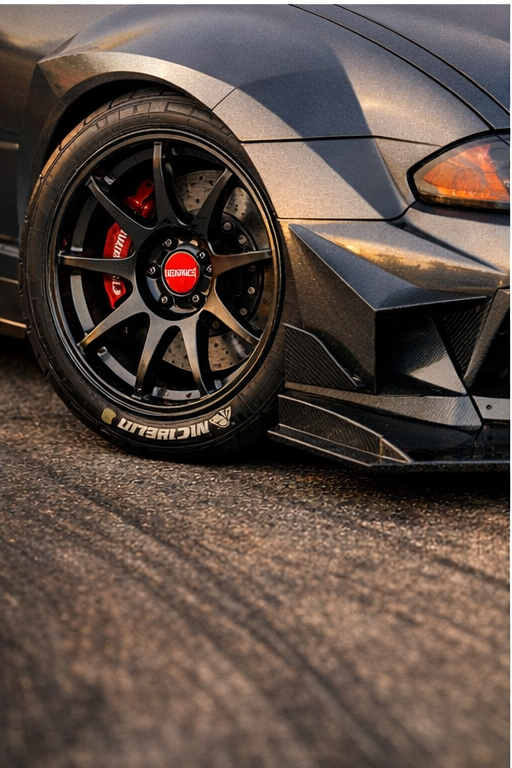
Front: 18x11 Forgeline forged monoblocks, ET18
Rear: 18x12 Forgeline forged monoblocks, ET15
Tires: Michelin Pilot Sport Cup 2 R — 315/40-18 front, 335/40-18 rear
Ride height target: ~85 mm ground clearance with track-focused alignment range

Powertrain

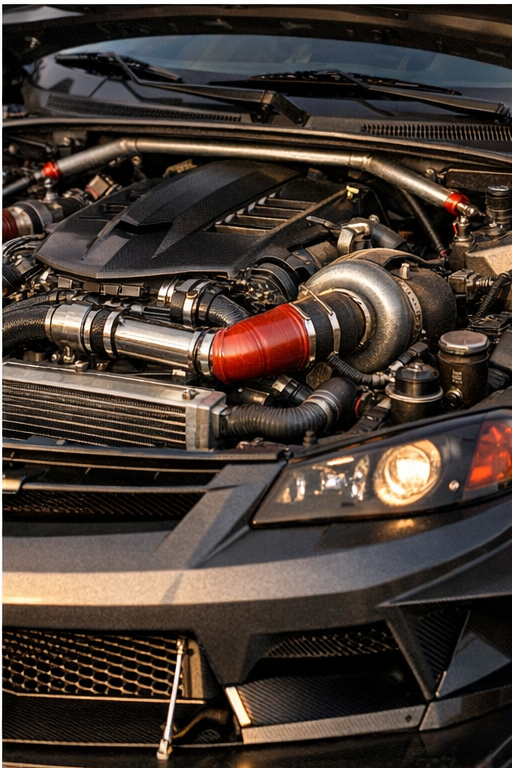
Turbocharged 2.4L inline-4 (Ecotec-family concept) built for sustained high-load track duty
Liquid-cooled turbo system with dedicated oil cooling and high-capacity intercooling
Front-mid placement to improve balance and reduce front axle overload
Track-calibrated ECU strategy emphasizing repeatability: IAT control, knock margin, and thermal limits

Fabrication Notes

Widebody executed as planar composite/metal sections with consistent chamfers for repeatable panel gaps and serviceability
Brake ducting integrated into front flares with sealed routing to the rotor hat area and controlled exit under the splitter
Reinforced splitter mounts tied into chassis structure to prevent aero stall from deflection
Diffuser and undertray designed as removable modules for quick access and damage repair
Heat management: hood extraction plus rear rocker vents to prevent heat soak in long sessions
×

Design Philosophy

Skyfire Vector Program takes the most anonymous J-body spec sheet and treats it like an Unlimited-class problem: widen it until the tires fit, then build aero that actually works at speed. The Cavalier’s sedan roofline stays recognizable, but everything below the beltline gets re-authored into sharp, panel-like surfaces—big brake ducts, real heat extraction, and a splitter/canard layout aimed at front-end authority instead of parking-lot drama.

Under the skin, the concept leans on believable Time Attack priorities: track width, cooling capacity, and packaging that survives repeated hot laps. A front-mid 2.4L turbo layout shifts mass rearward, the sidepod intercoolers shorten charge piping, and the underbody is treated as a system—splitter to flat floor to deep diffuser—so the car isn’t just loud in photos, it’s stable when the data logger says 140 mph.

Platform+
2004 Chevrolet Cavalier LS Sport Sedan

2004 Chevrolet Cavalier LS Sport Sedan

The 2004 Chevrolet Cavalier LS Sport Sedan stands as a quintessential early-2000s compact sedan, embodying Chevrolet's take on practical, everyday driving with a sporty edge. Grounded on a front-wheel-drive platform with a straightforward suspension setup, it offers a no-nonsense driving experience that prioritizes reliability and accessible performance over flash. While unassuming in its factory form, the Cavalier’s balanced proportions and clean lines make it a blank canvas for creative tuning and customization within enthusiast circles, especially where value meets style.

ChevroletCavalier LS Sport Sedan2004
View Platform
Aero Package+

175 mm forward splitter with multi-plane leading edge and reinforced mounting points
Inward-angled canards (30°) for front-end bite and yaw stability at speed
Flat-floor integration concept feeding a deep rear diffuser with six vertical vanes
Trunk-lid extension with forged-carbon lip spoiler to clean separation and add rear stability

Chassis+

Set at dusk on a modern road course, the Cavalier reads like a purpose-built Time Attack entry: long splitter shadow, wide tires filling hard-edged arches, and a rear diffuser that visually explains why the car would stay planted through fast sweepers. The lighting catches exposed carbon and the matte graphite planes, emphasizing the build’s panel-like geometry and cooling openings.

Wheels & Tires+

Front: 18x11 Forgeline forged monoblocks, ET18
Rear: 18x12 Forgeline forged monoblocks, ET15
Tires: Michelin Pilot Sport Cup 2 R — 315/40-18 front, 335/40-18 rear
Ride height target: ~85 mm ground clearance with track-focused alignment range

Powertrain+

Turbocharged 2.4L inline-4 (Ecotec-family concept) built for sustained high-load track duty
Liquid-cooled turbo system with dedicated oil cooling and high-capacity intercooling
Front-mid placement to improve balance and reduce front axle overload
Track-calibrated ECU strategy emphasizing repeatability: IAT control, knock margin, and thermal limits

Fabrication Notes+

Widebody executed as planar composite/metal sections with consistent chamfers for repeatable panel gaps and serviceability
Brake ducting integrated into front flares with sealed routing to the rotor hat area and controlled exit under the splitter
Reinforced splitter mounts tied into chassis structure to prevent aero stall from deflection
Diffuser and undertray designed as removable modules for quick access and damage repair
Heat management: hood extraction plus rear rocker vents to prevent heat soak in long sessions

×Design Philosophy+

Skyfire Vector Program takes the most anonymous J-body spec sheet and treats it like an Unlimited-class problem: widen it until the tires fit, then build aero that actually works at speed. The Cavalier’s sedan roofline stays recognizable, but everything below the beltline gets re-authored into sharp, panel-like surfaces—big brake ducts, real heat extraction, and a splitter/canard layout aimed at front-end authority instead of parking-lot drama.

Under the skin, the concept leans on believable Time Attack priorities: track width, cooling capacity, and packaging that survives repeated hot laps. A front-mid 2.4L turbo layout shifts mass rearward, the sidepod intercoolers shorten charge piping, and the underbody is treated as a system—splitter to flat floor to deep diffuser—so the car isn’t just loud in photos, it’s stable when the data logger says 140 mph.

Part of
Wave 18

Skunkworks

We just jammed a fighter jet’s DNA into everything that even remotely resembles a pickup or SUV. Our builds aren’t just widebodies—they’re aerodynamic missiles masquerading as street-legal speed demons.

Explore Wave 18 → 5 Builds

Keep Exploring

The archive is always growing. New releases, waves, and blueprints added regularly.