







R106
Raptor Stealth Initiative
2010 Ford F-150 Platinum
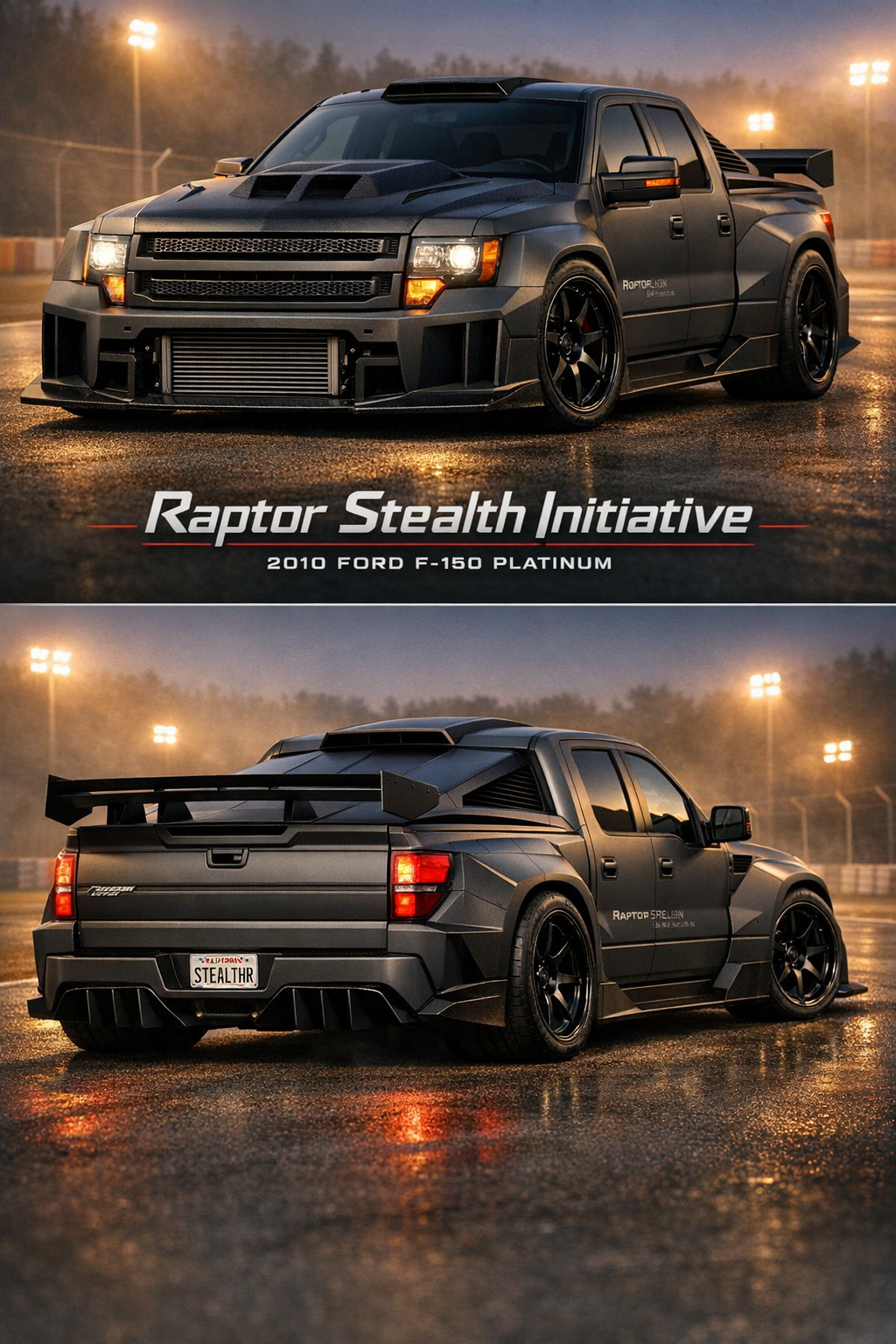
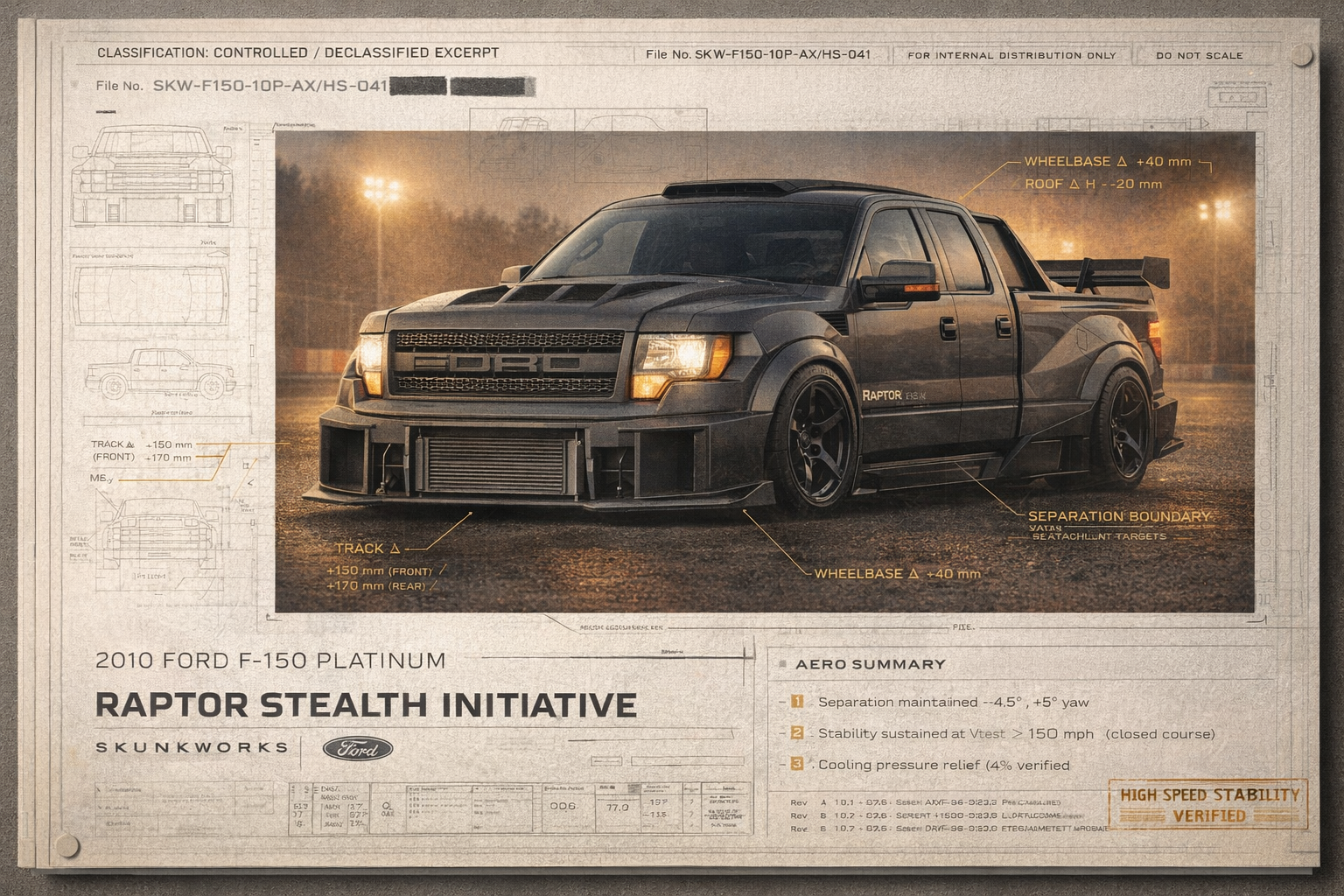
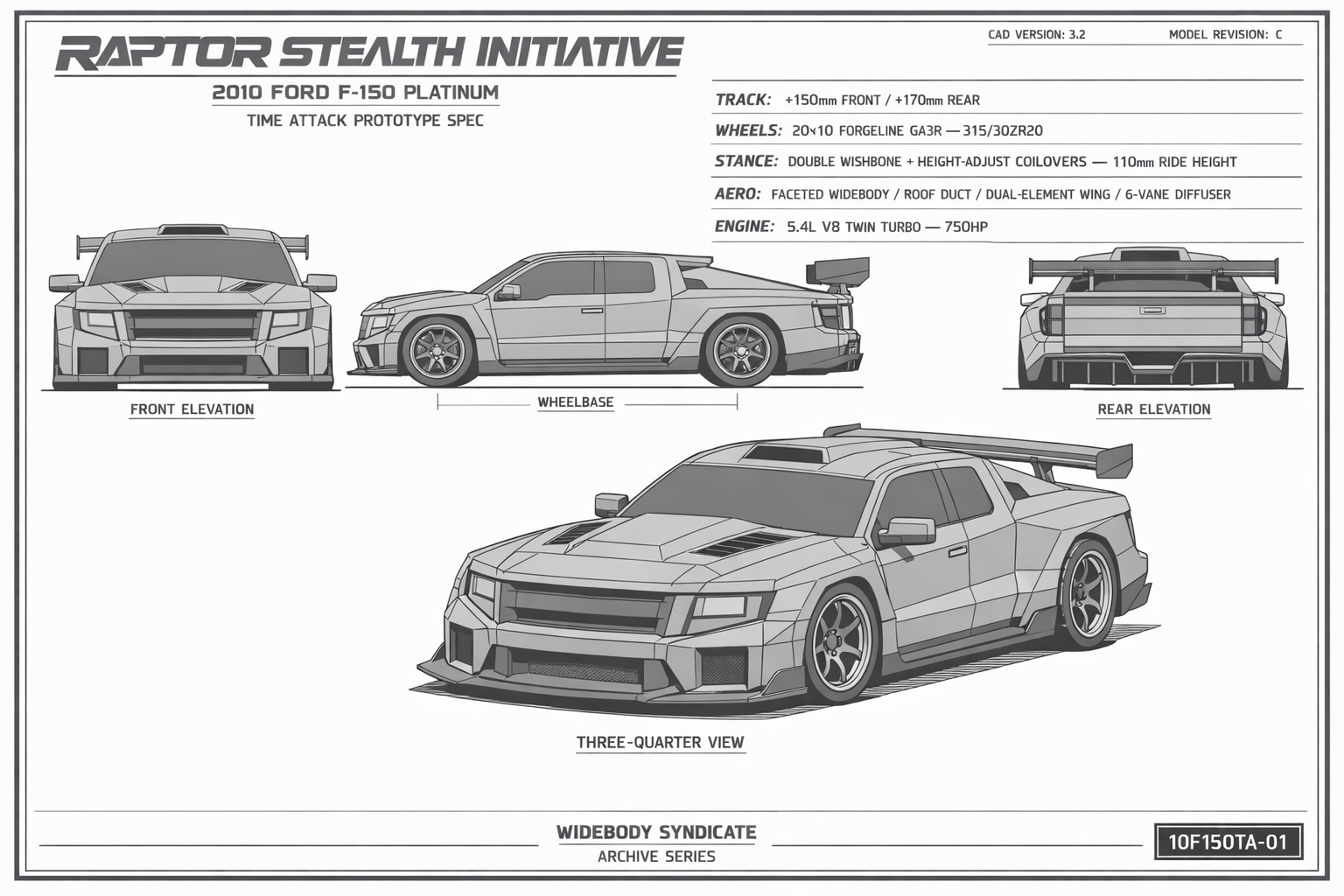
The Raptor Stealth Initiative takes a 2010 F-150 Platinum and treats it like a closed-course aero problem: reduce mass, control pressure, and keep the platform stable past 150 mph. The stock truck silhouette is replaced with faceted, stealth-inspired panels that aren’t just for drama—sharp transitions define where air separates, where it’s reattached, and where heat is allowed to leave without turning the nose into a parachute.
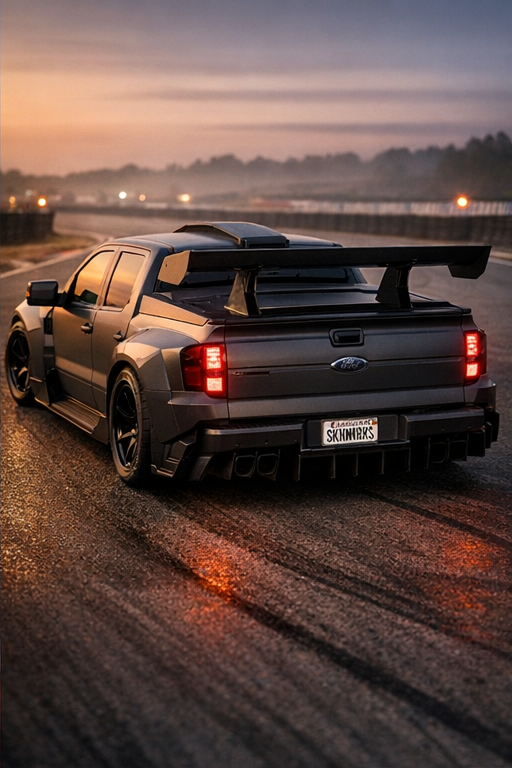
With a +150 mm front and +170 mm rear track, the widebody is built around tire, not styling. Boxed trapezoid flares, shelf-like skirts, and a deep multi-vane diffuser turn a full-size pickup into a time attack prototype that can brake late, rotate clean, and put power down without skating on aero lift.
Release Image Studies
Platform transformation, examined from every angle.
Comparison Shots
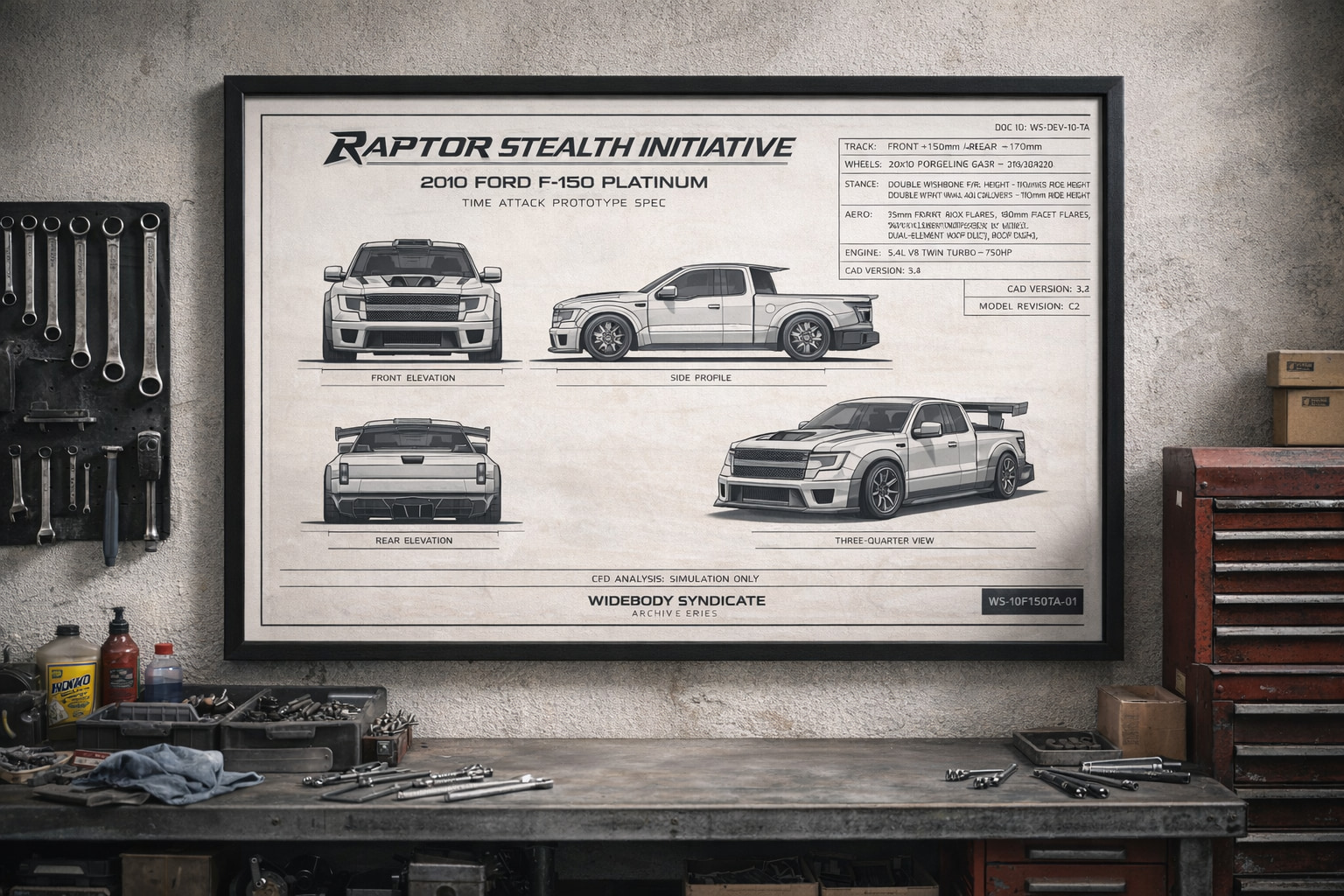
Blueprint / Collector Archive
Engineering record. Exhibition artifact.
The technical study and collectible interpretation of one build, preserved together.
Technical Dossier
Platform
2010 Ford F-150 Platinum
The 2010 Ford F-150 Platinum stands as a pillar of American full-size pickup engineering, blending rugged capability with upscale refinement. Rooted in Ford’s highly durable and versatile F-Series platform, this truck delivers a robust frame, high-strength steel construction, and a powerful V8 engine lineup designed for both heavy-duty work and confident highway cruising. The Platinum trim elevates the truck with premium materials and advanced technology, making it a commanding presence on any terrain or city street, true to the F-150’s legacy as an icon of utilitarian prestige.
Aero Package
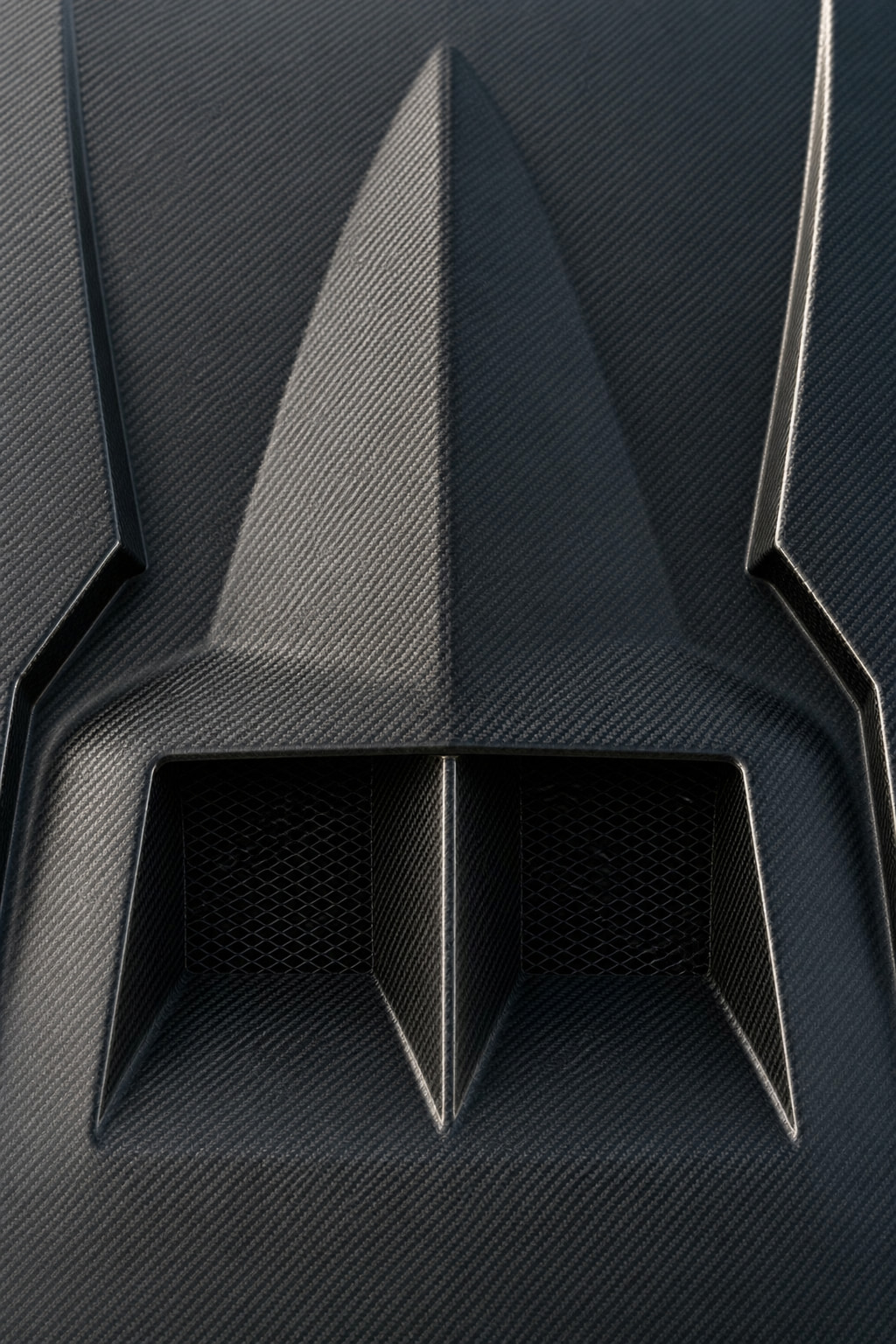
Matte carbon hood with polygonal airbox scoop and tri-finned extraction vents
Lowered roofline with forward-angled roof duct feeding rear-side cooling radiators
280 mm-deep rear diffuser with six vertical vanes for underbody flow control
Fixed dual-element rear wing (1700 mm span) on low-profile twin pylons
Chassis
Set for closed-course sprint work where stability at speed matters as much as peak power. The aero package is designed to keep the rear planted through high-speed transitions, while the cooling layout assumes multiple hot laps without heat soak or brake-zone misbehavior from front-end pressure buildup.
Wheels & Tires
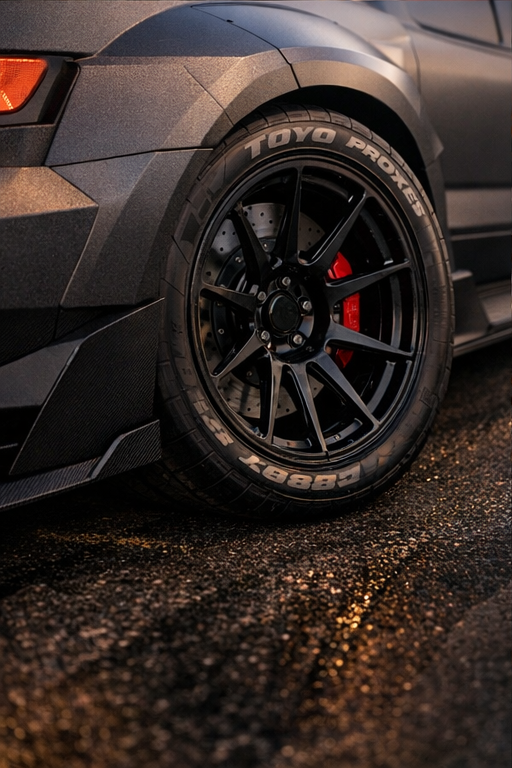
Forgeline GA3R 20x10 in satin black with diamond-cut face
Toyo Proxes R888R 315/30ZR20 square setup for rotation and consistent balance
Track width increase: +150 mm front, +170 mm rear to match aero and tire load
110 mm ride height target to support underbody efficiency without becoming un-drivable
Powertrain
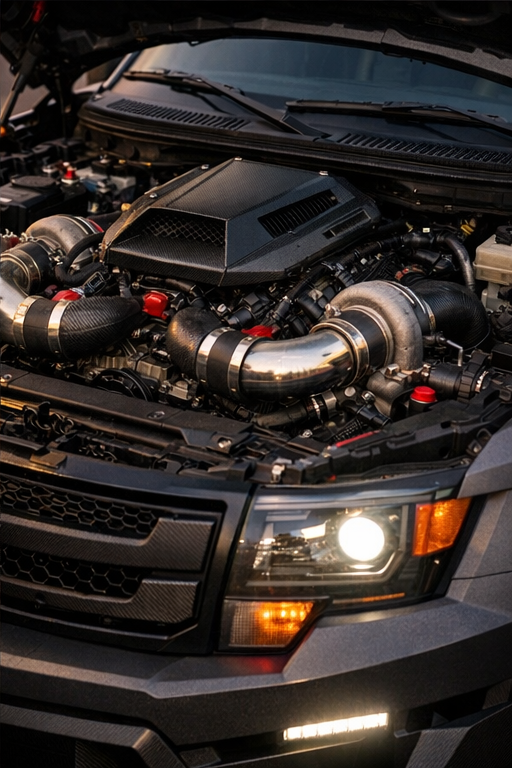
5.4L 3V modular V8 retained, weight-focused rotating assembly with titanium components where sensible
Twin-turbo layout targeting ~750 hp with conservative boost ramp for corner-exit traction
Concealed front bumper charge-air inlets feeding a front-mount intercooler array
Supplemental rear-side radiators supplied by roof duct for sustained session temps
Fabrication Notes
Faceted widebody panels in carbon composite over reinforced pickup hardpoints; serviceable fasteners where heat cycles matter
Sealed ducting strategy: bumper inlets to intercooler, hood extraction to low-pressure zones, roof feed to sidepod radiators
Diffuser and wing mounts tied into chassis structure, not bumper skins, to survive real downforce loads
Double-wishbone conversion requires custom subframes, upright design, and steering geometry correction for scrub radius

Design Philosophy
The Raptor Stealth Initiative takes a 2010 F-150 Platinum and treats it like a closed-course aero problem: reduce mass, control pressure, and keep the platform stable past 150 mph. The stock truck silhouette is replaced with faceted, stealth-inspired panels that aren’t just for drama—sharp transitions define where air separates, where it’s reattached, and where heat is allowed to leave without turning the nose into a parachute.
With a +150 mm front and +170 mm rear track, the widebody is built around tire, not styling. Boxed trapezoid flares, shelf-like skirts, and a deep multi-vane diffuser turn a full-size pickup into a time attack prototype that can brake late, rotate clean, and put power down without skating on aero lift.
▧Platform+
2010 Ford F-150 Platinum
The 2010 Ford F-150 Platinum stands as a pillar of American full-size pickup engineering, blending rugged capability with upscale refinement. Rooted in Ford’s highly durable and versatile F-Series platform, this truck delivers a robust frame, high-strength steel construction, and a powerful V8 engine lineup designed for both heavy-duty work and confident highway cruising. The Platinum trim elevates the truck with premium materials and advanced technology, making it a commanding presence on any terrain or city street, true to the F-150’s legacy as an icon of utilitarian prestige.
⌘Aero Package+
Matte carbon hood with polygonal airbox scoop and tri-finned extraction vents
Lowered roofline with forward-angled roof duct feeding rear-side cooling radiators
280 mm-deep rear diffuser with six vertical vanes for underbody flow control
Fixed dual-element rear wing (1700 mm span) on low-profile twin pylons
⟡Chassis+
Set for closed-course sprint work where stability at speed matters as much as peak power. The aero package is designed to keep the rear planted through high-speed transitions, while the cooling layout assumes multiple hot laps without heat soak or brake-zone misbehavior from front-end pressure buildup.
◎Wheels & Tires+
Forgeline GA3R 20x10 in satin black with diamond-cut face
Toyo Proxes R888R 315/30ZR20 square setup for rotation and consistent balance
Track width increase: +150 mm front, +170 mm rear to match aero and tire load
110 mm ride height target to support underbody efficiency without becoming un-drivable
▤Powertrain+
5.4L 3V modular V8 retained, weight-focused rotating assembly with titanium components where sensible
Twin-turbo layout targeting ~750 hp with conservative boost ramp for corner-exit traction
Concealed front bumper charge-air inlets feeding a front-mount intercooler array
Supplemental rear-side radiators supplied by roof duct for sustained session temps
△Fabrication Notes+
Faceted widebody panels in carbon composite over reinforced pickup hardpoints; serviceable fasteners where heat cycles matter
Sealed ducting strategy: bumper inlets to intercooler, hood extraction to low-pressure zones, roof feed to sidepod radiators
Diffuser and wing mounts tied into chassis structure, not bumper skins, to survive real downforce loads
Double-wishbone conversion requires custom subframes, upright design, and steering geometry correction for scrub radius
×Design Philosophy+
The Raptor Stealth Initiative takes a 2010 F-150 Platinum and treats it like a closed-course aero problem: reduce mass, control pressure, and keep the platform stable past 150 mph. The stock truck silhouette is replaced with faceted, stealth-inspired panels that aren’t just for drama—sharp transitions define where air separates, where it’s reattached, and where heat is allowed to leave without turning the nose into a parachute.
With a +150 mm front and +170 mm rear track, the widebody is built around tire, not styling. Boxed trapezoid flares, shelf-like skirts, and a deep multi-vane diffuser turn a full-size pickup into a time attack prototype that can brake late, rotate clean, and put power down without skating on aero lift.
Part of
Wave 18
Skunkworks
We just jammed a fighter jet’s DNA into everything that even remotely resembles a pickup or SUV. Our builds aren’t just widebodies—they’re aerodynamic missiles masquerading as street-legal speed demons.
Explore Wave 18 → 5 BuildsKeep Exploring
The archive is always growing. New releases, waves, and blueprints added regularly.