


R206
Project Fluxwalker
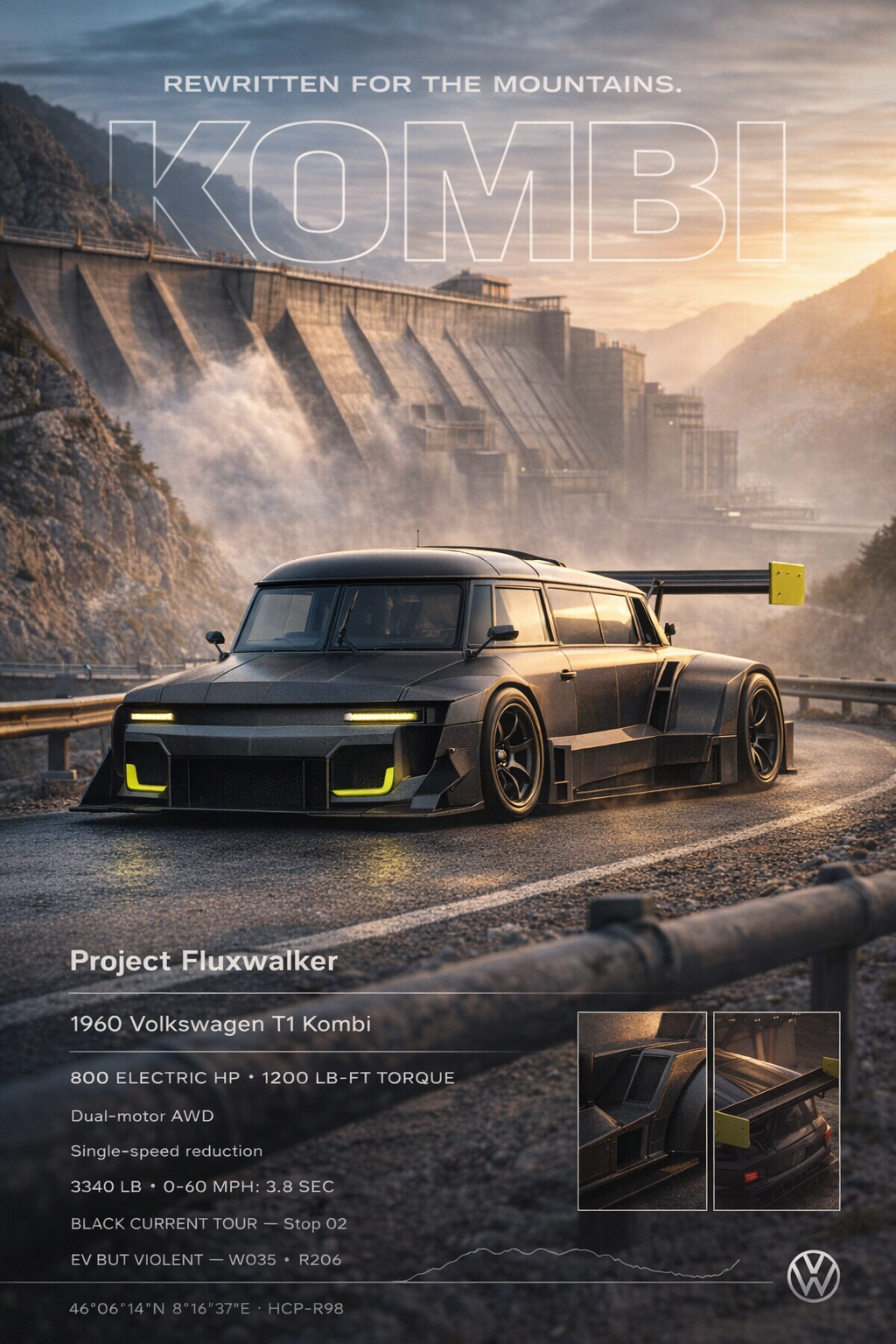
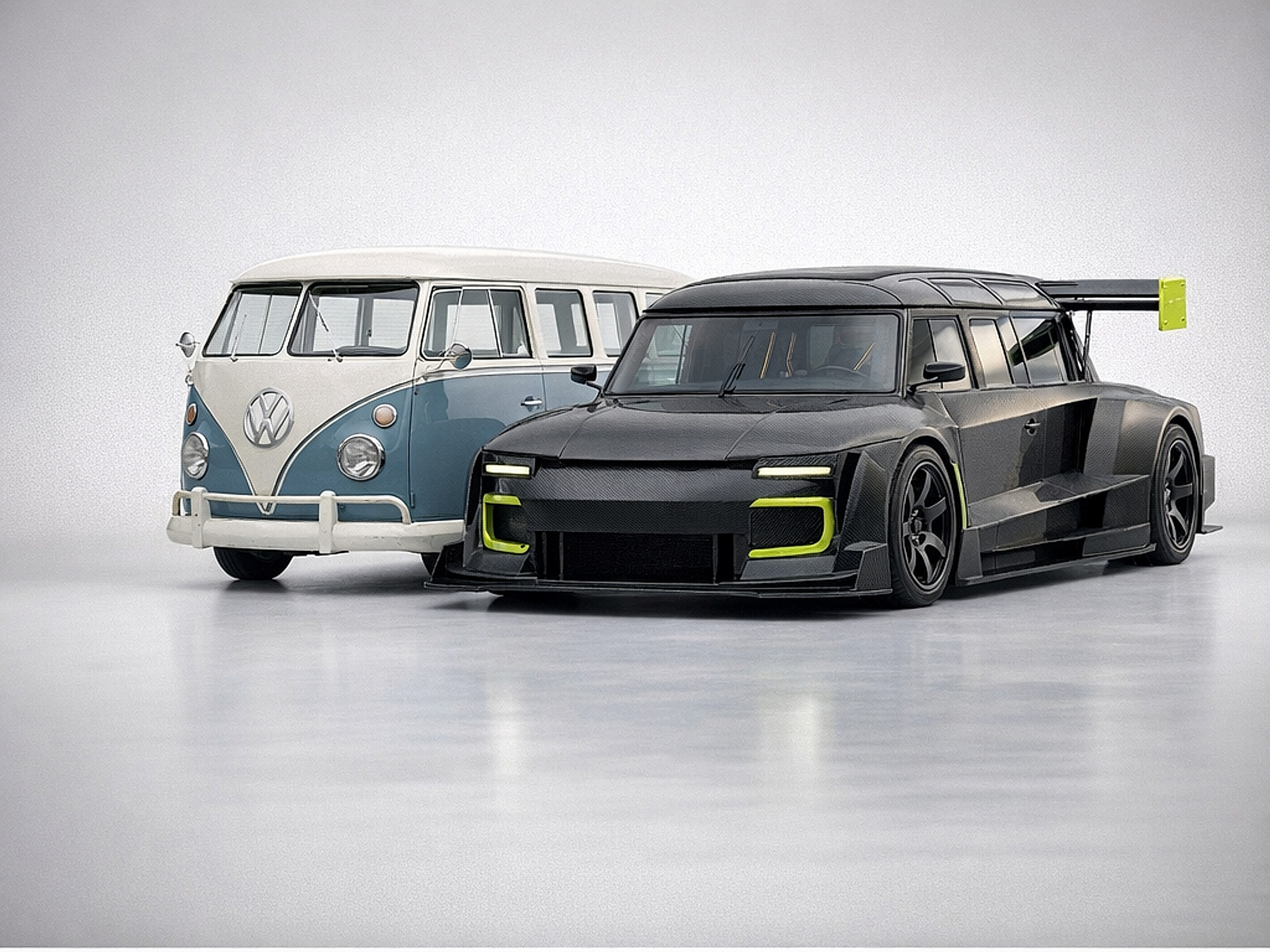
Project Fluxwalker starts with the most unassuming shape in German motoring history and treats it like a clean-sheet hill climb chassis. The T1’s silhouette stays instantly recognizable, but everything under the skin is re-centered around track width, airflow, and packaging: a carbon composite widebody pushes the wheels outward by more than 300mm, the cabin becomes a functional canopy, and the once-upright van stance turns into a low, planted prototype.
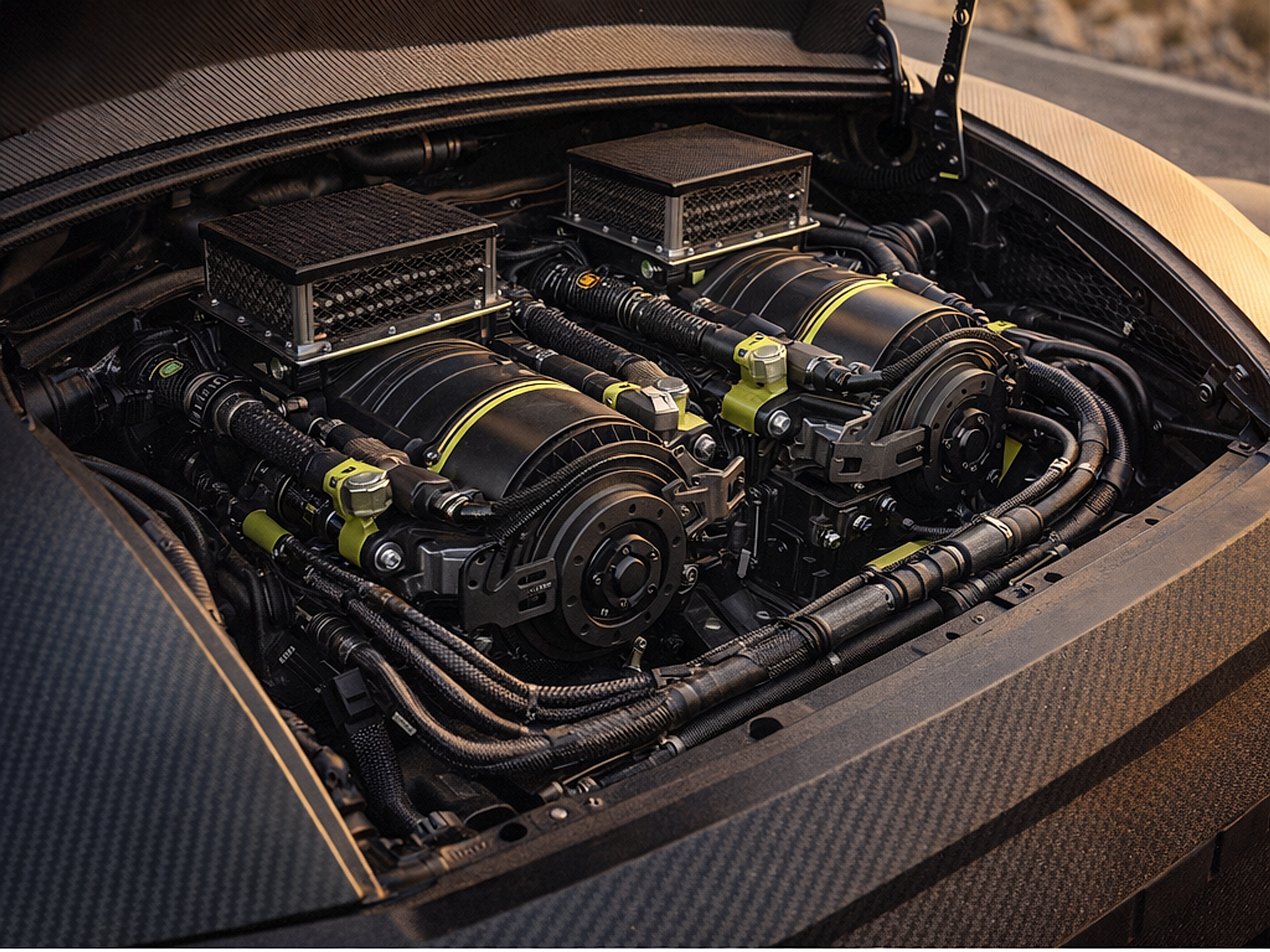
Where the stock Kombi relied on simplicity, Fluxwalker leans into systems. A mid-mounted dual-motor layout puts mass where it belongs, with roof-mounted radiators and sidepod ducting solving the hard problem of cooling an EV at sustained load. Matte carbon and acid green highlights aren’t decoration here—they mark the airflow’s path and the hardware doing the work.
Release Image Studies
Image studies from every angle.
Comparison Shots
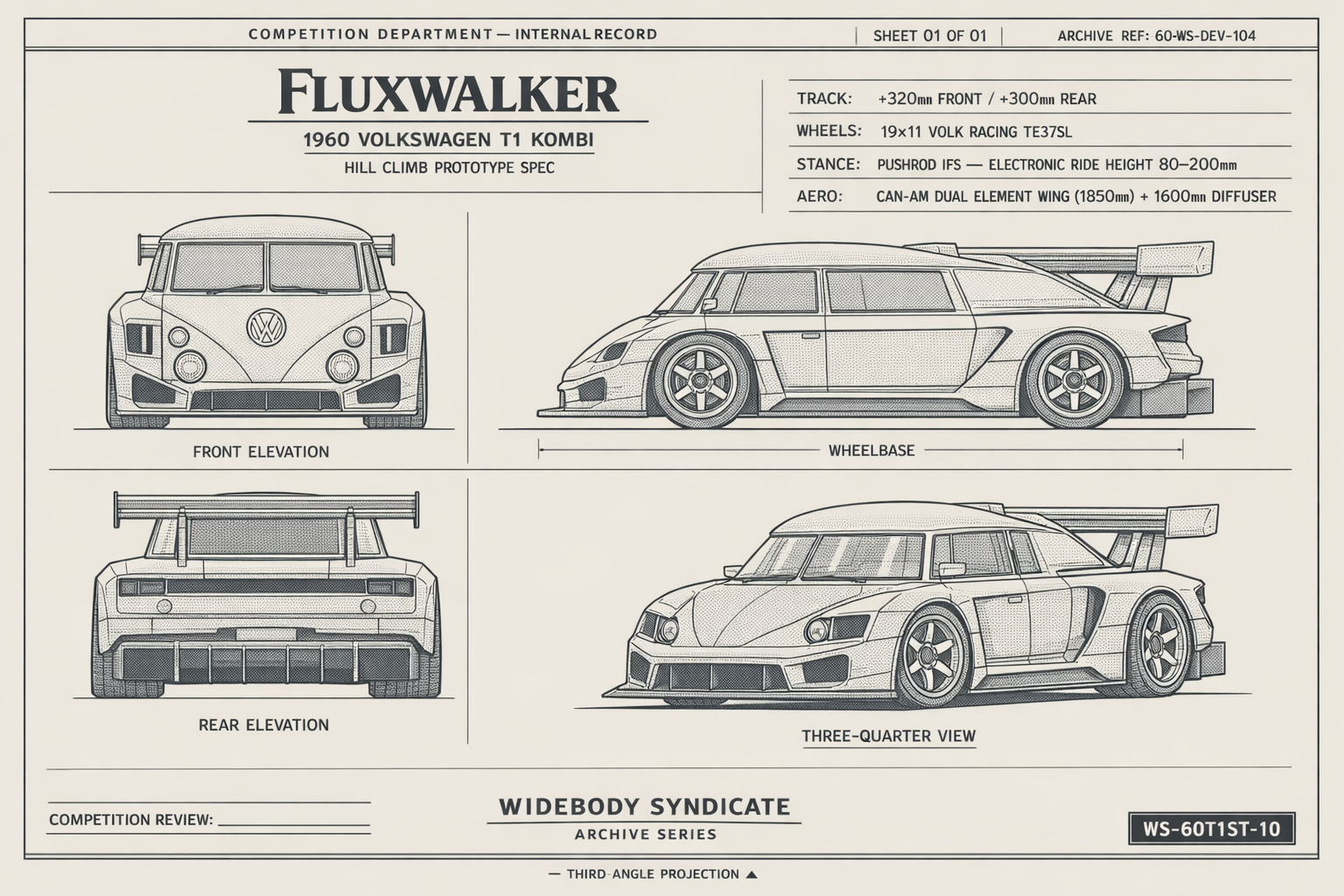
Blueprint / Collector Archive
Engineering Artifacts
The technical study and collectible interpretation of one build, preserved together.
A presentation-grade collector artifact created for this release and preserved as part of the Widebody Syndicate archive.
Selected archive goods are available for collectors.
Technical Dossier
Platform
1960 Volkswagen T1 Kombi
The 1960 Volkswagen T1 Kombi is an icon of post-war automotive ingenuity, blending simplistic engineering with unparalleled versatility. Its air-cooled flat-four engine powering a lightweight, utilitarian van body set the stage for decades of cultural impact—from hippie convoy leader to functional workhorse. With its distinctive split windshield and rounded silhouette, the T1 Kombi’s design remains timeless, embodying a raw, mechanical charm that highlights its straightforward, rear-engine, rear-wheel-drive layout.
Aero Package
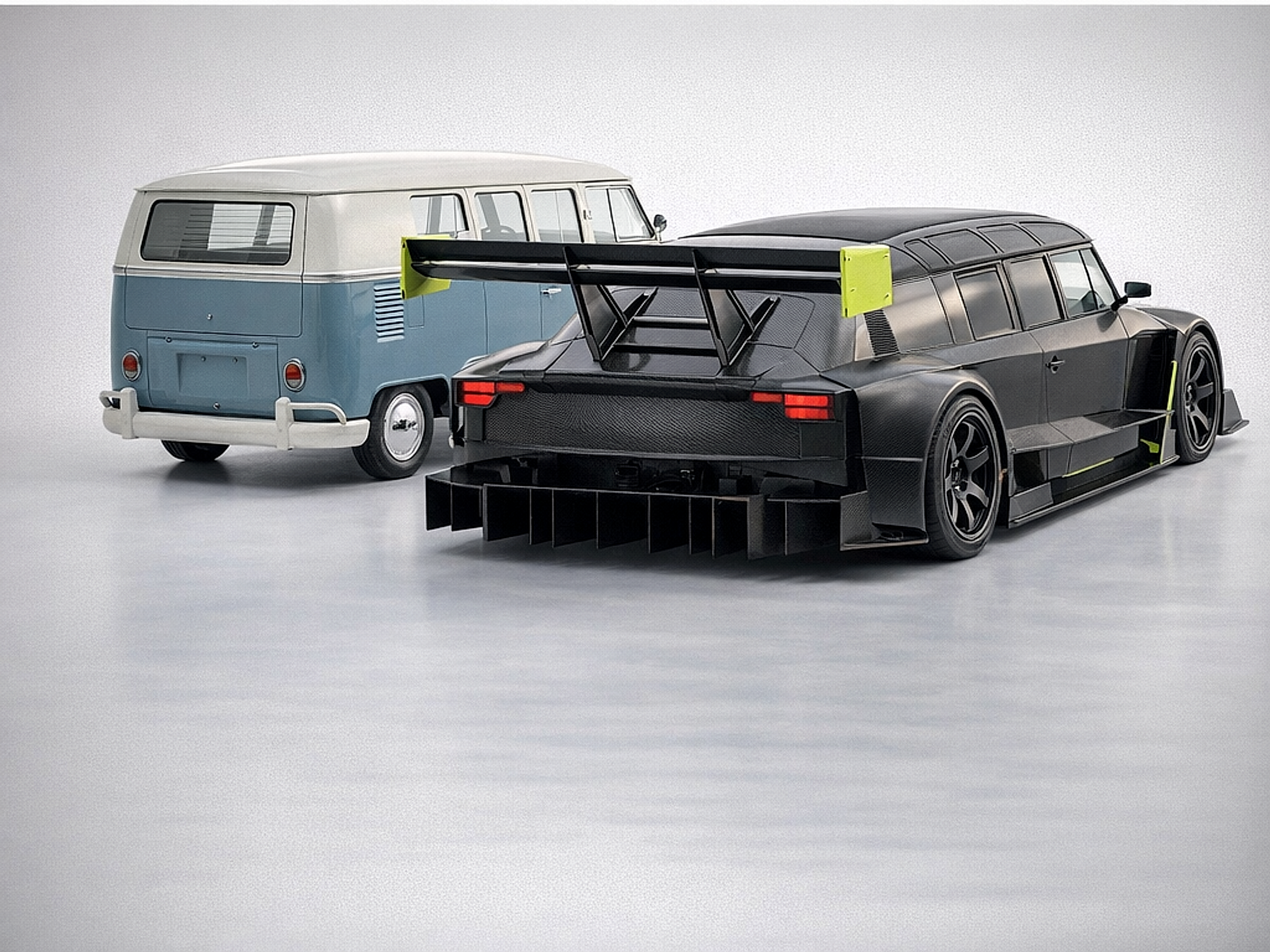
Twin sidepod intakes feeding roof-mounted radiators with controlled exit
Full-length flat floor with multi-channel rear diffuser
1850mm dual-element rear wing mounted ~850mm above diffuser deck
NACA ducts and louvering for motor/inverter bay pressure relief
Front splitter with corner fences to manage front tire wake
Chassis
Built for narrow, imperfect mountain roads where commitment matters more than peak speed. The setup prioritizes mechanical compliance from the tall tire, fast transient response from the wide track, and aero stability that doesn’t fall apart in dirty air or elevation changes.
Wheels & Tires
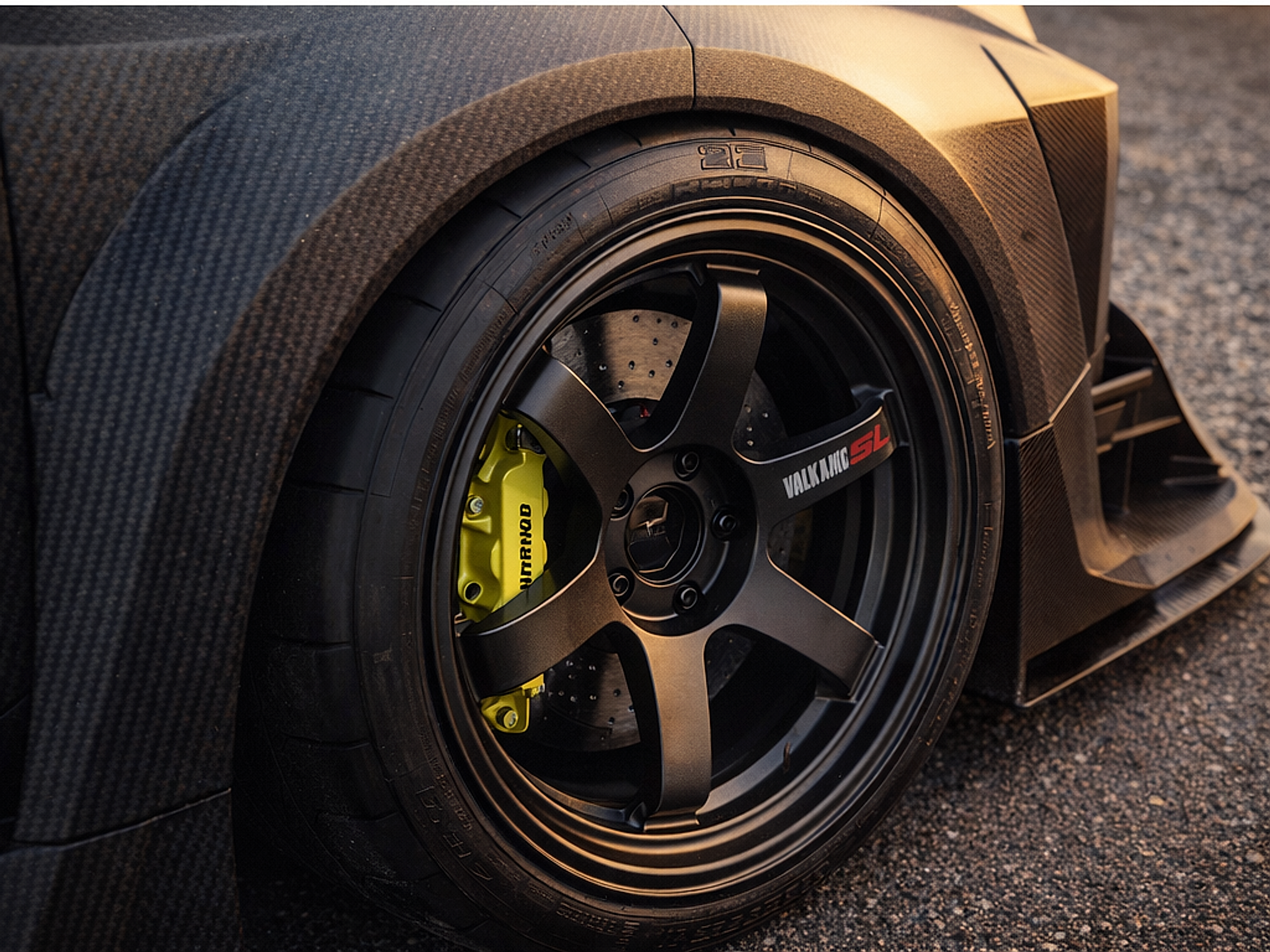
Volk Racing TE37SL forged wheels
19x11
315/565-19 tall-profile hill climb tire for compliance and footprint
Motorsport-grade extended studs and center-lock style retention concept
High-clearance brake package sized for regen + sustained downhill heat
Powertrain
Mid-mounted dual electric motors with independent rear drive control
High-discharge battery pack packaged low and central with serviceable modules
Roof radiator loop with sidepod-fed ducting and high-flow pumps
Track-tuned regen strategy for downhill sections and brake temperature control
Fabrication Notes
Widebody and flare geometry built around tire envelope and steering lock
not aesthetics
Wing pylons and diffuser deck tied into a rear structure to handle real aero load
Sidepod ducting designed with smooth transitions to avoid pressure loss and turbulence
Roof radiator mounting incorporates a rigid spine to prevent core movement at speed
Quick-access panels for inverter
pumps
and HV service points

Design Philosophy
Project Fluxwalker starts with the most unassuming shape in German motoring history and treats it like a clean-sheet hill climb chassis. The T1’s silhouette stays instantly recognizable, but everything under the skin is re-centered around track width, airflow, and packaging: a carbon composite widebody pushes the wheels outward by more than 300mm, the cabin becomes a functional canopy, and the once-upright van stance turns into a low, planted prototype.
Where the stock Kombi relied on simplicity, Fluxwalker leans into systems. A mid-mounted dual-motor layout puts mass where it belongs, with roof-mounted radiators and sidepod ducting solving the hard problem of cooling an EV at sustained load. Matte carbon and acid green highlights aren’t decoration here—they mark the airflow’s path and the hardware doing the work.
▧Platform+
1960 Volkswagen T1 Kombi
The 1960 Volkswagen T1 Kombi is an icon of post-war automotive ingenuity, blending simplistic engineering with unparalleled versatility. Its air-cooled flat-four engine powering a lightweight, utilitarian van body set the stage for decades of cultural impact—from hippie convoy leader to functional workhorse. With its distinctive split windshield and rounded silhouette, the T1 Kombi’s design remains timeless, embodying a raw, mechanical charm that highlights its straightforward, rear-engine, rear-wheel-drive layout.
⌘Aero Package+
Twin sidepod intakes feeding roof-mounted radiators with controlled exit
Full-length flat floor with multi-channel rear diffuser
1850mm dual-element rear wing mounted ~850mm above diffuser deck
NACA ducts and louvering for motor/inverter bay pressure relief
Front splitter with corner fences to manage front tire wake
⟡Chassis+
Built for narrow, imperfect mountain roads where commitment matters more than peak speed. The setup prioritizes mechanical compliance from the tall tire, fast transient response from the wide track, and aero stability that doesn’t fall apart in dirty air or elevation changes.
◎Wheels & Tires+
Volk Racing TE37SL forged wheels
19x11
315/565-19 tall-profile hill climb tire for compliance and footprint
Motorsport-grade extended studs and center-lock style retention concept
High-clearance brake package sized for regen + sustained downhill heat
▤Powertrain+
Mid-mounted dual electric motors with independent rear drive control
High-discharge battery pack packaged low and central with serviceable modules
Roof radiator loop with sidepod-fed ducting and high-flow pumps
Track-tuned regen strategy for downhill sections and brake temperature control
△Fabrication Notes+
Widebody and flare geometry built around tire envelope and steering lock
not aesthetics
Wing pylons and diffuser deck tied into a rear structure to handle real aero load
Sidepod ducting designed with smooth transitions to avoid pressure loss and turbulence
Roof radiator mounting incorporates a rigid spine to prevent core movement at speed
Quick-access panels for inverter
pumps
and HV service points
×Design Philosophy+
Project Fluxwalker starts with the most unassuming shape in German motoring history and treats it like a clean-sheet hill climb chassis. The T1’s silhouette stays instantly recognizable, but everything under the skin is re-centered around track width, airflow, and packaging: a carbon composite widebody pushes the wheels outward by more than 300mm, the cabin becomes a functional canopy, and the once-upright van stance turns into a low, planted prototype.
Where the stock Kombi relied on simplicity, Fluxwalker leans into systems. A mid-mounted dual-motor layout puts mass where it belongs, with roof-mounted radiators and sidepod ducting solving the hard problem of cooling an EV at sustained load. Matte carbon and acid green highlights aren’t decoration here—they mark the airflow’s path and the hardware doing the work.
Part of
Wave 35
EV But Violent
We just cooked up a batch of electric beasts that stomp the timeline and rewrite what muscle, drift, and hillclimb rides could have been if the juice ran wild a little earlier. From our stealthy ’90 Corvette ZR-1 turned covert assault prowler to a hillclimb Kombi that’s basically a carbon fiber thunderbolt with acid green sass, these rides don’t just push boundaries—they snap ’em in half and laugh while doing it.
Explore Wave 35 → 6 BuildsKeep Exploring
The archive is always growing. New releases, waves, and blueprints added regularly.