R805
Arctic Survival Rally Build
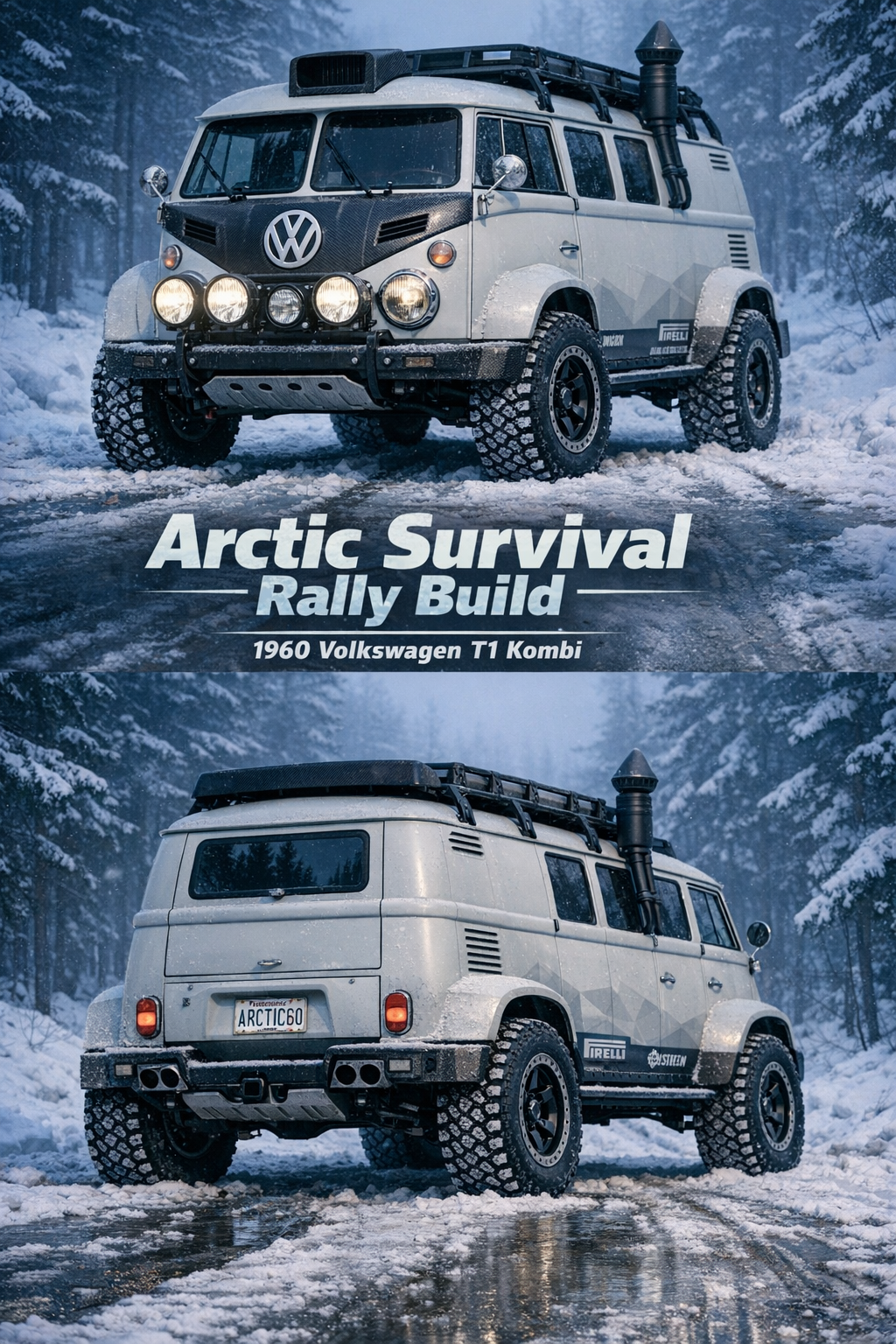
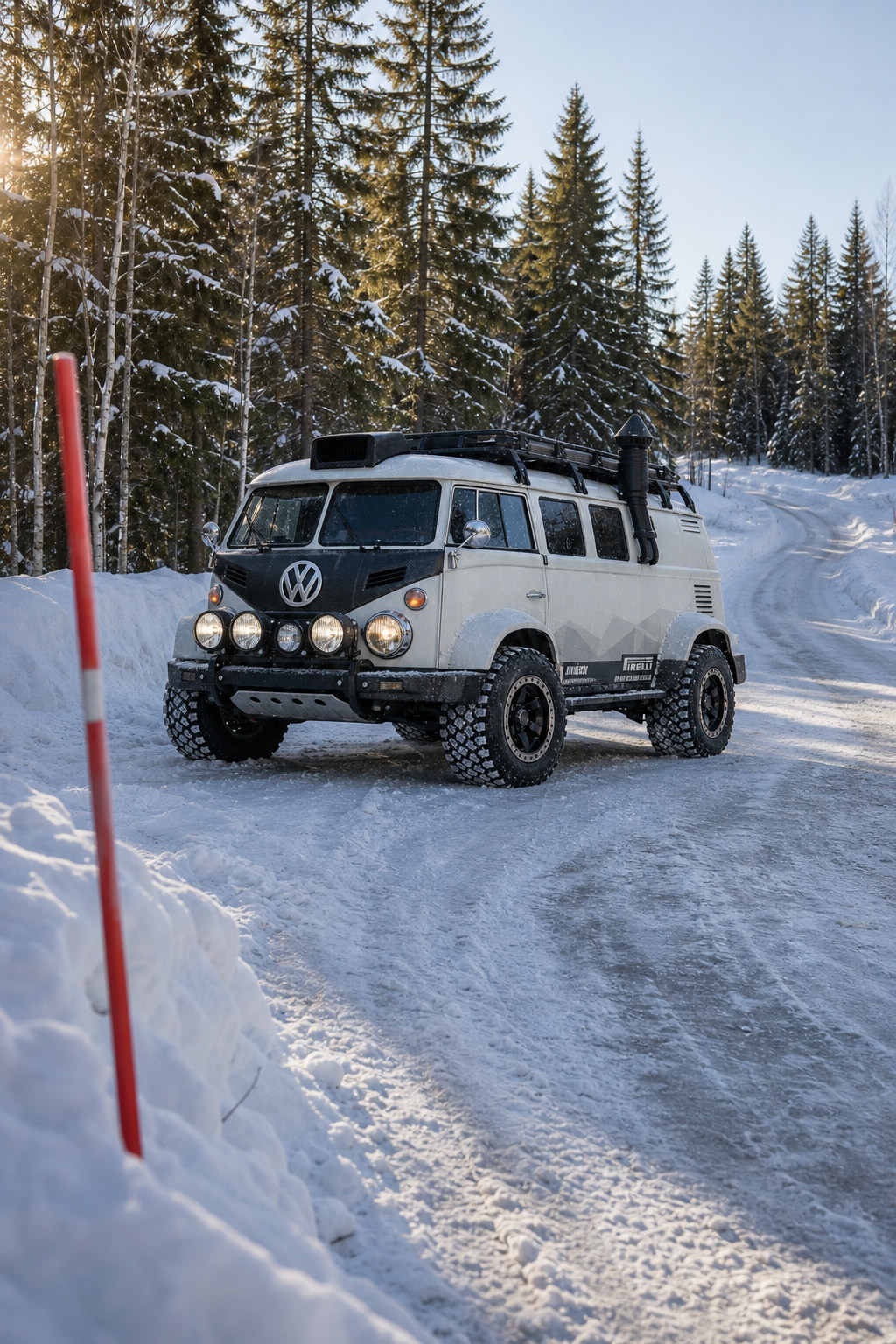
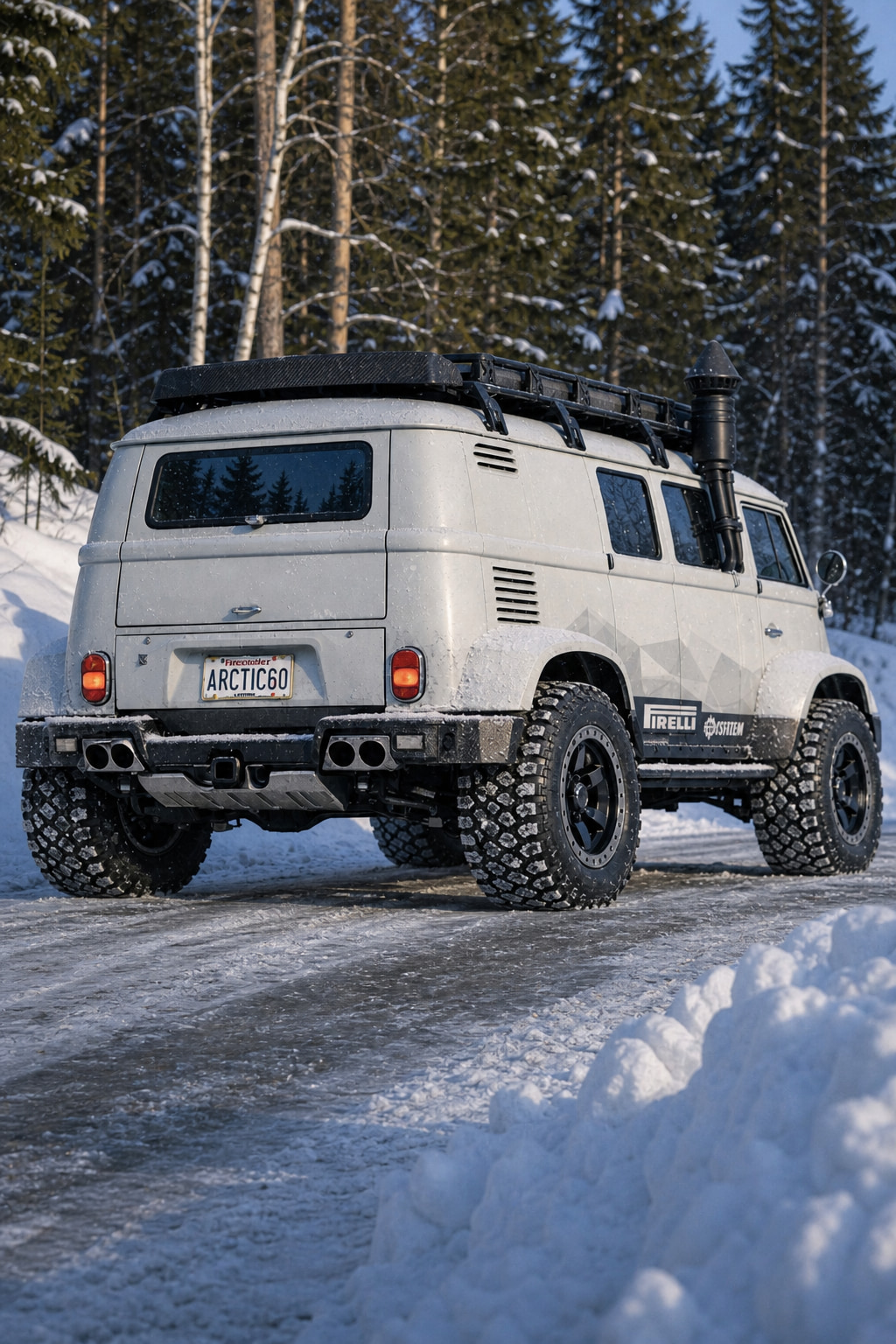
A split-window Kombi has no business looking this composed on a snow stage, which is exactly why it works. The Arctic Survival Rally Build keeps the rear-engine soul intact but rethinks everything around it for Scandinavian winter pace: wide track, real suspension travel, and airflow that prioritizes de-icing and heat management over nostalgia. Matte arctic white with frost geometry keeps it quiet visually, while the arches and snorkel tell you it’s here to work.
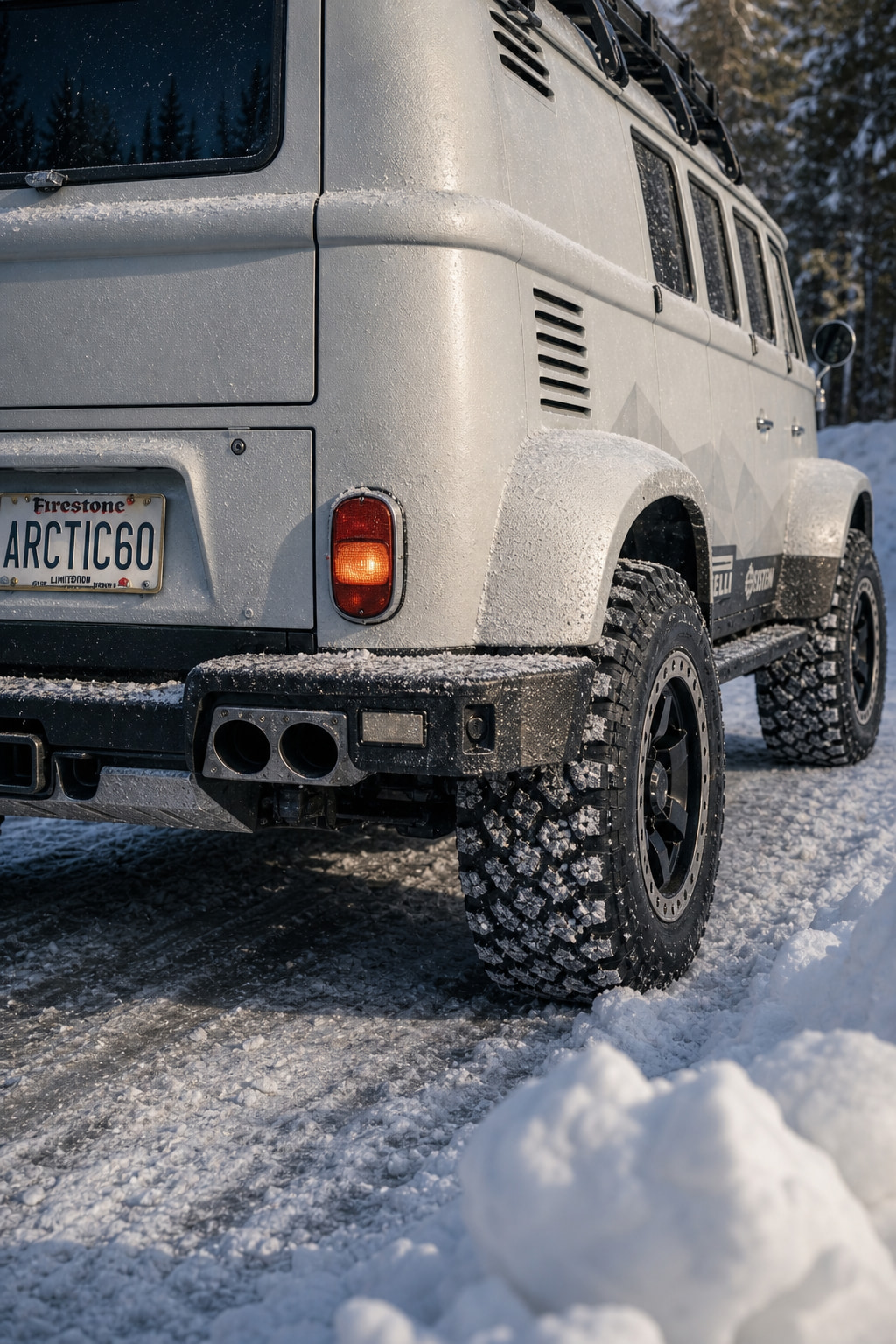
The widened body isn’t cosplay—those 100mm front and 140mm rear flares are shaped for studded tire clearance and full compression without chewing sheetmetal. Raised ride height and winter-tuned dampers give the van room to breathe in ruts and snowbanks, and the roof deflector and venting strategy aim to keep visibility and temps stable when the weather turns from pretty to punishing.
Release Image Studies
Image studies from every angle.
Comparison Shots
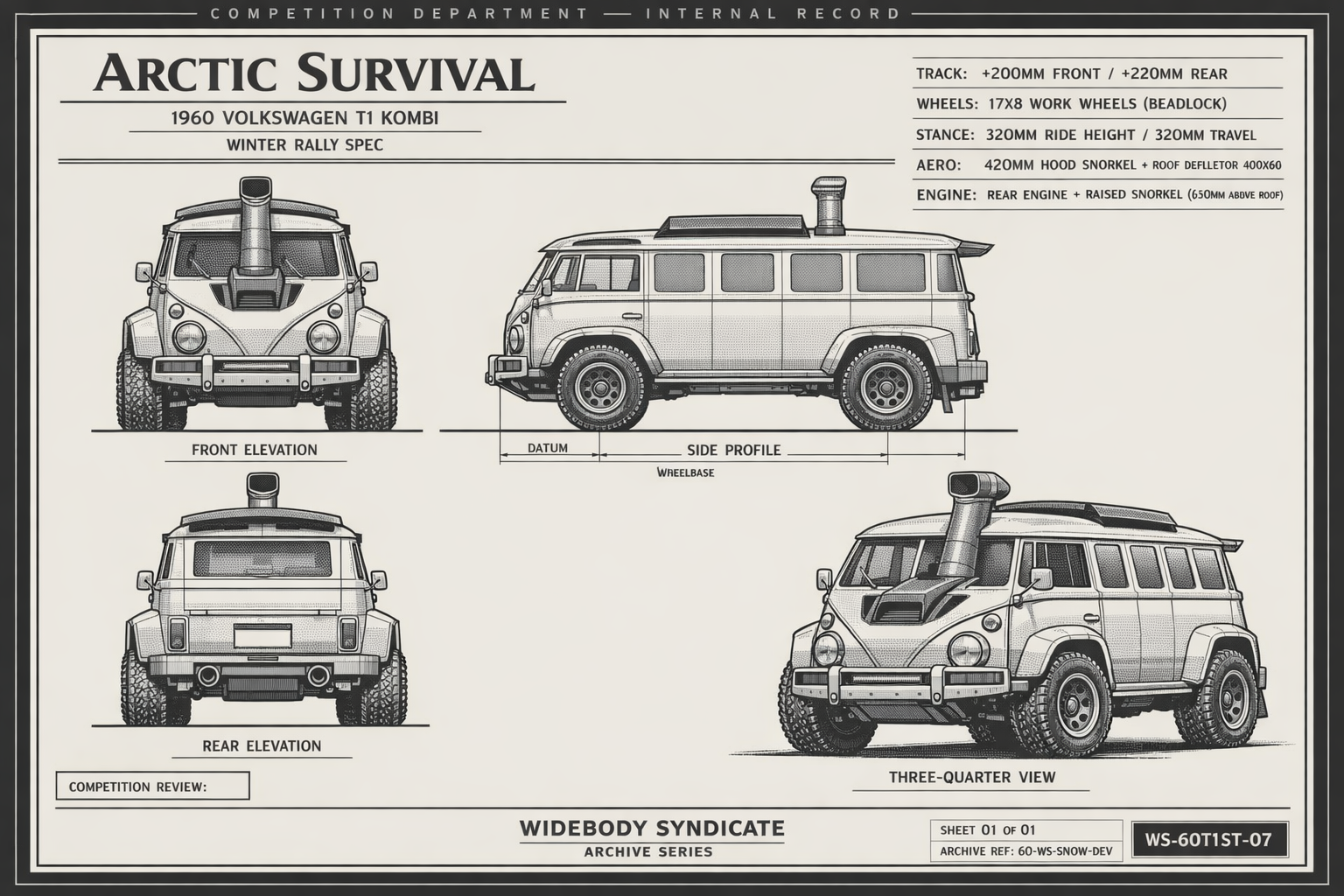
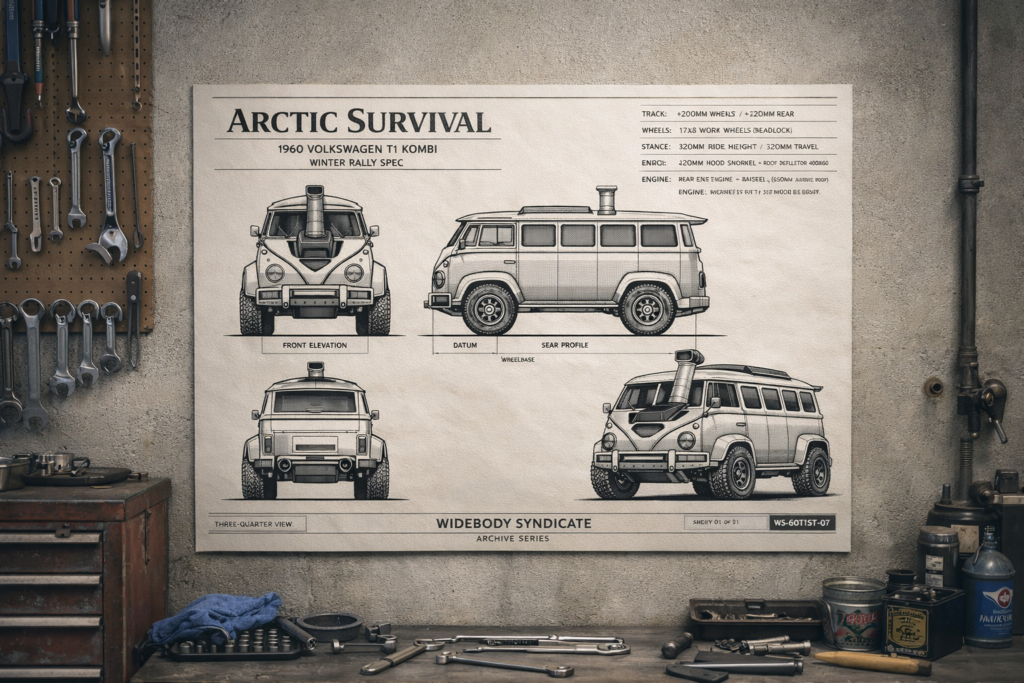
Blueprint / Collector Archive
Engineering Artifacts
The technical study and collectible interpretation of one build, preserved together.
Selected archive goods are available for collectors.
Technical Dossier
Platform
1960 Volkswagen T1 Kombi
The 1960 Volkswagen T1 Kombi is an icon of post-war automotive ingenuity, blending simplistic engineering with unparalleled versatility. Its air-cooled flat-four engine powering a lightweight, utilitarian van body set the stage for decades of cultural impact—from hippie convoy leader to functional workhorse. With its distinctive split windshield and rounded silhouette, the T1 Kombi’s design remains timeless, embodying a raw, mechanical charm that highlights its straightforward, rear-engine, rear-wheel-drive layout.
Aero Package
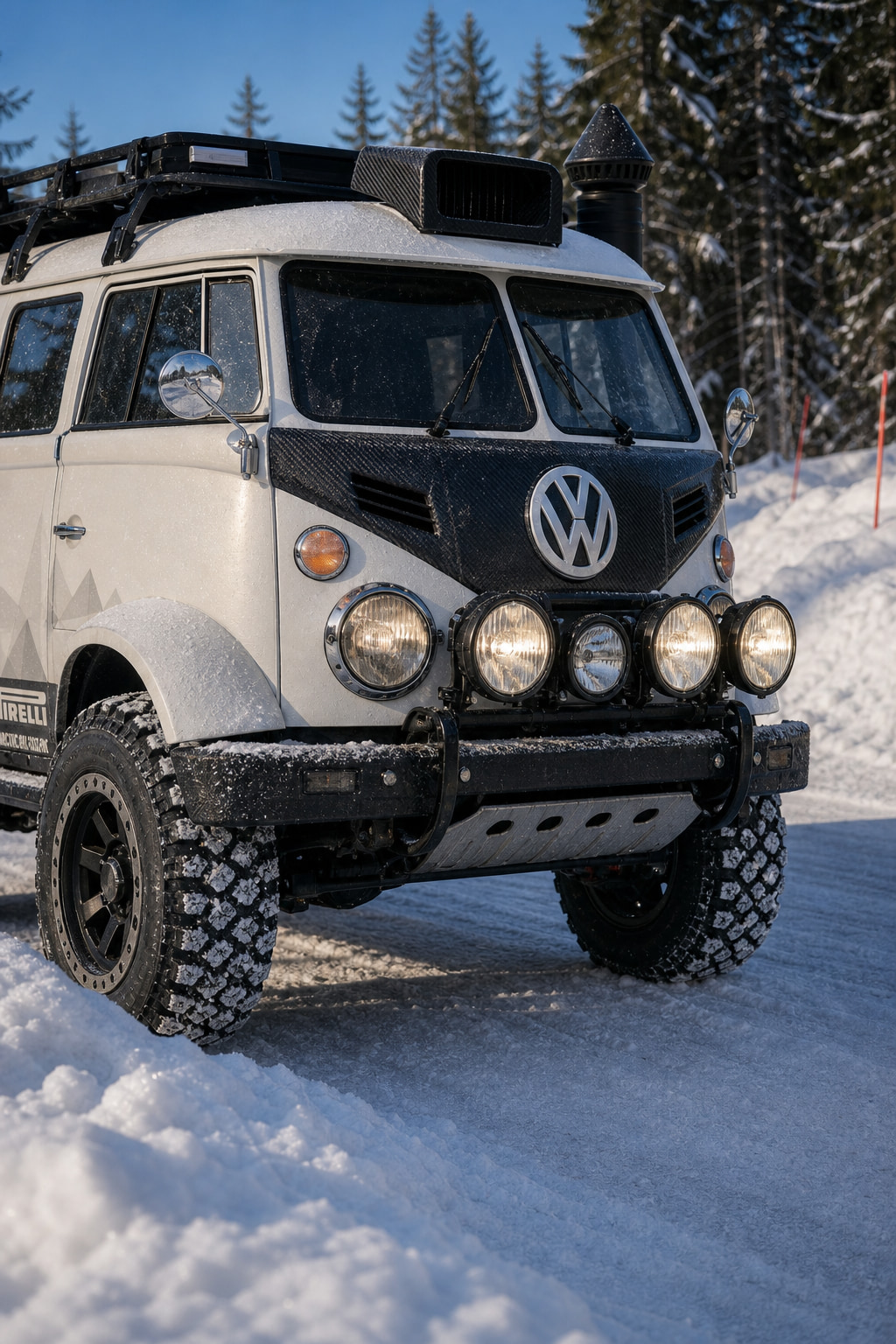
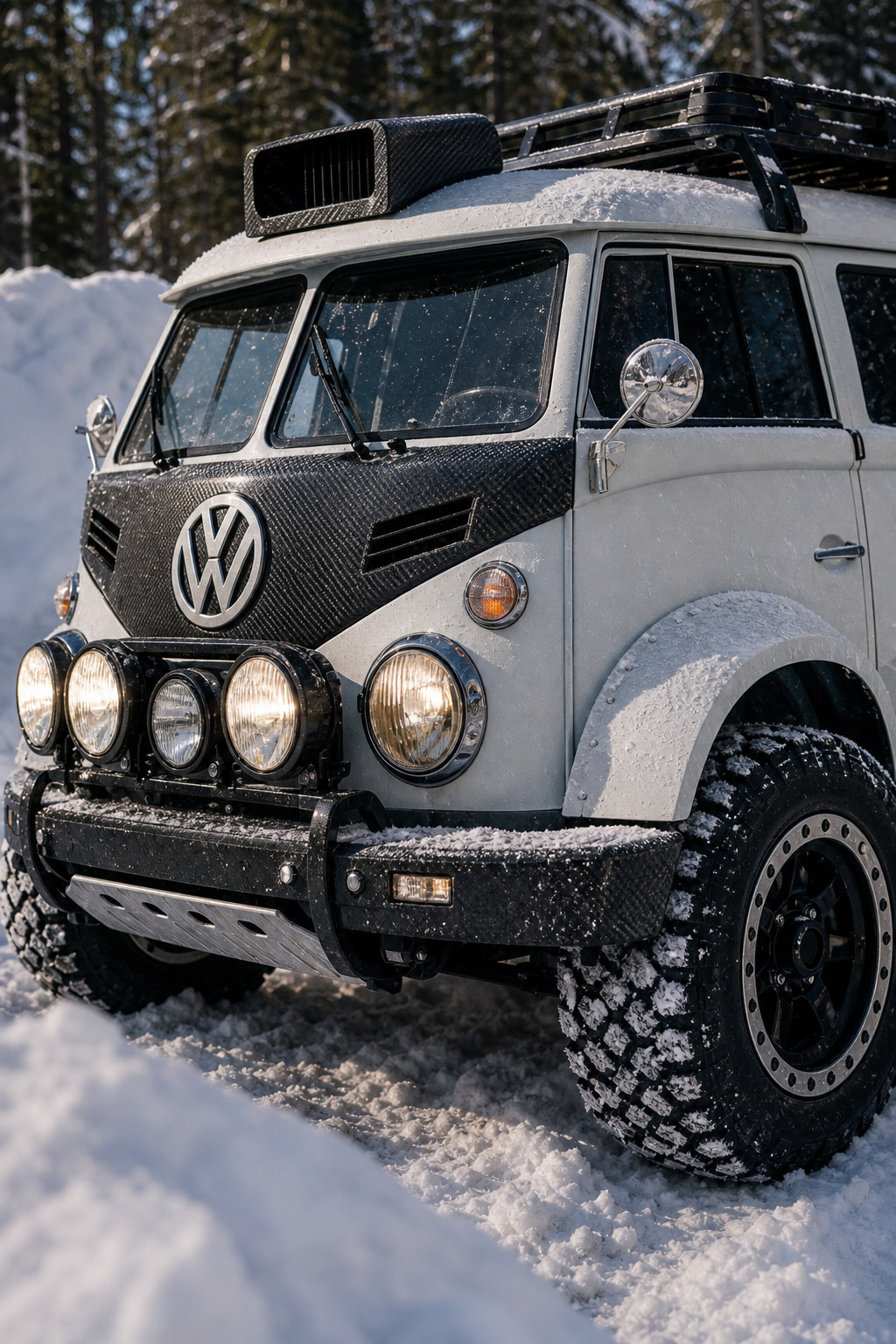
Carbon-fiber vented hood with 420mm rectangular center snorkel
Dual lateral heat extractors integrated into hood surface to evacuate engine bay heat
Subtle roof-mounted deflector (400mm wide, 60mm tall) to reduce snow buildup at the roof edge
Extended underbody skid plates for ice berms and frozen ruts
Chassis
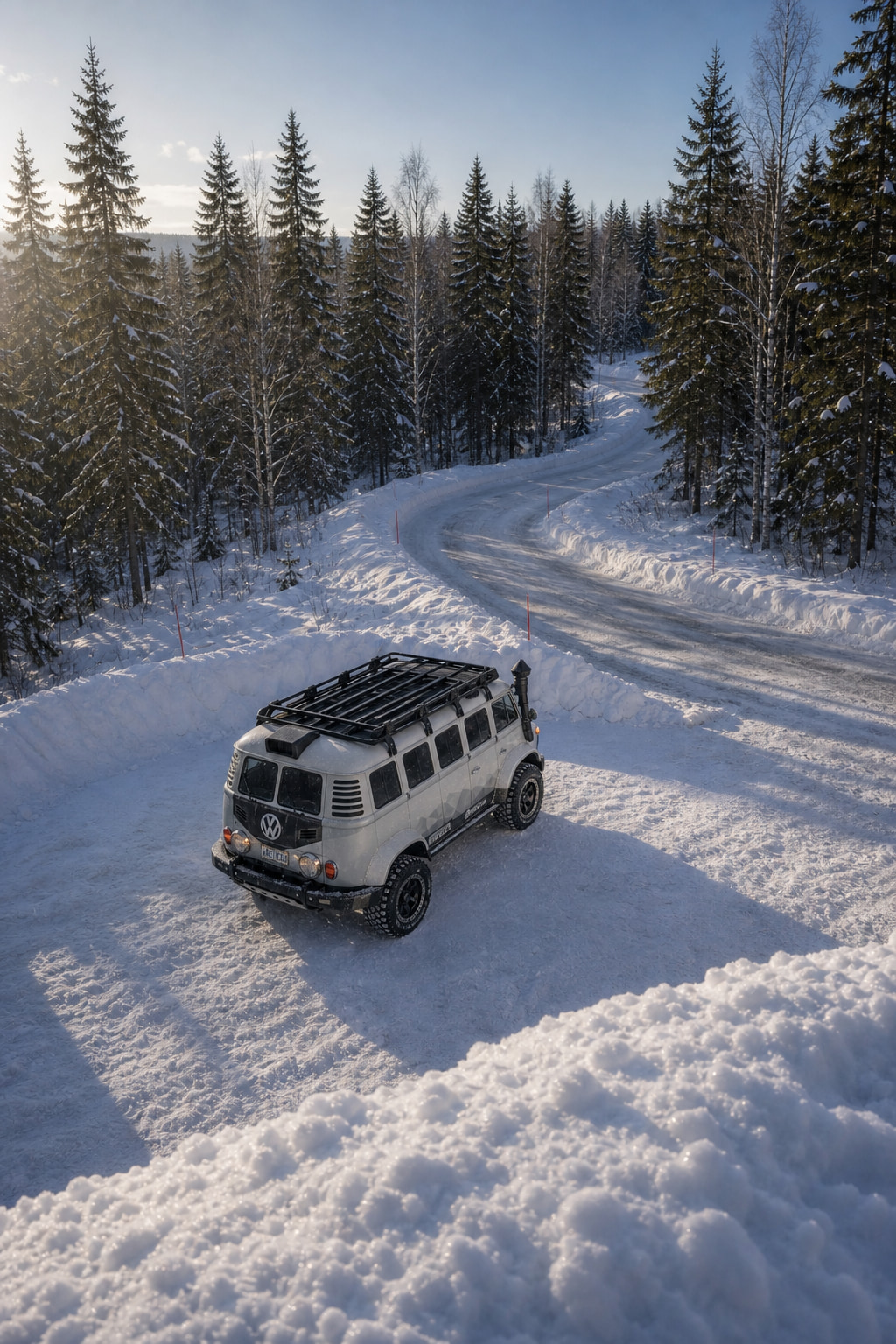
Set on a twilight Scandinavian forest stage, the Kombi sits in muted blue ambient light with fog and fine snow hanging in the air. A low 1m camera height and 35mm perspective put the emphasis on the packed arches, studded footprint, and rally lighting cutting through the haze. It’s the kind of scene where traction sounds like gravel and the road disappears under white.
Wheels & Tires
17x8 Work Wheels with reinforced beadlock rings for low-pressure snow/ice stability
Front: up to 295mm-wide studded snow tires, 17-inch diameter
Rear: up to 305mm-wide studded snow tires, 17-inch diameter
Wide-offset fitment to support +200mm/+220mm track increase and steering stability on ice
Powertrain
Original rear-engine layout retained with cold-weather-focused induction routing
Raised intake snorkel (~410mm length) extended ~650mm above roofline with deflector cone for clean air
Cold-start reliability upgrades: improved ignition, sealed electrics, and winter-grade filtration strategy
Heat management emphasis: controlled extraction to prevent melt/refreeze icing in the bay
Fabrication Notes
Boxed flare construction and inner-arch clearancing designed for full lock and full bump with studded tires
Track-width changes engineered around scrub radius and stability, not just visual width
Rear bumper and skid system built as a sacrificial structure for ice impacts and snowbank taps
Vent and snorkel integration shaped to shed snow and avoid pooling at panel transitions
Design Philosophy
A split-window Kombi has no business looking this composed on a snow stage, which is exactly why it works. The Arctic Survival Rally Build keeps the rear-engine soul intact but rethinks everything around it for Scandinavian winter pace: wide track, real suspension travel, and airflow that prioritizes de-icing and heat management over nostalgia. Matte arctic white with frost geometry keeps it quiet visually, while the arches and snorkel tell you it’s here to work.
The widened body isn’t cosplay—those 100mm front and 140mm rear flares are shaped for studded tire clearance and full compression without chewing sheetmetal. Raised ride height and winter-tuned dampers give the van room to breathe in ruts and snowbanks, and the roof deflector and venting strategy aim to keep visibility and temps stable when the weather turns from pretty to punishing.
▧Platform+
1960 Volkswagen T1 Kombi
The 1960 Volkswagen T1 Kombi is an icon of post-war automotive ingenuity, blending simplistic engineering with unparalleled versatility. Its air-cooled flat-four engine powering a lightweight, utilitarian van body set the stage for decades of cultural impact—from hippie convoy leader to functional workhorse. With its distinctive split windshield and rounded silhouette, the T1 Kombi’s design remains timeless, embodying a raw, mechanical charm that highlights its straightforward, rear-engine, rear-wheel-drive layout.
⌘Aero Package+
Carbon-fiber vented hood with 420mm rectangular center snorkel
Dual lateral heat extractors integrated into hood surface to evacuate engine bay heat
Subtle roof-mounted deflector (400mm wide, 60mm tall) to reduce snow buildup at the roof edge
Extended underbody skid plates for ice berms and frozen ruts
⟡Chassis+
Set on a twilight Scandinavian forest stage, the Kombi sits in muted blue ambient light with fog and fine snow hanging in the air. A low 1m camera height and 35mm perspective put the emphasis on the packed arches, studded footprint, and rally lighting cutting through the haze. It’s the kind of scene where traction sounds like gravel and the road disappears under white.
◎Wheels & Tires+
17x8 Work Wheels with reinforced beadlock rings for low-pressure snow/ice stability
Front: up to 295mm-wide studded snow tires, 17-inch diameter
Rear: up to 305mm-wide studded snow tires, 17-inch diameter
Wide-offset fitment to support +200mm/+220mm track increase and steering stability on ice
▤Powertrain+
Original rear-engine layout retained with cold-weather-focused induction routing
Raised intake snorkel (~410mm length) extended ~650mm above roofline with deflector cone for clean air
Cold-start reliability upgrades: improved ignition, sealed electrics, and winter-grade filtration strategy
Heat management emphasis: controlled extraction to prevent melt/refreeze icing in the bay
△Fabrication Notes+
Boxed flare construction and inner-arch clearancing designed for full lock and full bump with studded tires
Track-width changes engineered around scrub radius and stability, not just visual width
Rear bumper and skid system built as a sacrificial structure for ice impacts and snowbank taps
Vent and snorkel integration shaped to shed snow and avoid pooling at panel transitions
×Design Philosophy+
A split-window Kombi has no business looking this composed on a snow stage, which is exactly why it works. The Arctic Survival Rally Build keeps the rear-engine soul intact but rethinks everything around it for Scandinavian winter pace: wide track, real suspension travel, and airflow that prioritizes de-icing and heat management over nostalgia. Matte arctic white with frost geometry keeps it quiet visually, while the arches and snorkel tell you it’s here to work.
The widened body isn’t cosplay—those 100mm front and 140mm rear flares are shaped for studded tire clearance and full compression without chewing sheetmetal. Raised ride height and winter-tuned dampers give the van room to breathe in ruts and snowbanks, and the roof deflector and venting strategy aim to keep visibility and temps stable when the weather turns from pretty to punishing.
Part of
Wave 36
Winter Warriors: Vol. 1
We took a bunch of rides most people wouldn’t dare to drag out onto frozen hellscapes and turned them into absolute beasts of Arctic rally warfare. Our builds don’t just survive the cold — they thrive in it, with widebody arches stretched wide enough to swallow studded tires that could chew through ice like butter.
Explore Wave 36 → 6 BuildsKeep Exploring
The archive is always growing. New releases, waves, and blueprints added regularly.