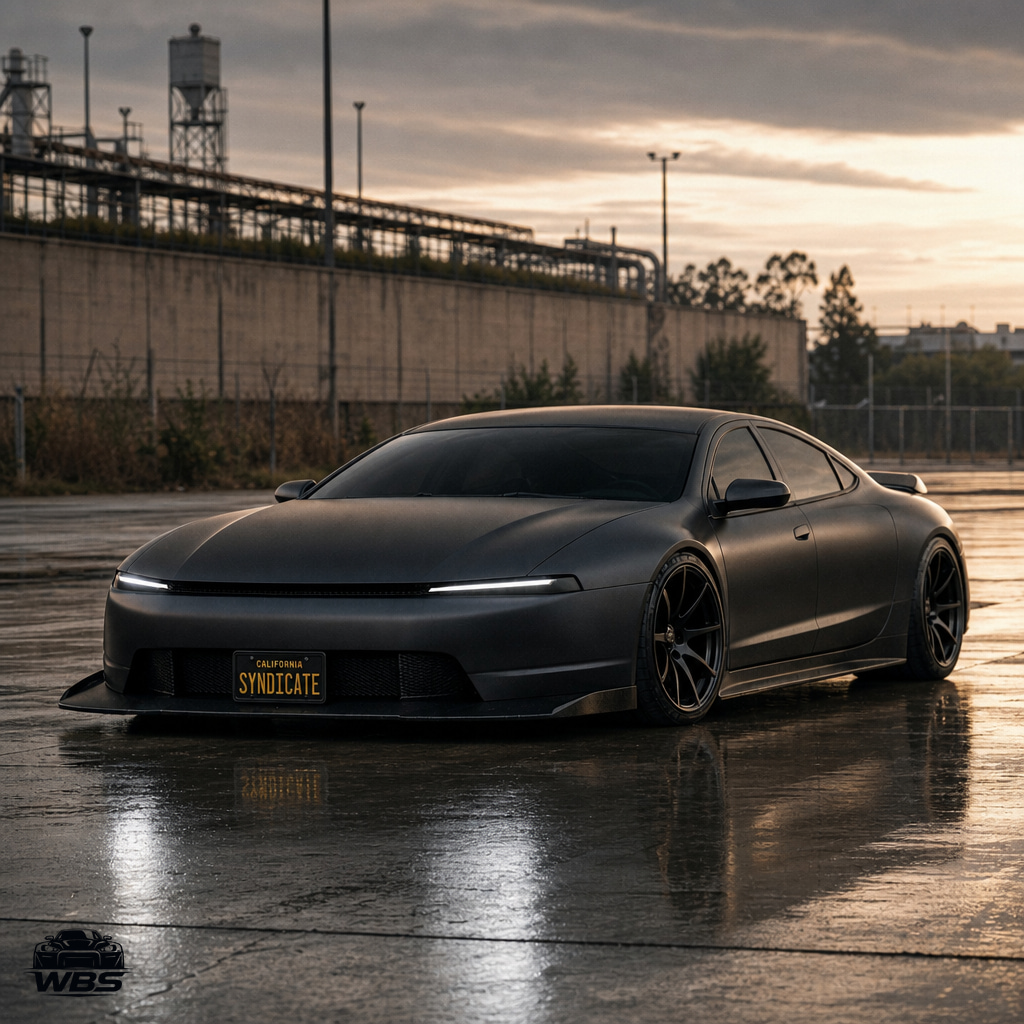
1969 Chevrolet Camaro
Silent Striker
Silent Striker takes a ’69 Camaro—one of the sacred shapes—and turns it into an urban interceptor that doesn’t announce itself.
Read build details ↓





BUILD DETAILS
Silent Striker takes a ’69 Camaro—one of the sacred shapes—and turns it into an urban interceptor that doesn’t announce itself. The widebody isn’t cartoon flare; it’s measured, low, and sharp, widening the track to 1820mm front and 1890mm rear while keeping the car’s original proportions intact. Matte radar-absorbent black and interlocked panel breaks kill reflections and visually flatten the surfaces, letting the silhouette do the intimidation.
Under the skin, the big-block myth is replaced by instant torque and thermal management. Dual motors push a 700kW peak through torque vectoring, backed by a trunk-integrated battery enclosure with real ducting and a rear diffuser that actually moves air. It sits 40mm lower on adaptive magnetic suspension—quiet in the approach, violent at the exit, and engineered to carry the weight and heat of the electronics without turning into a show-only prop.
BUILD MEDIA
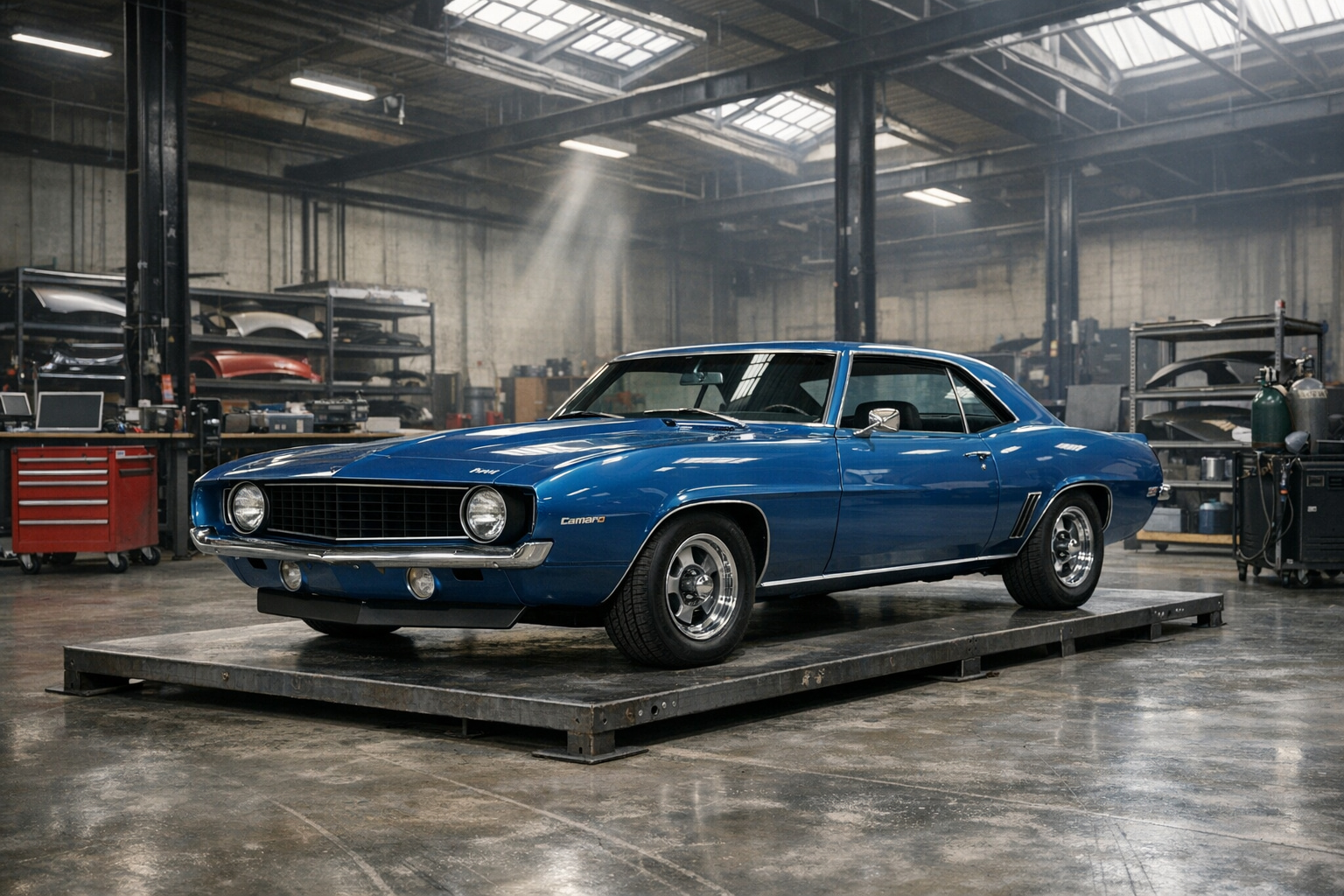
Photography Studio






Blueprint
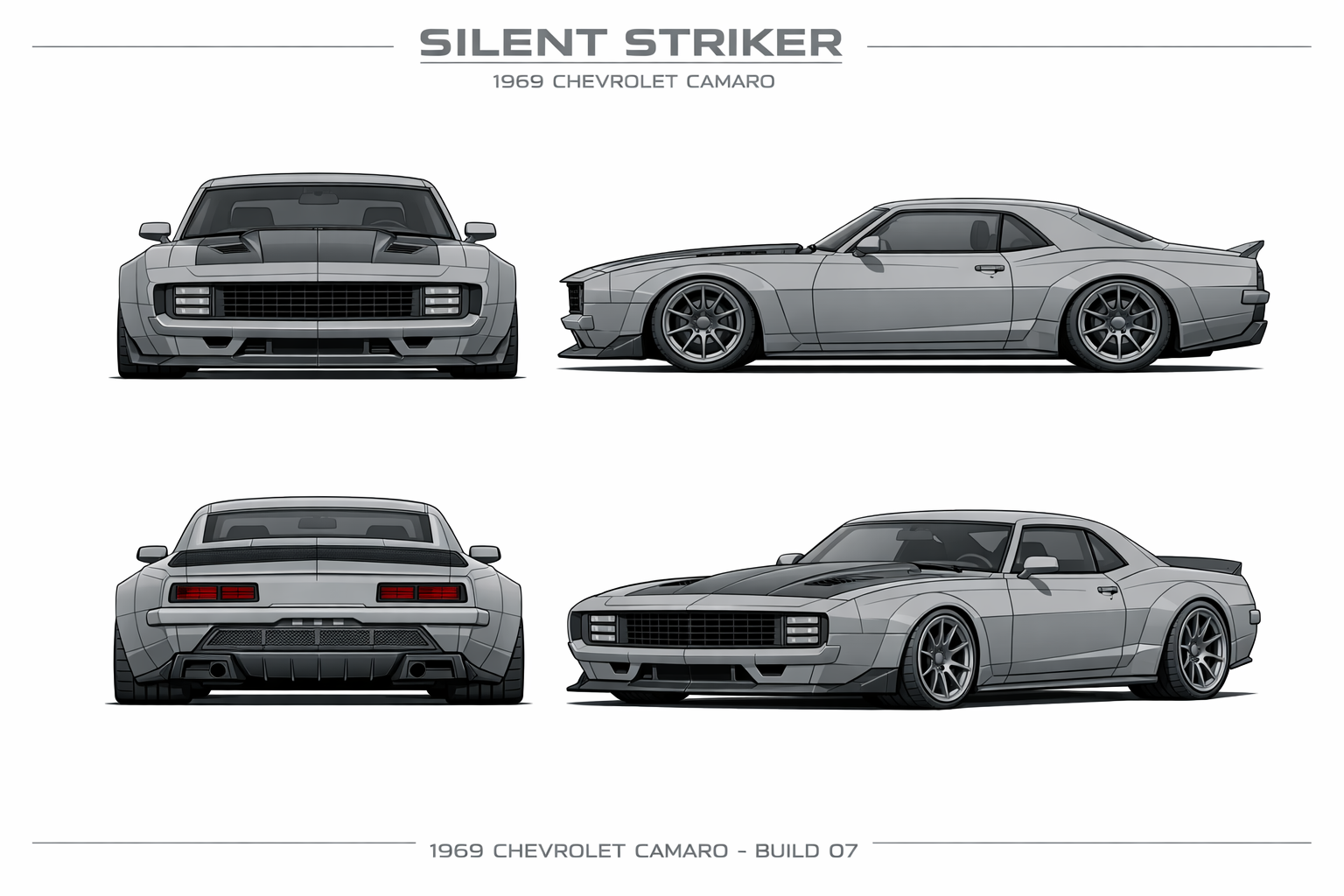 View blueprint ↗
Collectible Poster
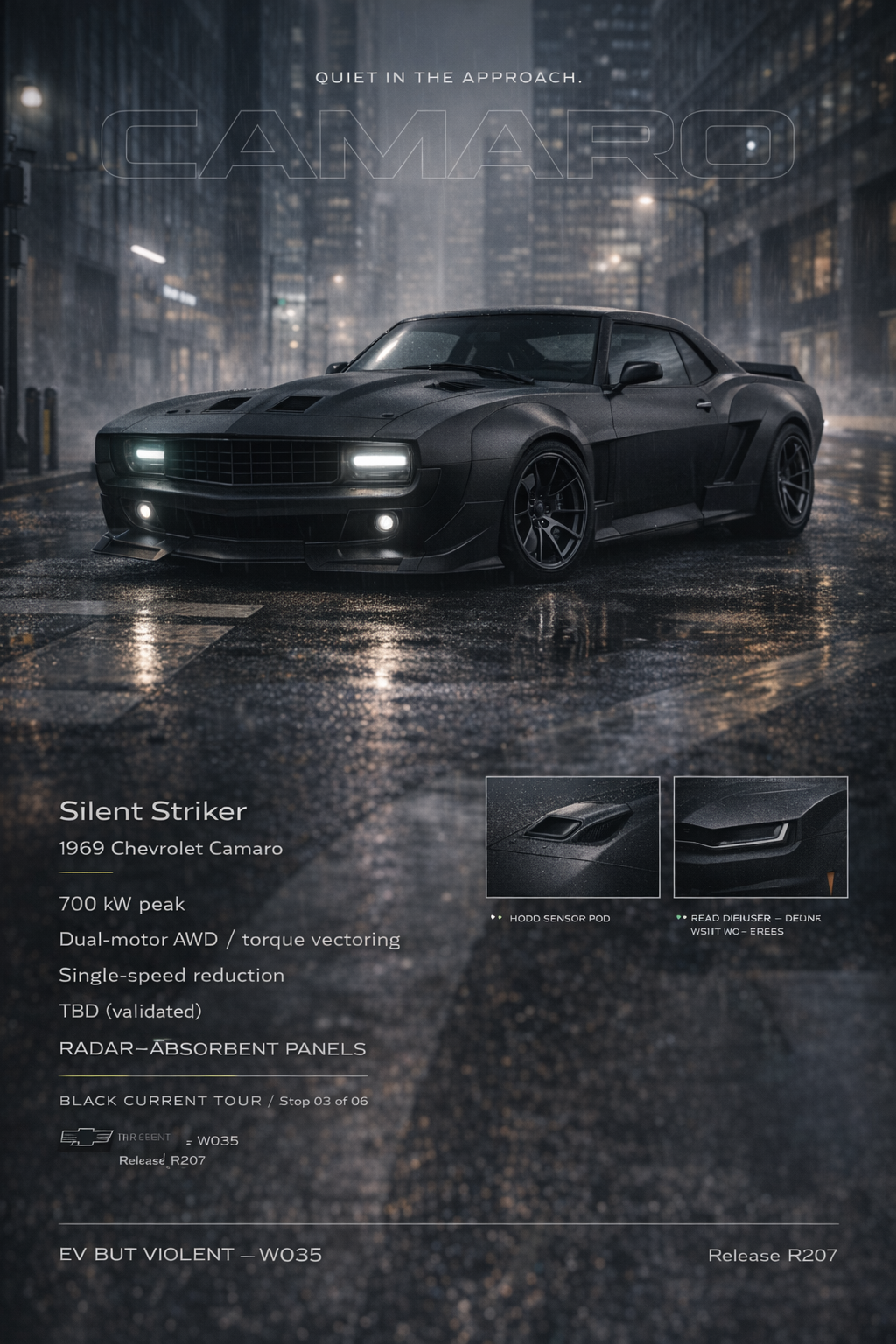
Powertrain concept+
Dual electric motors
700kW peak combined output
Electronic torque vectoring for yaw control and corner-exit traction
Active liquid cooling for motors/inverters with dedicated ducting paths
High-voltage architecture designed to support heavy onboard electronic systems
Aero package+
Front fascia with flush-mounted sensor pods and smoothed leading edges
Flat undertray transitioning into a functional rear diffuser for extraction and cooling
Integrated carbon ducktail tuned for low-drag stability
Tight arch-to-tire surfacing to reduce wheel-well turbulence
Chassis & stance+
1969 Chevrolet Camaro
Wheels & tires+
20x10 forged BBS FI wheels
275/35R20 Pirelli P Zero tires (square fitment for rotation and predictable balance)
High-load-rated hubs and studs specified for EV mass and braking torque
Fabrication notes+
Widebody integration blended to OEM body lines with reinforced inner tubs for full suspension travel
Battery enclosure mounts tied into rear structure with serviceable access panels and sealed gaskets
Cooling airflow mapped front-to-rear: intake management
heat exchanger placement
and diffuser-assisted extraction
Sensor pod housings designed flush and removable for calibration and repair