Media library
6 photos
Photography Studio Gallery
6 images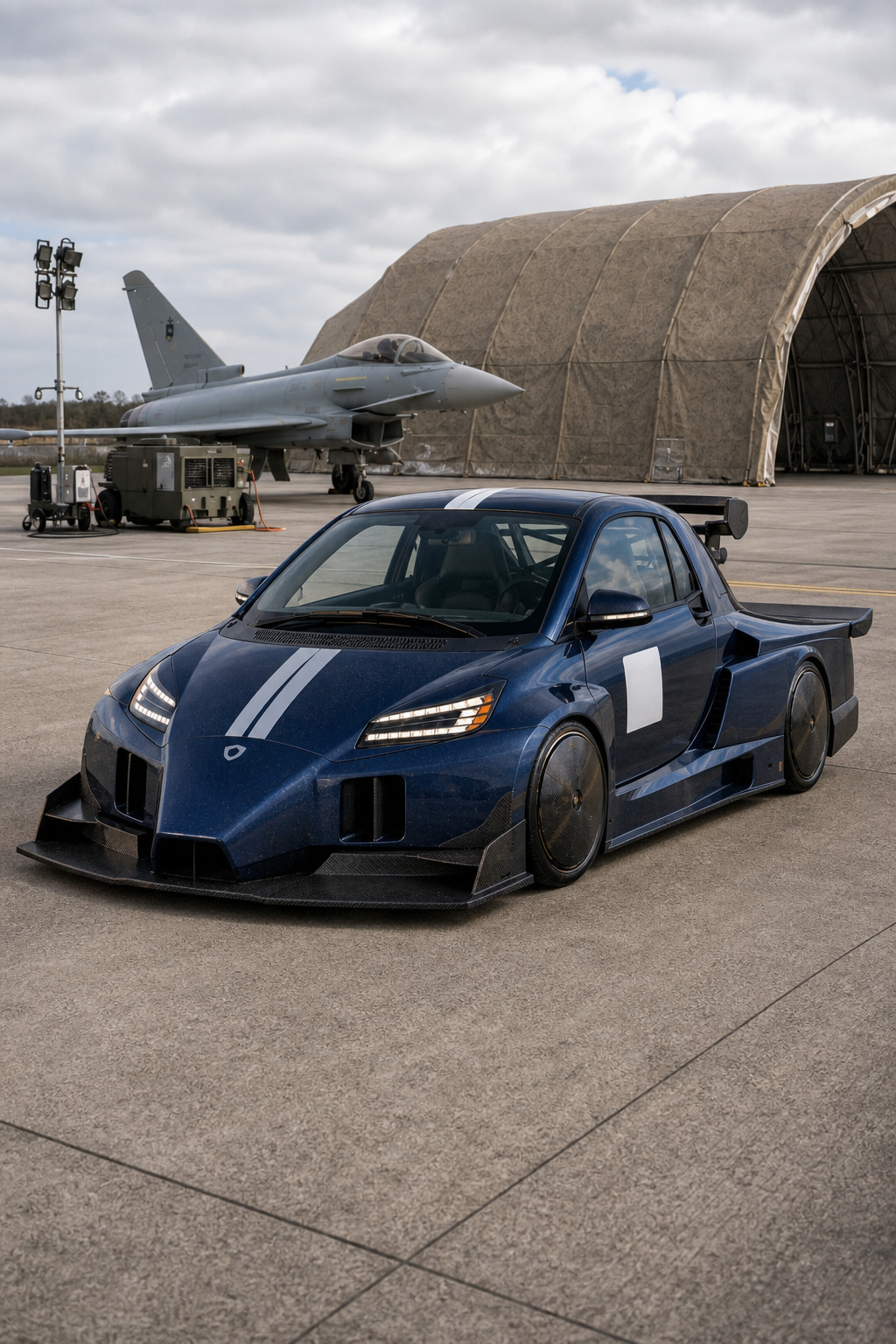

Story
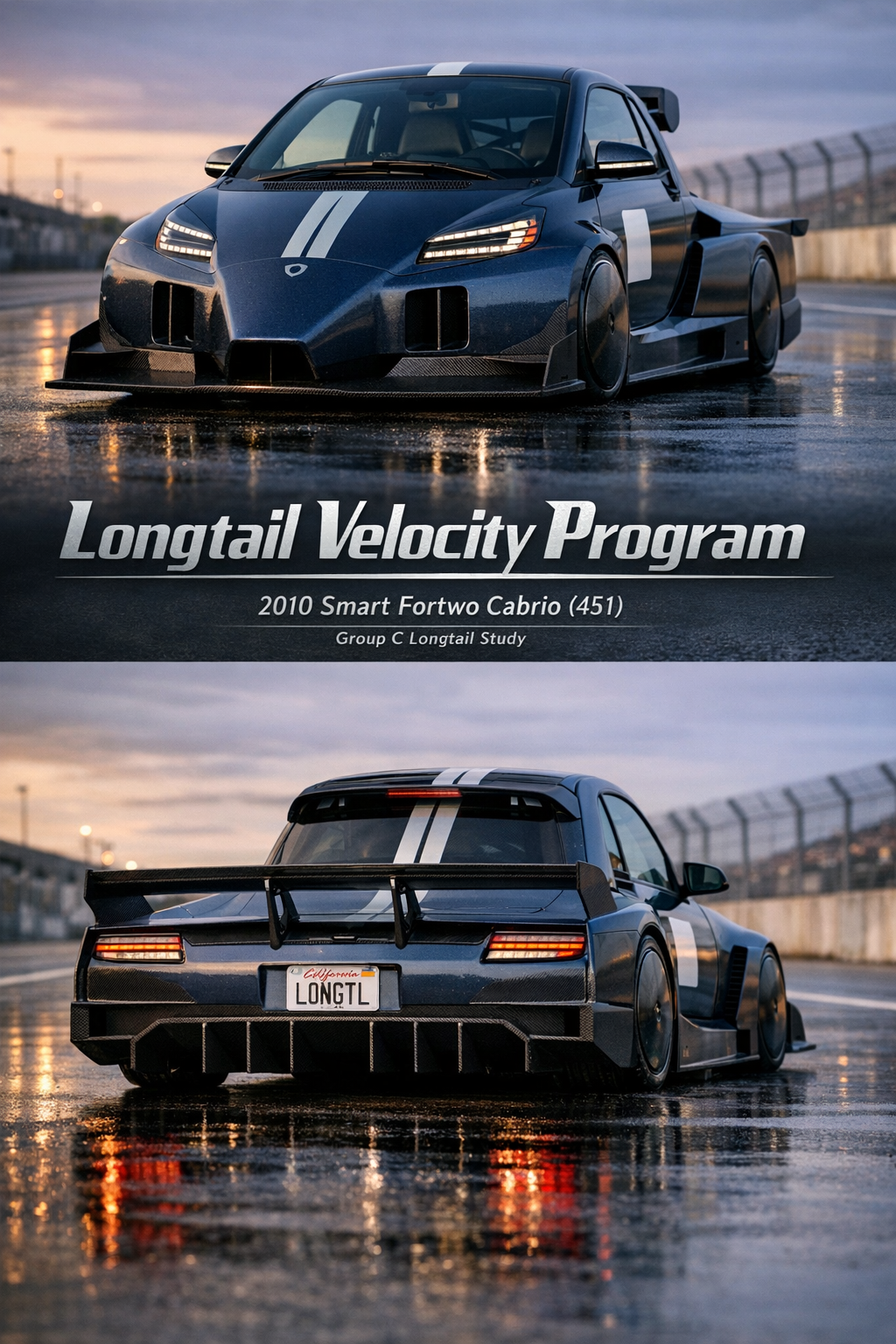
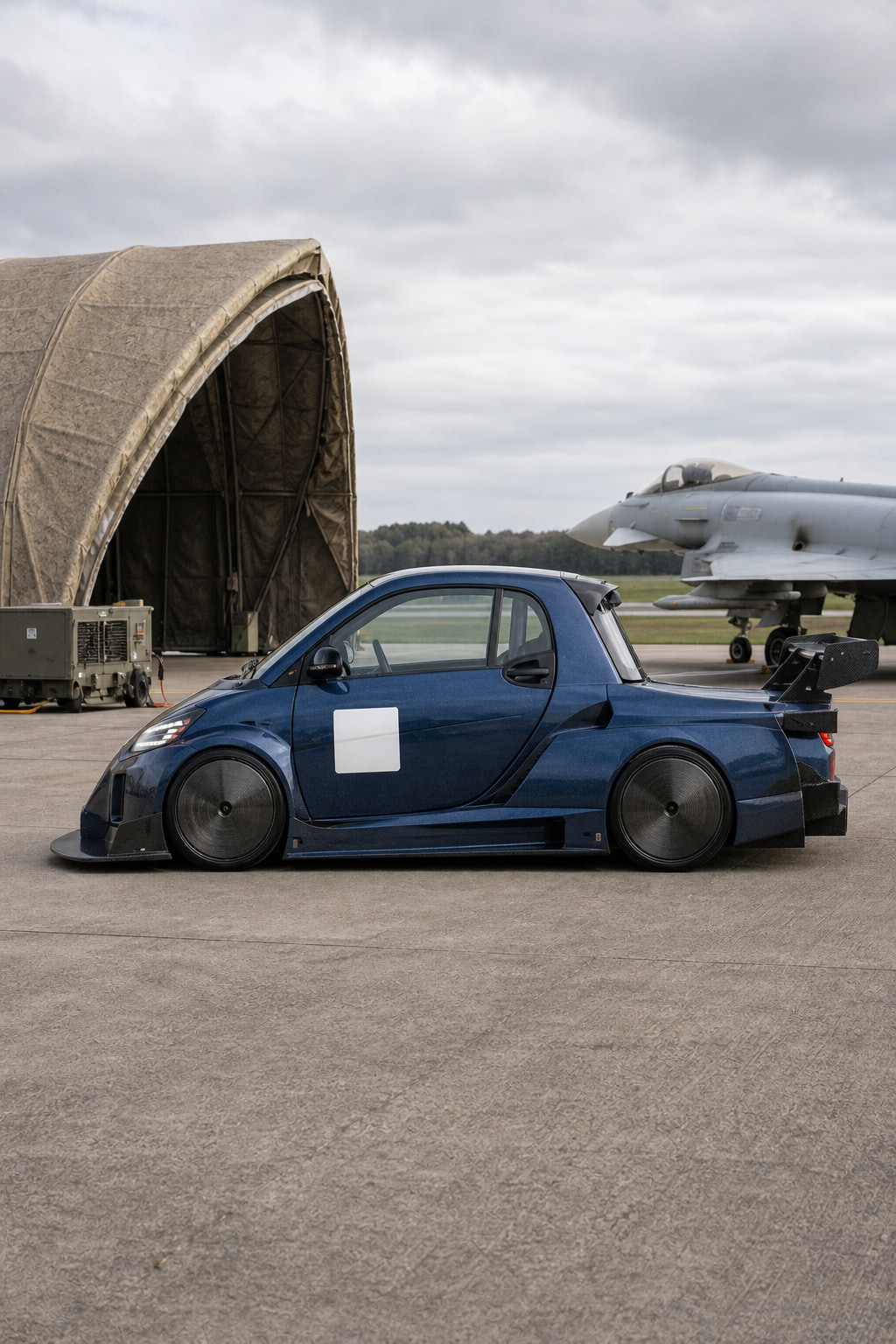
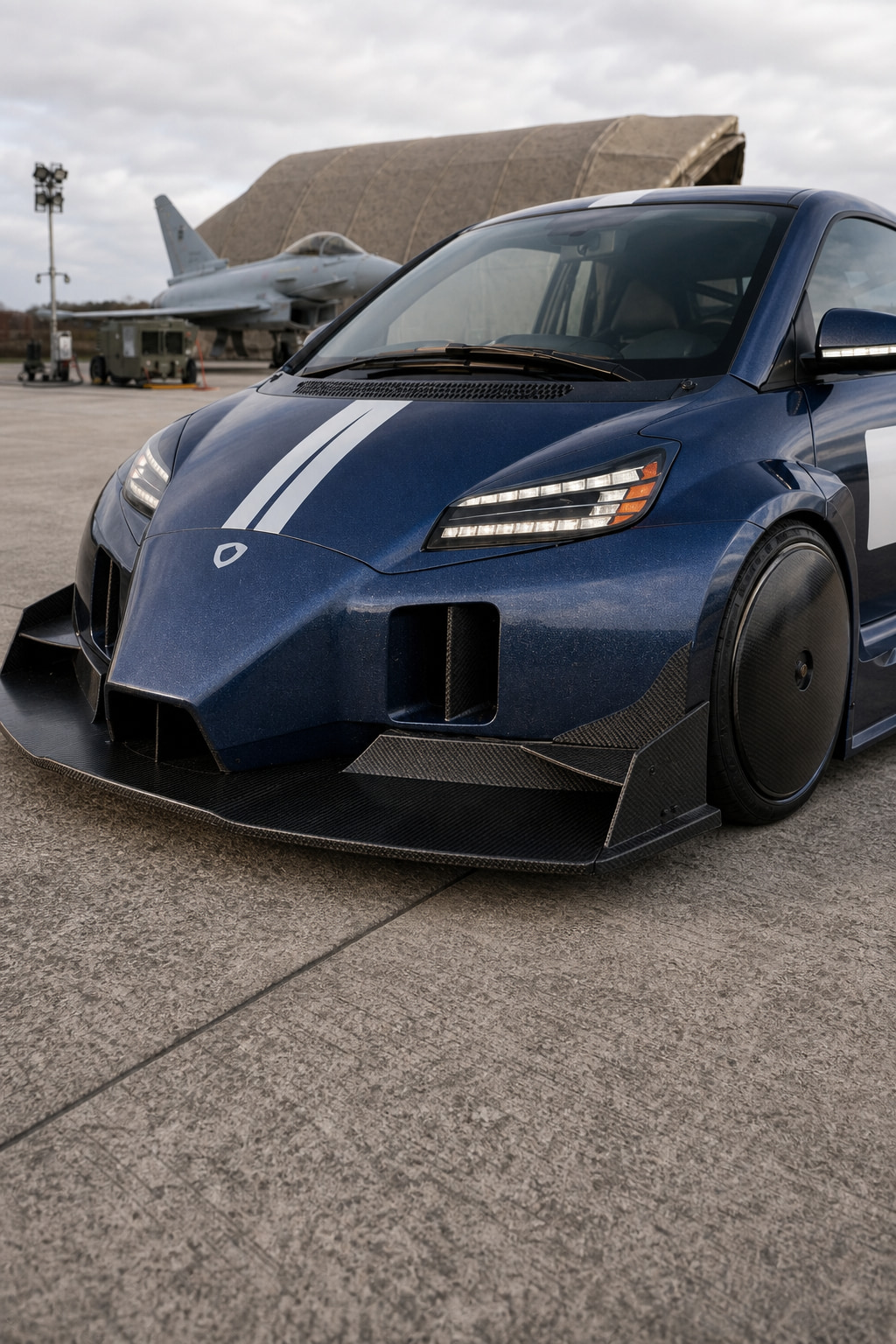
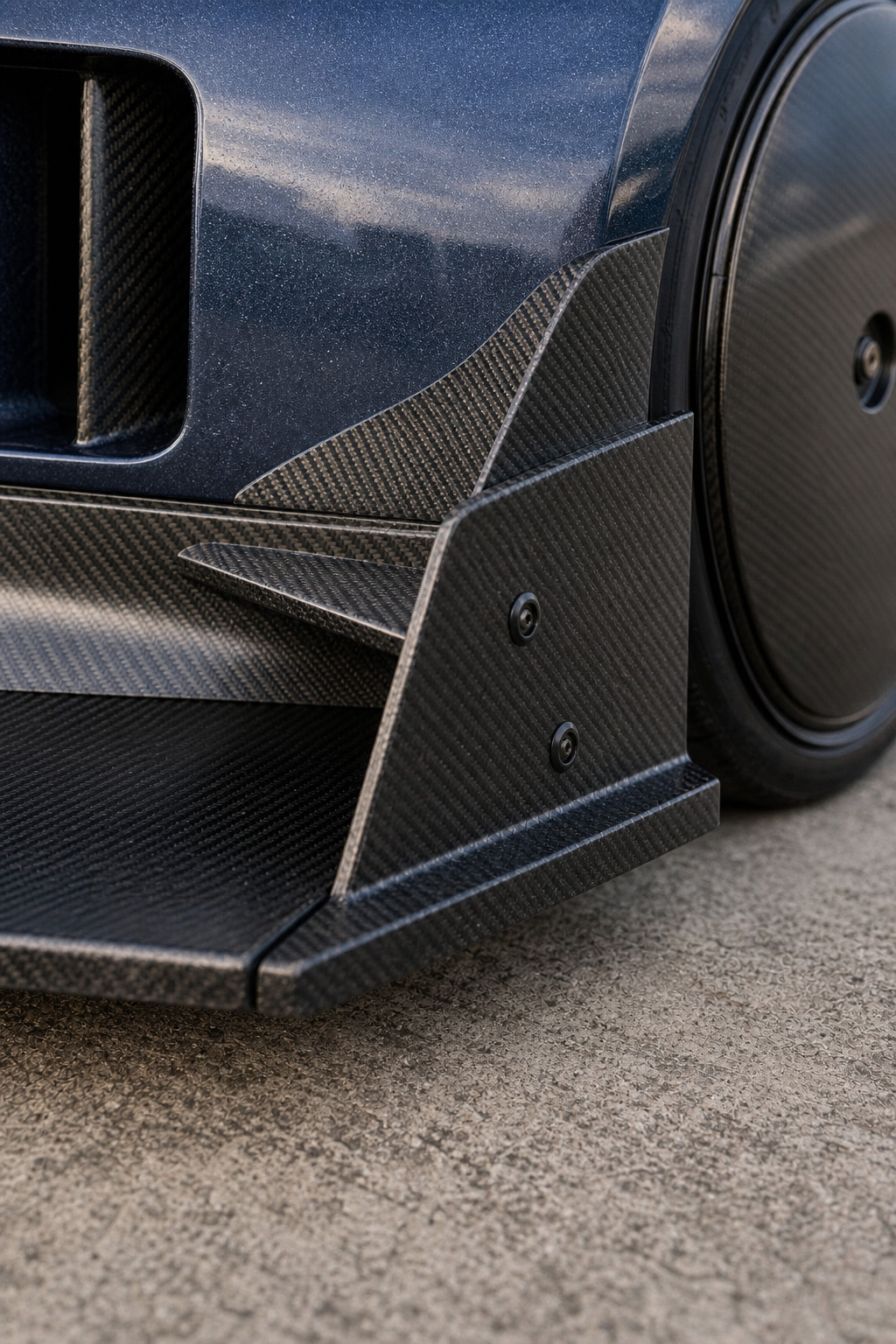
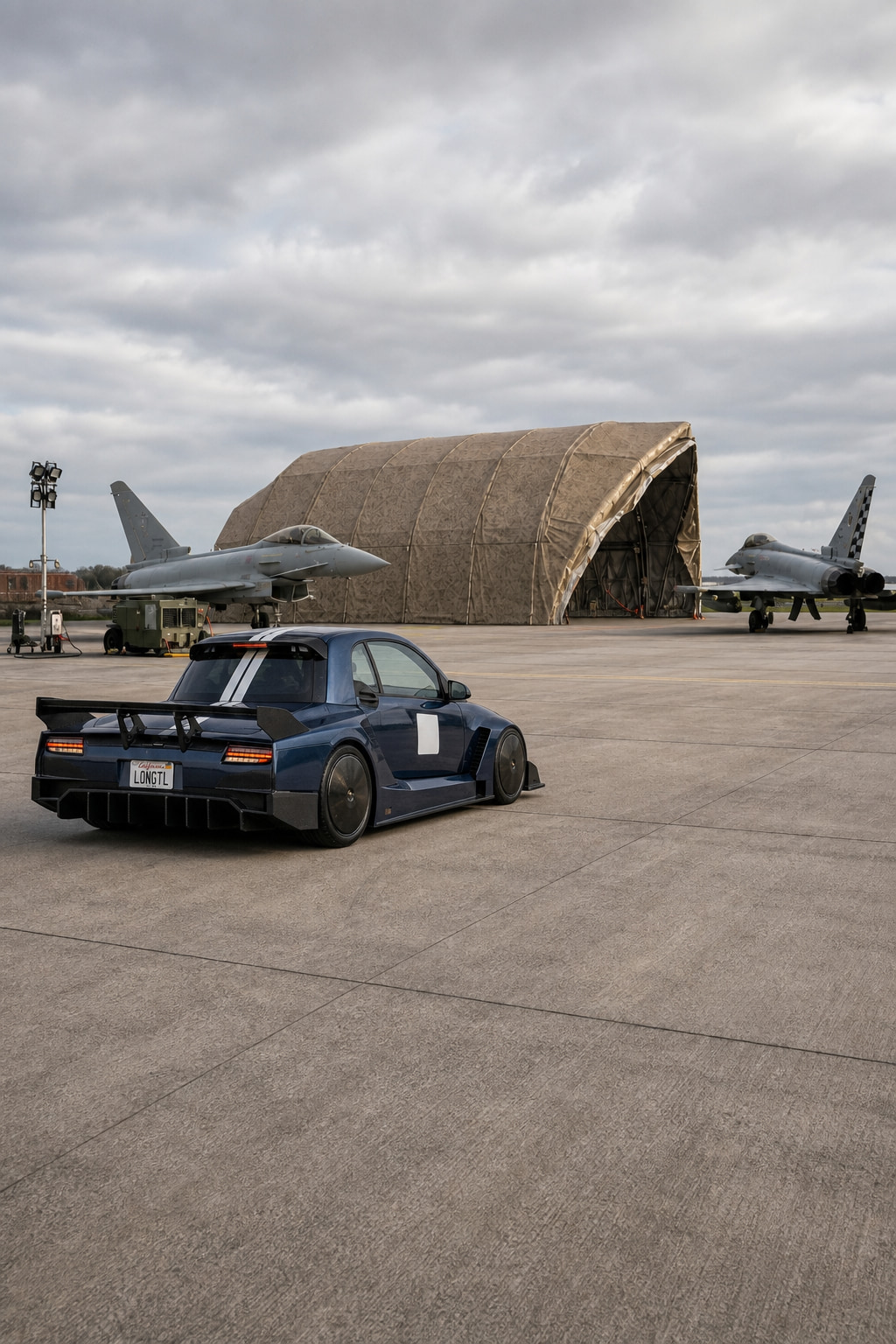
The Longtail Velocity Program takes a 2010 Smart Fortwo Cabrio 451 and forces it through an ’80s endurance-prototype lens without losing the telltale Smart greenhouse. The wedge nose is pushed forward, the wheels disappear under smooth fairings, and the body grows into a measured longtail that looks more Le Mans test mule than city car—still unmistakably a Fortwo from the beltline up.
It’s not a cartoon widebody; it’s a drag-and-balance exercise. A sealed front face feeds compact coolers through narrow inlets, the sidepods manage pressure and extraction, and the underfloor works with a multi-channel diffuser to keep the car stable when the speed comes up. The result reads like a design archive “what if”: microcar packaging, prototype aero discipline, and a stance that’s all business.
Blueprint
The Whitepaper Room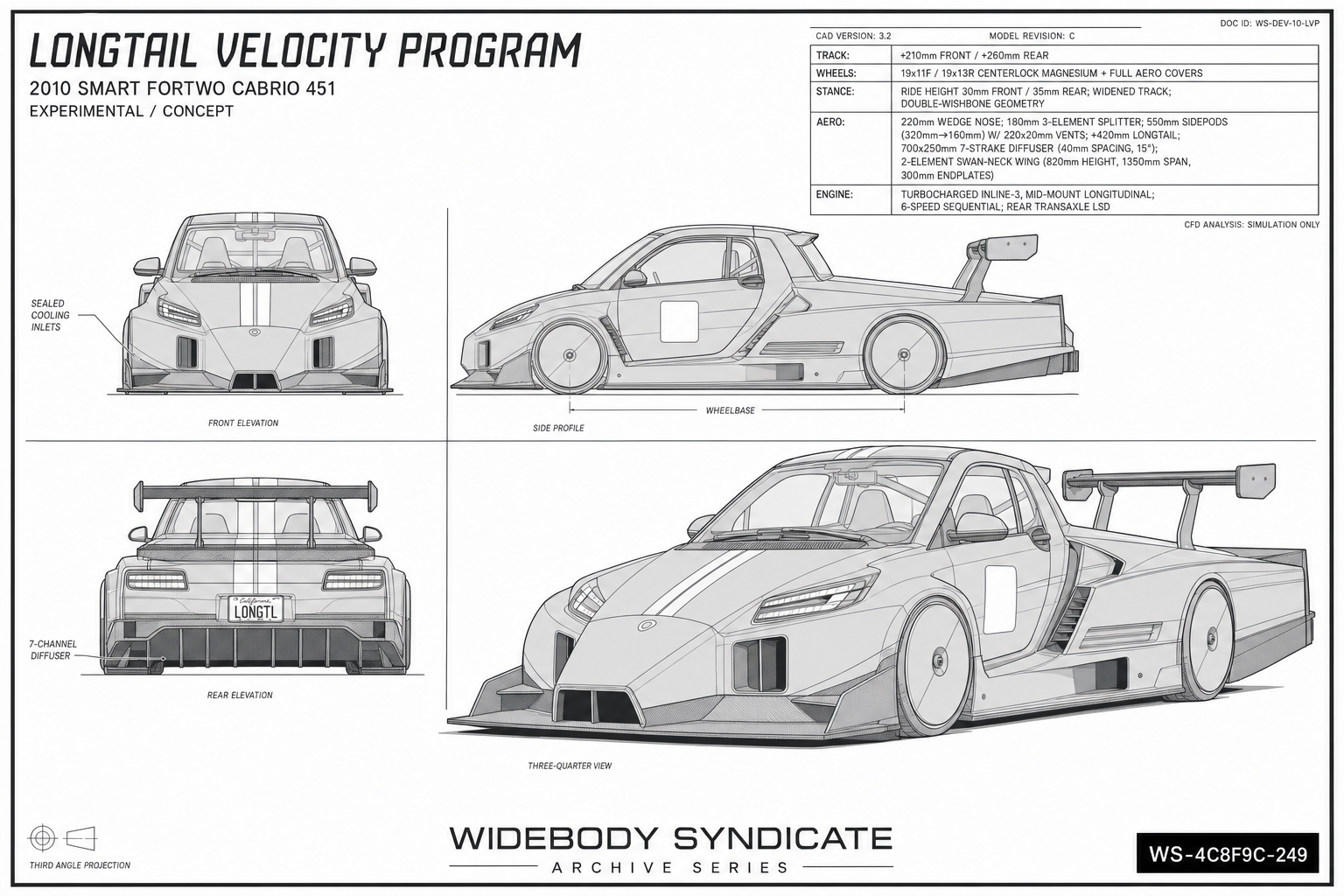 Inspect drawing ↗Open blueprint study →
Collectible Poster
Collector's Edition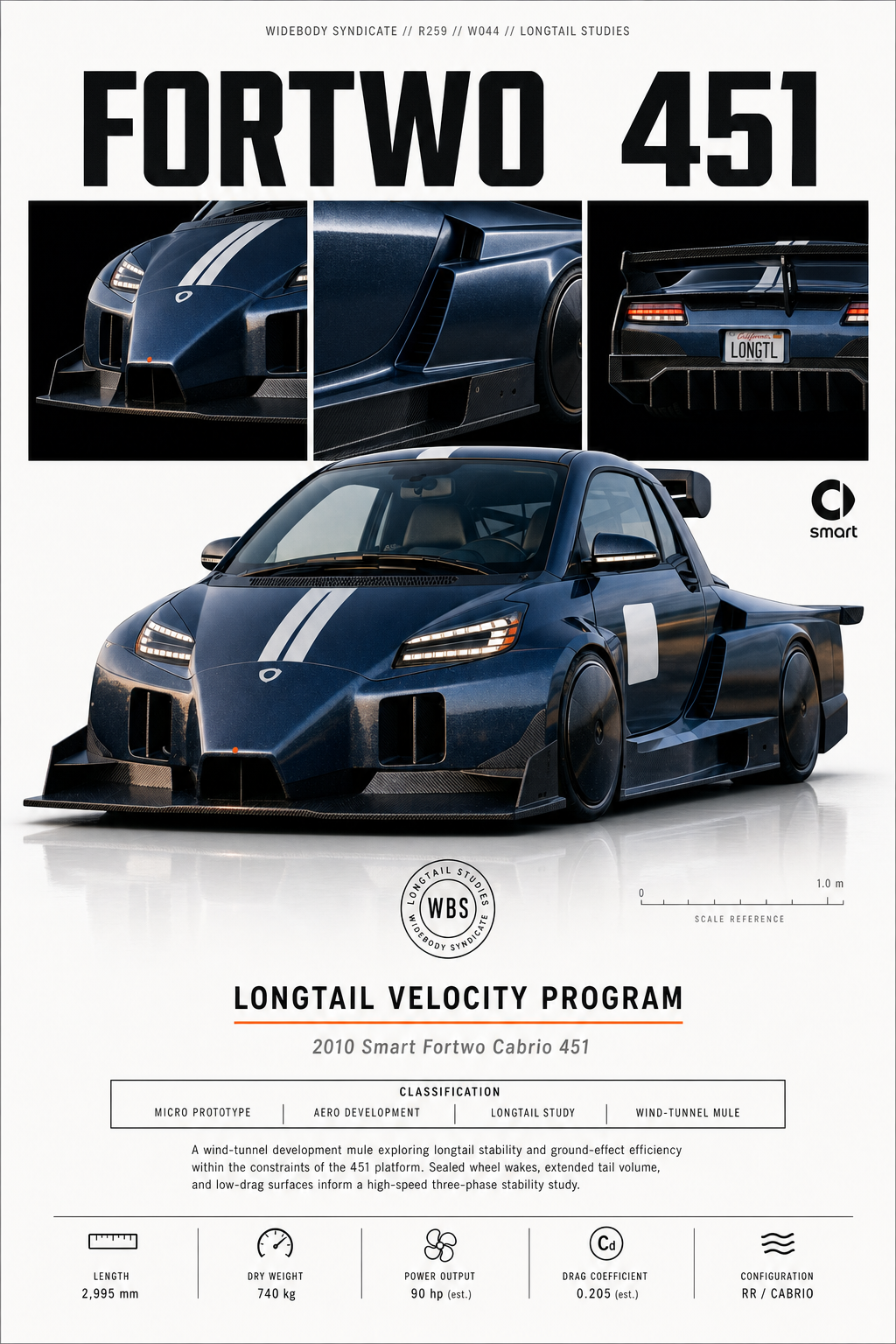 Inspect poster ↗
Technical dossier
Fictional engineering concept
Platform
2010 Smart Fortwo Cabrio 451
Powertrain concept
Mid-mounted longitudinal turbocharged inline-3 racing engine behind the cabin
6-speed sequential gearbox with rear transaxle packaging
Mechanical limited-slip differential for predictable power-down under aero load
Ducted cooling system using front and side inlets with sealed internal routing
Aero package
Sealed wedge nose cone with narrow vertical inlets feeding ducted water/oil cooling
Carbon multi-element front splitter with outboard dive planes to manage wheelhouse pressure
Full undertray to seven-channel venturi diffuser with tall strakes and controlled ramp angle
Longtail-integrated two-element rear wing on swan-neck pylons with tall trapezoidal endplates
Flush twin retractable air brakes integrated into the rear deck
Chassis & stance
2010 Smart Fortwo Cabrio 451
Wheels & tires
19x11 front and 19x13 rear magnesium centerlock wheels with full aero covers
Dunlop slicks: 295/30ZR19 front
335/30ZR19 rear
Track widened +210mm front and +260mm rear to match fairing volume and suspension geometry
Ultra-low ride height target: 30mm front
35mm rear for underfloor efficiency
Fabrication notes
Composite body and wheel fairings built around hard points; wheel coverage sized to clear steering and bump travel
Aluminum honeycomb reinforcement in longtail and splitter mounting zones to prevent aero-induced deflection
Titanium fasteners and serviceable dzus-style interfaces for quick access to coolers
brakes
and undertray
LED lamp internals packaged behind OEM lens shapes to preserve signature while smoothing surface transitions
Prints
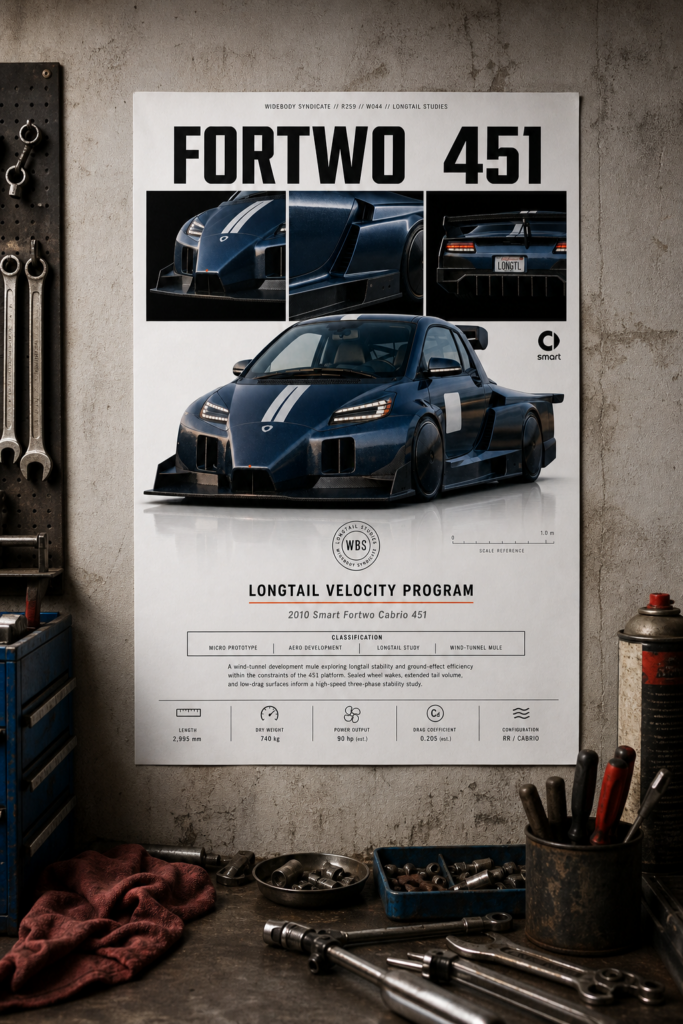
Collect this build
Choose an available edition, then select its size and finish.
View print options
 Continue the exhibitionLongtail StudiesI got bored of normal proportions, so we went full Group C on the stuff nobody asked for.Build 6 of 6↗