
R238
Daikoku Sentinel
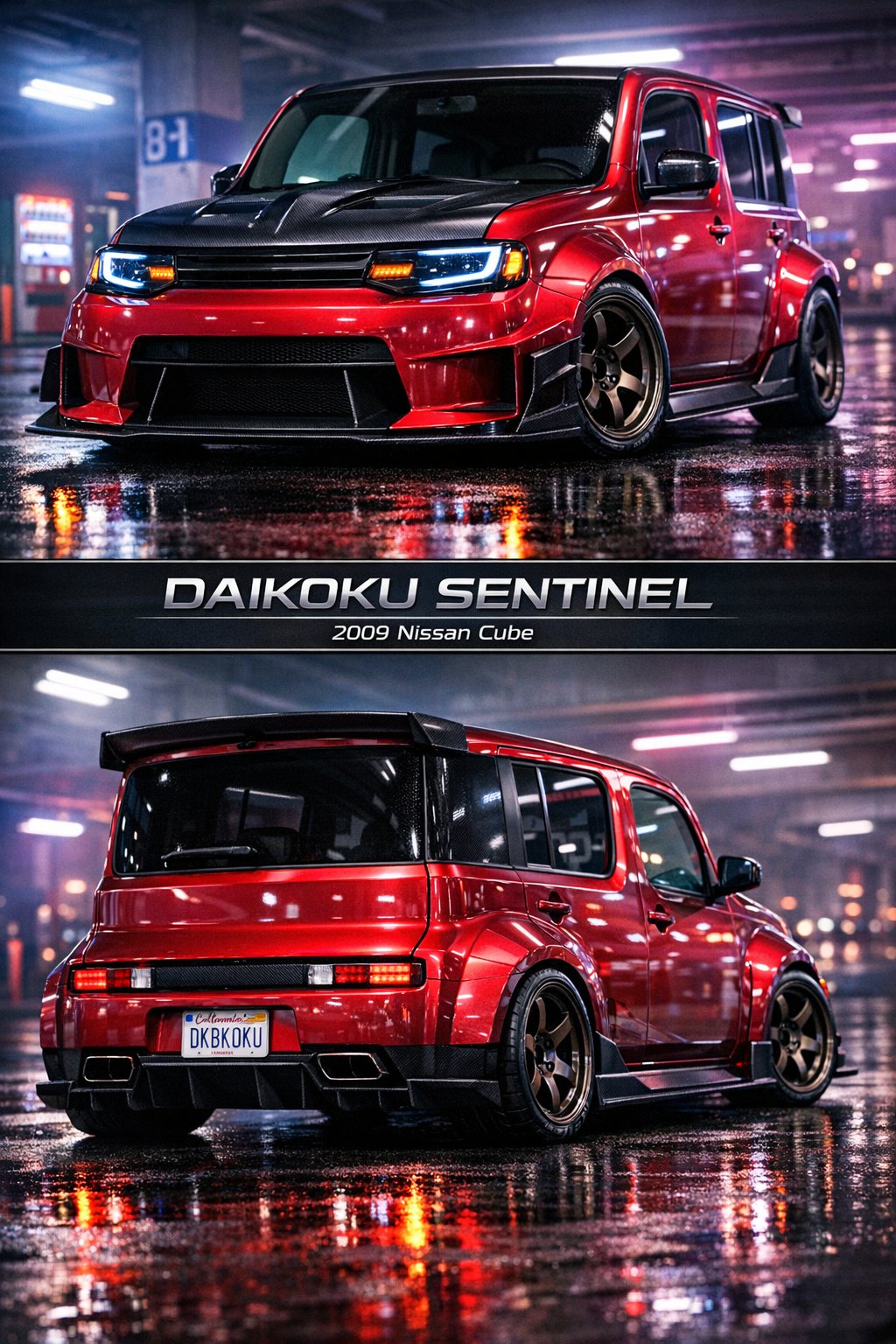
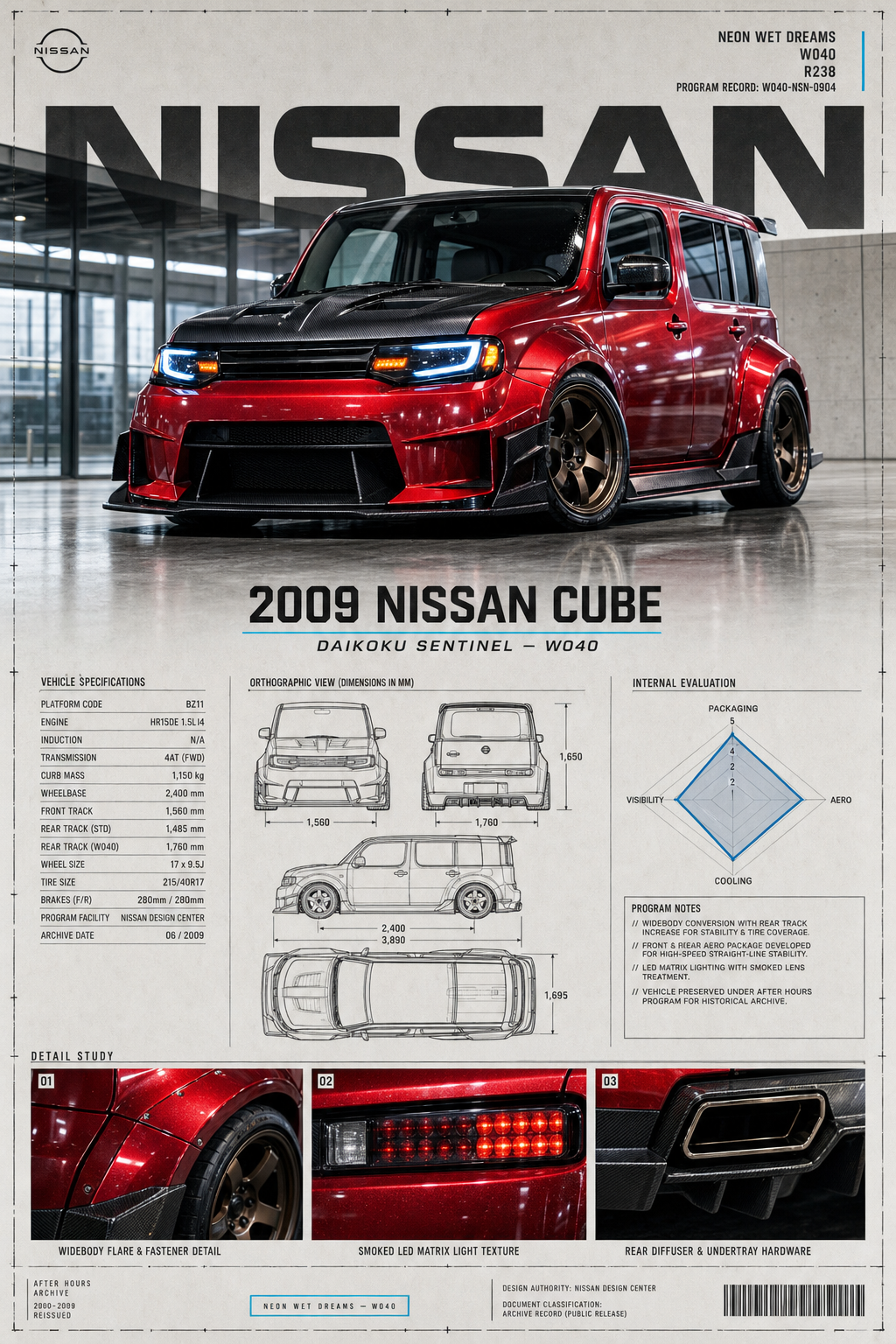
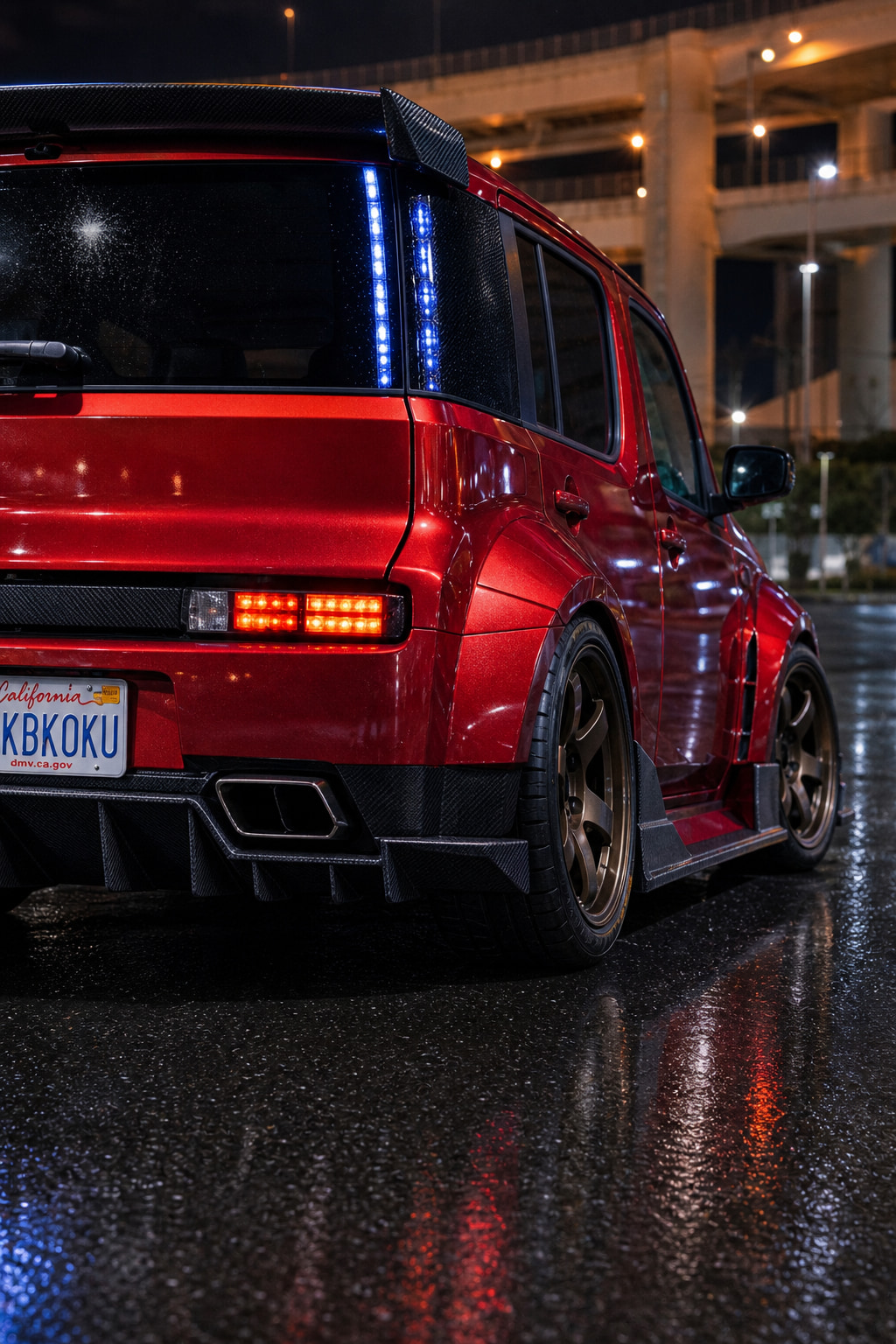
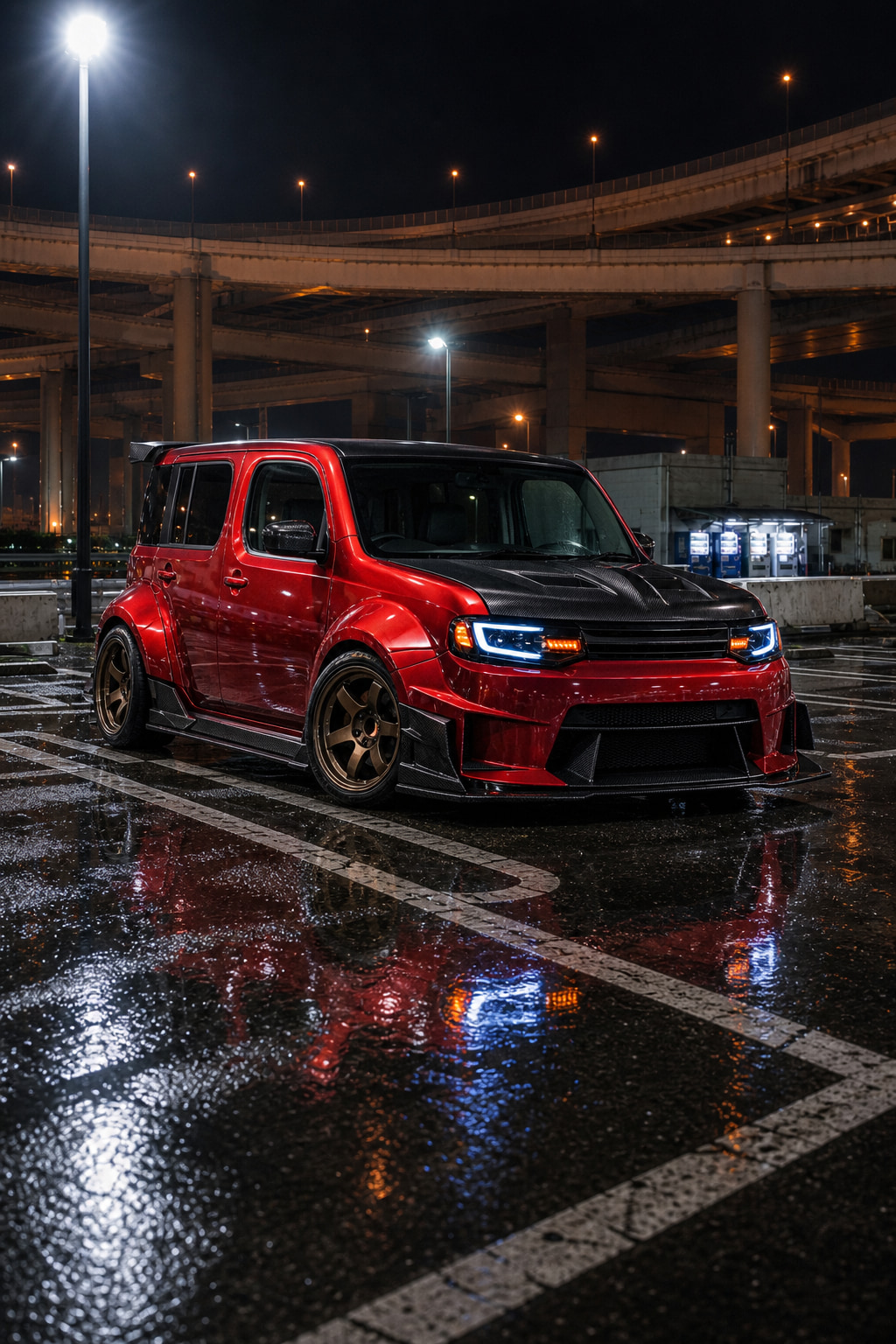
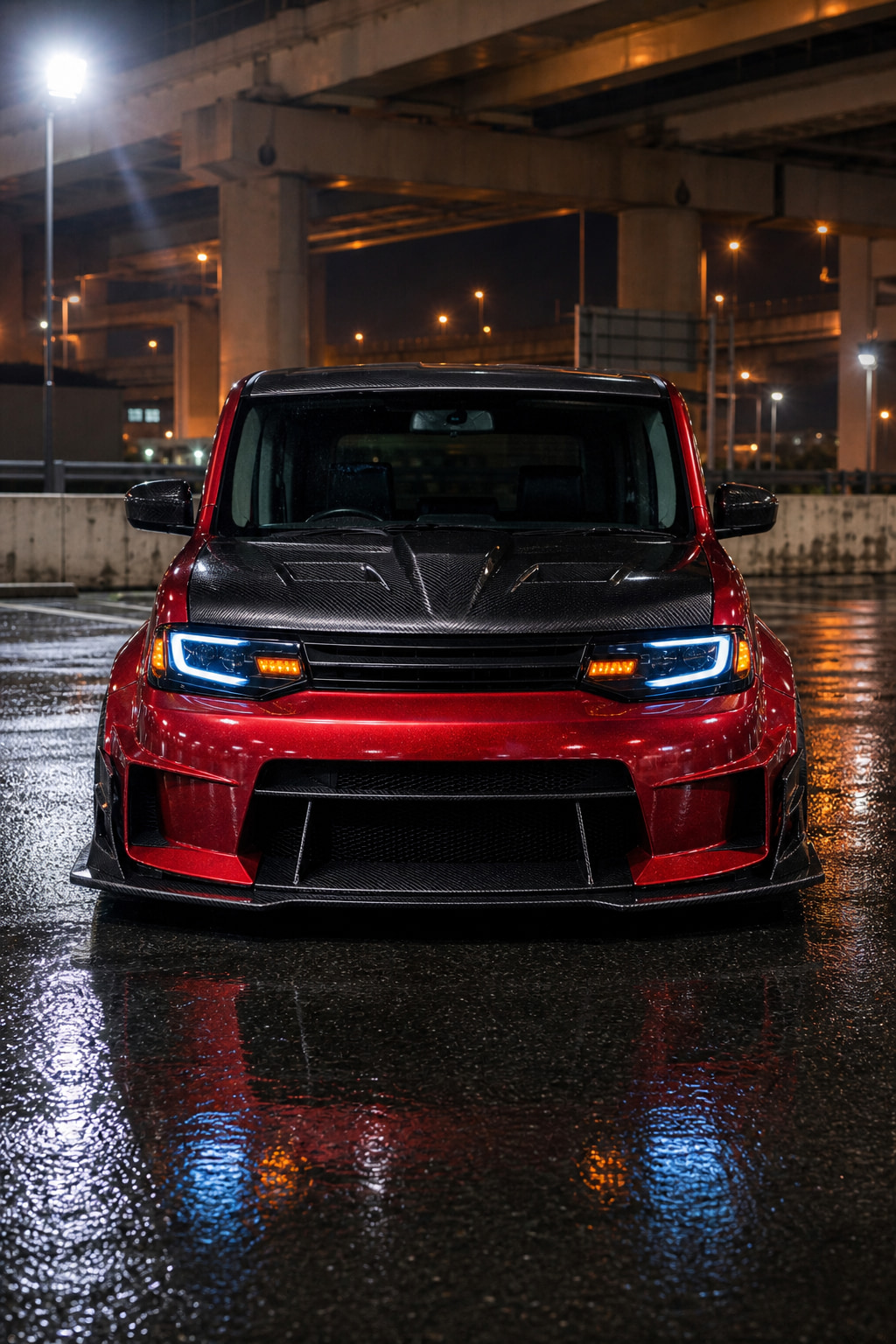
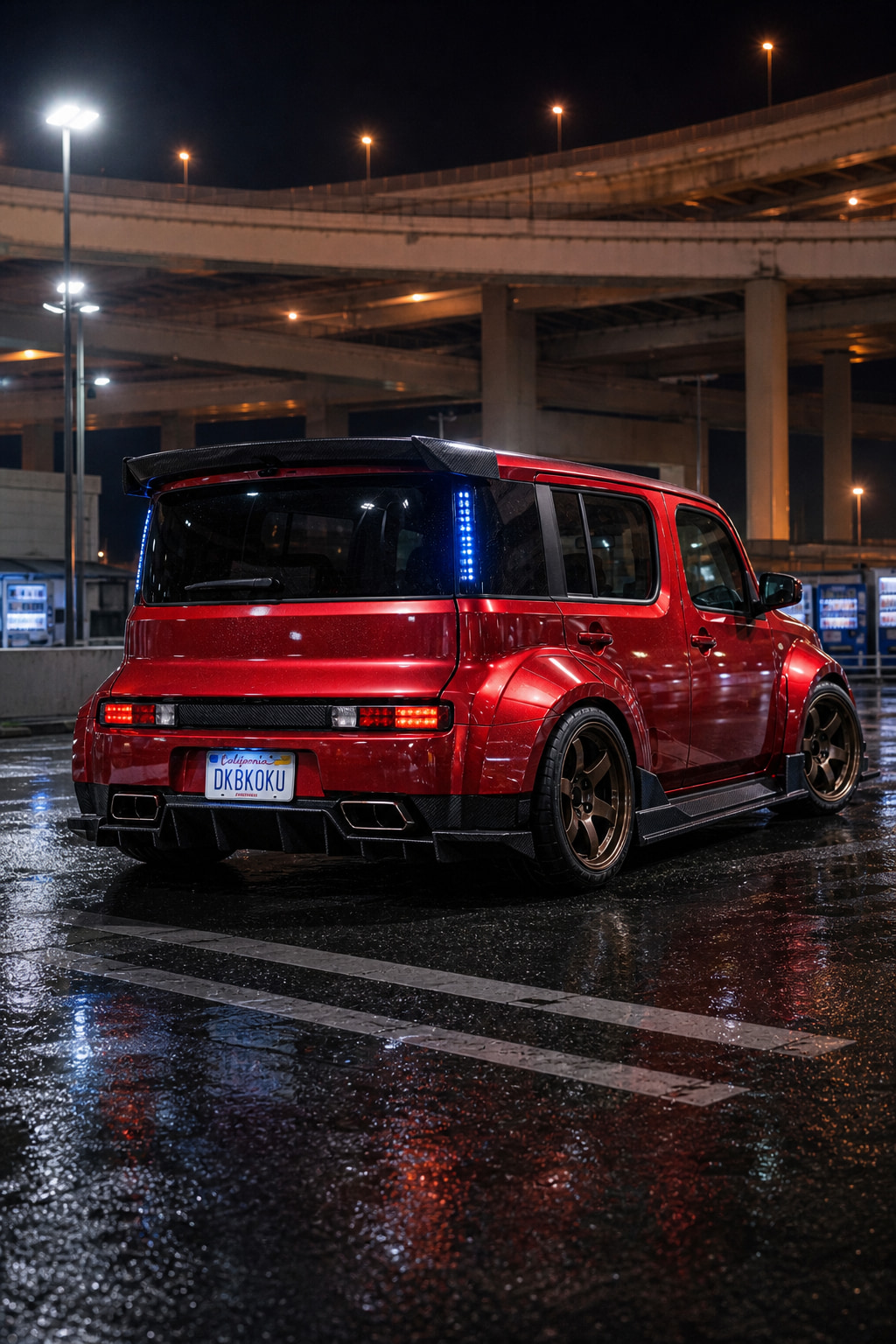
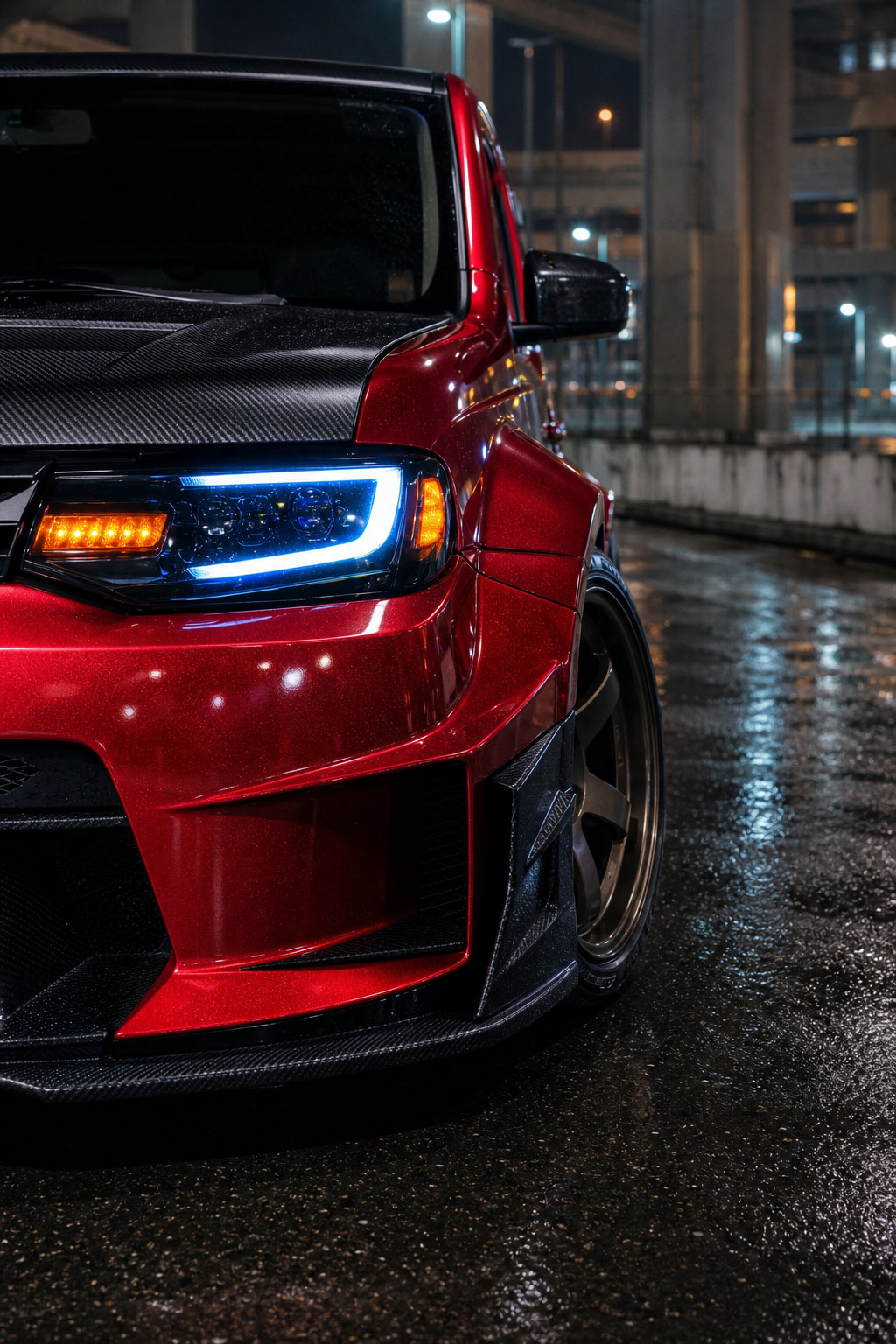
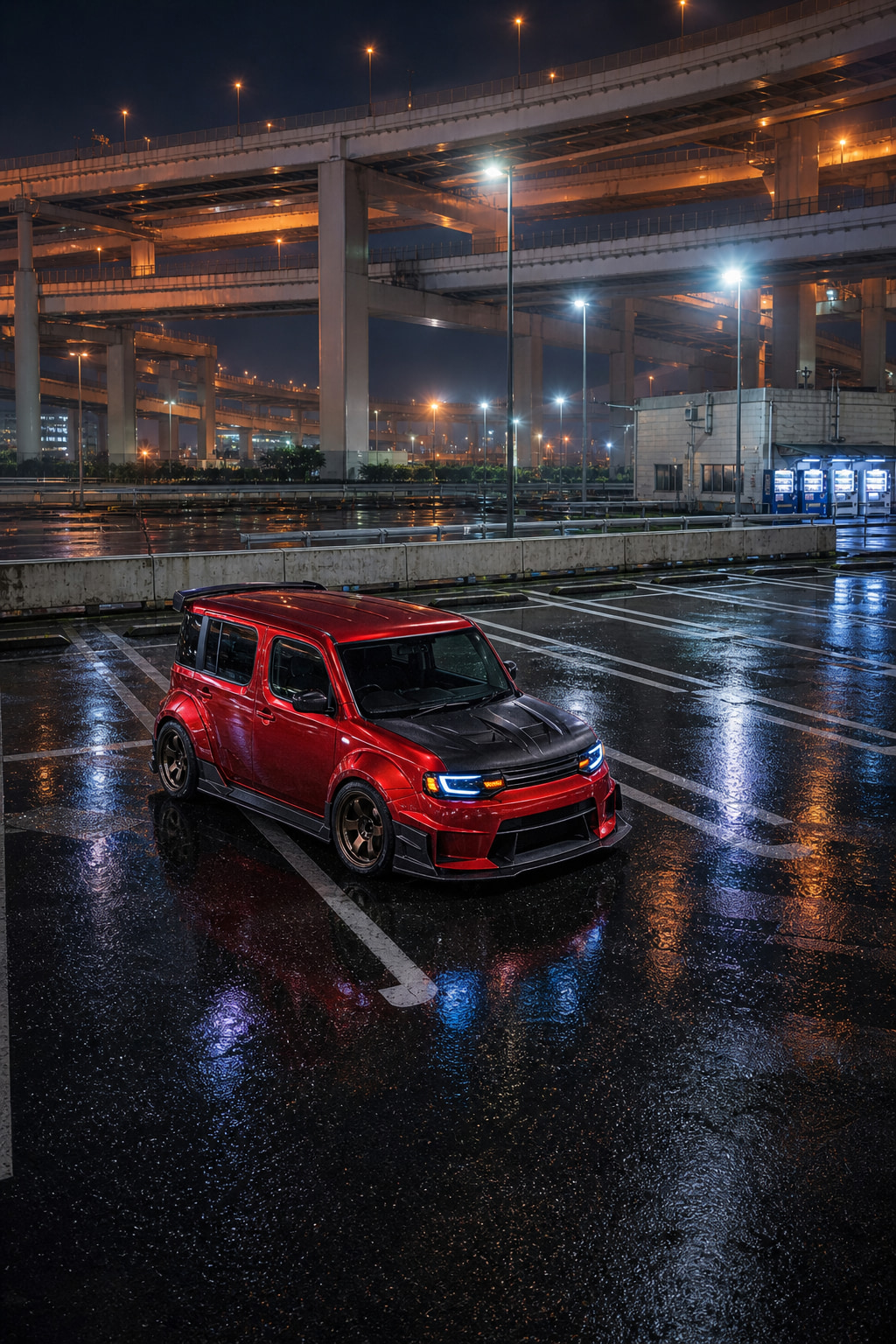
Daikoku Sentinel takes the 2009 Nissan Cube’s awkward-perfect greenhouse and turns it into a night-watch silhouette—wide, low, and deliberately overbuilt. The bodywork isn’t just “wide”; it’s engineered with concave reliefs, rolled lips, and boxed rear quarters that read like functional surfacing, not bolt-on costume. Under neon, the smoked LED matrix lamps and vertical rear pillars give the Cube a digital face and a wider-than-it-should-be presence.
This is the kind of parking-area hero car that looks believable up close: splitter height and shelf-like skirts that could actually survive street transitions, cooling paths that make sense, and a diffuser that’s shaped like someone measured airflow instead of vibes. It keeps the Cube’s charm, then stretches it into something that feels like a demo car for an aero-minded shop that grew up at Daikoku.
Release Image Studies
Image studies from every angle.
Comparison Shots
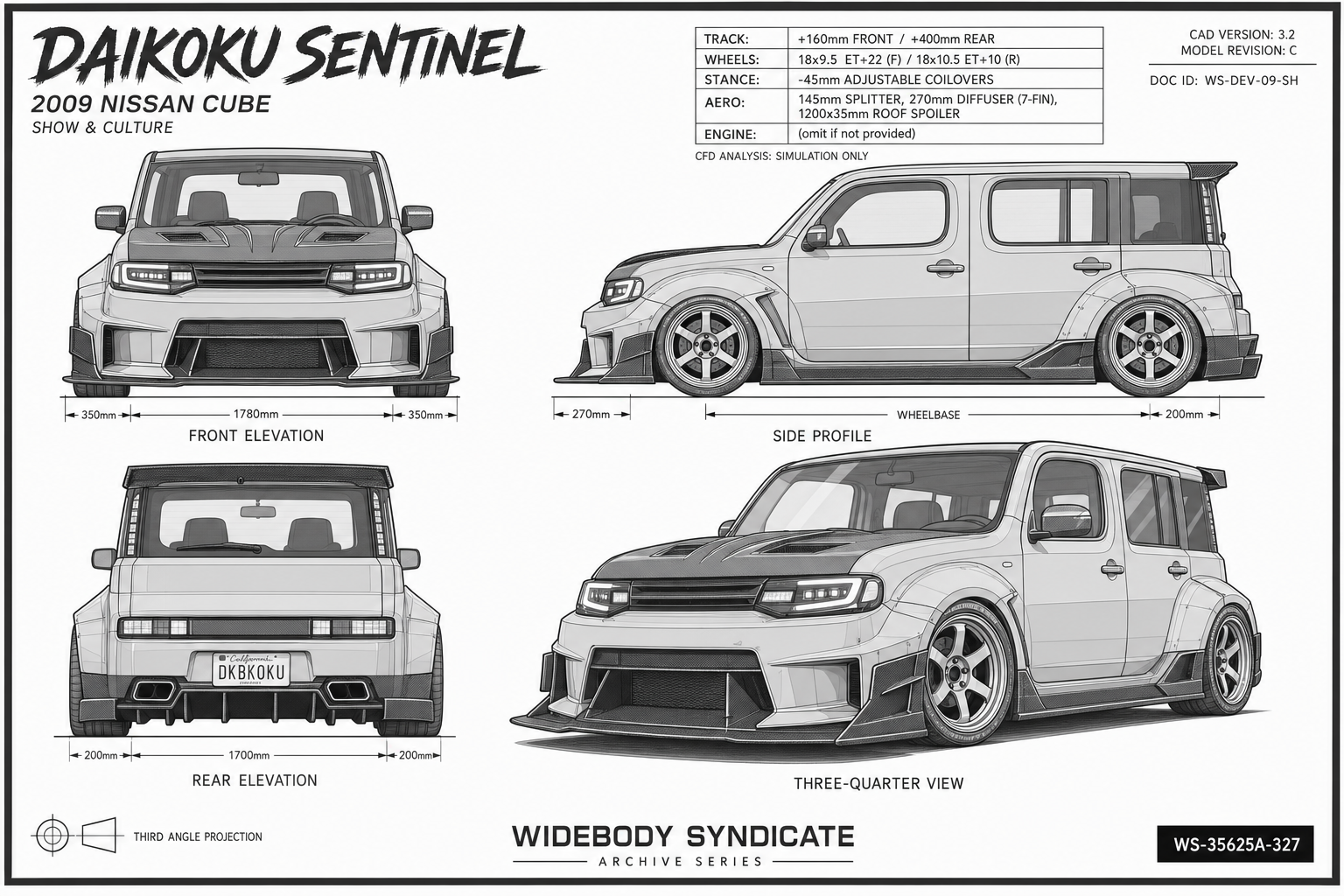
Blueprint / Collector Archive
Engineering Artifacts
The technical study and collectible interpretation of one build, preserved together.
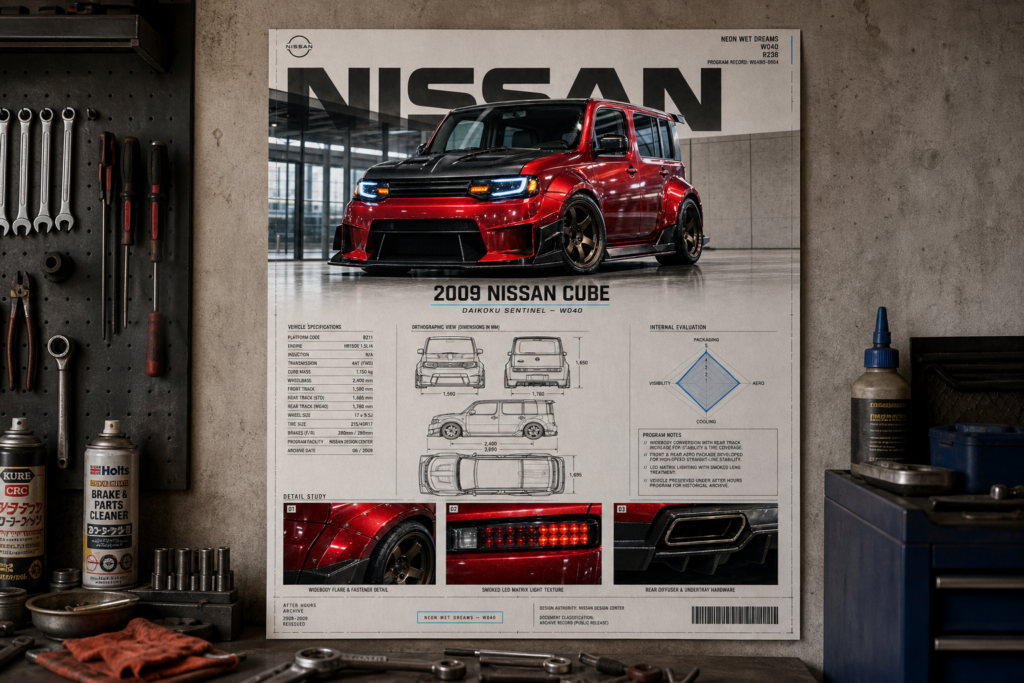
A presentation-grade collector artifact created for this release and preserved as part of the Widebody Syndicate archive.
Selected archive goods are available for collectors.
Technical Dossier
Platform
2009 Nissan Cube
The 2009 Nissan Cube is peak late-2000s Japanese urban design: a tall-roof compact built around space efficiency, visibility, and everyday ease rather than speed or status. Its upright greenhouse, short overhangs, and asymmetrical tail (a Cube signature) make it feel more like a clever piece of industrial design than a traditional hatch—friendly, functional, and instantly recognizable in traffic.
Underneath the quirky shape is straightforward Nissan hardware tuned for city life: light controls, a calm ride, and a cabin that prioritizes headroom and usable cargo volume. It’s the kind of platform that became a cultural shorthand for creative commuters and small-crew road trips—practical transport with real personality before “lifestyle car” became a marketing checkbox.
Aero Package
Flat front splitter with vertical dive planes for front-end stability
Side skirt “aero shelves” with slight upswept trailing edges
Rear hatch integrated gurney flap to add clean rear load
Deep rear diffuser with seven fins and recessed exhaust cutouts
Flush roof spoiler in exposed matte carbon
Chassis
Built for the rhythm of Tokyo nights: slow rolls, tight ramps, wet concrete reflections, and the occasional highway stretch between meets. The aero reads like a demo car, but the stance and component choices are grounded in street survivability—low enough to look serious, not so low it can’t function.
Wheels & Tires
Volk TE37XX forged wheels: 18x9.5 +22 front
18x10.5 +10 rear
Toyo Proxes R888R: 265/35R18 front
295/35R18 rear
Widened track and aggressive fender surfacing designed around square
high-grip fitment
Powertrain
Street-reliable turbo upgrade on the Cube’s 1.8L MR18DE with conservative boost and proper charge cooling
Dual-core cooling concept packaged to support repeated low-speed heat soak at meets and highway pulls
Exhaust routed to diffuser-friendly recessed outlets with heat management in mind
Fabrication Notes
Widebody transitions are blended as one surface language—concave channels into convex arches—avoiding abrupt add-on seams
Front aero mounts are designed as serviceable hard points to survive real street use and splitter swaps
Cooling and vent geometry prioritizes pressure relief (hood extractors) and wake control (air curtains)
Rear diffuser and exhaust recessing require careful heat shielding to protect composite structures
Design Philosophy
Daikoku Sentinel takes the 2009 Nissan Cube’s awkward-perfect greenhouse and turns it into a night-watch silhouette—wide, low, and deliberately overbuilt. The bodywork isn’t just “wide”; it’s engineered with concave reliefs, rolled lips, and boxed rear quarters that read like functional surfacing, not bolt-on costume. Under neon, the smoked LED matrix lamps and vertical rear pillars give the Cube a digital face and a wider-than-it-should-be presence.
This is the kind of parking-area hero car that looks believable up close: splitter height and shelf-like skirts that could actually survive street transitions, cooling paths that make sense, and a diffuser that’s shaped like someone measured airflow instead of vibes. It keeps the Cube’s charm, then stretches it into something that feels like a demo car for an aero-minded shop that grew up at Daikoku.
▧Platform+
2009 Nissan Cube
The 2009 Nissan Cube is peak late-2000s Japanese urban design: a tall-roof compact built around space efficiency, visibility, and everyday ease rather than speed or status. Its upright greenhouse, short overhangs, and asymmetrical tail (a Cube signature) make it feel more like a clever piece of industrial design than a traditional hatch—friendly, functional, and instantly recognizable in traffic.
Underneath the quirky shape is straightforward Nissan hardware tuned for city life: light controls, a calm ride, and a cabin that prioritizes headroom and usable cargo volume. It’s the kind of platform that became a cultural shorthand for creative commuters and small-crew road trips—practical transport with real personality before “lifestyle car” became a marketing checkbox.
⌘Aero Package+
Flat front splitter with vertical dive planes for front-end stability
Side skirt “aero shelves” with slight upswept trailing edges
Rear hatch integrated gurney flap to add clean rear load
Deep rear diffuser with seven fins and recessed exhaust cutouts
Flush roof spoiler in exposed matte carbon
⟡Chassis+
Built for the rhythm of Tokyo nights: slow rolls, tight ramps, wet concrete reflections, and the occasional highway stretch between meets. The aero reads like a demo car, but the stance and component choices are grounded in street survivability—low enough to look serious, not so low it can’t function.
◎Wheels & Tires+
Volk TE37XX forged wheels: 18x9.5 +22 front
18x10.5 +10 rear
Toyo Proxes R888R: 265/35R18 front
295/35R18 rear
Widened track and aggressive fender surfacing designed around square
high-grip fitment
▤Powertrain+
Street-reliable turbo upgrade on the Cube’s 1.8L MR18DE with conservative boost and proper charge cooling
Dual-core cooling concept packaged to support repeated low-speed heat soak at meets and highway pulls
Exhaust routed to diffuser-friendly recessed outlets with heat management in mind
△Fabrication Notes+
Widebody transitions are blended as one surface language—concave channels into convex arches—avoiding abrupt add-on seams
Front aero mounts are designed as serviceable hard points to survive real street use and splitter swaps
Cooling and vent geometry prioritizes pressure relief (hood extractors) and wake control (air curtains)
Rear diffuser and exhaust recessing require careful heat shielding to protect composite structures
×Design Philosophy+
Daikoku Sentinel takes the 2009 Nissan Cube’s awkward-perfect greenhouse and turns it into a night-watch silhouette—wide, low, and deliberately overbuilt. The bodywork isn’t just “wide”; it’s engineered with concave reliefs, rolled lips, and boxed rear quarters that read like functional surfacing, not bolt-on costume. Under neon, the smoked LED matrix lamps and vertical rear pillars give the Cube a digital face and a wider-than-it-should-be presence.
This is the kind of parking-area hero car that looks believable up close: splitter height and shelf-like skirts that could actually survive street transitions, cooling paths that make sense, and a diffuser that’s shaped like someone measured airflow instead of vibes. It keeps the Cube’s charm, then stretches it into something that feels like a demo car for an aero-minded shop that grew up at Daikoku.
Part of
Wave 40
Neon Wet Dreams
I can smell the fiberglass dust and energy drink breath already. This drop is our love letter to that loud, glossy corner of the 2000s where everything had a vent, everything had a wing, and nobody was scared of a candy color that could be seen from space.
Explore Wave 40 → 6 BuildsKeep Exploring
The archive is always growing. New releases, waves, and blueprints added regularly.