
Continue this wave
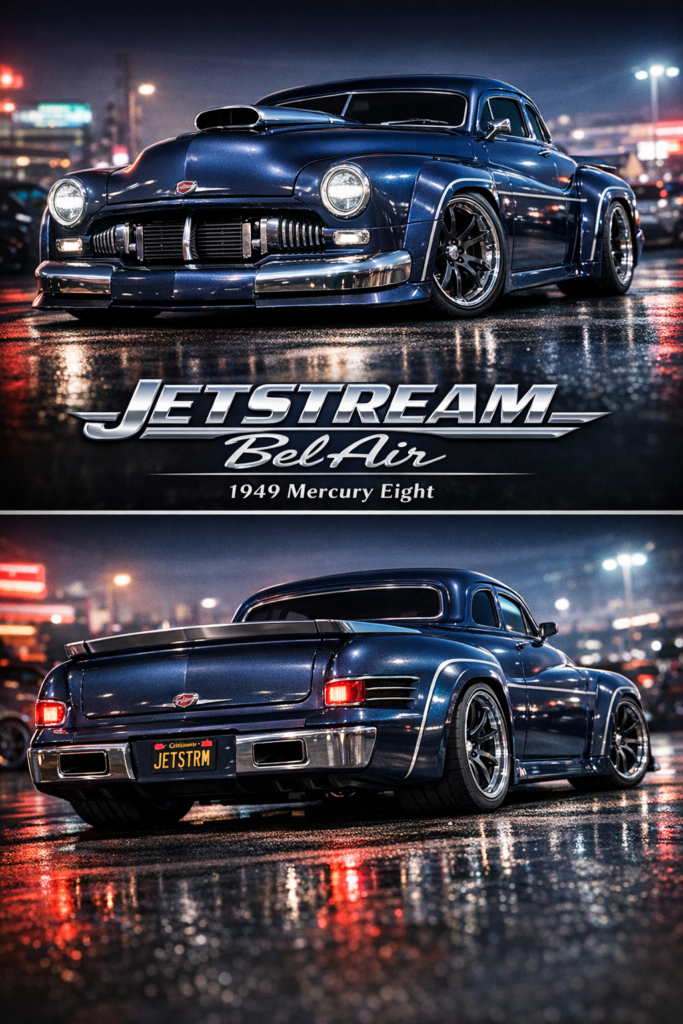
1949 Mercury Eight
9 photos
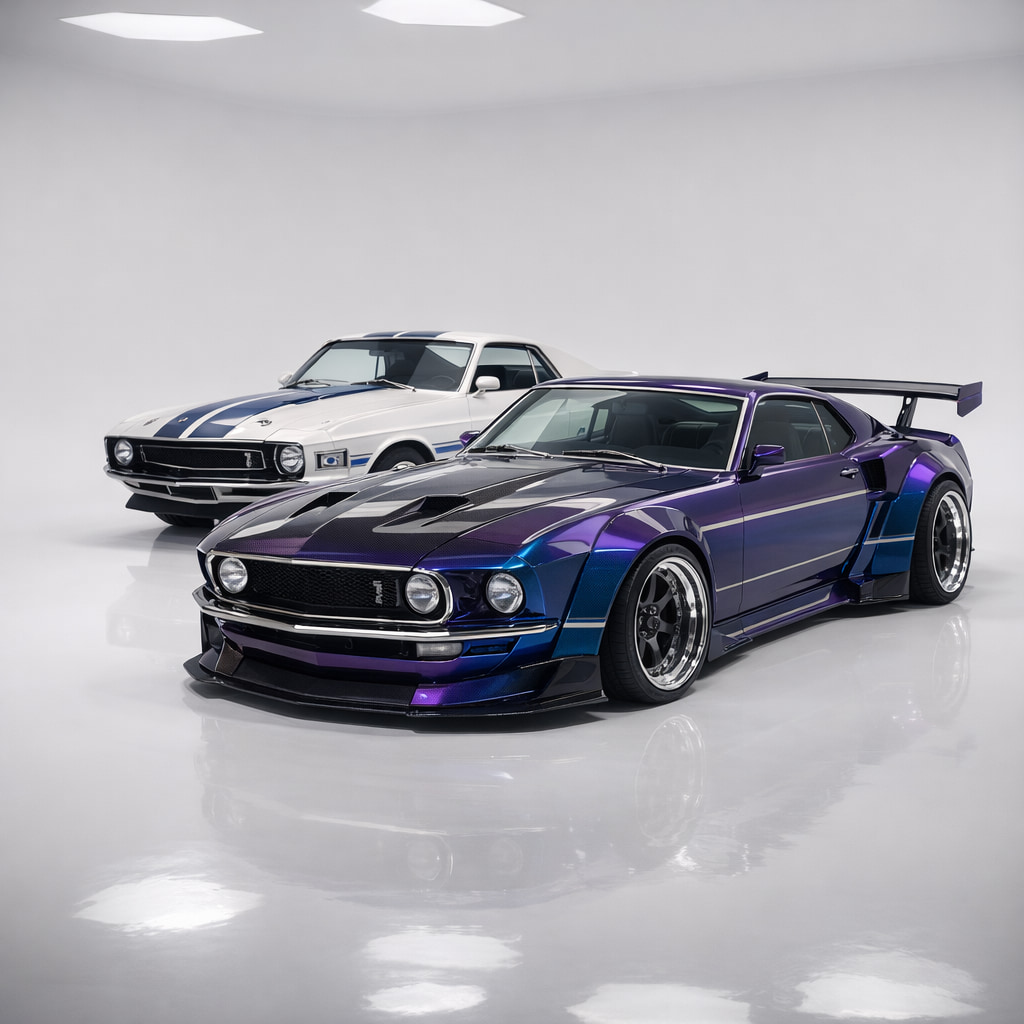
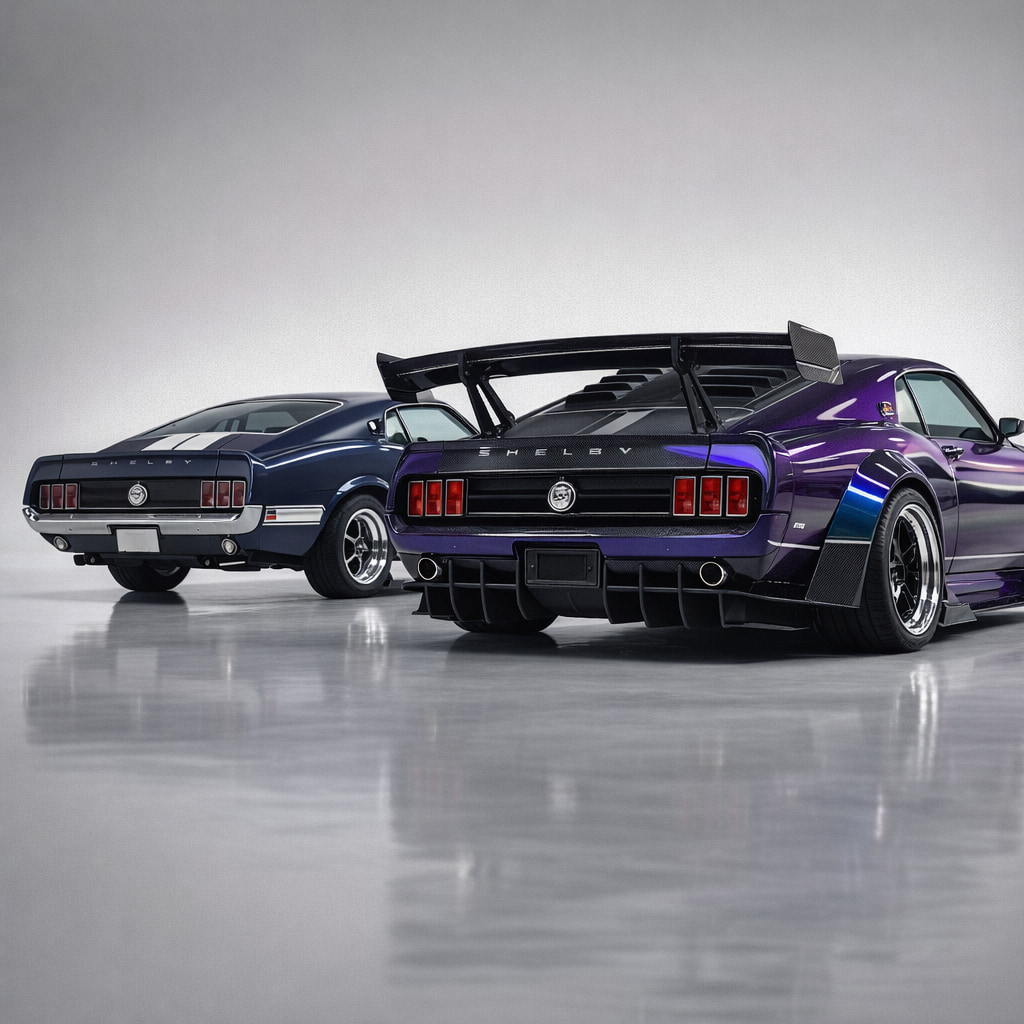
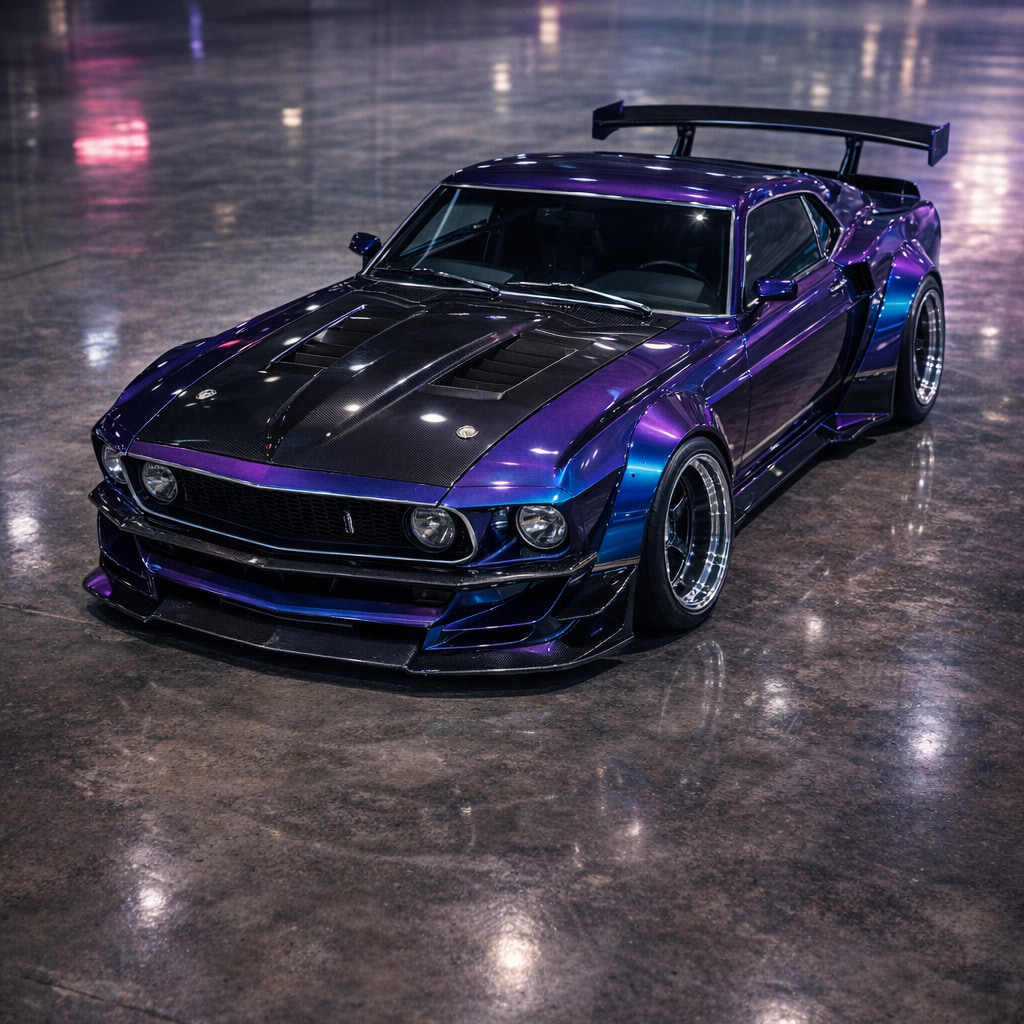
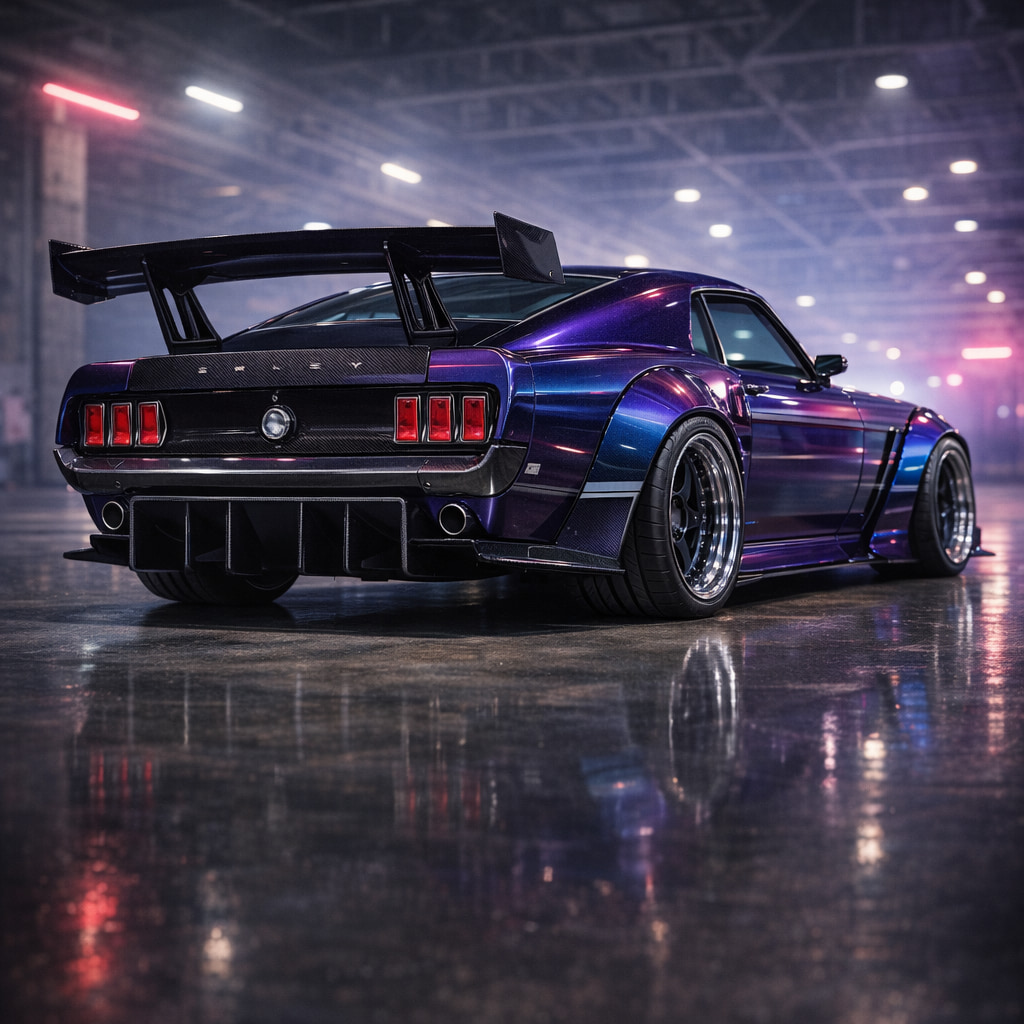
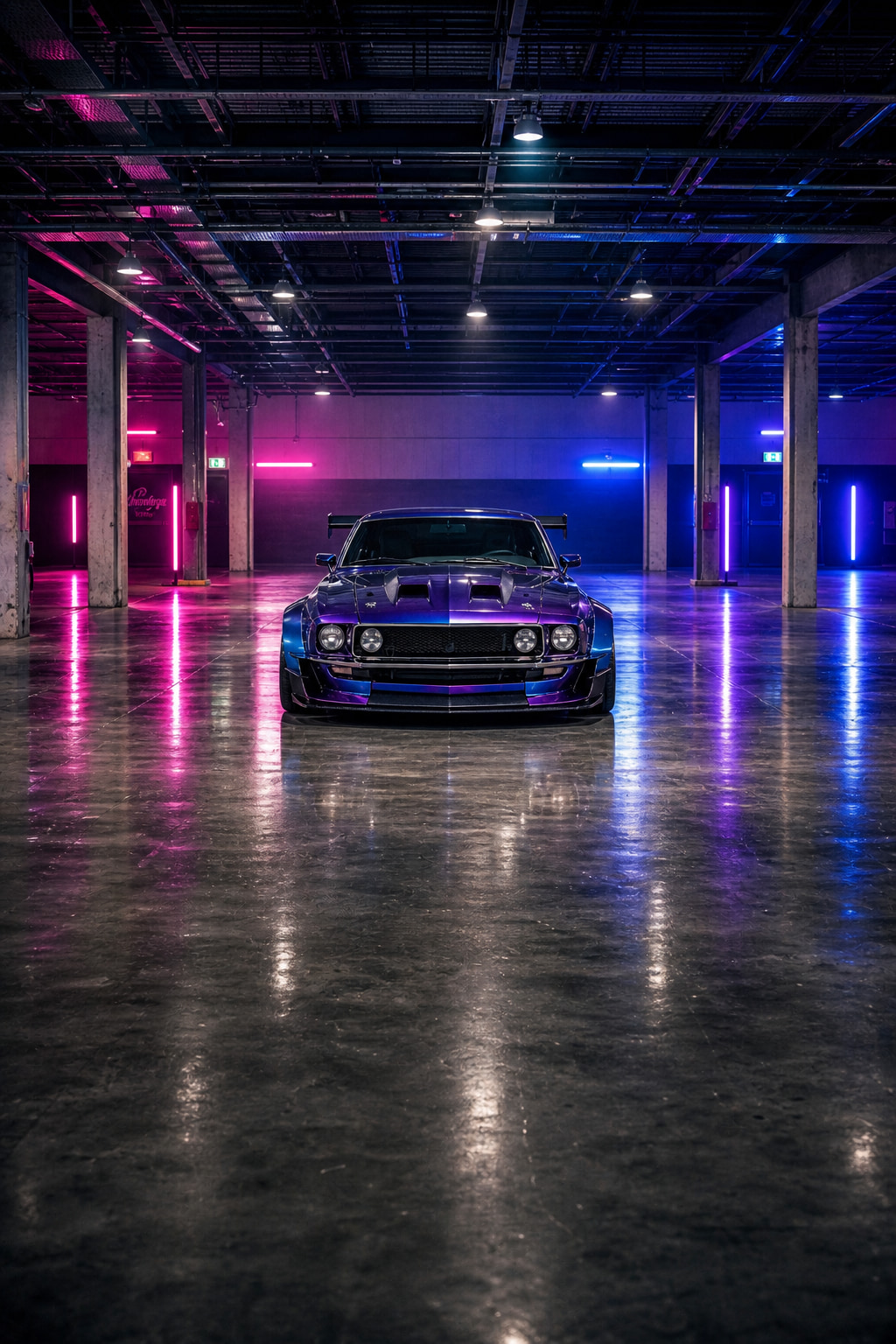
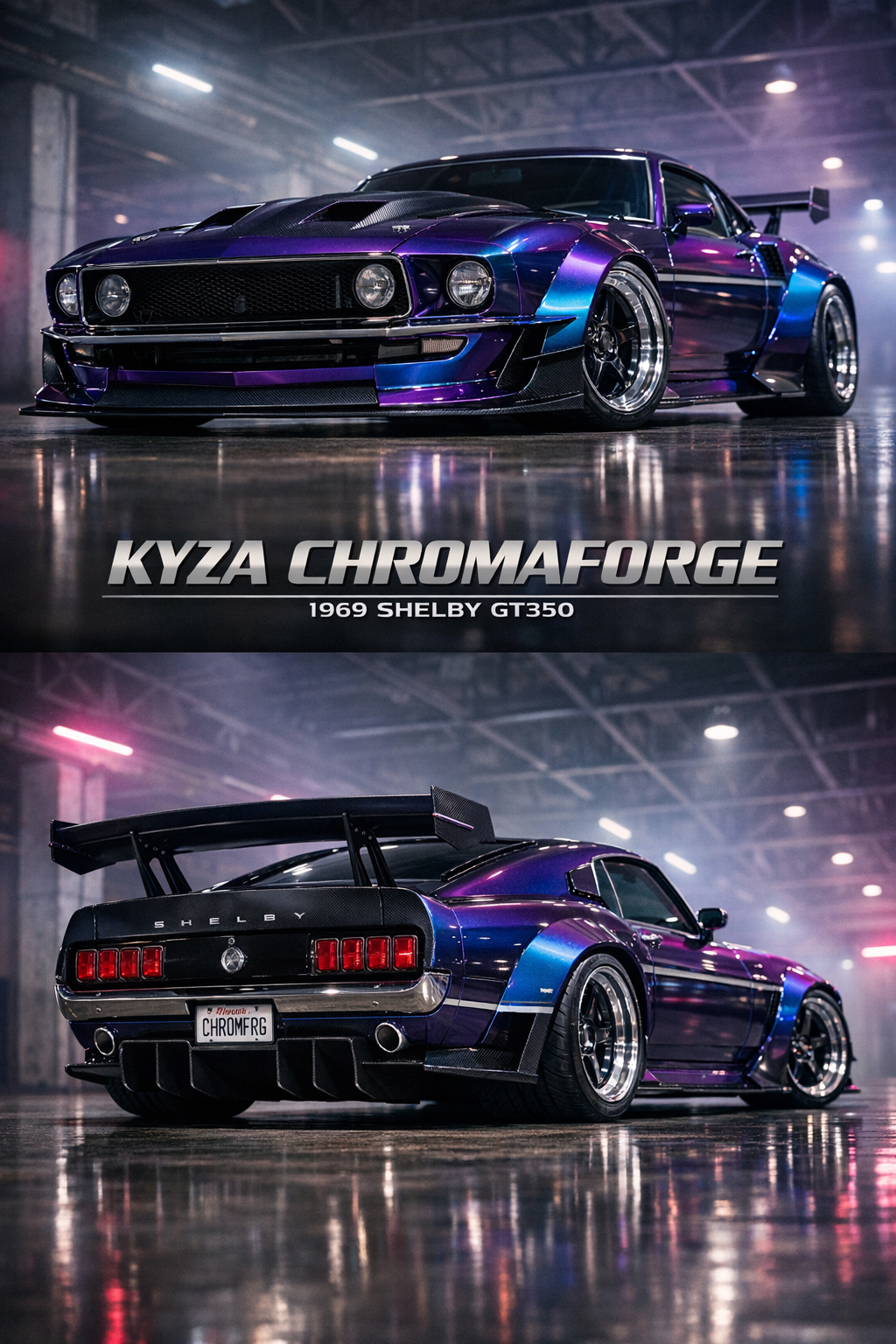
Kyza Chromaforge starts with a sacred silhouette—the ’69 GT350’s long hood, fastback roofline, and Shelby stance—then pulls it into a modern show-build vocabulary without pretending it’s something it’s not. The body grows outward with measured aggression: 150mm front and 230mm rear per side, not as bolt-on caricature but as layered surfacing that keeps the original character line readable while the arches turn trapezoidal and architectural.
Under the lights it’s all hard edges and depth: stepped rocker shelves, recessed channels that hint at side-exit heat management, and a hood that looks like it’s been pressure-formed around airflow. The candy chroma finish does the rest—purple to electric blue over semi-gloss carbon—so the car reads vintage from 20 meters and unapologetically digital from two.
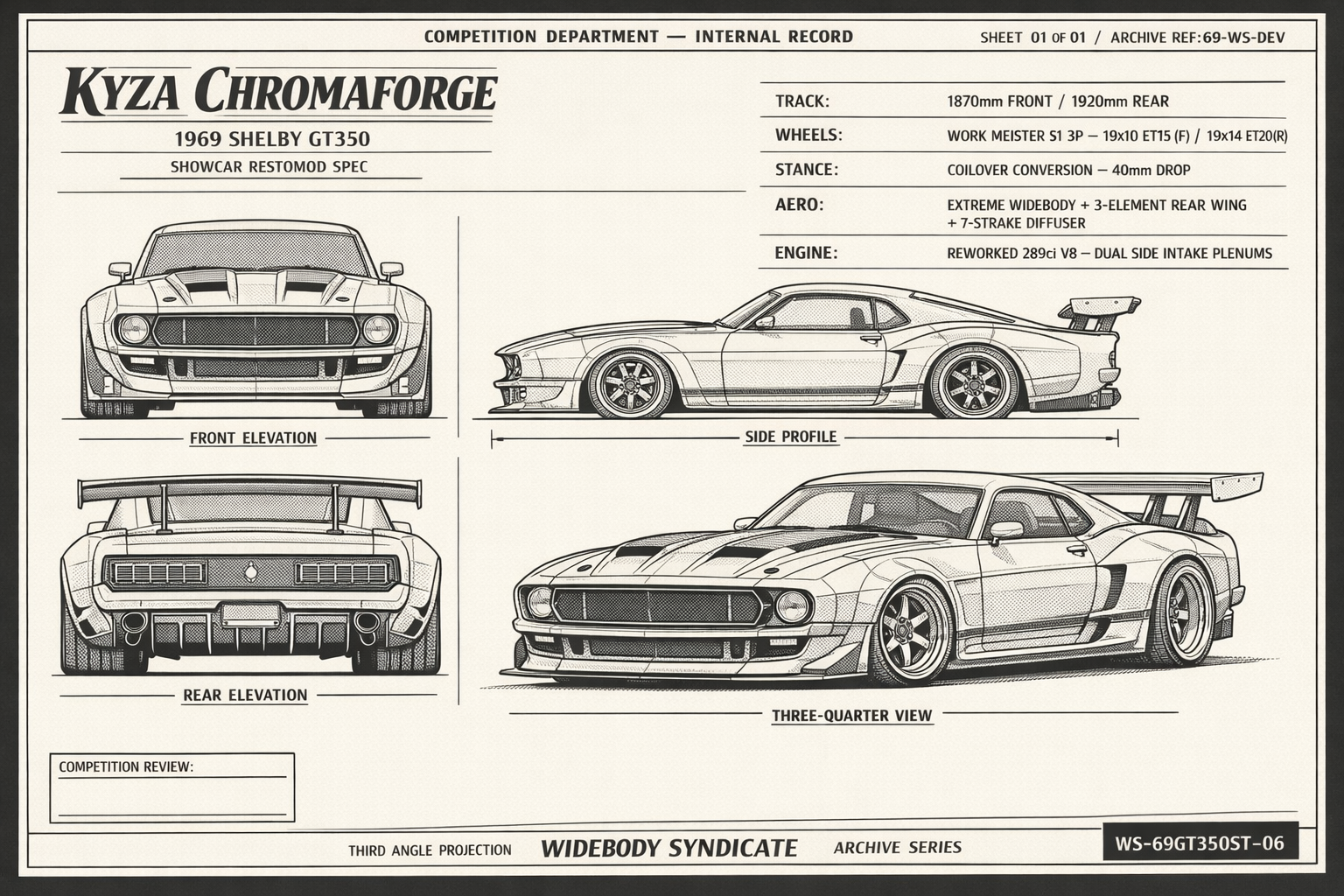 Inspect drawing ↗Open blueprint study →
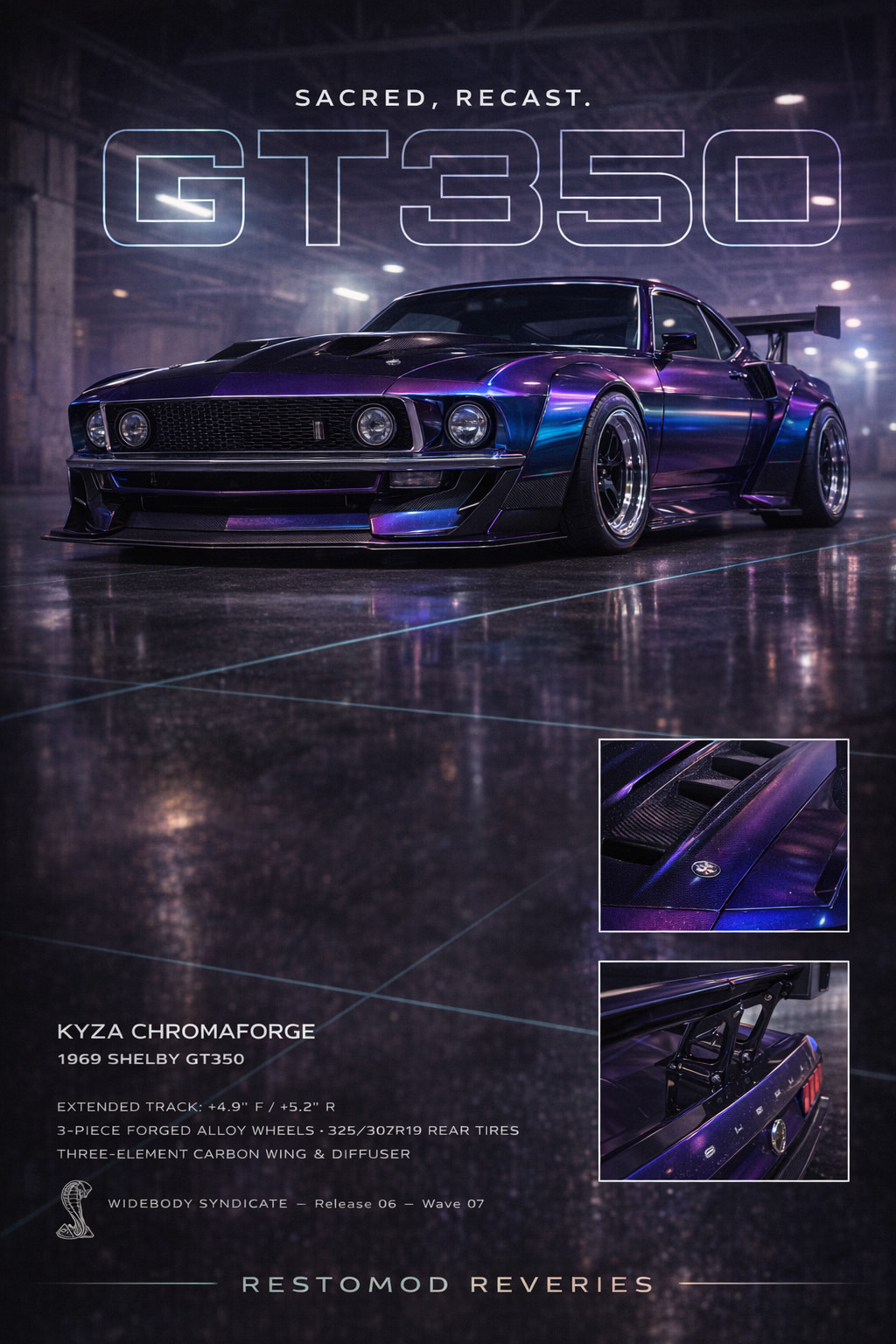
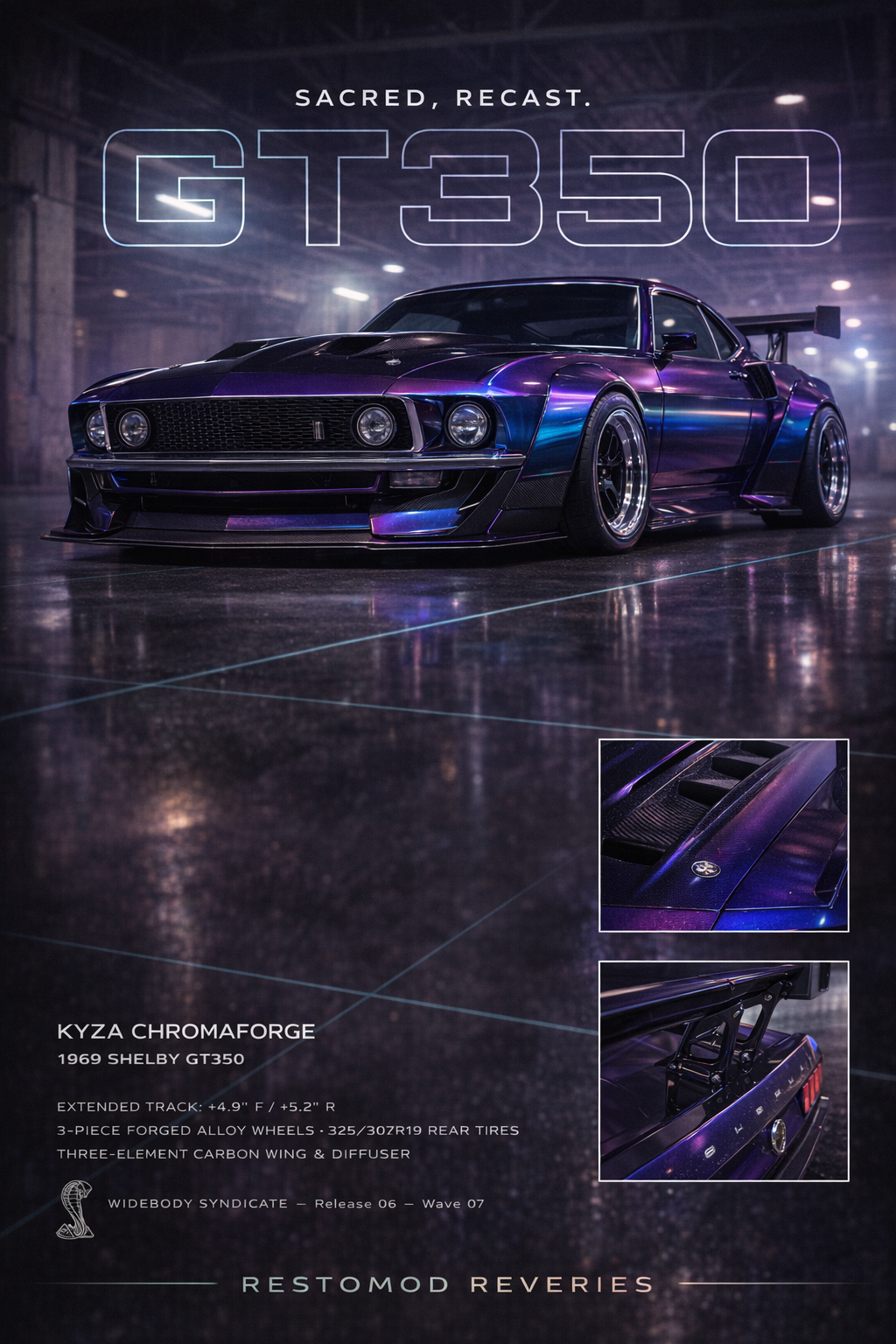 Inspect poster ↗
Fictional engineering concept
1969 Shelby GT350
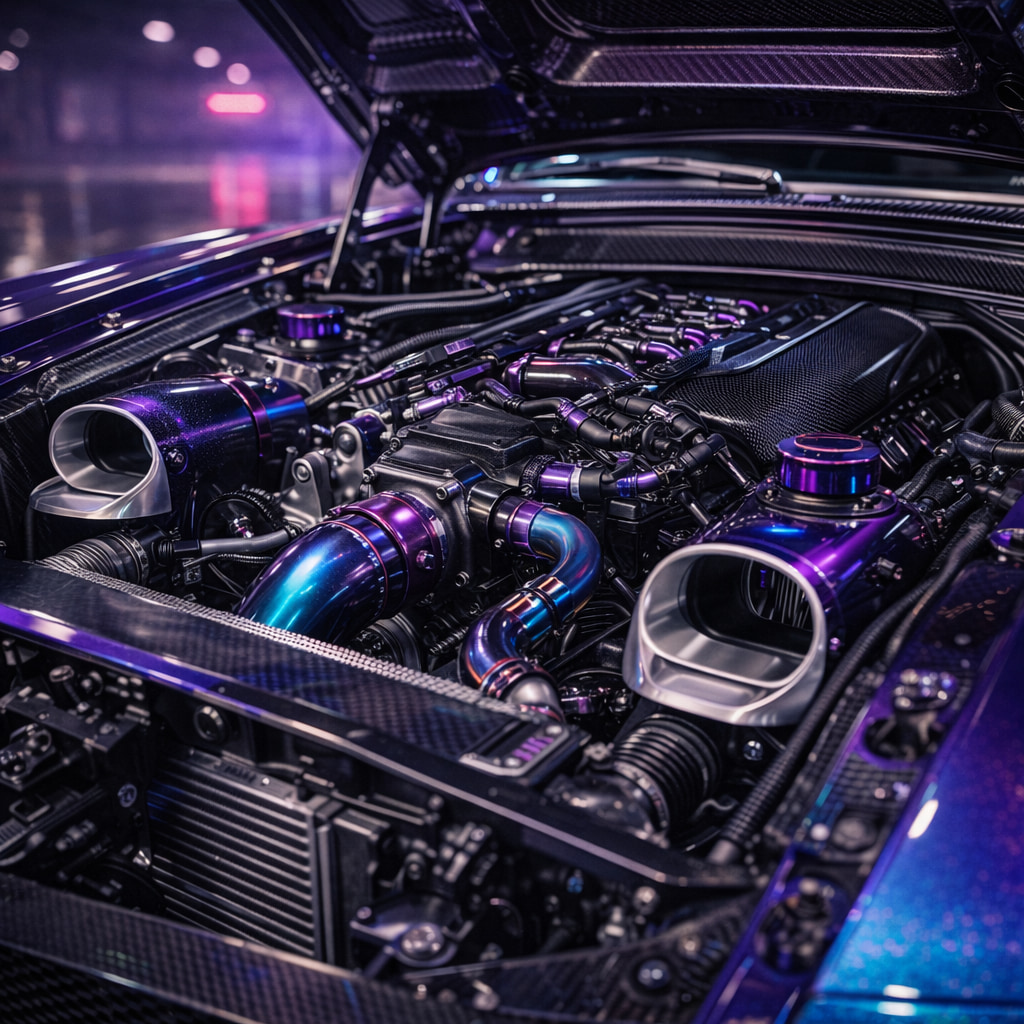
Period-correct small-block concept with modern internals for durability (restomod spec, not a swap-for-clicks build)
Fender-fed intake volume supporting high-flow filtration and cooler charge/underhood temps
Upgraded cooling stack with high-capacity radiator and controlled hood extraction
Side-exit exhaust routed with heat shielding and rocker-shelf diffusers exiting ahead of the rear wheels
Front splitter with integrated brake-cooling duct inlets at the arch lips
Fender-mounted horizontal airfoil/vortex feature set behind the front wheel centerline
Rear diffuser shelf with 7 strakes (90mm spacing) and stepped undertray surfaces
Three-element carbon rear wing on 750mm anodized pylons with reinforced deck mounts
1969 Shelby GT350
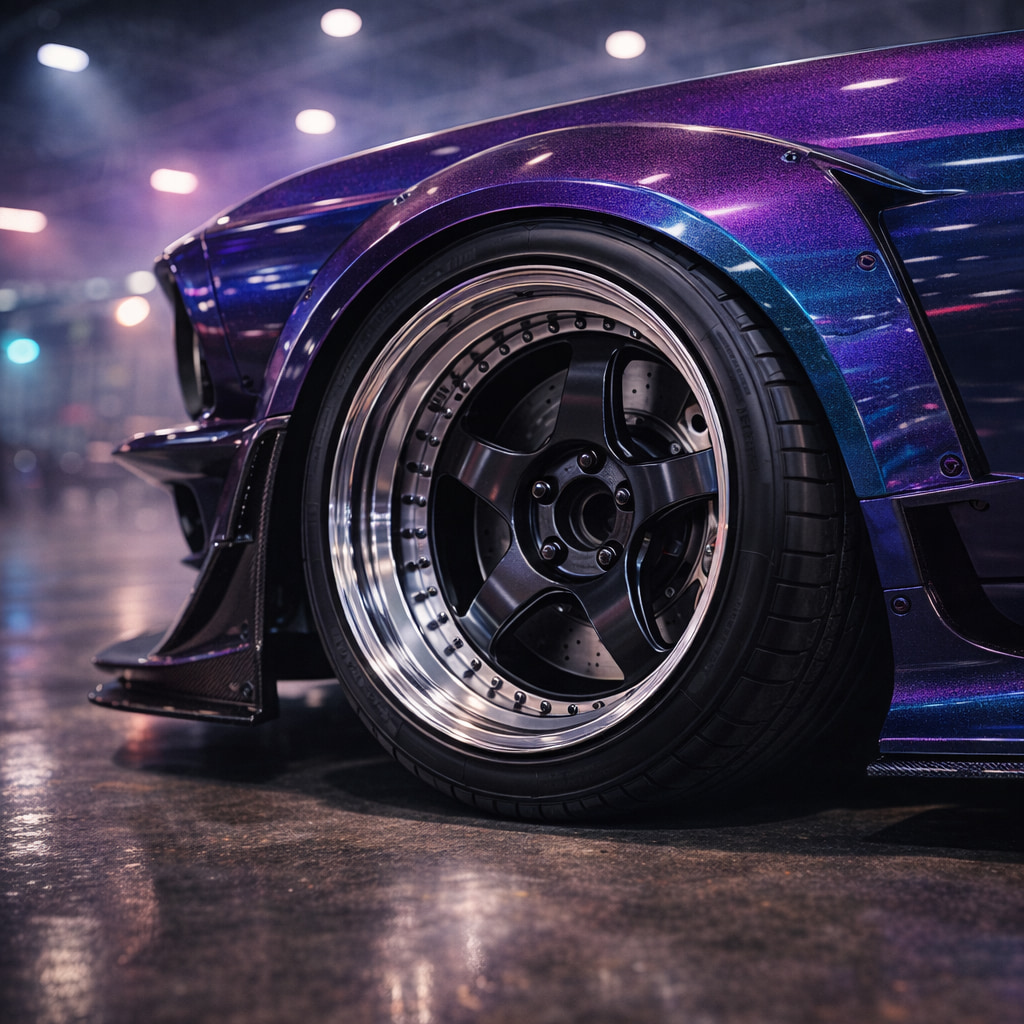
Work Meister S1 3P: 19x10 ET15 front, 19x14 ET20 rear
Continental SportContact 7: 285/35ZR19 front, 335/30ZR19 rear
Targeted 40mm tire-to-arch clearance for articulation under a low ride height
Big-brake packaging assumed with ducting priority and 19-inch barrel clearance
Widebody built as steel-to-composite hybrid: metal structure where it matters, composite skins for surfacing freedom
Inner tubs widened to match track increase; suspension pickup geometry validated for scrub radius and steering feel
Wing pylons tied into reinforced rear structure rather than trunk skin; serviceable mounts for transport
Thermal management: shielding and airflow gaps around rocker shelves and side-exit routing to protect paint and occupants
Continue this wave
1949 Mercury Eight
Different origins. Sacred Cars
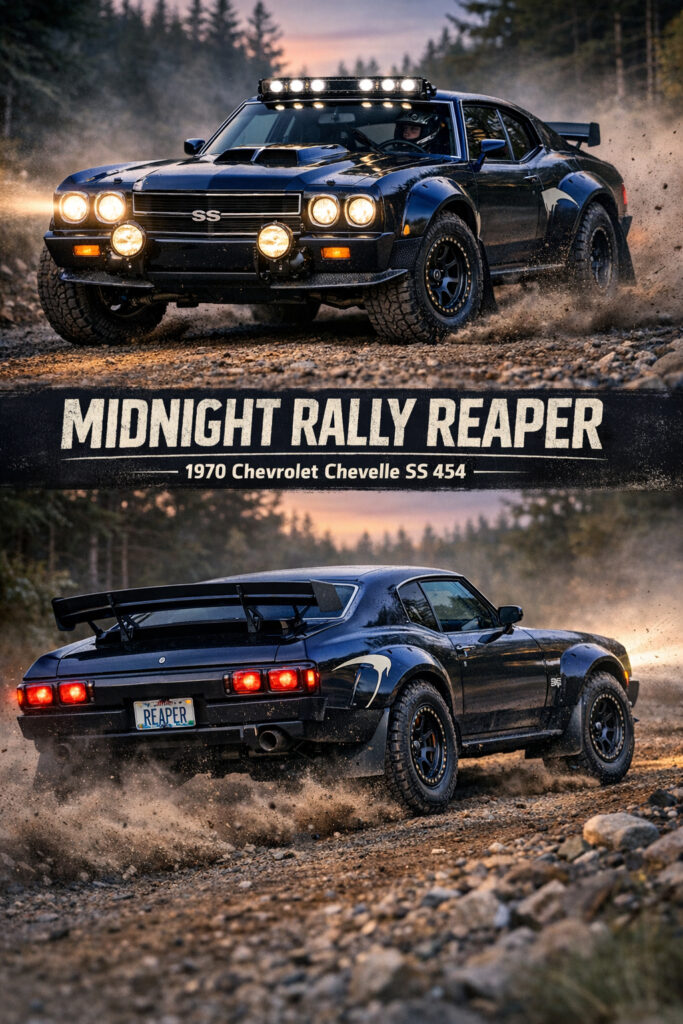
1970 Chevrolet Chevelle SS 454
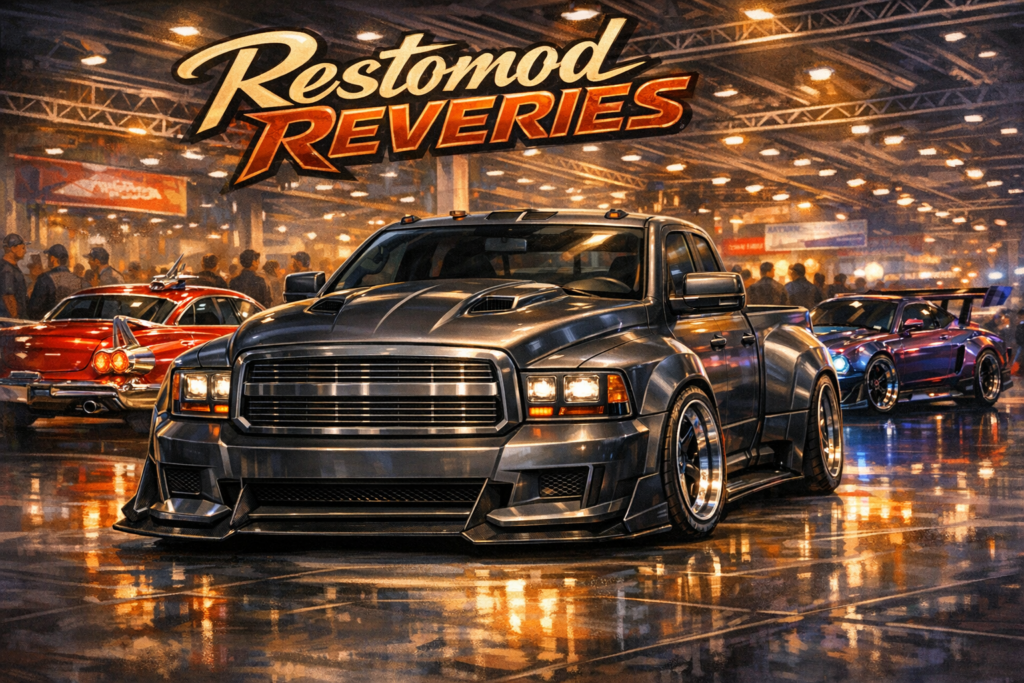 Continue the exhibitionRestomod ReveriesGather ’round, gearheads and widebody worshippers!Build 1 of 6↗