WS Widebody Syndicate
Veilstrike Protocol

R123

Veilstrike Protocol

1949 Mercury Eight

Series Sacred Cars
Category Show
Wave Wave 21

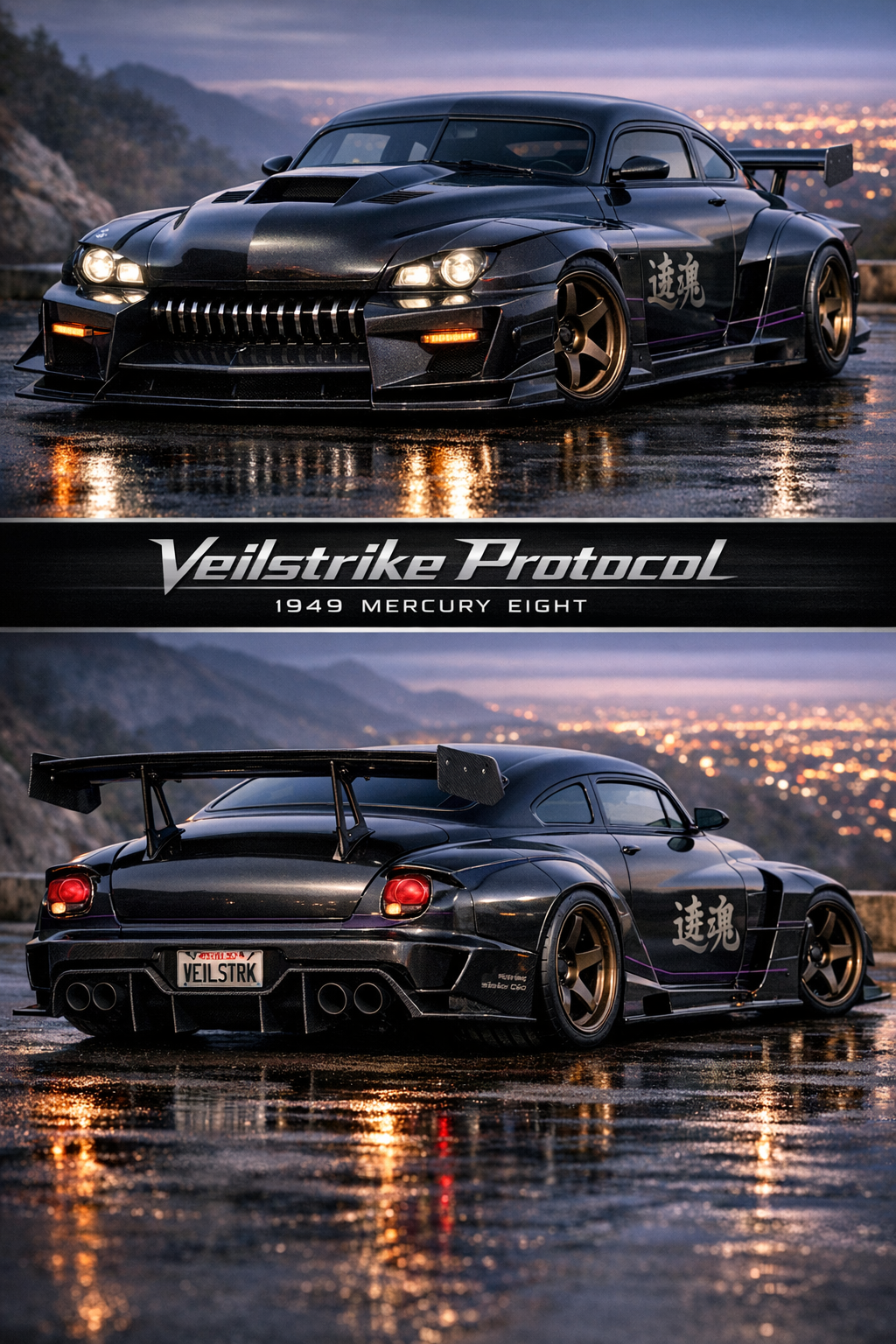
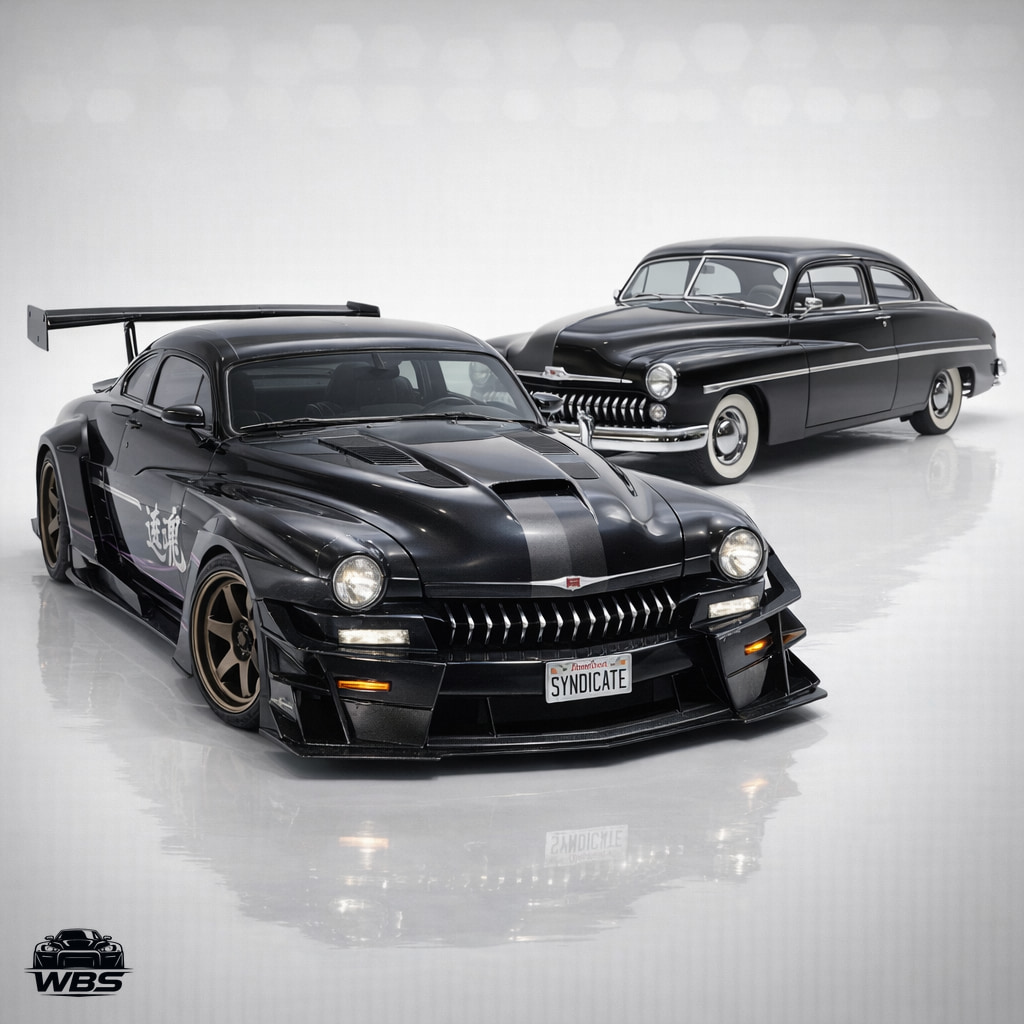
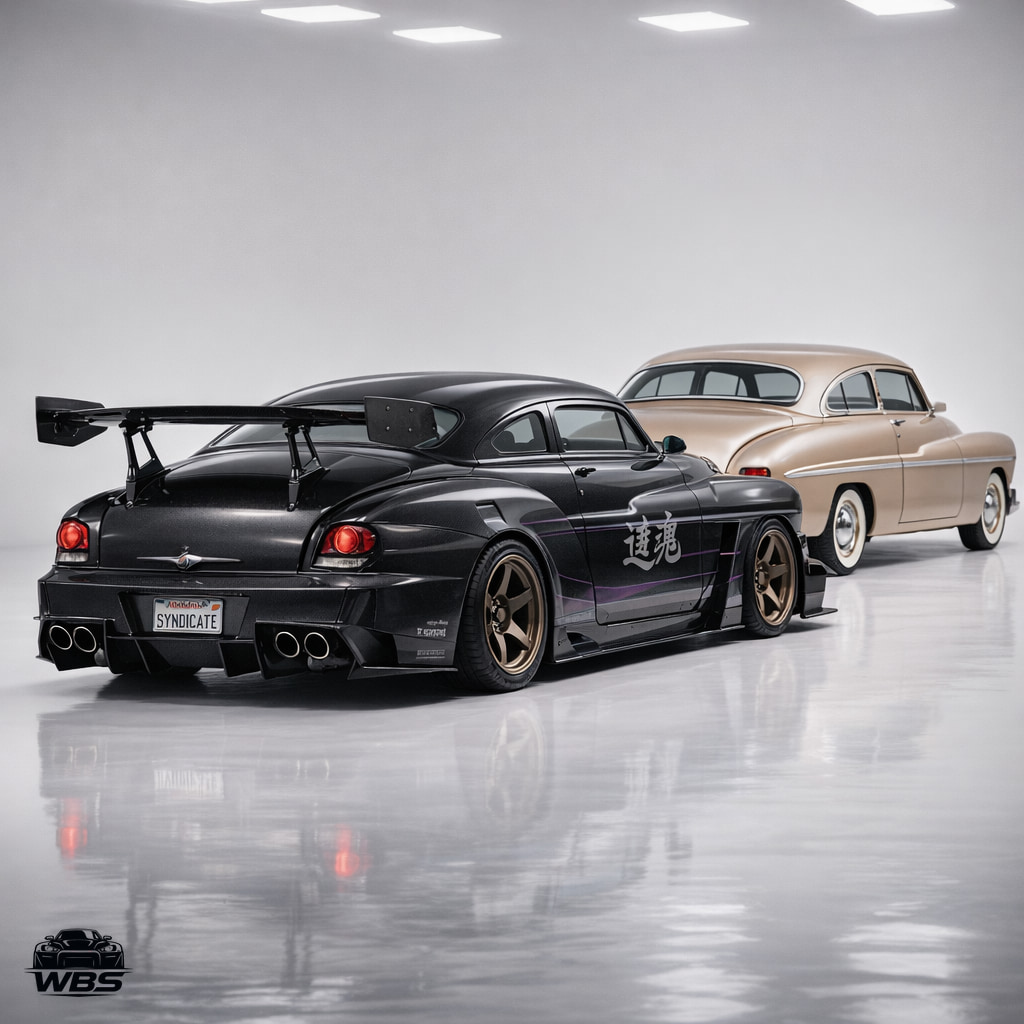
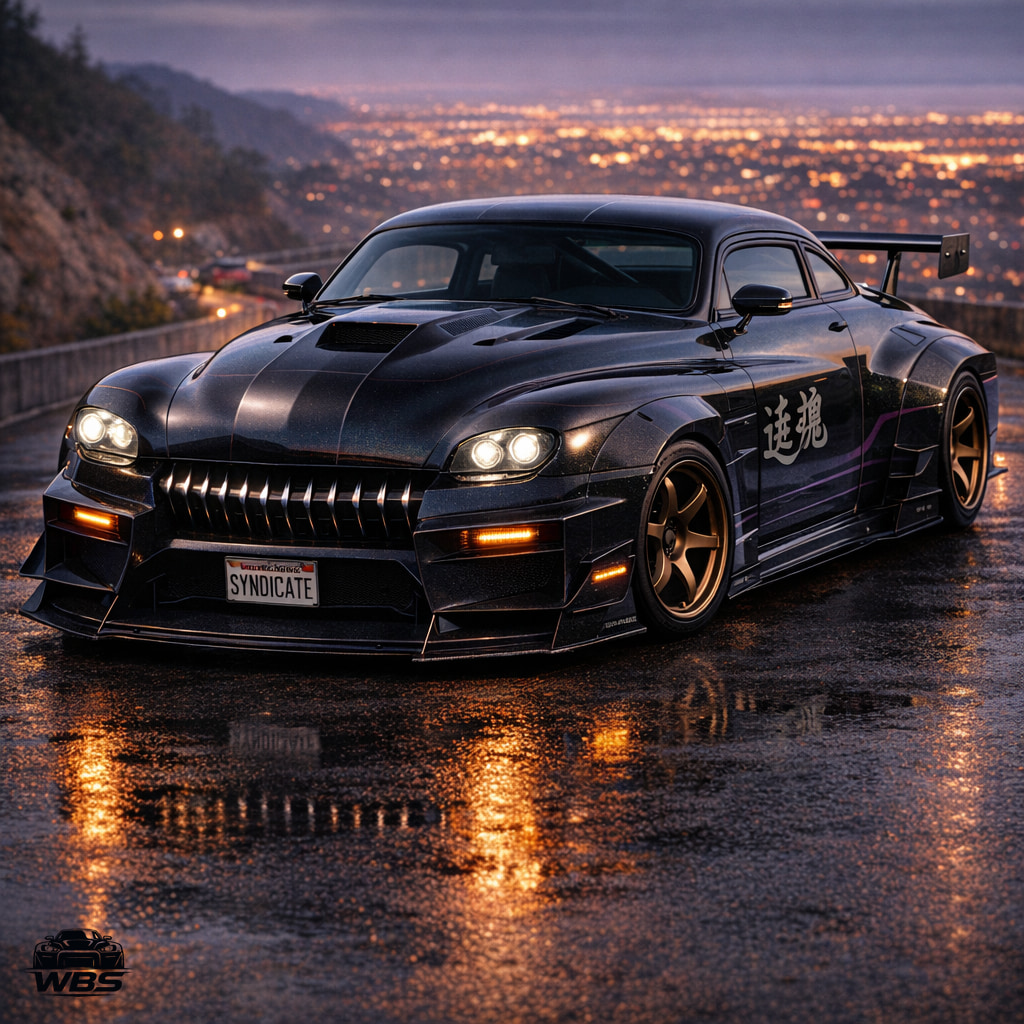
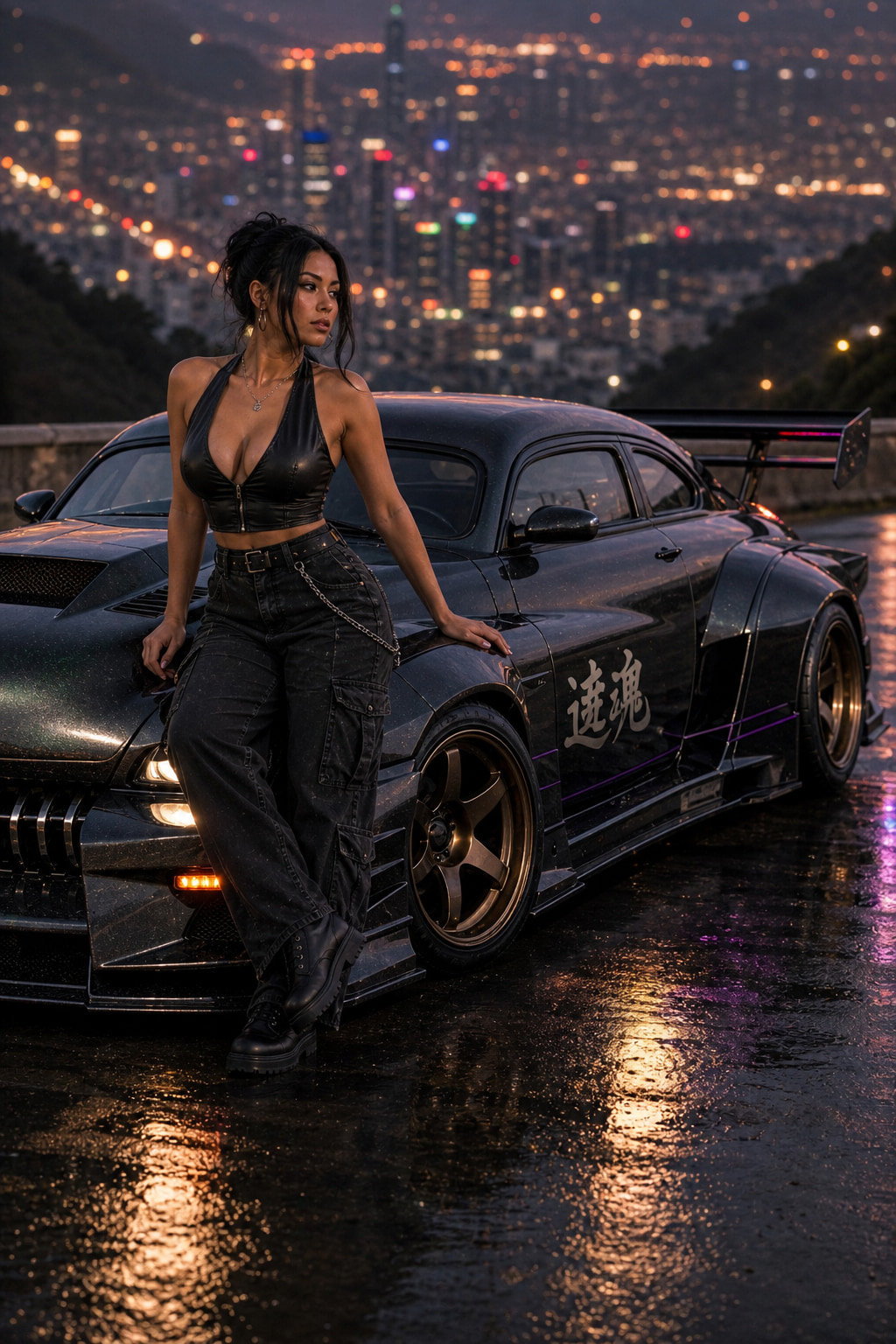
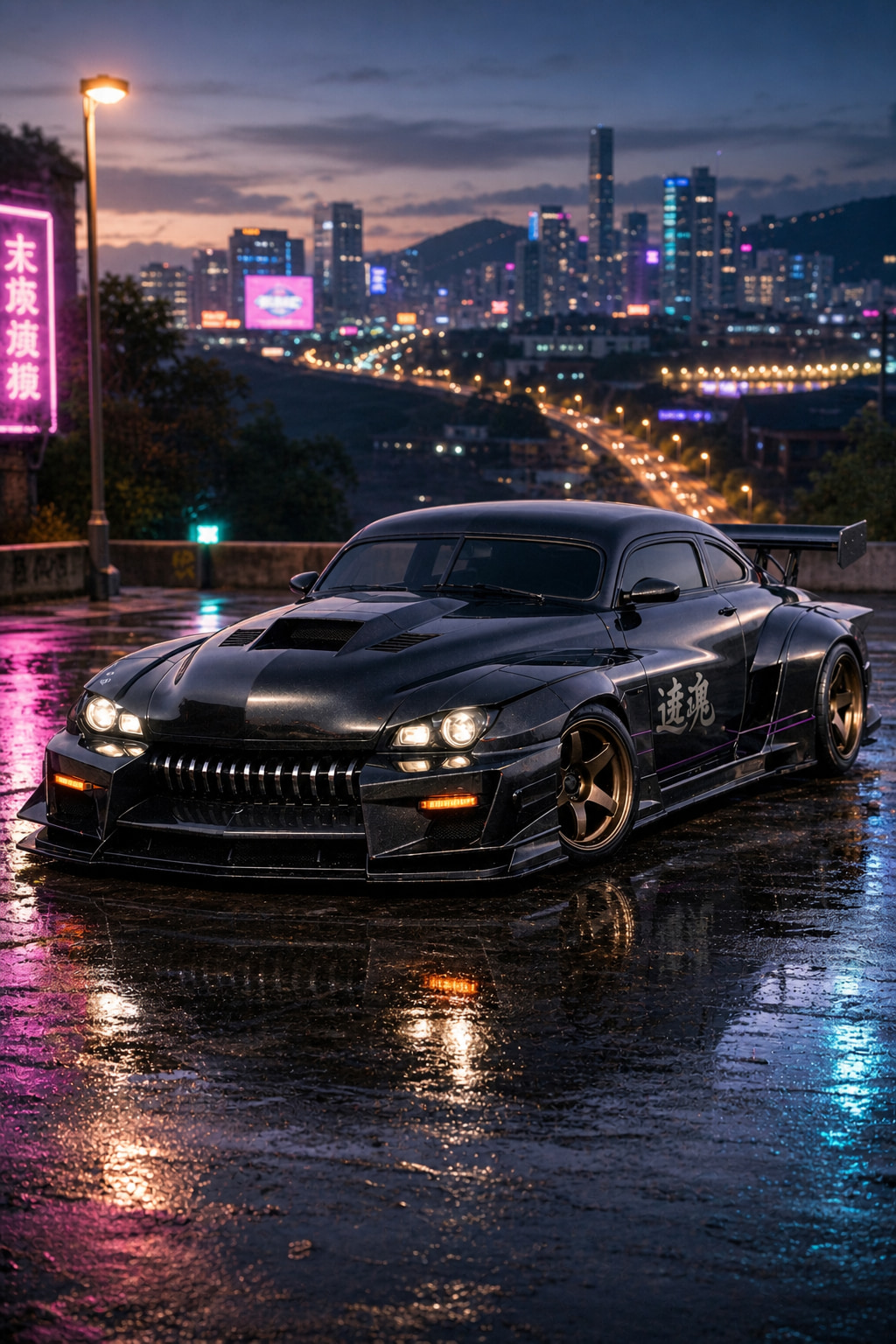
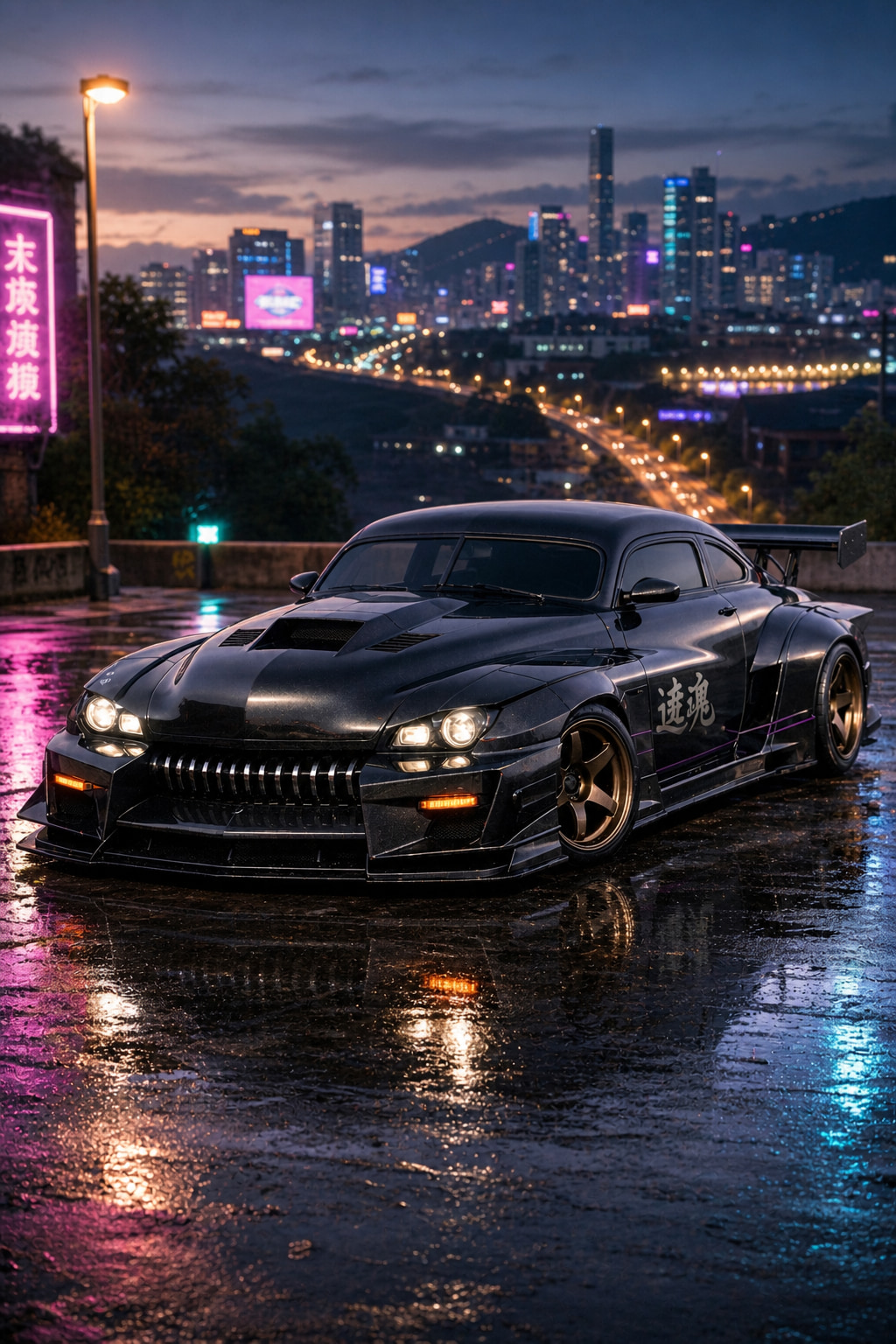
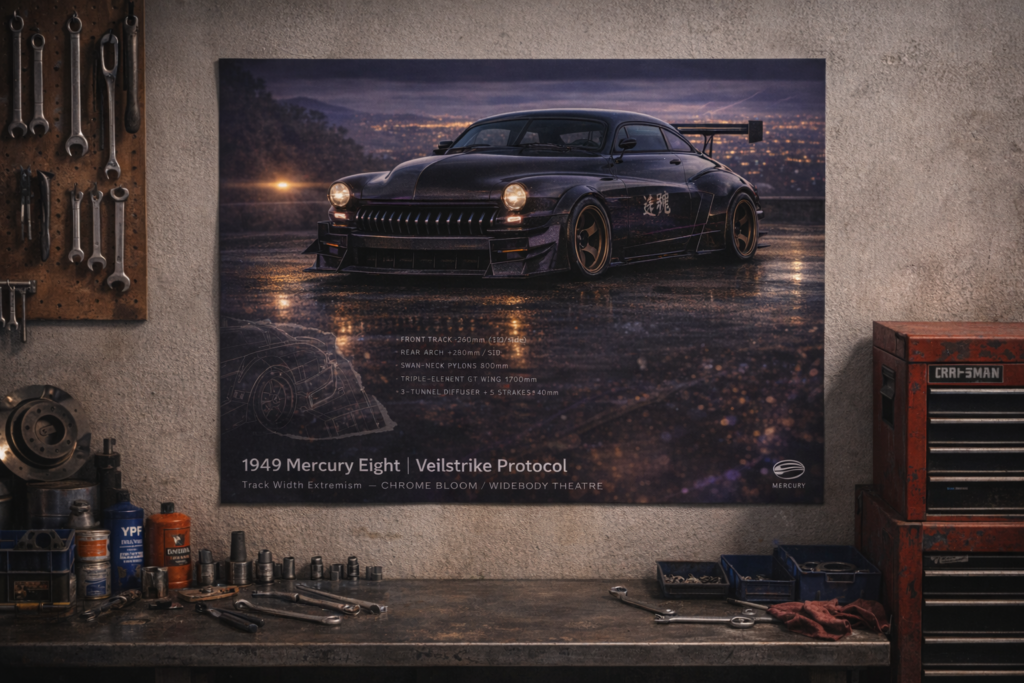
Veilstrike Protocol takes the sacred ’49 Mercury Eight silhouette—roofline, glass, and door geometry intact—and forces it through a 2000s JDM aero lens. Think Abflug severity and Veilside theater, but executed like a street time-attack study: planar box flares, hard chamfers, and layered channels that look like they were drawn with a straightedge and a grudge.

Under the skin, it’s built to justify the drama. Track width explodes, cooling is treated as a first-class design constraint, and the whole car is tuned around tire wake control, brake ducting, and underfloor management. The result reads like an outlaw demo car that accidentally learned how to turn in—low, wide, and technically coherent enough to belong in a design archive.
Share

Platform transformation, examined from every angle.

6 curated frames · swipe / tap to inspect

Comparison Shots

Engineering record. Exhibition artifact.

The technical study and collectible interpretation of one build, preserved together.

01
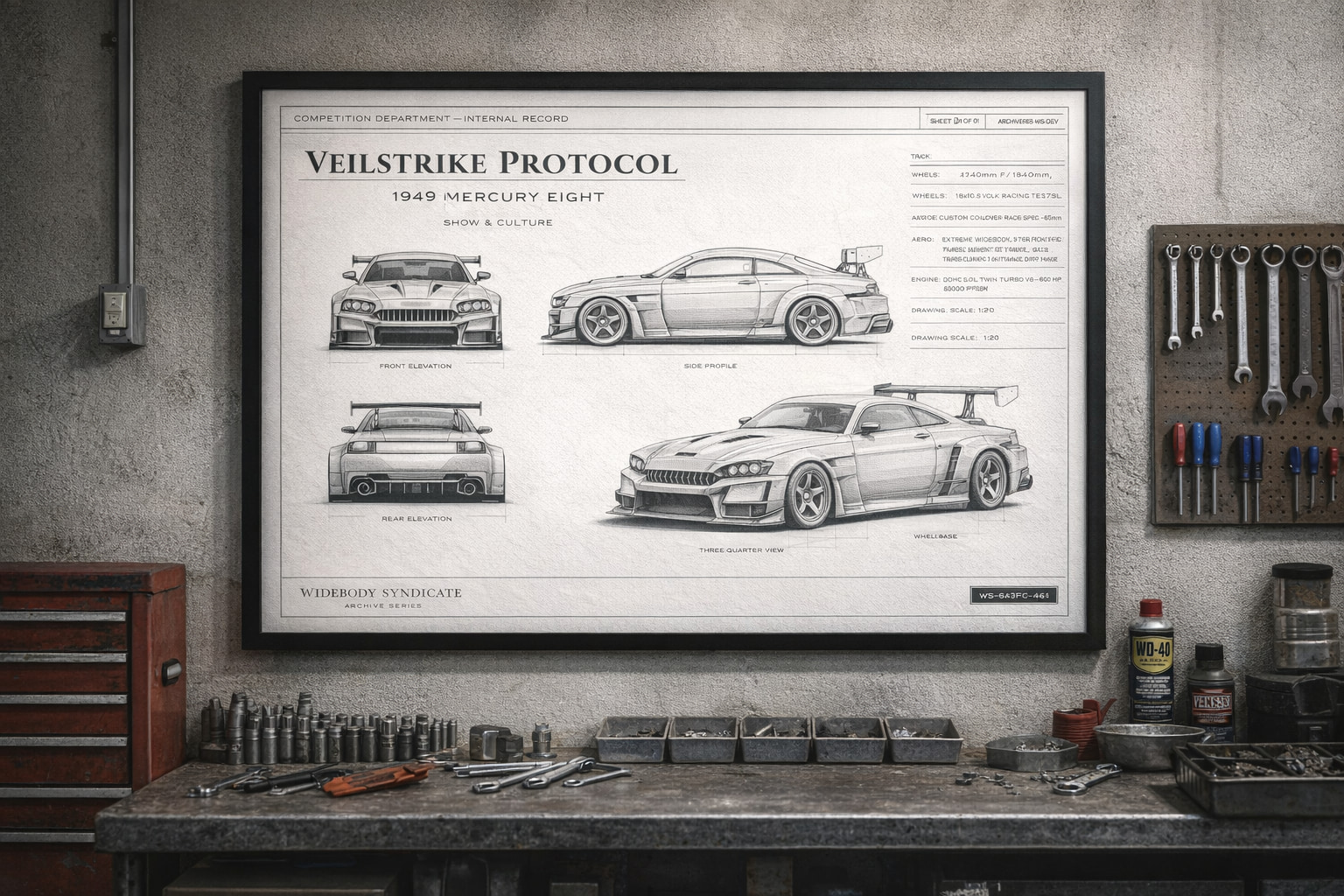
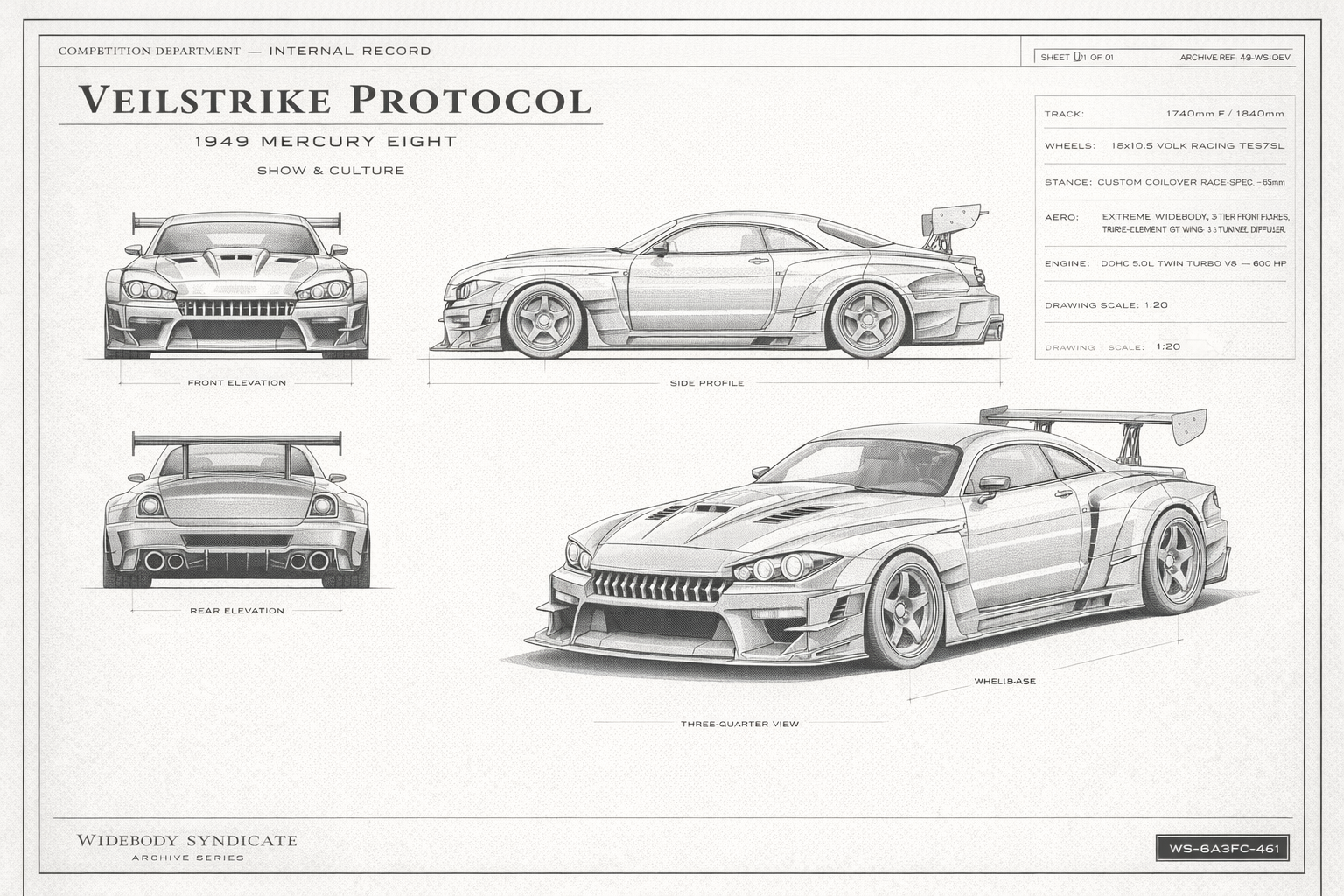
Technical DrawingBlueprint archive
Veilstrike Protocol blueprint
02
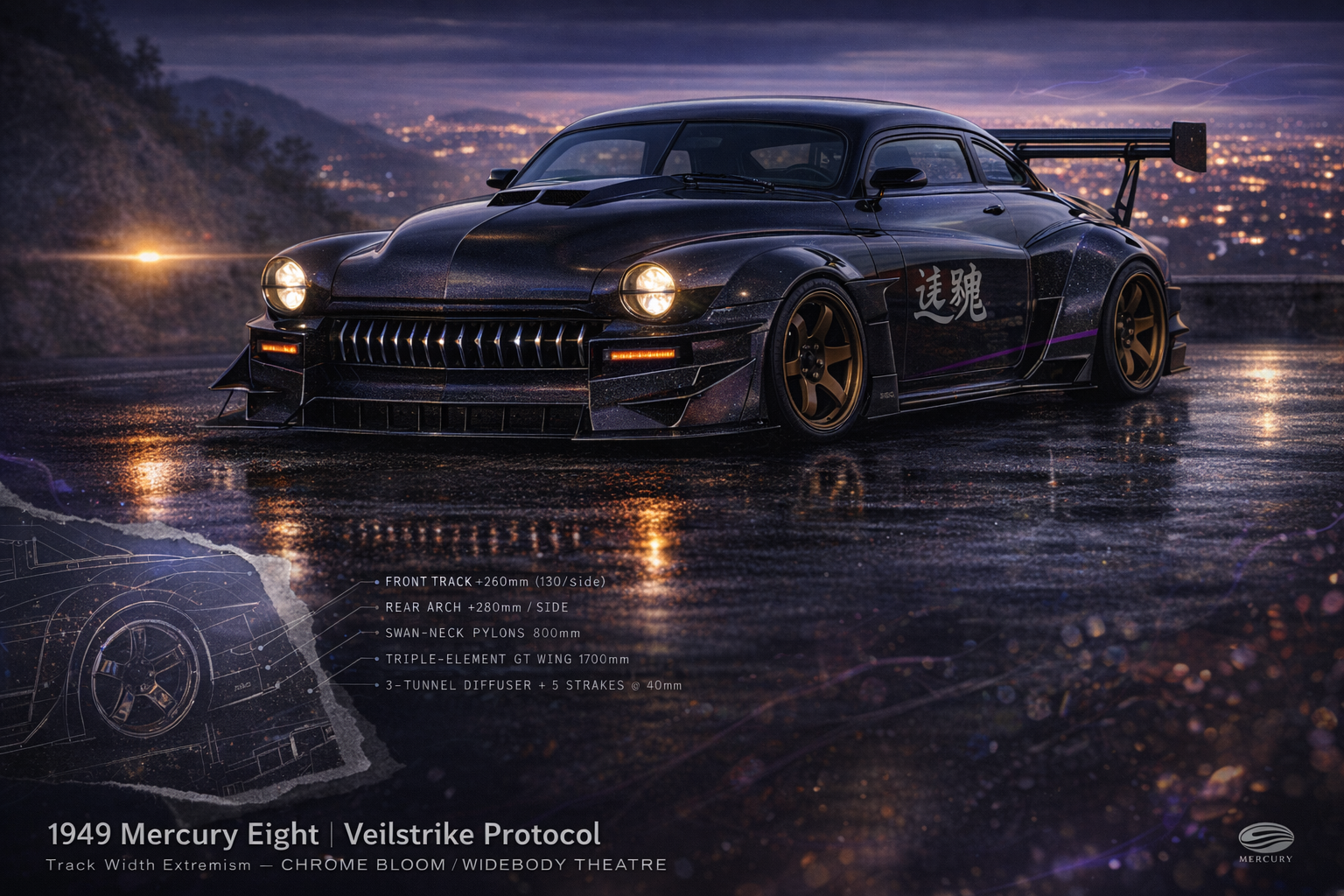
Veilstrike Protocol Collector EditionCollector artifact
Veilstrike Protocol Collector Edition

A presentation-grade collector artifact created for this release and preserved as part of the Widebody Syndicate archive.

Platform

1949 Mercury Eight

1949 Mercury Eight

The 1949 Mercury Eight stands as an iconic piece of post-war American automotive history, capturing the essence of late 1940s design with its clean, flowing lines and solid, chunky presence. Known for its rugged yet refined chassis, this platform offers a surprisingly balanced ride and a canvas primed for both traditional hot rodding and modern bespoke builds. Underneath the stylish steel body lies a robust frame with generous wheelbase and classic suspension setups that invite creative engineering without losing the authentic vintage character.

MercuryEight1949
View Platform

Aero Package

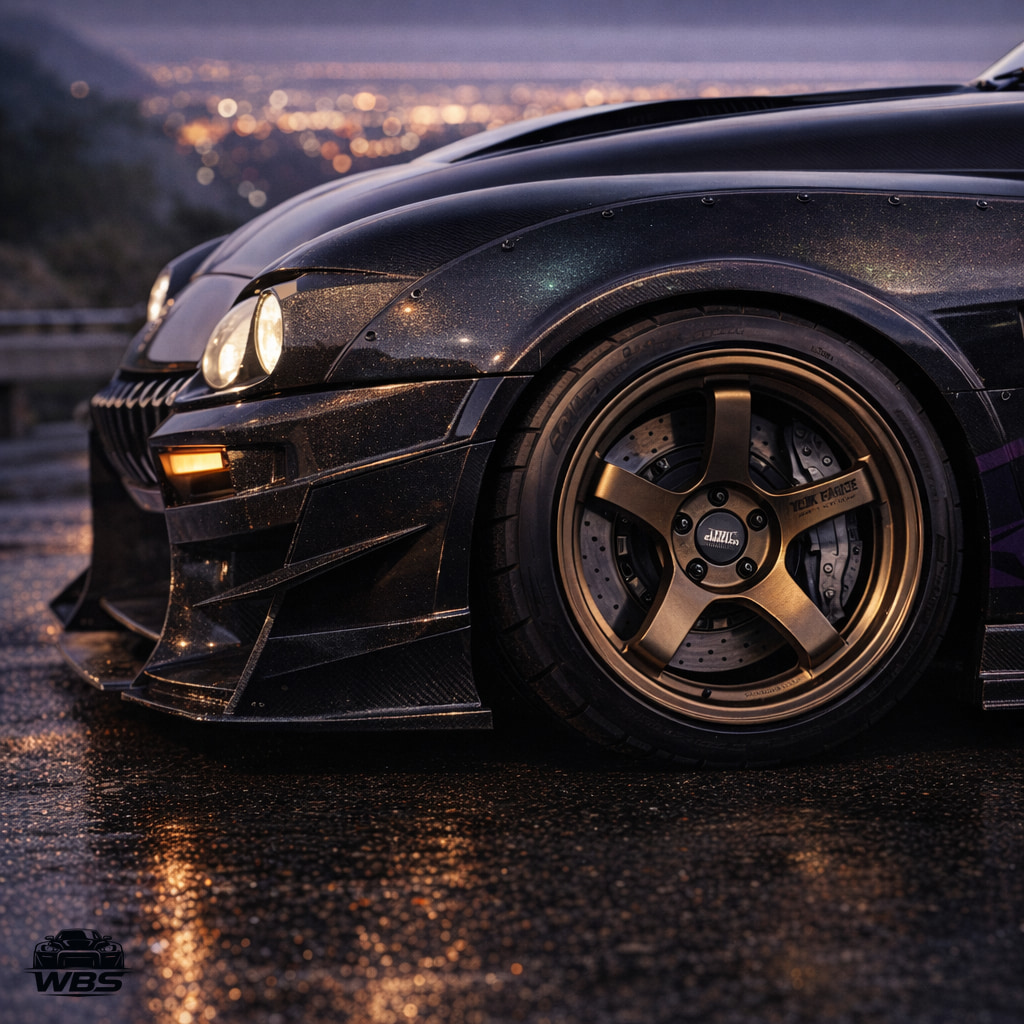
Front splitter with dedicated oil-cooler ducting and faceted bumper corner extensions
Integrated brake-cooling channels formed into the front arch secondary layer
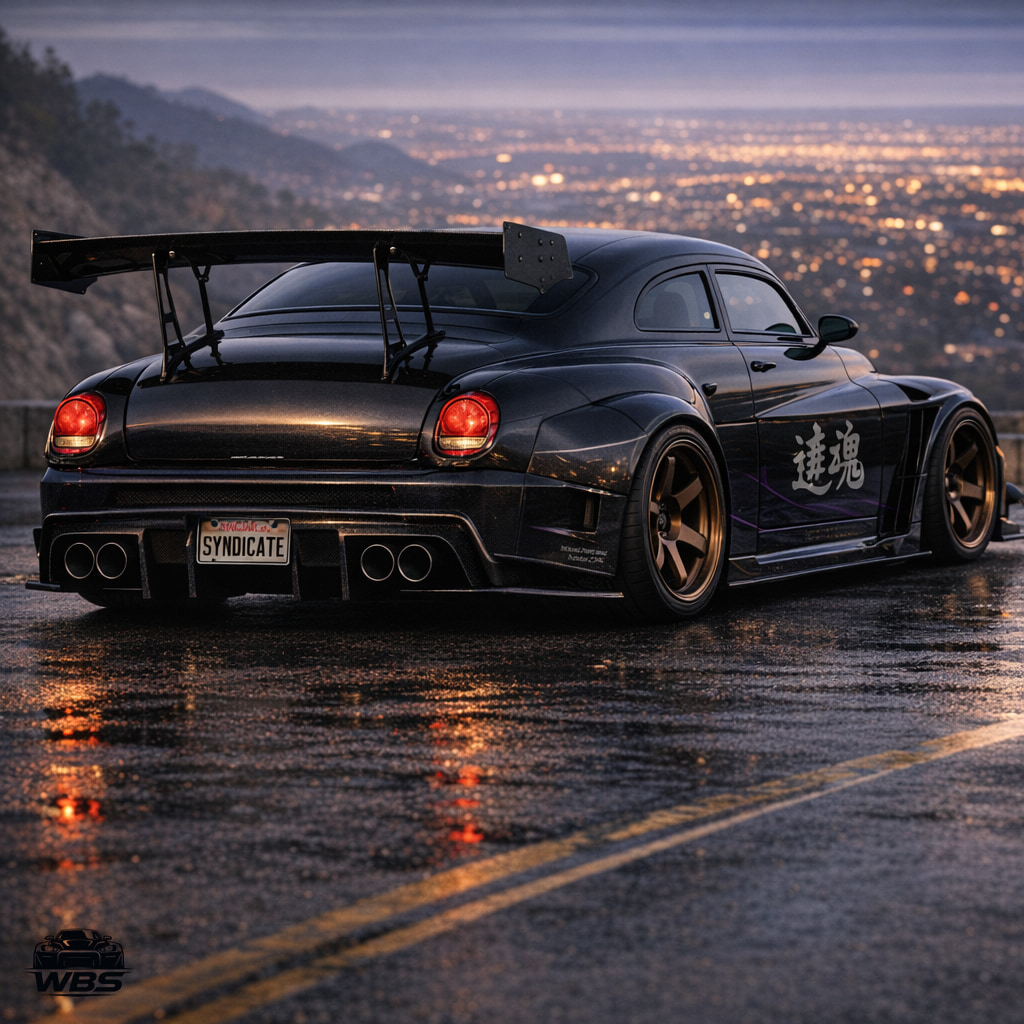
Three-element carbon diffuser with five vertical strakes and bumper undercut inlet
Triple-element GT wing (1700mm span) on tall swan-neck pylons with slotted endplates

Chassis

Veilstrike Protocol is aimed at street sprints and canyon time-attack—short pulls, hard braking zones, and repeated heat cycles where cooling and tire wake control matter as much as peak power. The aero is proportioned for stability and confidence: splitter, undercut, diffuser, and a tall multi-element wing to keep the rear planted when the road stops being smooth.

Wheels & Tires

Volk Racing TE37SL forged, Hyper Bronze, multi-lug conversion
18x10.5 staggered fitment with aggressive offsets to match widened centerlines
Toyo Proxes R888R: 285/35R18 front, 315/35R18 rear

Powertrain

Modernized Mercury flathead concept: reinforced bottom end with bespoke DOHC 4-valve heads
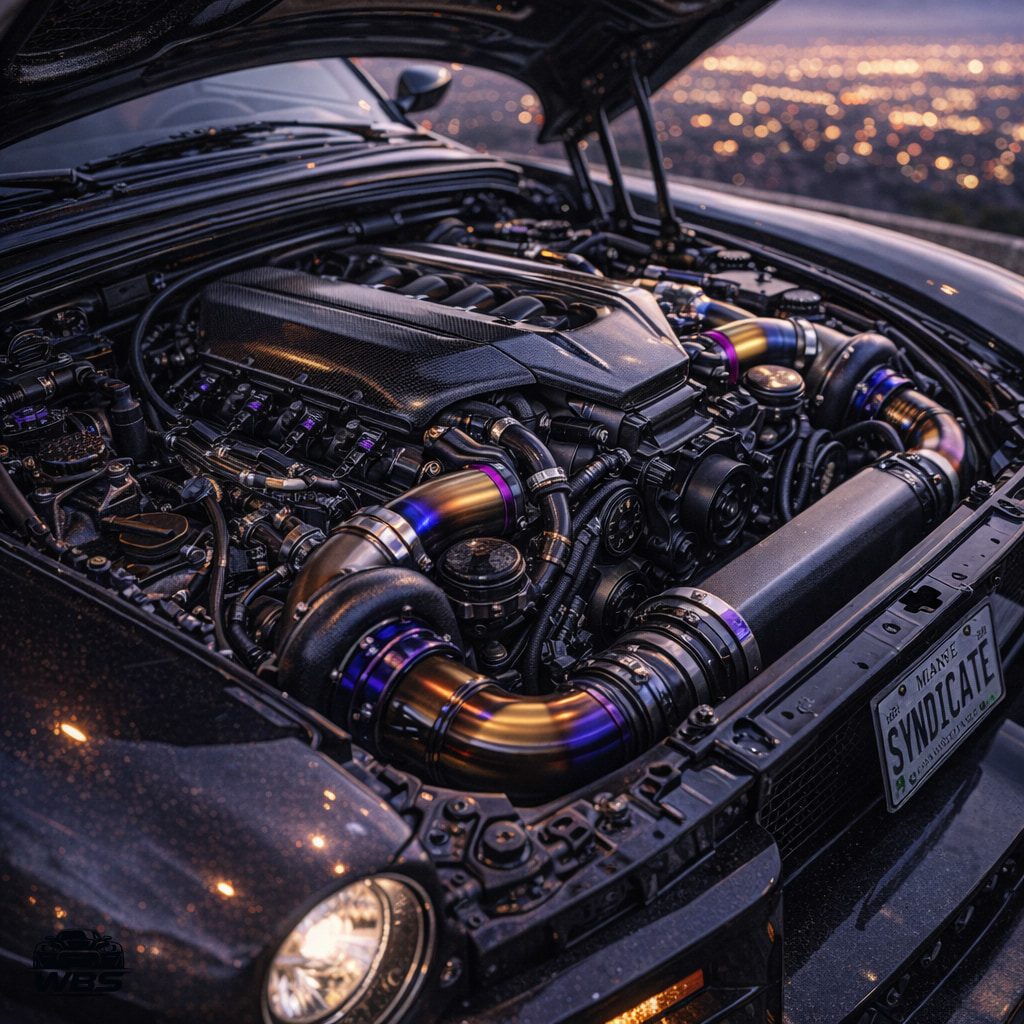
Twin-turbo 5.0L architecture targeting ~600 hp with response-biased turbine sizing
Side-exit titanium exhaust packaging under widened rockers to reduce rear heat soak and backpressure length
Cooling system: twin side-mounted radiators in front sidepods plus front oil cooler

Fabrication Notes

Widebody built as a layered, serviceable assembly with hard edges and defined part breaks for repeatability
Front suspension geometry corrected for scrub radius and steering feel after major track increase
Rear quarter stretch and wheelbase change managed with reinforced inner structures and re-indexed arch openings
Ducting designed as sealed pressure paths (inlets, cores, exits) rather than open vents for show
×

Design Philosophy

Veilstrike Protocol takes the sacred ’49 Mercury Eight silhouette—roofline, glass, and door geometry intact—and forces it through a 2000s JDM aero lens. Think Abflug severity and Veilside theater, but executed like a street time-attack study: planar box flares, hard chamfers, and layered channels that look like they were drawn with a straightedge and a grudge.

Under the skin, it’s built to justify the drama. Track width explodes, cooling is treated as a first-class design constraint, and the whole car is tuned around tire wake control, brake ducting, and underfloor management. The result reads like an outlaw demo car that accidentally learned how to turn in—low, wide, and technically coherent enough to belong in a design archive.

Platform+
1949 Mercury Eight

1949 Mercury Eight

The 1949 Mercury Eight stands as an iconic piece of post-war American automotive history, capturing the essence of late 1940s design with its clean, flowing lines and solid, chunky presence. Known for its rugged yet refined chassis, this platform offers a surprisingly balanced ride and a canvas primed for both traditional hot rodding and modern bespoke builds. Underneath the stylish steel body lies a robust frame with generous wheelbase and classic suspension setups that invite creative engineering without losing the authentic vintage character.

MercuryEight1949
View Platform
Aero Package+

Front splitter with dedicated oil-cooler ducting and faceted bumper corner extensions
Integrated brake-cooling channels formed into the front arch secondary layer
Three-element carbon diffuser with five vertical strakes and bumper undercut inlet
Triple-element GT wing (1700mm span) on tall swan-neck pylons with slotted endplates

Chassis+

Veilstrike Protocol is aimed at street sprints and canyon time-attack—short pulls, hard braking zones, and repeated heat cycles where cooling and tire wake control matter as much as peak power. The aero is proportioned for stability and confidence: splitter, undercut, diffuser, and a tall multi-element wing to keep the rear planted when the road stops being smooth.

Wheels & Tires+

Volk Racing TE37SL forged, Hyper Bronze, multi-lug conversion
18x10.5 staggered fitment with aggressive offsets to match widened centerlines
Toyo Proxes R888R: 285/35R18 front, 315/35R18 rear

Powertrain+

Modernized Mercury flathead concept: reinforced bottom end with bespoke DOHC 4-valve heads
Twin-turbo 5.0L architecture targeting ~600 hp with response-biased turbine sizing
Side-exit titanium exhaust packaging under widened rockers to reduce rear heat soak and backpressure length
Cooling system: twin side-mounted radiators in front sidepods plus front oil cooler

Fabrication Notes+

Widebody built as a layered, serviceable assembly with hard edges and defined part breaks for repeatability
Front suspension geometry corrected for scrub radius and steering feel after major track increase
Rear quarter stretch and wheelbase change managed with reinforced inner structures and re-indexed arch openings
Ducting designed as sealed pressure paths (inlets, cores, exits) rather than open vents for show

×Design Philosophy+

Veilstrike Protocol takes the sacred ’49 Mercury Eight silhouette—roofline, glass, and door geometry intact—and forces it through a 2000s JDM aero lens. Think Abflug severity and Veilside theater, but executed like a street time-attack study: planar box flares, hard chamfers, and layered channels that look like they were drawn with a straightedge and a grudge.

Under the skin, it’s built to justify the drama. Track width explodes, cooling is treated as a first-class design constraint, and the whole car is tuned around tire wake control, brake ducting, and underfloor management. The result reads like an outlaw demo car that accidentally learned how to turn in—low, wide, and technically coherent enough to belong in a design archive.

Part of
Wave 21

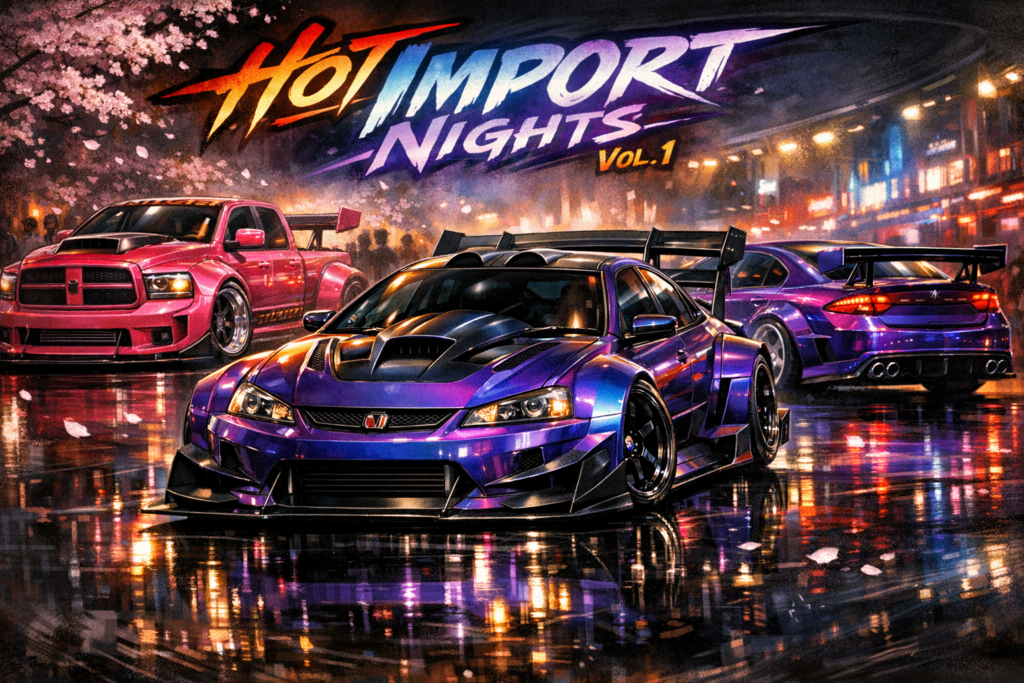
Hot Import Nights: Vol. 1

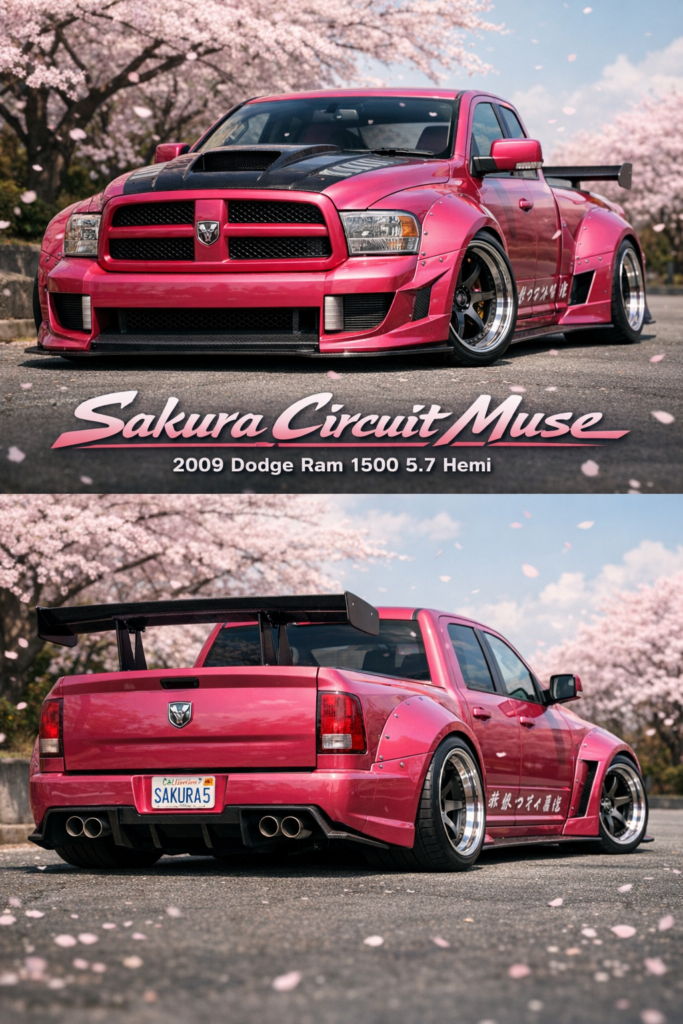
Welcome to the wild side of the early 2000s tuner boom and beyond, where our builds throw shade on OEM restraint and slam the culture into hyperdrive. From a Civic so outrageously wide it practically redefines compact, to a Dodge Ram decked out in full Bosozoku flamboyance under blooming sakura, these cars scream JDM show car insanity.

Explore Wave 21 → 6 Builds

Keep Exploring

The archive is always growing. New releases, waves, and blueprints added regularly.