R259
Longtail Velocity Program
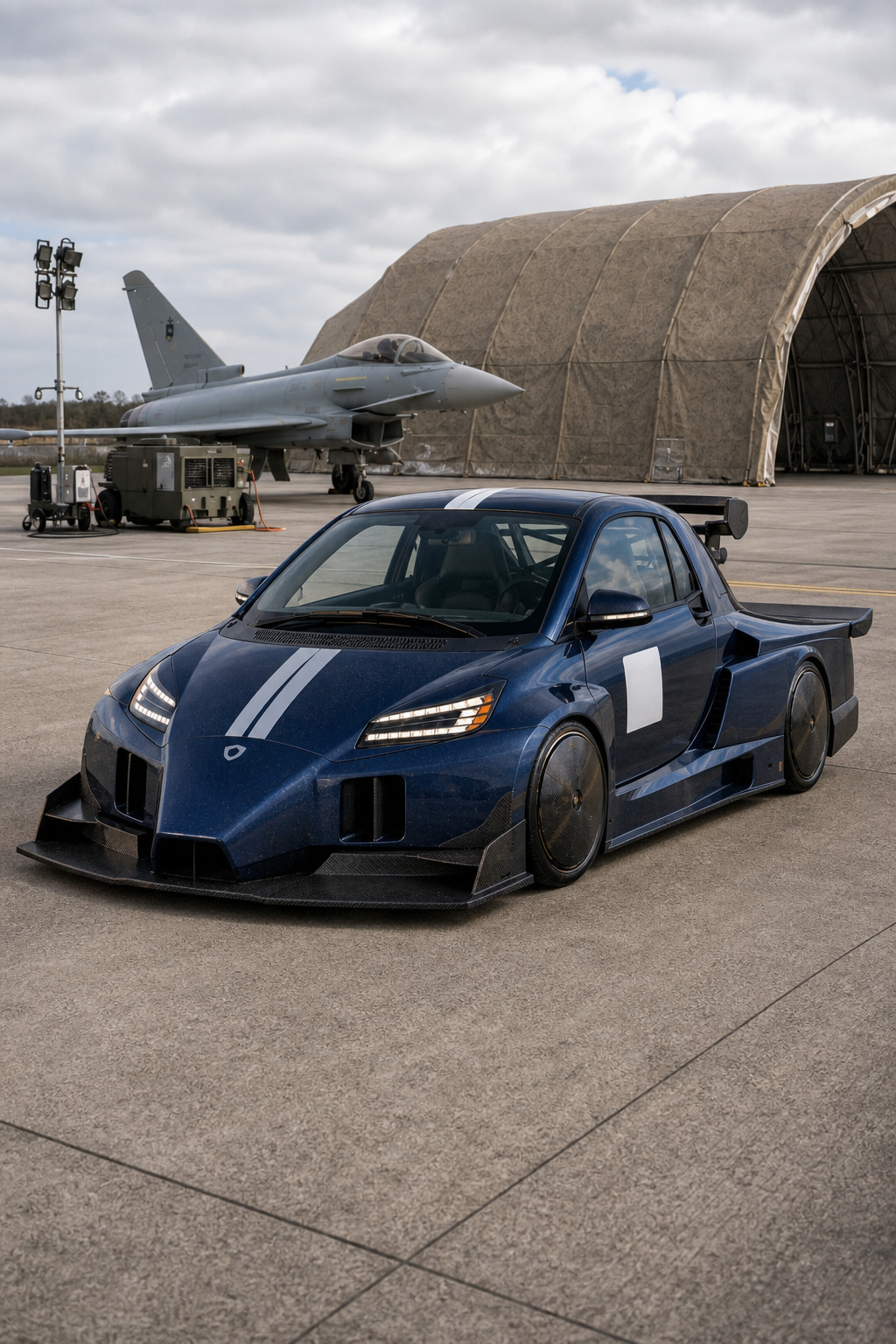
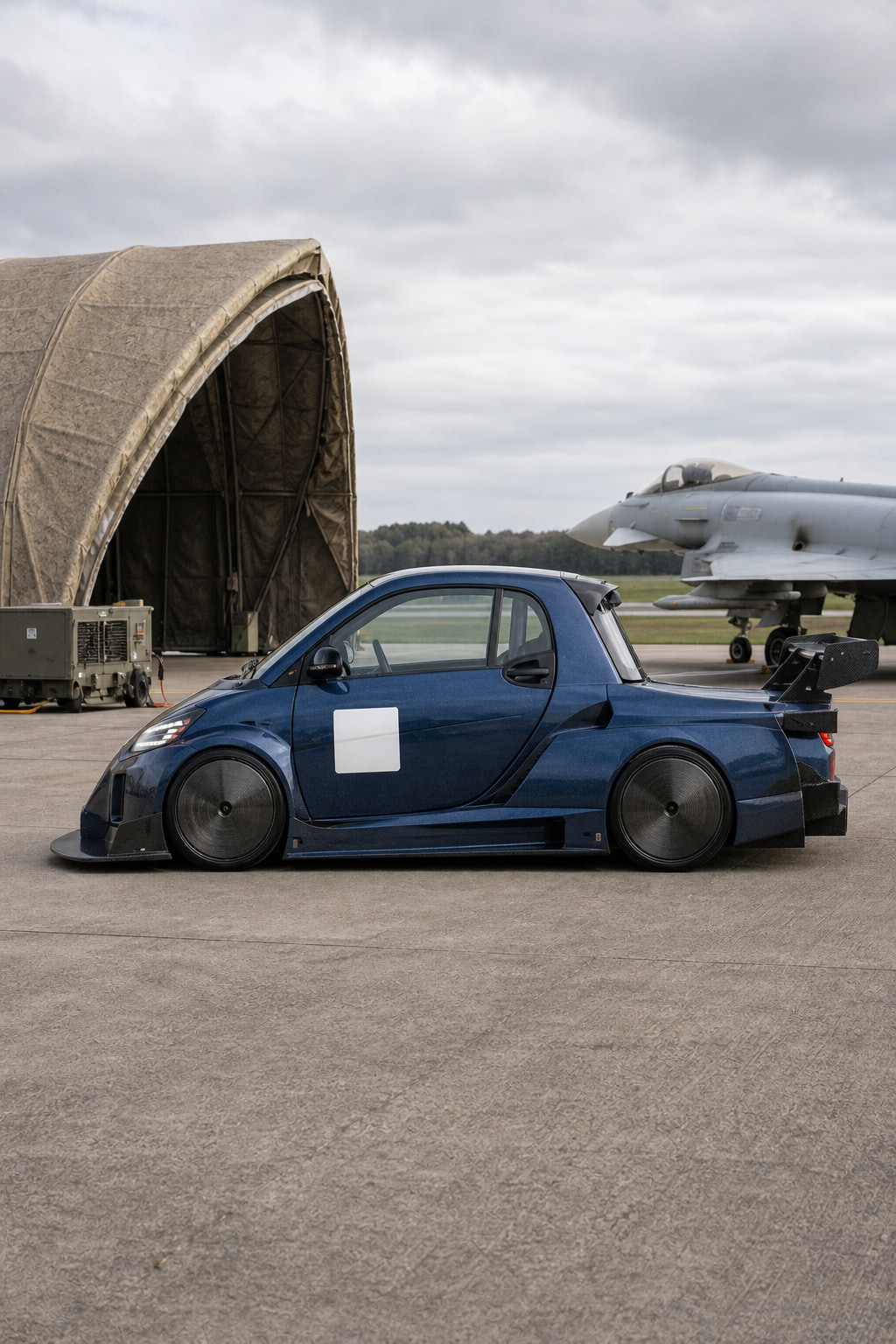
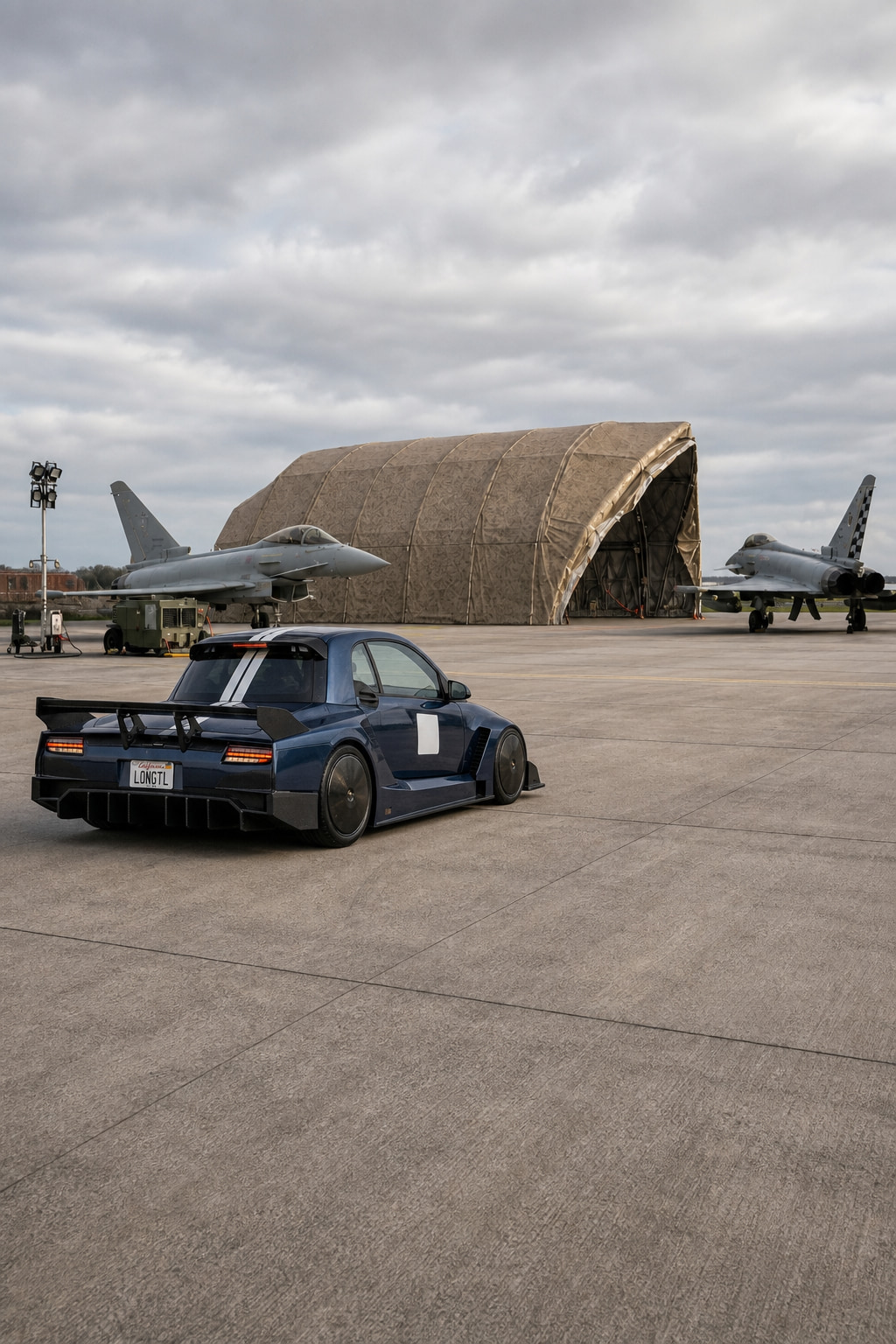
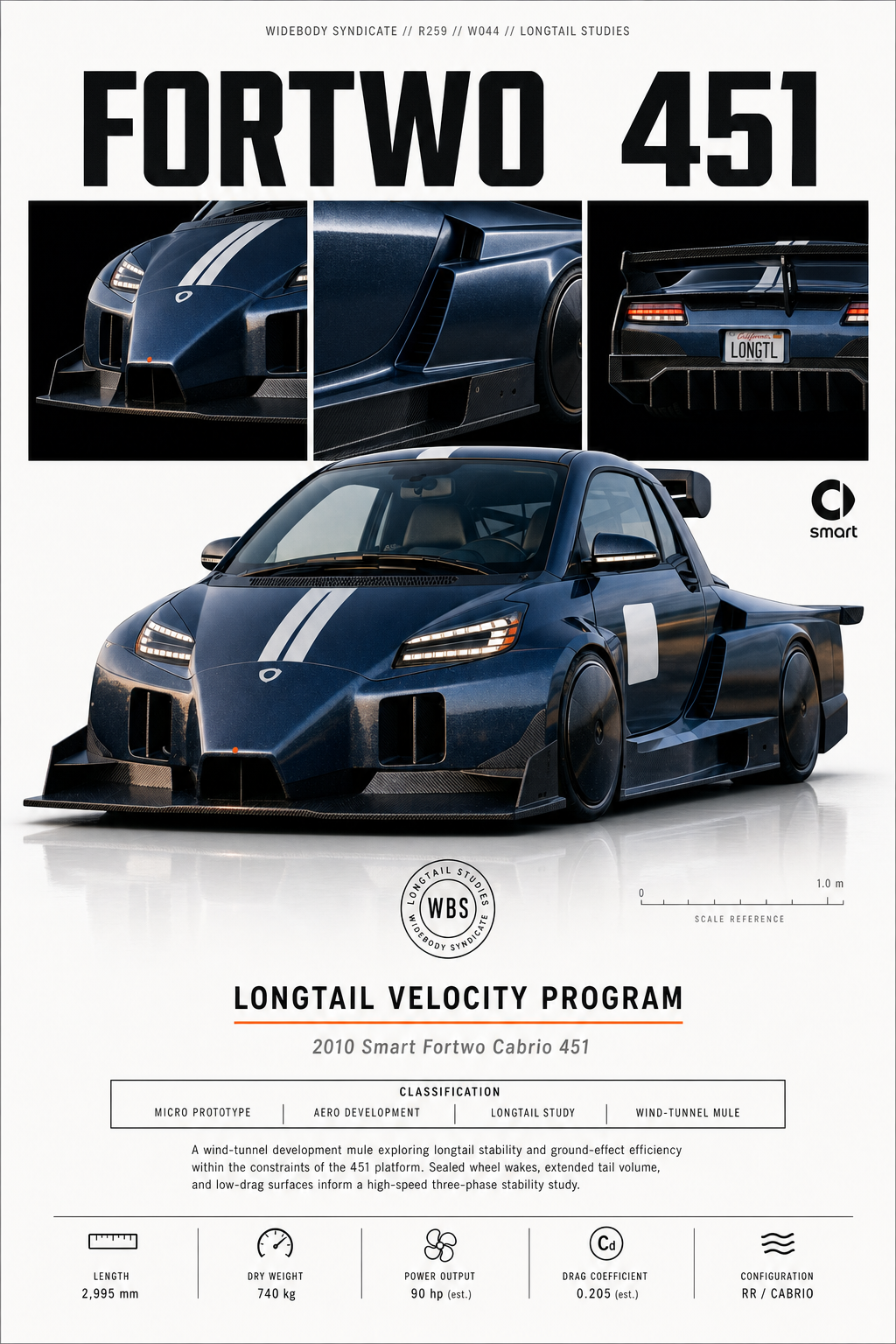
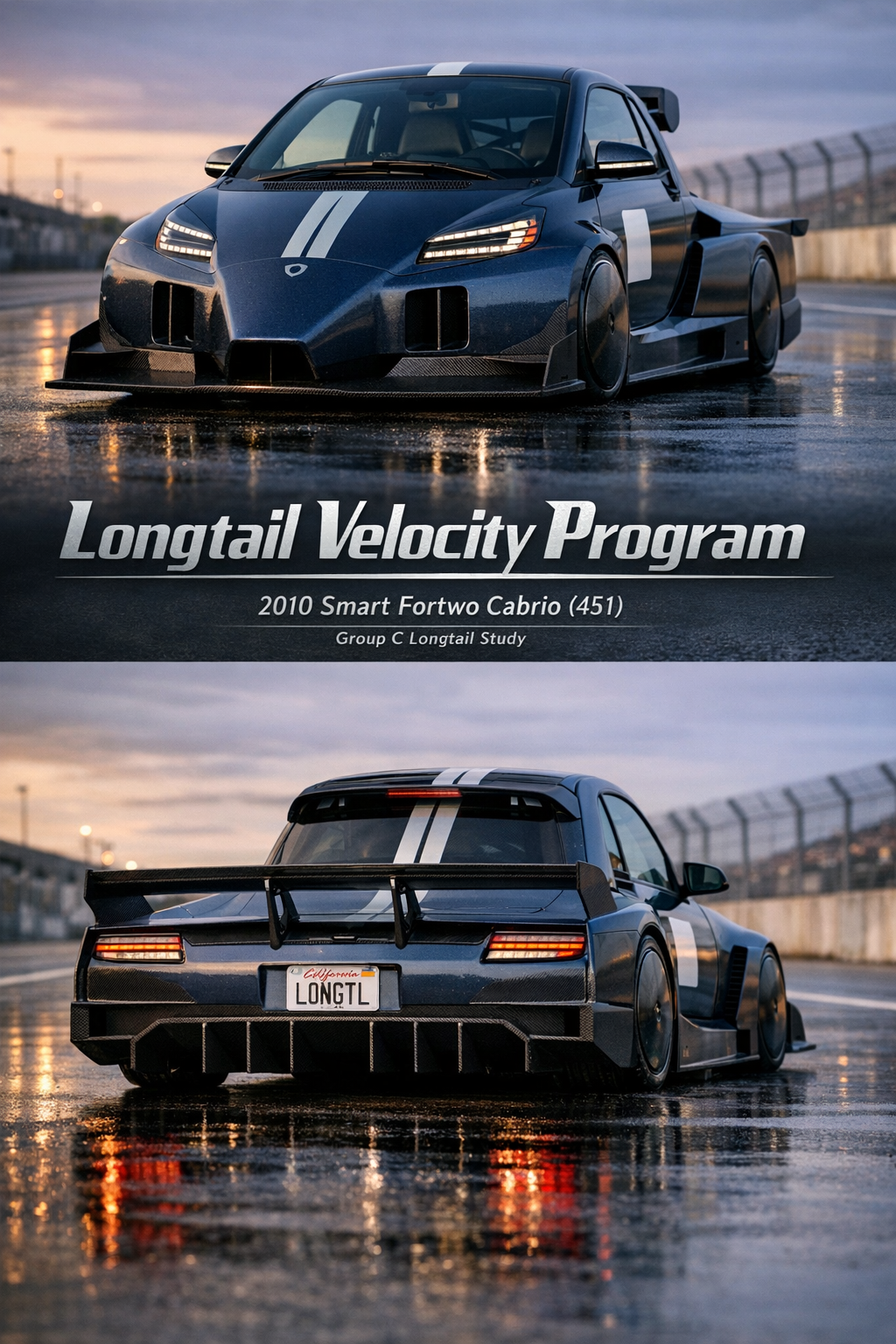
The Longtail Velocity Program takes a 2010 Smart Fortwo Cabrio 451 and forces it through an ’80s endurance-prototype lens without losing the telltale Smart greenhouse. The wedge nose is pushed forward, the wheels disappear under smooth fairings, and the body grows into a measured longtail that looks more Le Mans test mule than city car—still unmistakably a Fortwo from the beltline up.
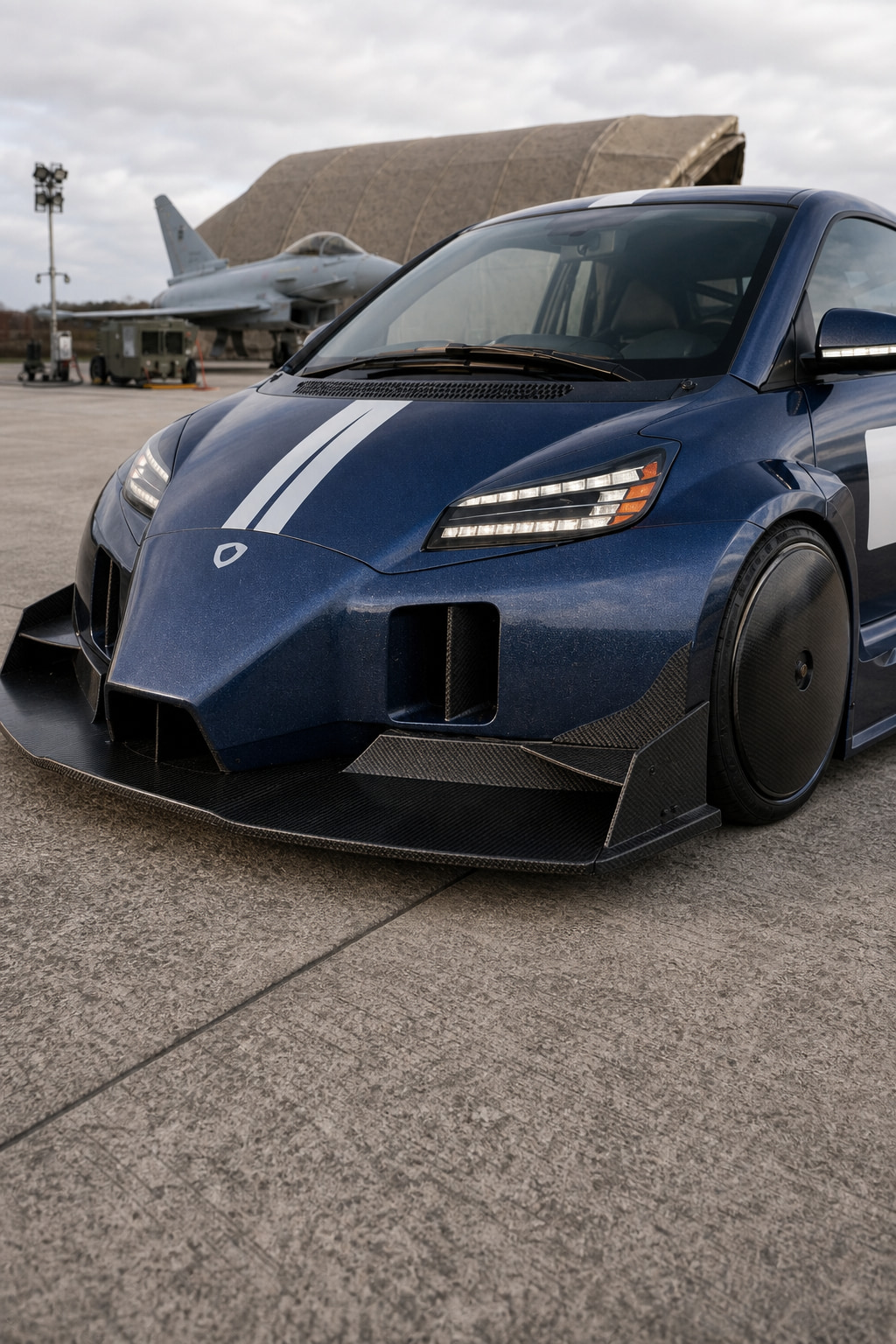
It’s not a cartoon widebody; it’s a drag-and-balance exercise. A sealed front face feeds compact coolers through narrow inlets, the sidepods manage pressure and extraction, and the underfloor works with a multi-channel diffuser to keep the car stable when the speed comes up. The result reads like a design archive “what if”: microcar packaging, prototype aero discipline, and a stance that’s all business.
Release Image Studies
Image studies from every angle.
Comparison Shots
Blueprint / Collector Archive
Engineering Artifacts
The technical study and collectible interpretation of one build, preserved together.
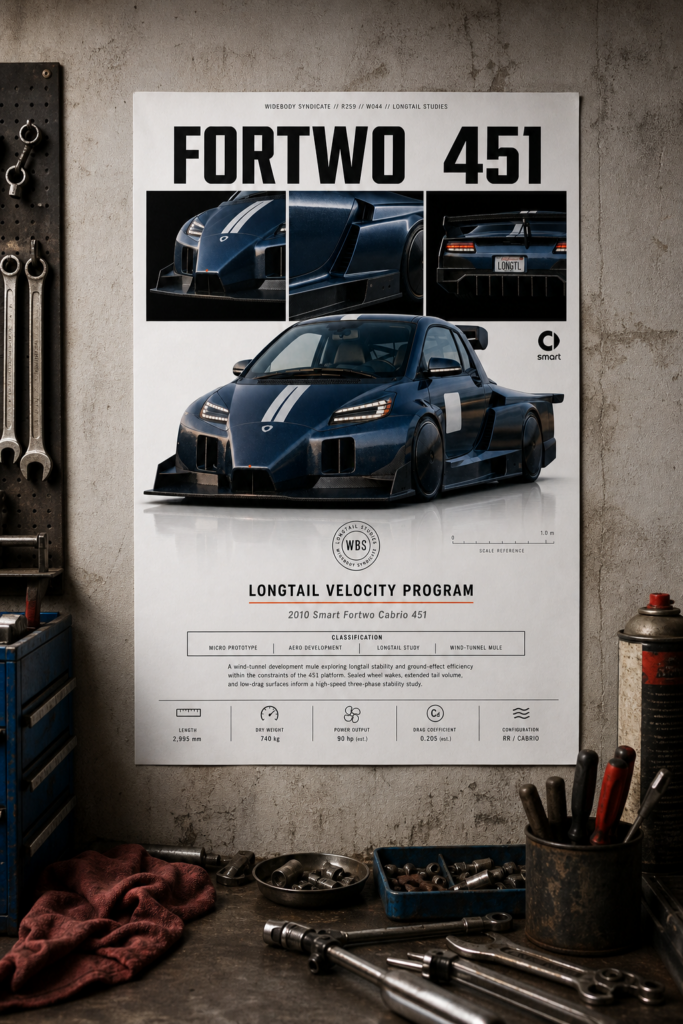
A presentation-grade collector artifact created for this release and preserved as part of the Widebody Syndicate archive.
Selected archive goods are available for collectors.
Technical Dossier
Platform
2010 Smart Fortwo Cabrio 451
The 2010 Smart Fortwo Cabrio (451) is the ultimate modern city-car icon: a two-seat microcar built around a visible Tridion safety cell and packaged with the kind of efficiency that feels almost architectural. Everything about it is deliberate — the short wheelbase, the upright glass, the tight overhangs — creating that unmistakable Fortwo silhouette that’s equal parts European street furniture and real automotive design statement.
As a platform, the 451 Cabrio mixes compact-car pragmatism with a genuinely characterful layout: rear-mounted three-cylinder power, rear-drive attitude, and a lightweight soft-top that turns the tiniest footprint into an open-air experience. It’s the kind of base that thrives on detail and intent — proof that you don’t need big dimensions to have big presence.
Aero Package
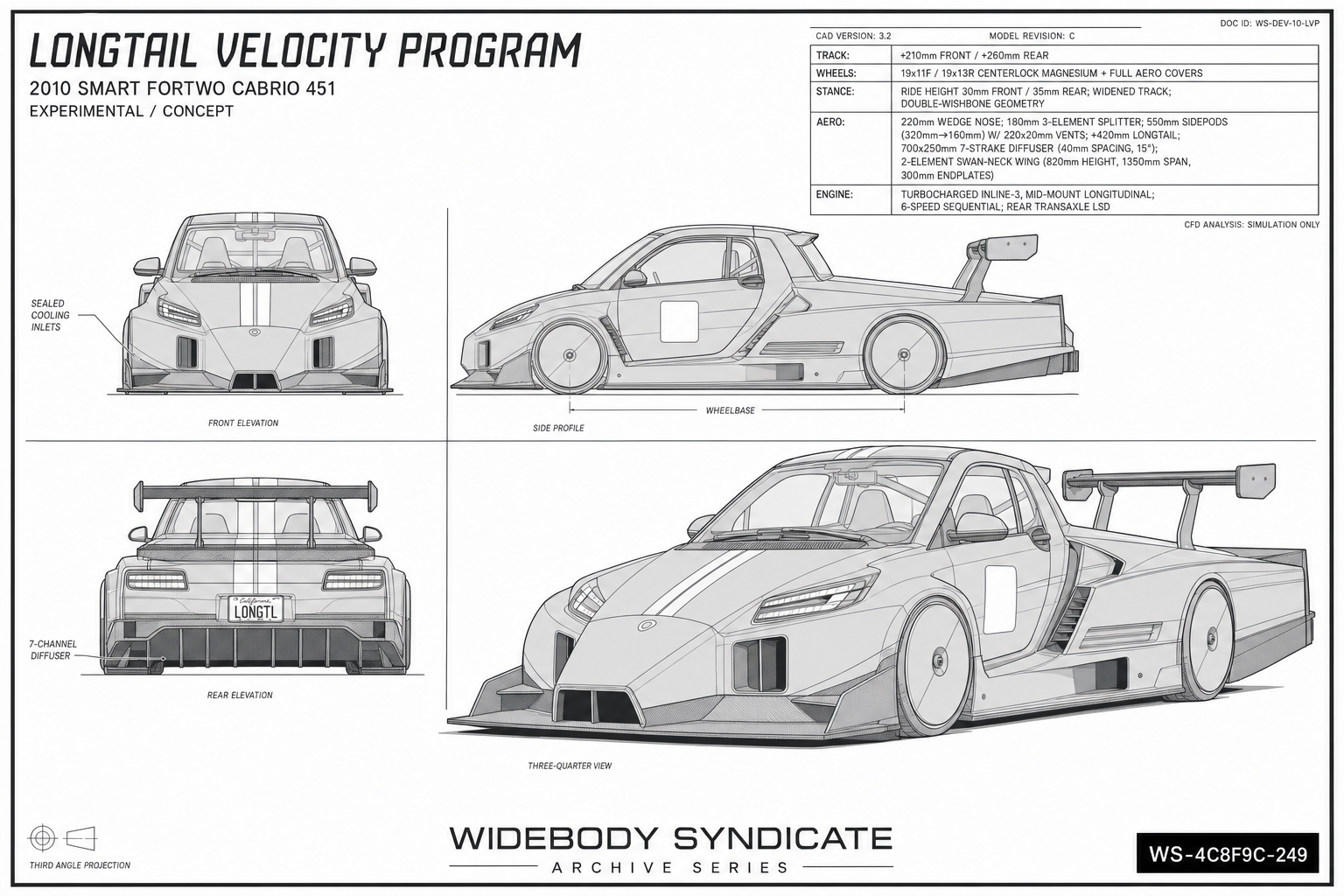
Sealed wedge nose cone with narrow vertical inlets feeding ducted water/oil cooling
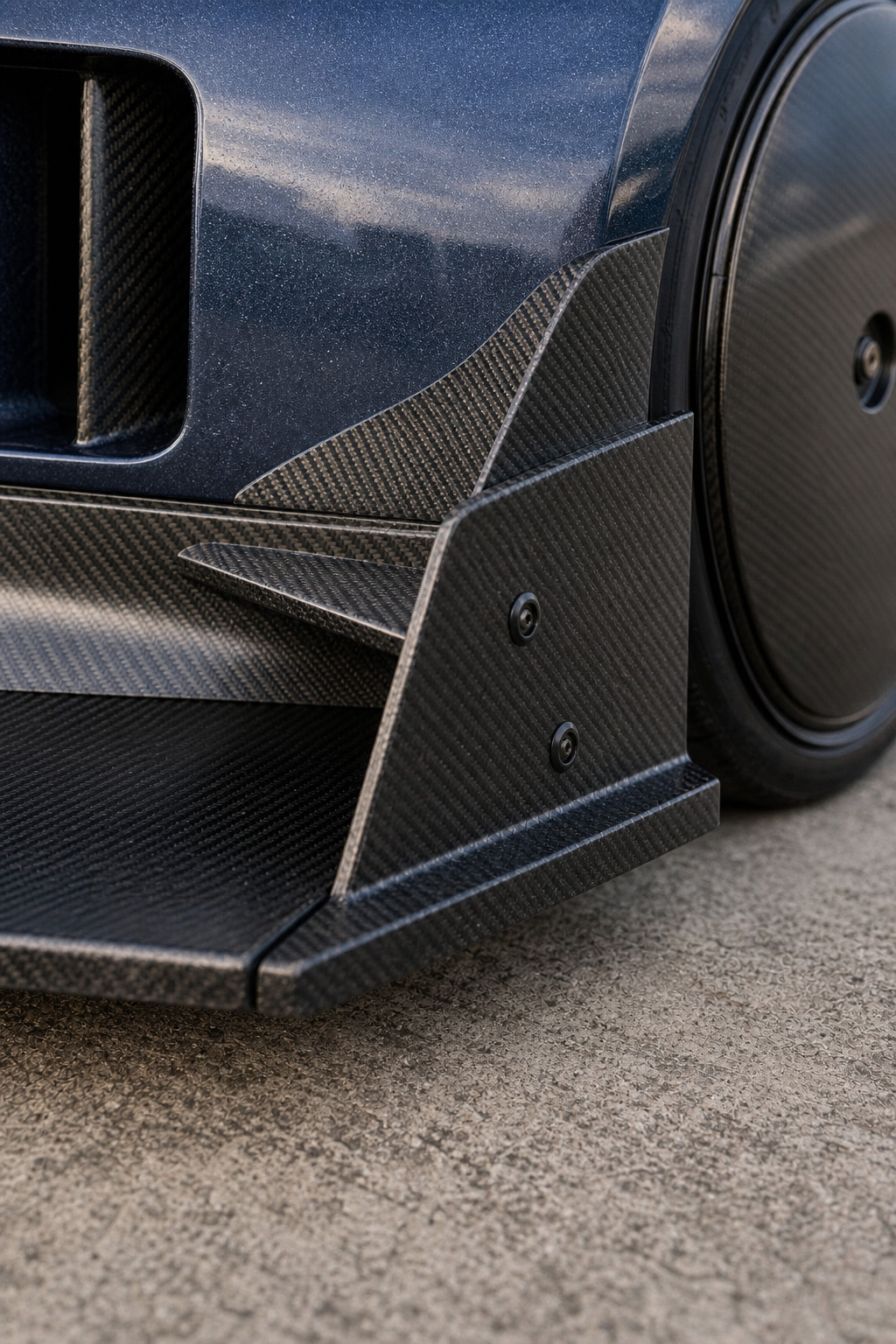
Carbon multi-element front splitter with outboard dive planes to manage wheelhouse pressure
Full undertray to seven-channel venturi diffuser with tall strakes and controlled ramp angle
Longtail-integrated two-element rear wing on swan-neck pylons with tall trapezoidal endplates
Flush twin retractable air brakes integrated into the rear deck
Chassis
Set on a wet dusk circuit straight, the reflections do the explaining: splitter planes, covered wheel volumes, and the diffuser’s seven tunnels read as functional surfaces rather than styling. It’s the kind of scene where Group C shapes make sense—low light, long shadows, and a car built to hold a line at speed.
Wheels & Tires
19x11 front and 19x13 rear magnesium centerlock wheels with full aero covers
Dunlop slicks: 295/30ZR19 front
335/30ZR19 rear
Track widened +210mm front and +260mm rear to match fairing volume and suspension geometry
Ultra-low ride height target: 30mm front
35mm rear for underfloor efficiency
Powertrain
Mid-mounted longitudinal turbocharged inline-3 racing engine behind the cabin
6-speed sequential gearbox with rear transaxle packaging
Mechanical limited-slip differential for predictable power-down under aero load
Ducted cooling system using front and side inlets with sealed internal routing
Fabrication Notes
Composite body and wheel fairings built around hard points; wheel coverage sized to clear steering and bump travel
Aluminum honeycomb reinforcement in longtail and splitter mounting zones to prevent aero-induced deflection
Titanium fasteners and serviceable dzus-style interfaces for quick access to coolers
brakes
and undertray
LED lamp internals packaged behind OEM lens shapes to preserve signature while smoothing surface transitions
Design Philosophy
The Longtail Velocity Program takes a 2010 Smart Fortwo Cabrio 451 and forces it through an ’80s endurance-prototype lens without losing the telltale Smart greenhouse. The wedge nose is pushed forward, the wheels disappear under smooth fairings, and the body grows into a measured longtail that looks more Le Mans test mule than city car—still unmistakably a Fortwo from the beltline up.
It’s not a cartoon widebody; it’s a drag-and-balance exercise. A sealed front face feeds compact coolers through narrow inlets, the sidepods manage pressure and extraction, and the underfloor works with a multi-channel diffuser to keep the car stable when the speed comes up. The result reads like a design archive “what if”: microcar packaging, prototype aero discipline, and a stance that’s all business.
▧Platform+
2010 Smart Fortwo Cabrio 451
The 2010 Smart Fortwo Cabrio (451) is the ultimate modern city-car icon: a two-seat microcar built around a visible Tridion safety cell and packaged with the kind of efficiency that feels almost architectural. Everything about it is deliberate — the short wheelbase, the upright glass, the tight overhangs — creating that unmistakable Fortwo silhouette that’s equal parts European street furniture and real automotive design statement.
As a platform, the 451 Cabrio mixes compact-car pragmatism with a genuinely characterful layout: rear-mounted three-cylinder power, rear-drive attitude, and a lightweight soft-top that turns the tiniest footprint into an open-air experience. It’s the kind of base that thrives on detail and intent — proof that you don’t need big dimensions to have big presence.
⌘Aero Package+
Sealed wedge nose cone with narrow vertical inlets feeding ducted water/oil cooling
Carbon multi-element front splitter with outboard dive planes to manage wheelhouse pressure
Full undertray to seven-channel venturi diffuser with tall strakes and controlled ramp angle
Longtail-integrated two-element rear wing on swan-neck pylons with tall trapezoidal endplates
Flush twin retractable air brakes integrated into the rear deck
⟡Chassis+
Set on a wet dusk circuit straight, the reflections do the explaining: splitter planes, covered wheel volumes, and the diffuser’s seven tunnels read as functional surfaces rather than styling. It’s the kind of scene where Group C shapes make sense—low light, long shadows, and a car built to hold a line at speed.
◎Wheels & Tires+
19x11 front and 19x13 rear magnesium centerlock wheels with full aero covers
Dunlop slicks: 295/30ZR19 front
335/30ZR19 rear
Track widened +210mm front and +260mm rear to match fairing volume and suspension geometry
Ultra-low ride height target: 30mm front
35mm rear for underfloor efficiency
▤Powertrain+
Mid-mounted longitudinal turbocharged inline-3 racing engine behind the cabin
6-speed sequential gearbox with rear transaxle packaging
Mechanical limited-slip differential for predictable power-down under aero load
Ducted cooling system using front and side inlets with sealed internal routing
△Fabrication Notes+
Composite body and wheel fairings built around hard points; wheel coverage sized to clear steering and bump travel
Aluminum honeycomb reinforcement in longtail and splitter mounting zones to prevent aero-induced deflection
Titanium fasteners and serviceable dzus-style interfaces for quick access to coolers
brakes
and undertray
LED lamp internals packaged behind OEM lens shapes to preserve signature while smoothing surface transitions
×Design Philosophy+
The Longtail Velocity Program takes a 2010 Smart Fortwo Cabrio 451 and forces it through an ’80s endurance-prototype lens without losing the telltale Smart greenhouse. The wedge nose is pushed forward, the wheels disappear under smooth fairings, and the body grows into a measured longtail that looks more Le Mans test mule than city car—still unmistakably a Fortwo from the beltline up.
It’s not a cartoon widebody; it’s a drag-and-balance exercise. A sealed front face feeds compact coolers through narrow inlets, the sidepods manage pressure and extraction, and the underfloor works with a multi-channel diffuser to keep the car stable when the speed comes up. The result reads like a design archive “what if”: microcar packaging, prototype aero discipline, and a stance that’s all business.
Part of
Wave 44
Longtail Studies
I got bored of normal proportions, so we went full Group C on the stuff nobody asked for. Microcar cabrios, rally legends, a sensible BMW sedan, an actual Honda Element, a compact pickup, and a mid-engine MR2 all lined up in the shop with the same disease: wedge noses, covered wheels, and rear decks stretched like we’re trying to outrun the calendar.
Explore Wave 44 → 6 BuildsKeep Exploring
The archive is always growing. New releases, waves, and blueprints added regularly.