

R179
Summit Apex Program
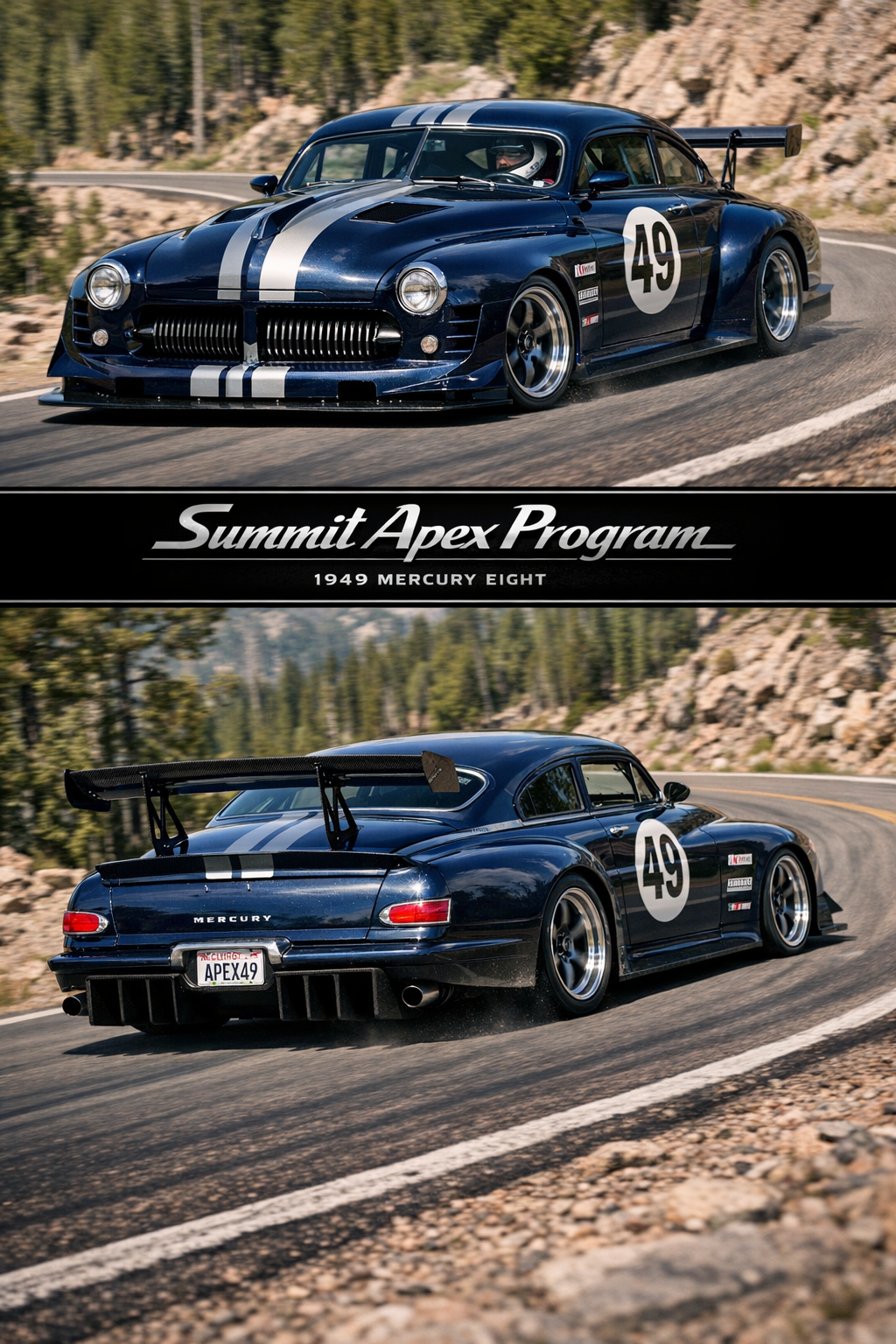
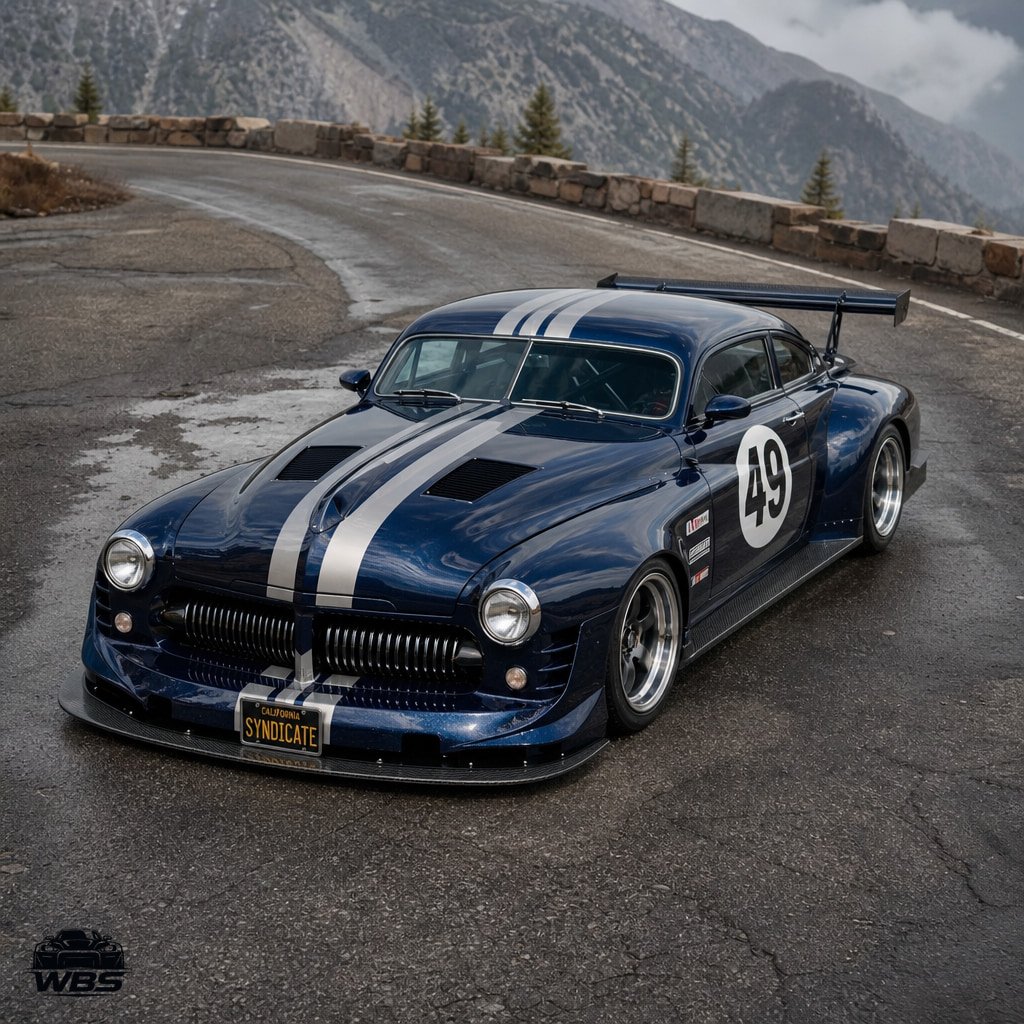
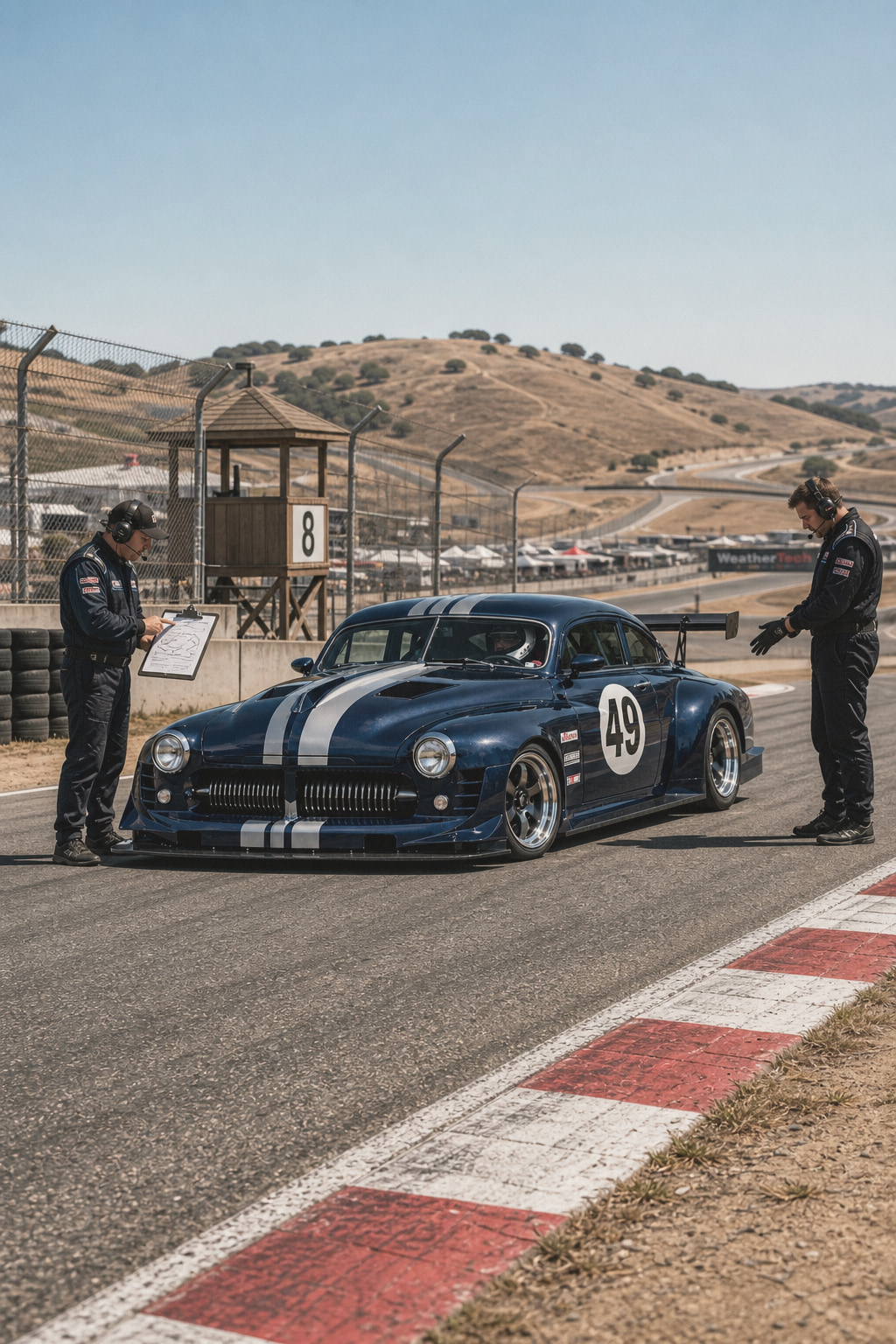
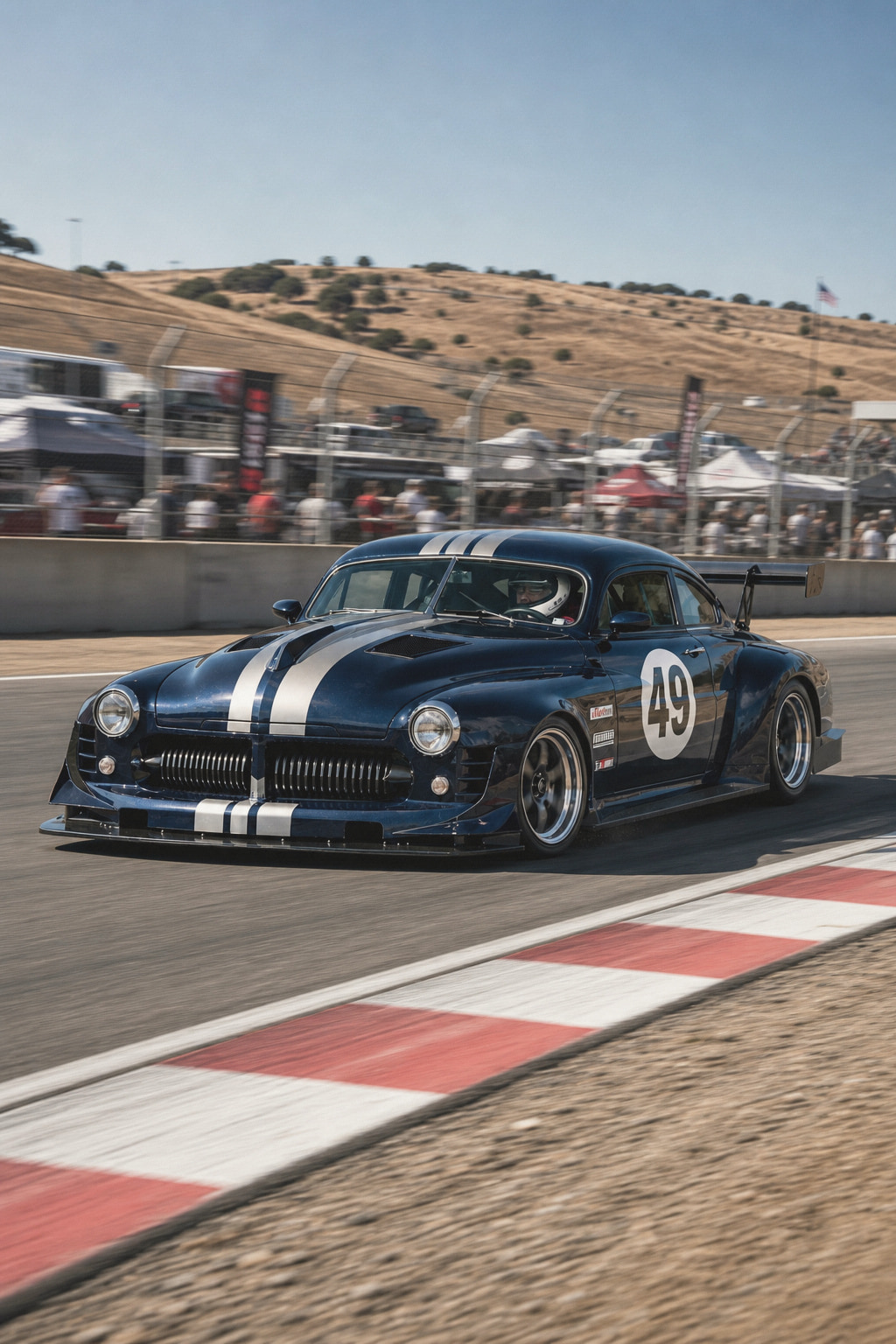
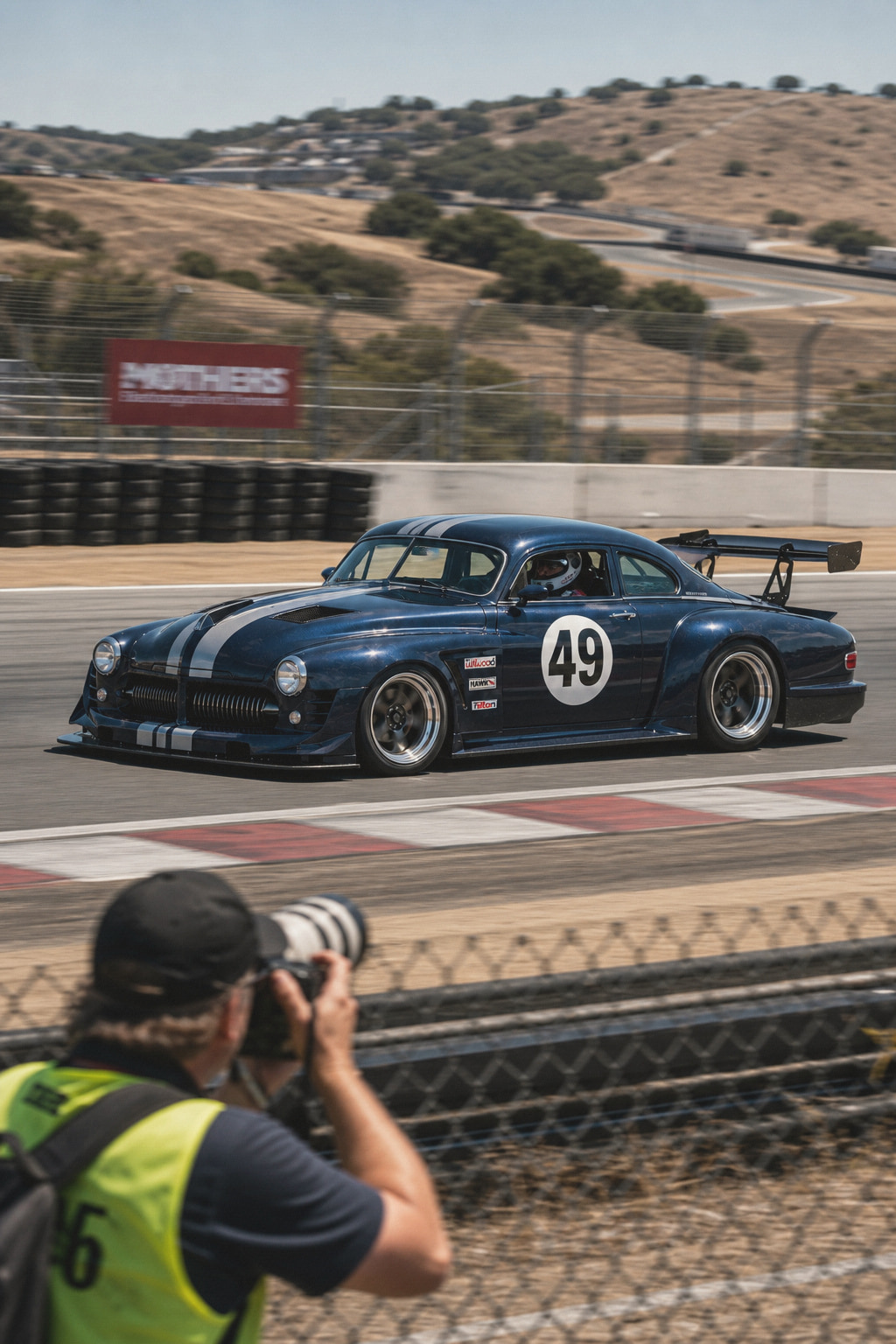
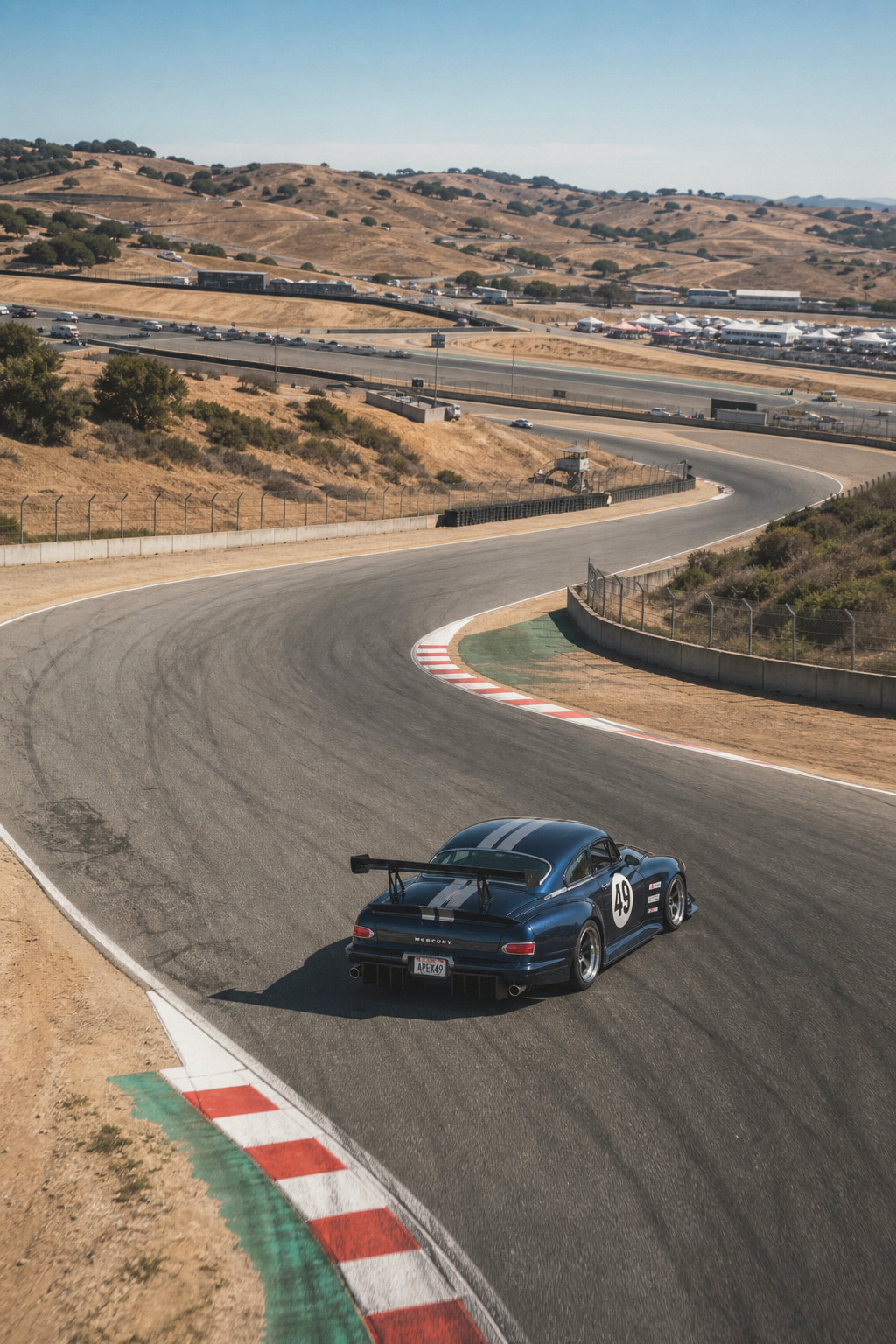
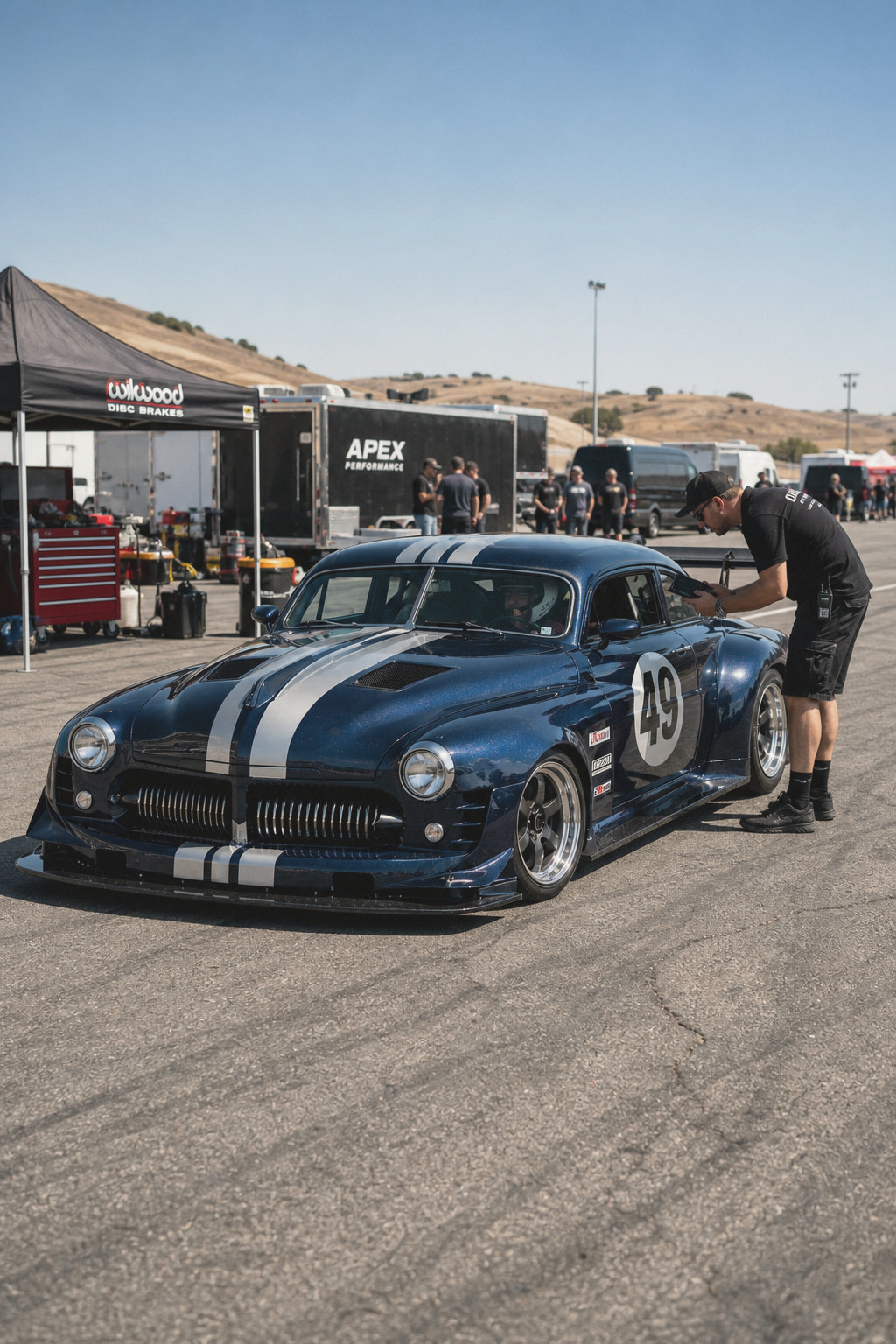
Summit Apex Program takes the long, iconic ’49 Mercury Eight silhouette and forces it to do modern hill climb work—short bursts of full load, violent brake zones, and constant surface change. The widebody isn’t costume: it’s track width, tire, and cooling capacity packaged into trapezoidal front flares and compound rear quarters that stabilize airflow into a deep diffuser without losing the Merc’s roofline and glasshouse proportions.
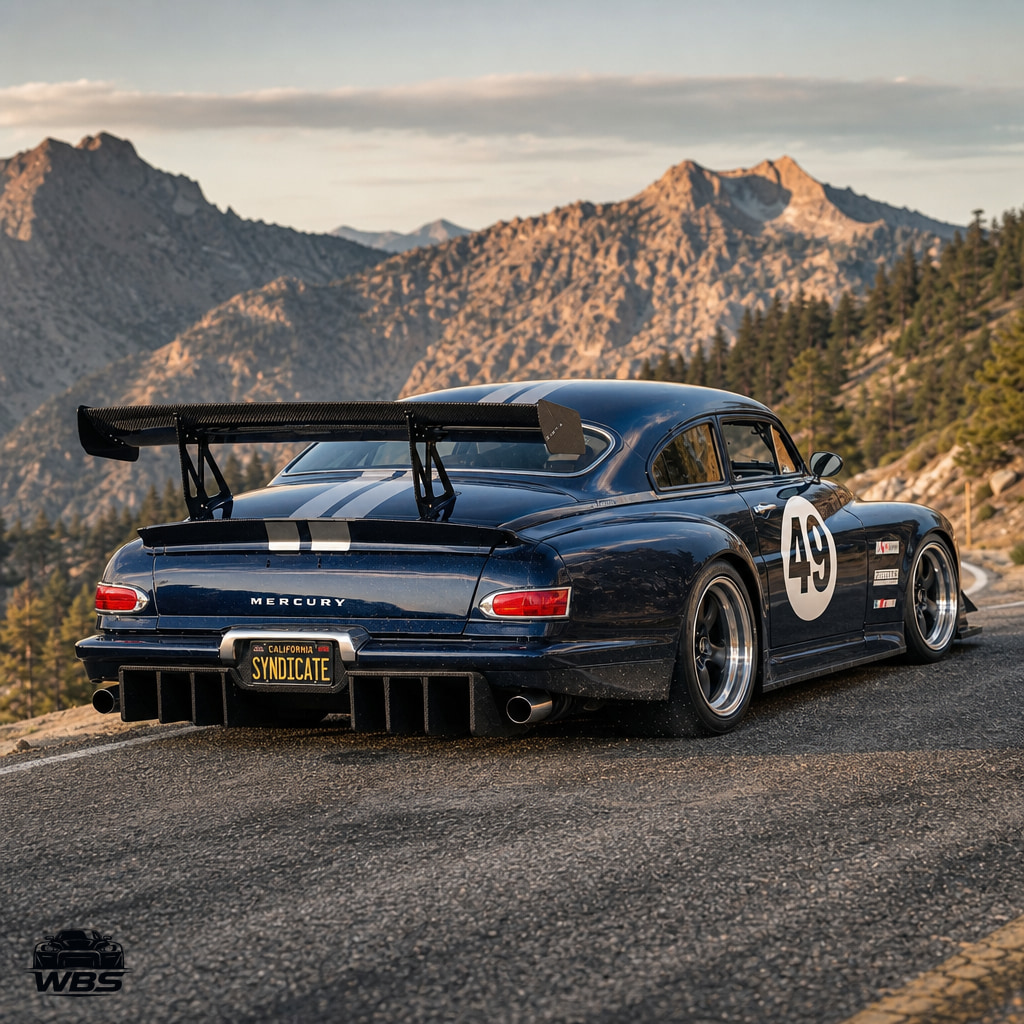
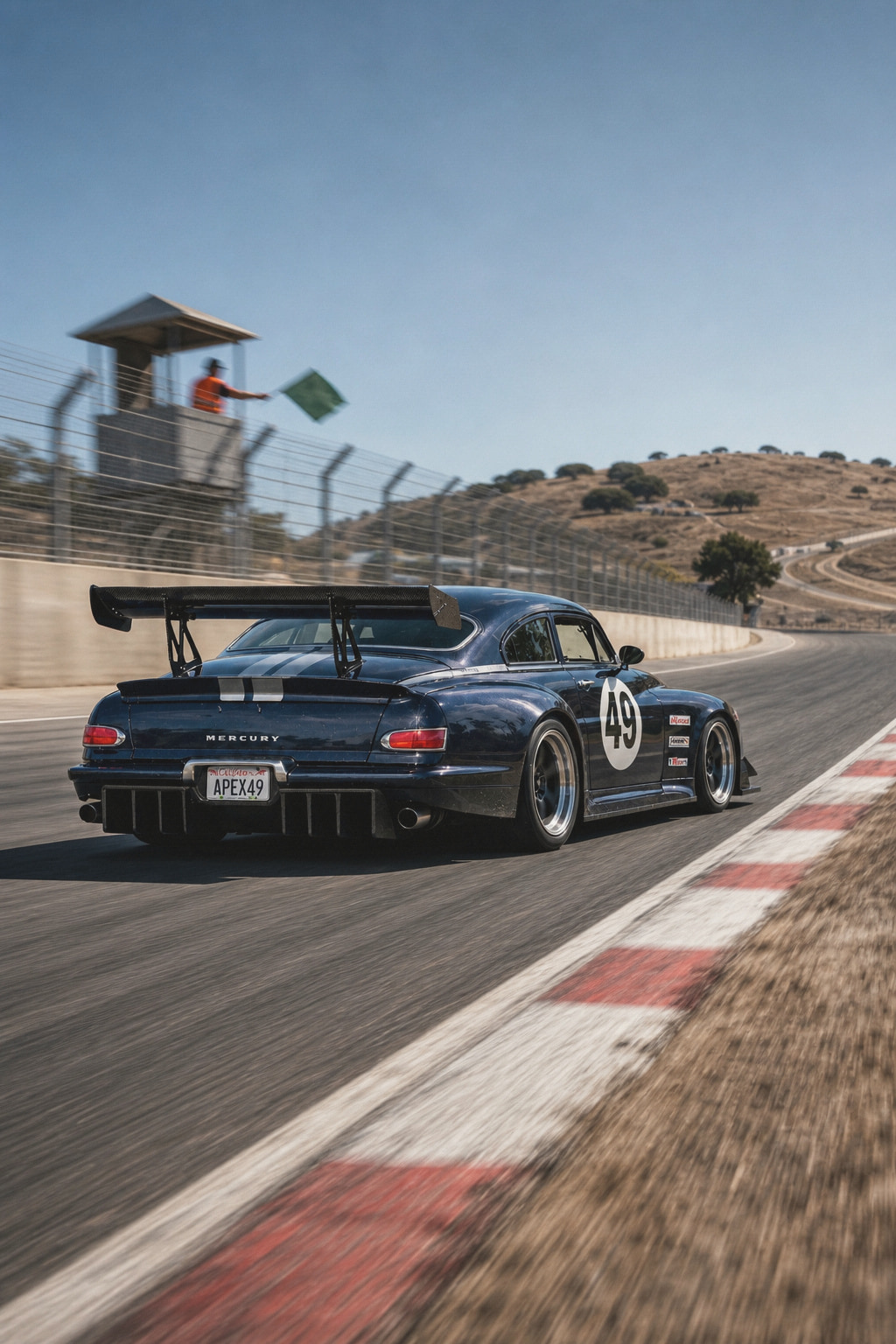
The aero reads time-attack, but it’s engineered for mountains: a forward-swept hood with a center spine to keep flow attached, NACA-fed sidepod radiators for consistent temps at altitude, and a high-mounted twin-element wing to keep rear load predictable through switchbacks. It’s a purist’s nightmare built with the logic of a stopwatch—downforce you can tune, grip you can lean on, and a chassis layout that finally puts the weight where the road demands it.
Release Image Studies
Image studies from every angle.
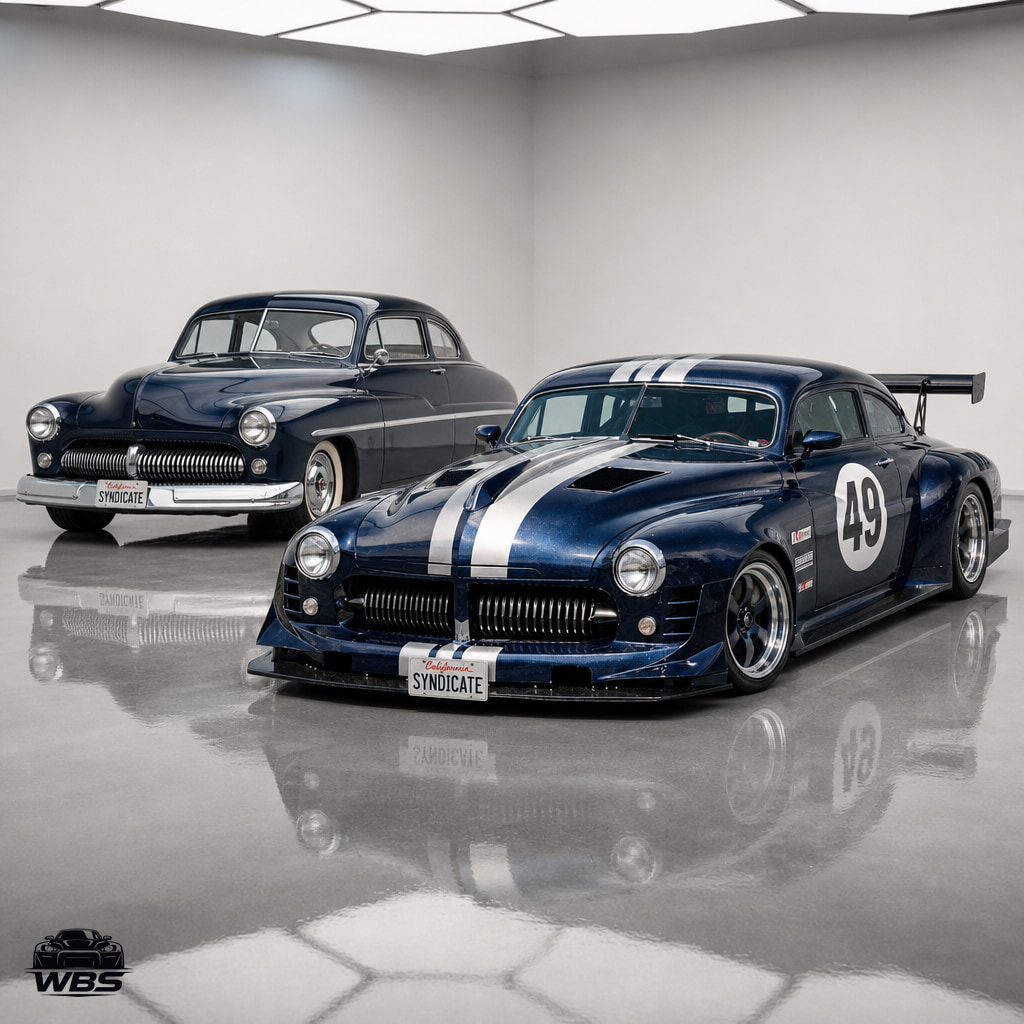
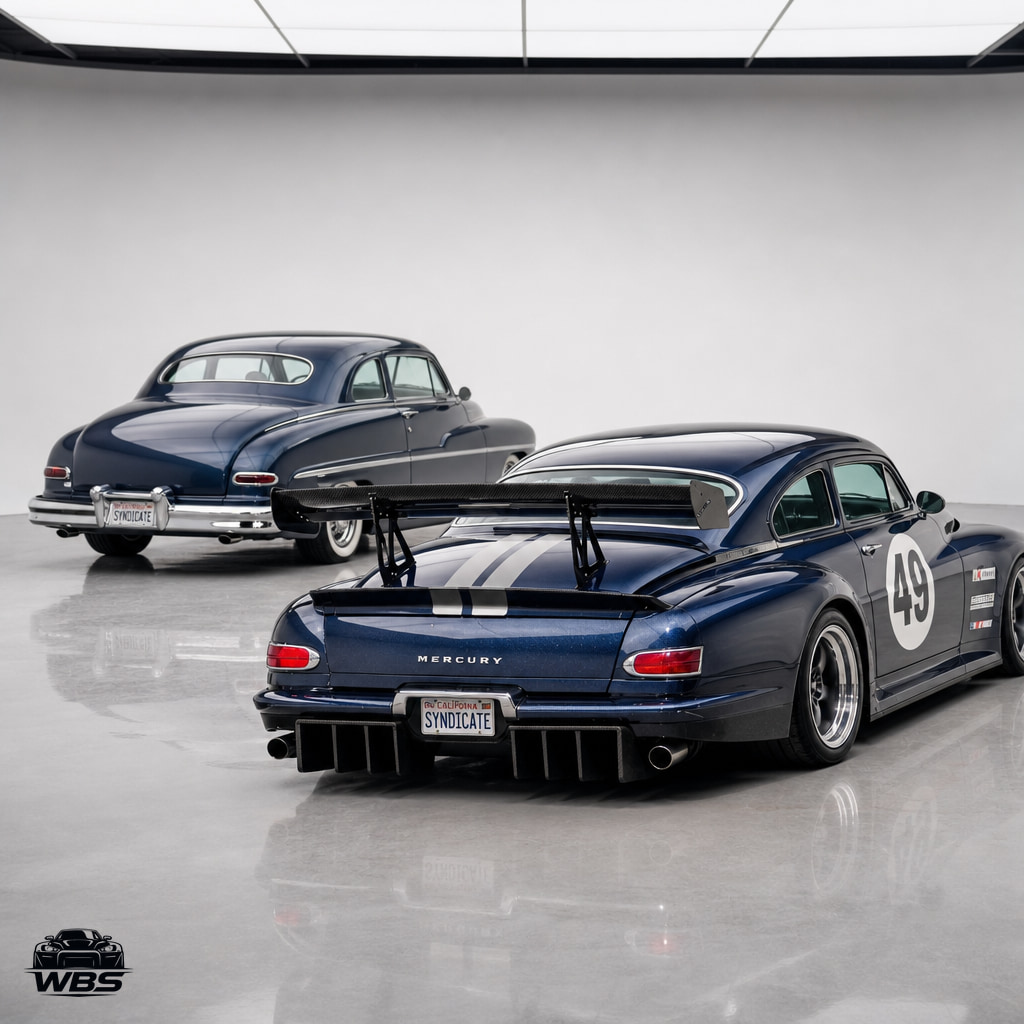
Comparison Shots
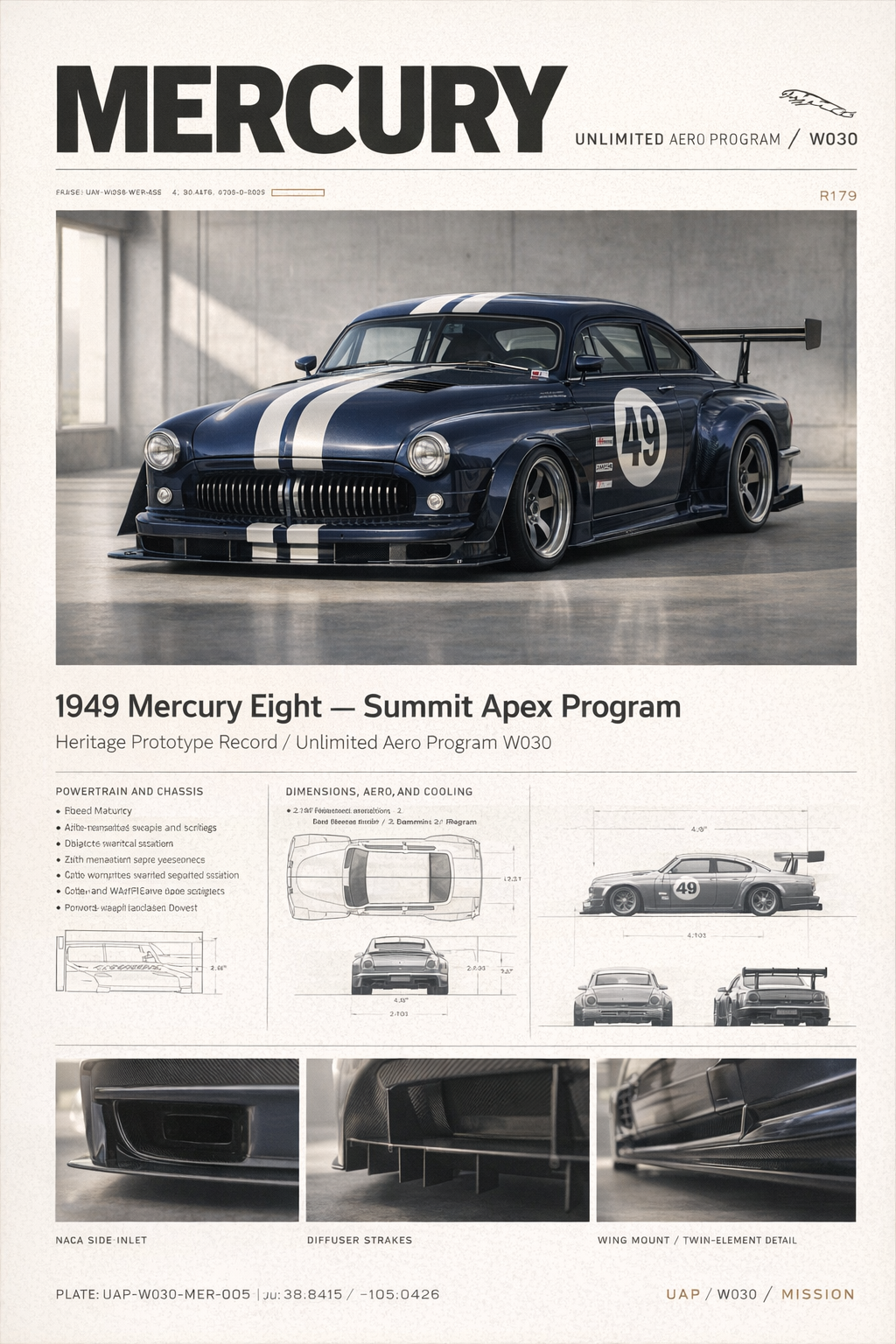
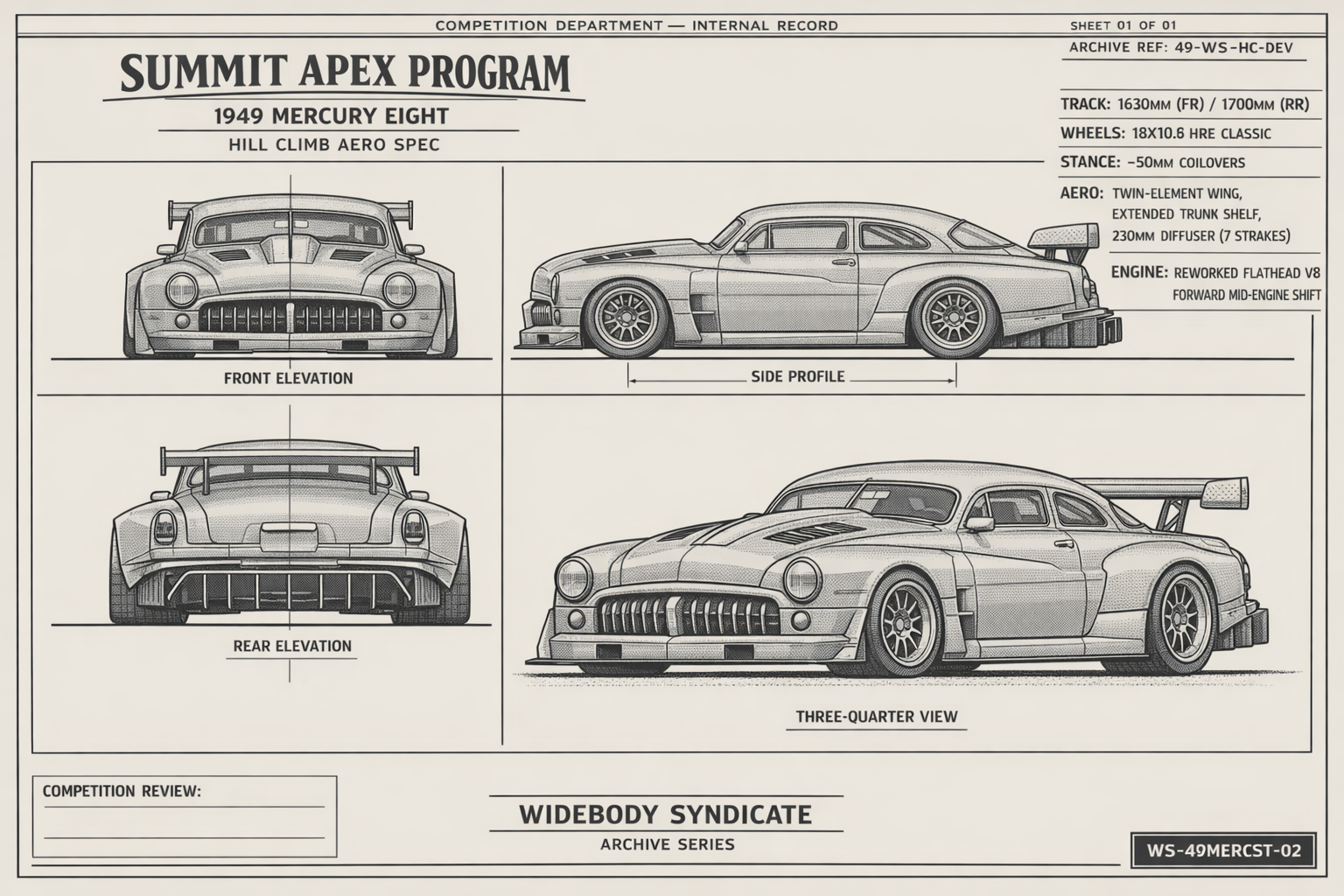
Blueprint / Collector Archive
Engineering Artifacts
The technical study and collectible interpretation of one build, preserved together.
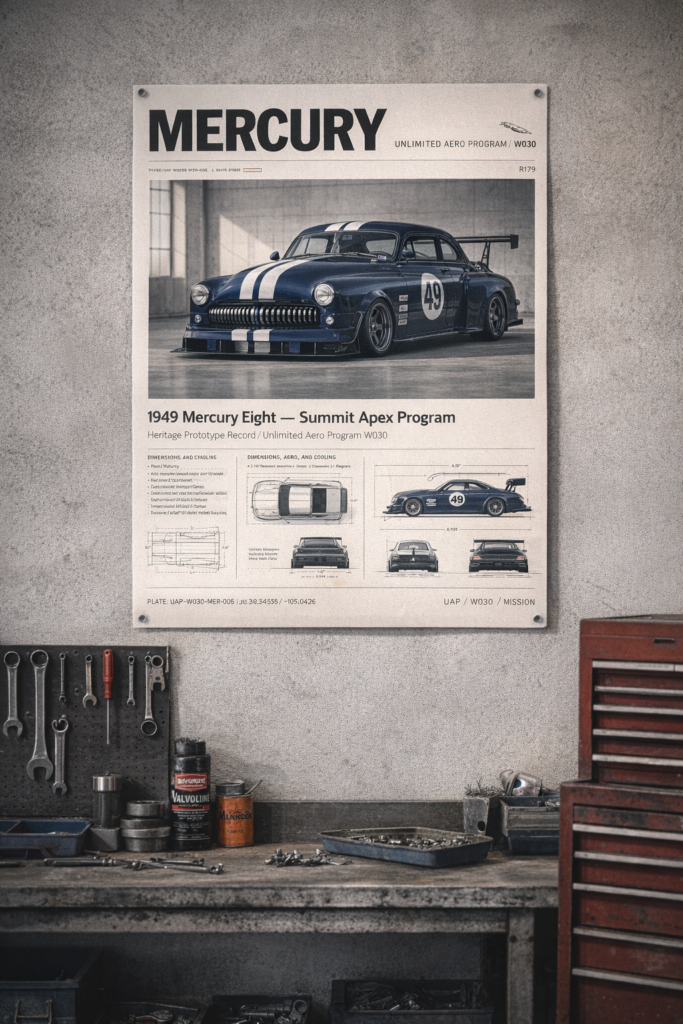
A presentation-grade collector artifact created for this release and preserved as part of the Widebody Syndicate archive.
Selected archive goods are available for collectors.
Technical Dossier
Platform
1949 Mercury Eight
The 1949 Mercury Eight stands as an iconic piece of post-war American automotive history, capturing the essence of late 1940s design with its clean, flowing lines and solid, chunky presence. Known for its rugged yet refined chassis, this platform offers a surprisingly balanced ride and a canvas primed for both traditional hot rodding and modern bespoke builds. Underneath the stylish steel body lies a robust frame with generous wheelbase and classic suspension setups that invite creative engineering without losing the authentic vintage character.
Aero Package
Twin-element carbon rear wing (1650mm span) on swan-neck pylons
adjustable primary flap with tall endplates
230mm-deep rear diffuser starting 190mm behind rear axle with seven vertical strakes for yaw stability
Hood center spine and flush NACA ducts to feed sidepod radiators with low drag penalty
Rear deck edge fences and extended shelf to strengthen rear pressure recovery ahead of the wing
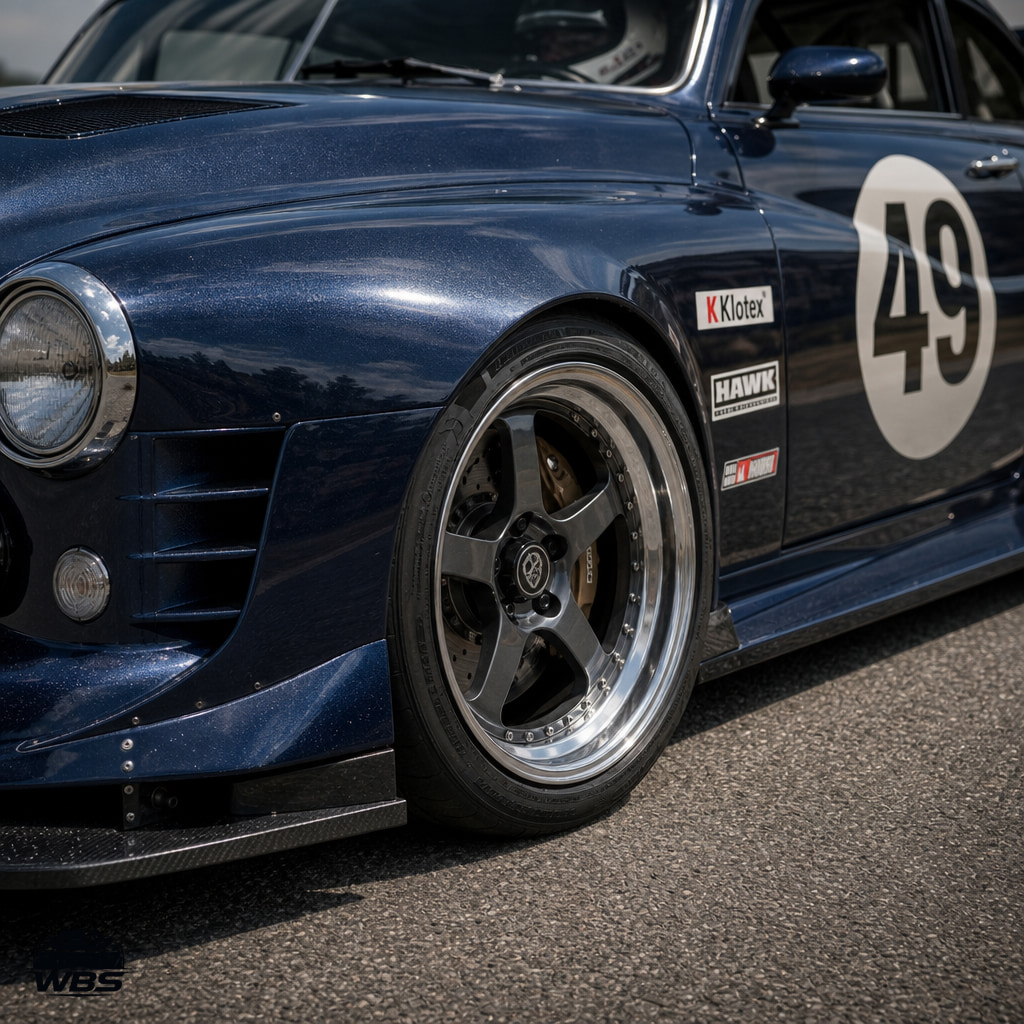
Fender cooling slats angled rearward to evacuate brake duct turbulence and reduce wheel-well lift
Chassis
Set for alpine hill climbs—tight switchbacks, quick elevation changes, and patches of grip that come and go. This Mercury is tuned to stay calm at yaw, carry speed through medium corners, and put down predictable rear load when the road falls away mid-apex.
Wheels & Tires
18x10.5 HRE Classic wheels front and rear
Michelin Pilot Sport Cup 2: 295/35R18 front
325/30R18 rear
Target track widths: 1630mm front
1700mm rear for stability without numbness
Powertrain
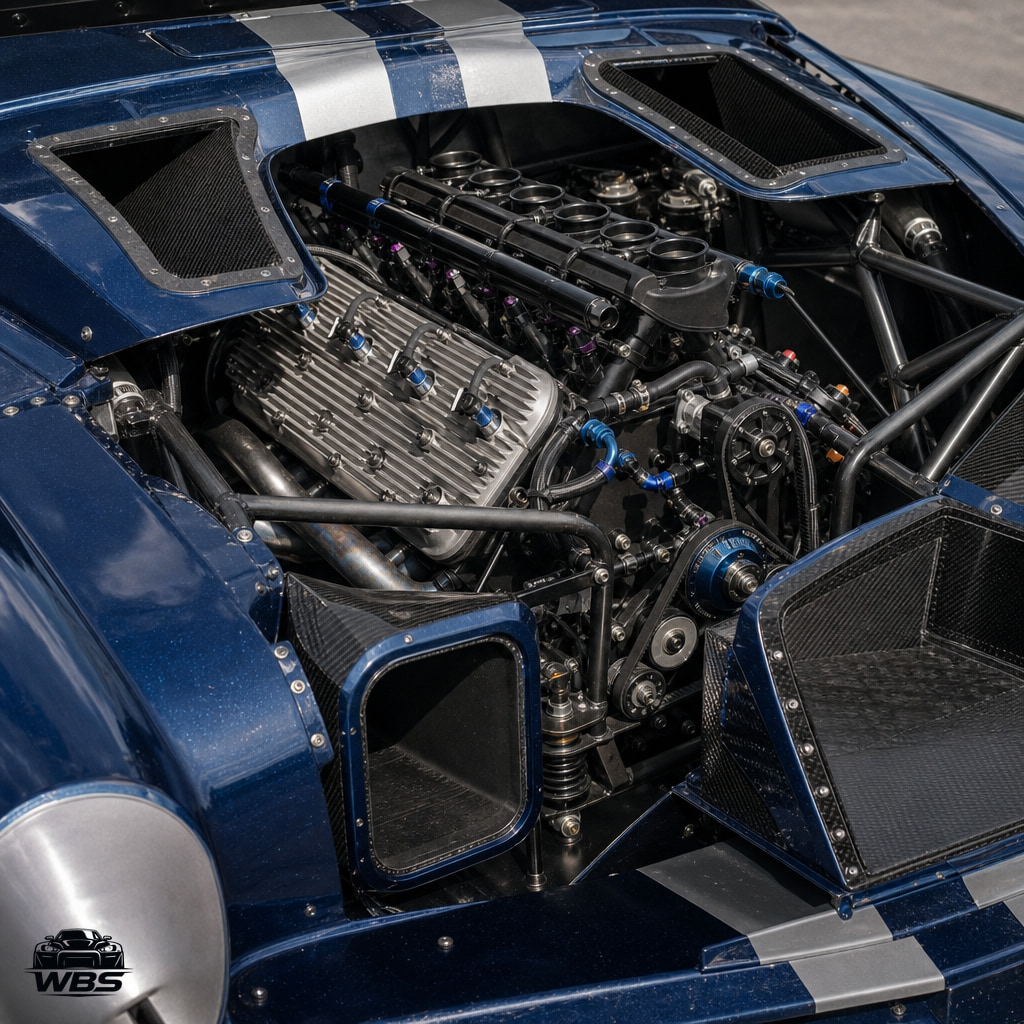
Heavily reworked Mercury flathead V8 retained for character
optimized for sustained high-load climbs
Forward mid-engine shift into a tubular space-frame extension for improved polar moment and front grip
Sidepod radiator system fed by hood NACA ducts with high-efficiency ducting for altitude consistency
Side-exit exhaust routing to preserve underbody cleanliness for diffuser performance
Fabrication Notes
Tubular steel space frame integrated to support engine relocation
suspension loads
and aero mounting points
Hand-formed widebody panels with controlled compound curvature to keep reflections clean and airflow attached
Sealed ducting from hood NACA inlets to radiators with serviceable panels for stage-side access
Wing pylons tied into rear structure with load paths designed for sustained downforce
not show mounts
Design Philosophy
Summit Apex Program takes the long, iconic ’49 Mercury Eight silhouette and forces it to do modern hill climb work—short bursts of full load, violent brake zones, and constant surface change. The widebody isn’t costume: it’s track width, tire, and cooling capacity packaged into trapezoidal front flares and compound rear quarters that stabilize airflow into a deep diffuser without losing the Merc’s roofline and glasshouse proportions.
The aero reads time-attack, but it’s engineered for mountains: a forward-swept hood with a center spine to keep flow attached, NACA-fed sidepod radiators for consistent temps at altitude, and a high-mounted twin-element wing to keep rear load predictable through switchbacks. It’s a purist’s nightmare built with the logic of a stopwatch—downforce you can tune, grip you can lean on, and a chassis layout that finally puts the weight where the road demands it.
▧Platform+
1949 Mercury Eight
The 1949 Mercury Eight stands as an iconic piece of post-war American automotive history, capturing the essence of late 1940s design with its clean, flowing lines and solid, chunky presence. Known for its rugged yet refined chassis, this platform offers a surprisingly balanced ride and a canvas primed for both traditional hot rodding and modern bespoke builds. Underneath the stylish steel body lies a robust frame with generous wheelbase and classic suspension setups that invite creative engineering without losing the authentic vintage character.
⌘Aero Package+
Twin-element carbon rear wing (1650mm span) on swan-neck pylons
adjustable primary flap with tall endplates
230mm-deep rear diffuser starting 190mm behind rear axle with seven vertical strakes for yaw stability
Hood center spine and flush NACA ducts to feed sidepod radiators with low drag penalty
Rear deck edge fences and extended shelf to strengthen rear pressure recovery ahead of the wing
Fender cooling slats angled rearward to evacuate brake duct turbulence and reduce wheel-well lift
⟡Chassis+
Set for alpine hill climbs—tight switchbacks, quick elevation changes, and patches of grip that come and go. This Mercury is tuned to stay calm at yaw, carry speed through medium corners, and put down predictable rear load when the road falls away mid-apex.
◎Wheels & Tires+
18x10.5 HRE Classic wheels front and rear
Michelin Pilot Sport Cup 2: 295/35R18 front
325/30R18 rear
Target track widths: 1630mm front
1700mm rear for stability without numbness
▤Powertrain+
Heavily reworked Mercury flathead V8 retained for character
optimized for sustained high-load climbs
Forward mid-engine shift into a tubular space-frame extension for improved polar moment and front grip
Sidepod radiator system fed by hood NACA ducts with high-efficiency ducting for altitude consistency
Side-exit exhaust routing to preserve underbody cleanliness for diffuser performance
△Fabrication Notes+
Tubular steel space frame integrated to support engine relocation
suspension loads
and aero mounting points
Hand-formed widebody panels with controlled compound curvature to keep reflections clean and airflow attached
Sealed ducting from hood NACA inlets to radiators with serviceable panels for stage-side access
Wing pylons tied into rear structure with load paths designed for sustained downforce
not show mounts
×Design Philosophy+
Summit Apex Program takes the long, iconic ’49 Mercury Eight silhouette and forces it to do modern hill climb work—short bursts of full load, violent brake zones, and constant surface change. The widebody isn’t costume: it’s track width, tire, and cooling capacity packaged into trapezoidal front flares and compound rear quarters that stabilize airflow into a deep diffuser without losing the Merc’s roofline and glasshouse proportions.
The aero reads time-attack, but it’s engineered for mountains: a forward-swept hood with a center spine to keep flow attached, NACA-fed sidepod radiators for consistent temps at altitude, and a high-mounted twin-element wing to keep rear load predictable through switchbacks. It’s a purist’s nightmare built with the logic of a stopwatch—downforce you can tune, grip you can lean on, and a chassis layout that finally puts the weight where the road demands it.
Part of
Wave 30
Unlimited Aero Program
When the mountain calls, you don’t just answer—you blast uphill like a bat out of aero hell. Our builds here took a hard left from their original careers and dove headfirst into the ruthless world of hill climb unlimited aero monsters.
Explore Wave 30 → 6 BuildsKeep Exploring
The archive is always growing. New releases, waves, and blueprints added regularly.