


R210
Electric Drift Beast
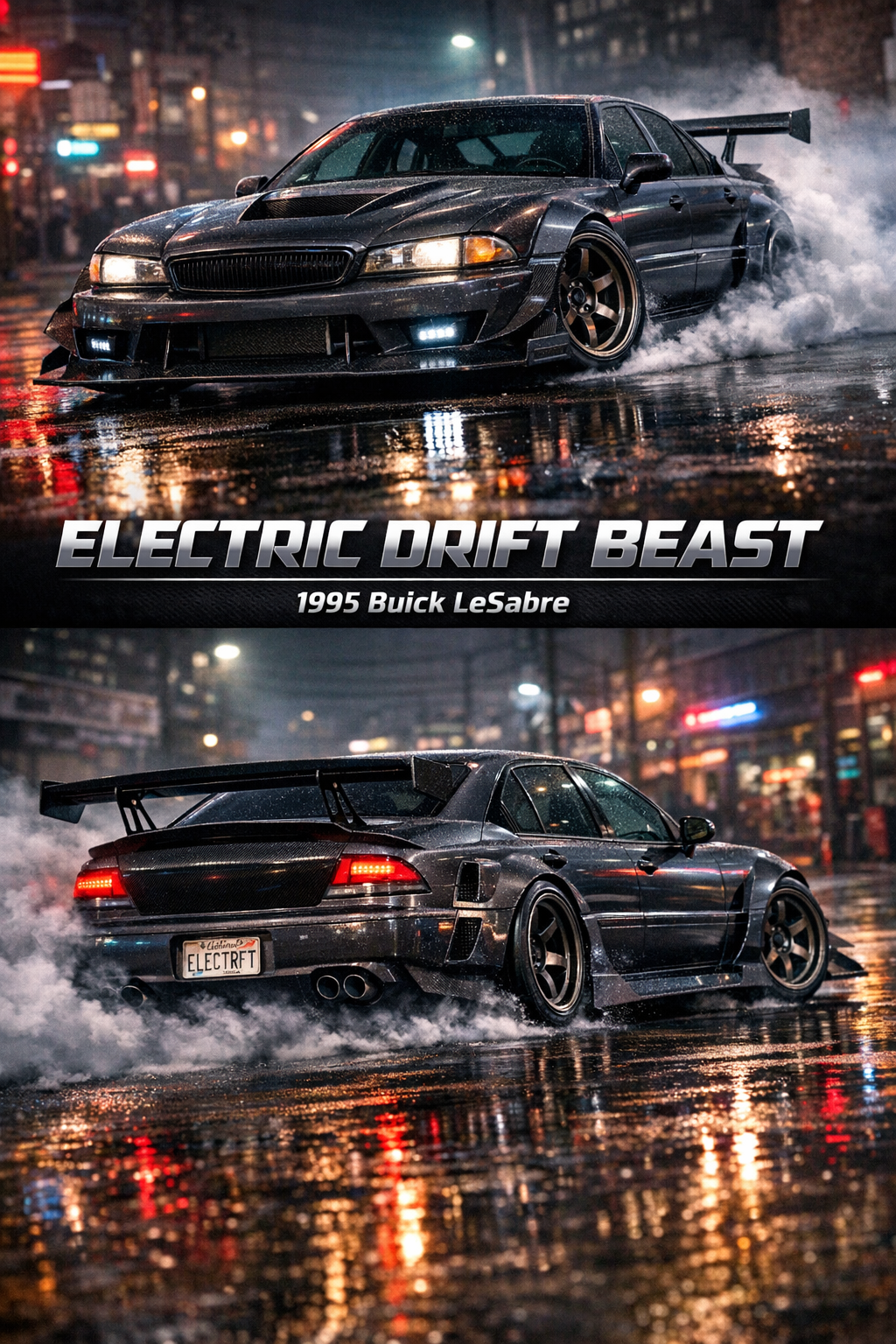
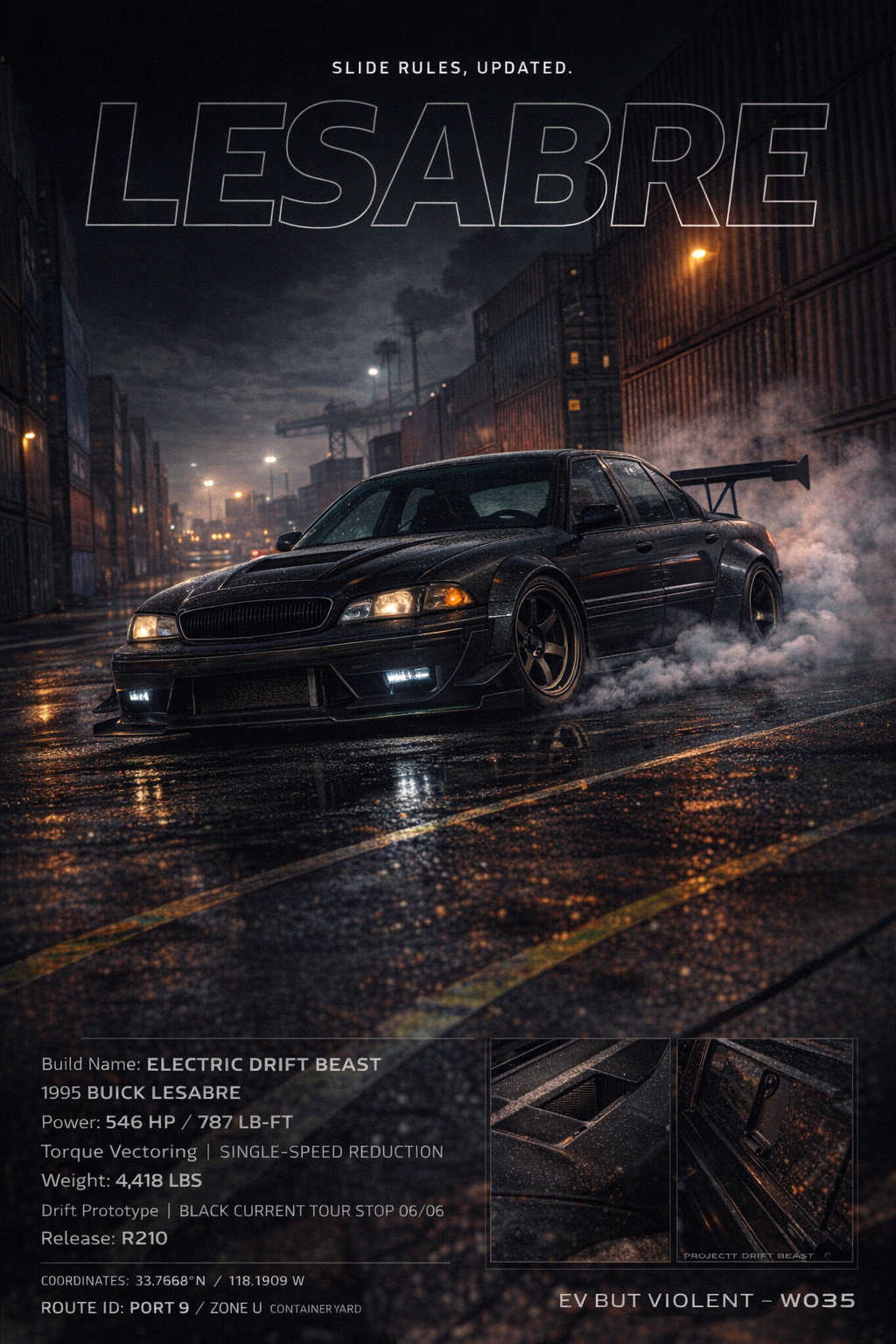
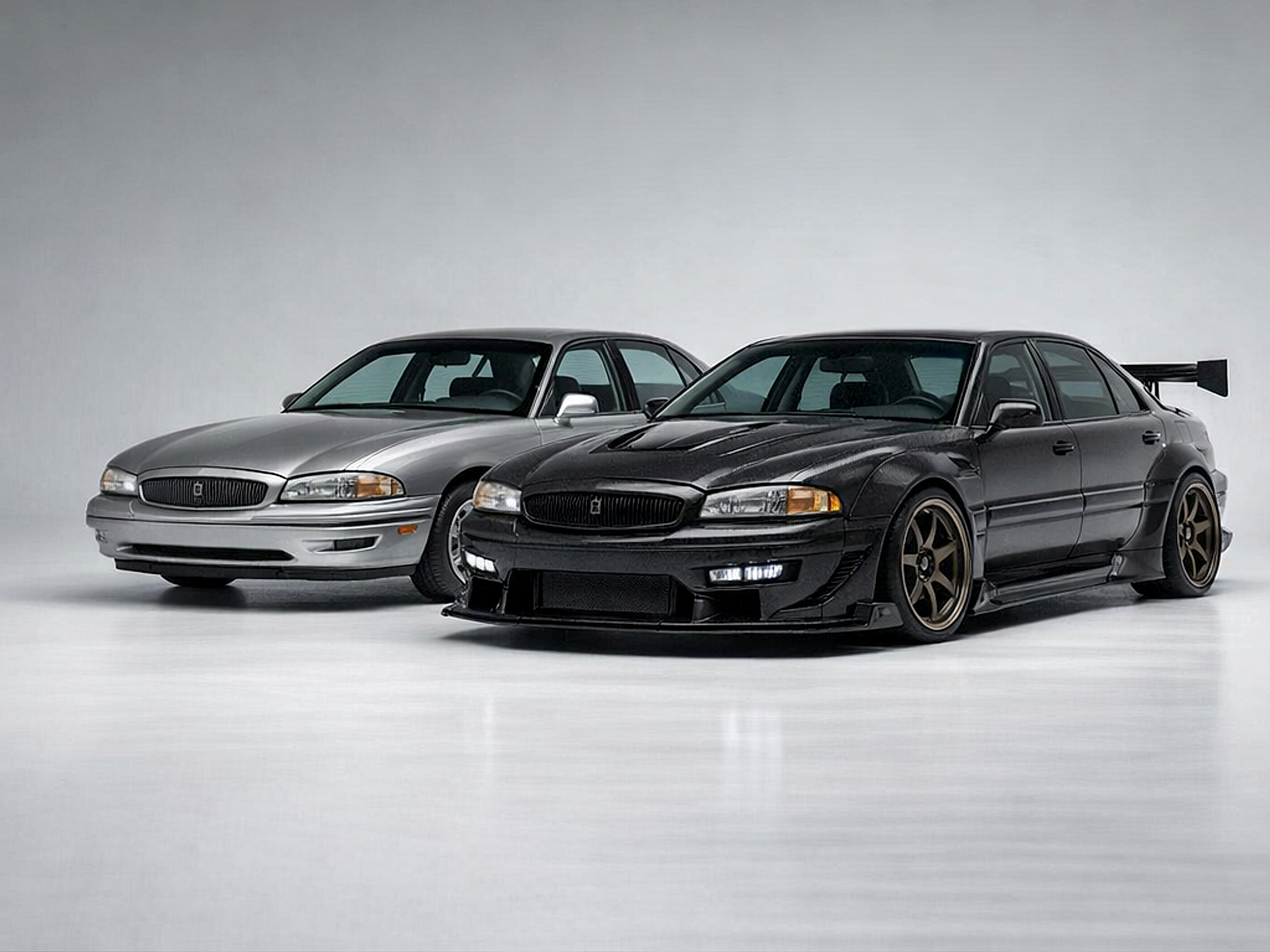
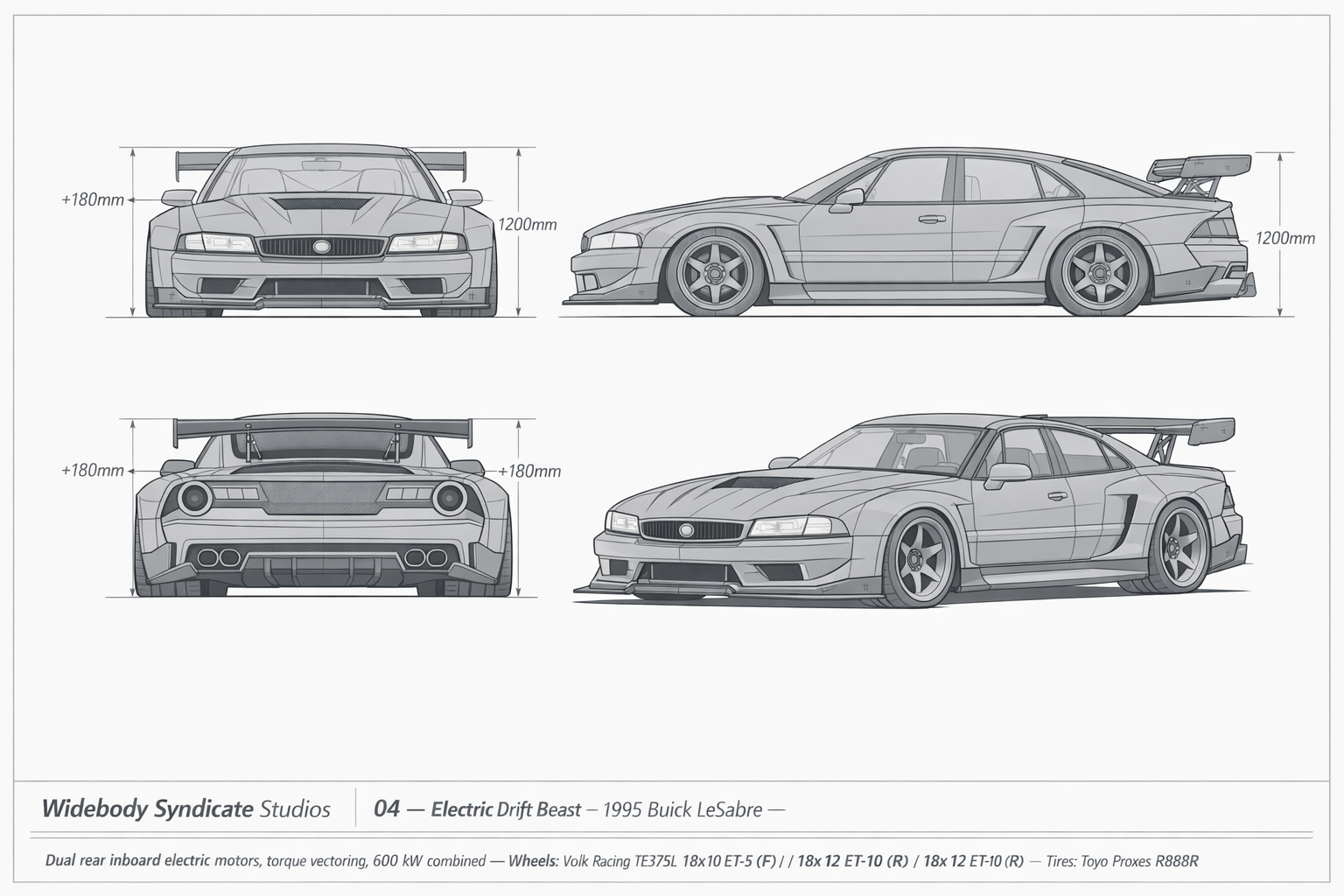
A ’95 LeSabre is the ultimate background sedan—soft lines, long overhangs, and zero expectations. That’s exactly why it works. This build keeps the Buick silhouette recognizable, then pulls it wide by 180mm per side with hard cutbacks and vented rear arches that read like function, not costume. The hood goes angular with a deep center extraction vent to keep the front power electronics alive when the car lives at full slip angle.
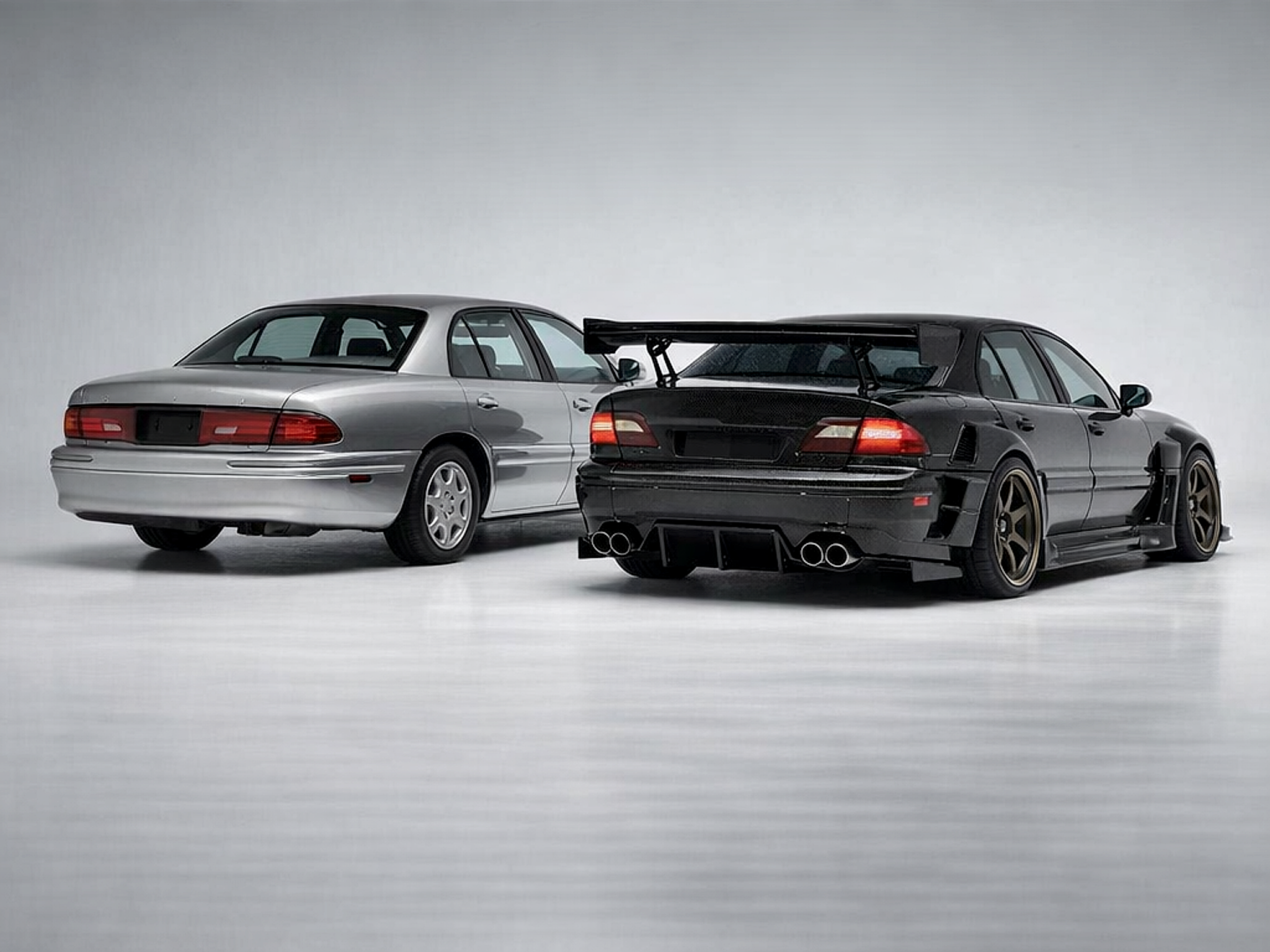
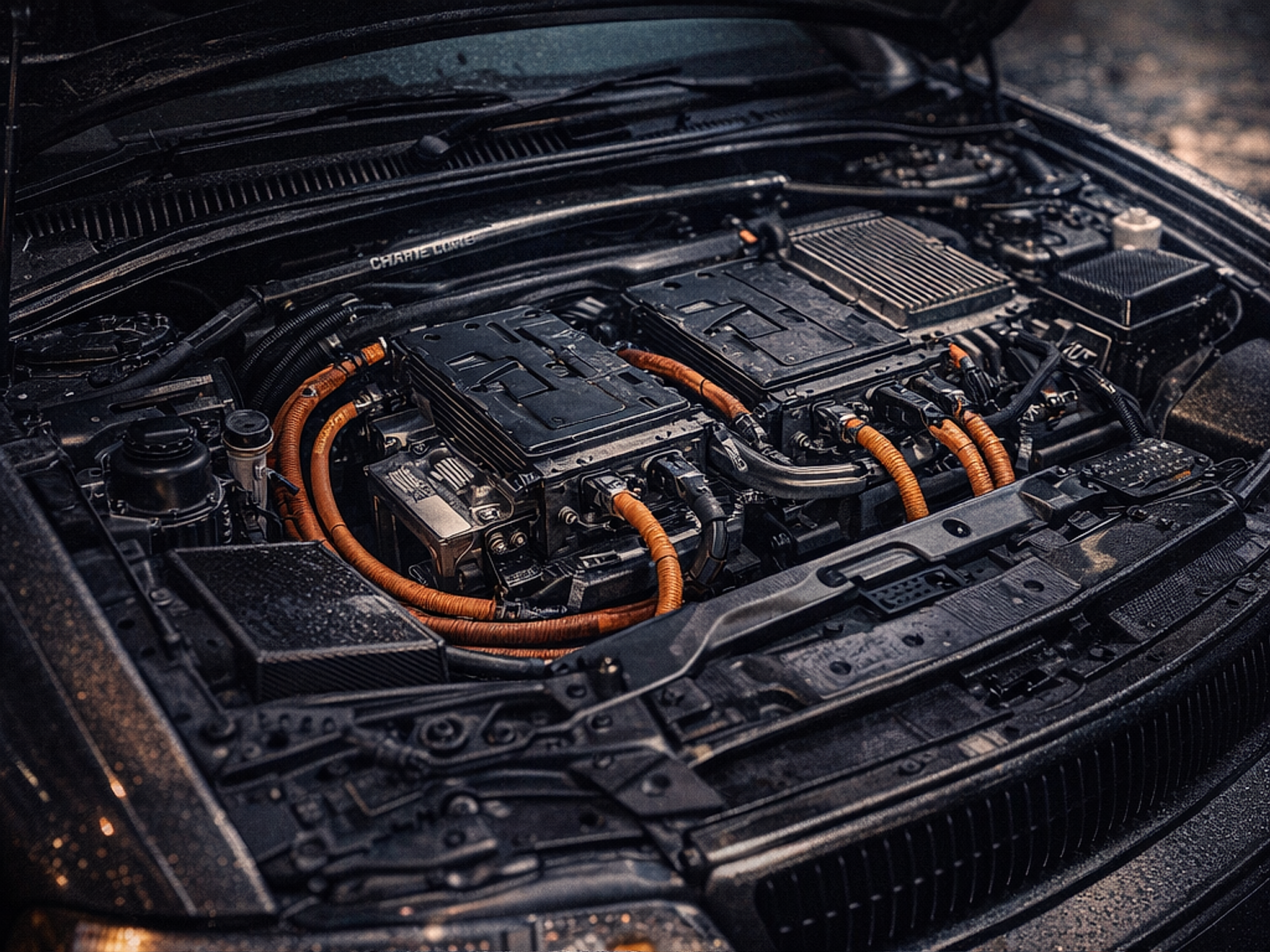
The real twist is the rear: twin inboard electric motors feeding a torque-vectoring rear end, packaged under widened quarters with flare-mounted vents and a serviceable carbon hatch panel. It’s a street-lot drift weapon that trades exhaust noise for tire howl and inverter whine—still violent, just cleaner and faster to respond.
Release Image Studies
Image studies from every angle.
Comparison Shots
Blueprint / Collector Archive
Engineering Artifacts
The technical study and collectible interpretation of one build, preserved together.
A presentation-grade collector artifact created for this release and preserved as part of the Widebody Syndicate archive.
Selected archive goods are available for collectors.
Technical Dossier
Platform
1995 Buick LeSabre
The 1995 Buick LeSabre represents a pinnacle of American front-wheel-drive full-size sedans from the mid-90s, blending comfortable highway cruising with a smooth V6 powertrain and a spacious, well-appointed interior. Known for its body-on-frame construction paired with a torsion bar front suspension and a solid rear axle, the LeSabre provided a durable and predictable platform that favored comfort and reliability over outright sportiness. Its timeless three-box silhouette and restrained design cues embody the era’s approach to luxury and practicality, making it a solid foundation for subtle, tasteful customization or preservation projects.
Aero Package
Aggressive vented hood with large central extraction to relieve front bay heat
Adjustable carbon fiber rear wing on reinforced mounts tied into the rear structure
Rear arch flare-mounted vents to evacuate heat from the motor/inverter area
Front bumper ducting strategy focused on inverter/radiator airflow rather than cosmetic openings
Chassis
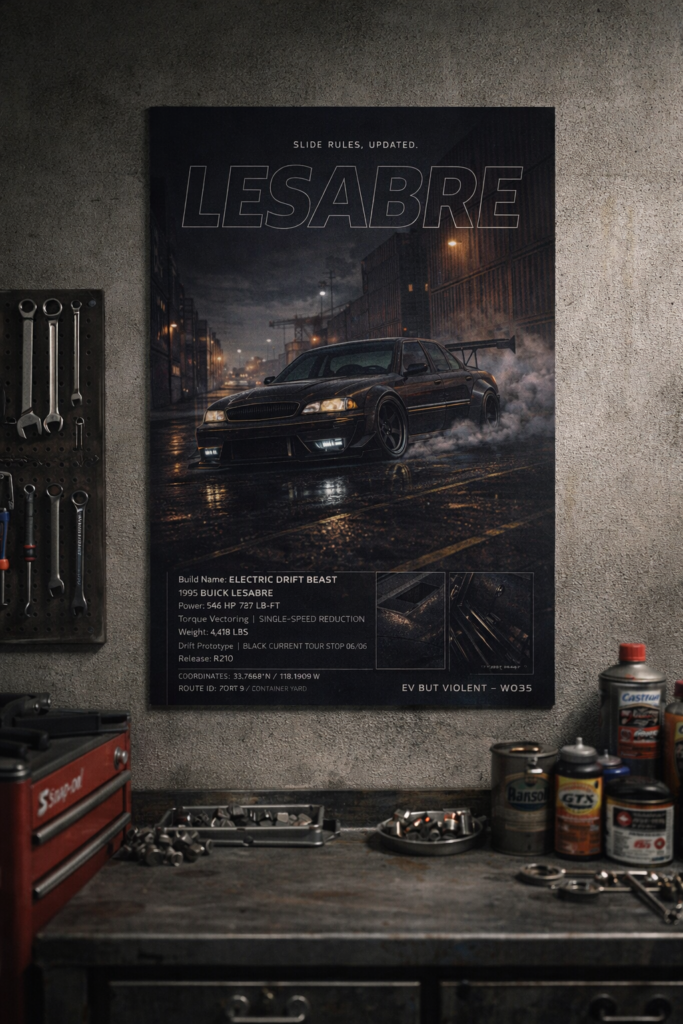
Set in an urban night parking lot—wet asphalt, neon reflections, and smoke hanging low where the light catches it. It’s the kind of improvised underground circuit where speed is secondary to commitment, proximity, and how clean you can link the run.
Wheels & Tires
Volk Racing TE37SL 18x10 ET-5 front
Volk Racing TE37SL 18x12 ET-10 rear
Toyo Proxes R888R performance tires sized to suit the wide track and drift abuse
Alignment biased for steering angle
front bite
and predictable rear breakaway
Powertrain
Dual rear inboard electric motors
600 kW combined output
Torque vectoring control to modulate yaw and stabilize transitions
Front-mounted inverter and cooling package with dedicated hood extraction
Thermal strategy designed for repeated high-load drift runs
not single pulls
Fabrication Notes
Quarter panels and rear structure reworked to package inboard motors while maintaining service access
Wing mounts reinforced into the rear body structure to survive high-speed load and curb hits
Rocker reinforcement to reduce flex with the widened track and sticky tires
Cooling ducting and vent placement validated around heat rejection
not symmetry
Design Philosophy
A ’95 LeSabre is the ultimate background sedan—soft lines, long overhangs, and zero expectations. That’s exactly why it works. This build keeps the Buick silhouette recognizable, then pulls it wide by 180mm per side with hard cutbacks and vented rear arches that read like function, not costume. The hood goes angular with a deep center extraction vent to keep the front power electronics alive when the car lives at full slip angle.
The real twist is the rear: twin inboard electric motors feeding a torque-vectoring rear end, packaged under widened quarters with flare-mounted vents and a serviceable carbon hatch panel. It’s a street-lot drift weapon that trades exhaust noise for tire howl and inverter whine—still violent, just cleaner and faster to respond.
▧Platform+
1995 Buick LeSabre
The 1995 Buick LeSabre represents a pinnacle of American front-wheel-drive full-size sedans from the mid-90s, blending comfortable highway cruising with a smooth V6 powertrain and a spacious, well-appointed interior. Known for its body-on-frame construction paired with a torsion bar front suspension and a solid rear axle, the LeSabre provided a durable and predictable platform that favored comfort and reliability over outright sportiness. Its timeless three-box silhouette and restrained design cues embody the era’s approach to luxury and practicality, making it a solid foundation for subtle, tasteful customization or preservation projects.
⌘Aero Package+
Aggressive vented hood with large central extraction to relieve front bay heat
Adjustable carbon fiber rear wing on reinforced mounts tied into the rear structure
Rear arch flare-mounted vents to evacuate heat from the motor/inverter area
Front bumper ducting strategy focused on inverter/radiator airflow rather than cosmetic openings
⟡Chassis+
Set in an urban night parking lot—wet asphalt, neon reflections, and smoke hanging low where the light catches it. It’s the kind of improvised underground circuit where speed is secondary to commitment, proximity, and how clean you can link the run.
◎Wheels & Tires+
Volk Racing TE37SL 18x10 ET-5 front
Volk Racing TE37SL 18x12 ET-10 rear
Toyo Proxes R888R performance tires sized to suit the wide track and drift abuse
Alignment biased for steering angle
front bite
and predictable rear breakaway
▤Powertrain+
Dual rear inboard electric motors
600 kW combined output
Torque vectoring control to modulate yaw and stabilize transitions
Front-mounted inverter and cooling package with dedicated hood extraction
Thermal strategy designed for repeated high-load drift runs
not single pulls
△Fabrication Notes+
Quarter panels and rear structure reworked to package inboard motors while maintaining service access
Wing mounts reinforced into the rear body structure to survive high-speed load and curb hits
Rocker reinforcement to reduce flex with the widened track and sticky tires
Cooling ducting and vent placement validated around heat rejection
not symmetry
×Design Philosophy+
A ’95 LeSabre is the ultimate background sedan—soft lines, long overhangs, and zero expectations. That’s exactly why it works. This build keeps the Buick silhouette recognizable, then pulls it wide by 180mm per side with hard cutbacks and vented rear arches that read like function, not costume. The hood goes angular with a deep center extraction vent to keep the front power electronics alive when the car lives at full slip angle.
The real twist is the rear: twin inboard electric motors feeding a torque-vectoring rear end, packaged under widened quarters with flare-mounted vents and a serviceable carbon hatch panel. It’s a street-lot drift weapon that trades exhaust noise for tire howl and inverter whine—still violent, just cleaner and faster to respond.
Part of
Wave 35
EV But Violent
We just cooked up a batch of electric beasts that stomp the timeline and rewrite what muscle, drift, and hillclimb rides could have been if the juice ran wild a little earlier. From our stealthy ’90 Corvette ZR-1 turned covert assault prowler to a hillclimb Kombi that’s basically a carbon fiber thunderbolt with acid green sass, these rides don’t just push boundaries—they snap ’em in half and laugh while doing it.
Explore Wave 35 → 6 BuildsKeep Exploring
The archive is always growing. New releases, waves, and blueprints added regularly.