


WS Widebody Syndicate
Crimson Lotus Initiative

R153

Crimson Lotus Initiative

2004 Pontiac Grand Prix

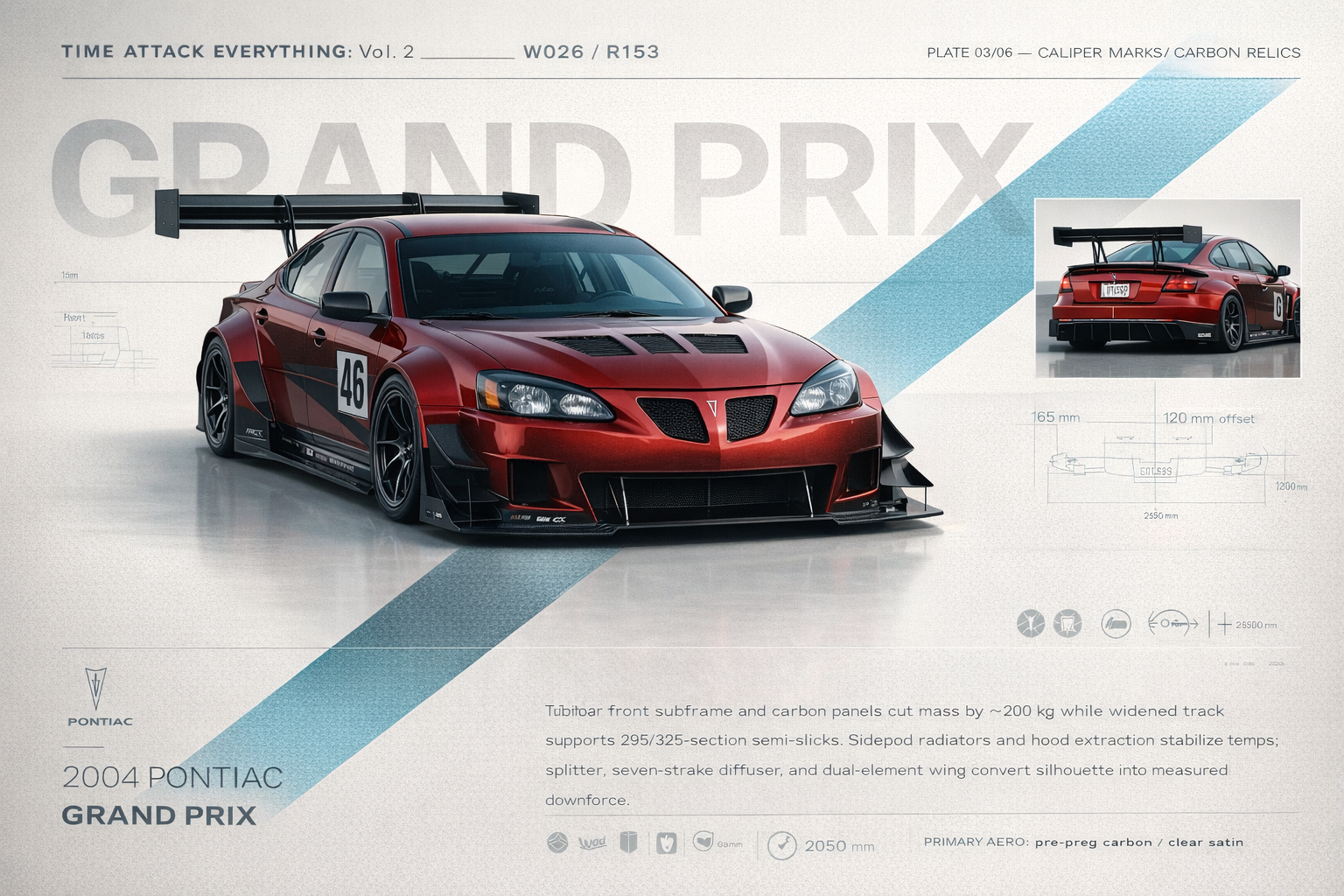
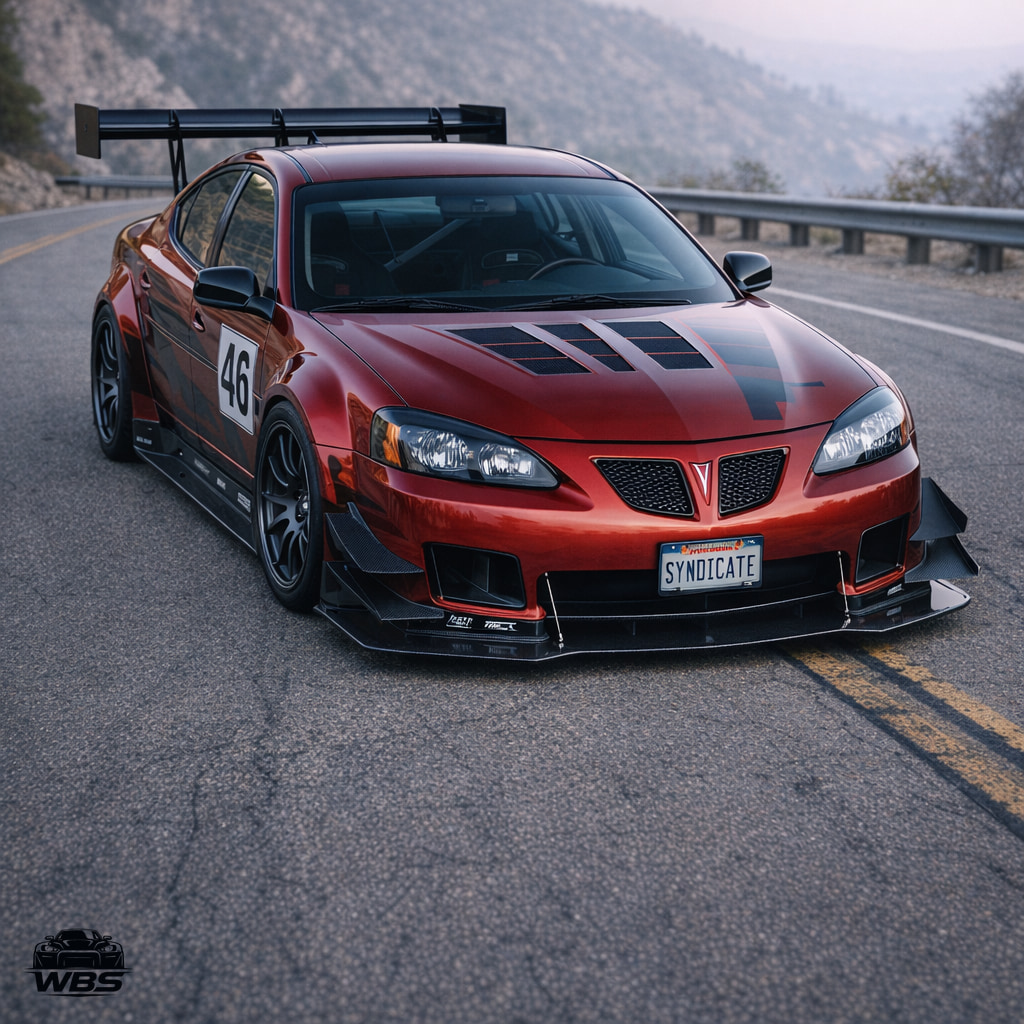
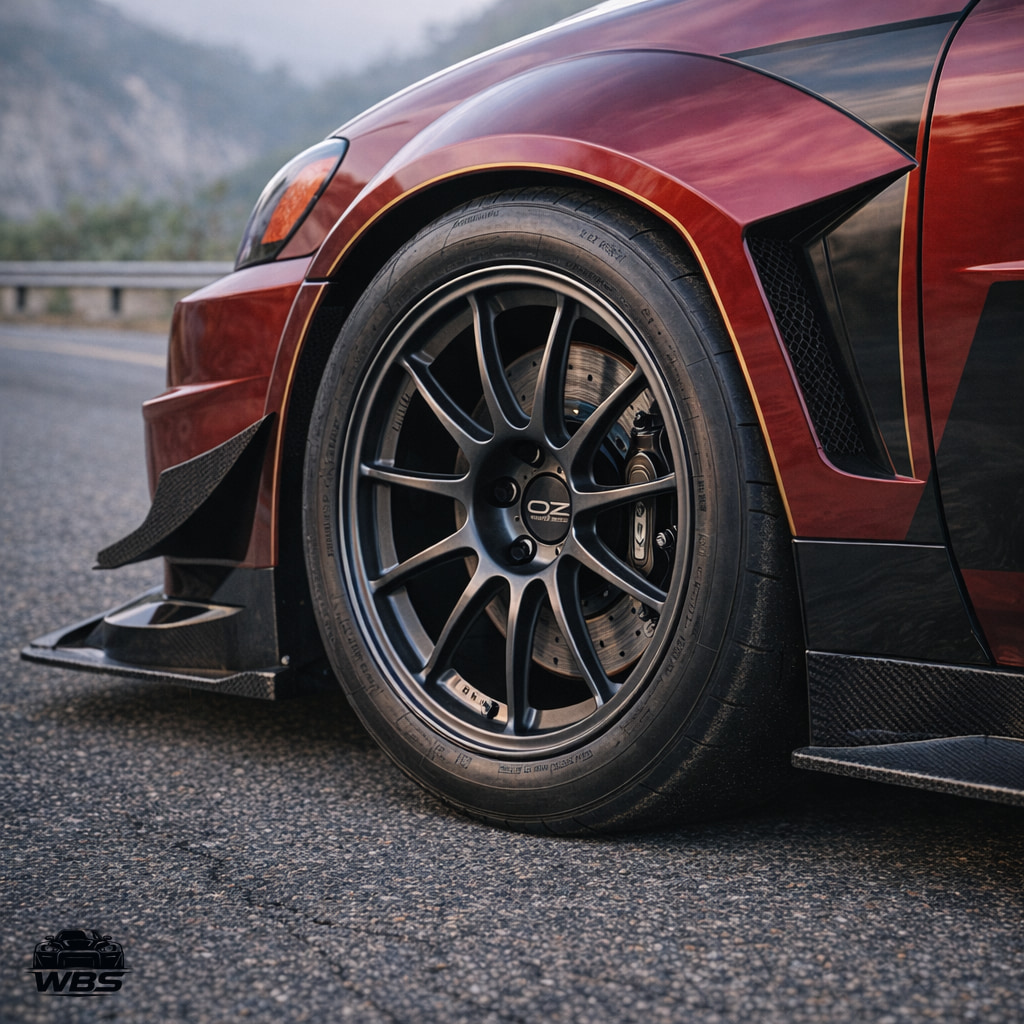
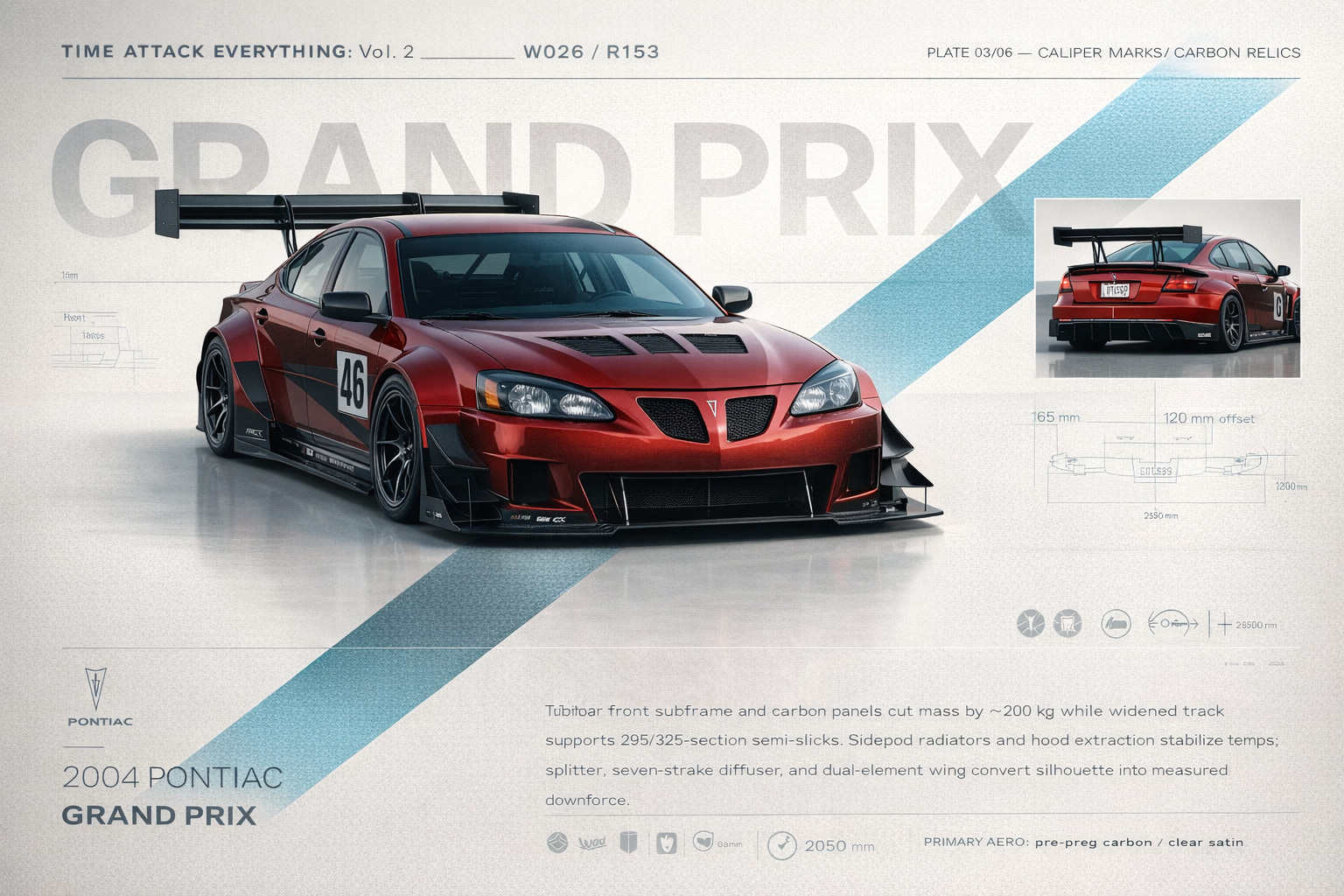
Crimson Lotus Initiative takes the 2004 Grand Prix—an everyday Midwest sedan with a recognizable roofline—and drags it into early-2000s time-attack logic: width, ducts, and real aero surfaces that don’t need excuses. The squared 125mm front box flares and 175mm rear haunches aren’t just for show; they’re shaped around brake cooling, sidepod radiator feed, and tire clearance for a 295/325 stagger that looks as serious as it drives.

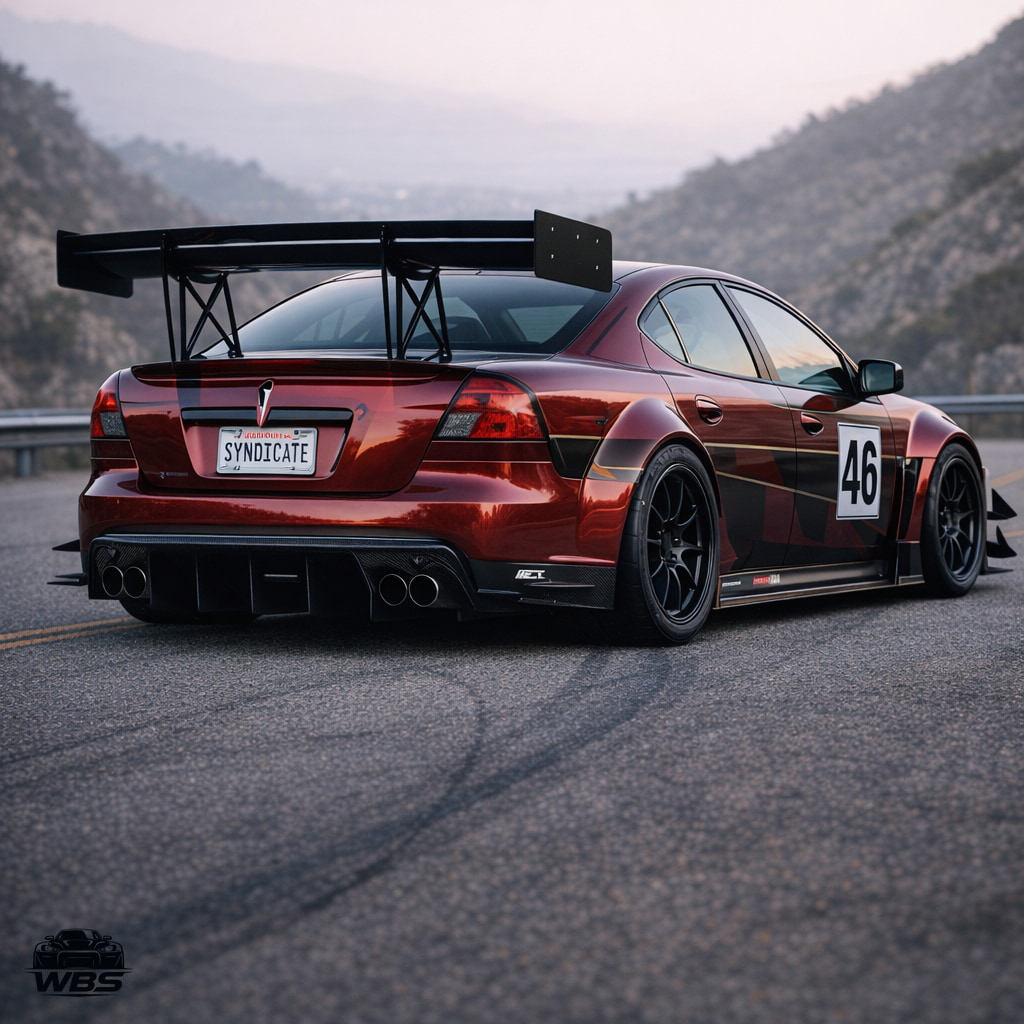
Under the skin, the build reads like a track car that kept its street manners: a tubular front subframe, targeted carbon panel swaps, and a reworked suspension geometry to match the widened tracks. Deep crimson with matte-black blocks and fine gold outlining ties it to the era—graphic, loud, and purposeful—without losing the Grand Prix silhouette that makes the whole flip hit harder.
Share Release X FB

Image studies from every angle.

6 curated frames · swipe / tap to inspect

Comparison Shots

Engineering Artifacts

The technical study and collectible interpretation of one build, preserved together.

01
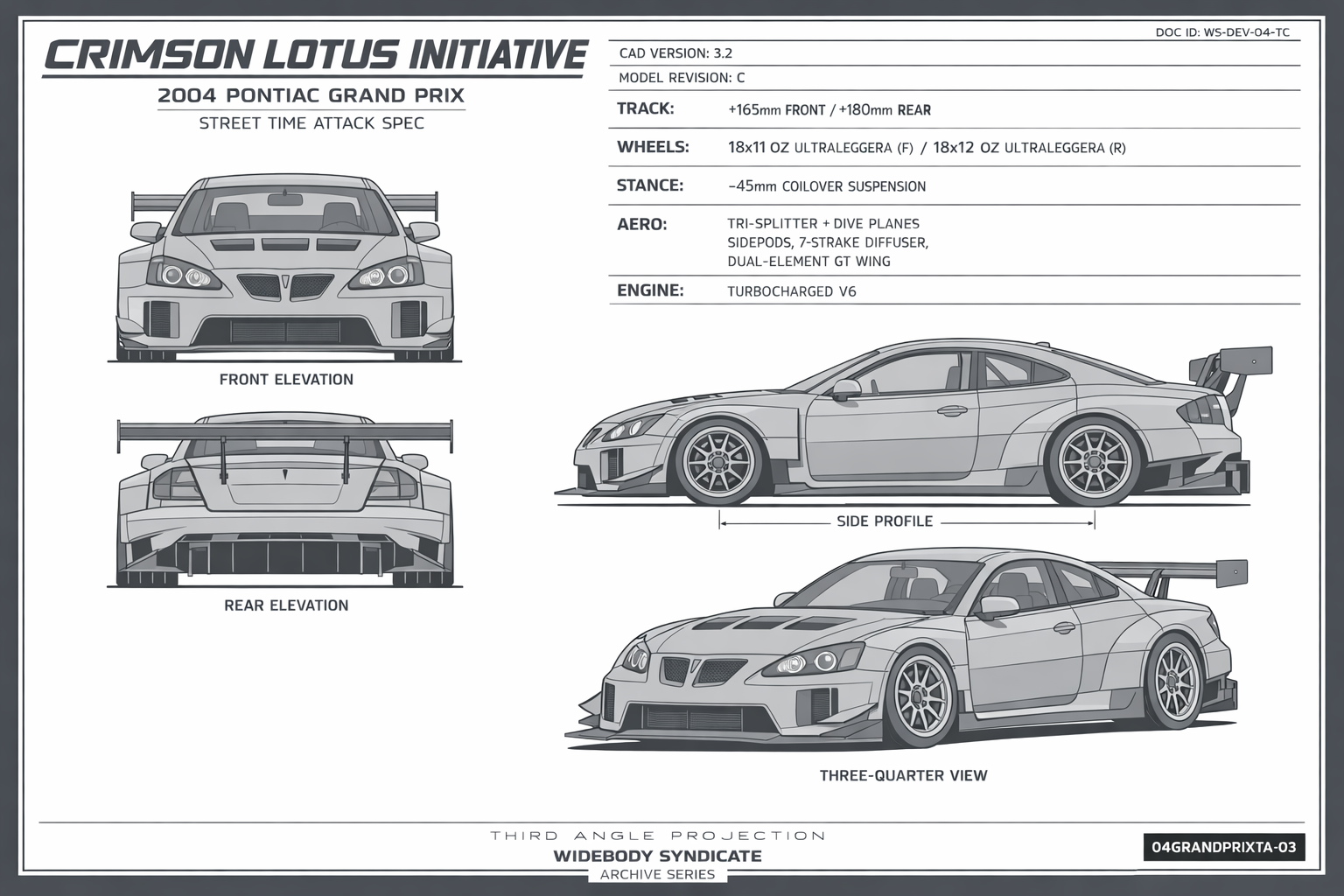
Technical DrawingBlueprint archive
Crimson Lotus Initiative blueprint
02
Crimson Lotus Initiative Collector EditionCollector artifact
Crimson Lotus Initiative Collector Edition

A presentation-grade collector artifact created for this release and preserved as part of the Widebody Syndicate archive.

Platform

2004 Pontiac Grand Prix

2004 Pontiac Grand Prix

The 2004 Pontiac Grand Prix stands as a quintessential mid-2000s American sport sedan, blending everyday practicality with a subtle performance edge. Rooted in GM's W-body platform, the Grand Prix offers a balanced chassis with front-wheel drive and a V6 powertrain that, while unassuming, delivers a comfortable yet engaging drive. Its sharp, aerodynamic profile and characteristic split grille reflect a period of automotive design focused on blending aggressive stance with refined lines — a sleeper platform cherished by enthusiasts looking to explore customization beyond the flashy muscle car archetype.

PontiacGrand Prix2004
View Platform

Aero Package

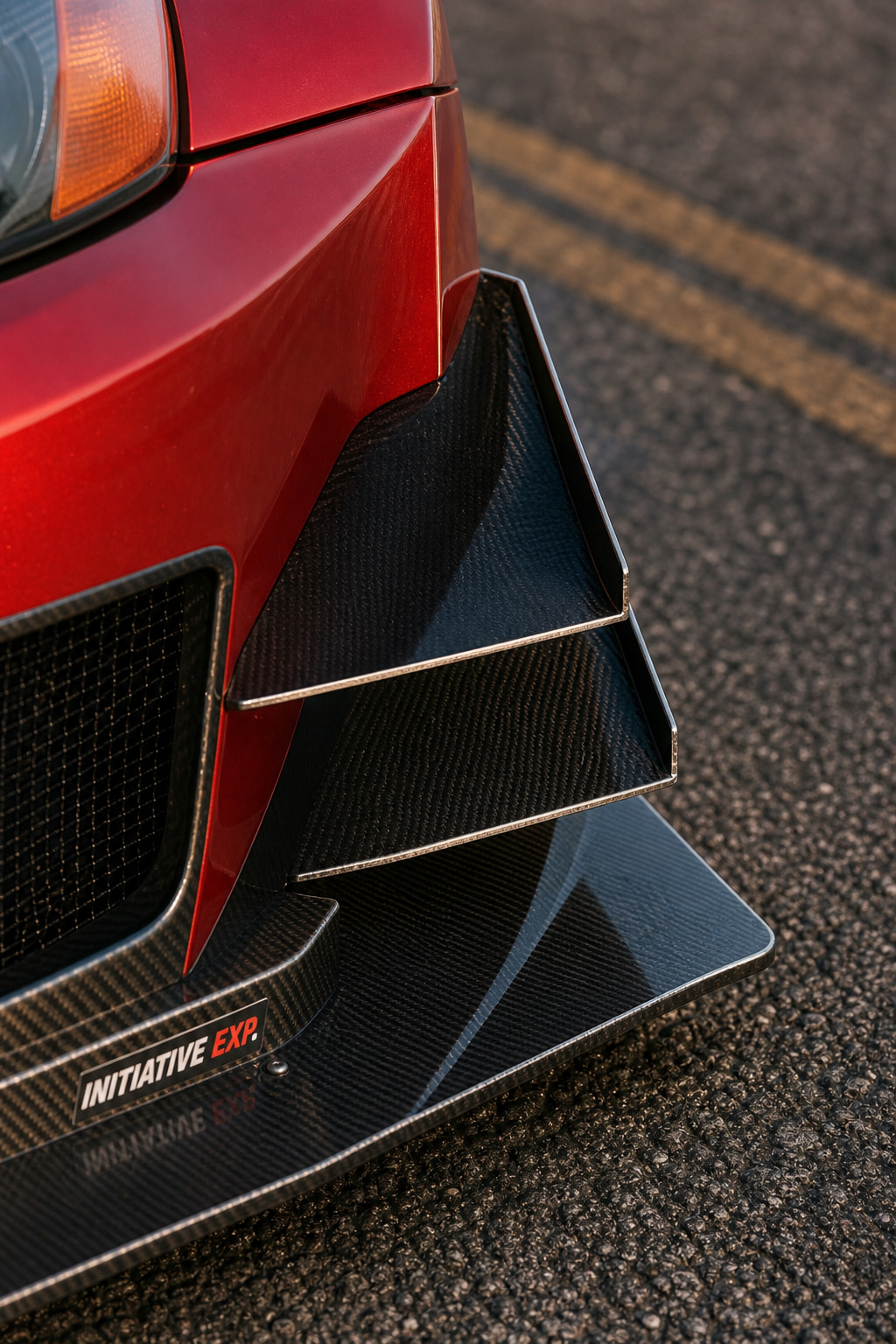
170mm tri-section front splitter with raised dive planes (90mm tall) mounted above the deck
500mm sidepods with internal ducting to side-mounted radiators and a 60mm side-shelf skirt
900mm-wide rear diffuser extending 230mm past rear axle centerline with seven 140mm strakes
1750mm adjustable dual-element GT wing on 720mm swan-neck pylons near quarter edges

Chassis

Set up for tight, technical circuits and mountain-road rhythm: quick direction changes, heavy braking zones, and short straights where aero stability and midrange torque matter more than top speed. The aero and cooling architecture are designed to stay consistent as speed and temperature climb.

Wheels & Tires

Front: 18x11 forged OZ Racing Ultraleggera with 295/680R18 semi-slicks
Rear: 18x12 forged OZ Racing Ultraleggera with 325/690R18 semi-slicks
Carbon/Kevlar inner liners for debris protection and tire-to-body clearance control
Track width: +165mm front, +180mm rear; ride height: -45mm on adjustable coilovers

Powertrain

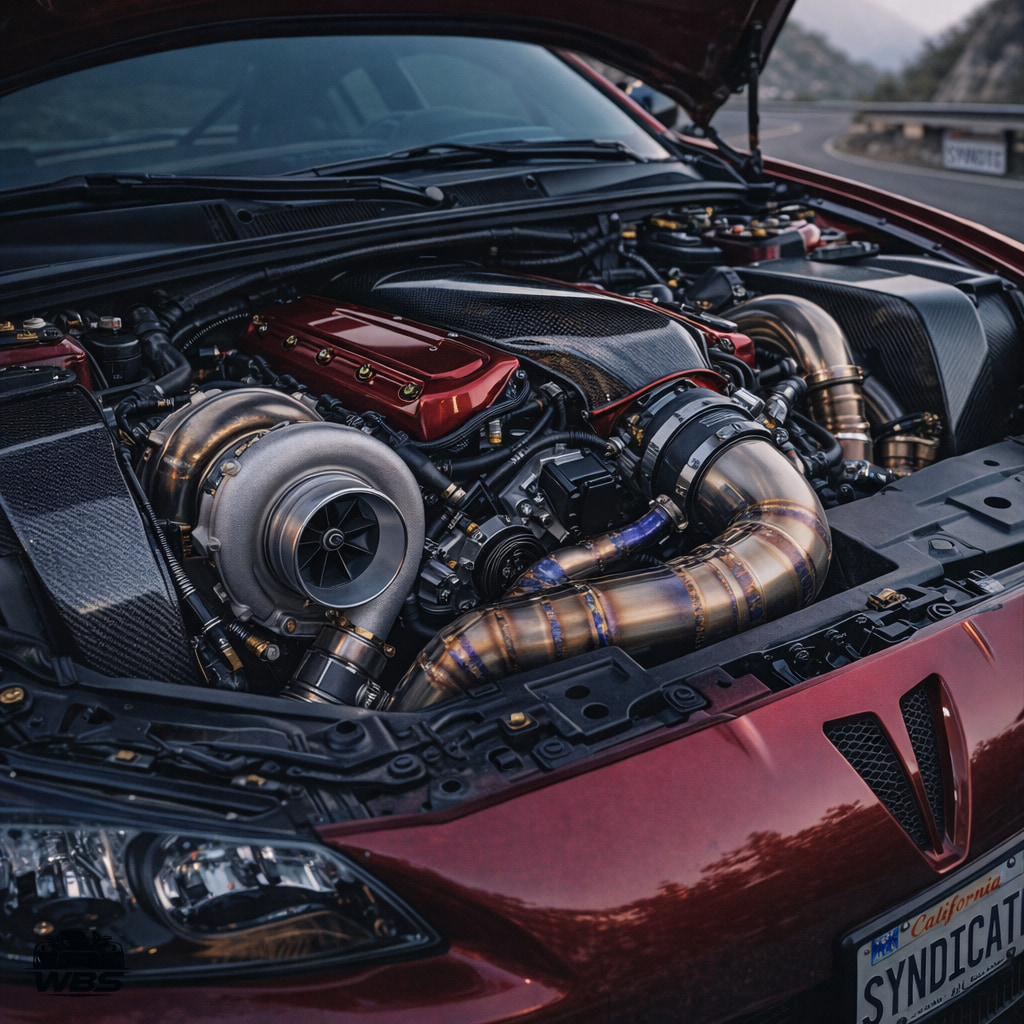
Turbocharged, built V6 concept tuned for broad midrange and sustained track temps
Front corner inlets feeding sidepod heat exchangers to stabilize coolant and charge temps
Ducted brake cooling integrated into fender architecture for repeatable lap-to-lap braking
Track-focused calibration prioritizing throttle modulation over peak dyno numbers

Fabrication Notes

Welded-in tubular front subframe to support revised suspension pickup points and reduce mass forward
Widebody built around duct routing: sealed paths from fender inlets to side radiators and brakes
Underbody sealing and skirt edge management to support diffuser performance at realistic ride heights
Reinforced wing mounts tied into rear structure to handle sustained downforce loads

×

Design Philosophy

Crimson Lotus Initiative takes the 2004 Grand Prix—an everyday Midwest sedan with a recognizable roofline—and drags it into early-2000s time-attack logic: width, ducts, and real aero surfaces that don’t need excuses. The squared 125mm front box flares and 175mm rear haunches aren’t just for show; they’re shaped around brake cooling, sidepod radiator feed, and tire clearance for a 295/325 stagger that looks as serious as it drives.

Under the skin, the build reads like a track car that kept its street manners: a tubular front subframe, targeted carbon panel swaps, and a reworked suspension geometry to match the widened tracks. Deep crimson with matte-black blocks and fine gold outlining ties it to the era—graphic, loud, and purposeful—without losing the Grand Prix silhouette that makes the whole flip hit harder.

Platform+
2004 Pontiac Grand Prix

2004 Pontiac Grand Prix

The 2004 Pontiac Grand Prix stands as a quintessential mid-2000s American sport sedan, blending everyday practicality with a subtle performance edge. Rooted in GM's W-body platform, the Grand Prix offers a balanced chassis with front-wheel drive and a V6 powertrain that, while unassuming, delivers a comfortable yet engaging drive. Its sharp, aerodynamic profile and characteristic split grille reflect a period of automotive design focused on blending aggressive stance with refined lines — a sleeper platform cherished by enthusiasts looking to explore customization beyond the flashy muscle car archetype.

PontiacGrand Prix2004
View Platform
Aero Package+

170mm tri-section front splitter with raised dive planes (90mm tall) mounted above the deck
500mm sidepods with internal ducting to side-mounted radiators and a 60mm side-shelf skirt
900mm-wide rear diffuser extending 230mm past rear axle centerline with seven 140mm strakes
1750mm adjustable dual-element GT wing on 720mm swan-neck pylons near quarter edges

Chassis+

Set up for tight, technical circuits and mountain-road rhythm: quick direction changes, heavy braking zones, and short straights where aero stability and midrange torque matter more than top speed. The aero and cooling architecture are designed to stay consistent as speed and temperature climb.

Wheels & Tires+

Front: 18x11 forged OZ Racing Ultraleggera with 295/680R18 semi-slicks
Rear: 18x12 forged OZ Racing Ultraleggera with 325/690R18 semi-slicks
Carbon/Kevlar inner liners for debris protection and tire-to-body clearance control
Track width: +165mm front, +180mm rear; ride height: -45mm on adjustable coilovers

Powertrain+

Turbocharged, built V6 concept tuned for broad midrange and sustained track temps
Front corner inlets feeding sidepod heat exchangers to stabilize coolant and charge temps
Ducted brake cooling integrated into fender architecture for repeatable lap-to-lap braking
Track-focused calibration prioritizing throttle modulation over peak dyno numbers

Fabrication Notes+

Welded-in tubular front subframe to support revised suspension pickup points and reduce mass forward
Widebody built around duct routing: sealed paths from fender inlets to side radiators and brakes
Underbody sealing and skirt edge management to support diffuser performance at realistic ride heights
Reinforced wing mounts tied into rear structure to handle sustained downforce loads

×Design Philosophy+

Crimson Lotus Initiative takes the 2004 Grand Prix—an everyday Midwest sedan with a recognizable roofline—and drags it into early-2000s time-attack logic: width, ducts, and real aero surfaces that don’t need excuses. The squared 125mm front box flares and 175mm rear haunches aren’t just for show; they’re shaped around brake cooling, sidepod radiator feed, and tire clearance for a 295/325 stagger that looks as serious as it drives.

Under the skin, the build reads like a track car that kept its street manners: a tubular front subframe, targeted carbon panel swaps, and a reworked suspension geometry to match the widened tracks. Deep crimson with matte-black blocks and fine gold outlining ties it to the era—graphic, loud, and purposeful—without losing the Grand Prix silhouette that makes the whole flip hit harder.

Part of
Wave 26

Time Attack Everything: Vol. 2

We just cranked the time attack dial all the way to eleven. Our builds slam classic chassis and overlooked platforms into a parallel universe where track dominance isn’t just a goal — it’s a mandate stamped in carbon fiber and forged metal.

Explore Wave 26 → 6 Builds

Keep Exploring

The archive is always growing. New releases, waves, and blueprints added regularly.