R258
Stratus Vortex GT
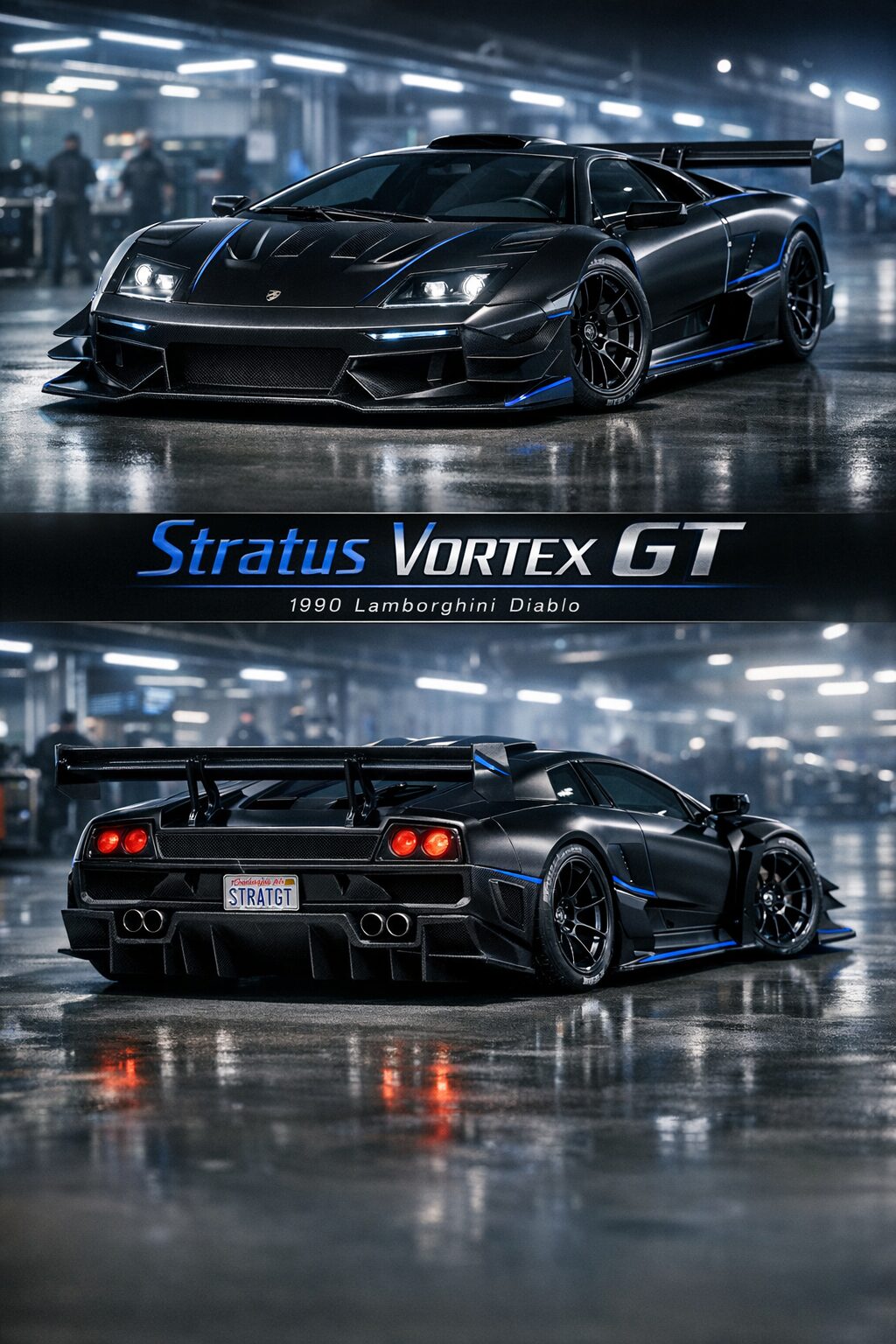
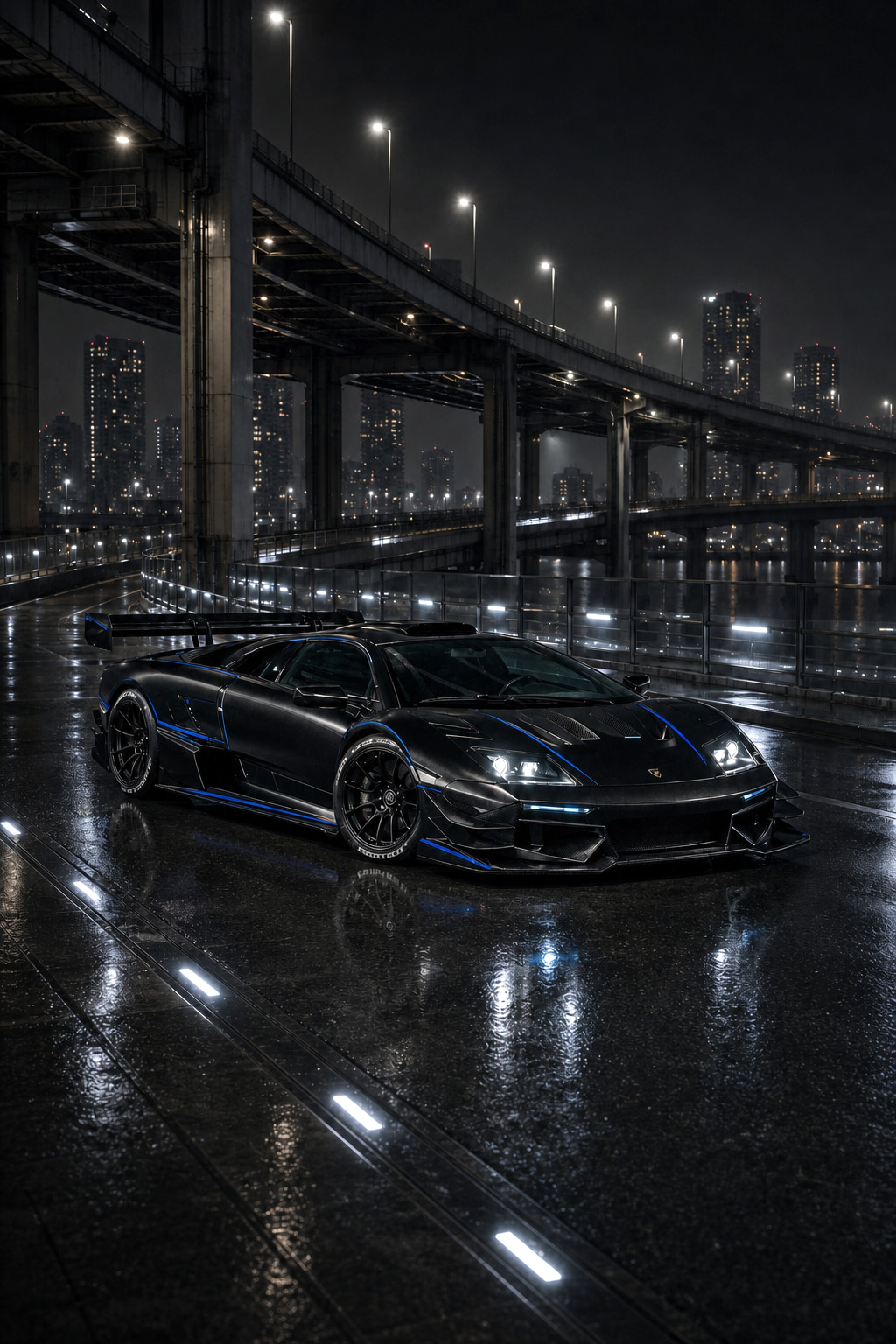
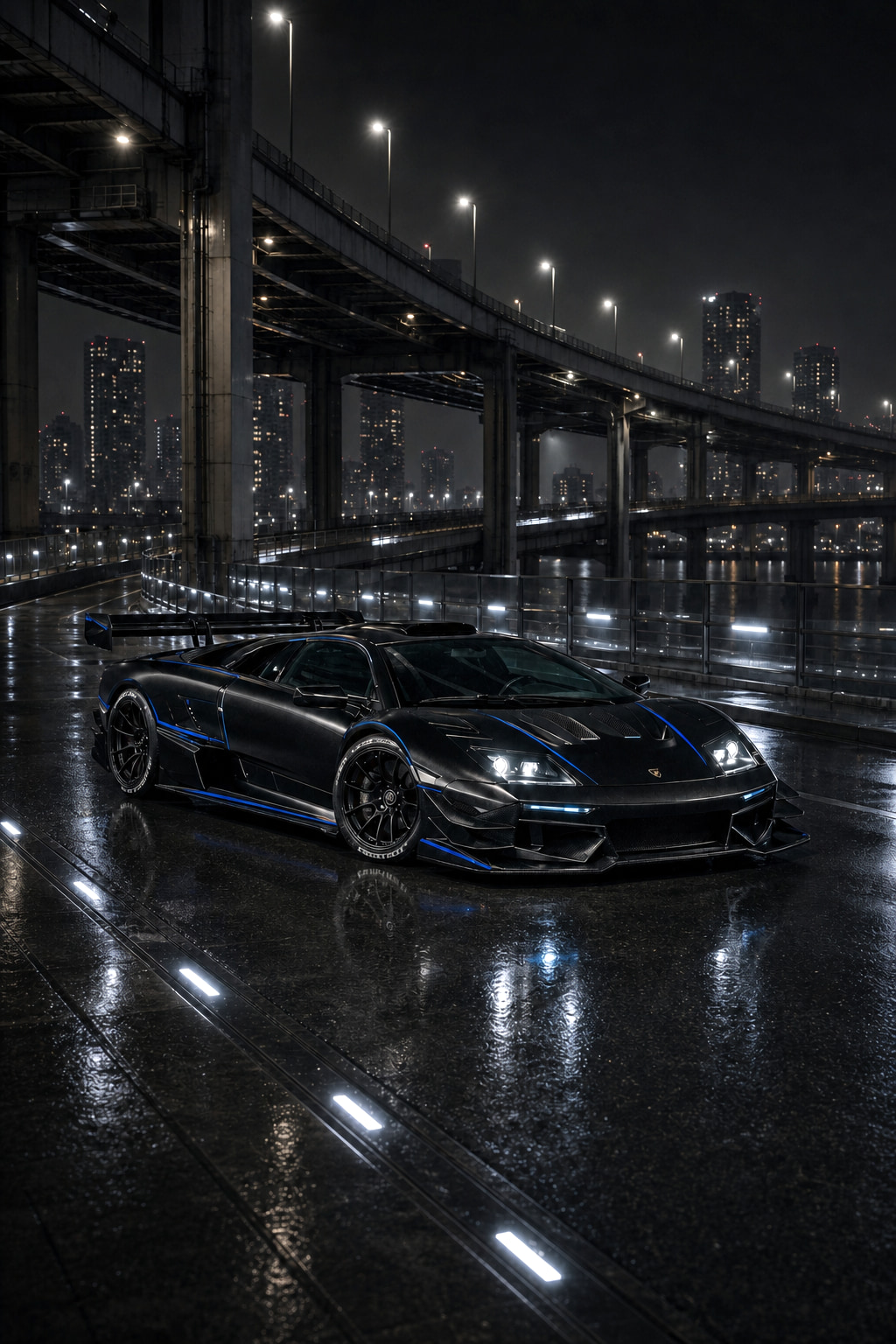
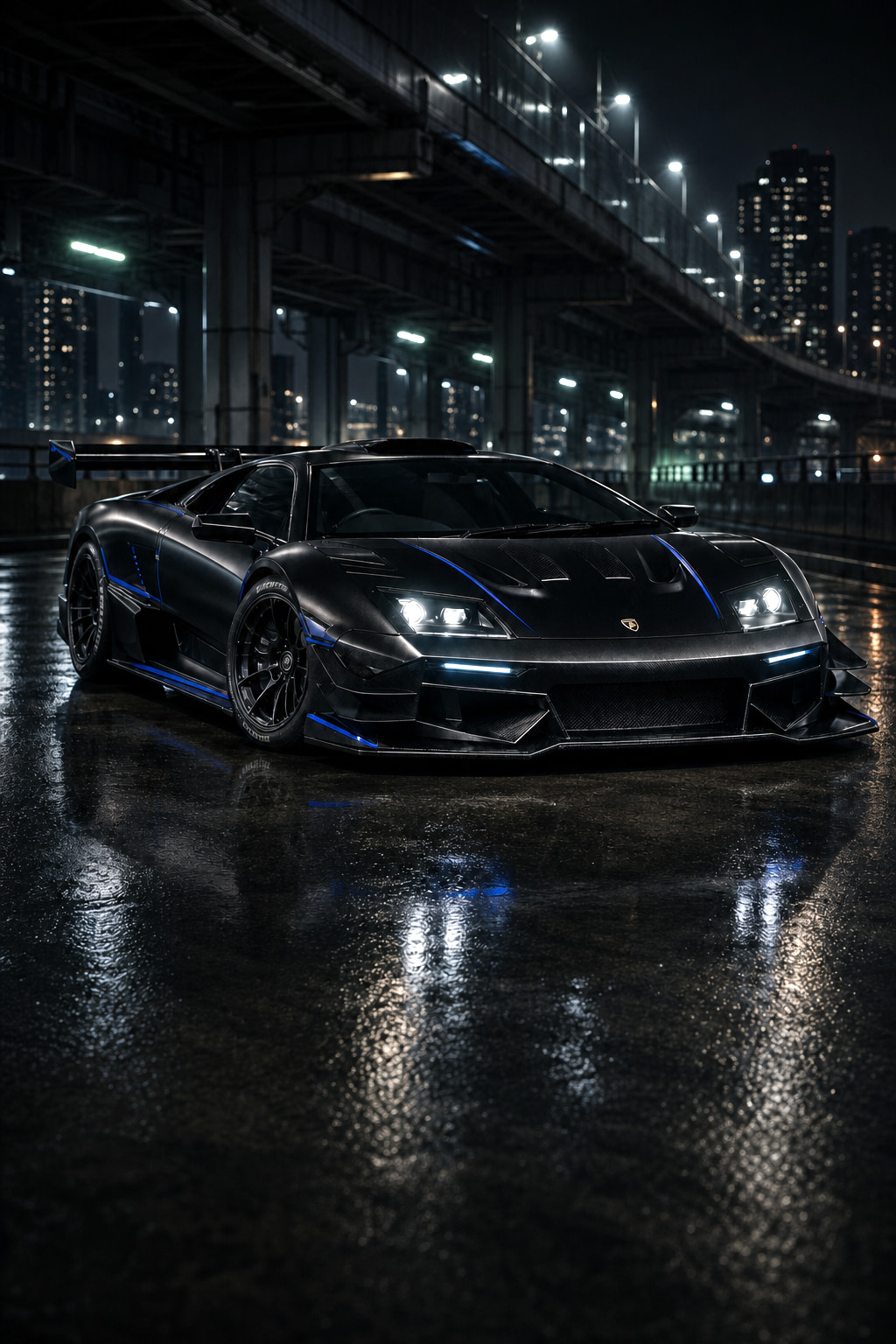
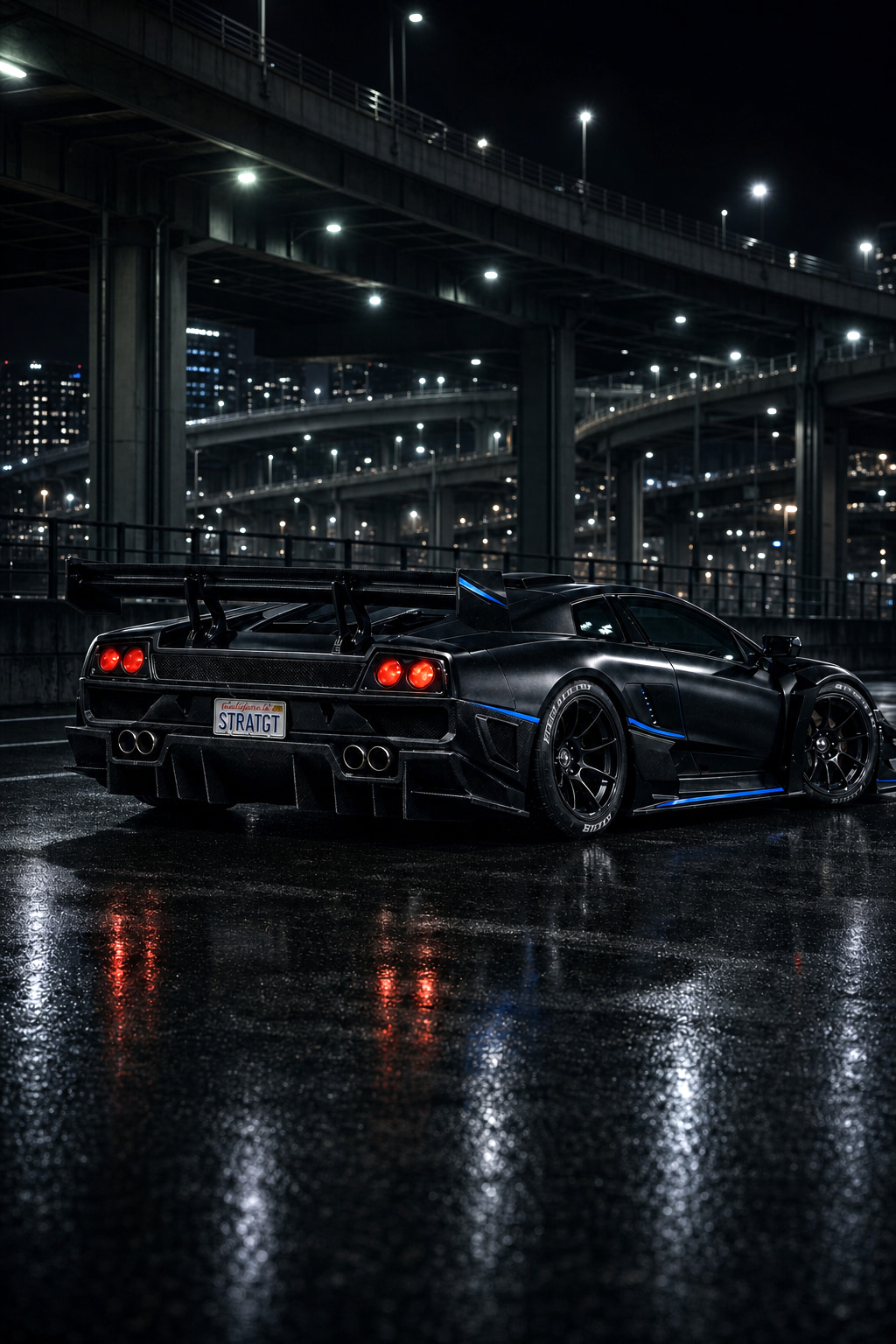
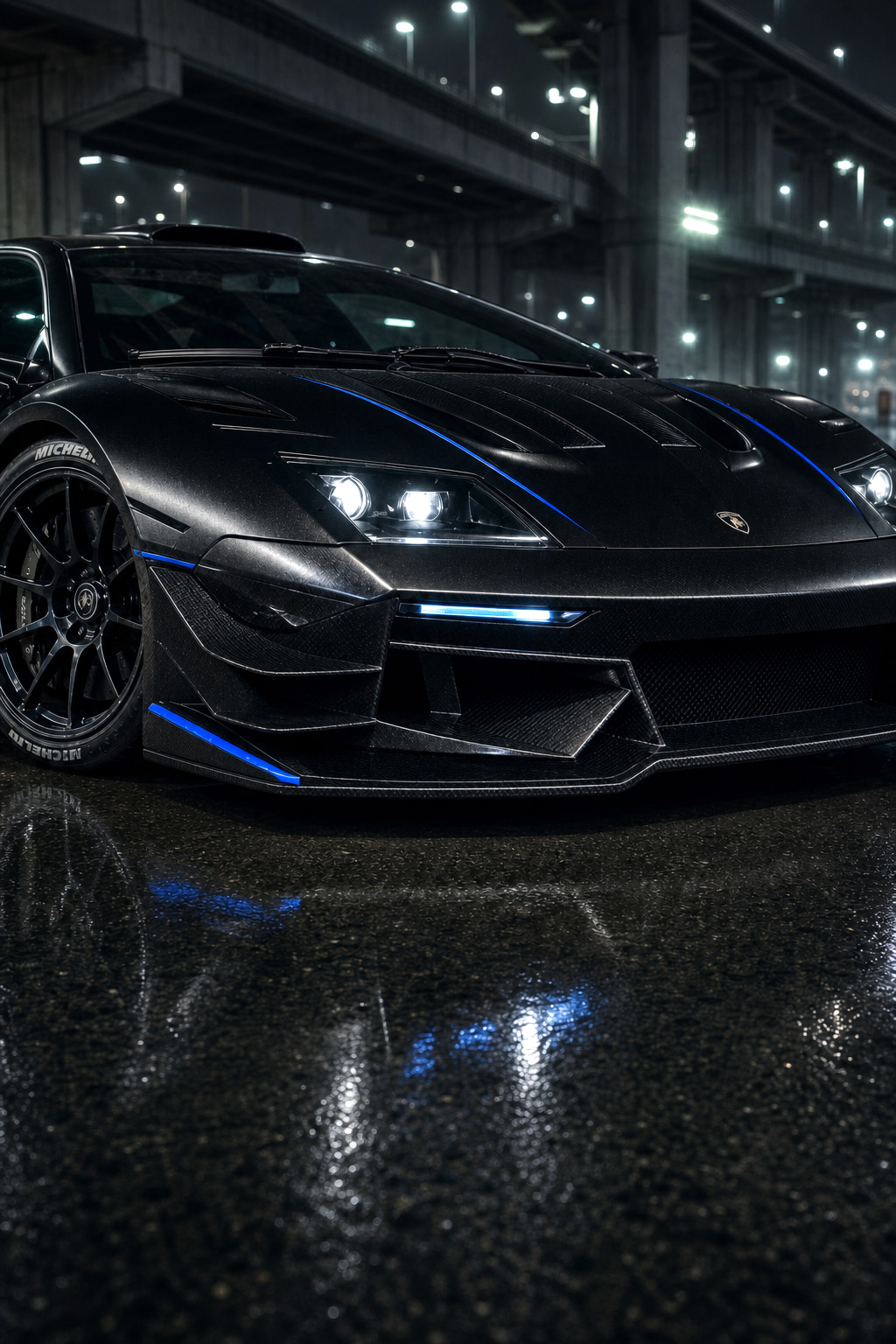
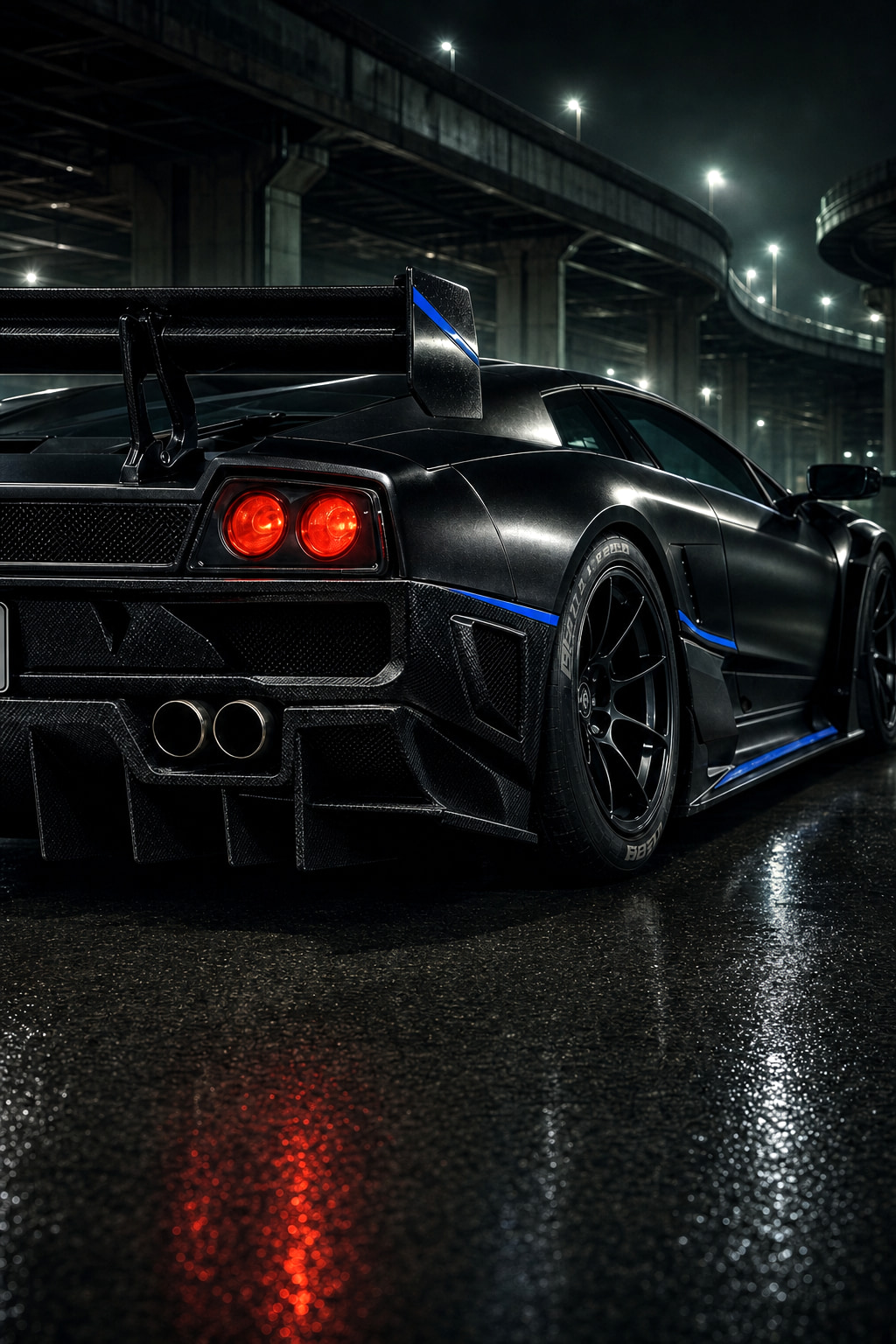
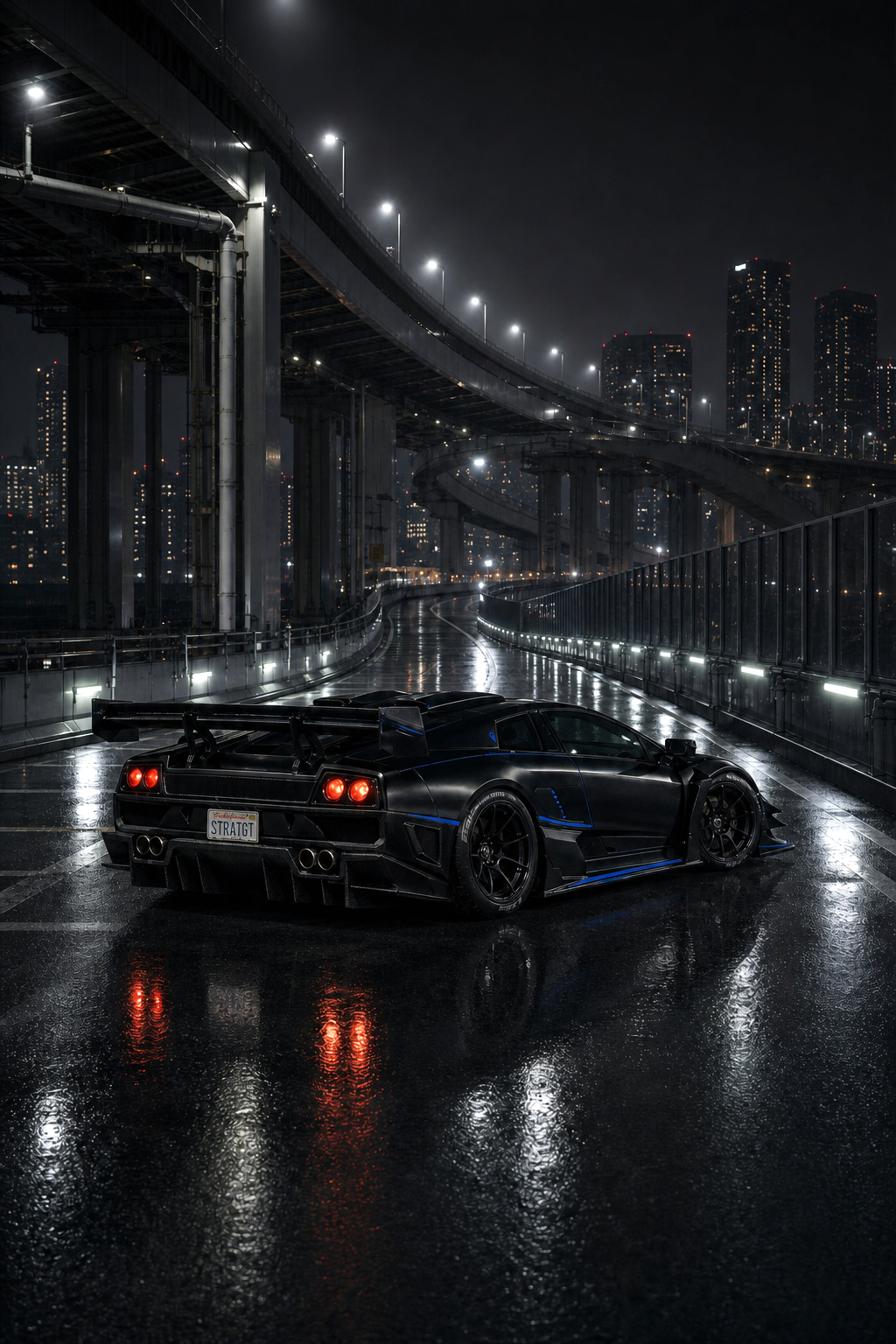
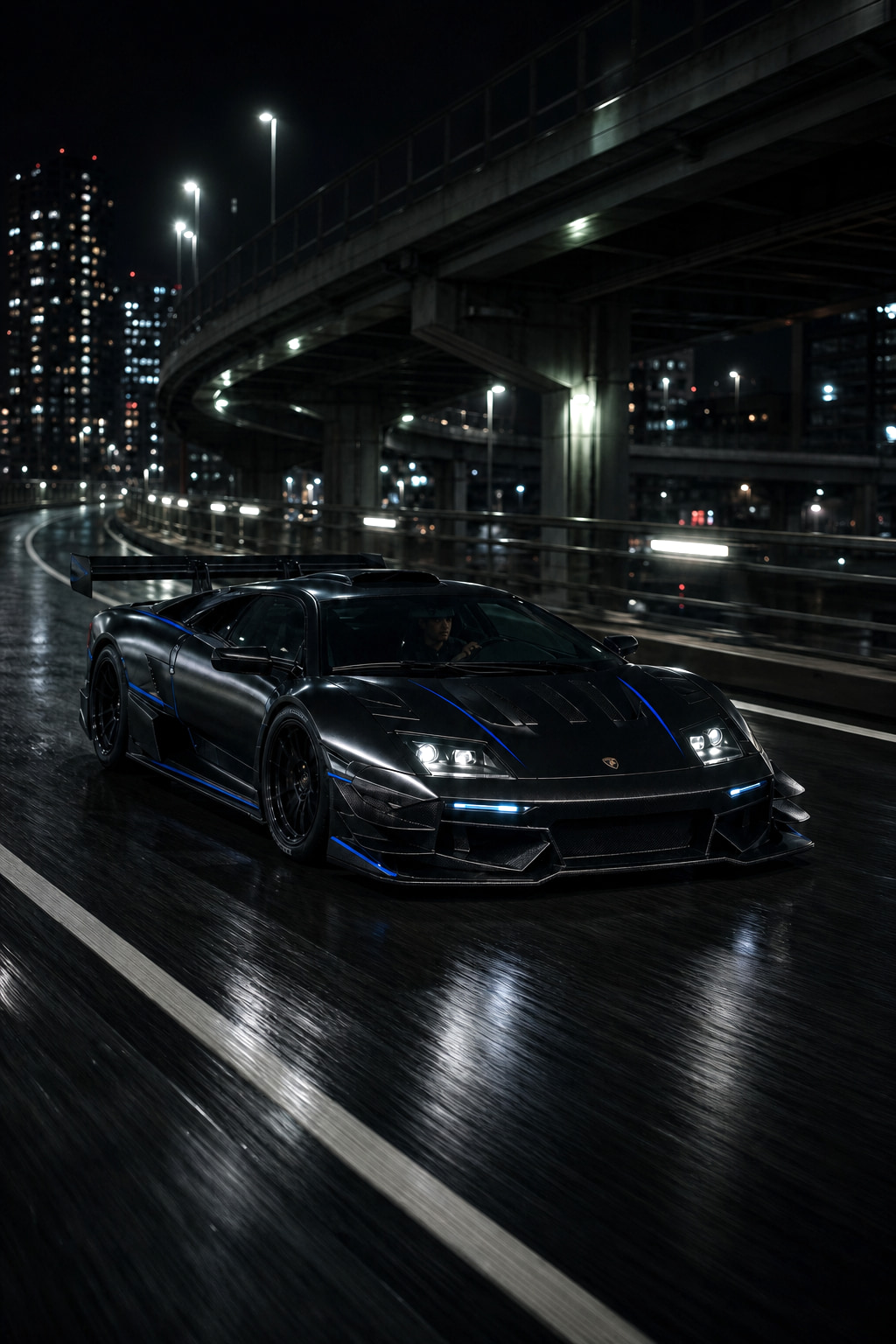
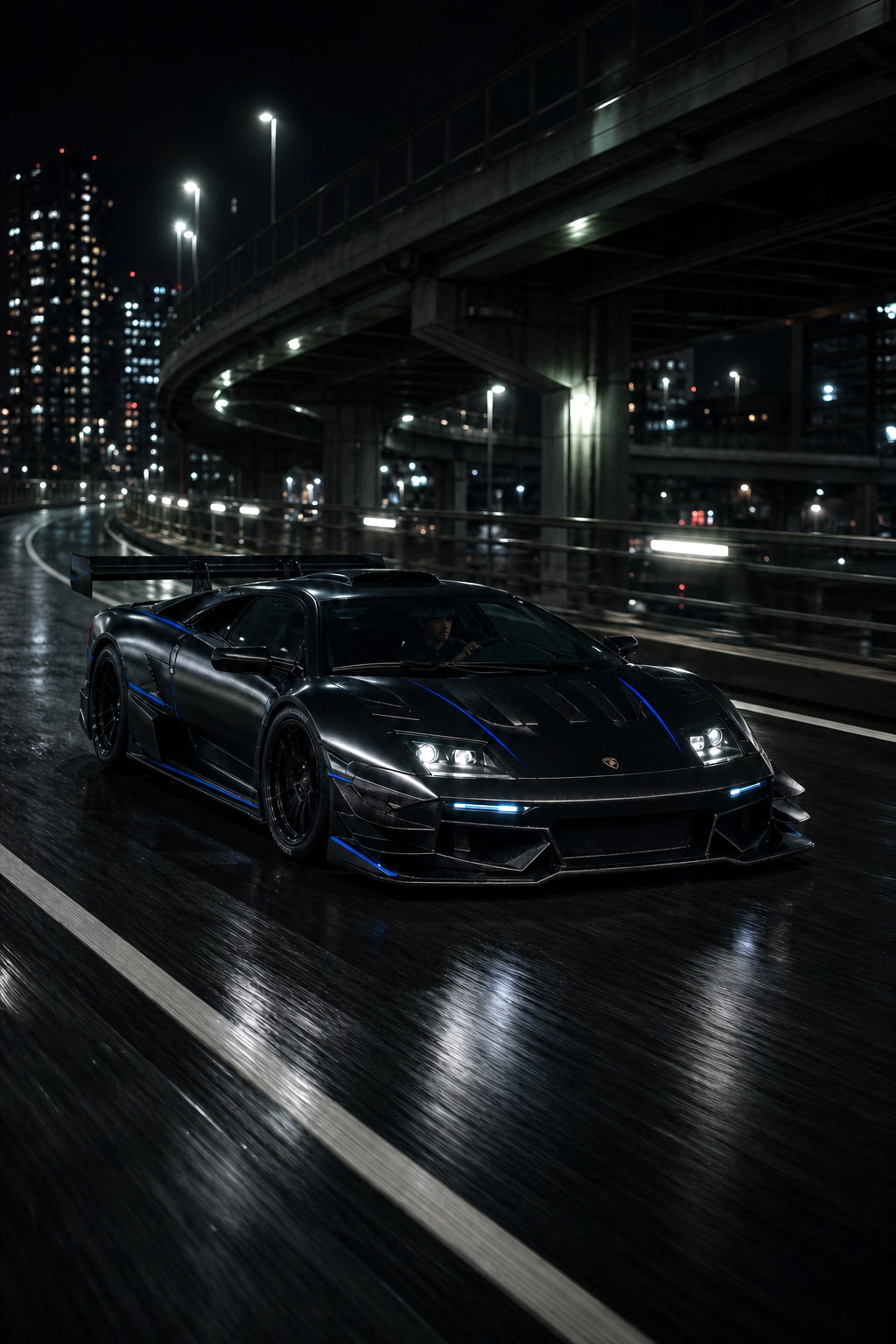
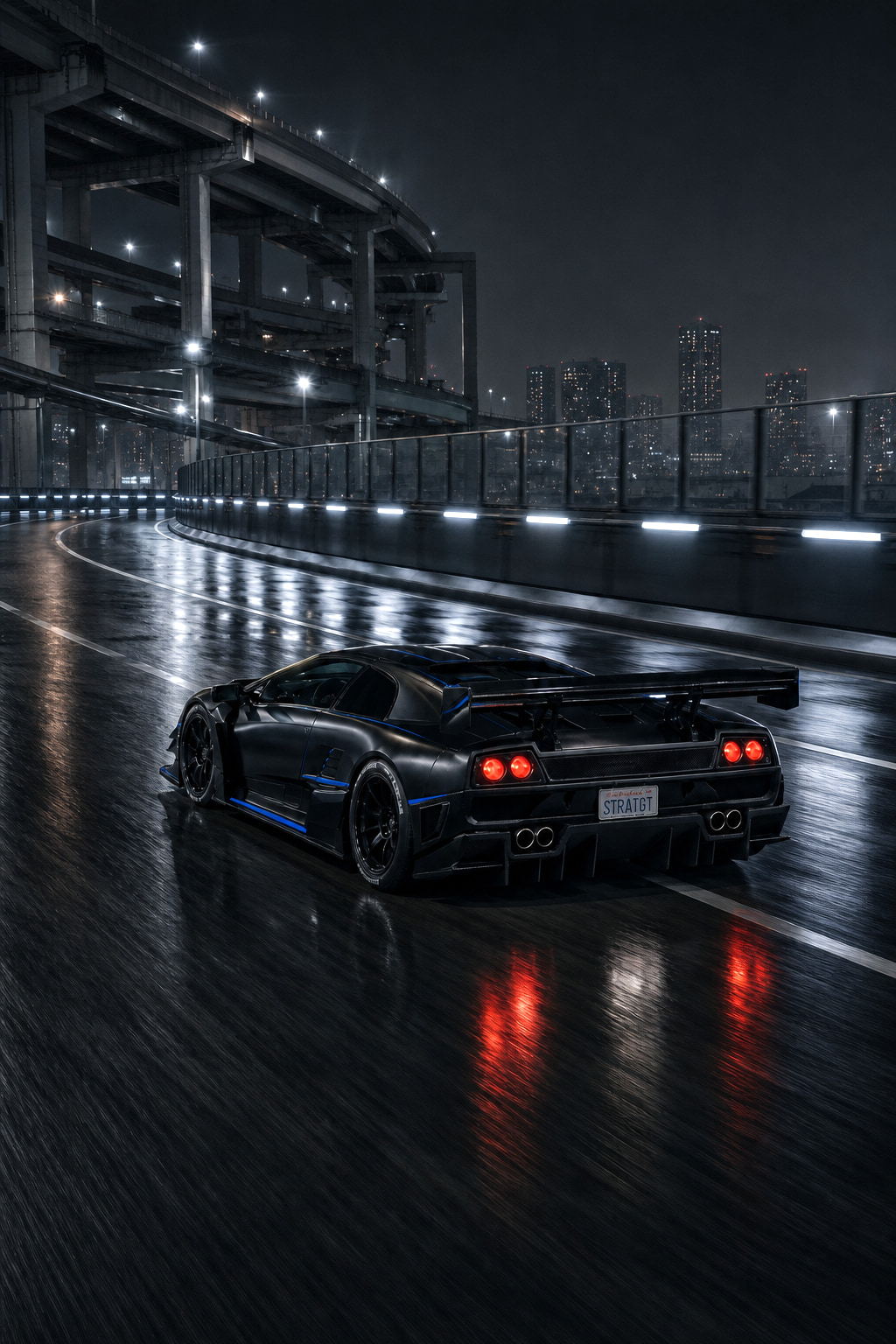
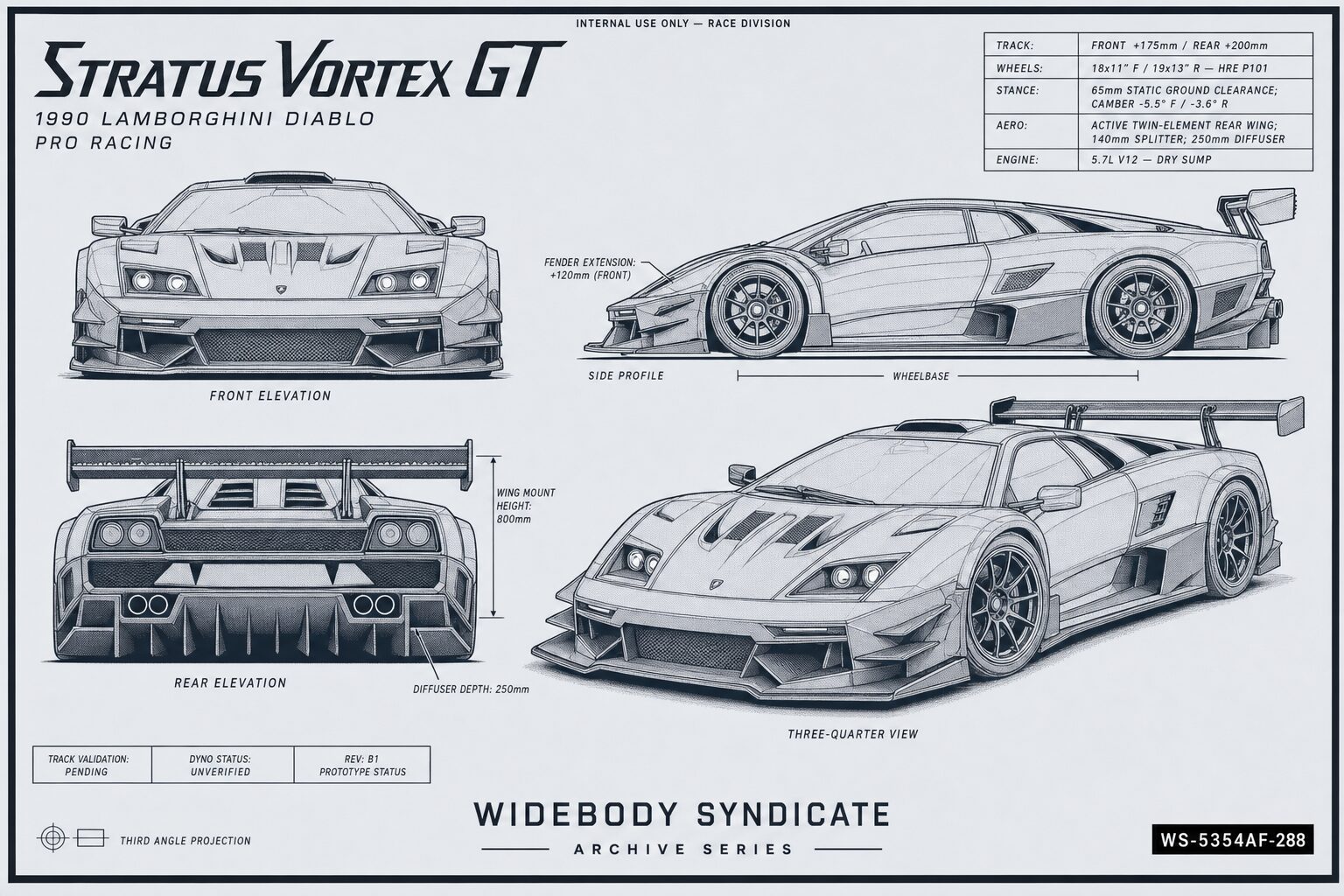
Stratus Vortex GT treats the 1990 Diablo like a homologation myth that finally got its works program. The greenhouse and roofline stay unmistakably Sant’Agata, but everything below the beltline is re-authored for aero load: hard-edged trapezoidal arches, deep sidepods that read like pressure vessels, and a floor that’s clearly doing as much work as the wing.
It’s a GT3 silhouette pushed into a GT5 rulebook—wide track, slicks, and cooling that looks intentional instead of decorative. Active elements aren’t there to look futuristic; they’re there to keep the car stable as speed, yaw, and brake temps change lap to lap, while the V12 remains the emotional center of the whole package.
Release Image Studies
Image studies from every angle.
Comparison Shots
Blueprint / Collector Archive
Engineering Artifacts
The technical study and collectible interpretation of one build, preserved together.
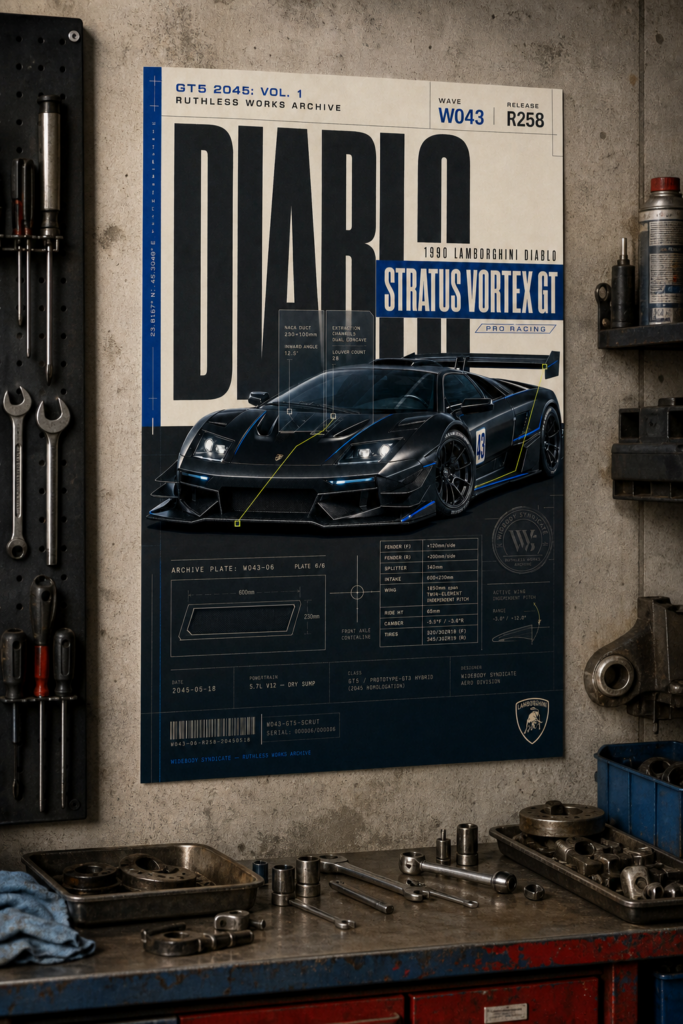
A presentation-grade collector artifact created for this release and preserved as part of the Widebody Syndicate archive.
Selected archive goods are available for collectors.
Technical Dossier
Platform
1990 Lamborghini Diablo
The 1990 Lamborghini Diablo is the moment Sant’Agata went from poster-car mythology to bona fide supercar benchmark. Penned with that classic Gandini edge still sharp in the lines, but engineered for the next era, the Diablo brought a bigger, more usable kind of drama: a 5.7-liter V12 mounted behind the cabin, rear-wheel drive, and that long, low wedge profile that defines early-’90s excess in the best possible way.
As a base platform, it’s pure analog theater wrapped around serious hardware—spaceframe construction, unequal-length suspension, and proportions that feel stretched over the mechanicals like a tailored suit. It’s the kind of chassis that rewards respect: wide sills, heavy doors, a cockpit set forward, and a rear deck that exists solely to frame the V12’s presence. The original Diablo isn’t trying to be modern; it’s the reference point for what Lamborghini became afterward.
Aero Package
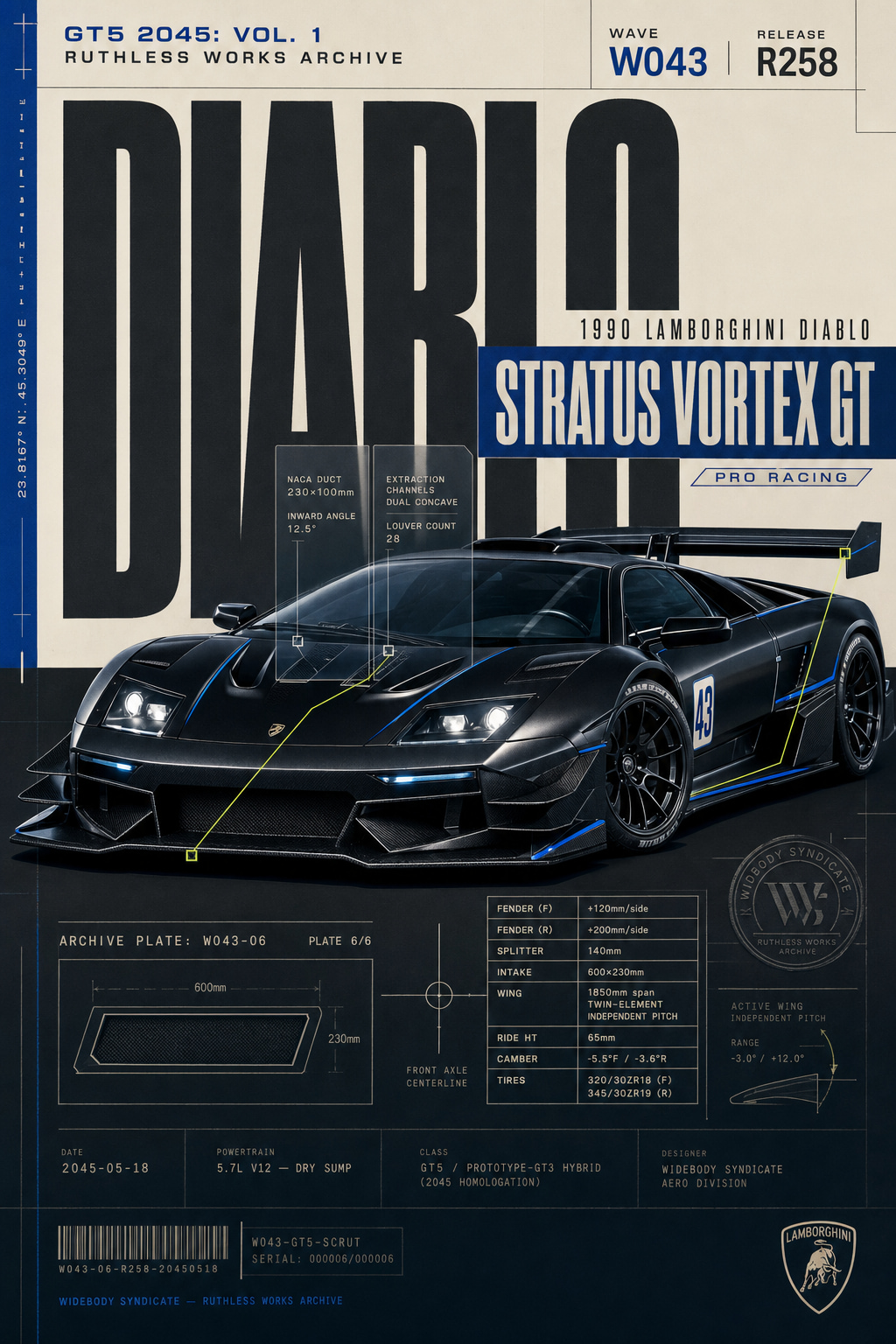
140 mm forward carbon splitter with outer-edge chamfer and stacked twin dive planes
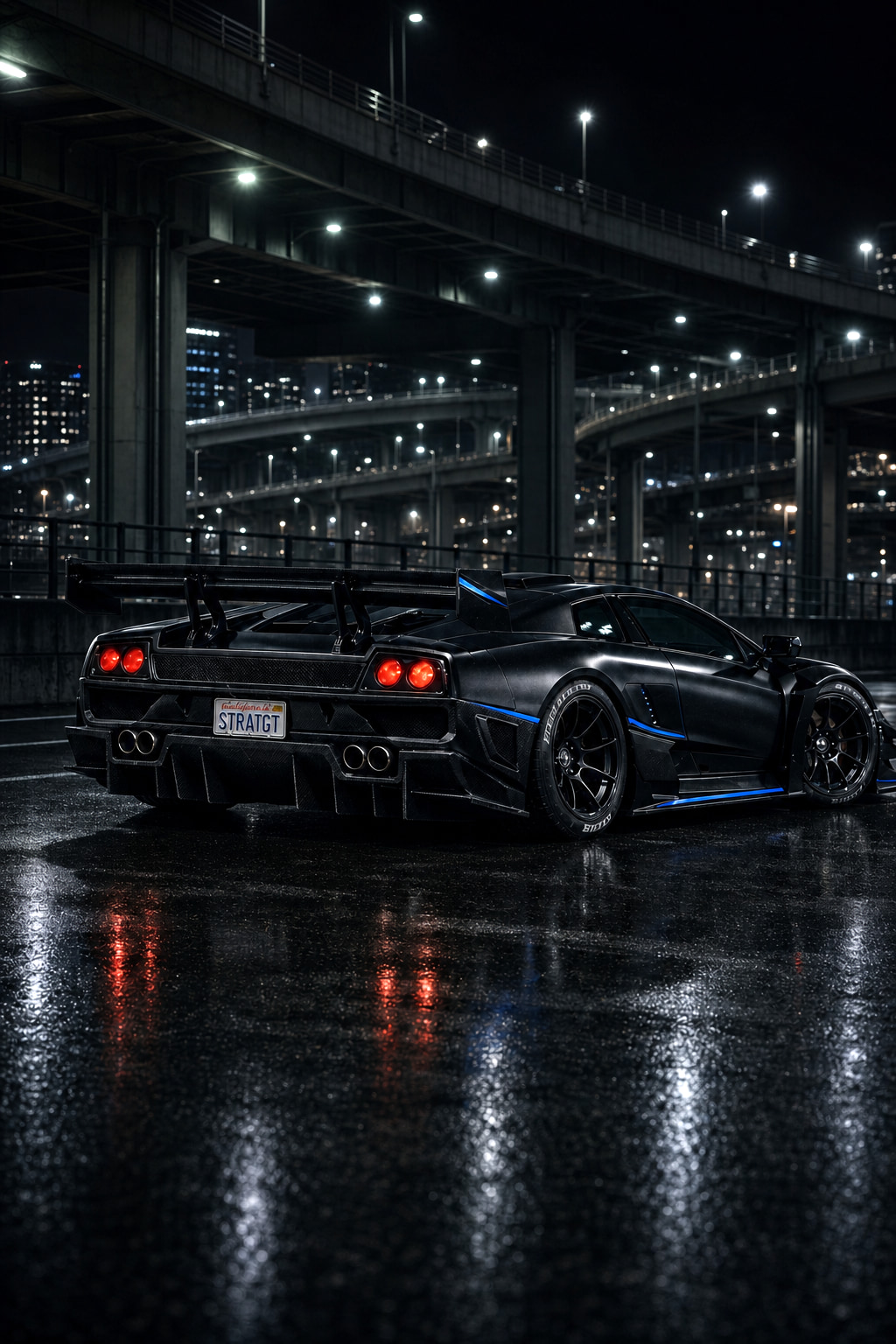
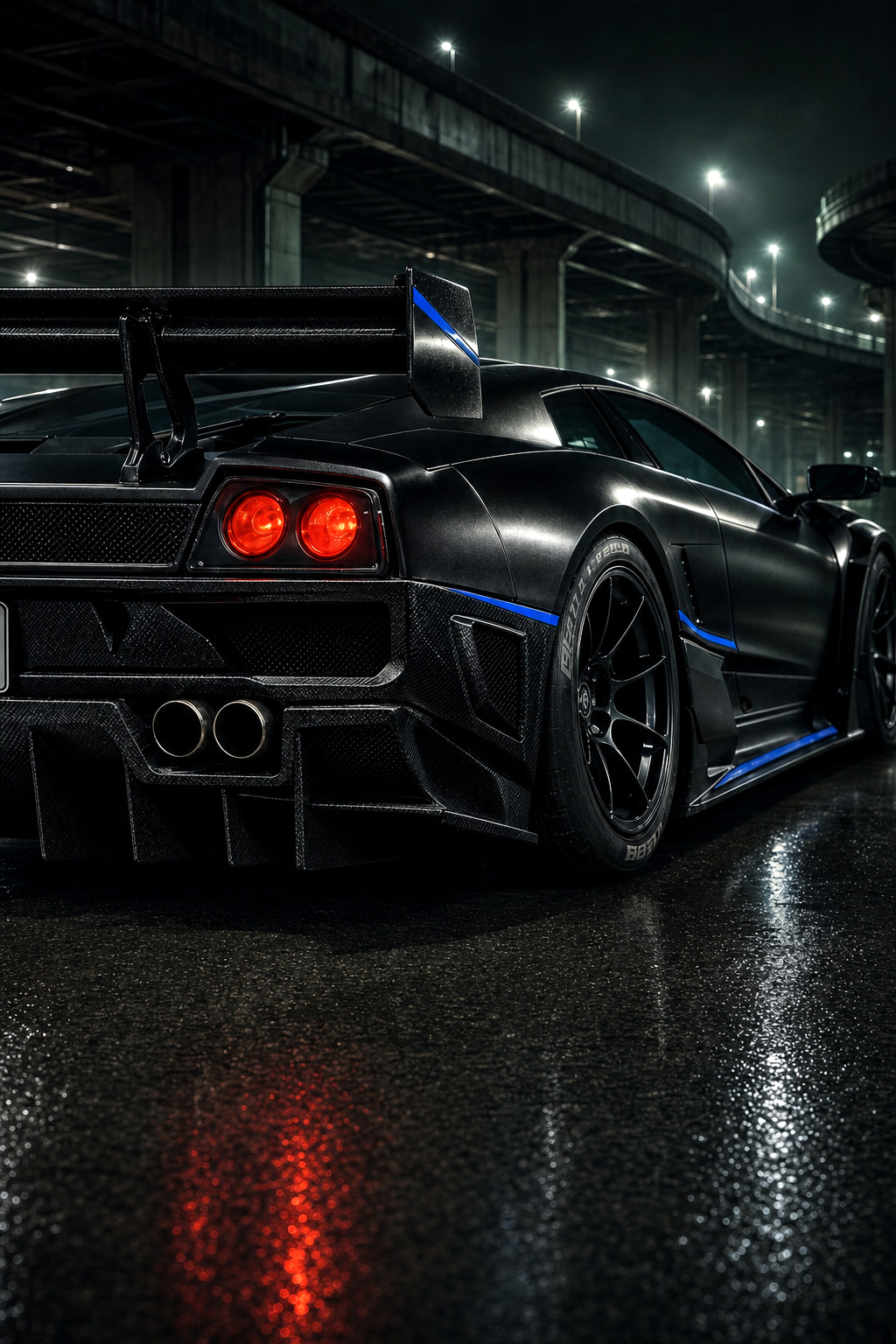
Active twin-element rear wing on swan-neck mounts with independent pitch actuation
250 mm-deep multi-shelf rear diffuser with seven trapezoidal strakes for underfloor control
Active cooling flaps in fenders/sidepods to trade drag for thermal headroom
Chassis
Built for fast, aero-dependent circuits where underfloor efficiency matters as much as horsepower. The active wing and cooling flaps are there for long stints—trim for the straight, add angle for braking and high-speed commitment, and keep temperatures controlled when running in dirty air.
Wheels & Tires
HRE P101 forged: 18x11 front, 19x13 rear
Michelin Pilot Sport GT3 R slicks: 320/30ZR18 front, 345/30ZR19 rear
Wide-track stance: +175 mm total front, +200 mm total rear to match flare geometry
Powertrain
5.7L V12 retained with race-spec dry sump conversion for sustained lateral load
Reworked intake/extraction and ducting strategy to stabilize coolant and oil temps in traffic
Race exhaust routing through diffuser-integrated outlets with heat-shielded carbon recesses
Electronics concept centered on aero/thermal control integration (wing + cooling flap logic)
Fabrication Notes
Resin-infused carbon panels with aluminum hardpoints at suspension, wing pylons, and aero mounts
Tight-radius edge management: chamfers and radiused transitions to resist cracking and reduce separation
Serviceable modular louver and duct inserts for track-dependent cooling configurations
Underfloor and diffuser built as a structurally braced assembly to maintain aero platform consistency
Design Philosophy
Stratus Vortex GT treats the 1990 Diablo like a homologation myth that finally got its works program. The greenhouse and roofline stay unmistakably Sant’Agata, but everything below the beltline is re-authored for aero load: hard-edged trapezoidal arches, deep sidepods that read like pressure vessels, and a floor that’s clearly doing as much work as the wing.
It’s a GT3 silhouette pushed into a GT5 rulebook—wide track, slicks, and cooling that looks intentional instead of decorative. Active elements aren’t there to look futuristic; they’re there to keep the car stable as speed, yaw, and brake temps change lap to lap, while the V12 remains the emotional center of the whole package.
▧Platform+
1990 Lamborghini Diablo
The 1990 Lamborghini Diablo is the moment Sant’Agata went from poster-car mythology to bona fide supercar benchmark. Penned with that classic Gandini edge still sharp in the lines, but engineered for the next era, the Diablo brought a bigger, more usable kind of drama: a 5.7-liter V12 mounted behind the cabin, rear-wheel drive, and that long, low wedge profile that defines early-’90s excess in the best possible way.
As a base platform, it’s pure analog theater wrapped around serious hardware—spaceframe construction, unequal-length suspension, and proportions that feel stretched over the mechanicals like a tailored suit. It’s the kind of chassis that rewards respect: wide sills, heavy doors, a cockpit set forward, and a rear deck that exists solely to frame the V12’s presence. The original Diablo isn’t trying to be modern; it’s the reference point for what Lamborghini became afterward.
⌘Aero Package+
140 mm forward carbon splitter with outer-edge chamfer and stacked twin dive planes
Active twin-element rear wing on swan-neck mounts with independent pitch actuation
250 mm-deep multi-shelf rear diffuser with seven trapezoidal strakes for underfloor control
Active cooling flaps in fenders/sidepods to trade drag for thermal headroom
⟡Chassis+
Built for fast, aero-dependent circuits where underfloor efficiency matters as much as horsepower. The active wing and cooling flaps are there for long stints—trim for the straight, add angle for braking and high-speed commitment, and keep temperatures controlled when running in dirty air.
◎Wheels & Tires+
HRE P101 forged: 18x11 front, 19x13 rear
Michelin Pilot Sport GT3 R slicks: 320/30ZR18 front, 345/30ZR19 rear
Wide-track stance: +175 mm total front, +200 mm total rear to match flare geometry
▤Powertrain+
5.7L V12 retained with race-spec dry sump conversion for sustained lateral load
Reworked intake/extraction and ducting strategy to stabilize coolant and oil temps in traffic
Race exhaust routing through diffuser-integrated outlets with heat-shielded carbon recesses
Electronics concept centered on aero/thermal control integration (wing + cooling flap logic)
△Fabrication Notes+
Resin-infused carbon panels with aluminum hardpoints at suspension, wing pylons, and aero mounts
Tight-radius edge management: chamfers and radiused transitions to resist cracking and reduce separation
Serviceable modular louver and duct inserts for track-dependent cooling configurations
Underfloor and diffuser built as a structurally braced assembly to maintain aero platform consistency
×Design Philosophy+
Stratus Vortex GT treats the 1990 Diablo like a homologation myth that finally got its works program. The greenhouse and roofline stay unmistakably Sant’Agata, but everything below the beltline is re-authored for aero load: hard-edged trapezoidal arches, deep sidepods that read like pressure vessels, and a floor that’s clearly doing as much work as the wing.
It’s a GT3 silhouette pushed into a GT5 rulebook—wide track, slicks, and cooling that looks intentional instead of decorative. Active elements aren’t there to look futuristic; they’re there to keep the car stable as speed, yaw, and brake temps change lap to lap, while the V12 remains the emotional center of the whole package.
Part of
Wave 43
GT5 2045: Vol. 1
In 2045, GT5 is what happens when the world’s biggest racing league stops caring about pedigree and starts caring about lap time. This volume is our opening grid: sacred icons, oddball commuters, and an American land-yacht all dragged through the same rulebook and the same wind tunnel.
Explore Wave 43 → 6 BuildsKeep Exploring
The archive is always growing. New releases, waves, and blueprints added regularly.