
Continue this wave
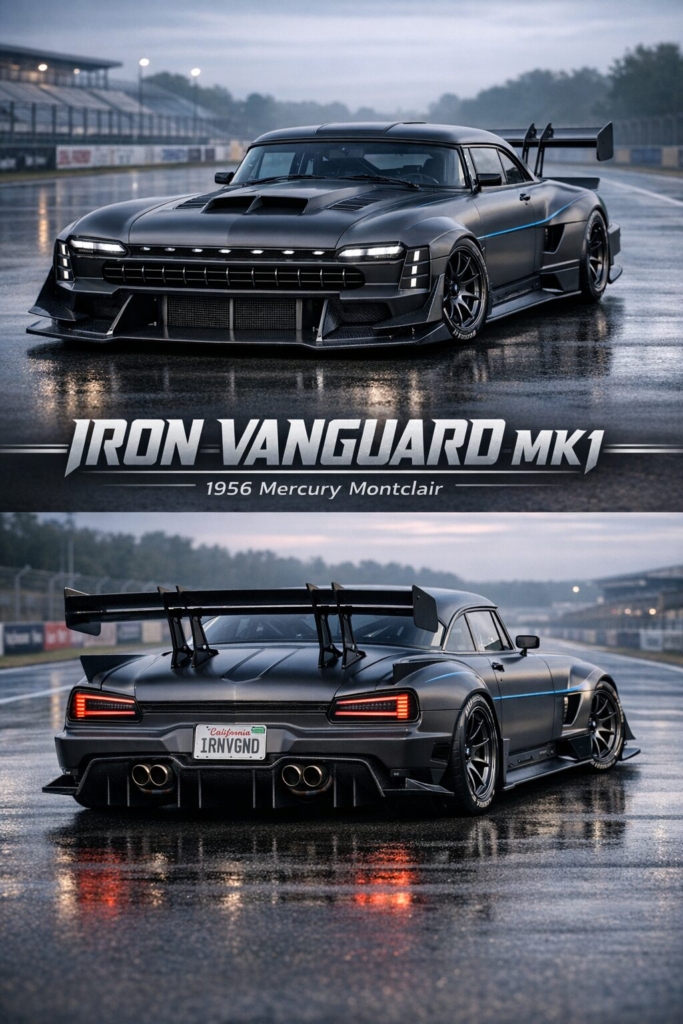
1956 Mercury Montclair

6 photos
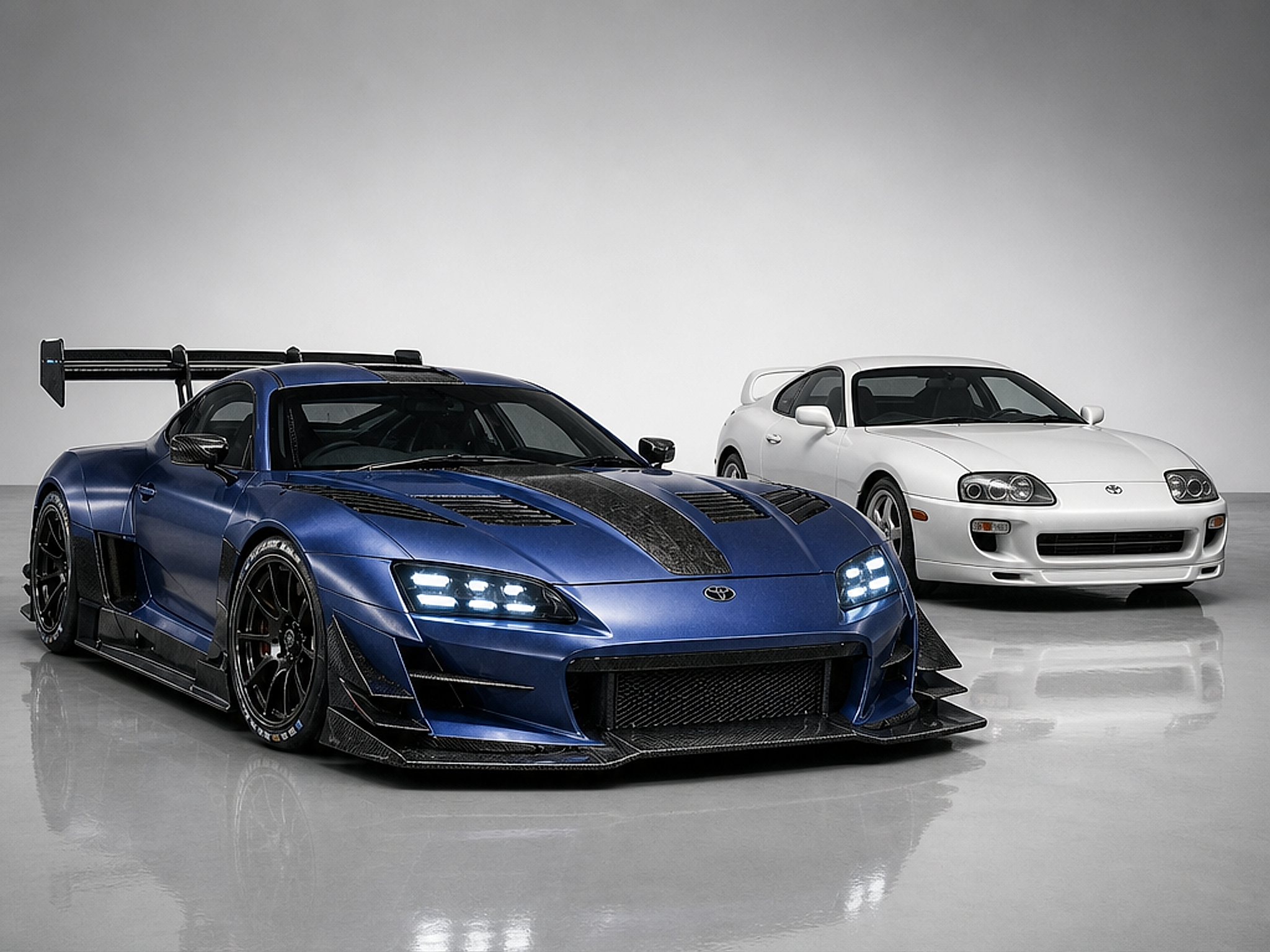
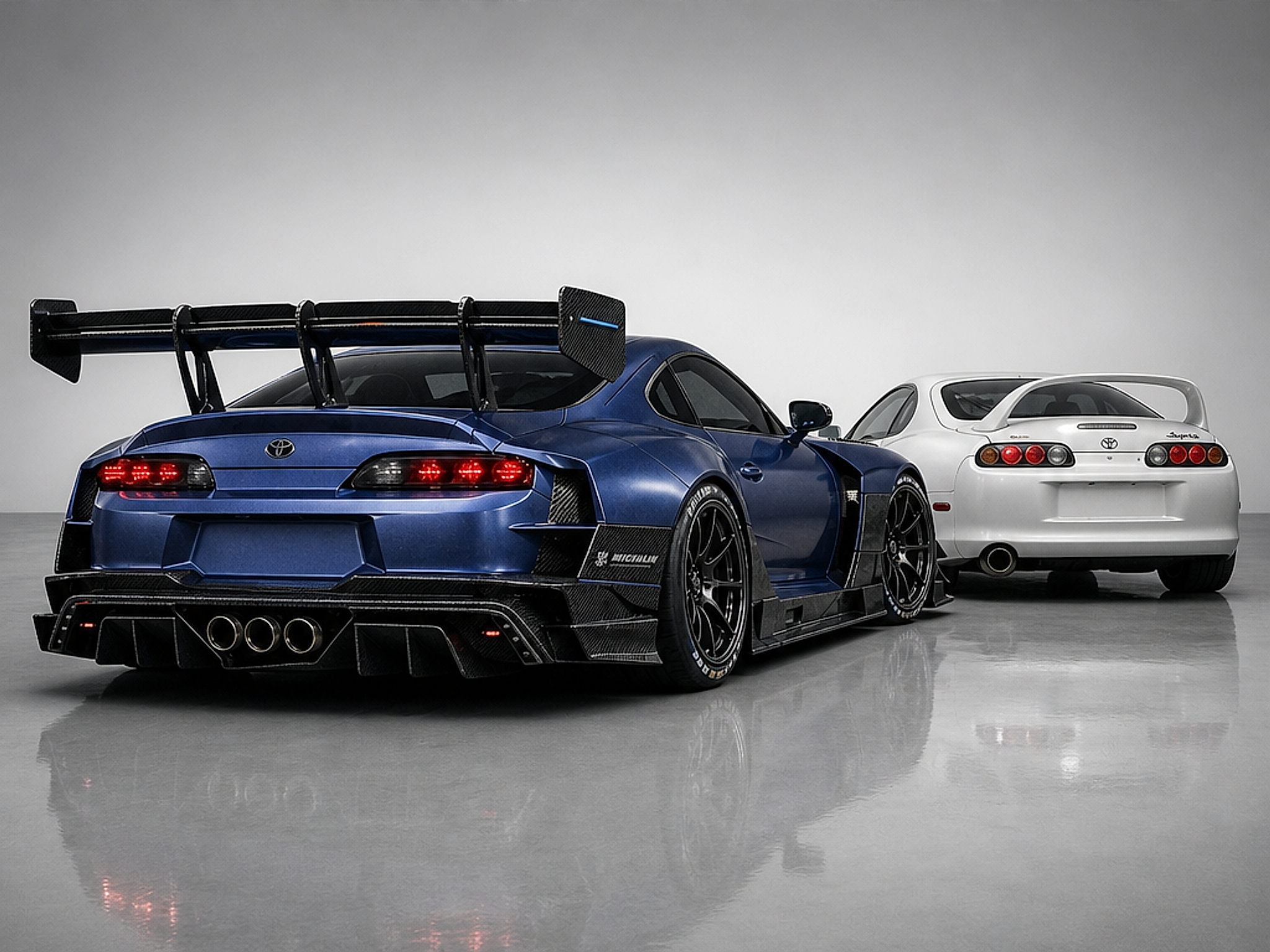
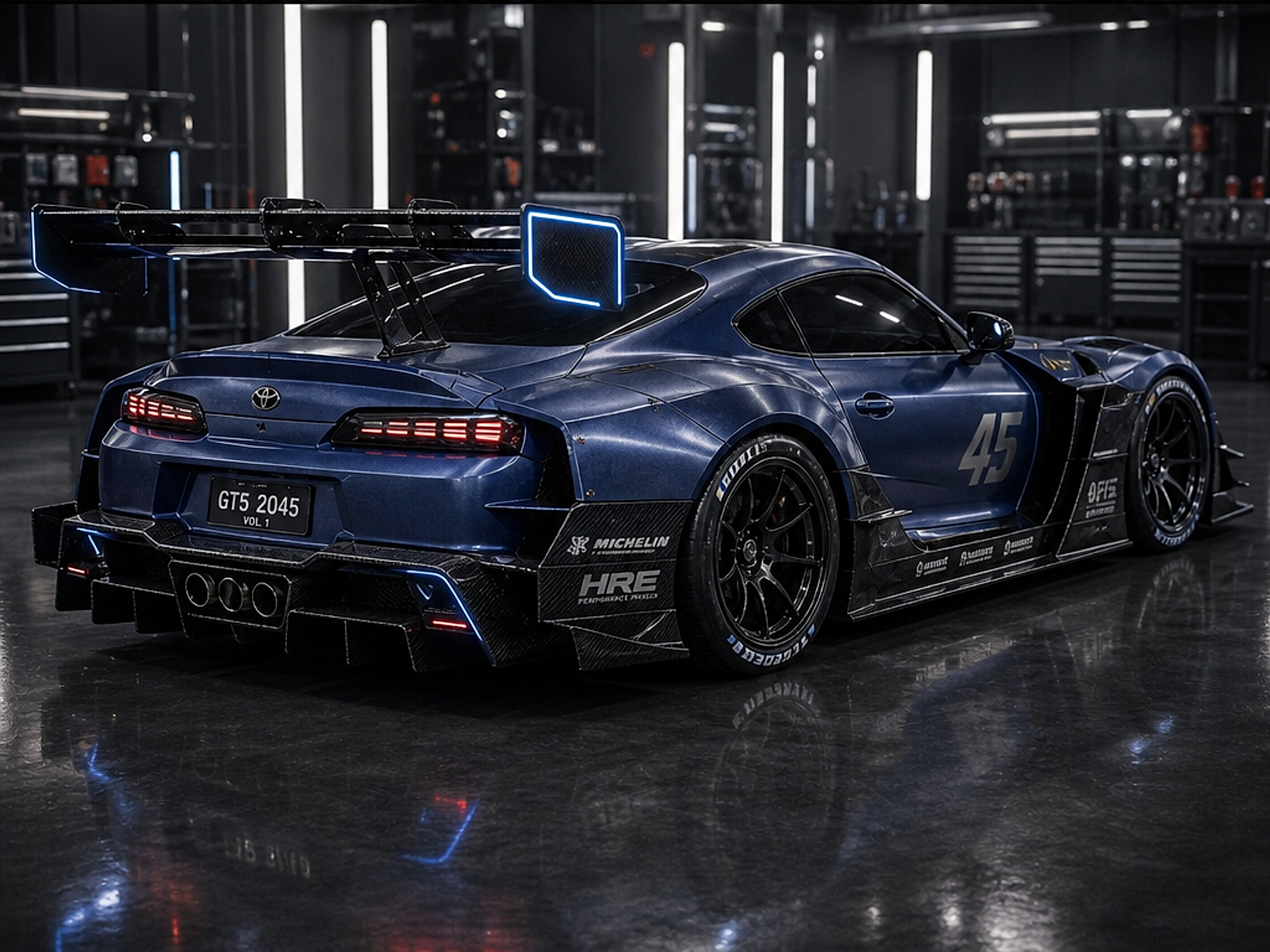
GT5 Apex Predator treats the Mk4 Supra like a homologation shell for a modern prototype program—roofline and greenhouse intact, everything below the beltline re-authored for downforce, cooling, and tire. The body grows with hard-edged, chamfered arches and deep aero shelves that look sculptural in the paddock but read like airflow management at speed: controlled separation, clean extraction, and room for real slick.
Underneath the drama is believable race math: wider track, double-wishbone geometry, a flat floor that actually works, and an aero map built around active surfaces rather than bolt-on theatrics. It’s the kind of Supra that doesn’t “pay tribute” to GT racing—it shows up to qualify, manage temps, and live on brake traces.
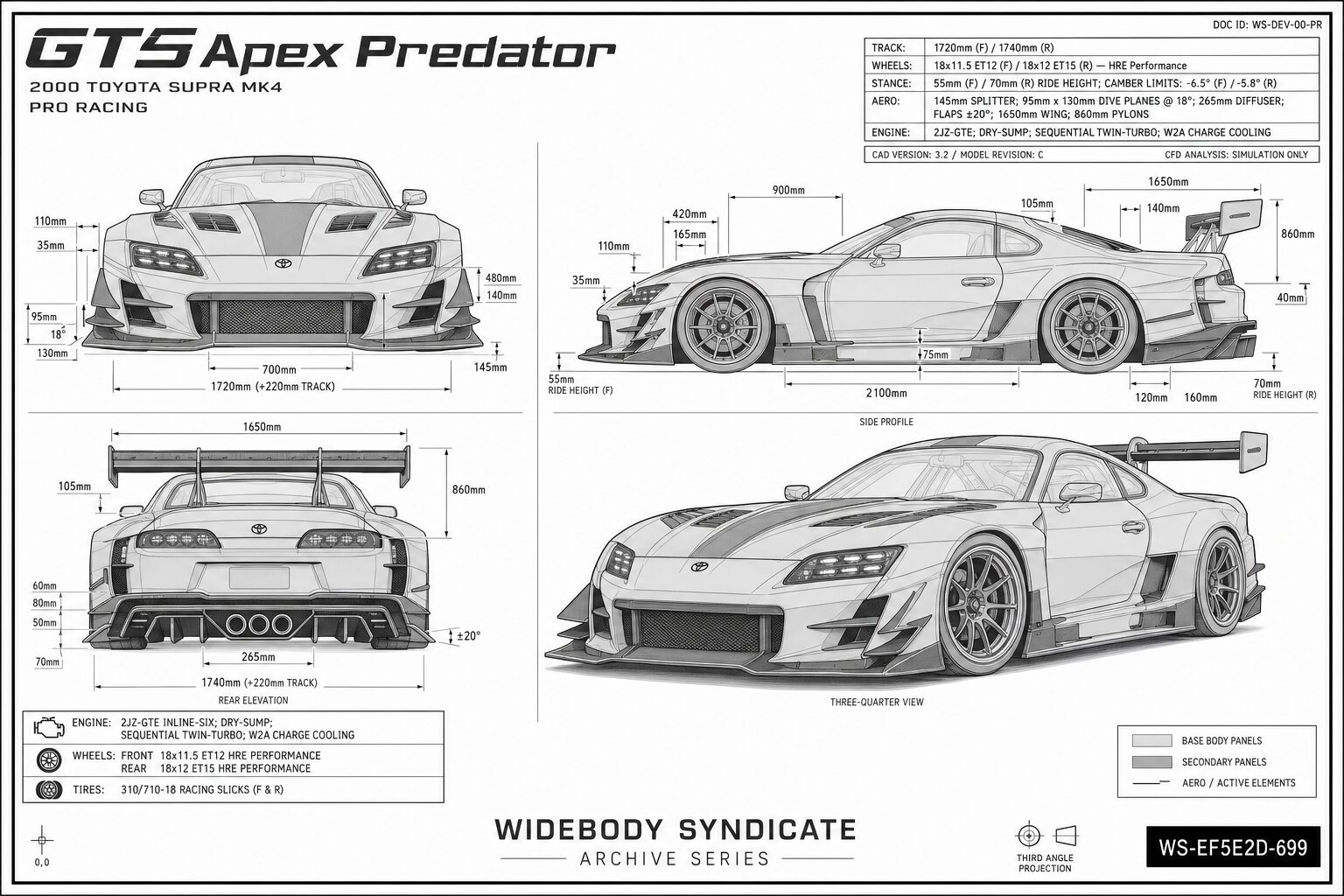 Inspect drawing ↗Open blueprint study →
 Inspect poster ↗
Fictional engineering concept
2000 Toyota Supra Mk4
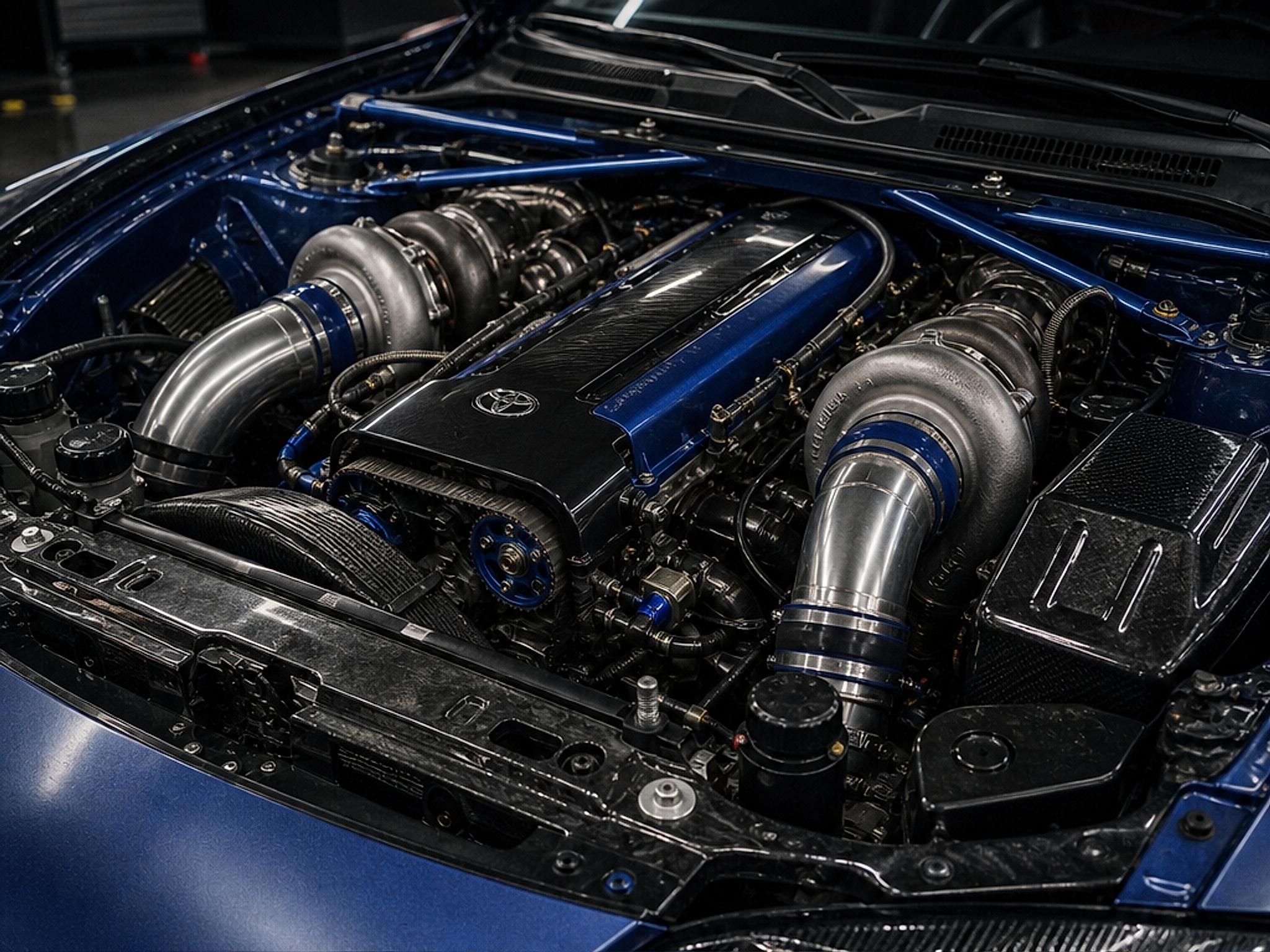
2JZ-GTE retained with dry-sump lubrication for sustained lateral load and lower engine mounting
Sequential twin-turbo layout with water-to-air charge cooling sized for repeatable stint power
Front cooling module with ducted radiator and twin charge-cooler exchangers plus active intake flaps
Track-focused calibration prioritizing torque control, thermal stability, and drivability over peak dyno numbers
Multi-tier carbon splitter protruding 145mm with retractable dive planes for corner/straight balance
Flat floor with side aero shelf integration to seal and feed the underbody
Triple-channel rear diffuser with electro-mechanical flaps (±20°) for dynamic downforce modulation
Dual-element swan-neck rear wing (1650mm span) with adjustable endplates and telemetry-linked lighting
2000 Toyota Supra Mk4
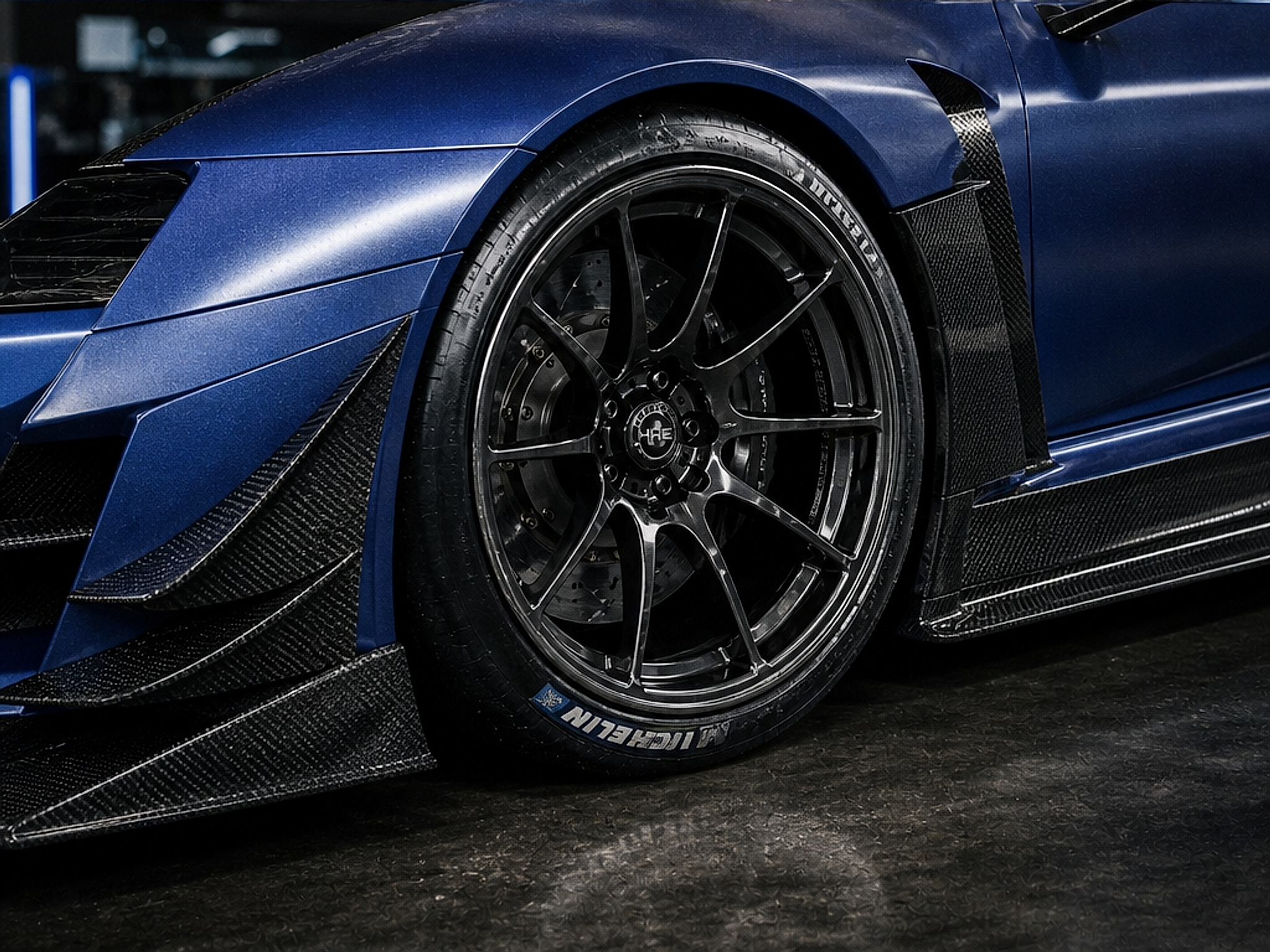
Front: 18x11.5 HRE forged (ET12) with 310/710-18 Michelin slicks
Rear: 18x12 HRE forged (ET15) with 310/710-18 Michelin slicks
Ventilated spoke architecture to support brake cooling and reduce wheelhouse heat soak
Widebody executed as forged-carbon composite with controlled tangency lines to preserve the OEM greenhouse proportions
Wheelhouse liners and brake ducts modeled as functional aero surfaces to manage extraction and reduce lift
Active aero hardware packaged for serviceability: modular actuators, quick-access panels, and replaceable edge elements
Suspension pickup reinforcement and subframe work to support widened track and double-wishbone conversion
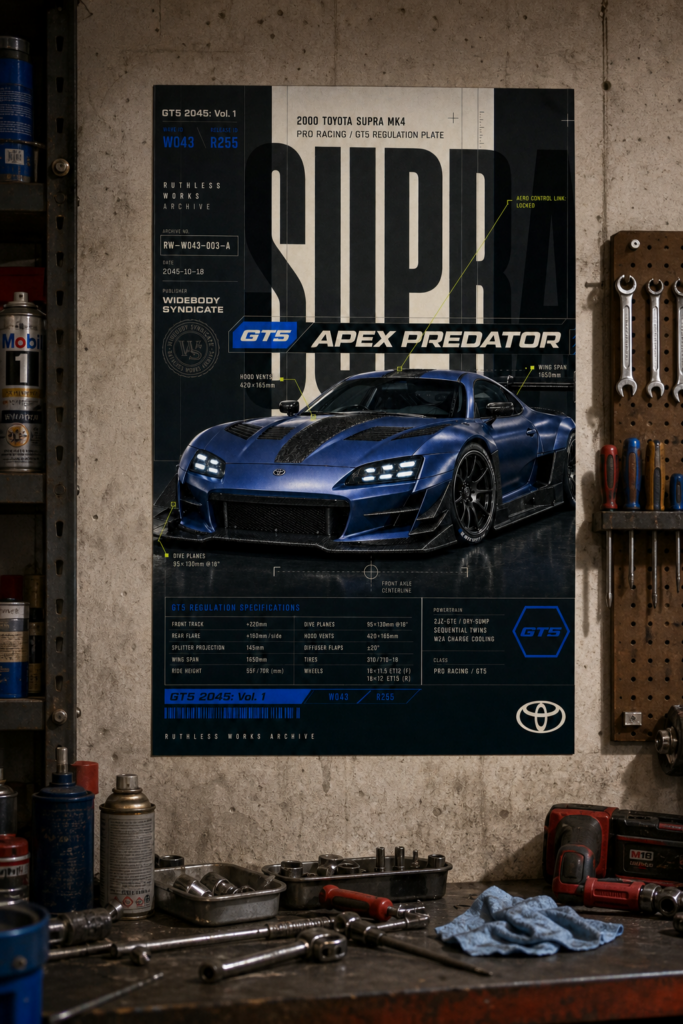
Choose an available edition, then select its size and finish.
Continue this wave
1956 Mercury Montclair
Different origins. Sacred Cars

1970 Chevrolet Chevelle SS 454
 Continue the exhibitionGT5 2045: Vol. 1In 2045, GT5 is what happens when the world’s biggest racing league stops caring about pedigree and starts caring about lap time.Build 4 of 6↗