

R226
Wind Sovereign Initiative
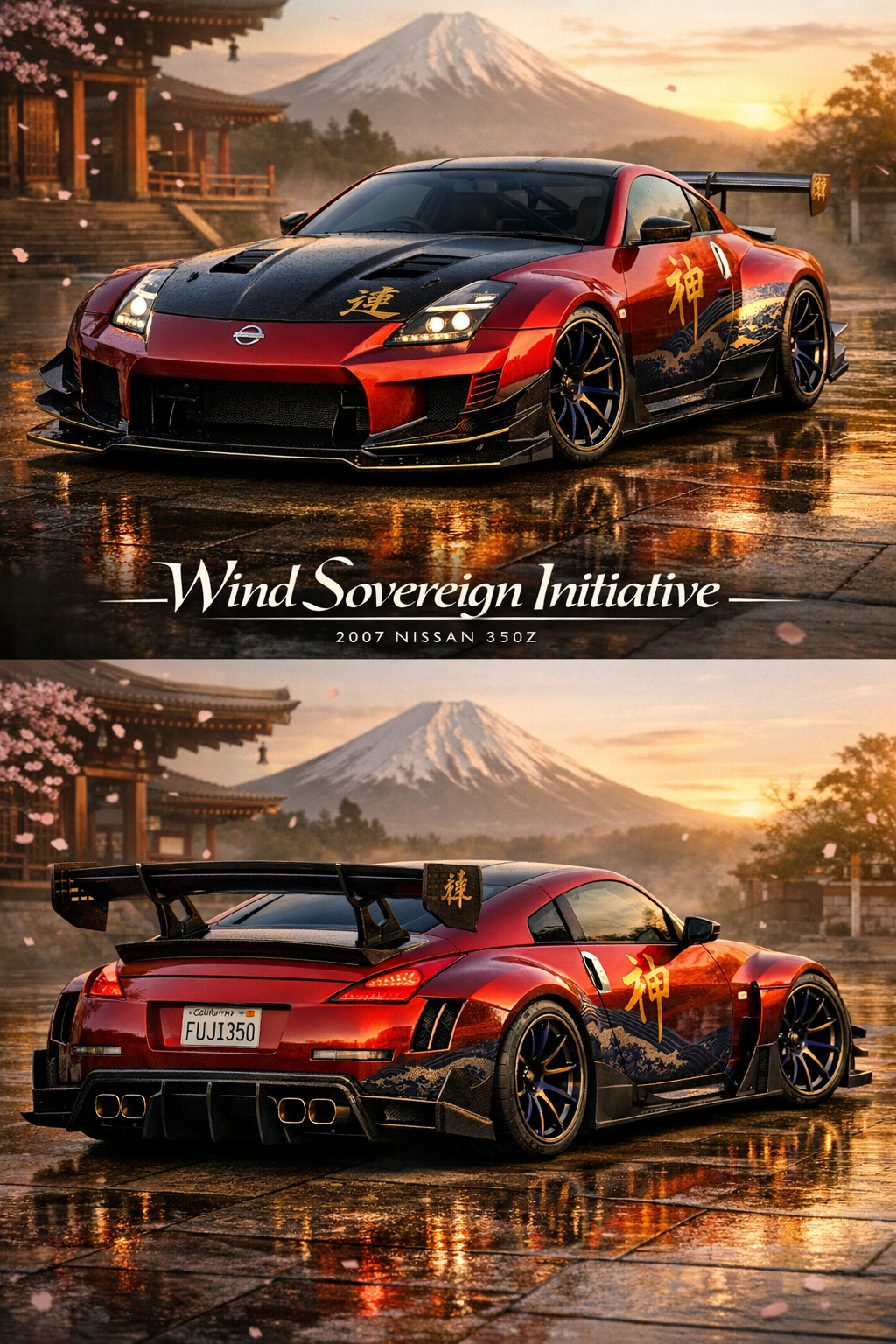
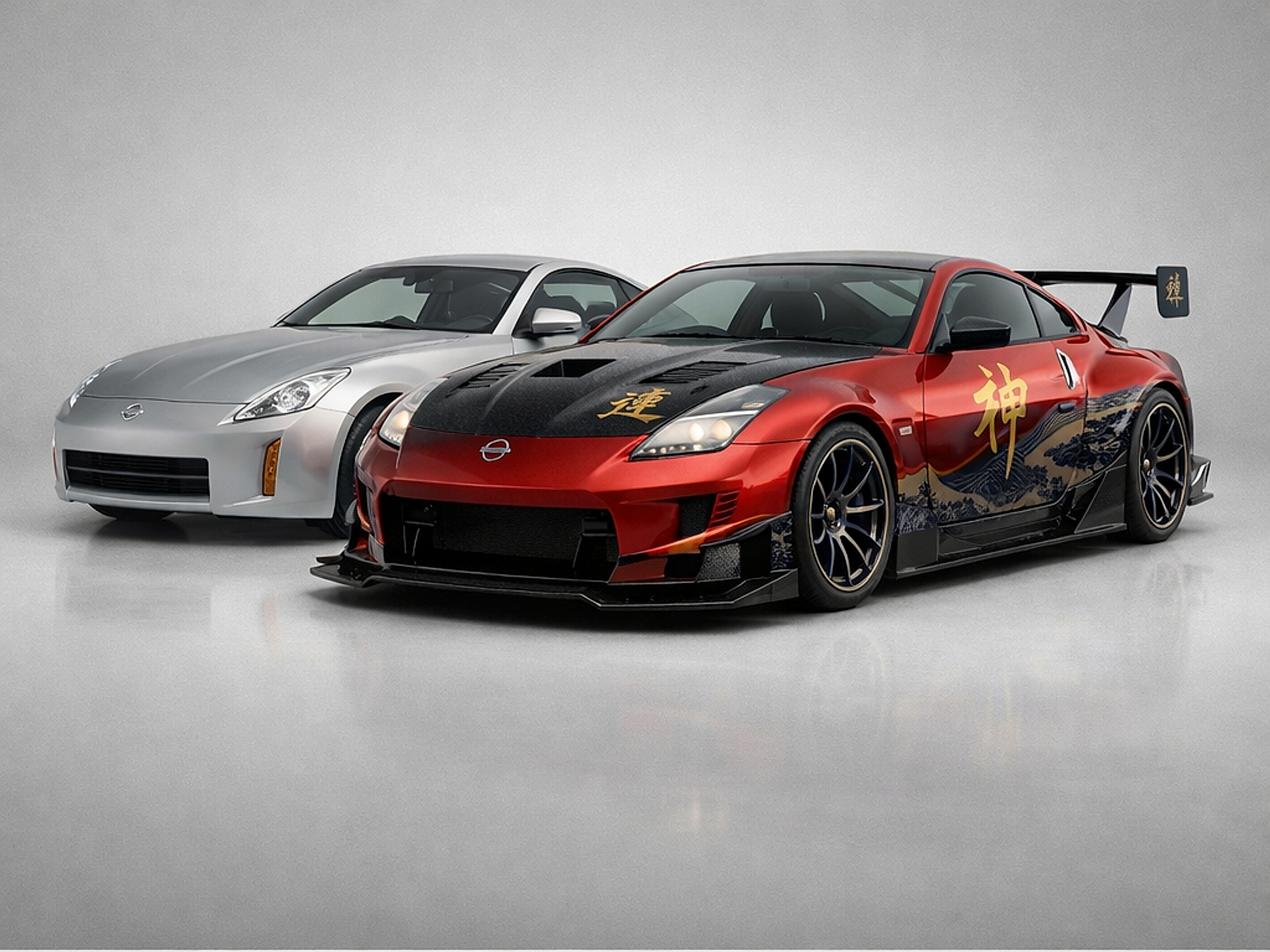
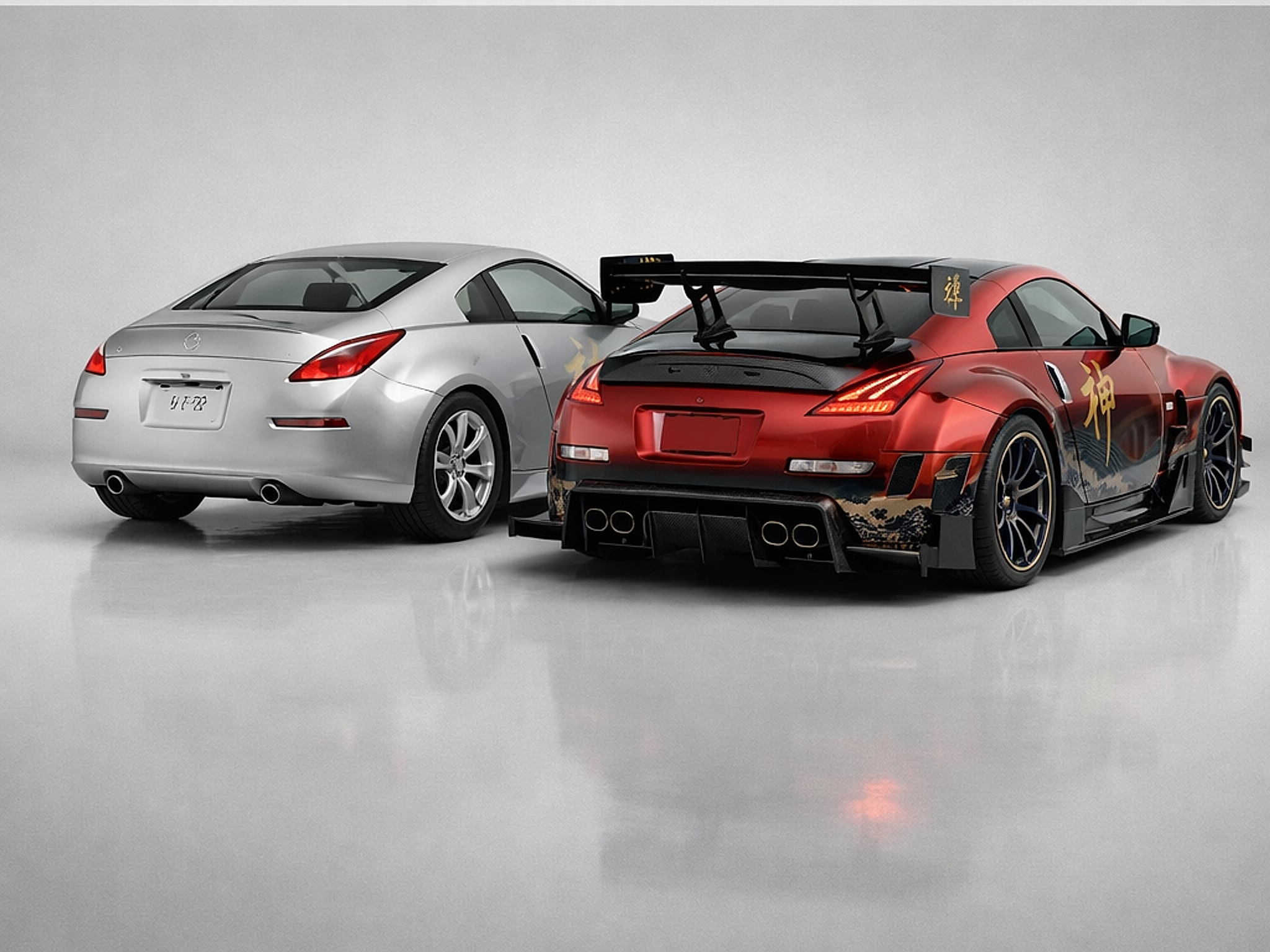
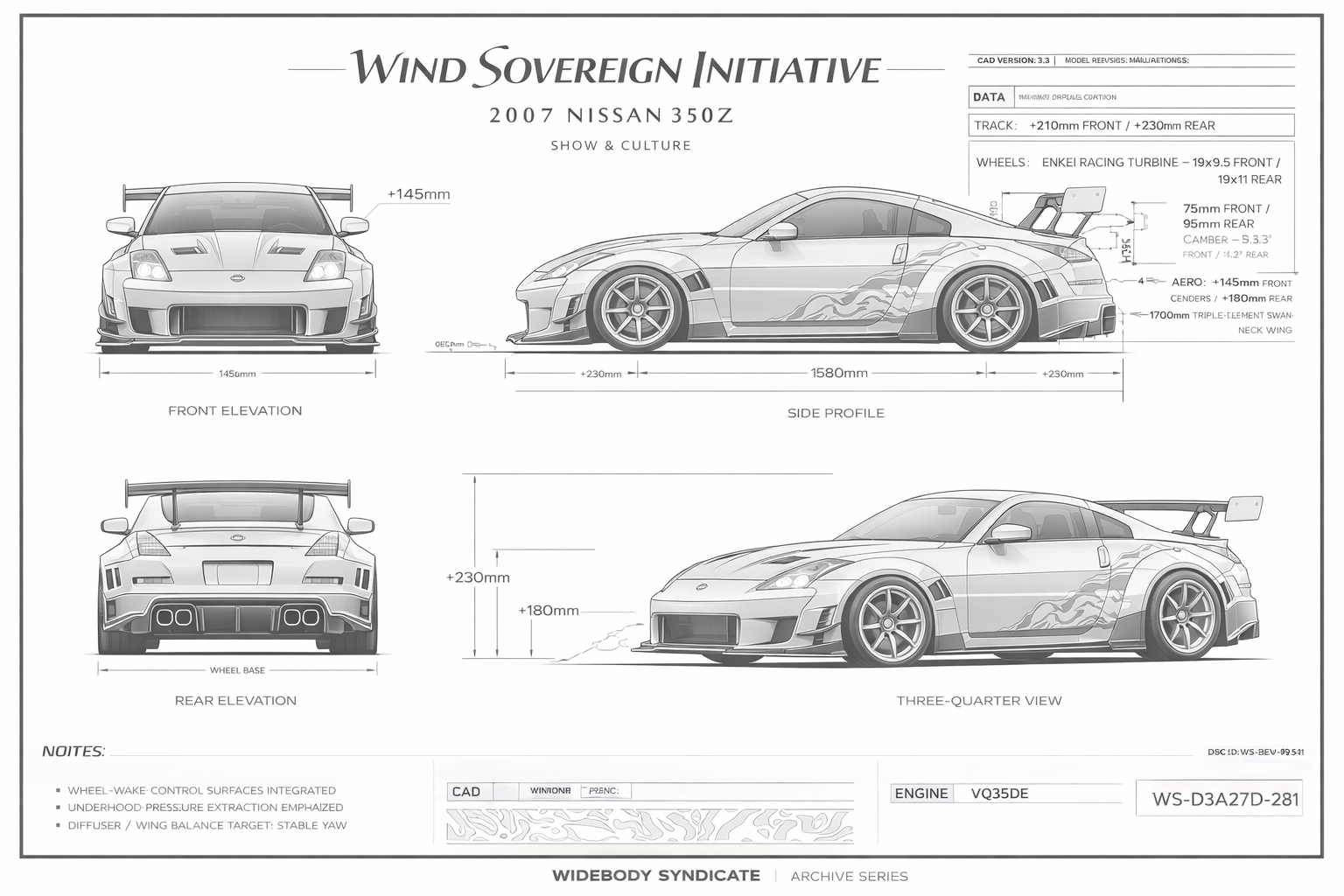
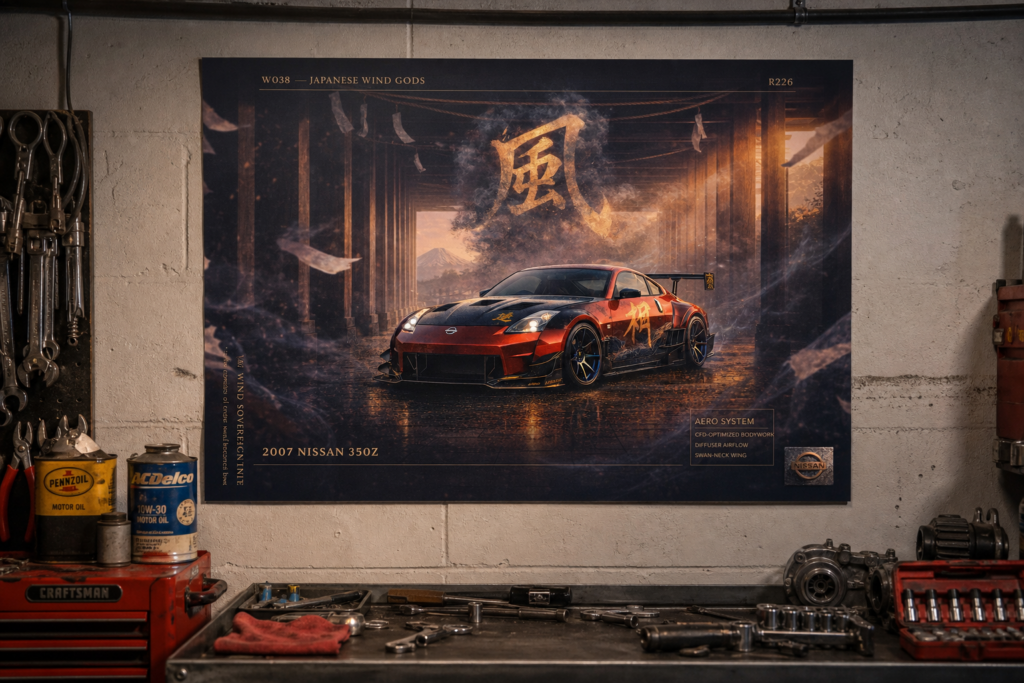
Wind Sovereign Initiative treats the ’07 350Z like a modern sacred object—kept instantly recognizable in roofline and glass, then re-cut everywhere else into a full aero study. The widebody isn’t “style first”; it’s shaped around wheel-wake control, brake cooling, and pressure management, with 145mm front and 180mm rear growth built to support a true GT-style track width and tire.
Up front, vortex channels and stacked splitter planes set the tone: airflow is separated, redirected, and bled where it matters. Out back, a long diffuser with tall strakes and an elevated swan-neck triple element wing turn the hatch area into a working pressure device. The ukiyo-e wave graphics and kanji aren’t a costume—they’re laid across carbon surfaces that look engineered, not decorated.
Release Image Studies
Image studies from every angle.
Comparison Shots
Blueprint / Collector Archive
Engineering Artifacts
The technical study and collectible interpretation of one build, preserved together.
A presentation-grade collector artifact created for this release and preserved as part of the Widebody Syndicate archive.
Selected archive goods are available for collectors.
Technical Dossier
Platform
2007 Nissan 350Z
The 2007 Nissan 350Z is a celebrated icon of the mid-2000s sports car scene, built on Nissan’s venerable Z platform known for its balanced rear-wheel-drive layout and precise handling. With a naturally aspirated V6 under the hood and a chiseled yet muscular silhouette, the 350Z perfectly blends raw driver engagement with modern engineering, making it a favorite canvas for enthusiasts and tuners alike. Its robust chassis and well-tuned suspension serve as the ideal foundation for performance upgrades and custom fabrication, embodying a true driver’s car ethos that still reverberates through automotive culture today.
Aero Package
Multi-tier front splitter (130mm primary plane with secondary lips) with corner fin management for wheel wake
Fender vortex generator channels and chamfered aero lips to stabilize front wheelhouse pressure
Deep-channel side skirts with integrated hot-air extraction ahead of the rear arches
Six-strake rear diffuser (260mm extension) with tall endplates for expansion control
1700mm triple-element swan-neck wing with vented endplates for balance and adjustability
Chassis
This is drawn like an aero demo car that could survive real sessions: low ride height to help seal the floor, deliberate rake, and a rear package that looks balanced rather than oversized. The combination of wheel-wake management, skirt extraction, and a long diffuser suggests stability in fast corners and composure under braking.
Wheels & Tires
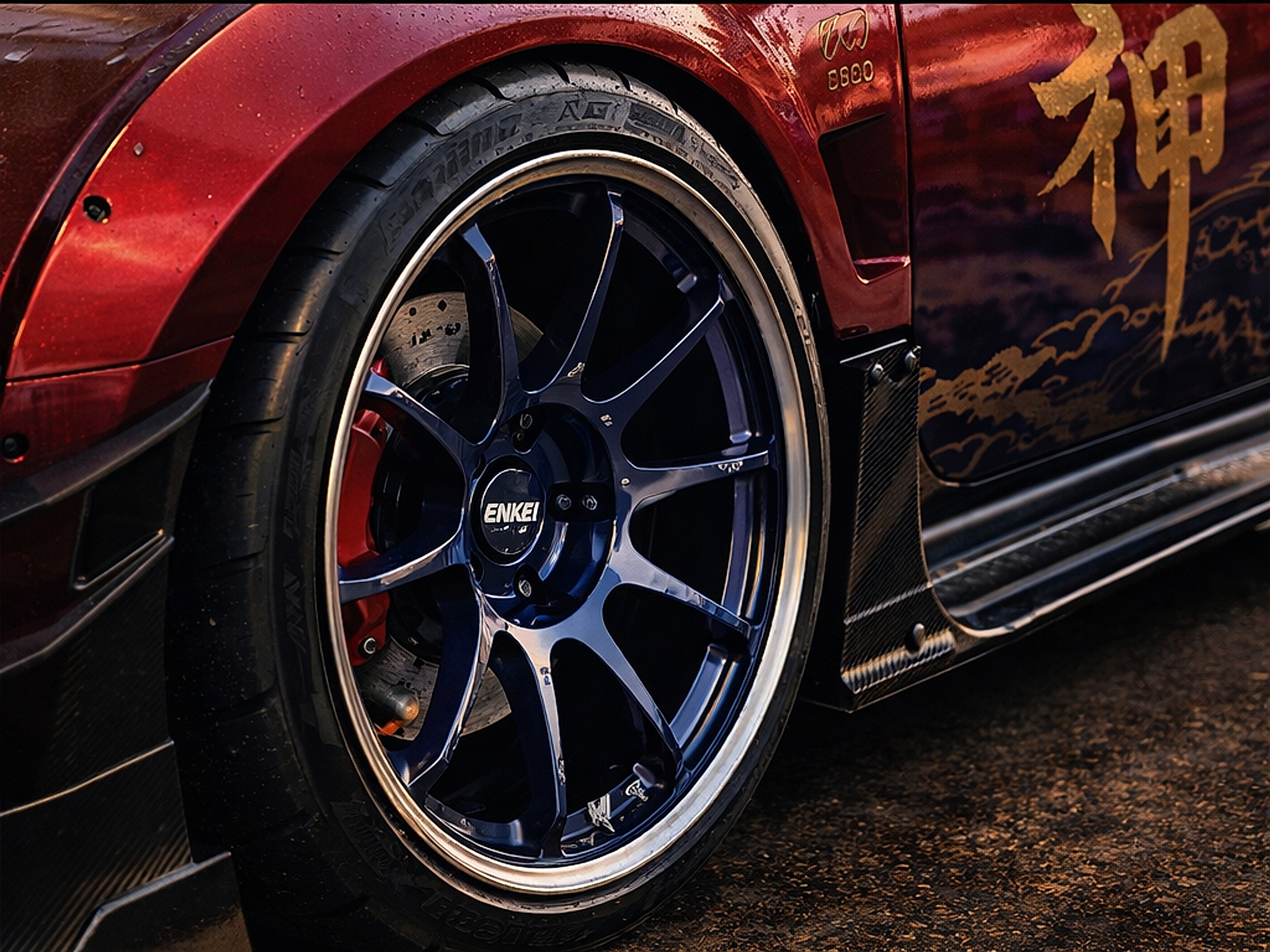
Enkei Racing forged magnesium
turbine-spoke: 19x9.5 front / 19x11 rear
Yokohama Advan A048 semi-slicks: 275/35ZR19 front / 315/30ZR19 rear
Wide track target: +210mm front / +230mm rear to match body and tire envelope
Clearance built around 320-section rear capability with squared rear-lip architecture
Powertrain
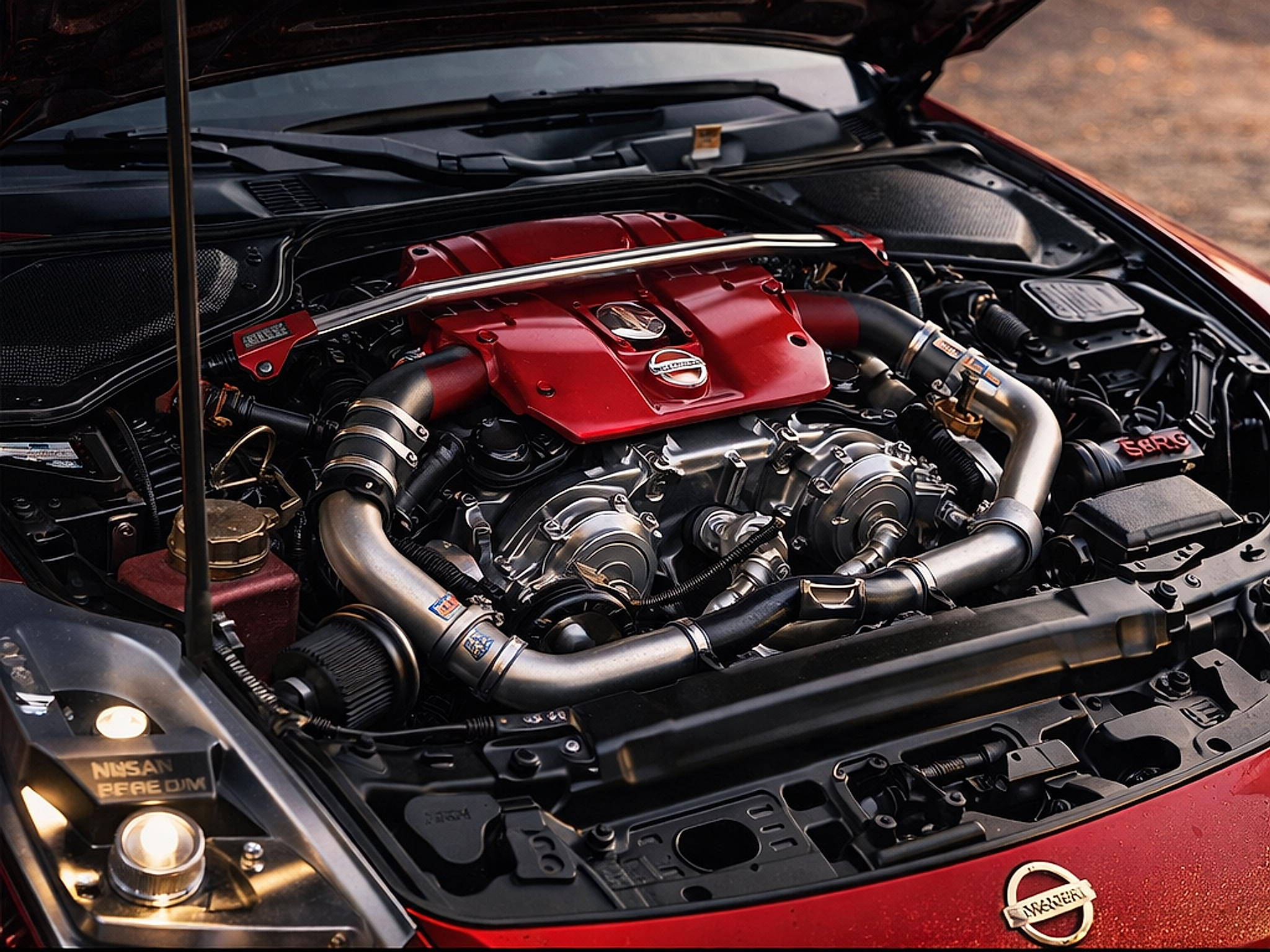
Retained VQ35DE with airflow-led cooling upgrades via hood extraction and ducted side feed
Thermal management prioritized for sustained laps: brake ducting
wheelhouse evacuation
and radiator/intercooler feed planning
Free-flow exhaust tuned for packaging: quad outlets integrated into diffuser without disrupting strake paths
Calibration and reliability bias: consistent power delivery over peak numbers to suit aero load and tire
Fabrication Notes
Carbon panel strategy: forged carbon hood and diffuser
composite widebody with reinforced mounting flanges for track serviceability
Fender channels and ridges modeled to be mold-friendly while preserving sharp break lines and consistent radii
Wing pylons recessed into hatch structure with load-spreading plates to manage downforce without cracking the skin
Mesh and louver details designed as removable inserts for cleaning
inspection
and event-to-event tuning
Design Philosophy
Wind Sovereign Initiative treats the ’07 350Z like a modern sacred object—kept instantly recognizable in roofline and glass, then re-cut everywhere else into a full aero study. The widebody isn’t “style first”; it’s shaped around wheel-wake control, brake cooling, and pressure management, with 145mm front and 180mm rear growth built to support a true GT-style track width and tire.
Up front, vortex channels and stacked splitter planes set the tone: airflow is separated, redirected, and bled where it matters. Out back, a long diffuser with tall strakes and an elevated swan-neck triple element wing turn the hatch area into a working pressure device. The ukiyo-e wave graphics and kanji aren’t a costume—they’re laid across carbon surfaces that look engineered, not decorated.
▧Platform+
2007 Nissan 350Z
The 2007 Nissan 350Z is a celebrated icon of the mid-2000s sports car scene, built on Nissan’s venerable Z platform known for its balanced rear-wheel-drive layout and precise handling. With a naturally aspirated V6 under the hood and a chiseled yet muscular silhouette, the 350Z perfectly blends raw driver engagement with modern engineering, making it a favorite canvas for enthusiasts and tuners alike. Its robust chassis and well-tuned suspension serve as the ideal foundation for performance upgrades and custom fabrication, embodying a true driver’s car ethos that still reverberates through automotive culture today.
⌘Aero Package+
Multi-tier front splitter (130mm primary plane with secondary lips) with corner fin management for wheel wake
Fender vortex generator channels and chamfered aero lips to stabilize front wheelhouse pressure
Deep-channel side skirts with integrated hot-air extraction ahead of the rear arches
Six-strake rear diffuser (260mm extension) with tall endplates for expansion control
1700mm triple-element swan-neck wing with vented endplates for balance and adjustability
⟡Chassis+
This is drawn like an aero demo car that could survive real sessions: low ride height to help seal the floor, deliberate rake, and a rear package that looks balanced rather than oversized. The combination of wheel-wake management, skirt extraction, and a long diffuser suggests stability in fast corners and composure under braking.
◎Wheels & Tires+
Enkei Racing forged magnesium
turbine-spoke: 19x9.5 front / 19x11 rear
Yokohama Advan A048 semi-slicks: 275/35ZR19 front / 315/30ZR19 rear
Wide track target: +210mm front / +230mm rear to match body and tire envelope
Clearance built around 320-section rear capability with squared rear-lip architecture
▤Powertrain+
Retained VQ35DE with airflow-led cooling upgrades via hood extraction and ducted side feed
Thermal management prioritized for sustained laps: brake ducting
wheelhouse evacuation
and radiator/intercooler feed planning
Free-flow exhaust tuned for packaging: quad outlets integrated into diffuser without disrupting strake paths
Calibration and reliability bias: consistent power delivery over peak numbers to suit aero load and tire
△Fabrication Notes+
Carbon panel strategy: forged carbon hood and diffuser
composite widebody with reinforced mounting flanges for track serviceability
Fender channels and ridges modeled to be mold-friendly while preserving sharp break lines and consistent radii
Wing pylons recessed into hatch structure with load-spreading plates to manage downforce without cracking the skin
Mesh and louver details designed as removable inserts for cleaning
inspection
and event-to-event tuning
×Design Philosophy+
Wind Sovereign Initiative treats the ’07 350Z like a modern sacred object—kept instantly recognizable in roofline and glass, then re-cut everywhere else into a full aero study. The widebody isn’t “style first”; it’s shaped around wheel-wake control, brake cooling, and pressure management, with 145mm front and 180mm rear growth built to support a true GT-style track width and tire.
Up front, vortex channels and stacked splitter planes set the tone: airflow is separated, redirected, and bled where it matters. Out back, a long diffuser with tall strakes and an elevated swan-neck triple element wing turn the hatch area into a working pressure device. The ukiyo-e wave graphics and kanji aren’t a costume—they’re laid across carbon surfaces that look engineered, not decorated.
Part of
Wave 38
Japanese Wind Gods
We just finished a little temple-courtyard science experiment: take the legends, the heroes, and the weirdos of JDM history and run them through a Wind God filter until the bodywork starts speaking in vortices. Same silhouette rules, same recognizable faces, but now every fender is a blade, every vent is a confession, and every swan-neck wing is basically a shrine that also happens to make downforce.
Explore Wave 38 → 6 BuildsKeep Exploring
The archive is always growing. New releases, waves, and blueprints added regularly.