Different origins. Sacred Cars
1970 Chevrolet Chevelle SS 454
6 photos
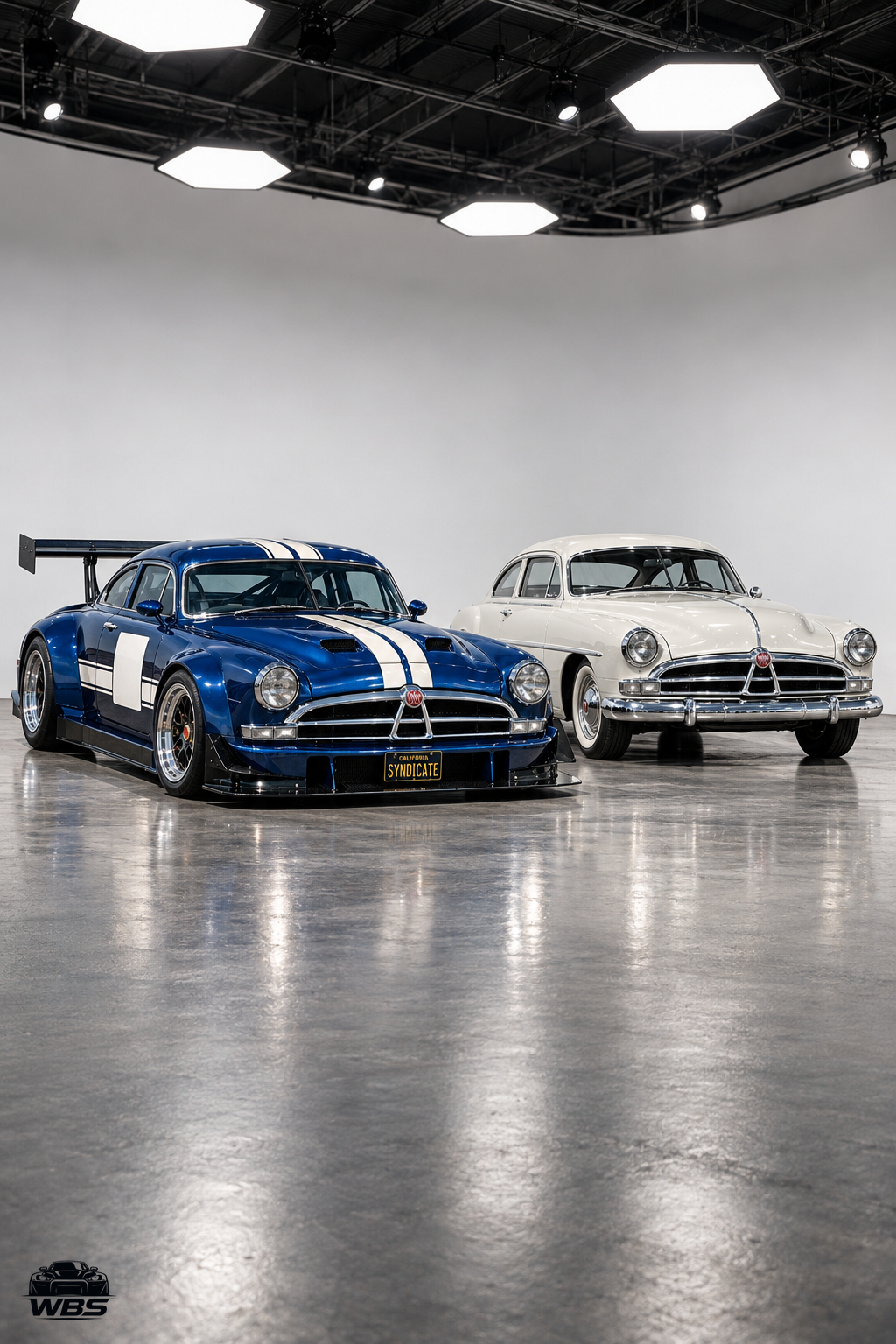
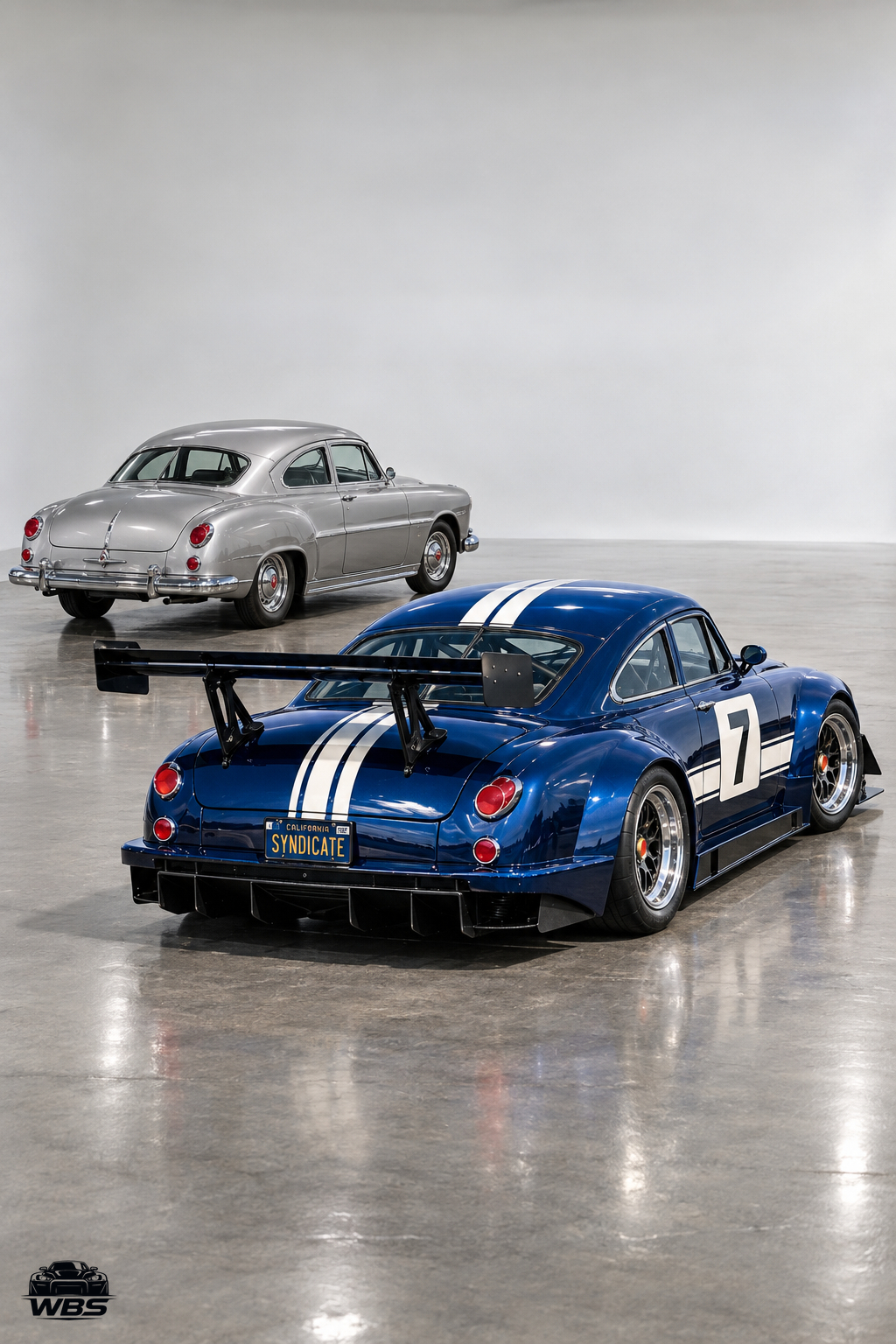
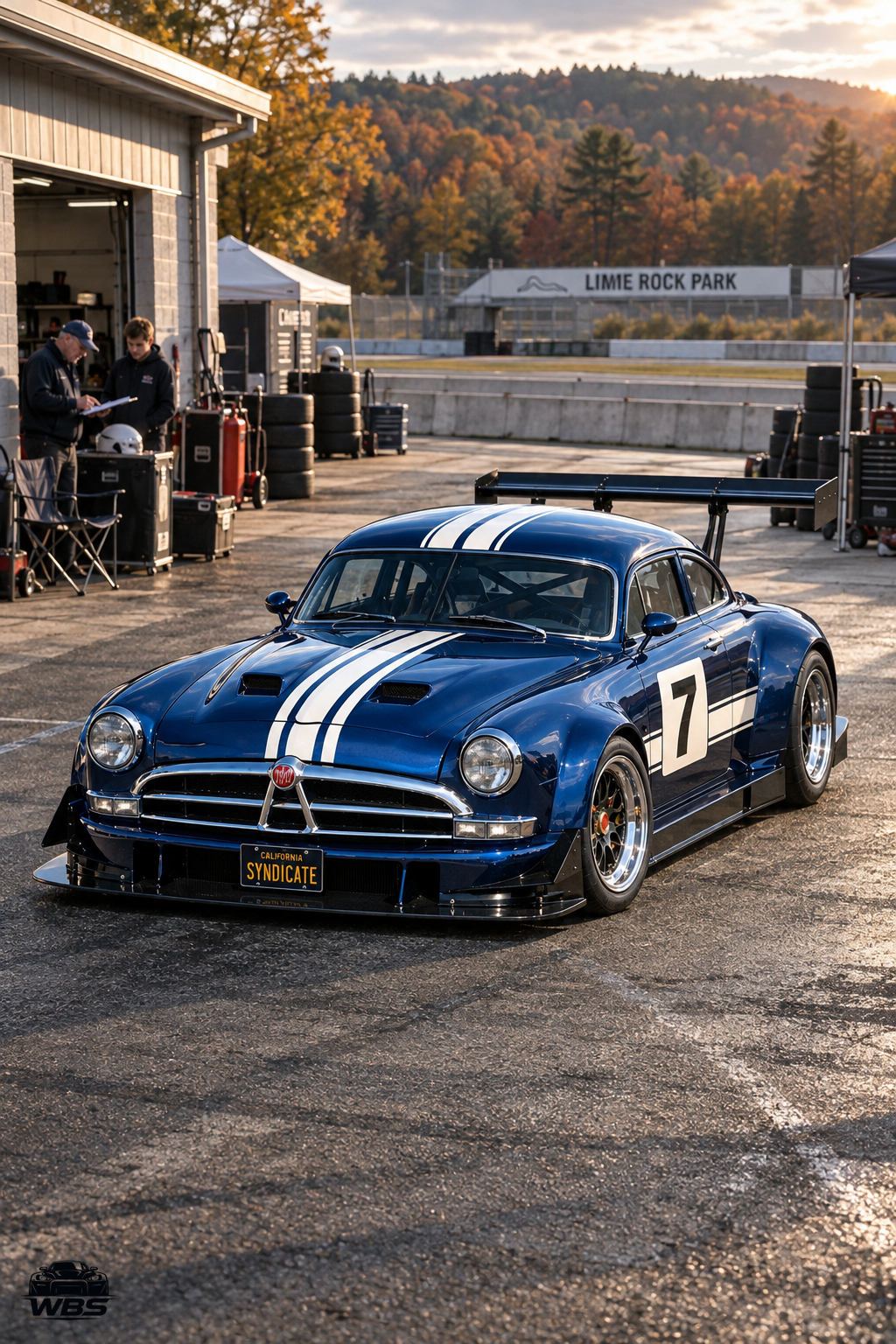
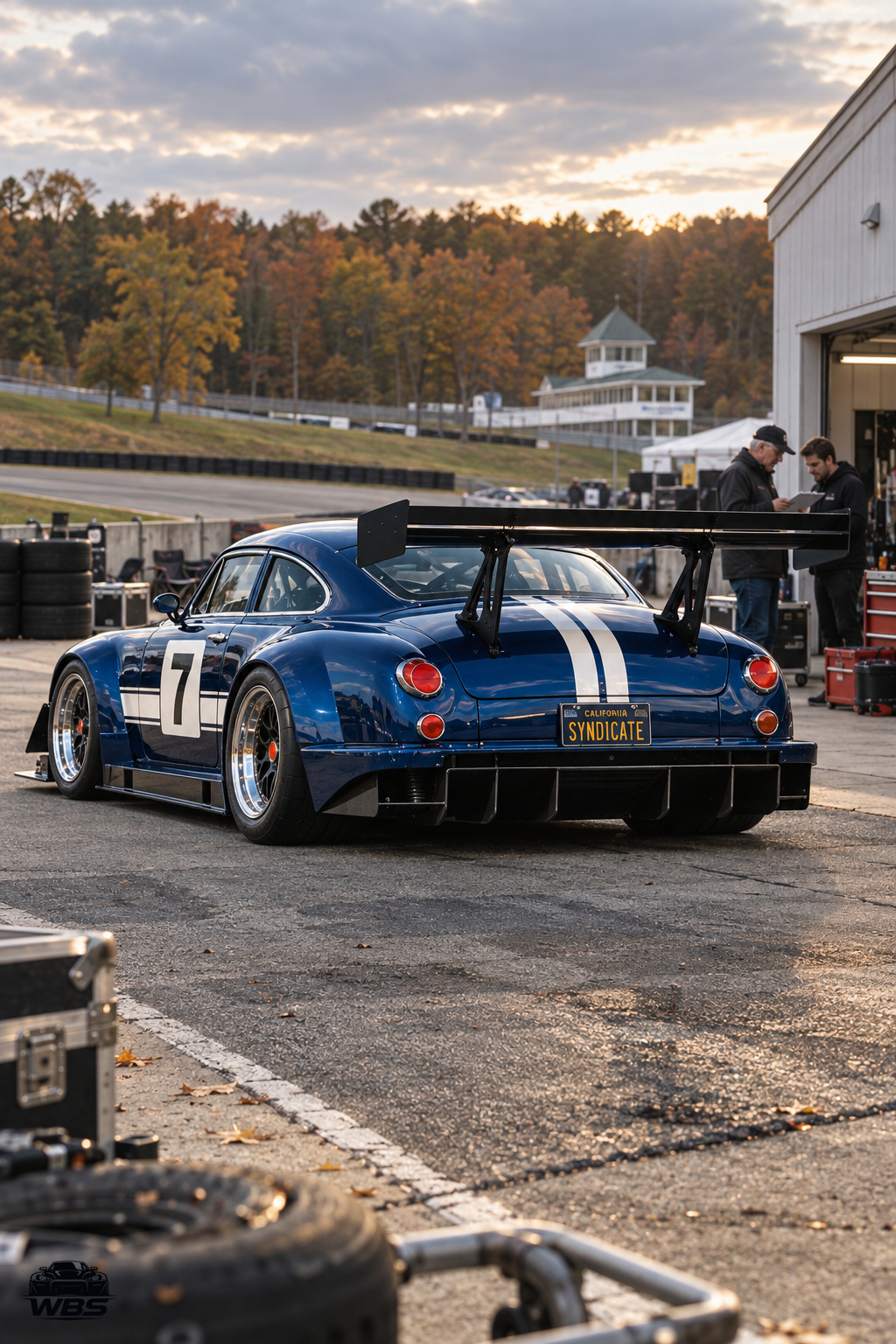
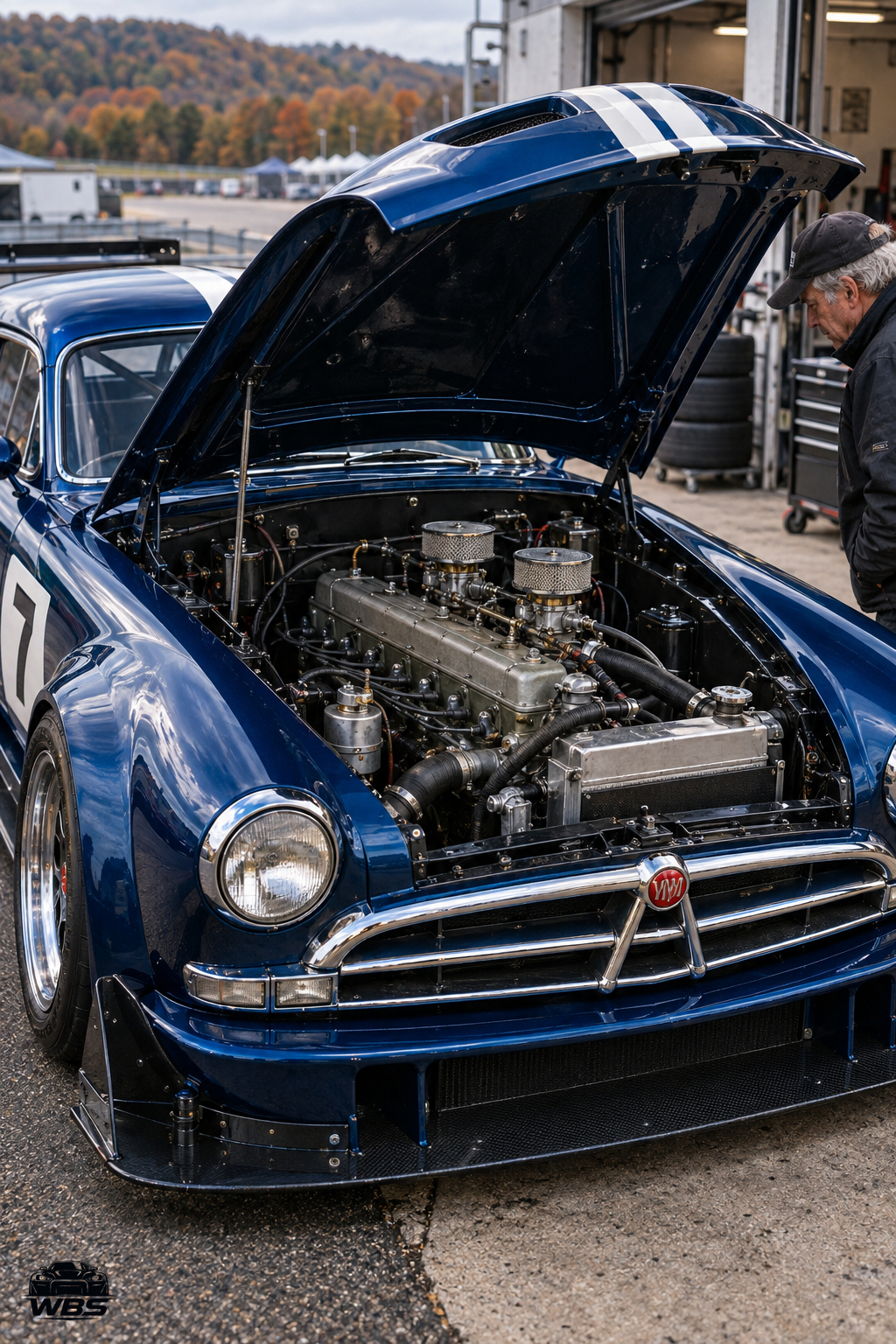
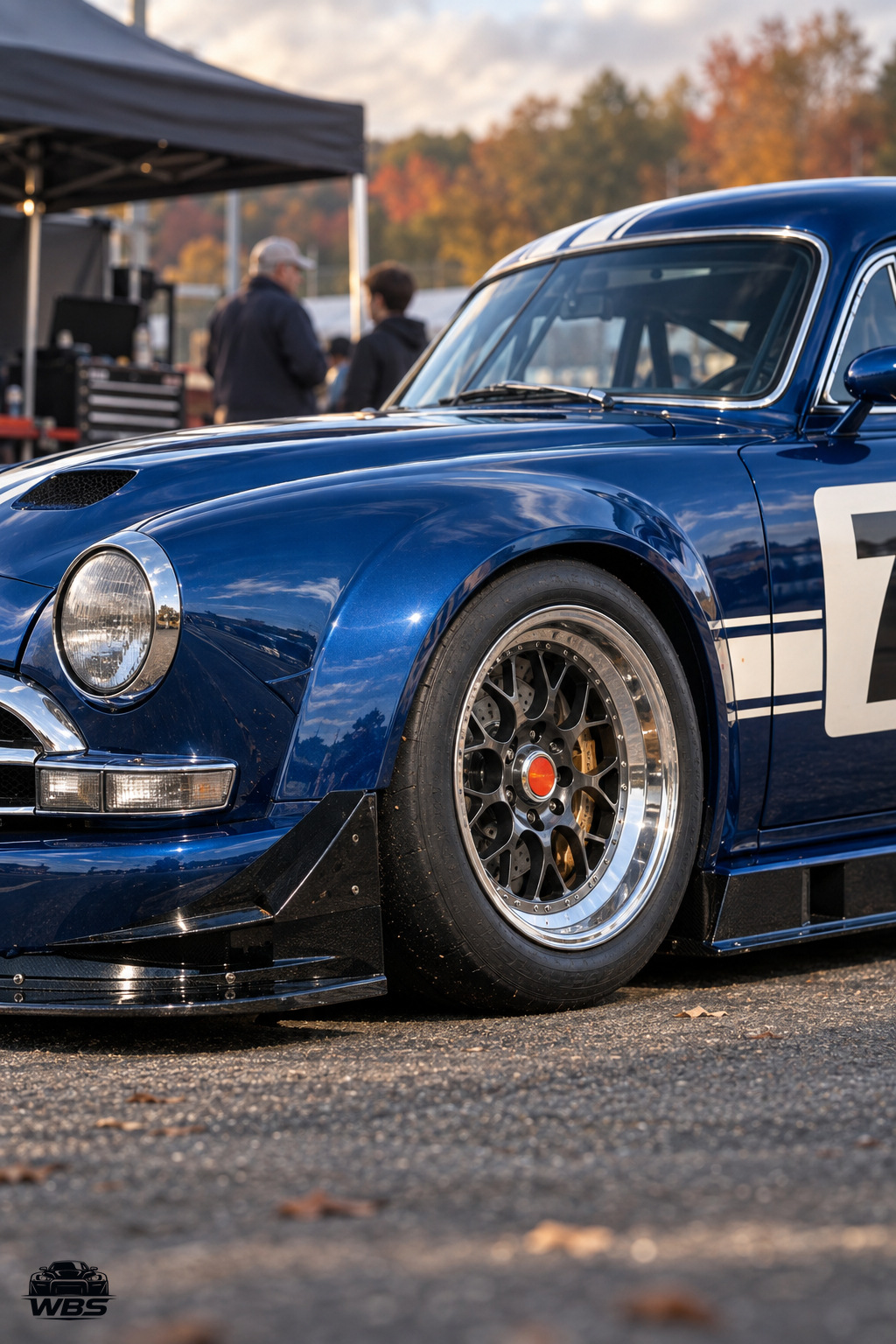
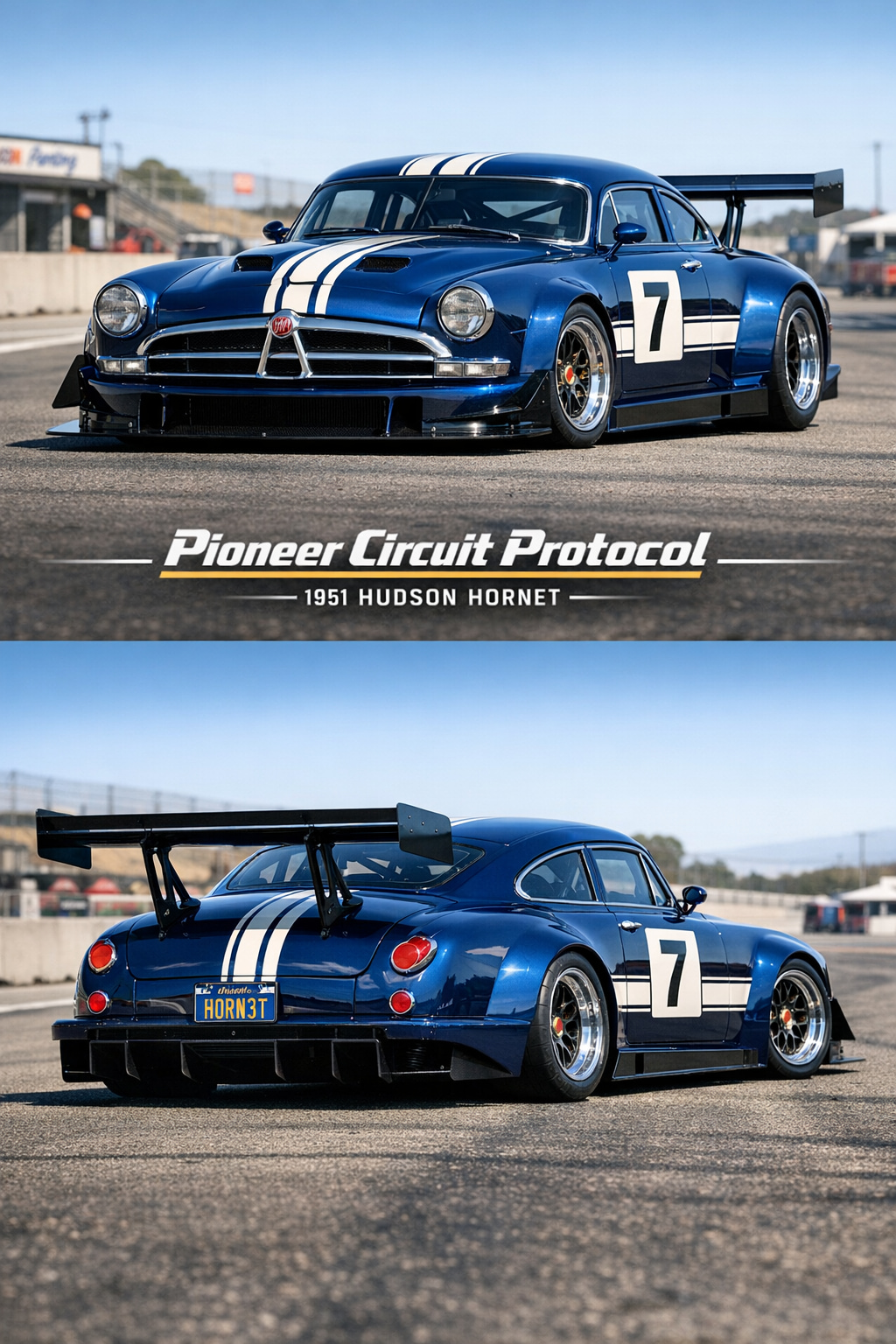
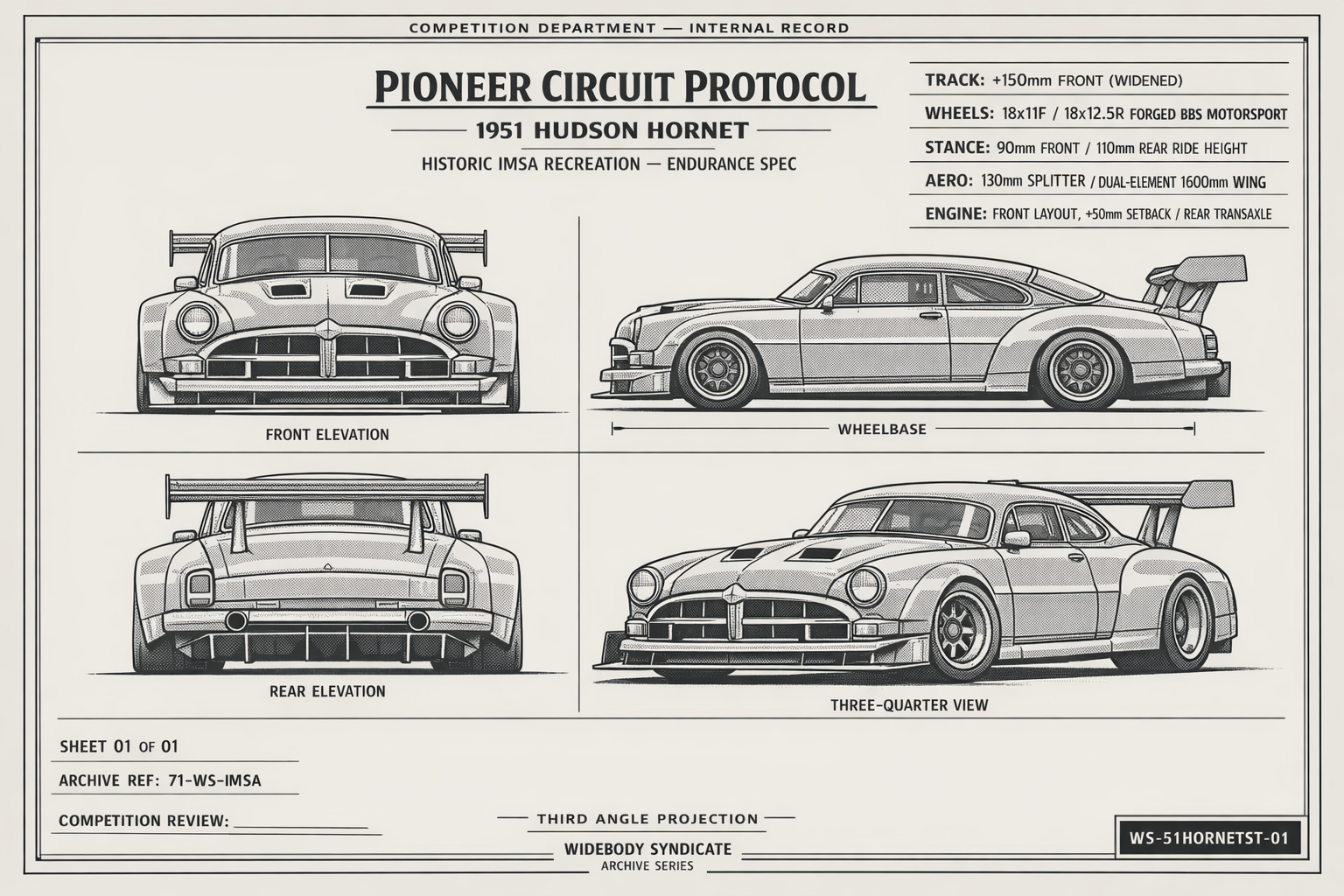
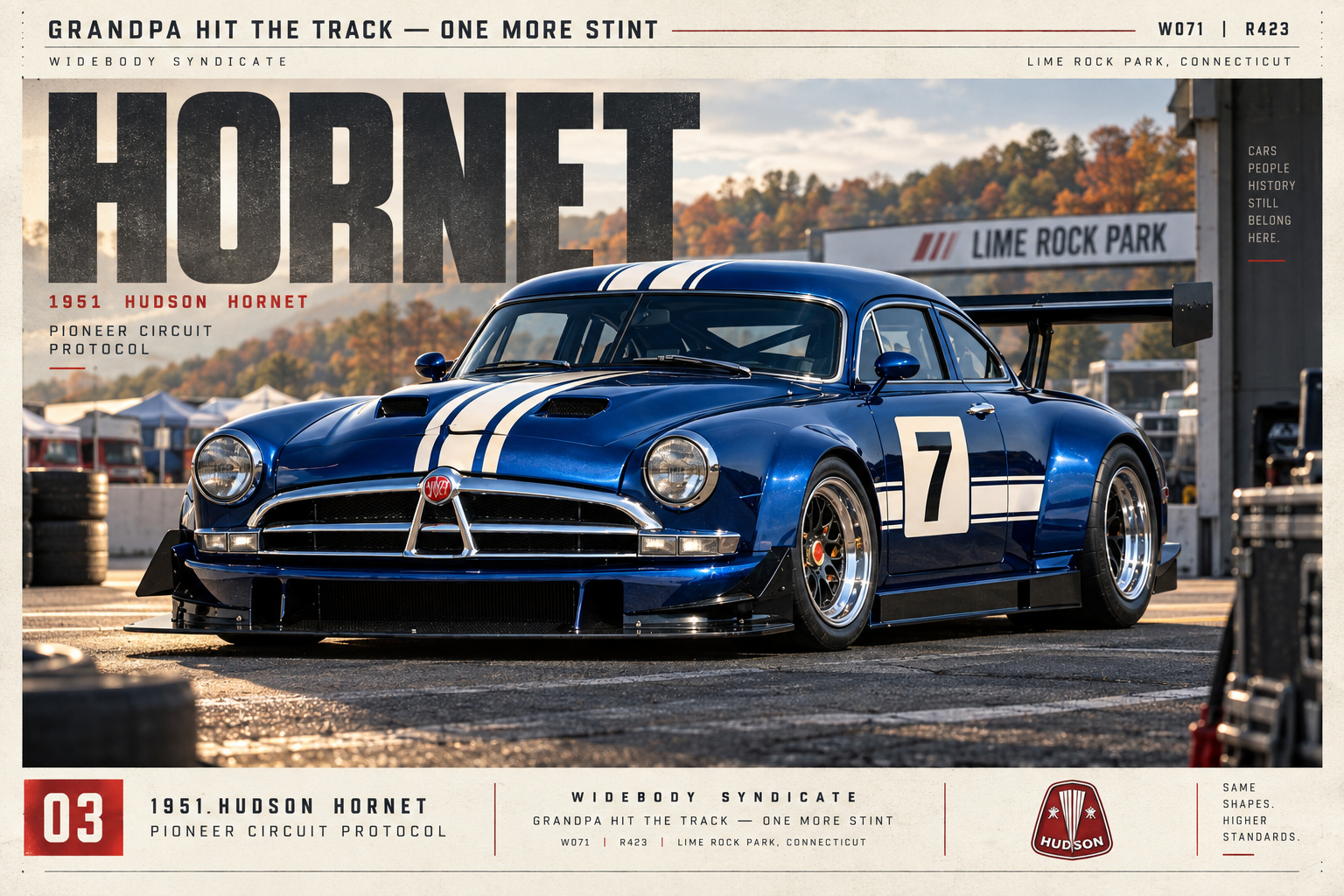
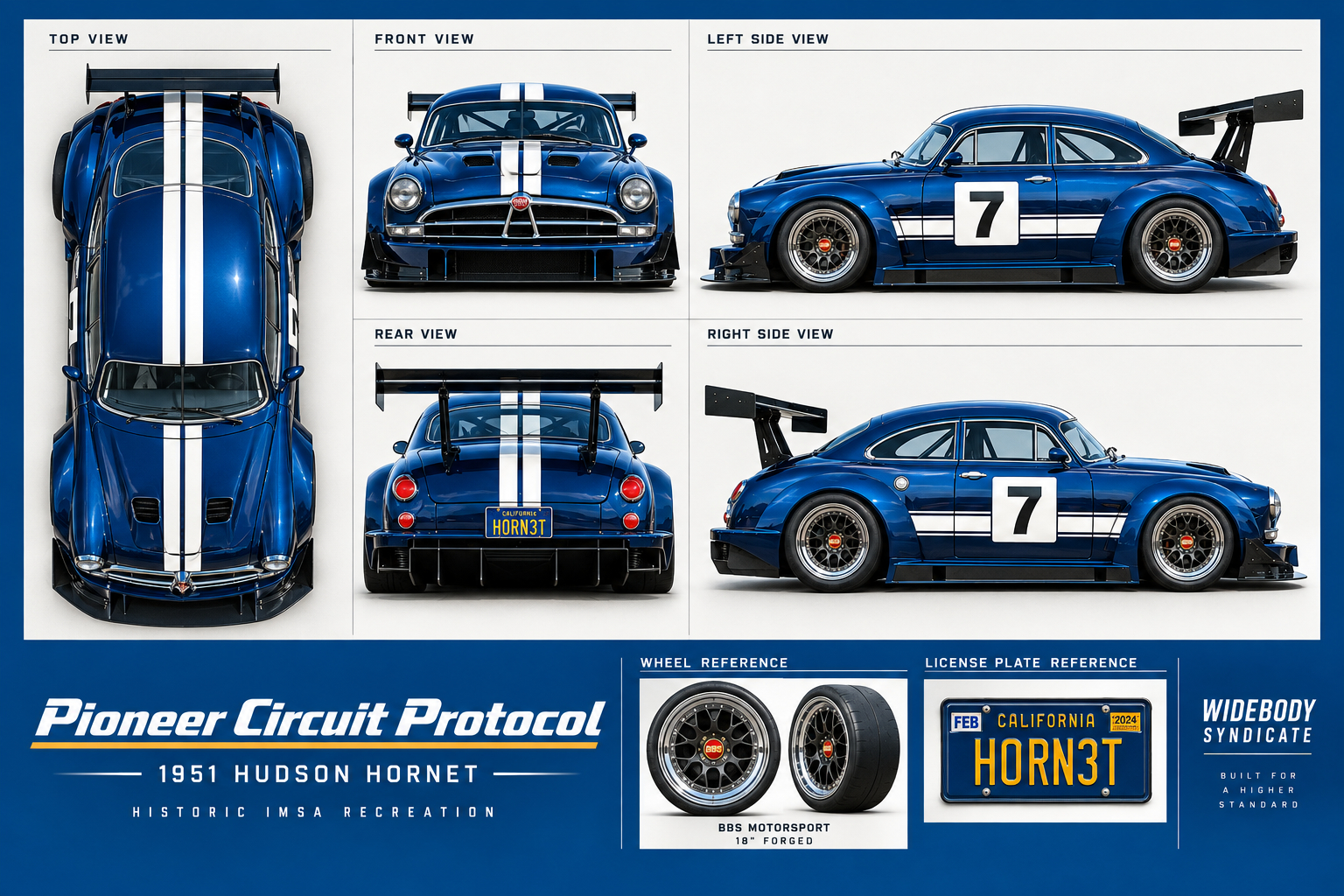
Pioneer Circuit Protocol takes the Hudson Hornet’s low roof, long hood and unmistakable rounded shoulders into a hard-working endurance paddock. Deep blue paint, white stripes and square door numbers keep the presentation clean, while the widened steel body makes room for serious track rubber.
 Inspect drawing ↗Open blueprint study →
 Inspect poster ↗
 Inspect all five angles ↗
Fictional engineering concept
1951 Hudson Hornet
Retain the Hudson 308-cu-in flathead inline-six as the build’s defining powerplant.
Balanced, endurance-oriented rebuild with revised oiling, careful cooling management and twin-carburetor induction.
Set the engine back 50 mm and pair it with a custom rear transaxle conversion for improved balance.
130 mm front splitter with 80 mm vertical dive planes near its outer edges.
Twin hood NACA ducts positioned behind the grille.
Full-width, dual-element rear wing on 700 mm swan-neck supports.
620 mm-wide rear diffuser extending 280 mm below the bumper.
1951 Hudson Hornet
18×11-inch forged BBS Motorsport wheels at the front.
18×12.5-inch forged BBS Motorsport wheels at the rear.
295/35R18 front and 315/30R18 rear slicks, with arch clearance checked through suspension travel.
Form the widened quarters and front fenders around the tire envelope, retaining the Hornet’s original roof and greenhouse.
Build sealed duct paths from the hood and fender inlets to the cooling cores, with exits routed clear of the tires.
Reinforce splitter, wing mounts and rear deck structure for sustained track loads.
Verify transaxle packaging, driveshaft alignment and service access before final bodywork.
Different origins. Sacred Cars
1970 Chevrolet Chevelle SS 454