R027
Hillclimb Beast
1978 Chevrolet Caprice
R022
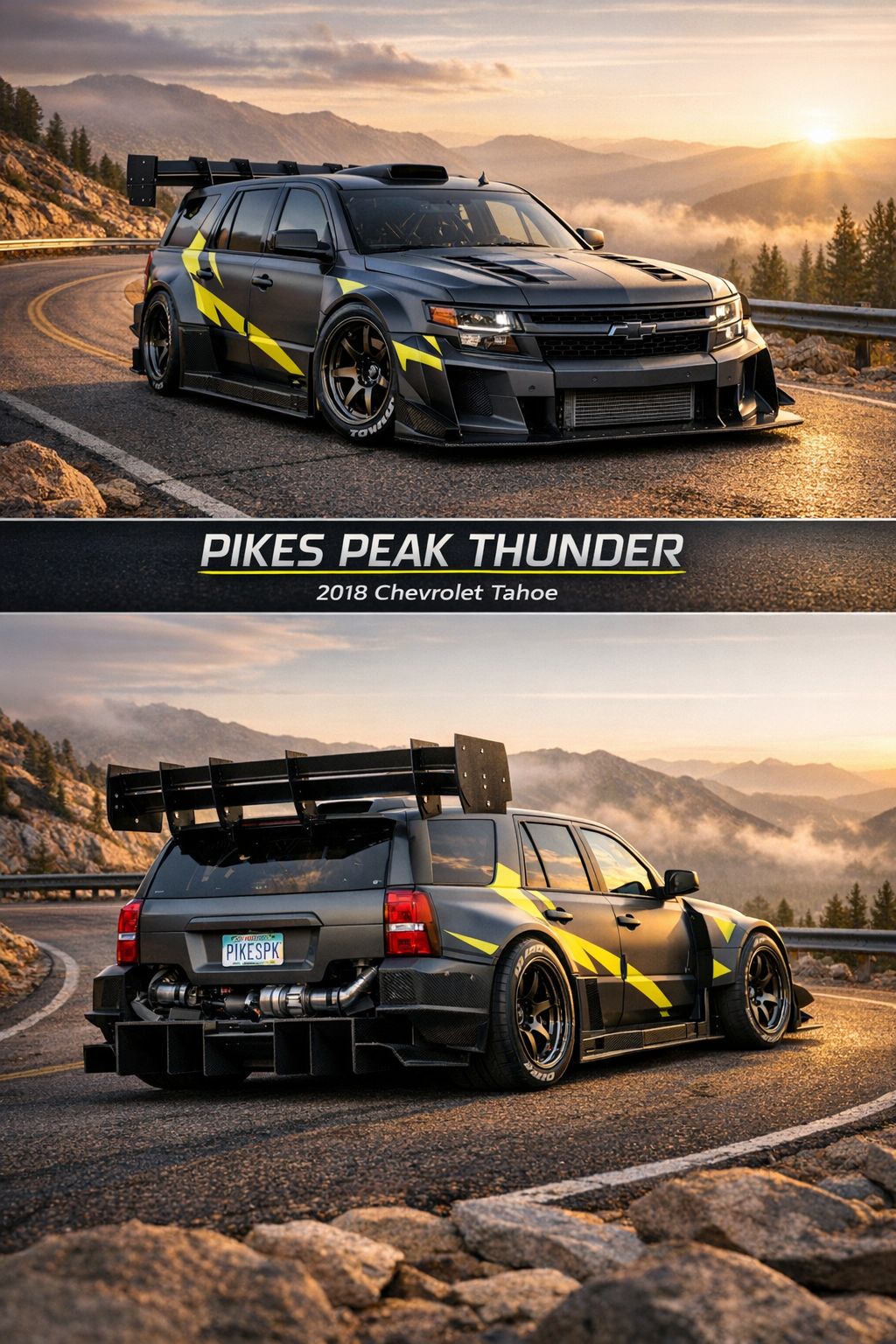
Pikes Peak Thunder takes the familiar 2018 Chevrolet Tahoe and completely reimagines it as an unlimited-class hill climb beast. The radical front-engine to mid-engine conversion relocates the V8 behind the seats, dramatically shifting mass to the center and allowing a shortened front overhang. This tightens the wheelbase and stretches the cabin rearward, optimizing weight distribution and agility for the treacherous, twisting ascent of Pikes Peak. The bodywork is a study in functional aggression, with sharply tapered front fenders, expansive sidepods feeding mid-mounted intercoolers and radiators, and exaggerated rear haunches that house ultra-wide 350-section tires on massive 18x12 and 19x14 Work Wheels. Every aerodynamic element is sculpted for maximum downforce and cooling efficiency. The ultra-high rear wing mounted nearly a meter above the carbon fiber tub is complemented by stepped diffuser tunnels and vertical endplates to stabilize airflow through the mountain’s unpredictable air currents. Adjustable ride height and progressive dampers prepare the Tahoe for both smooth tarmac and rougher hill sections, while the turbocharged V8’s heat is managed via a roof intake duct feeding a rear-mounted radiator, ensuring the powertrain stays cool at altitude. This build blends raw American muscle with purpose-built hill climb engineering, transforming an SUV into a time-attack predator.
Blueprint // R022
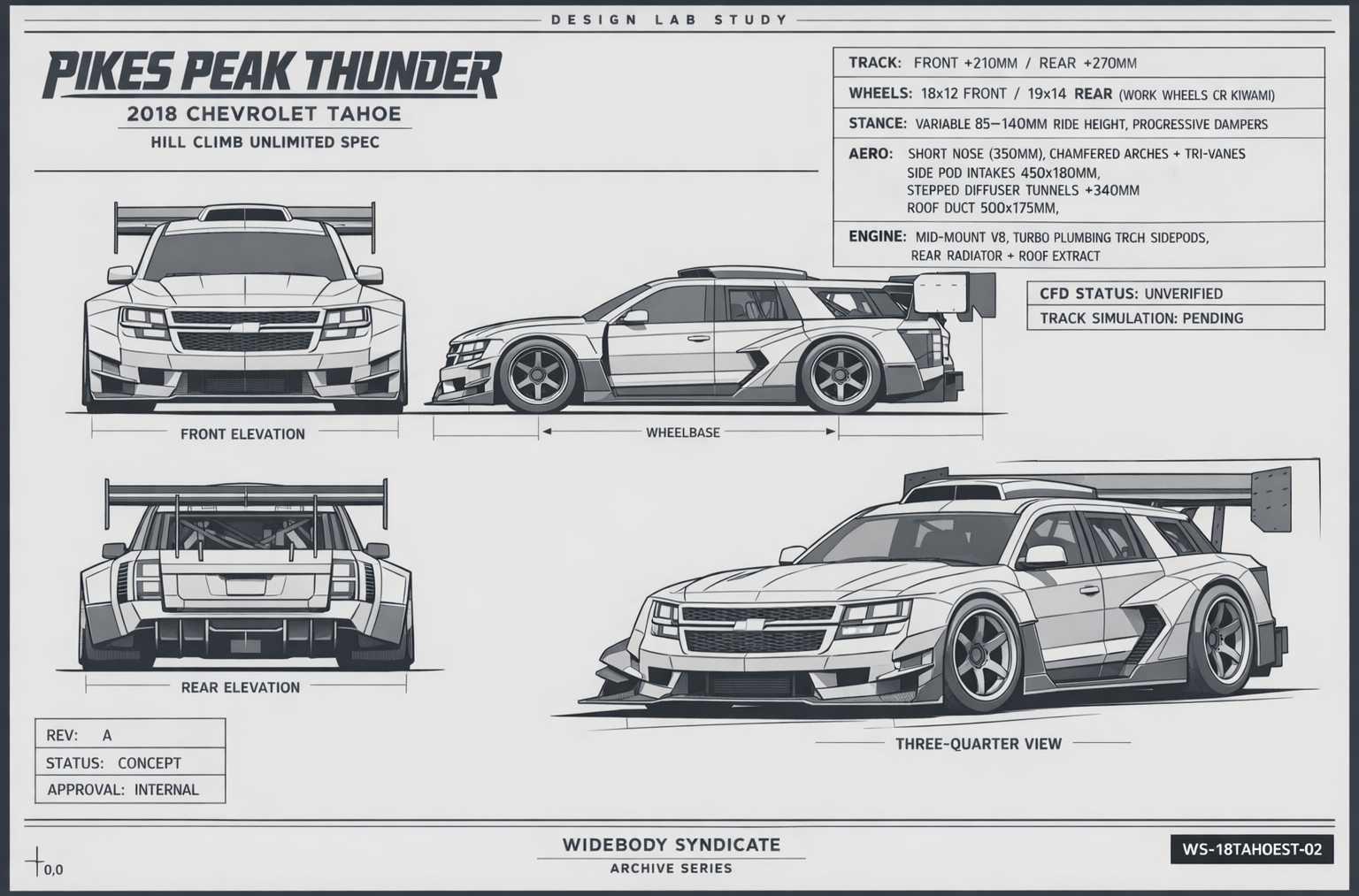
Built exclusively for the Pikes Peak Hill Climb, this Tahoe handles rapid elevation changes and tight, high-altitude switchbacks with precision. The wide track and ultra-sticky 350-section tires deliver exceptional grip, while the adjustable suspension keeps the car stable over mixed surfaces. Aerodynamic elements generate significant downforce without sacrificing cooling, essential for sustained performance on the demanding 12.42-mile course.
Front-engine to mid-engine conversion relocating V8 behind front seats
Shortened front overhang by 300mm with cabin shifted rearward
Wheelbase reduced by 120mm via front axle relocation
Widened front track by 210mm and rear by 270mm for ultra-wide tires
Sharply tapered front fenders with integrated triangular aero vanes
Sidepods with 450mm long concave air intakes feeding intercoolers
Stepped rear diffuser tunnels extending 340mm behind rear axle
Ultra-high 920mm single-element rear wing with multiple vertical endplates
Aerodynamics are optimized for extreme downforce and efficient cooling, featuring sharply chamfered front arches with integrated aero vanes directing airflow through intercooler ducts. Long concave sidepod intakes channel air to mid-mounted radiators, while a stepped diffuser and an ultra-high rear wing generate significant rear-end stability. Vertical endplates on the wing enhance lateral grip, crucial for maintaining control through Pikes Peak’s turbulent mountain air.
Work Wheels CR Kiwami 18x12 front
Work Wheels CR Kiwami 19x14 rear
350-section Toyo Proxes R888 hill climb tires front and rear
The car rolls on massive Work Wheels CR Kiwami forged wheels, sized 18x12 up front and a staggered 19x14 at the rear to accommodate enormous 350-section Toyo Proxes R888 tires. This setup maximizes mechanical grip and stability, essential for the aggressive cornering and rapid directional changes of hill climb racing.
Pikes Peak Thunder’s stance is aggressive and purposeful, with a ride height varying from a low 85mm on smooth surfaces to 140mm over rougher sections. The widened track and stretched haunches create a planted look, while the progressive dampers and reinforced suspension provide the balance between compliance and control necessary for the mountain’s challenging terrain.
Mid-mounted V8 engine with visible turbo plumbing through sidepods
Rear-mounted radiator system cooled by roof intake duct (500mm x 175mm)
Turbocharged forced induction optimized for high-altitude performance
The build features a mid-mounted V8 engine equipped with twin turbos, whose plumbing snakes through large sidepods designed for maximum airflow. The forced induction system is tailored for high-altitude performance, where air density drops, maintaining power delivery throughout the climb. Heat extraction is managed via a rear-mounted radiator cooled by a large roof intake duct, ensuring thermal stability under extreme conditions.
A mid-engine, rear-wheel-drive layout replaces the Tahoe’s original setup, centralizing mass and providing sharper handling through the mountain’s tight switchbacks. The drivetrain is supported by reinforced suspension geometry and progressive dampers, with ride height adjustable from 85mm to 140mm to adapt to varying surface conditions encountered during the ascent.
Reinforced suspension geometry with thick tube frame substructure visible through bodywork
Carbon fiber rear tub extended beyond hatch line to mount rear wing
Chassis modifications to accommodate rearward cabin shift and shortened front end
Wave Release
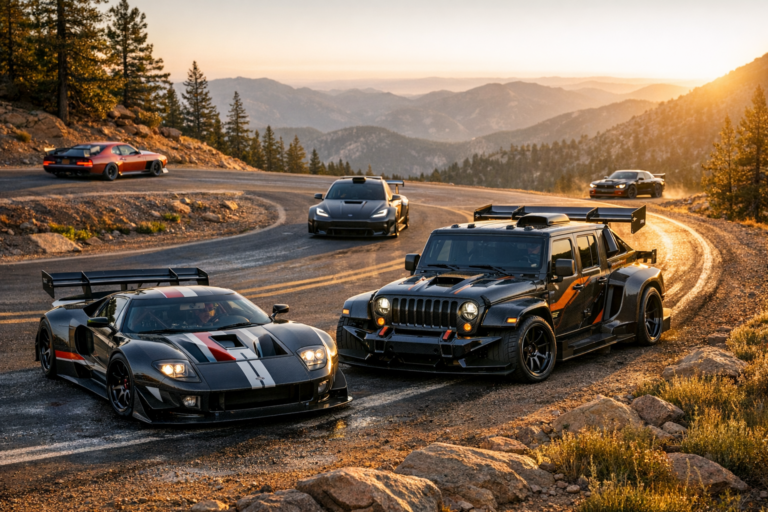
Alright, buckle up because we just finished crafting a wild collection of hillclimb beasts that redefine what it means to conquer mountains. Forget what you know about SUVs, city cars, or muscle classics—they’re all morphed here…
View Full Wave