R232
Iron Dragon Program
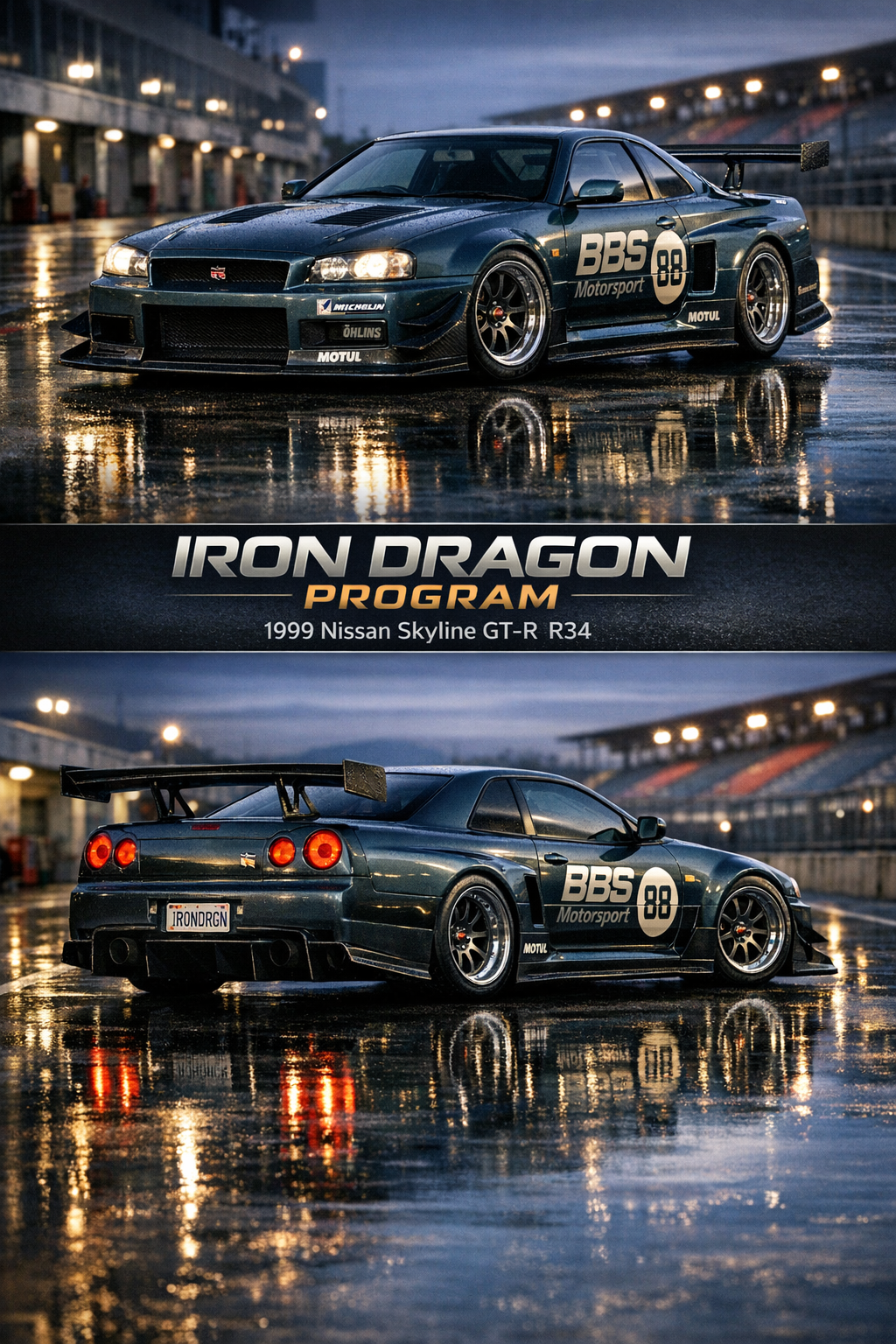
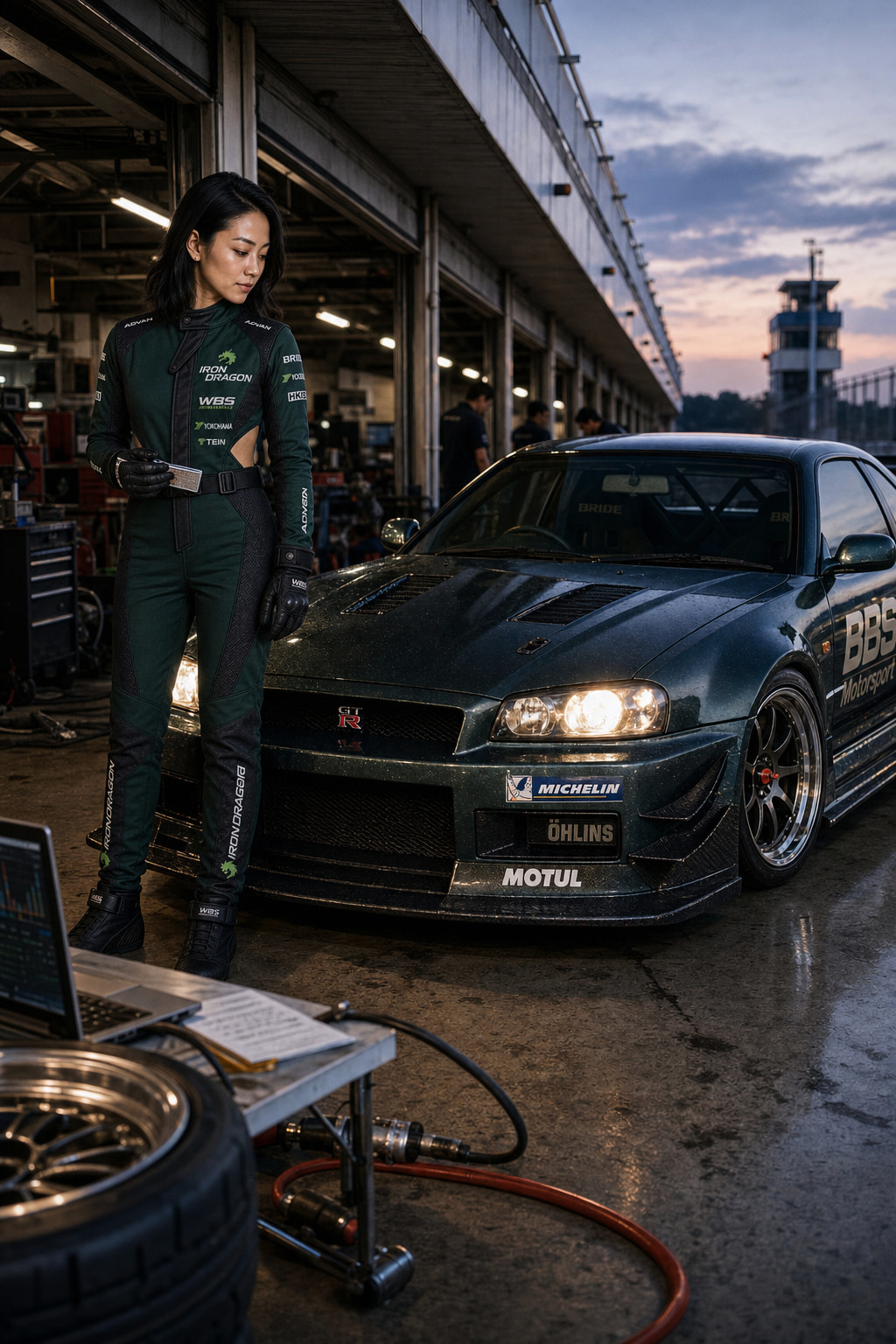
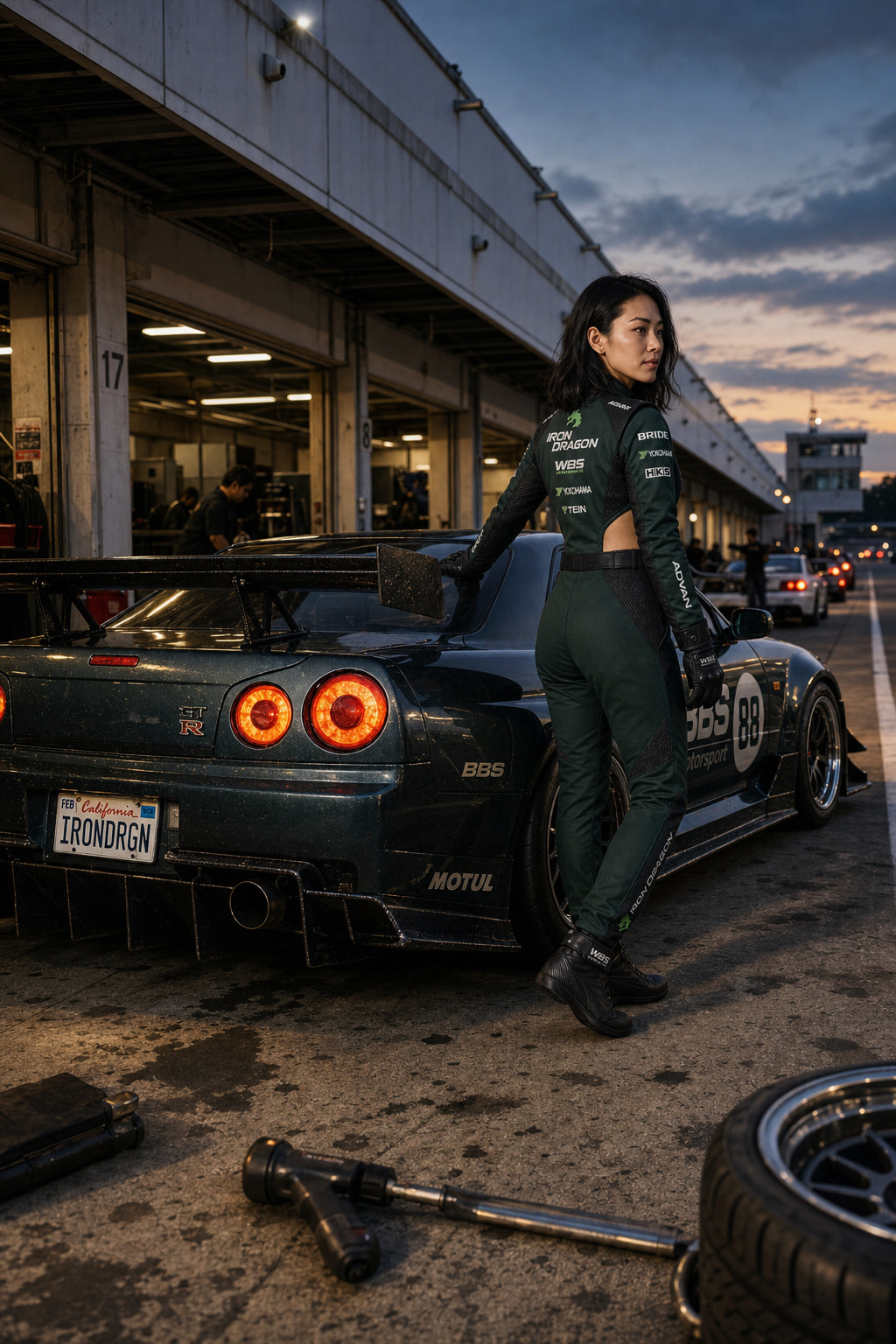
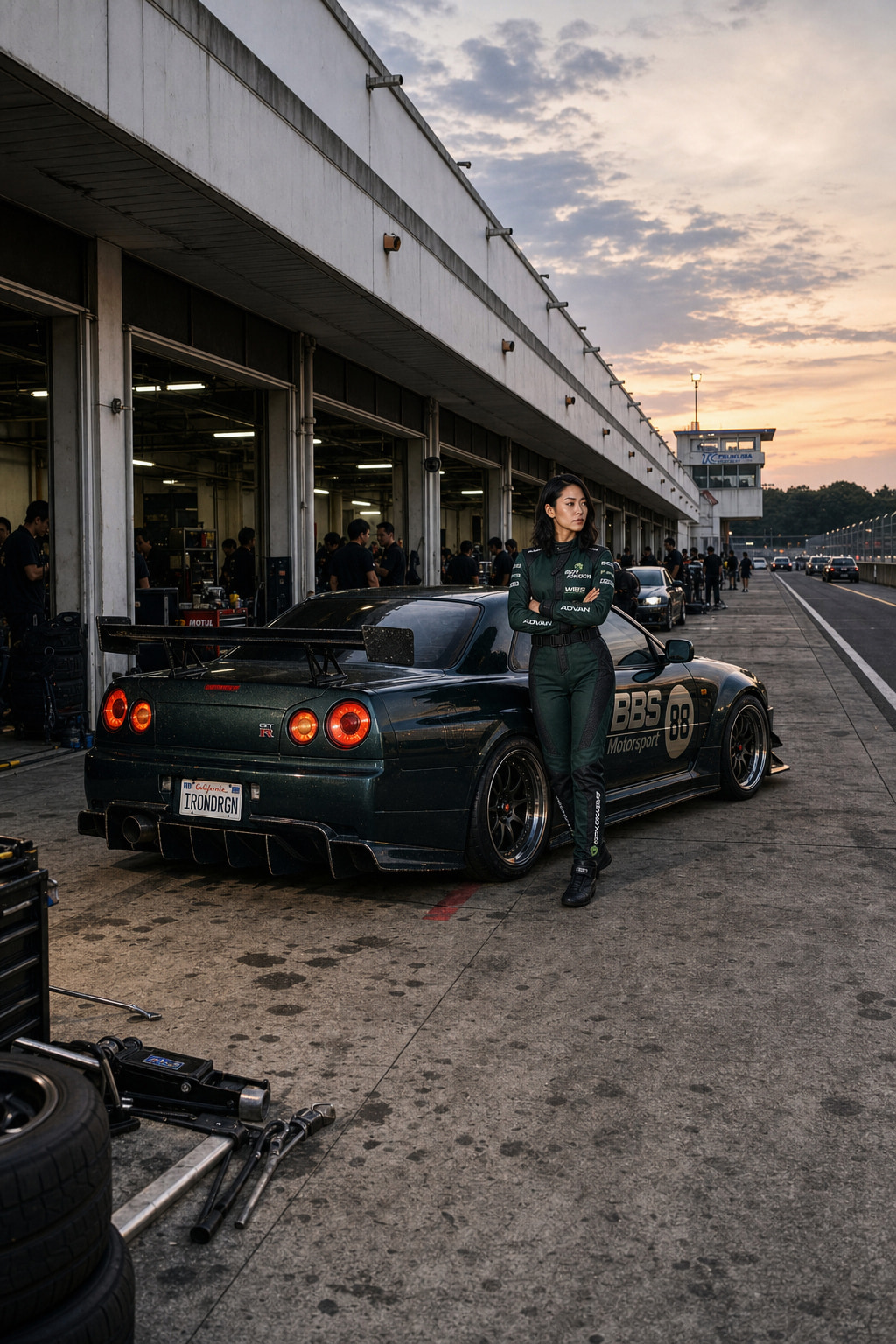
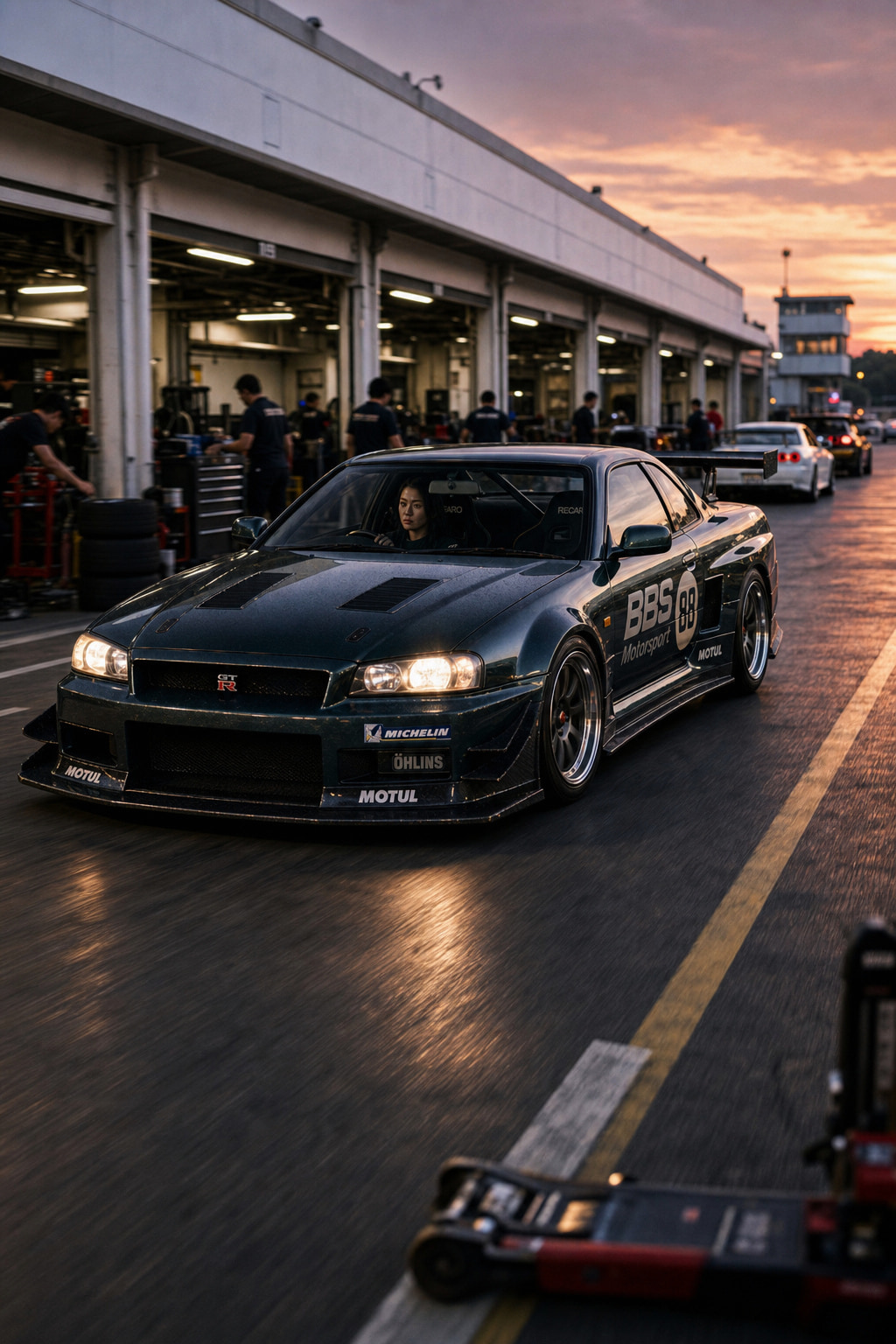
Iron Dragon Program treats the R34 like a late-’90s works car that never got the rulebook it deserved: a Group 4-style homologation special built for long stints, stable aero, and serviceability. The silhouette is still unmistakably Skyline—greenhouse, shoulders, and stance—just stretched, lowered, and widened with measured intent: +110mm front, +135mm rear, a 120mm rearward wheelbase change, and a 60mm nose trim to sharpen yaw response.
The engineering story is endurance efficiency. A long-tail hatch cleans up the wake, the floor and diffuser do the heavy lifting, and the cooling package moves into sidepod inlets fed by the cabin shift so the front end can focus on downforce and brake temp control. It’s the RB26 kept honest with dry-sump reliability and heat management, wrapped in bodywork that looks like it was born in a scrutineering bay, not a styling studio.
Release Image Studies
Image studies from every angle.
Comparison Shots
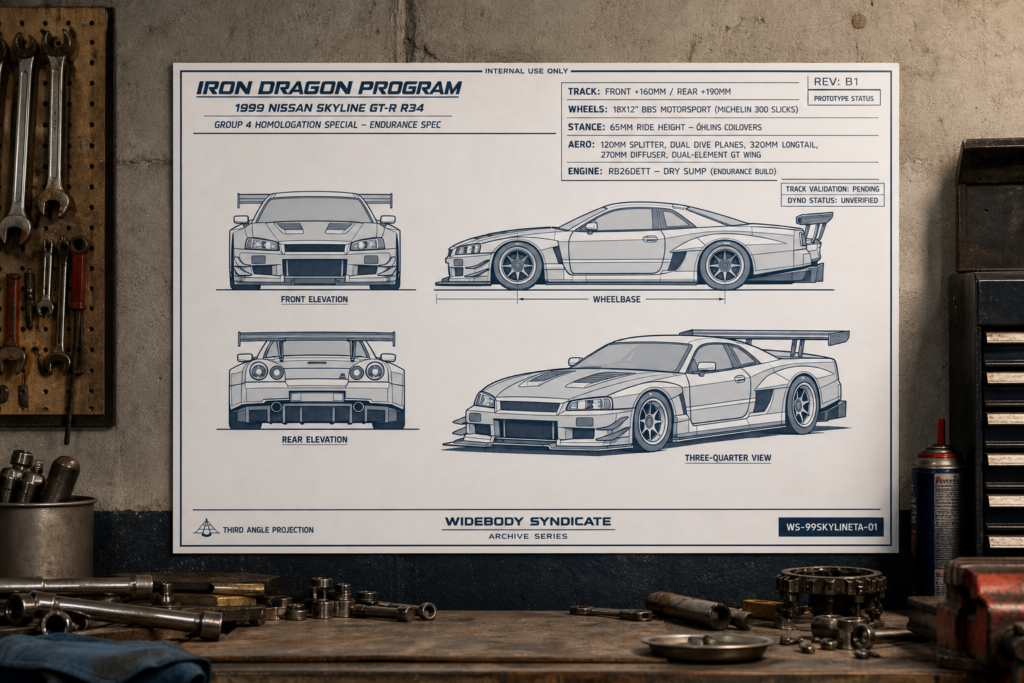
Blueprint / Collector Archive
Engineering Artifacts
The technical study and collectible interpretation of one build, preserved together.
Selected archive goods are available for collectors.
Technical Dossier
Platform
1999 Nissan Skyline GT-R R34
The 1999 Nissan Skyline GT-R R34 is the zenith of Japanese performance engineering from the golden era of the late '90s. With the iconic RB26DETT twin-turbocharged inline-six engine under the hood, it delivers a blend of raw power and precise control, thanks to its advanced ATTESA E-TS all-wheel-drive system and Super-HICAS four-wheel steering. The R34's aggressive yet functional design has become a cultural icon, setting the standard for precision, performance, and tunability that still resonates deeply within the tuner and motorsport communities worldwide.
Aero Package
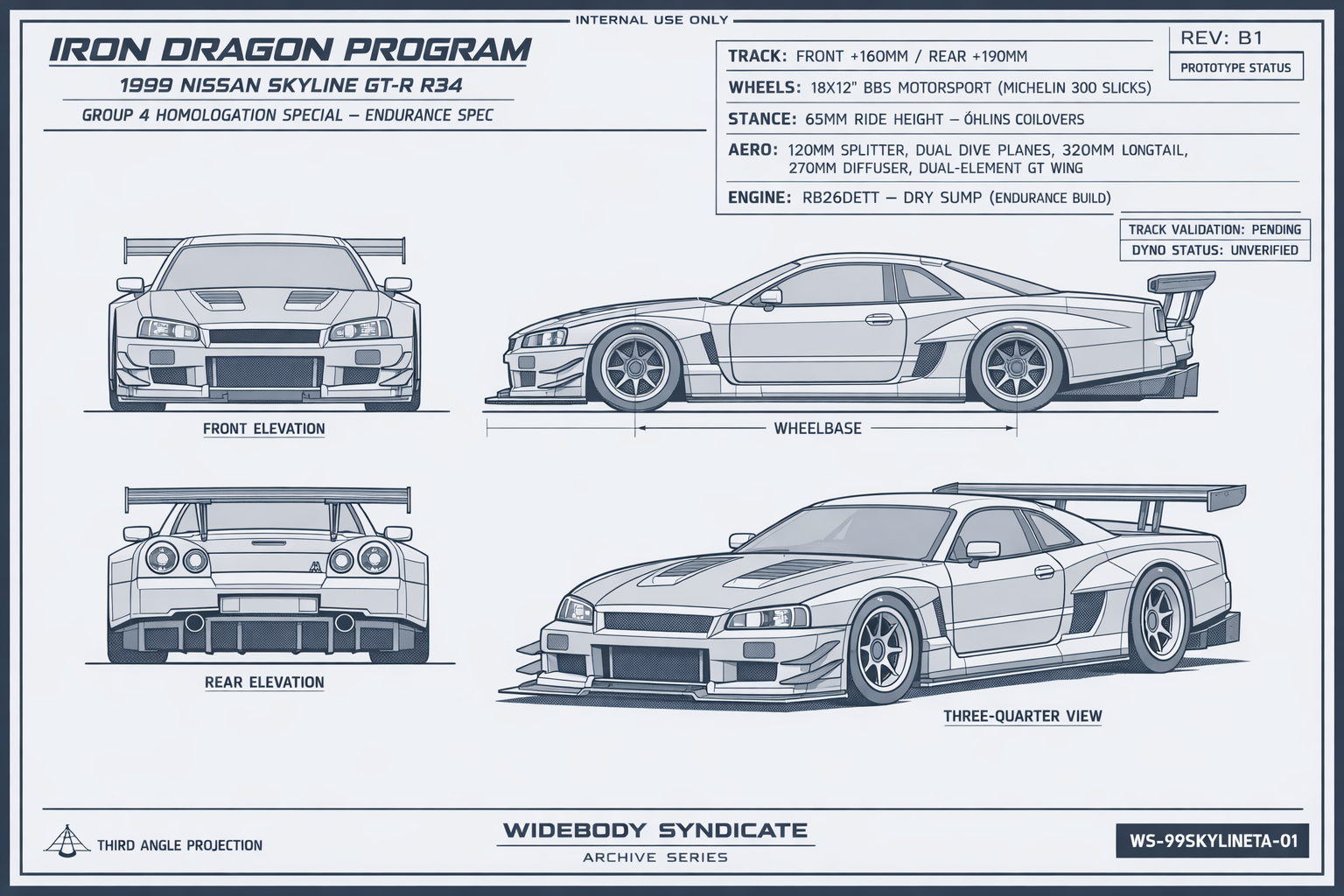
Carbon hood with twin 250x90mm longitudinal vents featuring raised chamfered lips
120mm front splitter with dual upward dive planes for front axle load and stability
Carbon composite long-tail hatch extending 320mm beyond stock trunk line
Rear diffuser extending 270mm past rear axle with tri-element vertical strakes and diffuser shelf
Dual-element adjustable GT wing on swan-neck pylons
1670mm span
mounted 780mm above trunk surface
Chassis
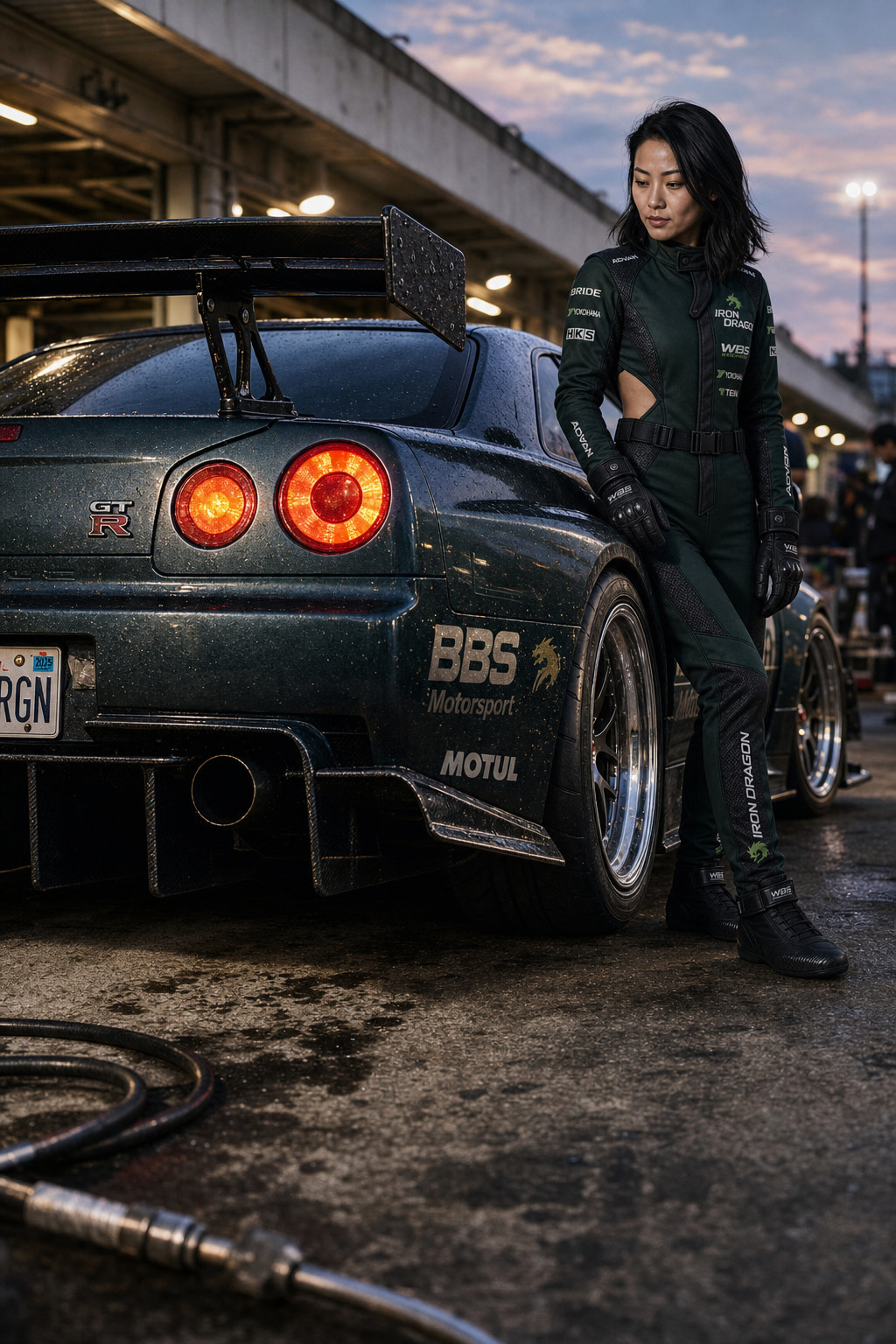
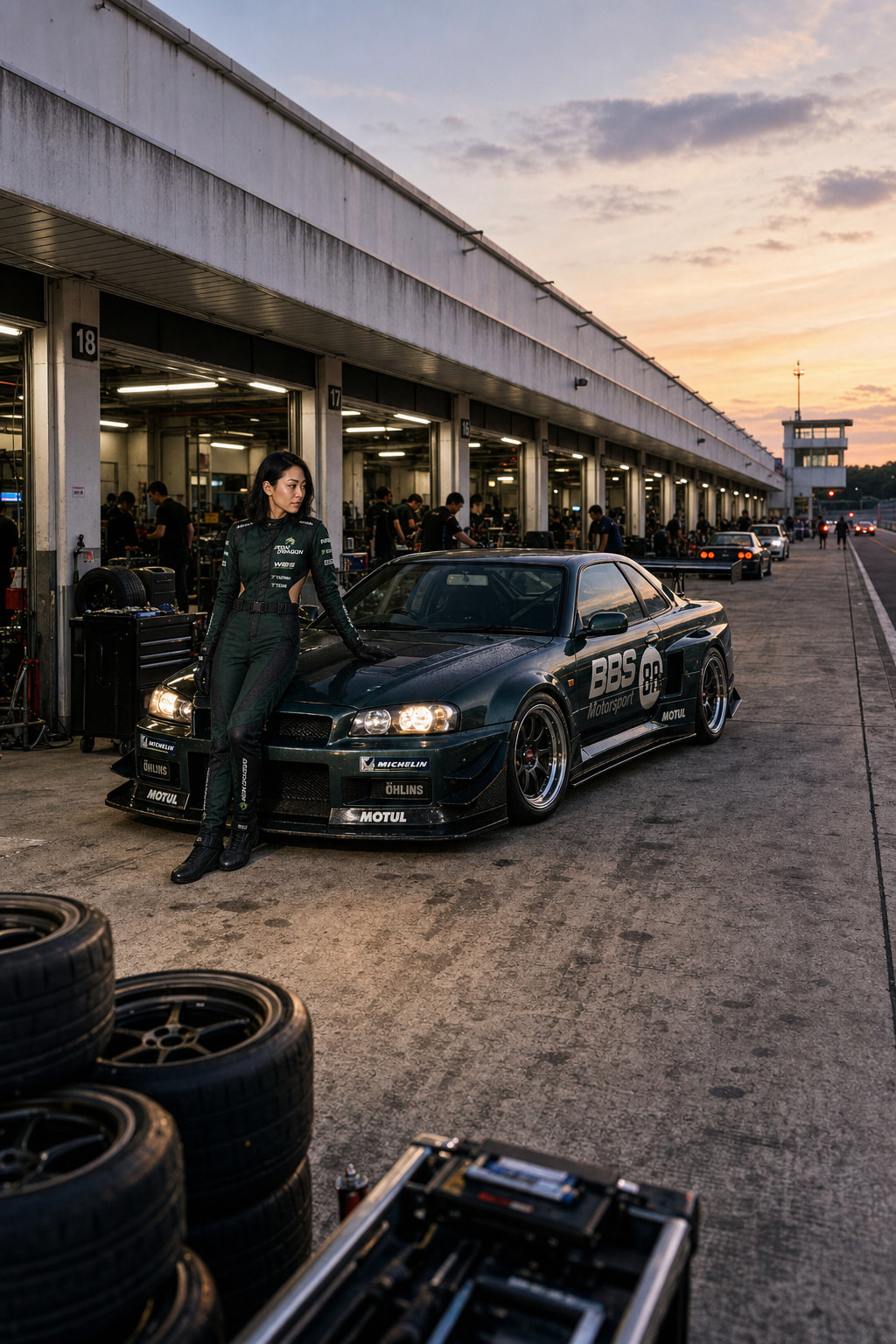
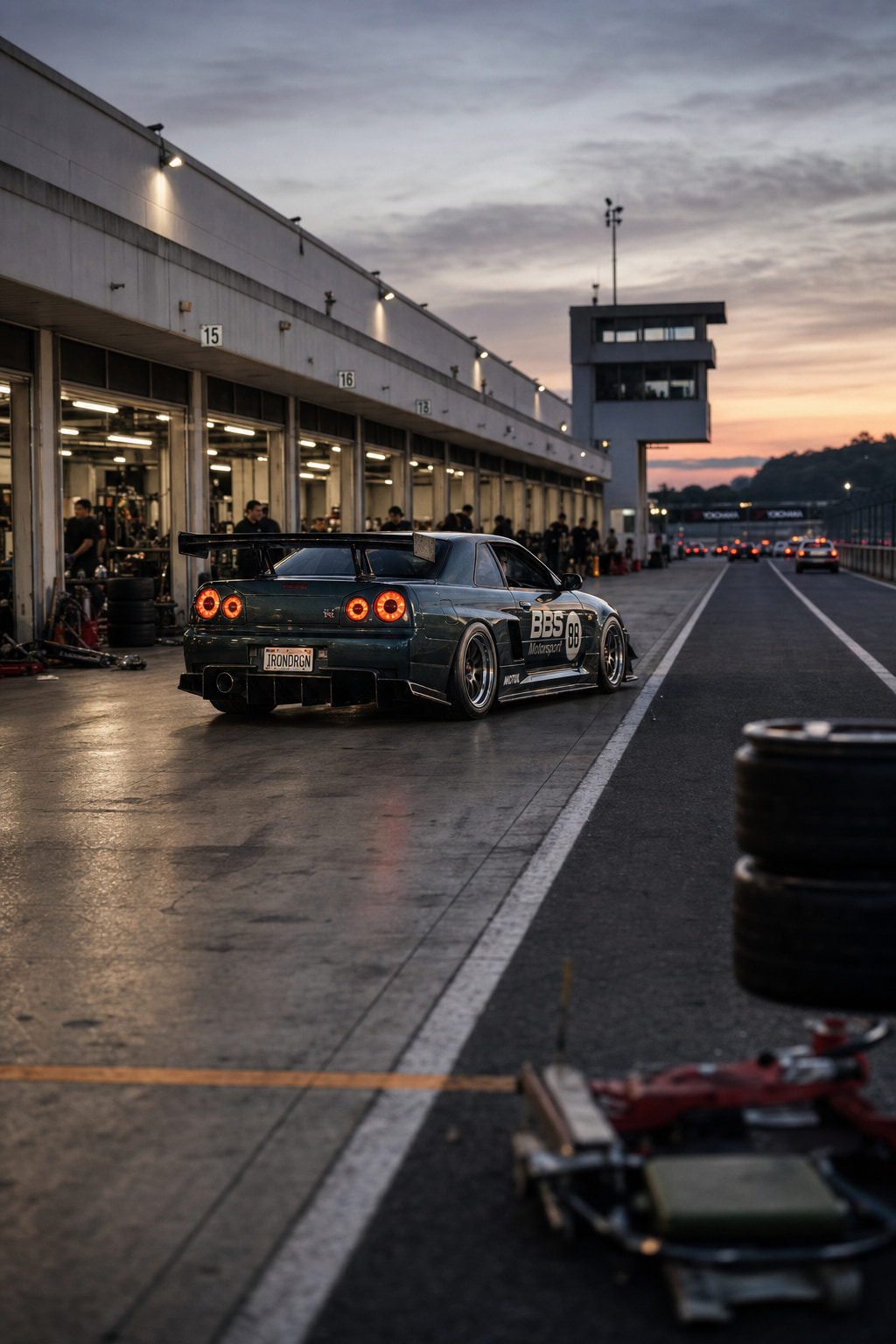
Set on a wet pit lane at dusk, the car reads like a night-stint weapon: reflections tracing the squared arches, splitter planes, and long-tail volume. The scene fits the brief—endurance ambience, functional surfaces, and the kind of lighting that makes carbon edges and panel gaps look like they were checked twice before scrutineering.
Wheels & Tires
18x12 BBS Motorsport forged wheels
300-section Michelin slicks (endurance compound focus)
Front track +160mm
rear track +190mm to support aero platform and tire footprint
Ride height set to 65mm F/R on adjustable Öhlins coilovers
Powertrain
RB26DETT retained with endurance-focused internals and conservative boost strategy
Dry-sump oiling for sustained lateral load and reduced windage
Cooling system relocated to sidepod radiators fed by 450x160mm mid-cabin inlets
Rear transaxle packaging concept to improve weight distribution and driveline efficiency
Fabrication Notes
Widebody executed as motorsport-style add-on architecture with serviceable inner liners and fastener access
Sidepod ducting designed as sealed pressure boxes with defined inlet
core
and exit paths
Long-tail hatch built as carbon composite with internal structure for wing load transfer
Flat-floor and diffuser interface reinforced to handle jacking points and endurance curb strikes
Design Philosophy
Iron Dragon Program treats the R34 like a late-’90s works car that never got the rulebook it deserved: a Group 4-style homologation special built for long stints, stable aero, and serviceability. The silhouette is still unmistakably Skyline—greenhouse, shoulders, and stance—just stretched, lowered, and widened with measured intent: +110mm front, +135mm rear, a 120mm rearward wheelbase change, and a 60mm nose trim to sharpen yaw response.
The engineering story is endurance efficiency. A long-tail hatch cleans up the wake, the floor and diffuser do the heavy lifting, and the cooling package moves into sidepod inlets fed by the cabin shift so the front end can focus on downforce and brake temp control. It’s the RB26 kept honest with dry-sump reliability and heat management, wrapped in bodywork that looks like it was born in a scrutineering bay, not a styling studio.
▧Platform+
1999 Nissan Skyline GT-R R34
The 1999 Nissan Skyline GT-R R34 is the zenith of Japanese performance engineering from the golden era of the late '90s. With the iconic RB26DETT twin-turbocharged inline-six engine under the hood, it delivers a blend of raw power and precise control, thanks to its advanced ATTESA E-TS all-wheel-drive system and Super-HICAS four-wheel steering. The R34's aggressive yet functional design has become a cultural icon, setting the standard for precision, performance, and tunability that still resonates deeply within the tuner and motorsport communities worldwide.
⌘Aero Package+
Carbon hood with twin 250x90mm longitudinal vents featuring raised chamfered lips
120mm front splitter with dual upward dive planes for front axle load and stability
Carbon composite long-tail hatch extending 320mm beyond stock trunk line
Rear diffuser extending 270mm past rear axle with tri-element vertical strakes and diffuser shelf
Dual-element adjustable GT wing on swan-neck pylons
1670mm span
mounted 780mm above trunk surface
⟡Chassis+
Set on a wet pit lane at dusk, the car reads like a night-stint weapon: reflections tracing the squared arches, splitter planes, and long-tail volume. The scene fits the brief—endurance ambience, functional surfaces, and the kind of lighting that makes carbon edges and panel gaps look like they were checked twice before scrutineering.
◎Wheels & Tires+
18x12 BBS Motorsport forged wheels
300-section Michelin slicks (endurance compound focus)
Front track +160mm
rear track +190mm to support aero platform and tire footprint
Ride height set to 65mm F/R on adjustable Öhlins coilovers
▤Powertrain+
RB26DETT retained with endurance-focused internals and conservative boost strategy
Dry-sump oiling for sustained lateral load and reduced windage
Cooling system relocated to sidepod radiators fed by 450x160mm mid-cabin inlets
Rear transaxle packaging concept to improve weight distribution and driveline efficiency
△Fabrication Notes+
Widebody executed as motorsport-style add-on architecture with serviceable inner liners and fastener access
Sidepod ducting designed as sealed pressure boxes with defined inlet
core
and exit paths
Long-tail hatch built as carbon composite with internal structure for wing load transfer
Flat-floor and diffuser interface reinforced to handle jacking points and endurance curb strikes
×Design Philosophy+
Iron Dragon Program treats the R34 like a late-’90s works car that never got the rulebook it deserved: a Group 4-style homologation special built for long stints, stable aero, and serviceability. The silhouette is still unmistakably Skyline—greenhouse, shoulders, and stance—just stretched, lowered, and widened with measured intent: +110mm front, +135mm rear, a 120mm rearward wheelbase change, and a 60mm nose trim to sharpen yaw response.
The engineering story is endurance efficiency. A long-tail hatch cleans up the wake, the floor and diffuser do the heavy lifting, and the cooling package moves into sidepod inlets fed by the cabin shift so the front end can focus on downforce and brake temp control. It’s the RB26 kept honest with dry-sump reliability and heat management, wrapped in bodywork that looks like it was born in a scrutineering bay, not a styling studio.
Part of
Wave 39
Homologation Dreams: Vol. 1
What we have here isn’t your usual automotive rerun. Our latest batch dives deep into the what-ifs of motorsport history, where homologation specials weren’t just about ticking boxes but about pushing the envelope until the envelope screamed for mercy.
Explore Wave 39 → 5 BuildsKeep Exploring
The archive is always growing. New releases, waves, and blueprints added regularly.