R230
FIA Group 4 Homologue
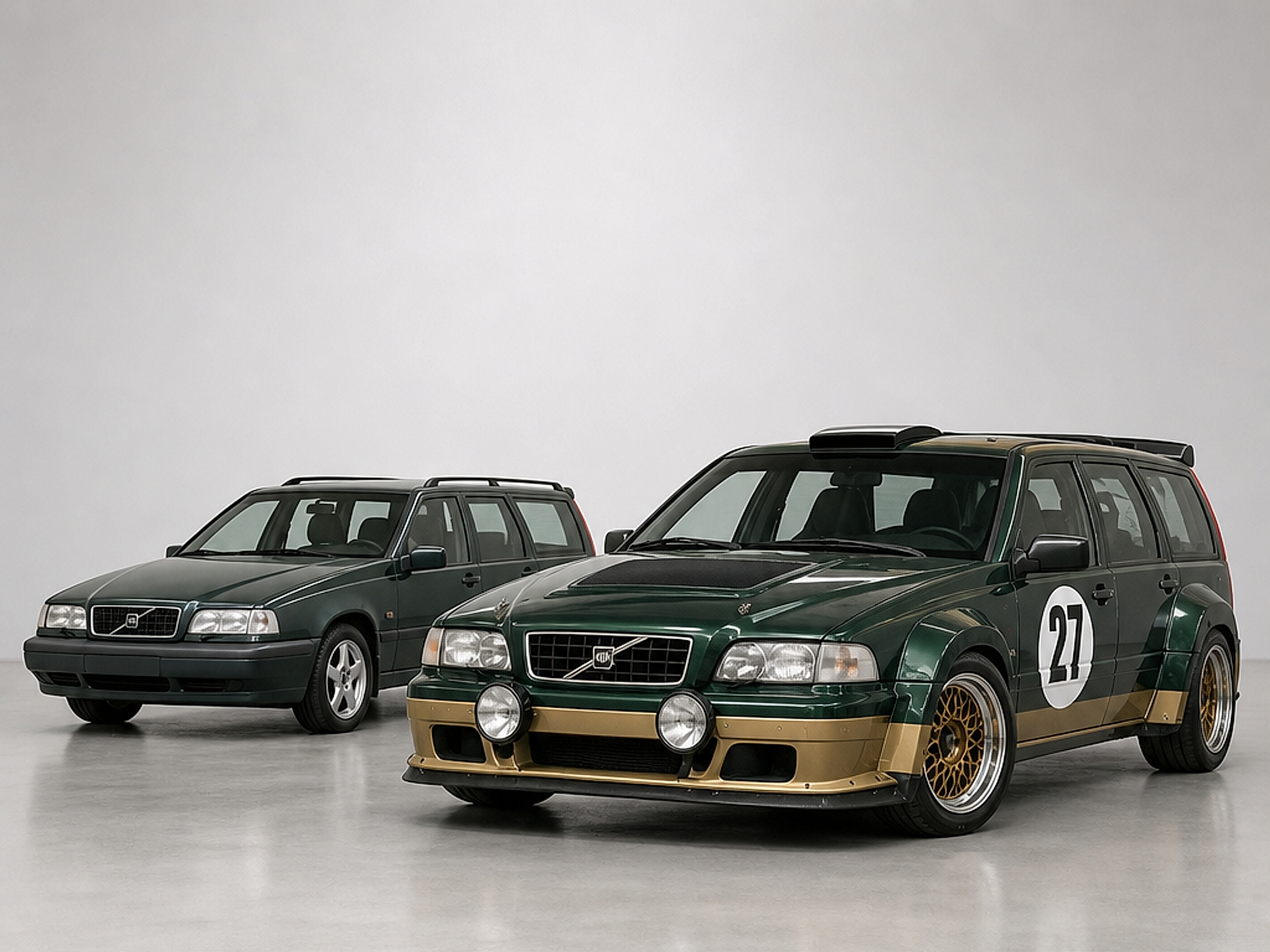
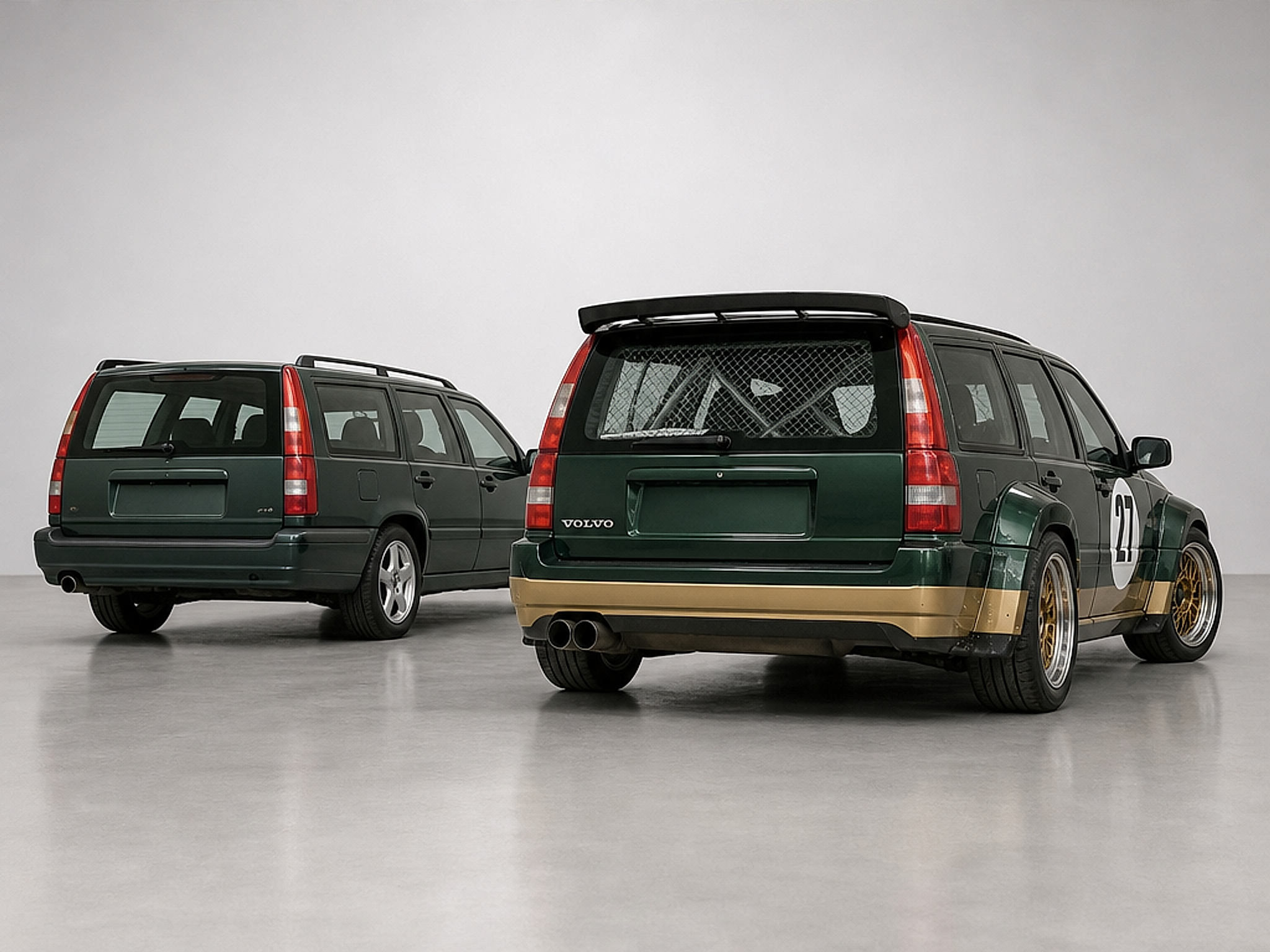
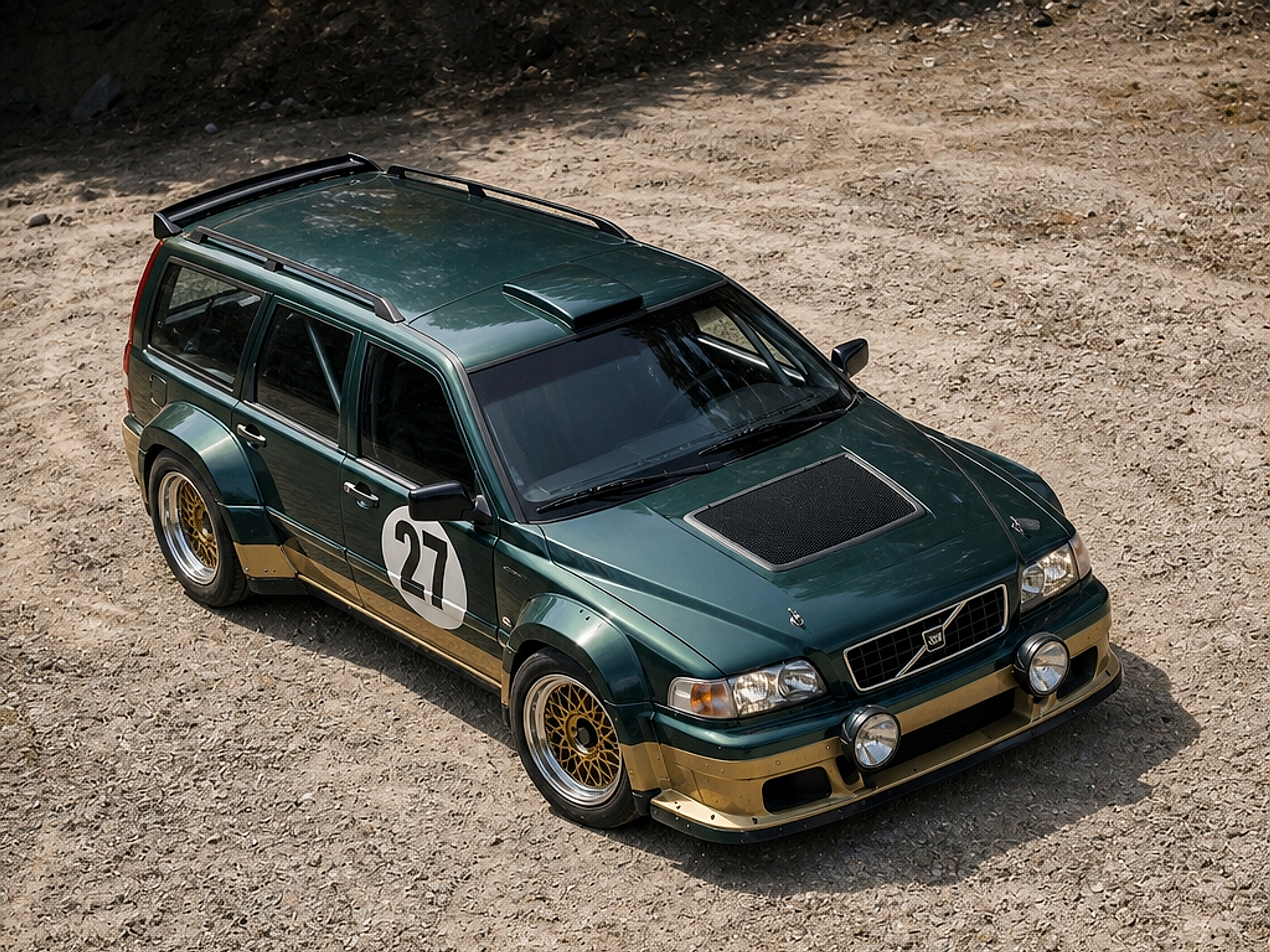
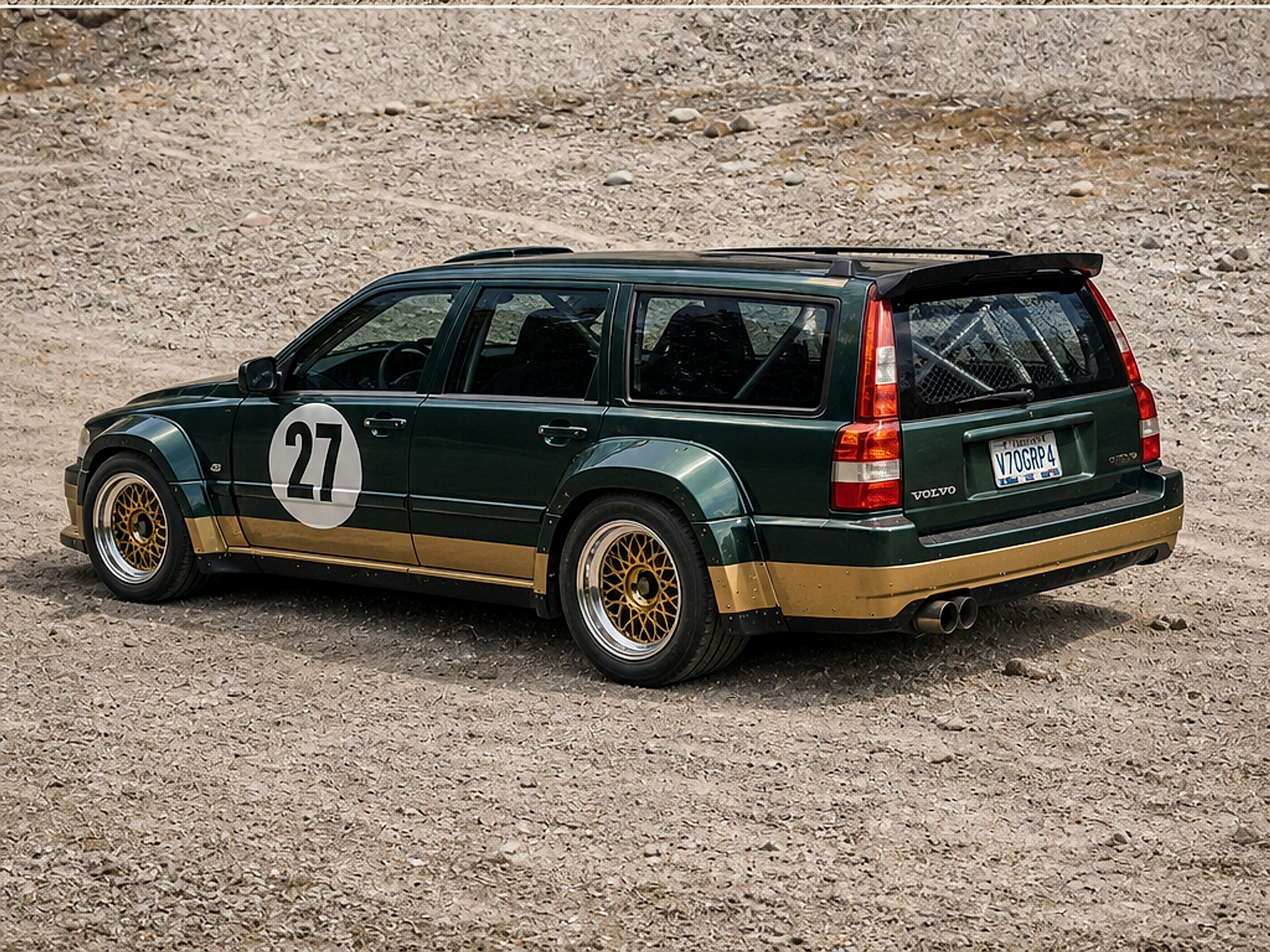
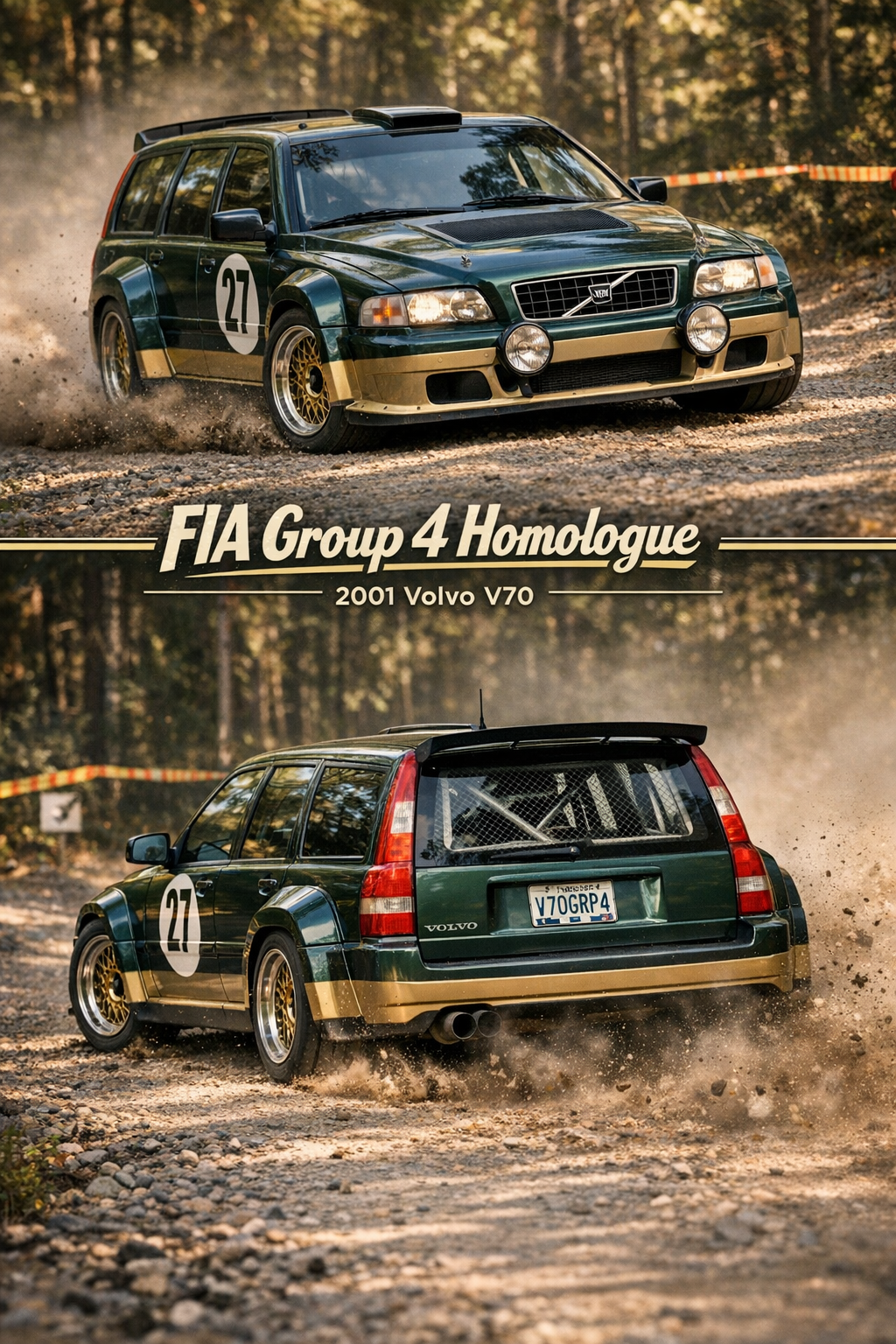
Take the sensible 2001 V70 and push it backwards through time until it lands in the late-’70s paddock: a Group 4-style homologation special built around width, clearance, and serviceability. The wagon silhouette stays intact, but everything below the beltline is rethought—hand-formed squared arches, a taller ride height, and a track that looks like it was measured with a plumb bob on a gravel layby.
The details sell it: rally lighting, brake ducting that actually feeds air, and a hood vent sized for heat, not aesthetics. It’s the kind of build that reads like a privateer’s best idea—period-correct cues wrapped around believable engineering, with just enough weathered intent to feel earned.
Release Image Studies
Image studies from every angle.
Comparison Shots
Blueprint / Collector Archive
Engineering Artifacts
The technical study and collectible interpretation of one build, preserved together.
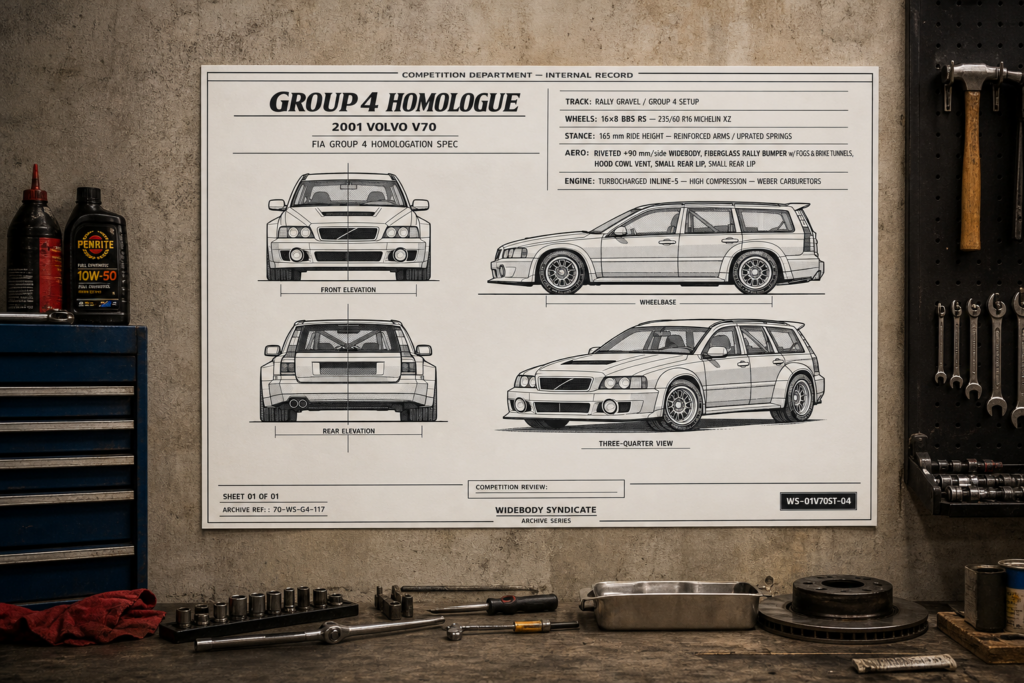
Selected archive goods are available for collectors.
Technical Dossier
Platform
2001 Volvo V70
The 2001 Volvo V70 stands as a quintessential example of Swedish automotive engineering, blending functionality and refined design in a smartly packaged wagon format. Known for its boxy yet elegant silhouette and spacious interior, this generation V70 balances everyday practicality with driver-focused dynamics, featuring robust safety innovations that cemented Volvo’s reputation at the turn of the millennium. Its understated Scandinavian style and utilitarian layout make it a compelling base for enthusiasts seeking a clean slate with heritage and durability.
Aero Package
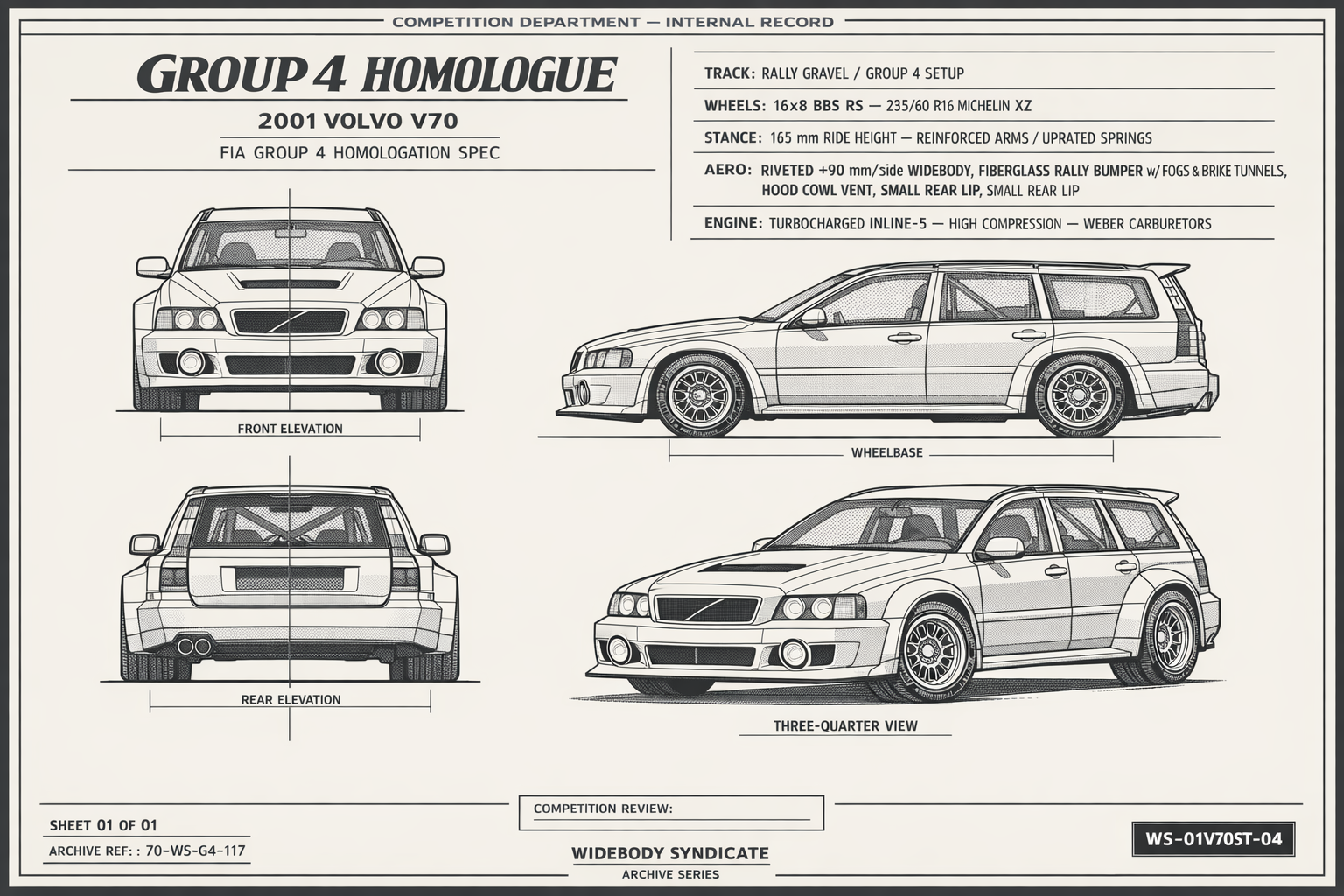
Fiberglass front bumper with integrated brake ducts and fog lamp pockets
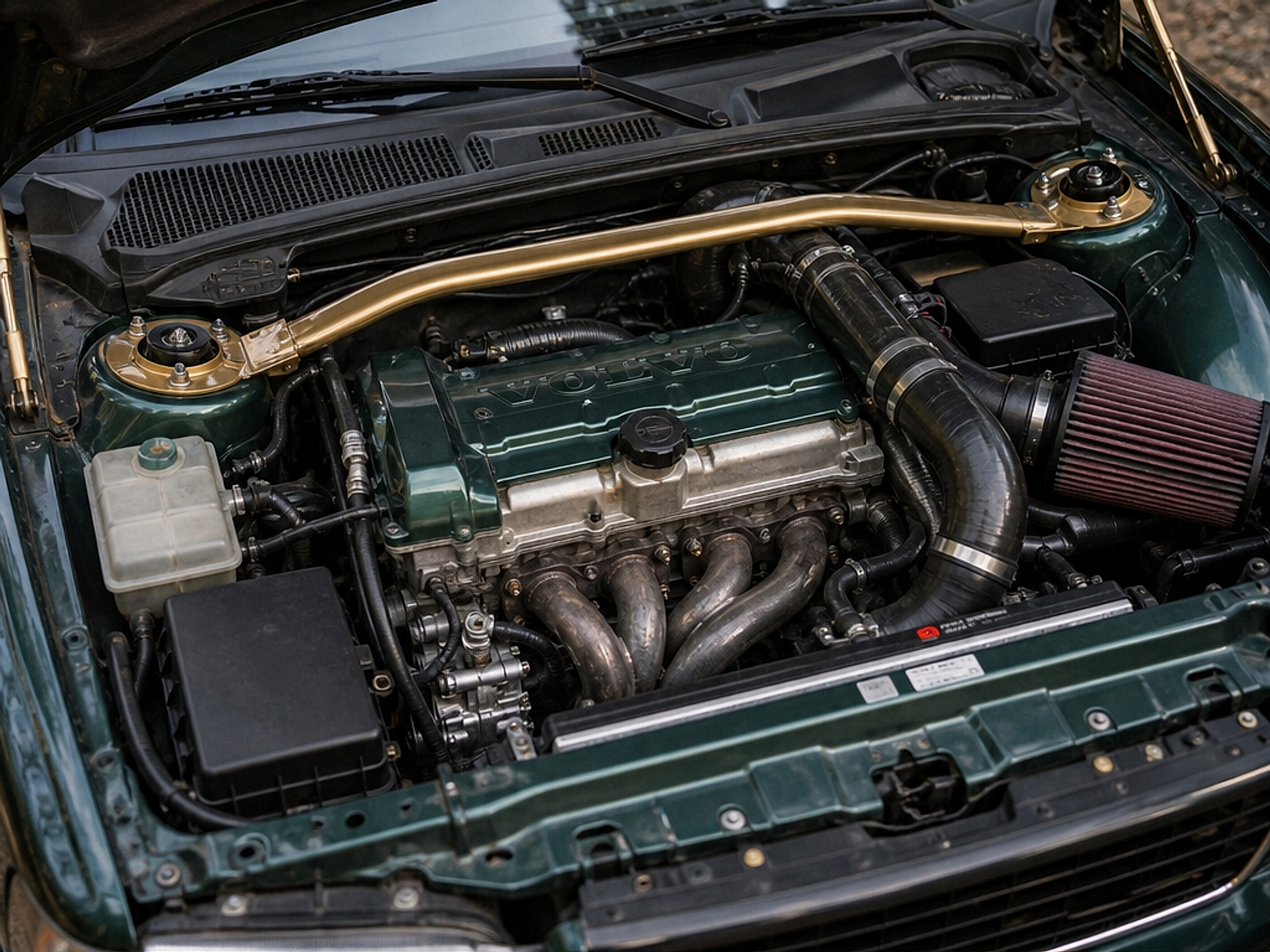
Vented aluminum hood for heat extraction over the turbo/exhaust side
Subtle rear roofline lip to stabilize the wagon at high-speed gravel sections
Flat undertray leading edge with gravel-friendly airflow management
Chassis
On a dusty forest stage it reads like a proper privateer homologation special: stable at speed, compliant over chatter, and predictable when the surface turns to marbles. The 165mm ride height and reinforced suspension let it take ruts without tearing itself apart, while the wide track keeps it planted through fast transitions. It’s a wagon that looks heavy until it starts moving.
Wheels & Tires
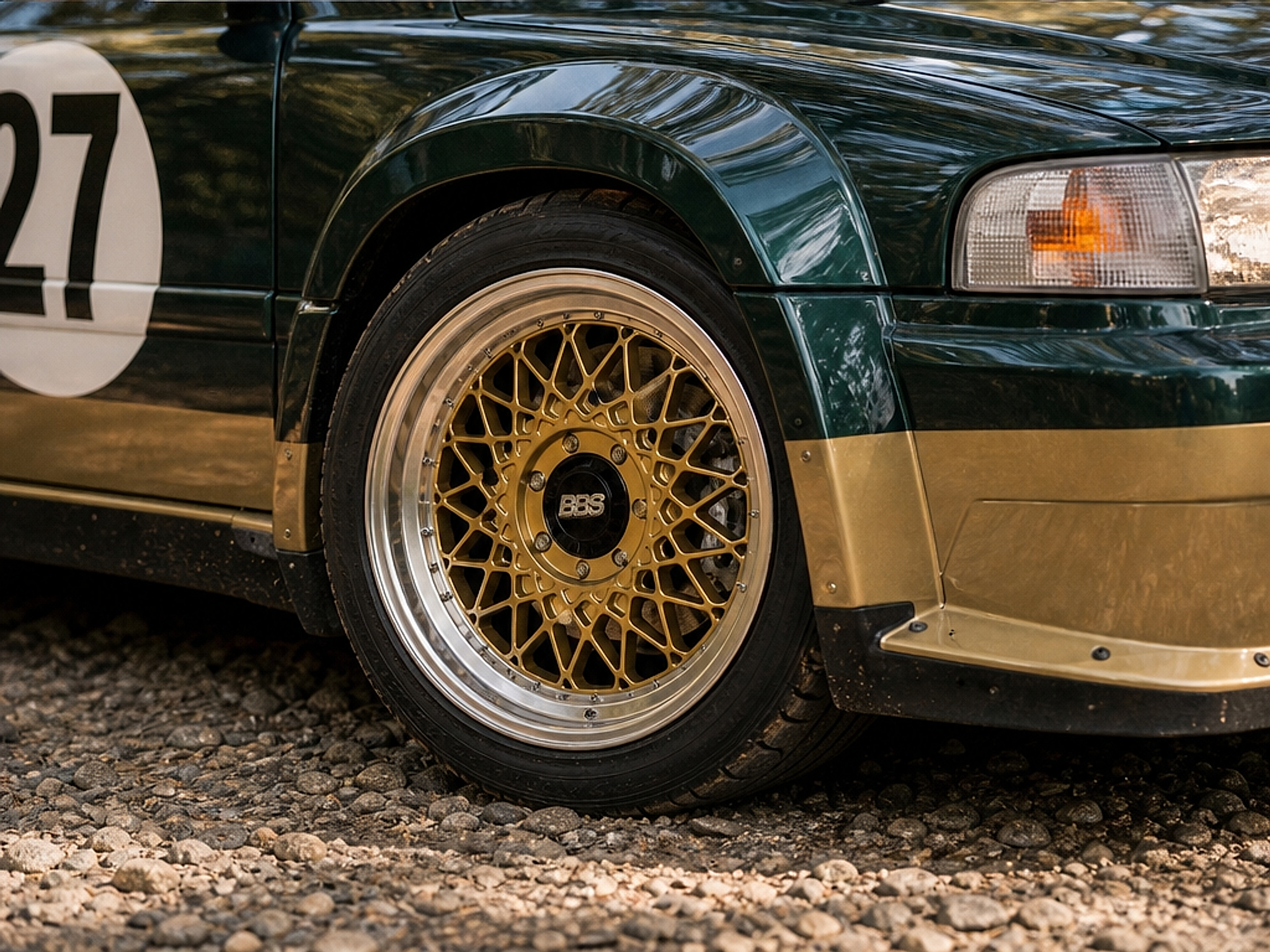
16x8 BBS RS wheels with reinforced hardware for rally impacts
Michelin XZ 235/60 R16 gravel tires for sidewall compliance and durability
Rally-length studs and open-ended nuts for fast service
Full-size matching spare strategy to suit stage support reality
Powertrain
Turbocharged Volvo inline-five with high-compression internals for snap off-boost
Period-inspired intake presentation using Weber-style throttle bodies (carb-look
EFI control)
Rally-safe charge cooling and oil control upgrades for sustained high load
Conservative boost mapping focused on midrange torque and traction
Fabrication Notes
Arch geometry set from tire sweep at full bump/lock to keep clearance honest
Brake duct routing sized for real airflow with protected inlets for gravel
Skid plate and control-arm reinforcement designed around quick replacement
Hood vent braced to prevent panel flutter at speed
Design Philosophy
Take the sensible 2001 V70 and push it backwards through time until it lands in the late-’70s paddock: a Group 4-style homologation special built around width, clearance, and serviceability. The wagon silhouette stays intact, but everything below the beltline is rethought—hand-formed squared arches, a taller ride height, and a track that looks like it was measured with a plumb bob on a gravel layby.
The details sell it: rally lighting, brake ducting that actually feeds air, and a hood vent sized for heat, not aesthetics. It’s the kind of build that reads like a privateer’s best idea—period-correct cues wrapped around believable engineering, with just enough weathered intent to feel earned.
▧Platform+
2001 Volvo V70
The 2001 Volvo V70 stands as a quintessential example of Swedish automotive engineering, blending functionality and refined design in a smartly packaged wagon format. Known for its boxy yet elegant silhouette and spacious interior, this generation V70 balances everyday practicality with driver-focused dynamics, featuring robust safety innovations that cemented Volvo’s reputation at the turn of the millennium. Its understated Scandinavian style and utilitarian layout make it a compelling base for enthusiasts seeking a clean slate with heritage and durability.
⌘Aero Package+
Fiberglass front bumper with integrated brake ducts and fog lamp pockets
Vented aluminum hood for heat extraction over the turbo/exhaust side
Subtle rear roofline lip to stabilize the wagon at high-speed gravel sections
Flat undertray leading edge with gravel-friendly airflow management
⟡Chassis+
On a dusty forest stage it reads like a proper privateer homologation special: stable at speed, compliant over chatter, and predictable when the surface turns to marbles. The 165mm ride height and reinforced suspension let it take ruts without tearing itself apart, while the wide track keeps it planted through fast transitions. It’s a wagon that looks heavy until it starts moving.
◎Wheels & Tires+
16x8 BBS RS wheels with reinforced hardware for rally impacts
Michelin XZ 235/60 R16 gravel tires for sidewall compliance and durability
Rally-length studs and open-ended nuts for fast service
Full-size matching spare strategy to suit stage support reality
▤Powertrain+
Turbocharged Volvo inline-five with high-compression internals for snap off-boost
Period-inspired intake presentation using Weber-style throttle bodies (carb-look
EFI control)
Rally-safe charge cooling and oil control upgrades for sustained high load
Conservative boost mapping focused on midrange torque and traction
△Fabrication Notes+
Arch geometry set from tire sweep at full bump/lock to keep clearance honest
Brake duct routing sized for real airflow with protected inlets for gravel
Skid plate and control-arm reinforcement designed around quick replacement
Hood vent braced to prevent panel flutter at speed
×Design Philosophy+
Take the sensible 2001 V70 and push it backwards through time until it lands in the late-’70s paddock: a Group 4-style homologation special built around width, clearance, and serviceability. The wagon silhouette stays intact, but everything below the beltline is rethought—hand-formed squared arches, a taller ride height, and a track that looks like it was measured with a plumb bob on a gravel layby.
The details sell it: rally lighting, brake ducting that actually feeds air, and a hood vent sized for heat, not aesthetics. It’s the kind of build that reads like a privateer’s best idea—period-correct cues wrapped around believable engineering, with just enough weathered intent to feel earned.
Part of
Wave 39
Homologation Dreams: Vol. 1
What we have here isn’t your usual automotive rerun. Our latest batch dives deep into the what-ifs of motorsport history, where homologation specials weren’t just about ticking boxes but about pushing the envelope until the envelope screamed for mercy.
Explore Wave 39 → 5 BuildsKeep Exploring
The archive is always growing. New releases, waves, and blueprints added regularly.