R174
Redline Boar Charge
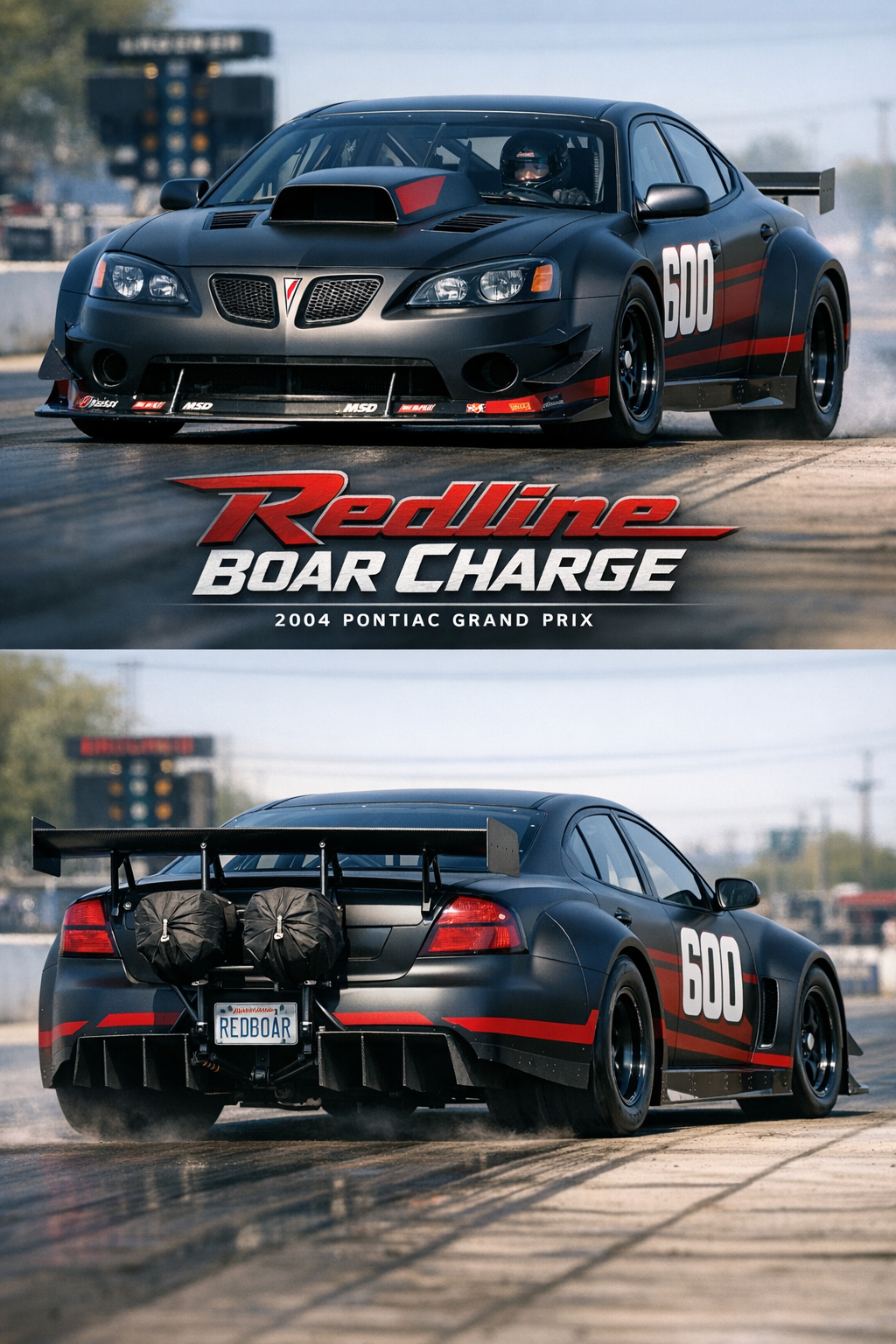
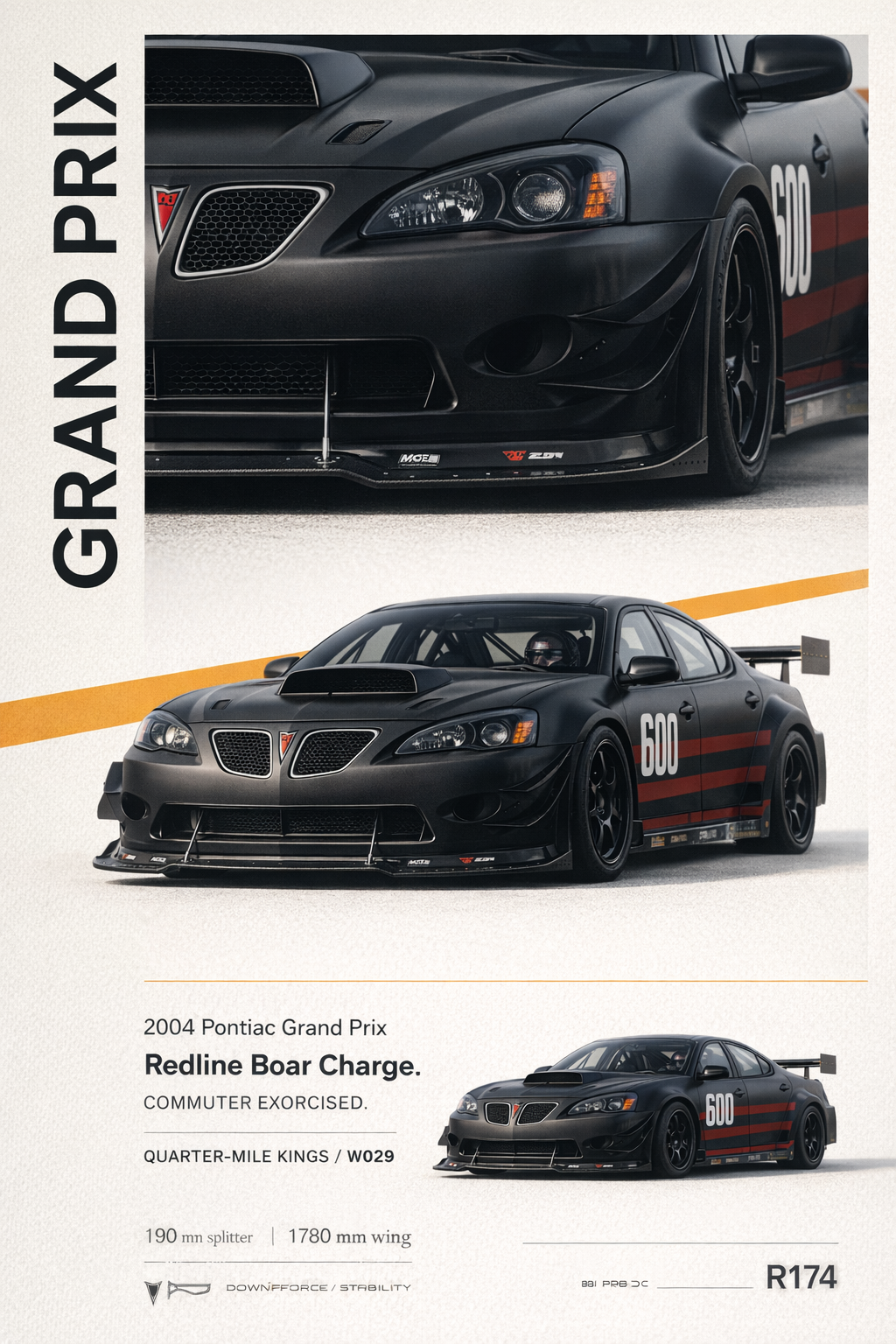
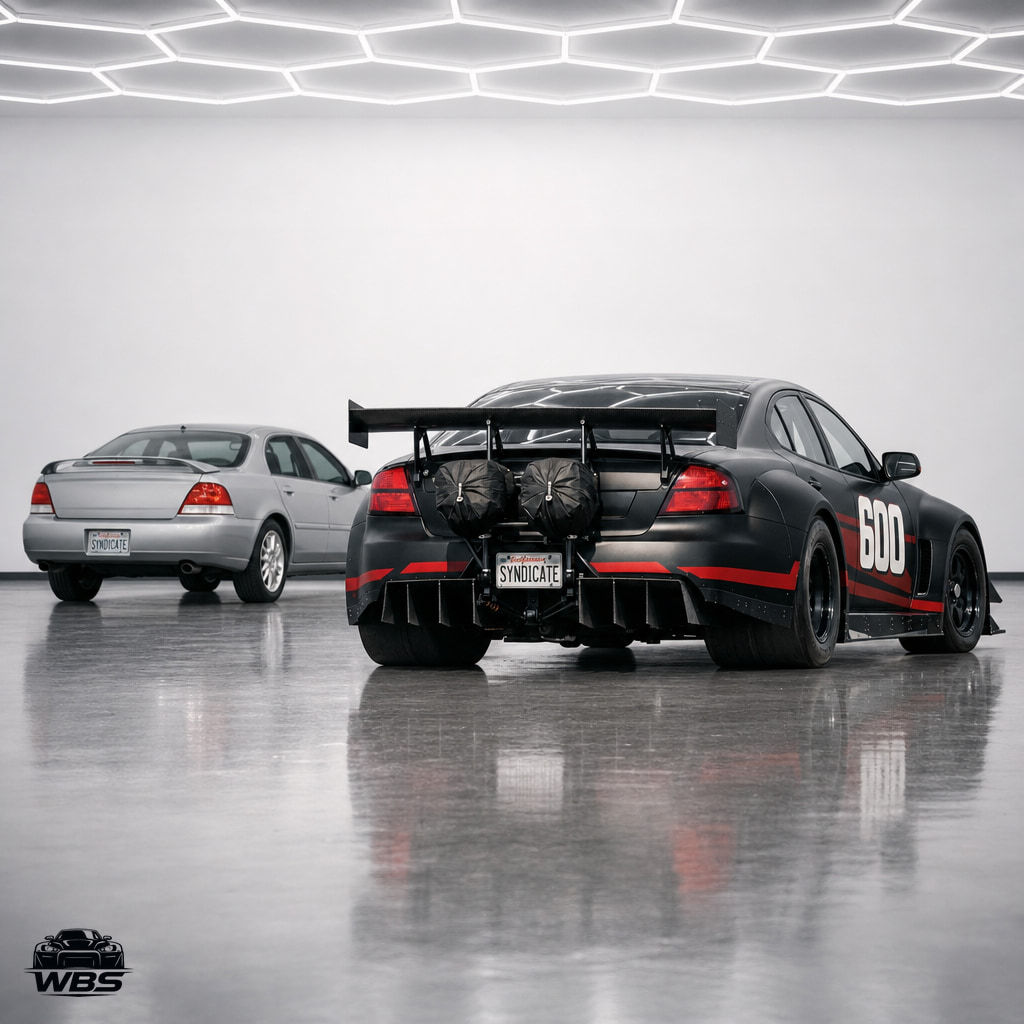
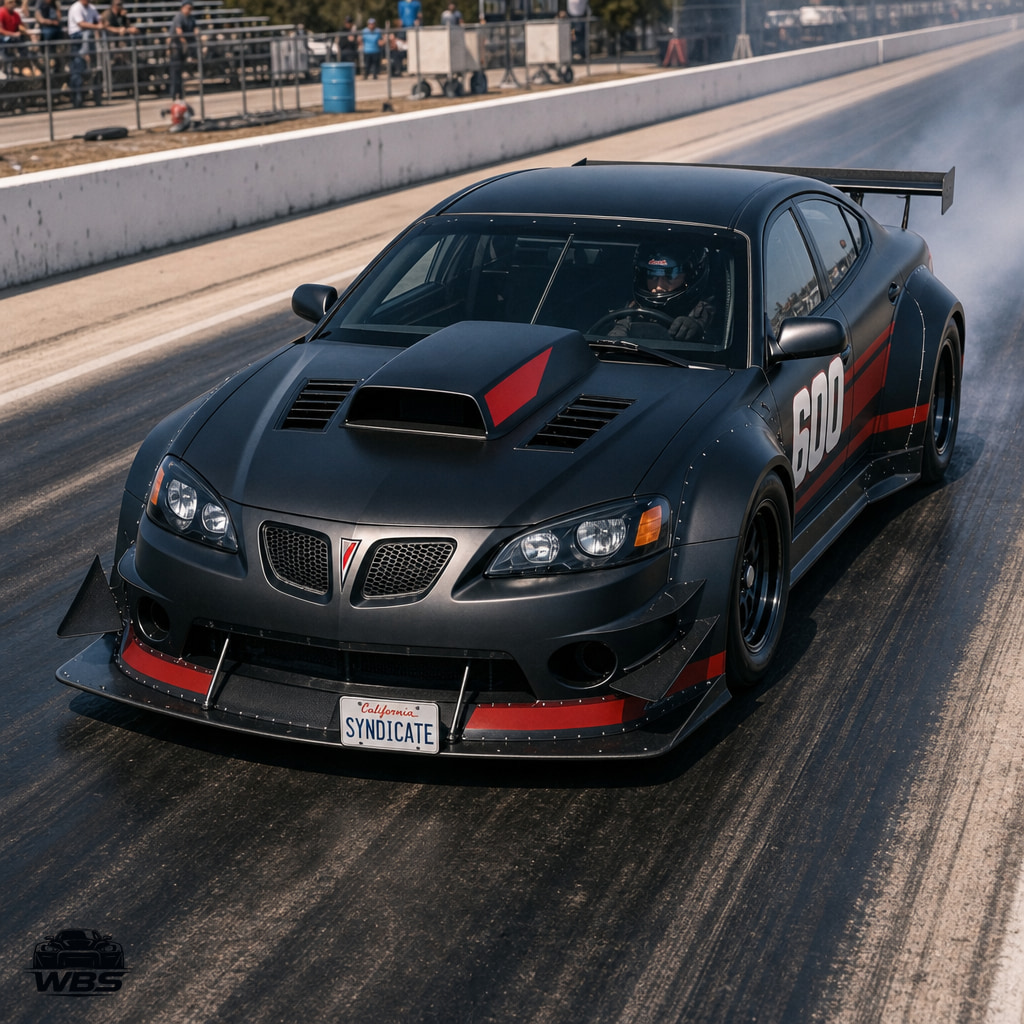
The 2004 Grand Prix was born a front-drive commuter with a supercharged reputation. Redline Boar Charge flips the script into a straight-line weapon: a front-engine, rear-drive conversion wrapped in a hard-edged widebody that looks like it was carved for tire sidewall. Satin black, red chevrons, and door numbers keep it honest—more staging lanes than show field.
The engineering reads like a checklist from a serious drag program: big-block boost up front, a sequential behind it, and a braced solid axle out back. The aero isn’t cosplay—splitter, dive planes, a tall swan-neck wing, and a deep diffuser are tuned for stability and load during the violent first 330 feet, while venting and ducting fight heat soak after the burnout.
Release Image Studies
Image studies from every angle.
Comparison Shots
Blueprint / Collector Archive
Engineering Artifacts
The technical study and collectible interpretation of one build, preserved together.
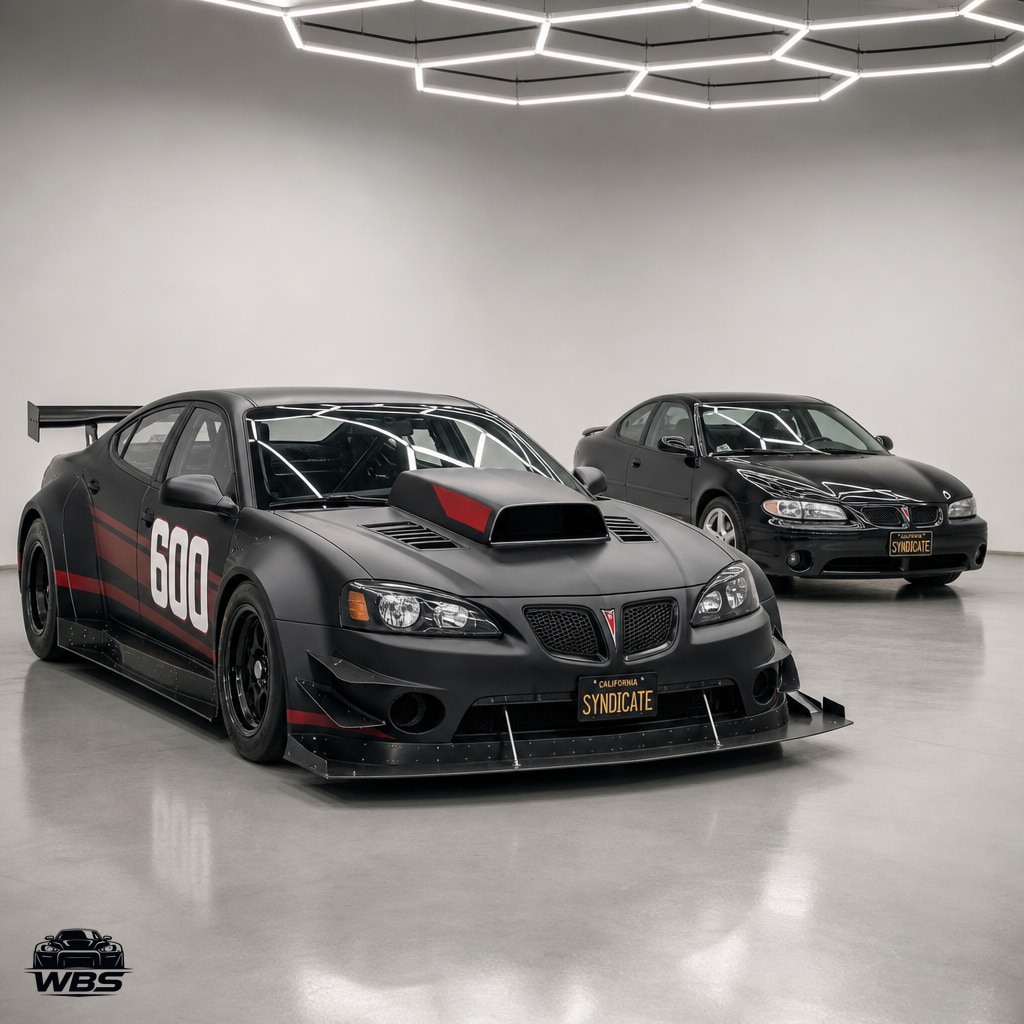
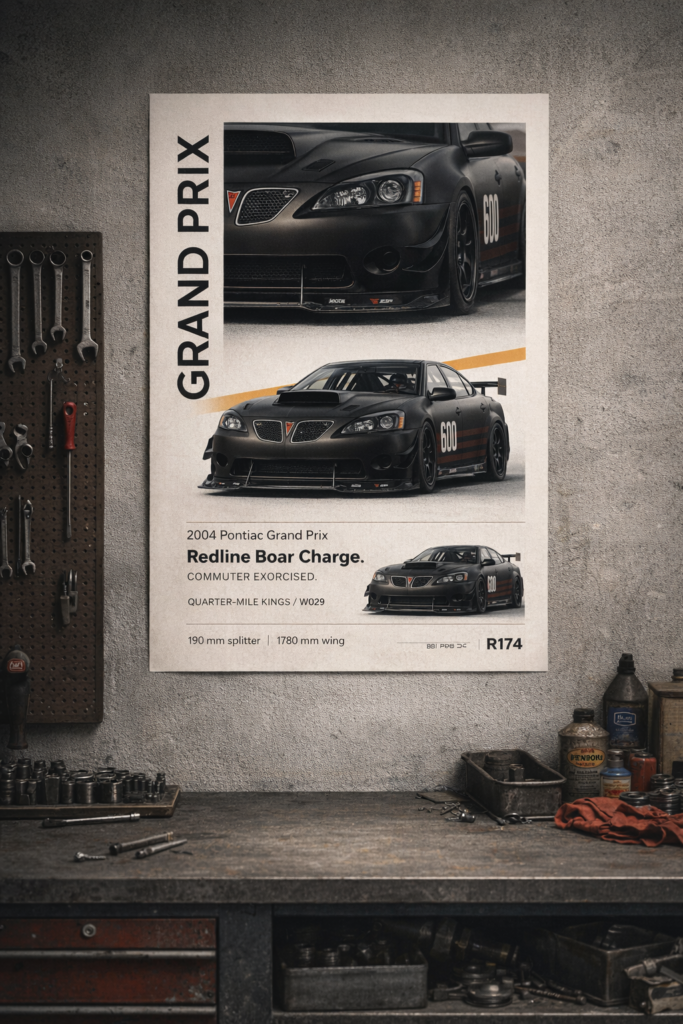
A presentation-grade collector artifact created for this release and preserved as part of the Widebody Syndicate archive.
Selected archive goods are available for collectors.
Technical Dossier
Platform
2004 Pontiac Grand Prix
The 2004 Pontiac Grand Prix stands as a quintessential mid-2000s American sport sedan, blending everyday practicality with a subtle performance edge. Rooted in GM's W-body platform, the Grand Prix offers a balanced chassis with front-wheel drive and a V6 powertrain that, while unassuming, delivers a comfortable yet engaging drive. Its sharp, aerodynamic profile and characteristic split grille reflect a period of automotive design focused on blending aggressive stance with refined lines — a sleeper platform cherished by enthusiasts looking to explore customization beyond the flashy muscle car archetype.
Aero Package
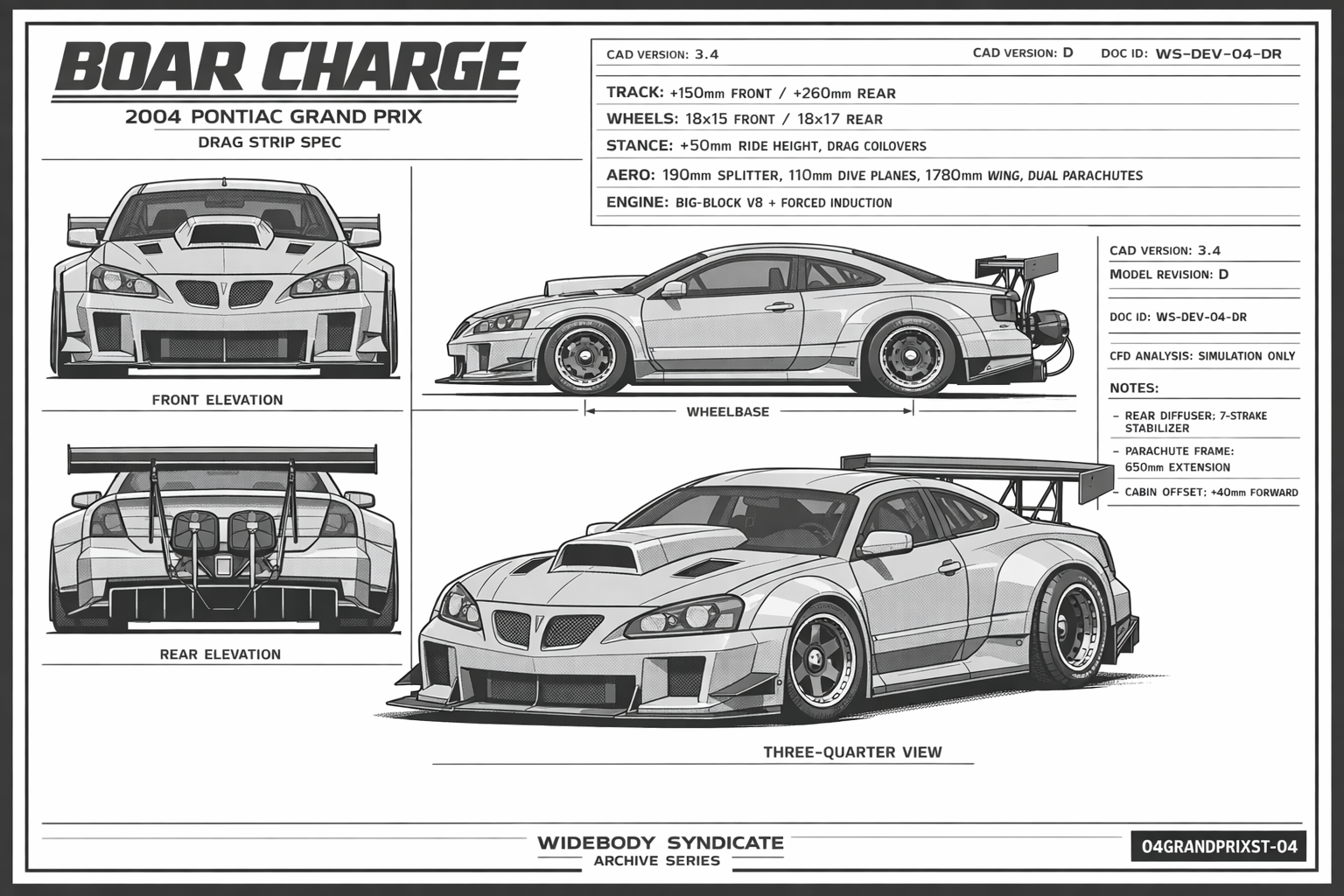
Full-width aluminum splitter extending 190 mm with reinforced leading edge
Dual dive planes mounted above splitter for launch-speed front load and stability
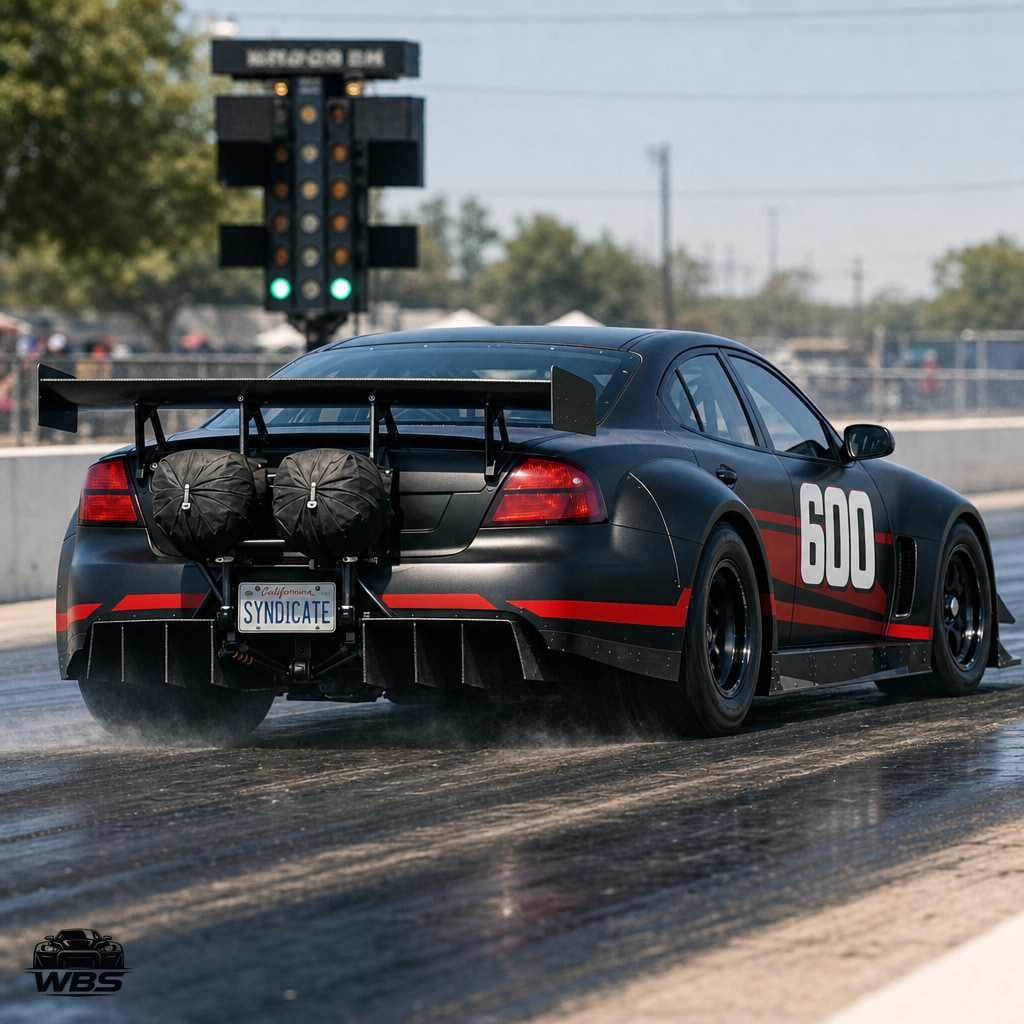
900 mm-wide rear diffuser extending 300 mm with seven vertical strakes
Single-element 1780 mm rear wing on tall swan-neck mounts
Dual parachute pack on a tubular rear frame tied into the chassis
Chassis
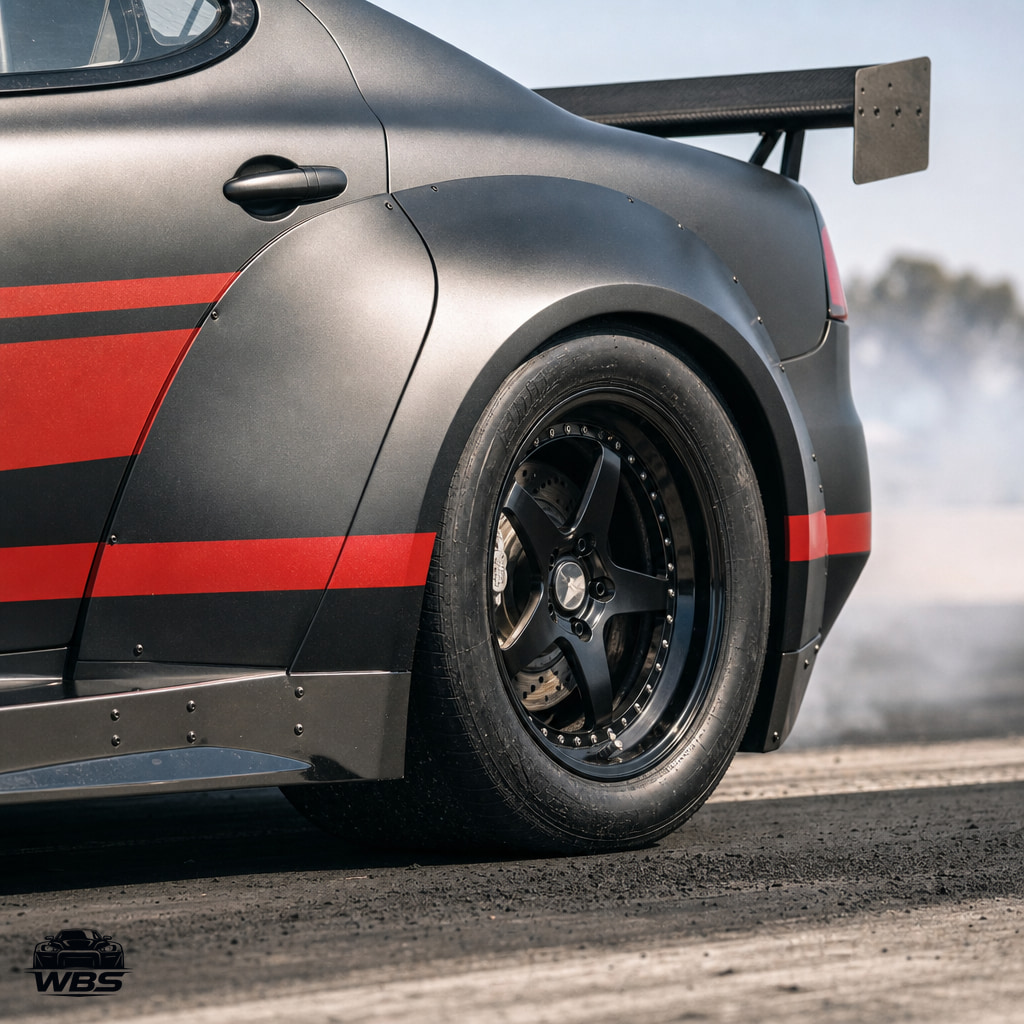
Set in its natural habitat: bright afternoon sun, concrete lanes, timing boards, and a haze of burnout smoke hanging in the background. The stance reads mid-launch—rear sidewalls wrinkled, front end light, aero working to keep it planted and pointed at the stripe.
Wheels & Tires
Front: 18x15 forged HRE FF01 with 315/610R18 drag radials
Rear: 18x17 forged HRE FF01 beadlock-style with 365/700R18 slicks
Clearanced tubs and flare geometry maintained for ~20 mm compression clearance
Widened track: +150 mm front, +260 mm rear for stability under power
Powertrain
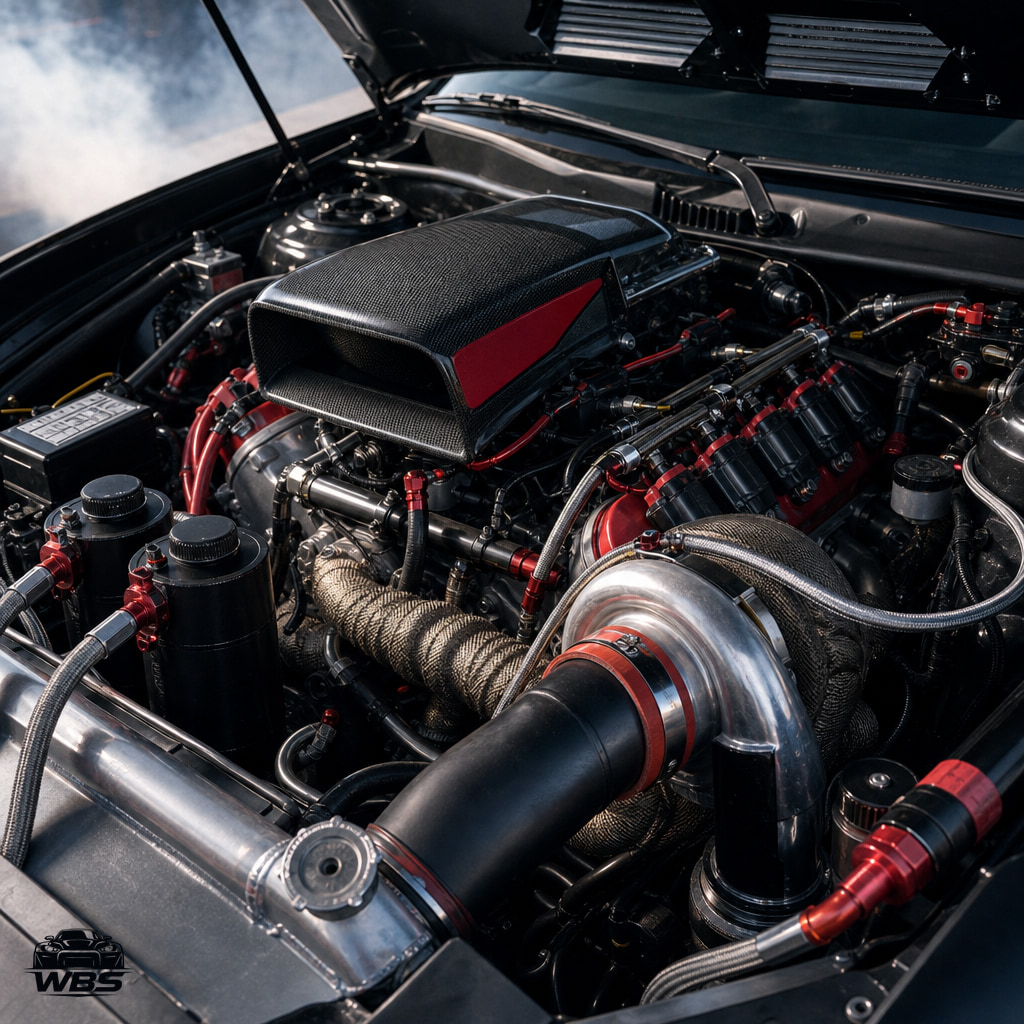
Boosted big-block V8 built for sustained WOT pulls and repeatable hot-lap consistency
Large front-mounted radiator with dedicated ducting plus twin oil coolers
Charge-air cooling sized for burnout-to-launch heat soak management
Fuel system configured for high-flow ethanol blend capability
Fabrication Notes
RWD conversion with transmission tunnel fabrication and reinforced front substructure
Rear chassis bracing and solid-axle mounts designed to control pinion angle under load
Parachute frame triangulated into rear structure to handle deployment loads cleanly
Ducting and venting built as sealed pressure paths, not open holes
Widebody panels fastened with serviceable rivet lines for quick tire and suspension access
Design Philosophy
The 2004 Grand Prix was born a front-drive commuter with a supercharged reputation. Redline Boar Charge flips the script into a straight-line weapon: a front-engine, rear-drive conversion wrapped in a hard-edged widebody that looks like it was carved for tire sidewall. Satin black, red chevrons, and door numbers keep it honest—more staging lanes than show field.
The engineering reads like a checklist from a serious drag program: big-block boost up front, a sequential behind it, and a braced solid axle out back. The aero isn’t cosplay—splitter, dive planes, a tall swan-neck wing, and a deep diffuser are tuned for stability and load during the violent first 330 feet, while venting and ducting fight heat soak after the burnout.
▧Platform+
2004 Pontiac Grand Prix
The 2004 Pontiac Grand Prix stands as a quintessential mid-2000s American sport sedan, blending everyday practicality with a subtle performance edge. Rooted in GM's W-body platform, the Grand Prix offers a balanced chassis with front-wheel drive and a V6 powertrain that, while unassuming, delivers a comfortable yet engaging drive. Its sharp, aerodynamic profile and characteristic split grille reflect a period of automotive design focused on blending aggressive stance with refined lines — a sleeper platform cherished by enthusiasts looking to explore customization beyond the flashy muscle car archetype.
⌘Aero Package+
Full-width aluminum splitter extending 190 mm with reinforced leading edge
Dual dive planes mounted above splitter for launch-speed front load and stability
900 mm-wide rear diffuser extending 300 mm with seven vertical strakes
Single-element 1780 mm rear wing on tall swan-neck mounts
Dual parachute pack on a tubular rear frame tied into the chassis
⟡Chassis+
Set in its natural habitat: bright afternoon sun, concrete lanes, timing boards, and a haze of burnout smoke hanging in the background. The stance reads mid-launch—rear sidewalls wrinkled, front end light, aero working to keep it planted and pointed at the stripe.
◎Wheels & Tires+
Front: 18x15 forged HRE FF01 with 315/610R18 drag radials
Rear: 18x17 forged HRE FF01 beadlock-style with 365/700R18 slicks
Clearanced tubs and flare geometry maintained for ~20 mm compression clearance
Widened track: +150 mm front, +260 mm rear for stability under power
▤Powertrain+
Boosted big-block V8 built for sustained WOT pulls and repeatable hot-lap consistency
Large front-mounted radiator with dedicated ducting plus twin oil coolers
Charge-air cooling sized for burnout-to-launch heat soak management
Fuel system configured for high-flow ethanol blend capability
△Fabrication Notes+
RWD conversion with transmission tunnel fabrication and reinforced front substructure
Rear chassis bracing and solid-axle mounts designed to control pinion angle under load
Parachute frame triangulated into rear structure to handle deployment loads cleanly
Ducting and venting built as sealed pressure paths, not open holes
Widebody panels fastened with serviceable rivet lines for quick tire and suspension access
×Design Philosophy+
The 2004 Grand Prix was born a front-drive commuter with a supercharged reputation. Redline Boar Charge flips the script into a straight-line weapon: a front-engine, rear-drive conversion wrapped in a hard-edged widebody that looks like it was carved for tire sidewall. Satin black, red chevrons, and door numbers keep it honest—more staging lanes than show field.
The engineering reads like a checklist from a serious drag program: big-block boost up front, a sequential behind it, and a braced solid axle out back. The aero isn’t cosplay—splitter, dive planes, a tall swan-neck wing, and a deep diffuser are tuned for stability and load during the violent first 330 feet, while venting and ducting fight heat soak after the burnout.
Part of
Wave 29
Quarter-Mile Kings
We took the oddballs and the icons, the overlooked and the outright wild, and gave them a second life on the strip. A steam-powered Sonata dragster?
Explore Wave 29 → 6 BuildsKeep Exploring
The archive is always growing. New releases, waves, and blueprints added regularly.