R154
Afterburn Vector
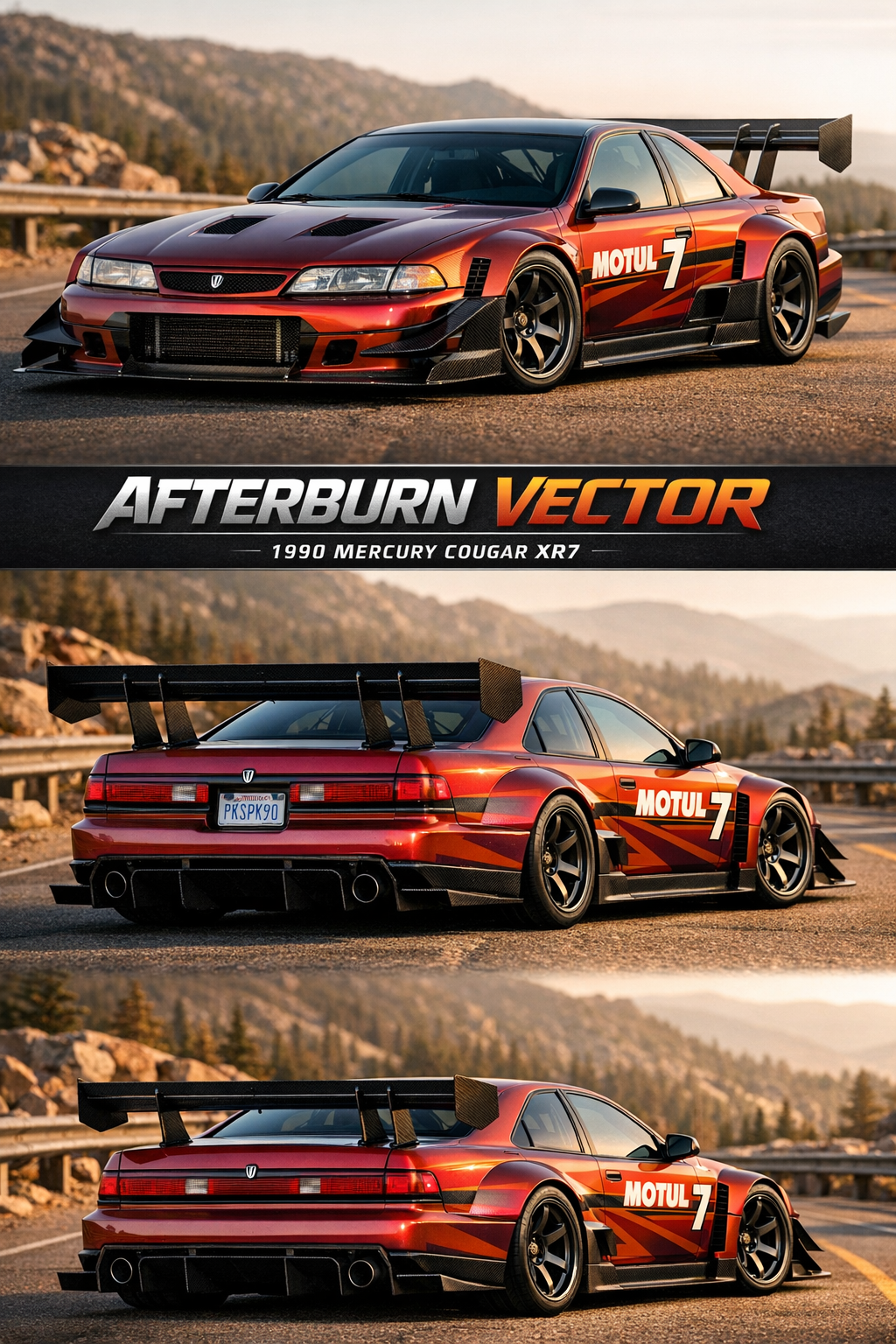
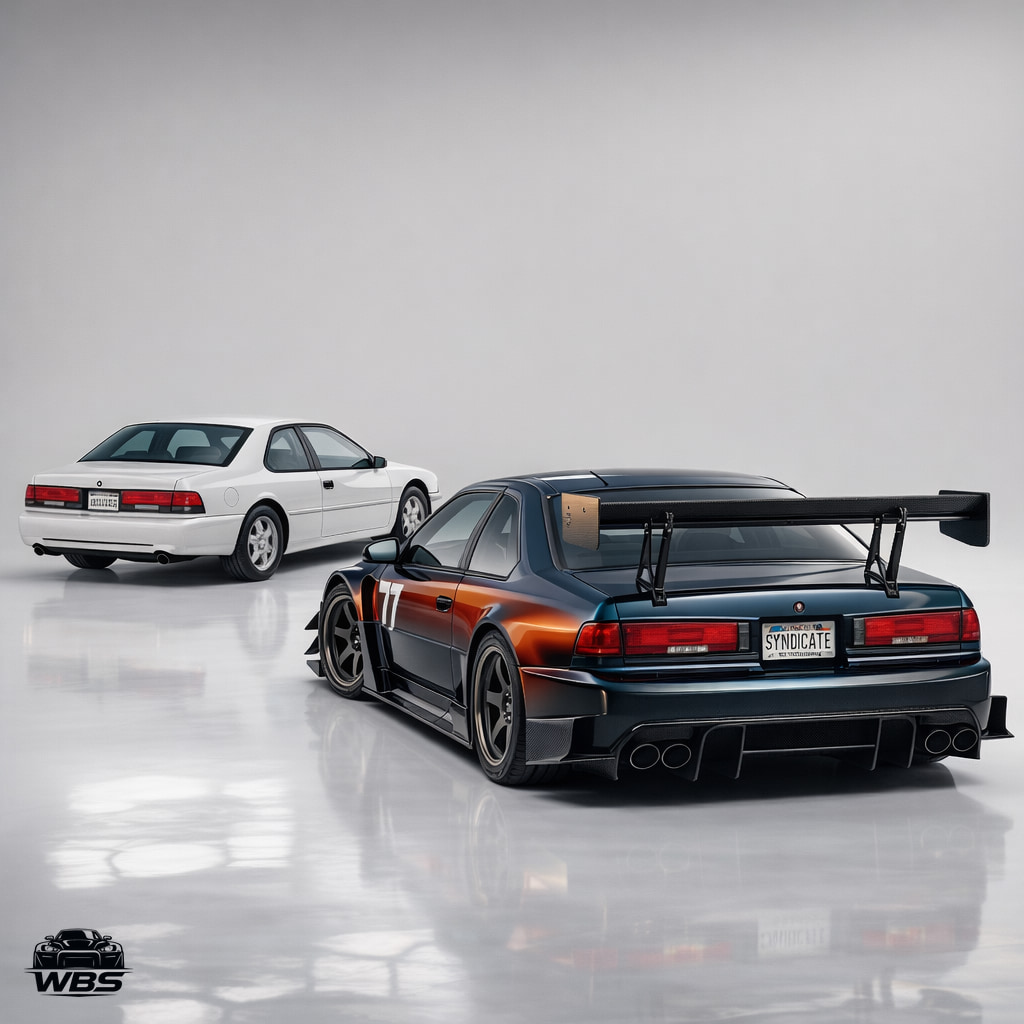
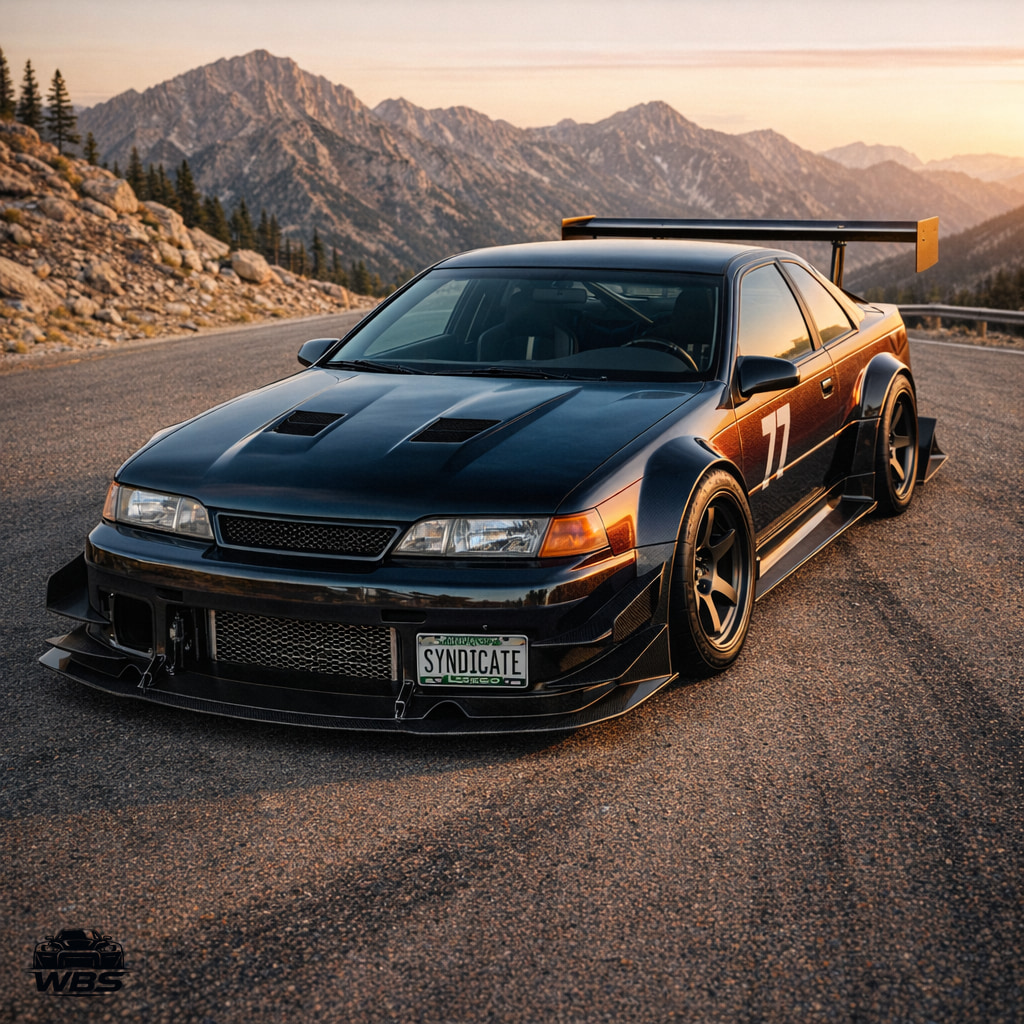
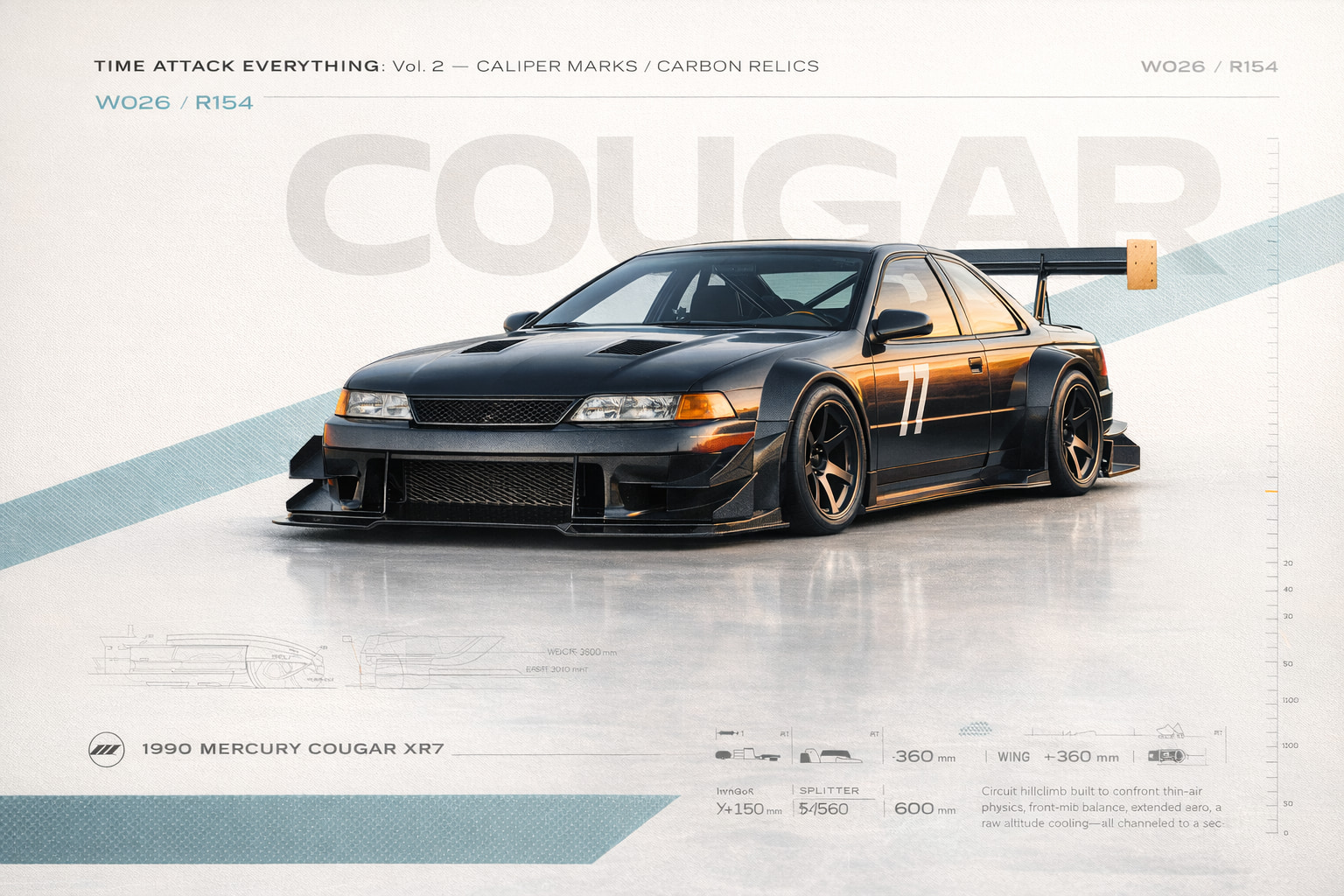
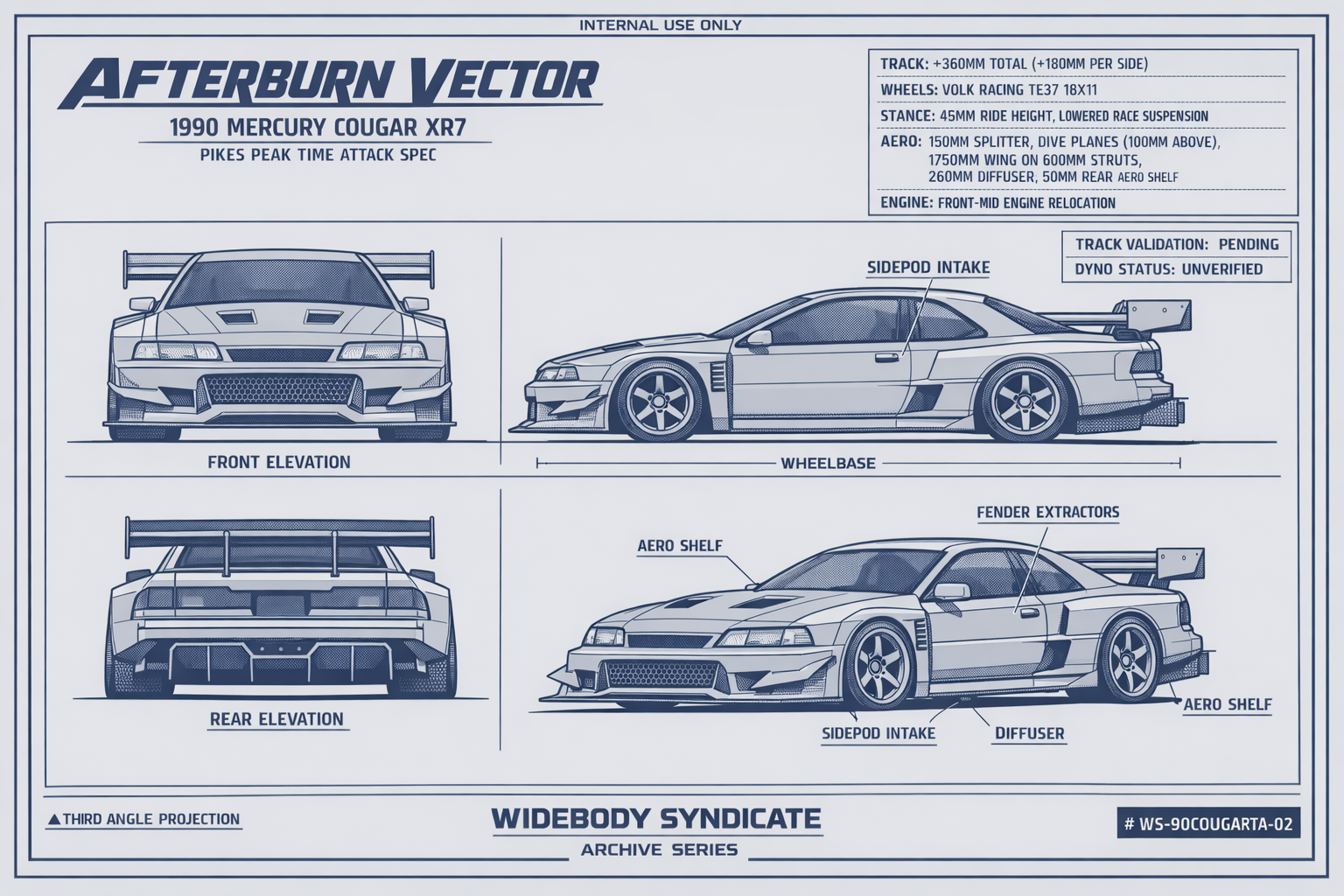
Afterburn Vector takes the forgotten 1990 Cougar XR7 silhouette and forces it into a Pikes Peak problem set: thin air, short straights, violent braking zones, and corners that punish anything without real aero and real cooling. The front end is re-engineered into a front‑mid layout, pulling mass rearward for rotation and stability, while the bodywork turns the long-nose coupe into a squared-off, vented, pressure-managed weapon.
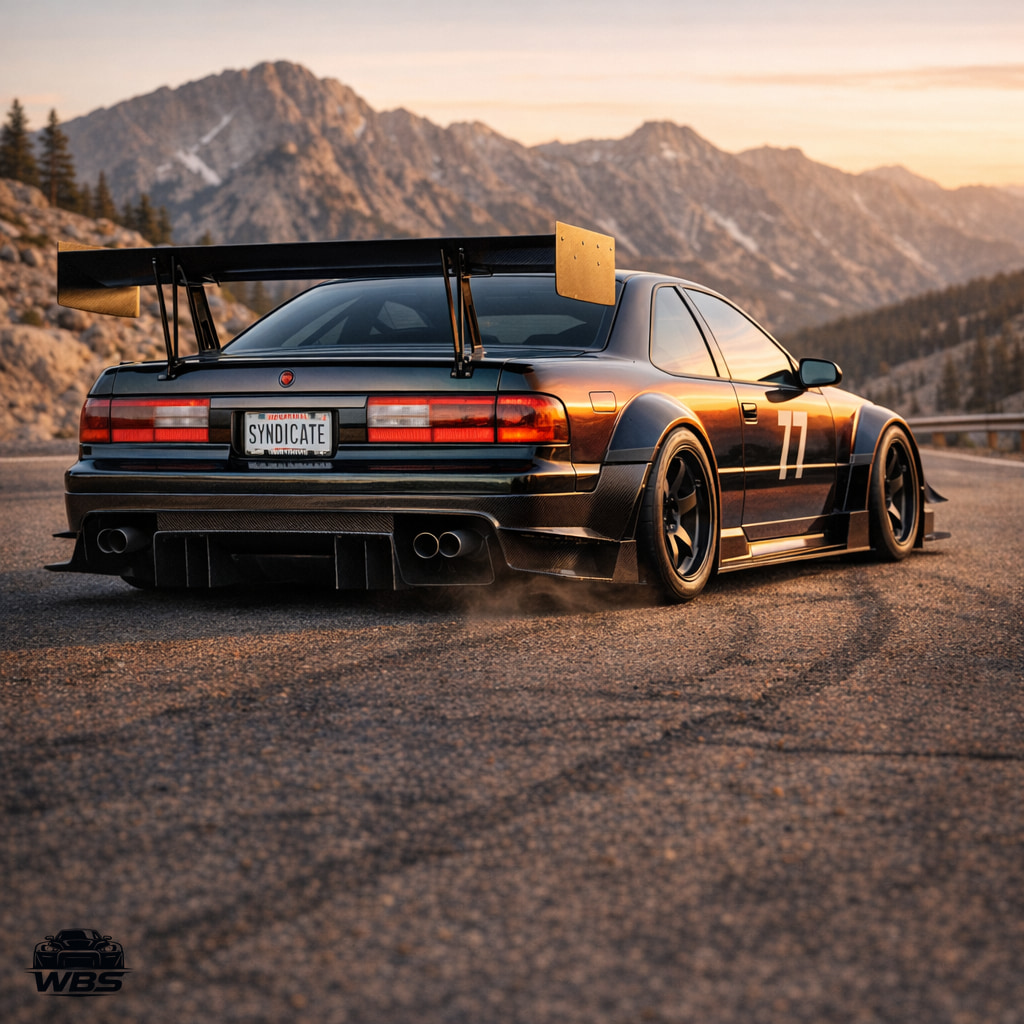
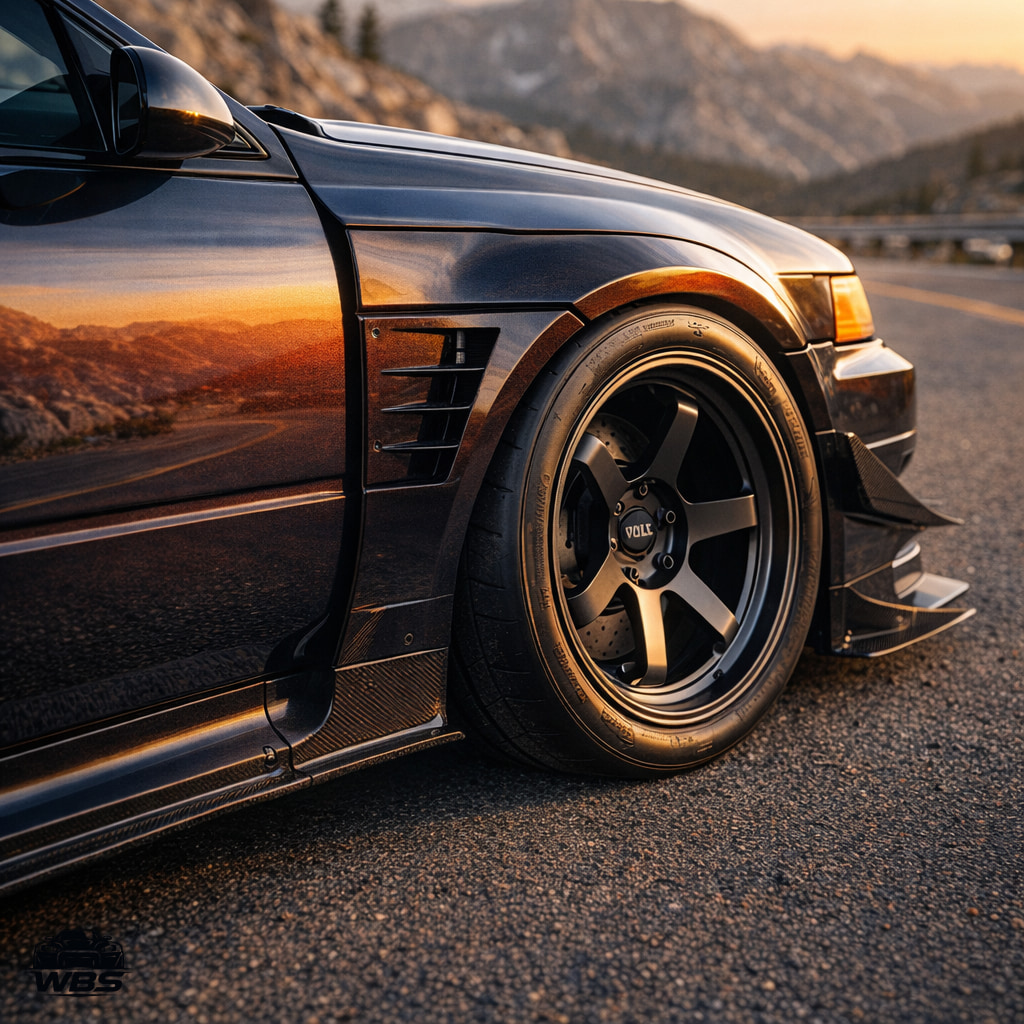
The widebody isn’t decoration—110mm trapezoidal front box flares and 125mm rear quarters exist to house 330-section rubber on 18x11 TE37s and to give the air somewhere to go. A 150mm splitter, raised dive planes, sidepod heat exchangers, and a tall-mounted 1,750mm wing work as a system, keeping the Cougar planted when the mountain takes away horsepower and margin at the same time.
Release Image Studies
Image studies from every angle.
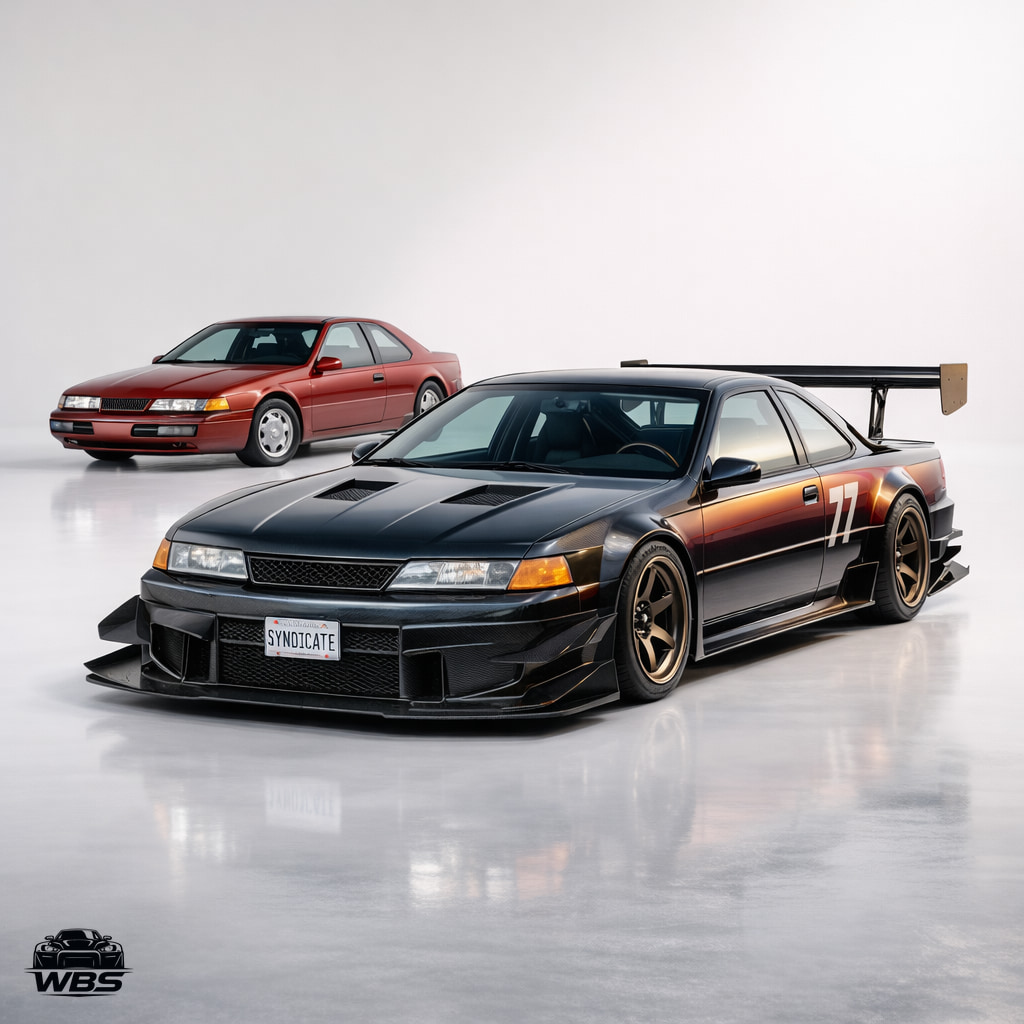
Comparison Shots
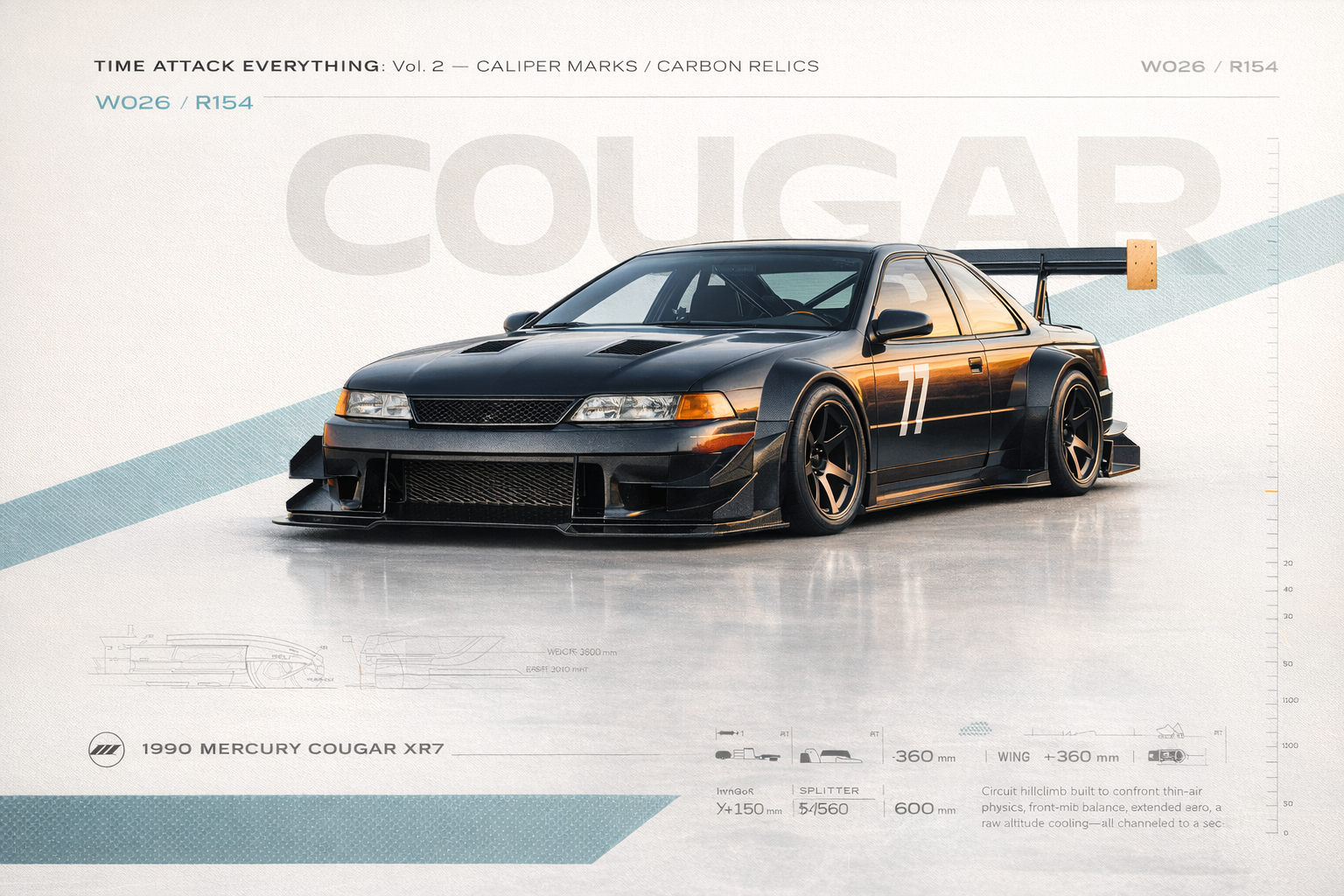
Blueprint / Collector Archive
Engineering Artifacts
The technical study and collectible interpretation of one build, preserved together.
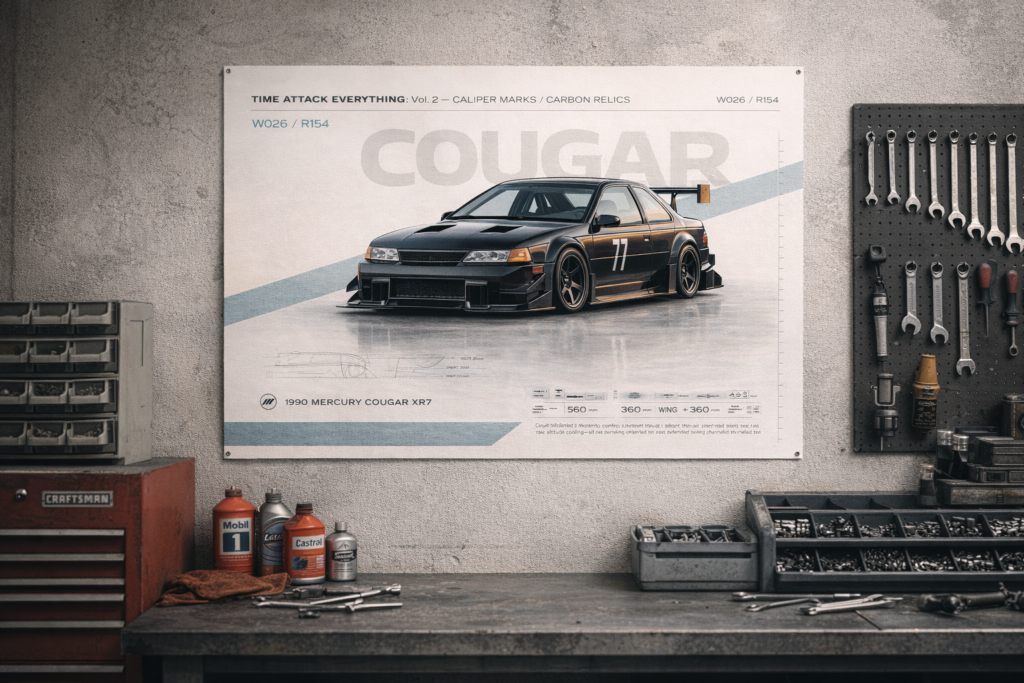
A presentation-grade collector artifact created for this release and preserved as part of the Widebody Syndicate archive.
Selected archive goods are available for collectors.
Technical Dossier
Platform
1990 Mercury Cougar XR7
The 1990 Mercury Cougar XR7 stands as a refined blend of American muscle and personal luxury from the twilight of the Fox Body era. Built on the Fox platform, this Cougar brought aerodynamically sculpted styling and a smooth V6 powertrain to a market craving sophistication without sacrificing performance. It channels the essence of early ’90s grand touring with its poised stance, plush interior, and balanced chassis dynamics—capturing a unique moment when sportiness met comfort in a sleek, signature coupe silhouette.
Aero Package
150mm front splitter with reinforced leading edge and flat floor tie-in
Raised dive planes positioned ~100mm above splitter for front-end bite without stalling the splitter
Vented front fenders with vertical extractor slats (~120mm tall) behind the front tires
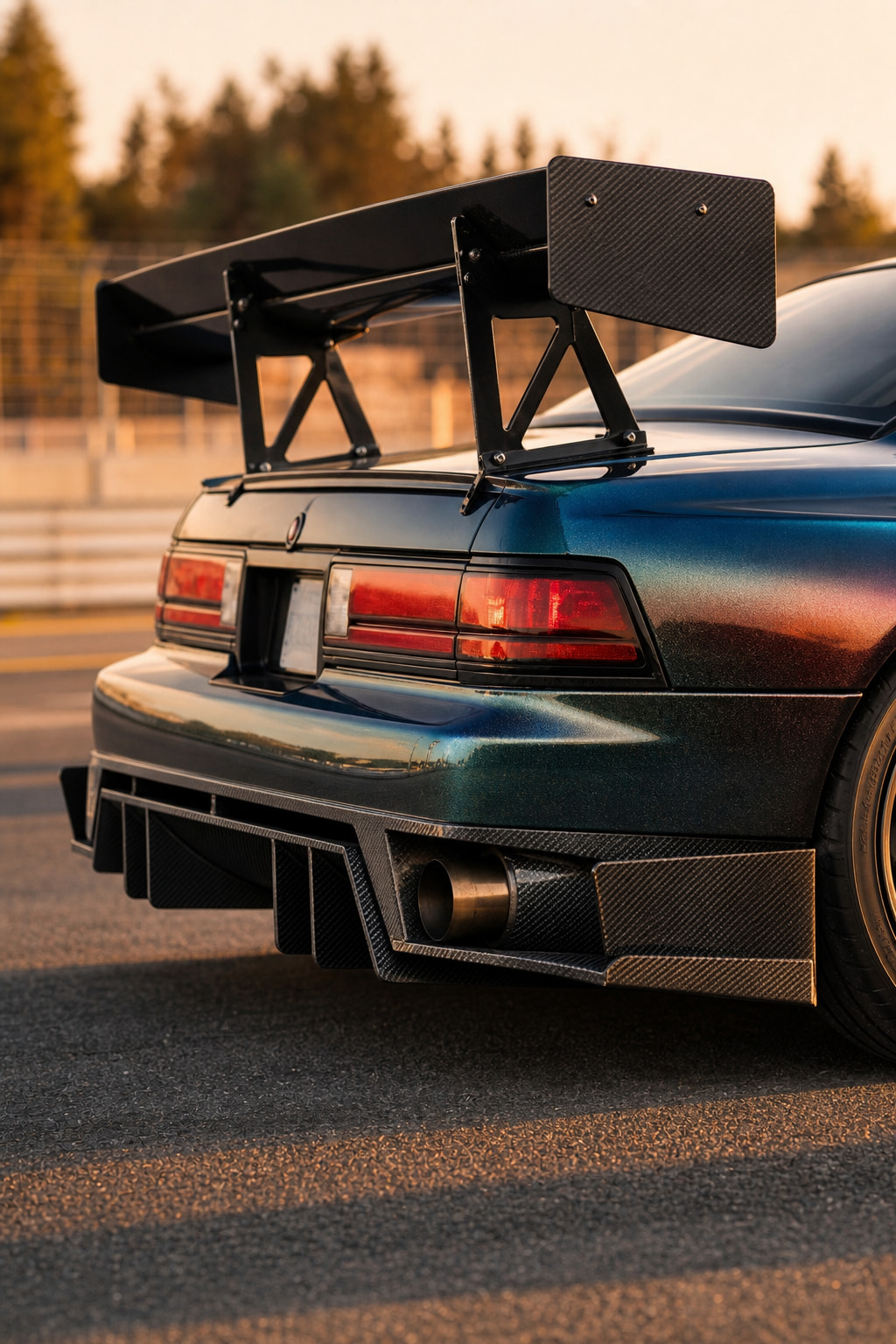
Rear diffuser extending ~260mm past rear axle with strakes to stabilize expansion
1,750mm single-element rear wing on ~600mm carbon uprights mounted to reinforced hatch structure
Chassis
Set for Pikes Peak-style sprints: fast turn-in, heavy braking stability, and mechanical grip that doesn’t fall apart on imperfect pavement. The widened track and low platform are tuned to work with downforce in thin air, keeping the Cougar calm when the road camber changes mid-corner.
Wheels & Tires
Volk Racing TE37, 18x11 square
330-section time attack compound tires front and rear
Motorsport extended studs with center-lock style caps for quick service aesthetics and practicality
High-temp brake package sized for repeated downhill braking zones with dedicated ducting
Powertrain
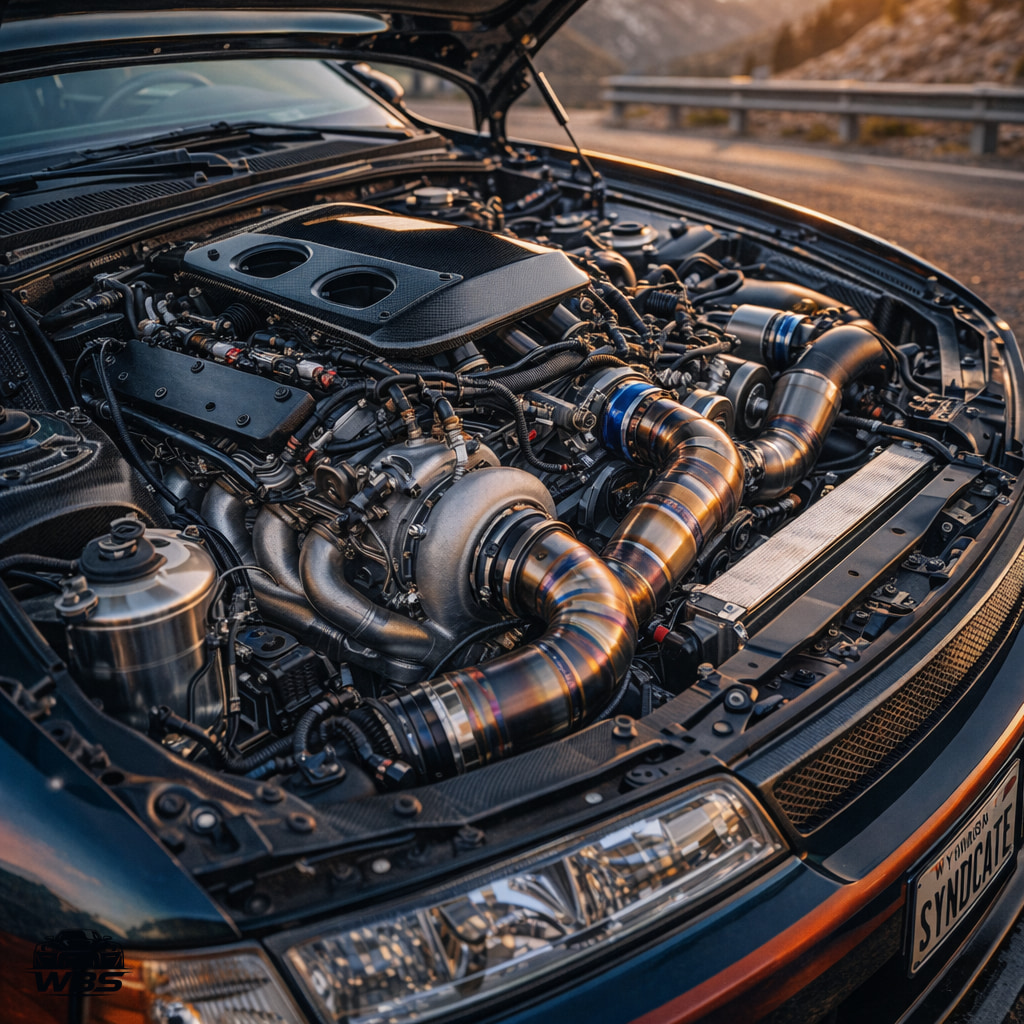
Front‑mid mounted turbo V8 concept tuned for altitude resilience and transient response
Front-mounted radiator/intercooler core supported by sidepod auxiliary heat exchangers
6-speed sequential transaxle-style packaging with paddle shift and flat-shift strategy
Dry-sump oiling and baffled fuel cell to survive long lateral loads and uphill acceleration
Fabrication Notes
Engine setback requires new front subframe, firewall modifications, and revised steering rack placement
Widebody integrated into steel structure with bonded/composite overfenders and serviceable inner liners
Splitter, floor, and diffuser mounted to chassis hardpoints with quick-release access for repairs
Wing mounts tied into rear structure with load-spreading plates to handle high AoA settings
Design Philosophy
Afterburn Vector takes the forgotten 1990 Cougar XR7 silhouette and forces it into a Pikes Peak problem set: thin air, short straights, violent braking zones, and corners that punish anything without real aero and real cooling. The front end is re-engineered into a front‑mid layout, pulling mass rearward for rotation and stability, while the bodywork turns the long-nose coupe into a squared-off, vented, pressure-managed weapon.
The widebody isn’t decoration—110mm trapezoidal front box flares and 125mm rear quarters exist to house 330-section rubber on 18x11 TE37s and to give the air somewhere to go. A 150mm splitter, raised dive planes, sidepod heat exchangers, and a tall-mounted 1,750mm wing work as a system, keeping the Cougar planted when the mountain takes away horsepower and margin at the same time.
▧Platform+
1990 Mercury Cougar XR7
The 1990 Mercury Cougar XR7 stands as a refined blend of American muscle and personal luxury from the twilight of the Fox Body era. Built on the Fox platform, this Cougar brought aerodynamically sculpted styling and a smooth V6 powertrain to a market craving sophistication without sacrificing performance. It channels the essence of early ’90s grand touring with its poised stance, plush interior, and balanced chassis dynamics—capturing a unique moment when sportiness met comfort in a sleek, signature coupe silhouette.
⌘Aero Package+
150mm front splitter with reinforced leading edge and flat floor tie-in
Raised dive planes positioned ~100mm above splitter for front-end bite without stalling the splitter
Vented front fenders with vertical extractor slats (~120mm tall) behind the front tires
Rear diffuser extending ~260mm past rear axle with strakes to stabilize expansion
1,750mm single-element rear wing on ~600mm carbon uprights mounted to reinforced hatch structure
⟡Chassis+
Set for Pikes Peak-style sprints: fast turn-in, heavy braking stability, and mechanical grip that doesn’t fall apart on imperfect pavement. The widened track and low platform are tuned to work with downforce in thin air, keeping the Cougar calm when the road camber changes mid-corner.
◎Wheels & Tires+
Volk Racing TE37, 18x11 square
330-section time attack compound tires front and rear
Motorsport extended studs with center-lock style caps for quick service aesthetics and practicality
High-temp brake package sized for repeated downhill braking zones with dedicated ducting
▤Powertrain+
Front‑mid mounted turbo V8 concept tuned for altitude resilience and transient response
Front-mounted radiator/intercooler core supported by sidepod auxiliary heat exchangers
6-speed sequential transaxle-style packaging with paddle shift and flat-shift strategy
Dry-sump oiling and baffled fuel cell to survive long lateral loads and uphill acceleration
△Fabrication Notes+
Engine setback requires new front subframe, firewall modifications, and revised steering rack placement
Widebody integrated into steel structure with bonded/composite overfenders and serviceable inner liners
Splitter, floor, and diffuser mounted to chassis hardpoints with quick-release access for repairs
Wing mounts tied into rear structure with load-spreading plates to handle high AoA settings
×Design Philosophy+
Afterburn Vector takes the forgotten 1990 Cougar XR7 silhouette and forces it into a Pikes Peak problem set: thin air, short straights, violent braking zones, and corners that punish anything without real aero and real cooling. The front end is re-engineered into a front‑mid layout, pulling mass rearward for rotation and stability, while the bodywork turns the long-nose coupe into a squared-off, vented, pressure-managed weapon.
The widebody isn’t decoration—110mm trapezoidal front box flares and 125mm rear quarters exist to house 330-section rubber on 18x11 TE37s and to give the air somewhere to go. A 150mm splitter, raised dive planes, sidepod heat exchangers, and a tall-mounted 1,750mm wing work as a system, keeping the Cougar planted when the mountain takes away horsepower and margin at the same time.
Part of
Wave 26
Time Attack Everything: Vol. 2
We just cranked the time attack dial all the way to eleven. Our builds slam classic chassis and overlooked platforms into a parallel universe where track dominance isn’t just a goal — it’s a mandate stamped in carbon fiber and forged metal.
Explore Wave 26 → 6 BuildsKeep Exploring
The archive is always growing. New releases, waves, and blueprints added regularly.