WS Widebody Syndicate
Phantom Canopy Protocol

R300

Phantom Canopy Protocol

2006 Scion tC

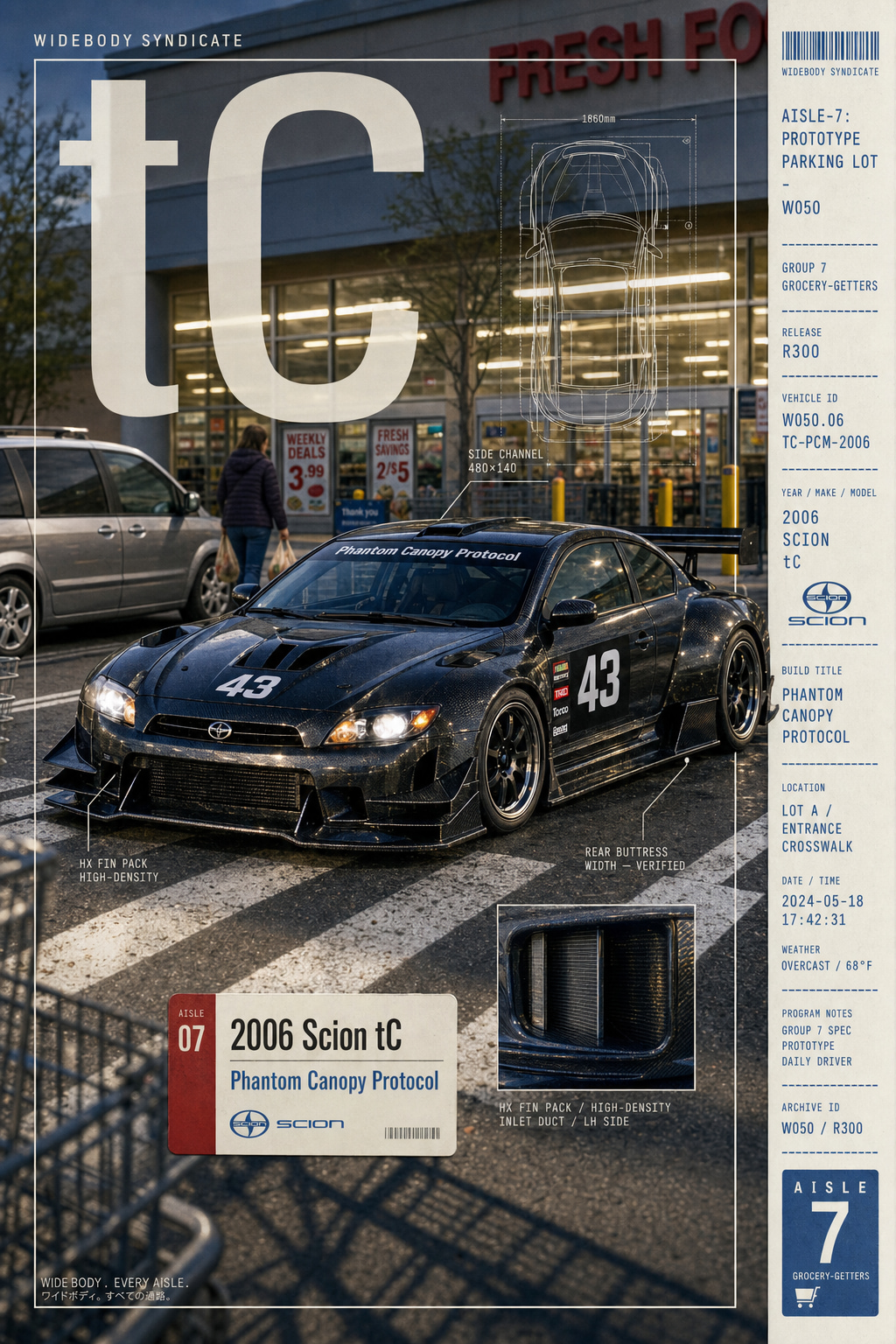
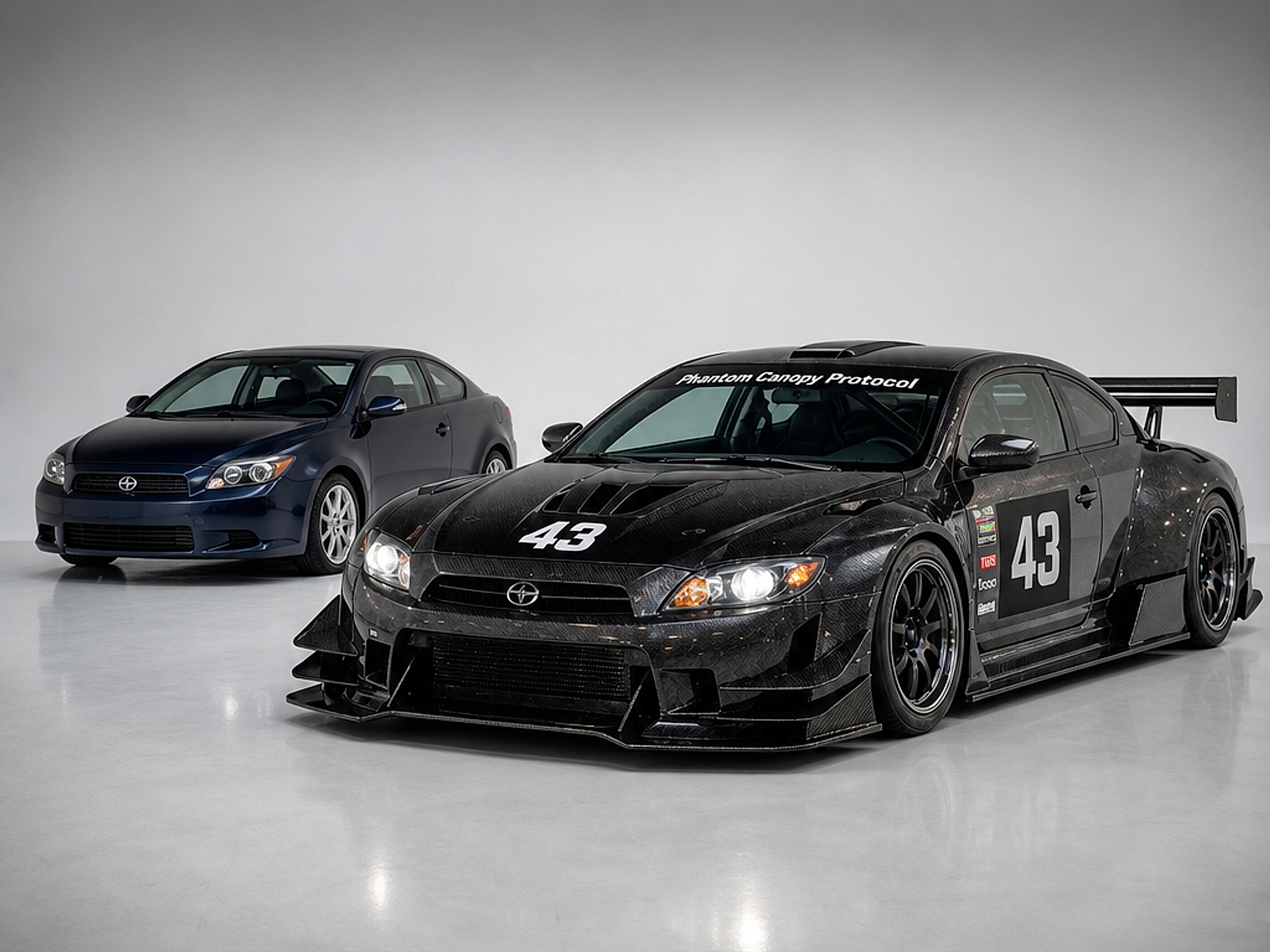
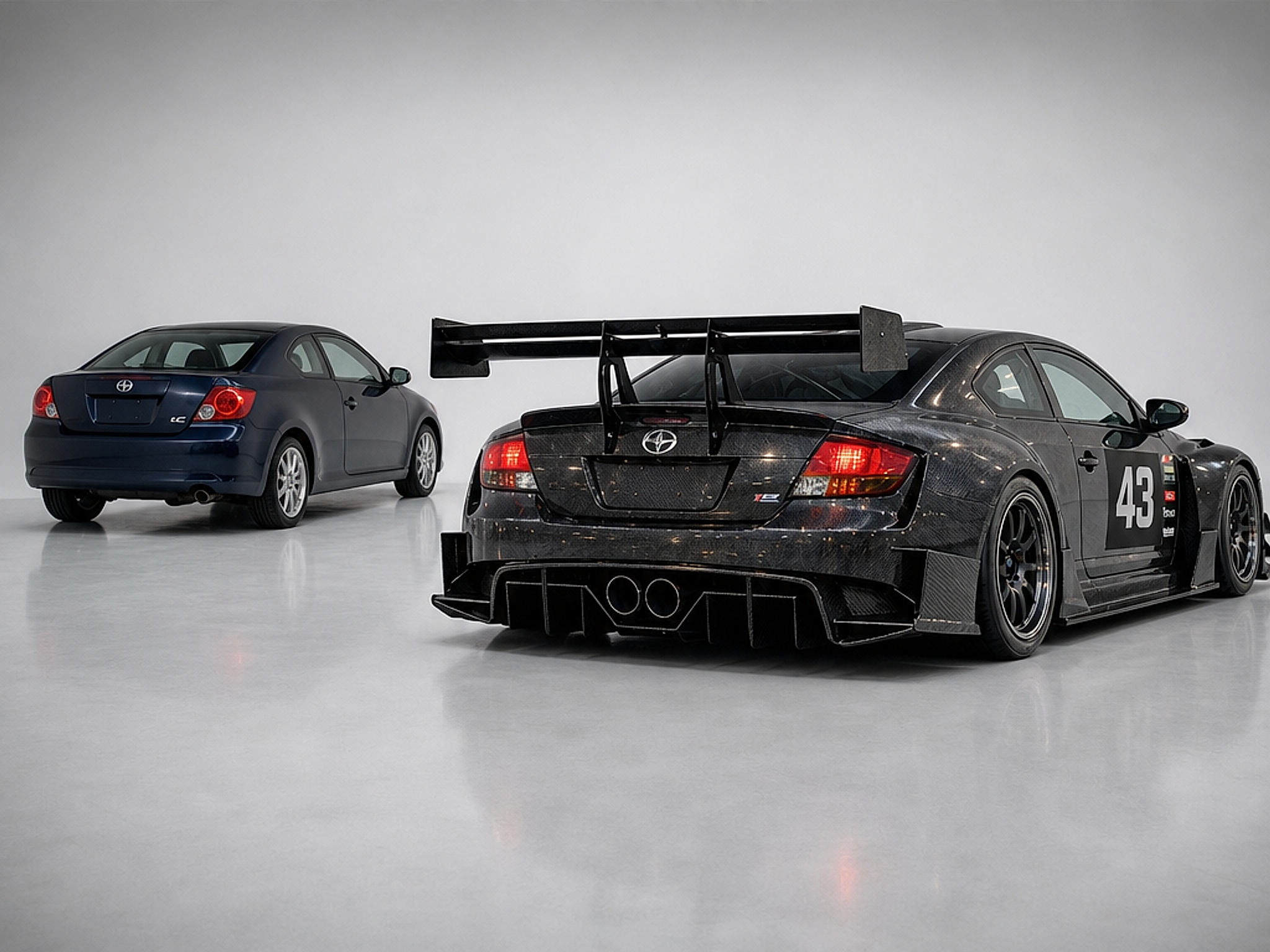
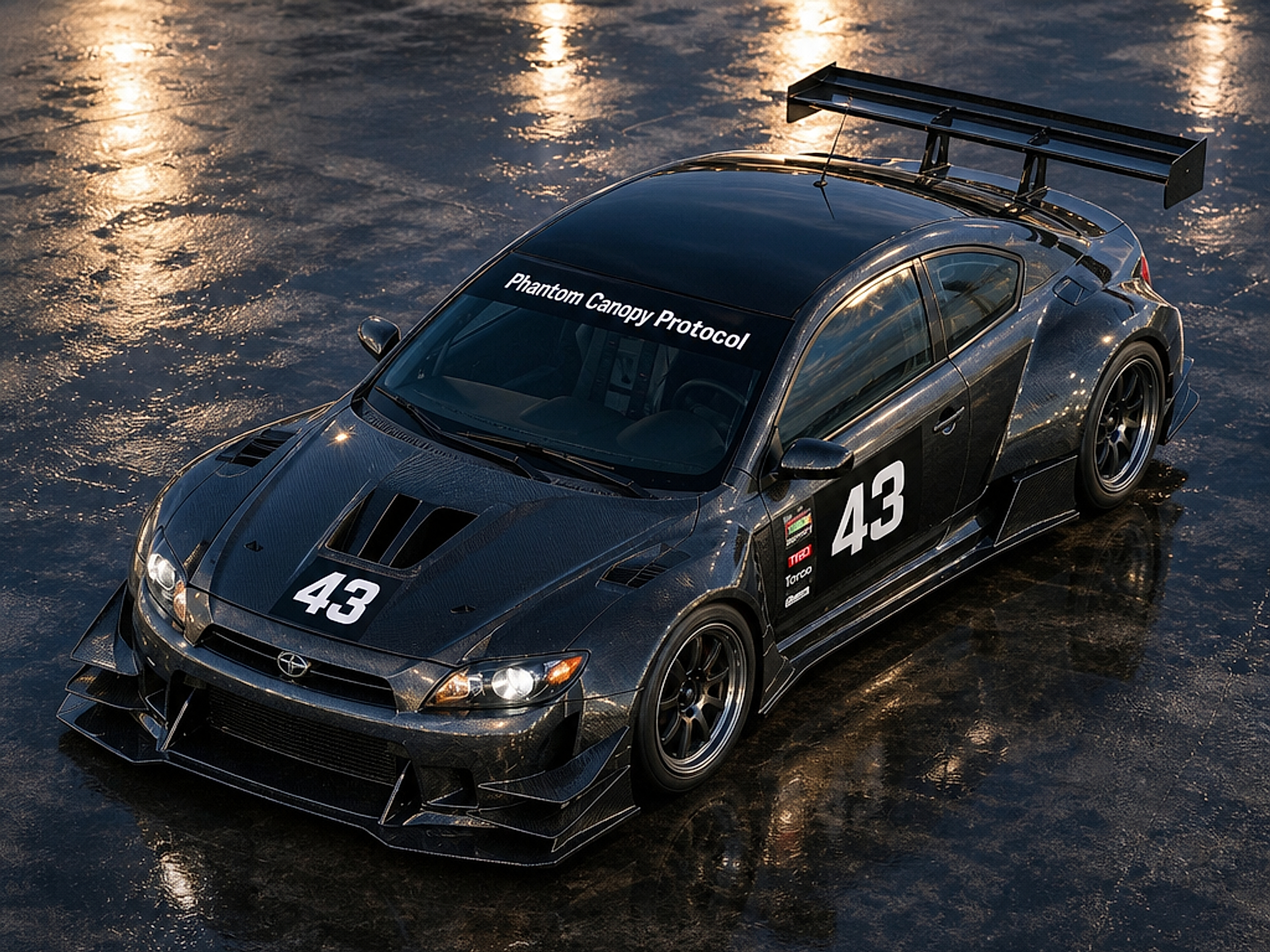
Phantom Canopy Protocol takes the humble 2006 Scion tC silhouette and treats it like an unlimited-class endurance prototype that just happens to wear production glass. The roofline and door cuts stay familiar, but everything below the beltline is rebuilt around a widened track, huge slicks, and an aero package that looks engineered first and styled second—hard edges, sharp lips, and panel breaks that read like serviceable race hardware.

The headline is visible cooling infrastructure: sidepod-style tunnels in the front arches, stacked venting behind them, and quarter-panel ducting that suggests the car was designed to run flat-out for hours, not a few hot laps. It’s a tC only in greenhouse and attitude—low, wide, and technical, with the kind of functional excess you’d expect from a rulebook that stopped caring.
Share Release X FB

Image studies from every angle.

6 curated frames · swipe / tap to inspect

Comparison Shots

Engineering Artifacts

The technical study and collectible interpretation of one build, preserved together.

01
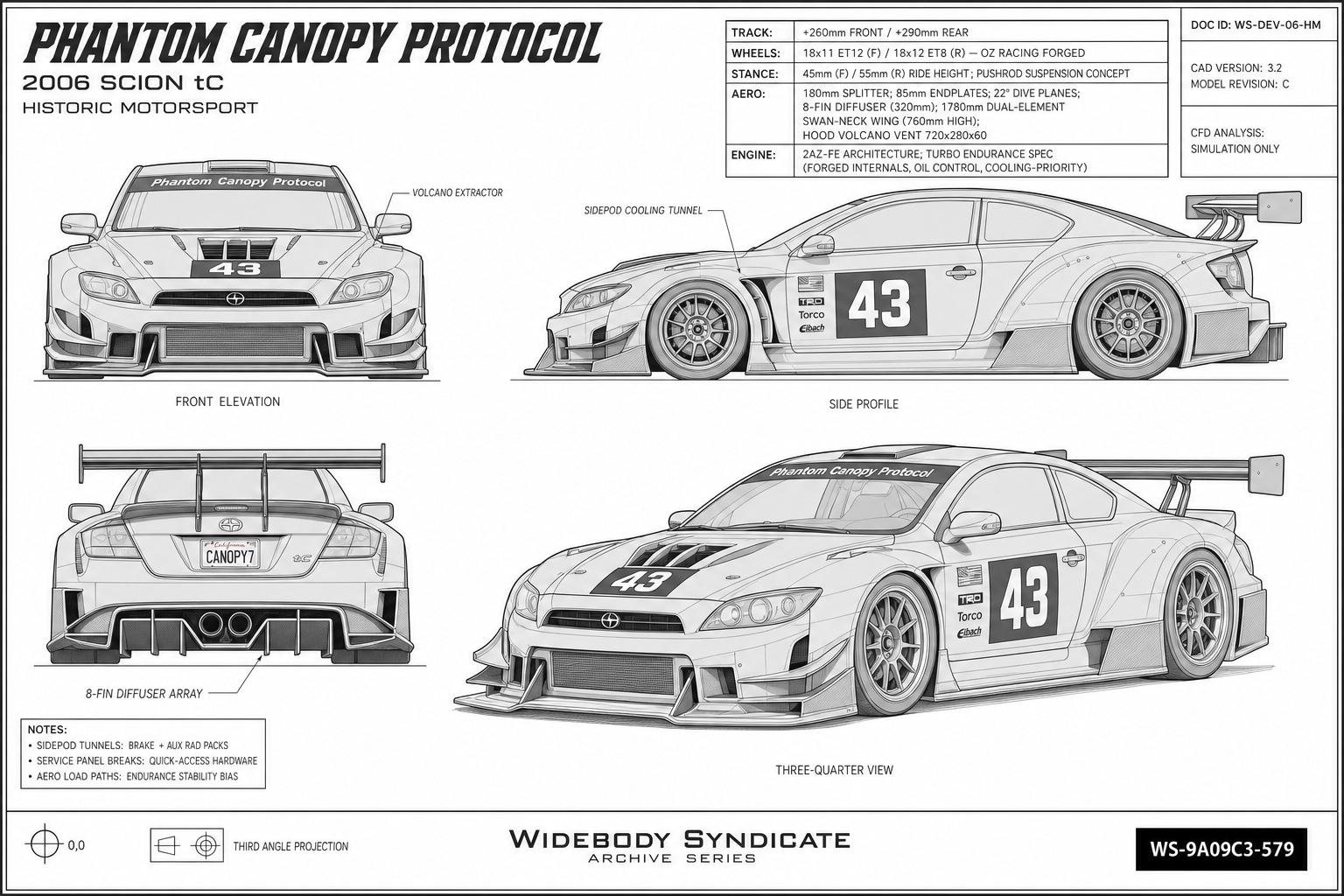
Technical DrawingBlueprint archive
Phantom Canopy Protocol blueprint
02
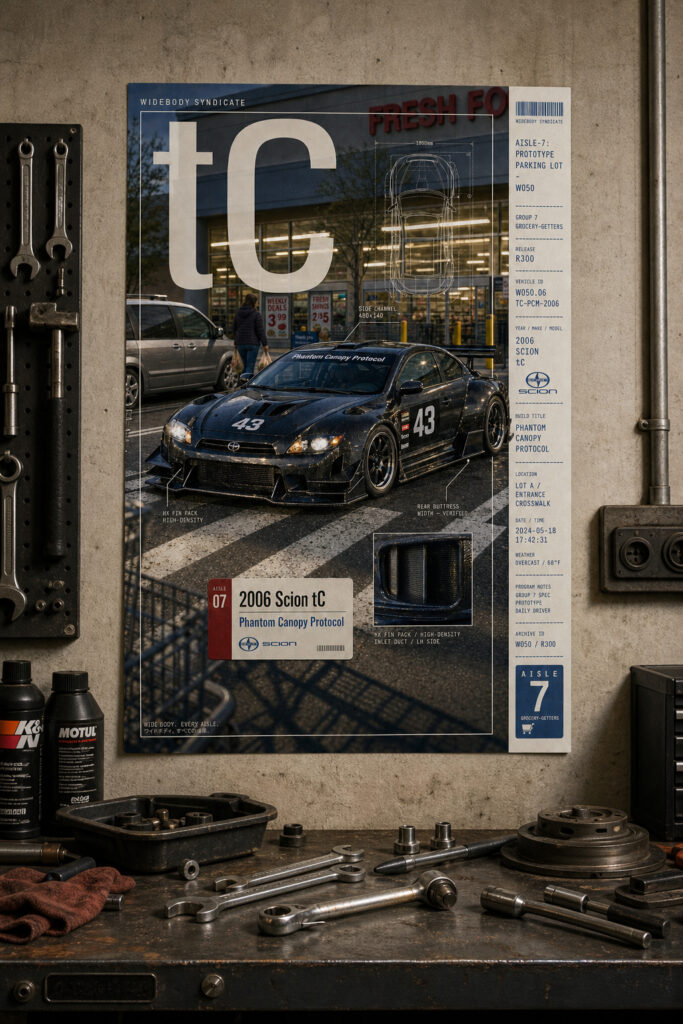
Phantom Canopy Protocol Collector EditionCollector artifact
Phantom Canopy Protocol Collector Edition

A presentation-grade collector artifact created for this release and preserved as part of the Widebody Syndicate archive.

Platform

2006 Scion tC

2006 Scion tC

Launched as Scion’s breakout coupe, the 2006 tC is peak mid-2000s Toyota thinking filtered through youth-culture packaging: clean lines, practical proportions, and a chassis that’s more honest than flashy. Underneath it’s built around Toyota’s dependable hardware (2AZ-FE 2.4L and a straightforward front-wheel-drive layout), wrapped in a compact 2+2 hatchback form that actually works as a daily—fold the rear seats and it becomes a parts runner as easily as a commuter.

What made the first-gen tC a scene staple wasn’t exotic engineering; it was accessibility. An OEM panoramic glass roof, simple McPherson strut/torsion-beam suspension, and strong aftermarket support turned it into a blank canvas across tuner, stance, and track-day circles—without ever losing that resilient, unpretentious Toyota base that keeps them on the road years later.

SciontC2006
View Platform

Aero Package

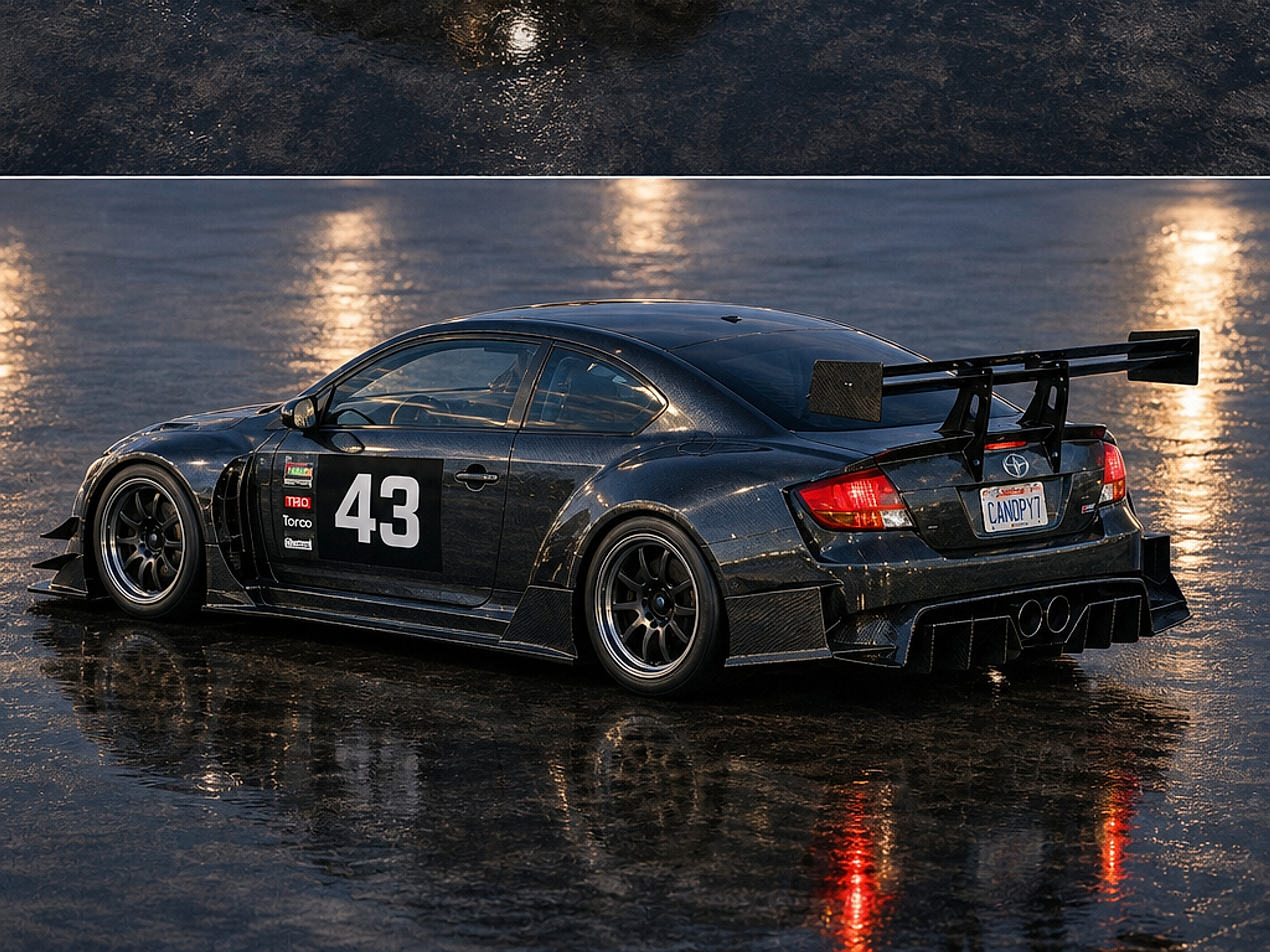
180mm carbon splitter with 85mm endplates and integrated dive planes
Multi-element front canards with outward bias for vortex management
Deep rear diffuser (8-fin) extending rearward for ground-effect extraction
Dual-element swan-neck rear wing (1780mm span) with adjustable pitch

Chassis

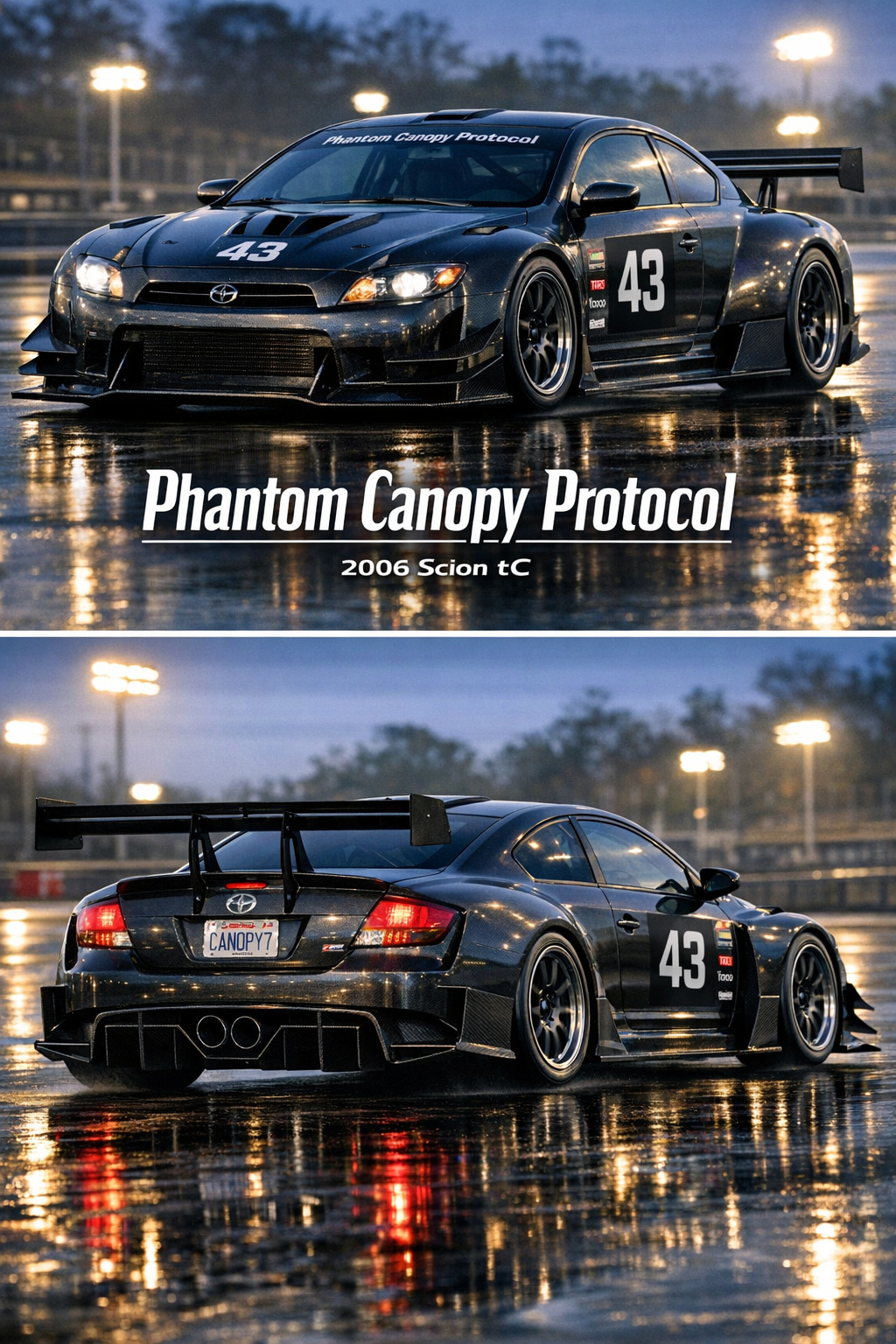
Set on a closed high-speed endurance circuit at dusk, the wet surface and flood lighting underline what this car is about: stability, cooling, and aero that works when conditions get messy. The low camera angle and long lens compress the proportions, making the widened arches, splitter plane, and towering wing read like purpose-built hardware rather than styling.

Wheels & Tires

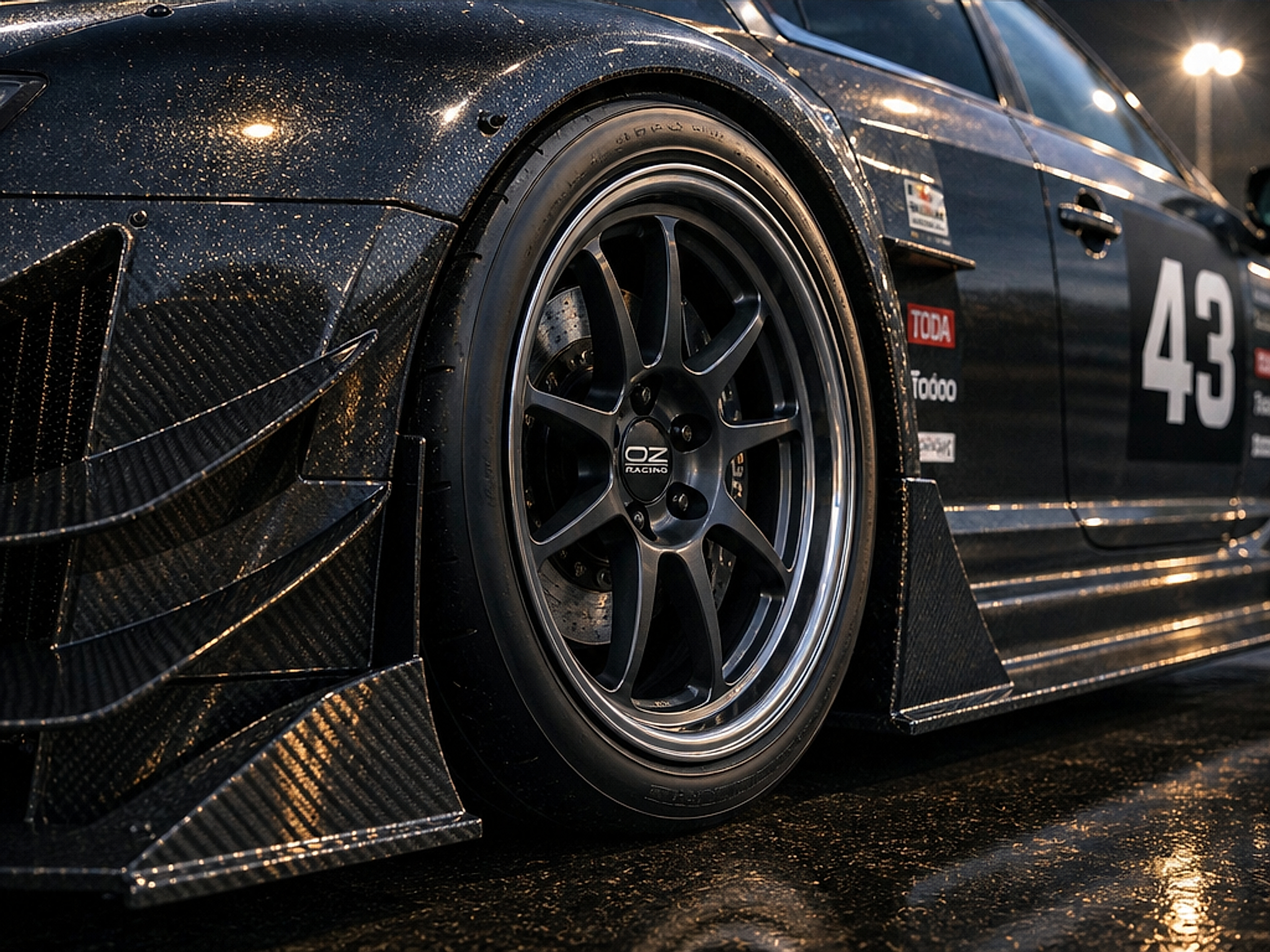
OZ Racing Superleggera forged: 18x11 ET12 front, 18x12 ET8 rear (matte gunmetal)
Slicks: 305/660-18 front, 335/690-18 rear
Clearance built around full-lock steering and sustained heat management (brakes/tires)

Powertrain

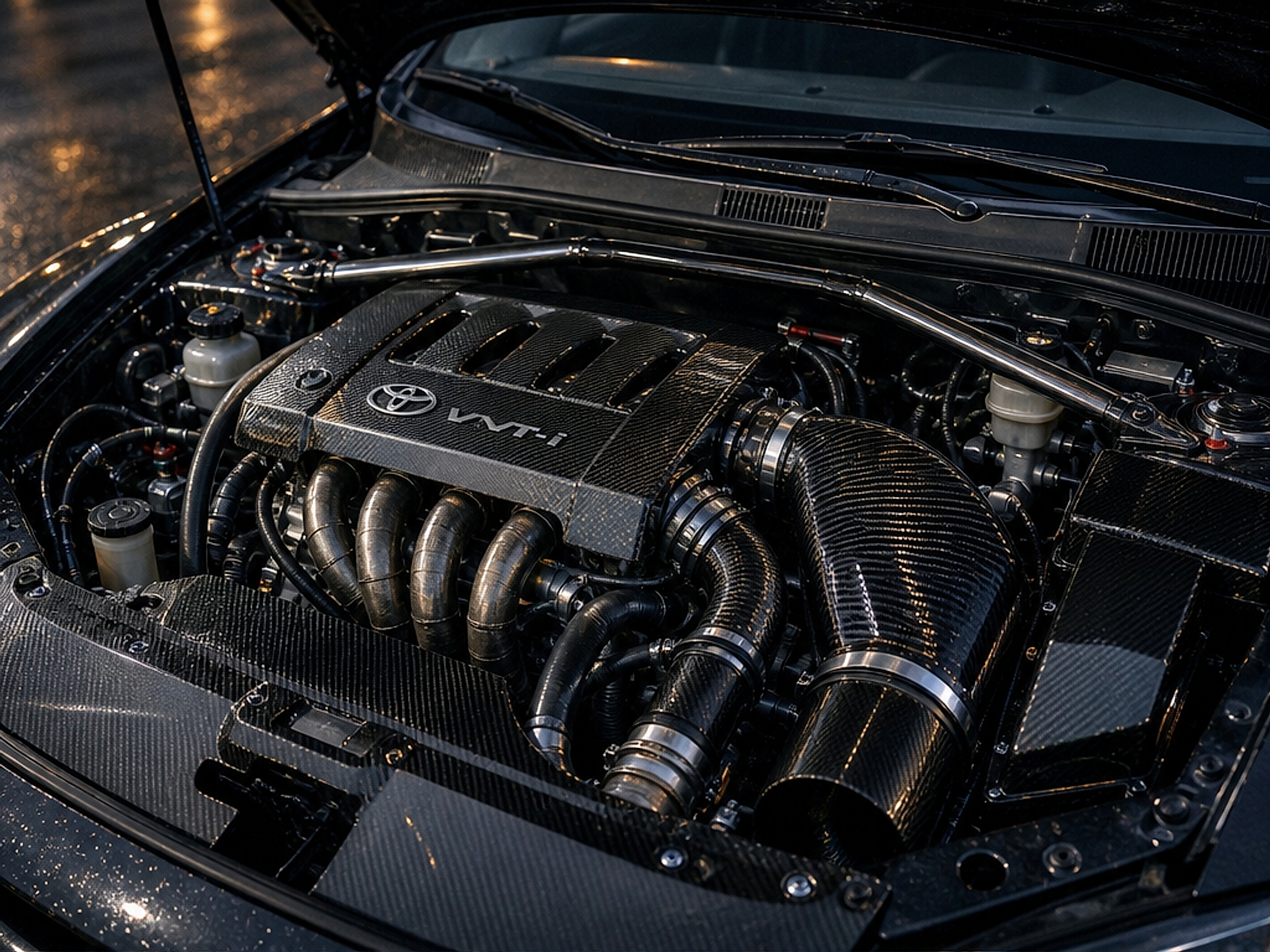
2AZ-FE-based endurance build: forged bottom end, conservative compression, sustained-load calibration
Medium-frame turbo with focus on midrange and thermal stability over peak numbers
Multi-radiator cooling strategy using front core plus side-duct auxiliary packs
Motorsport oil control: baffled sump, external oil cooler circuit, ducted extraction

Fabrication Notes

Composite hood with raised volcano vent and louvered extraction designed around pressure zones
Flat floor integration to diffuser throat with serviceable mounting points and heat shielding
Ducting built as sealed airflow paths (inlet-to-core-to-exit), not open cosmetic vents
Swan-neck wing mounts tied into rear structure with load-spreading plates for endurance durability
×

Design Philosophy

Phantom Canopy Protocol takes the humble 2006 Scion tC silhouette and treats it like an unlimited-class endurance prototype that just happens to wear production glass. The roofline and door cuts stay familiar, but everything below the beltline is rebuilt around a widened track, huge slicks, and an aero package that looks engineered first and styled second—hard edges, sharp lips, and panel breaks that read like serviceable race hardware.

The headline is visible cooling infrastructure: sidepod-style tunnels in the front arches, stacked venting behind them, and quarter-panel ducting that suggests the car was designed to run flat-out for hours, not a few hot laps. It’s a tC only in greenhouse and attitude—low, wide, and technical, with the kind of functional excess you’d expect from a rulebook that stopped caring.

Platform+
2006 Scion tC

2006 Scion tC

Launched as Scion’s breakout coupe, the 2006 tC is peak mid-2000s Toyota thinking filtered through youth-culture packaging: clean lines, practical proportions, and a chassis that’s more honest than flashy. Underneath it’s built around Toyota’s dependable hardware (2AZ-FE 2.4L and a straightforward front-wheel-drive layout), wrapped in a compact 2+2 hatchback form that actually works as a daily—fold the rear seats and it becomes a parts runner as easily as a commuter.

What made the first-gen tC a scene staple wasn’t exotic engineering; it was accessibility. An OEM panoramic glass roof, simple McPherson strut/torsion-beam suspension, and strong aftermarket support turned it into a blank canvas across tuner, stance, and track-day circles—without ever losing that resilient, unpretentious Toyota base that keeps them on the road years later.

SciontC2006
View Platform
Aero Package+

180mm carbon splitter with 85mm endplates and integrated dive planes
Multi-element front canards with outward bias for vortex management
Deep rear diffuser (8-fin) extending rearward for ground-effect extraction
Dual-element swan-neck rear wing (1780mm span) with adjustable pitch

Chassis+

Set on a closed high-speed endurance circuit at dusk, the wet surface and flood lighting underline what this car is about: stability, cooling, and aero that works when conditions get messy. The low camera angle and long lens compress the proportions, making the widened arches, splitter plane, and towering wing read like purpose-built hardware rather than styling.

Wheels & Tires+

OZ Racing Superleggera forged: 18x11 ET12 front, 18x12 ET8 rear (matte gunmetal)
Slicks: 305/660-18 front, 335/690-18 rear
Clearance built around full-lock steering and sustained heat management (brakes/tires)

Powertrain+

2AZ-FE-based endurance build: forged bottom end, conservative compression, sustained-load calibration
Medium-frame turbo with focus on midrange and thermal stability over peak numbers
Multi-radiator cooling strategy using front core plus side-duct auxiliary packs
Motorsport oil control: baffled sump, external oil cooler circuit, ducted extraction

Fabrication Notes+

Composite hood with raised volcano vent and louvered extraction designed around pressure zones
Flat floor integration to diffuser throat with serviceable mounting points and heat shielding
Ducting built as sealed airflow paths (inlet-to-core-to-exit), not open cosmetic vents
Swan-neck wing mounts tied into rear structure with load-spreading plates for endurance durability

×Design Philosophy+

Phantom Canopy Protocol takes the humble 2006 Scion tC silhouette and treats it like an unlimited-class endurance prototype that just happens to wear production glass. The roofline and door cuts stay familiar, but everything below the beltline is rebuilt around a widened track, huge slicks, and an aero package that looks engineered first and styled second—hard edges, sharp lips, and panel breaks that read like serviceable race hardware.

The headline is visible cooling infrastructure: sidepod-style tunnels in the front arches, stacked venting behind them, and quarter-panel ducting that suggests the car was designed to run flat-out for hours, not a few hot laps. It’s a tC only in greenhouse and attitude—low, wide, and technical, with the kind of functional excess you’d expect from a rulebook that stopped caring.

Part of
Wave 50

Group 7 Grocery-Getters

We got tired of watching the same halo cars hog all the pit lane attention, so we did the only reasonable thing: we turned the background traffic into the main event. This release is our love letter to the cars you ignore in the parking lot, now wearing full open-rule prototype hardware like they were born with it.

Explore Wave 50 → 6 Builds

Keep Exploring

The archive is always growing. New releases, waves, and blueprints added regularly.