R292
Rosso Terra Program
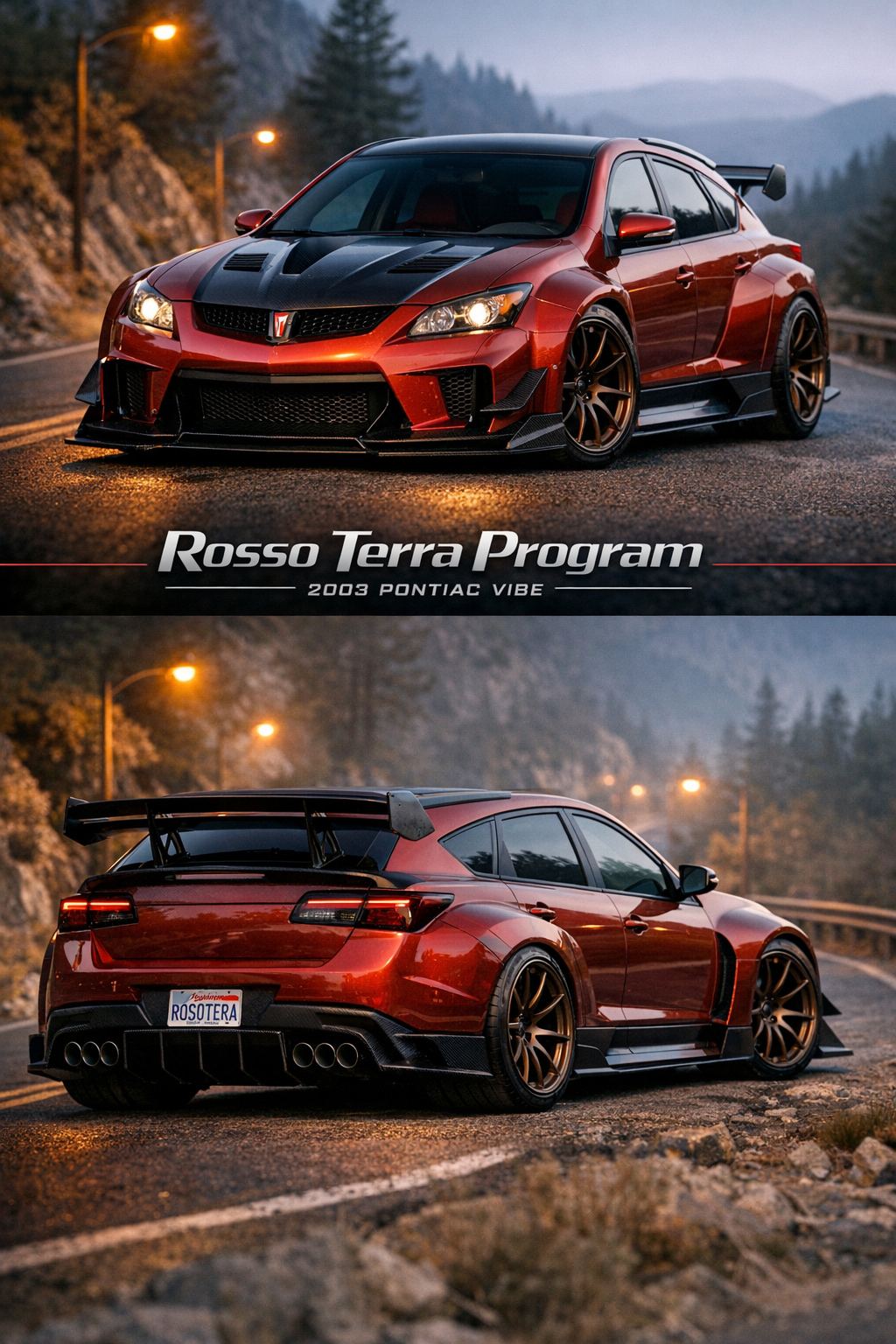
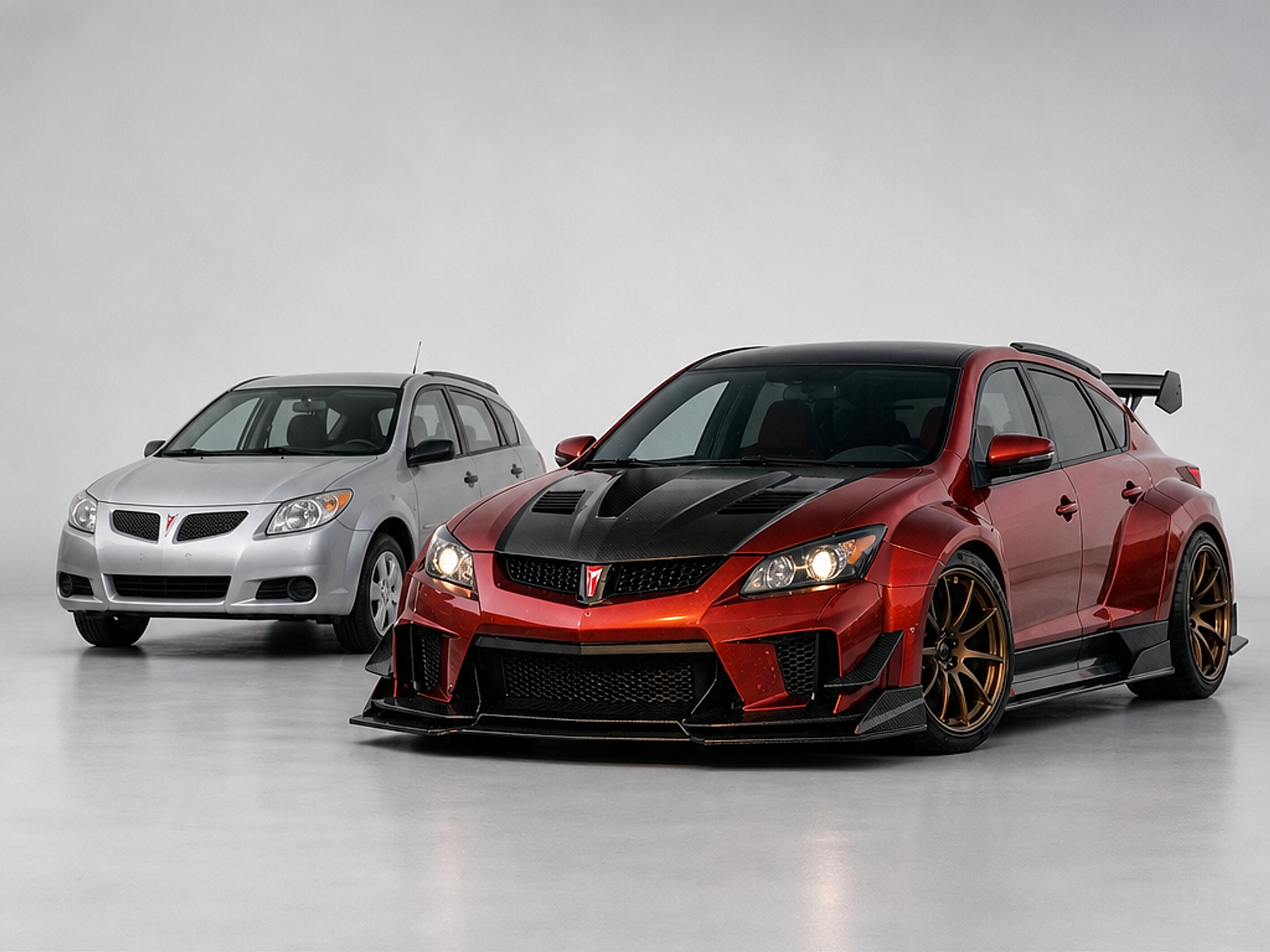
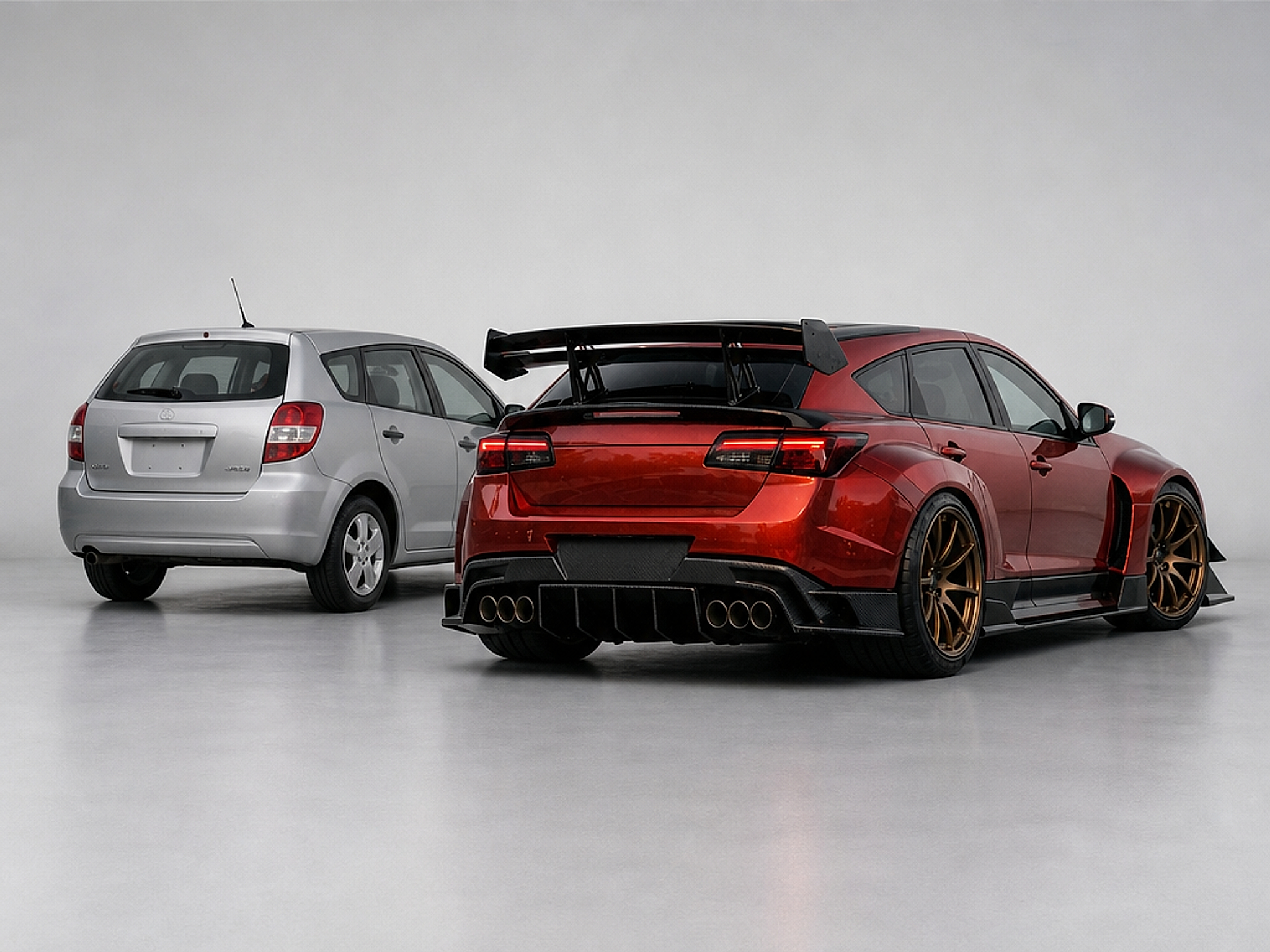
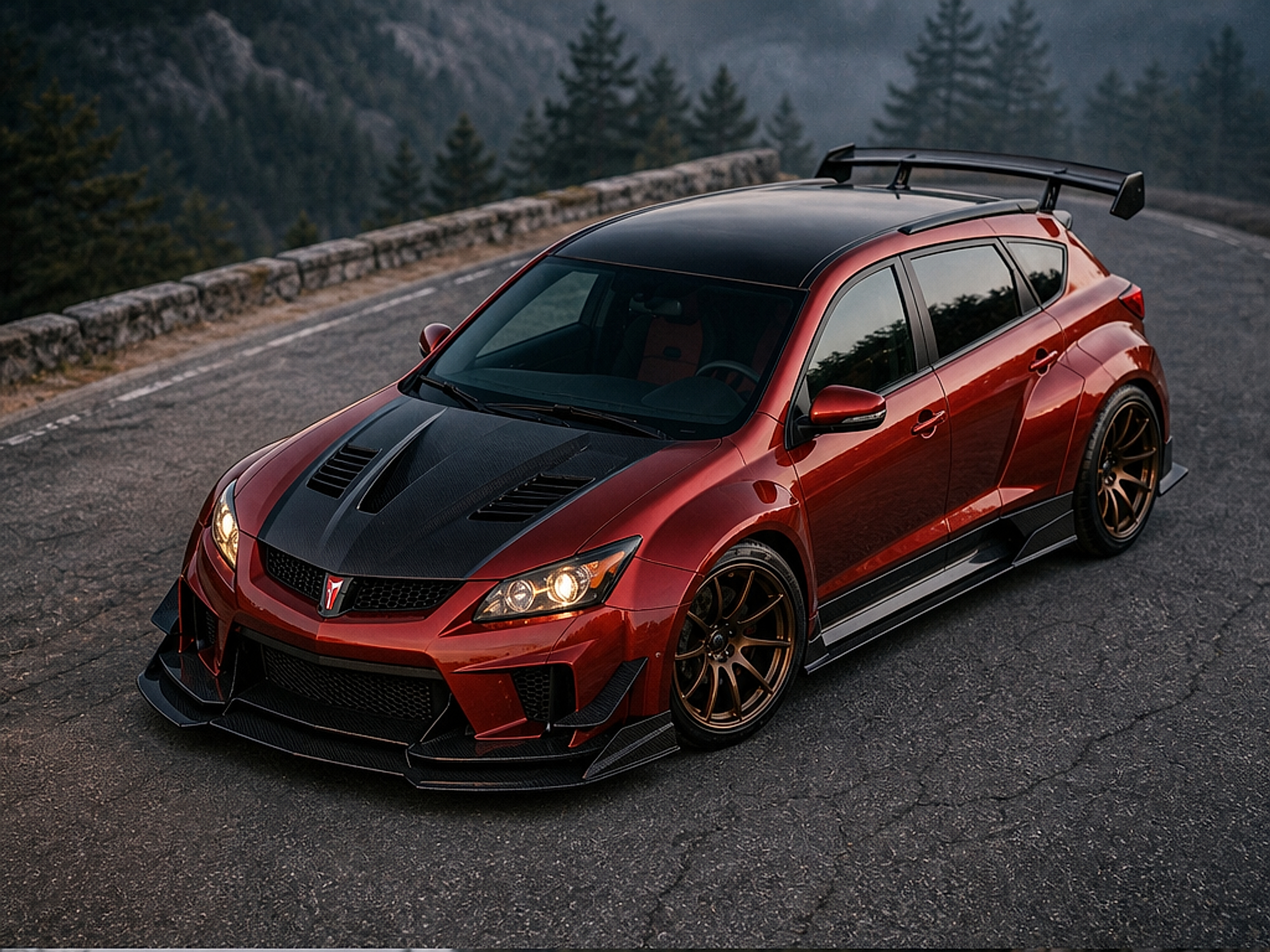
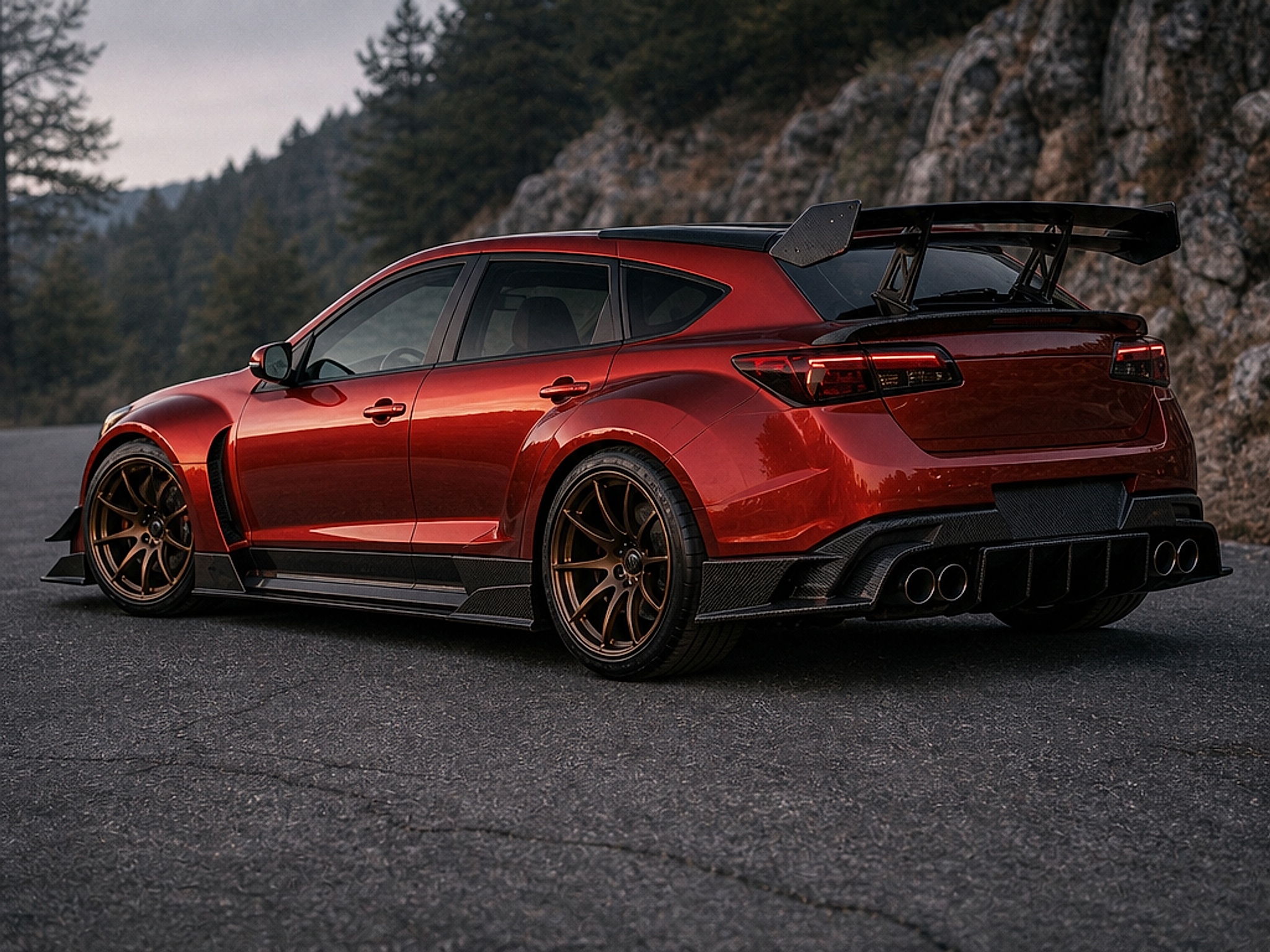
Rosso Terra Program takes the 2003 Pontiac Vibe—peak early-2000s commuter anonymity—and drags it into mid-2000s Italian supercar proportioning without losing what makes the Vibe readable. The roofline, glass, and pillars stay honest; everything below the beltline gets re-authored into a track-width monster with SUV ride-height range and real aero surfaces that look like they were wind-tunnel argued, not styled.
Under the drama is believable structure: a reinforced semi-monocoque concept tied into aluminum subframes, double-wishbone corners, and brakes that finally match the tire. The front-engine layout remains the anchor, while a turbo 2.4L and torque-vectoring AWD turn the “NPC car” into an aftermarket house demo that can actually put heat into its hardware on a mountain road.
Release Image Studies
Image studies from every angle.
Comparison Shots
Blueprint / Collector Archive
Engineering Artifacts
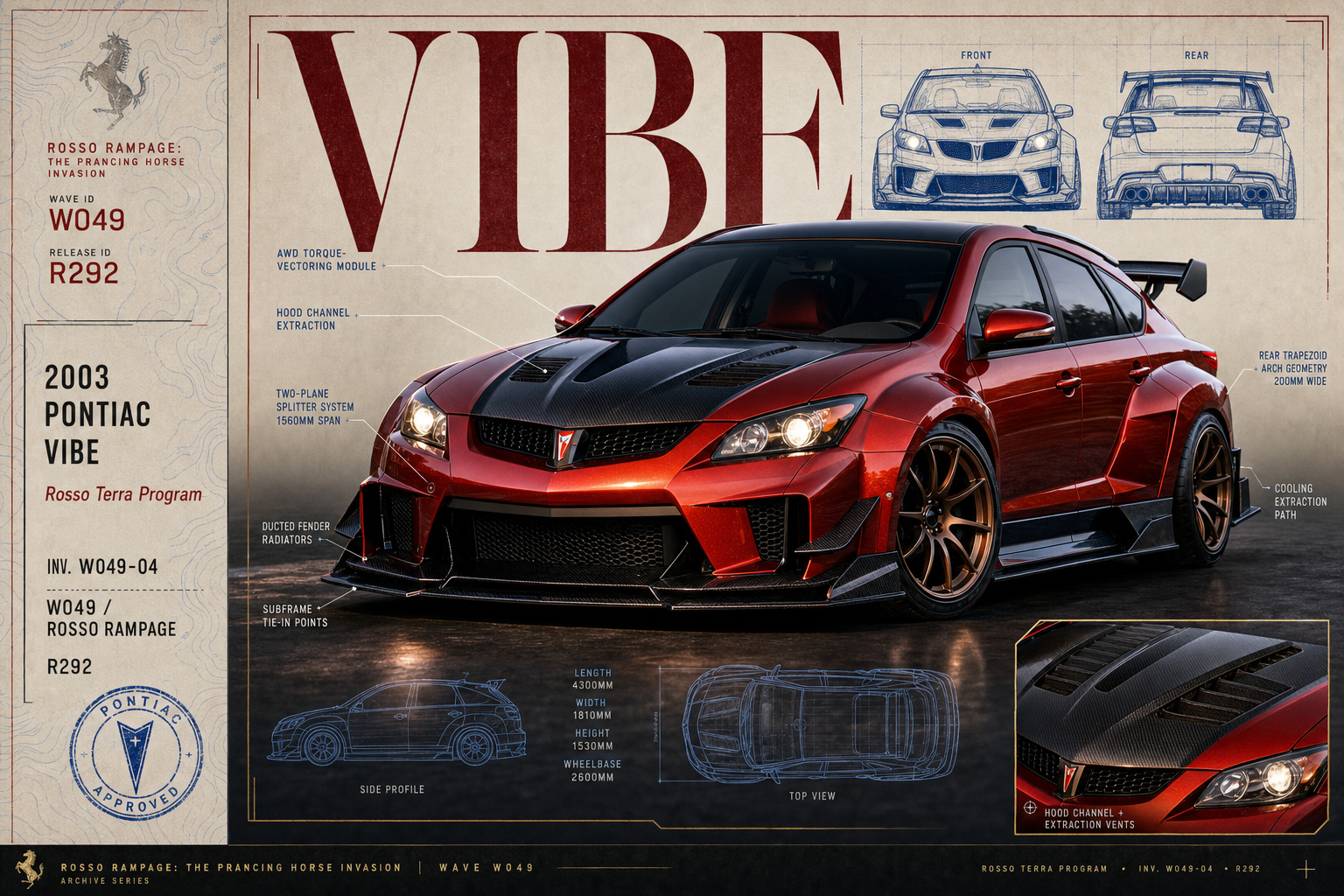
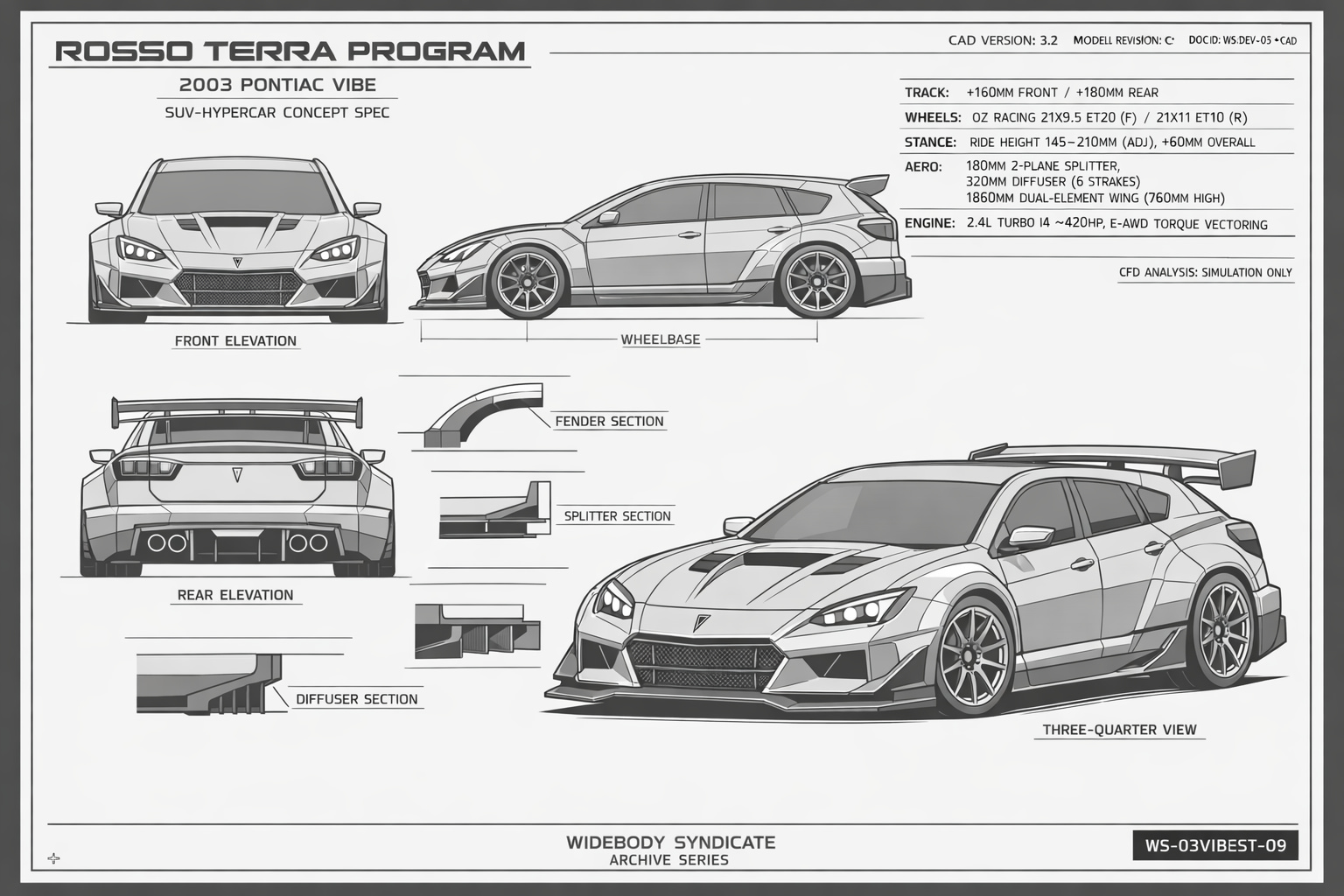
The technical study and collectible interpretation of one build, preserved together.
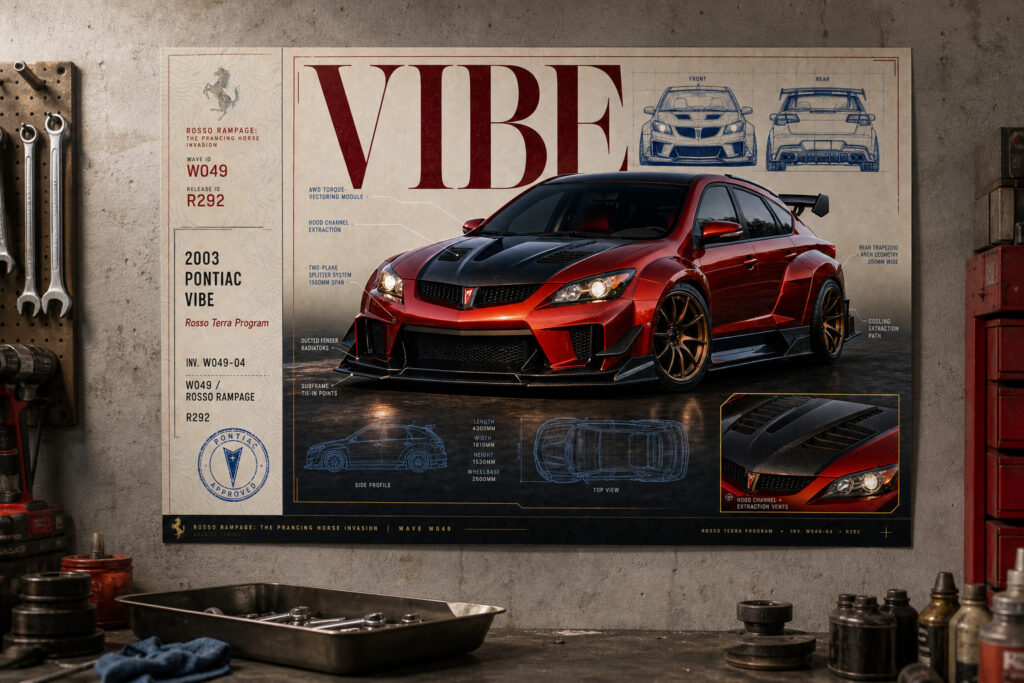
A presentation-grade collector artifact created for this release and preserved as part of the Widebody Syndicate archive.
Selected archive goods are available for collectors.
Technical Dossier
Platform
2003 Pontiac Vibe
The 2003 Pontiac Vibe is an unassuming compact hatchback that secretly harbors the engineering DNA of the Toyota Corolla Matrix and Toyota Matrix platform. Built on the Toyota MC platform, the Vibe blends functional versatility with a simple, dependable chassis ideal for everyday driving. Its clean, unstyled sheetmetal and upright hatchback silhouette represent a no-nonsense approach to compact car design, emphasizing practicality over flash without sacrificing the mechanical bones that make it a reliable base for modification and experimentation.
Aero Package
Two-plane front splitter with carbon endplates and dive-plane elements
Venturi-profile side skirts with under-channel feeding rear suction
Active rear diffuser with multi-strake layout and center exhaust clearance
Dual-element rear wing on adjustable pylons with mode-based angle control
Chassis
Front and rear tracks are pushed out aggressively to fill the 21s without cartoon stance tricks, backed by a full double-wishbone concept and reinforced mounting structure. Ride height spans 145–210 mm, letting it sit low for aero balance or come up for rougher roads while maintaining alignment control and tire contact patch discipline.
Wheels & Tires
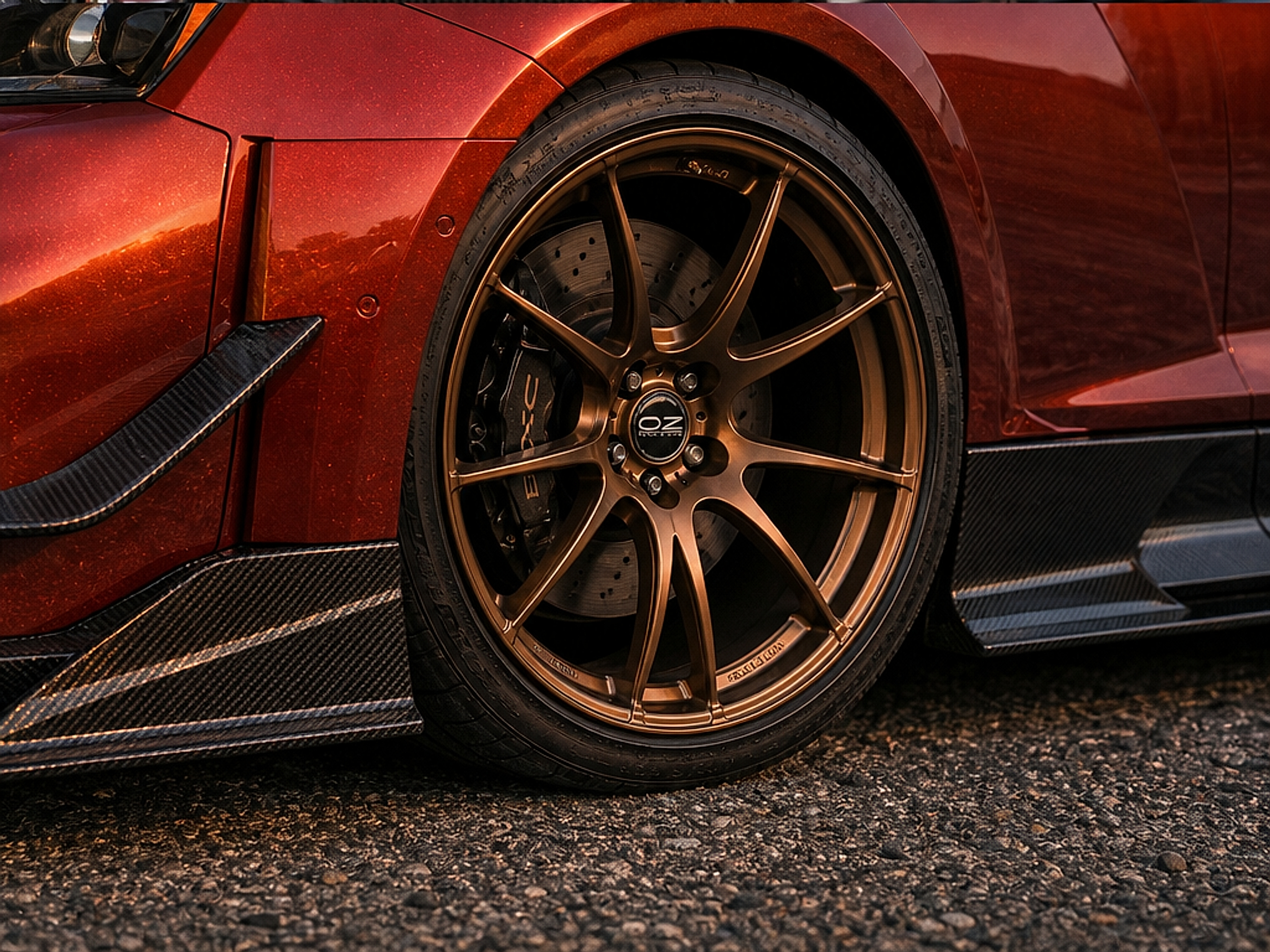
OZ Racing forged 21x9.5 ET20 front in anodized bronze
OZ Racing forged 21x11 ET10 rear in anodized bronze
295/30ZR21 front and 325/30ZR21 rear Pirelli P Zero Trofeo R
Clearance engineered for full suspension travel at lowered and raised ride heights
Powertrain
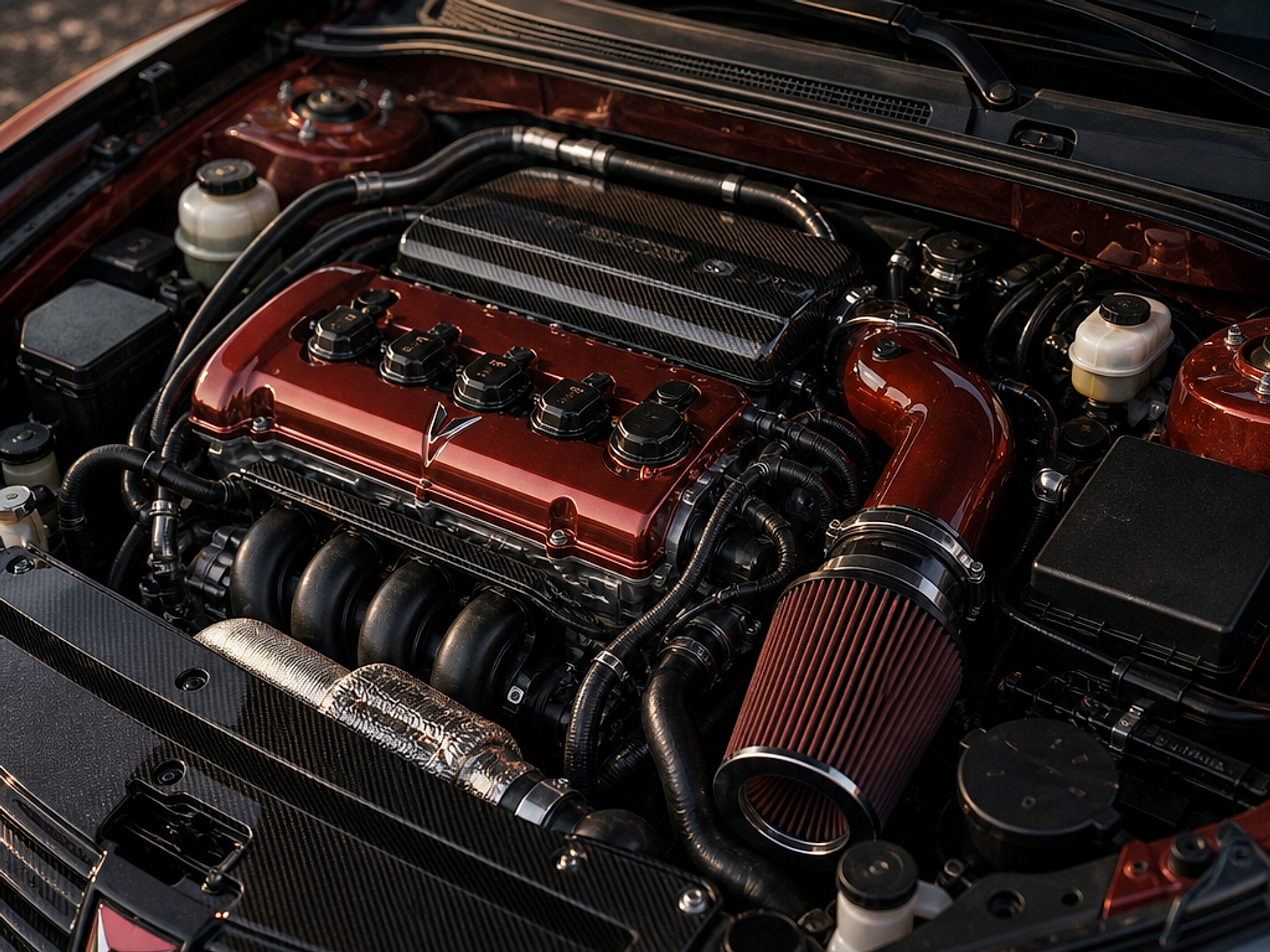
Turbocharged 2.4L inline-4 targeting ~420 hp with conservative
trackable boost control
Dry-sump-style oiling strategy and baffling for sustained lateral load
High-capacity intercooling fed by fender ducting and enlarged central heat exchanger stack
Electronically controlled AWD with active torque-vectoring rear differential
Titanium quad-outlet exhaust packaged to avoid diffuser flow disruption
Fabrication Notes
Semi-monocoque reinforcement strategy tied into aluminum subframes for rigidity and serviceability
Double-wishbone conversion with reinforced knuckles and revised pickup points to manage scrub radius and camber gain
Brake cooling routed from vertical front ducts through sealed internal channels to the hats
Aero surfaces mounted with hard points designed for repeatable alignment and high-speed stability
Rear hatch extension executed as carbon sandwich to keep mass behind the axle in check
Design Philosophy
Rosso Terra Program takes the 2003 Pontiac Vibe—peak early-2000s commuter anonymity—and drags it into mid-2000s Italian supercar proportioning without losing what makes the Vibe readable. The roofline, glass, and pillars stay honest; everything below the beltline gets re-authored into a track-width monster with SUV ride-height range and real aero surfaces that look like they were wind-tunnel argued, not styled.
Under the drama is believable structure: a reinforced semi-monocoque concept tied into aluminum subframes, double-wishbone corners, and brakes that finally match the tire. The front-engine layout remains the anchor, while a turbo 2.4L and torque-vectoring AWD turn the “NPC car” into an aftermarket house demo that can actually put heat into its hardware on a mountain road.
▧Platform+
2003 Pontiac Vibe
The 2003 Pontiac Vibe is an unassuming compact hatchback that secretly harbors the engineering DNA of the Toyota Corolla Matrix and Toyota Matrix platform. Built on the Toyota MC platform, the Vibe blends functional versatility with a simple, dependable chassis ideal for everyday driving. Its clean, unstyled sheetmetal and upright hatchback silhouette represent a no-nonsense approach to compact car design, emphasizing practicality over flash without sacrificing the mechanical bones that make it a reliable base for modification and experimentation.
⌘Aero Package+
Two-plane front splitter with carbon endplates and dive-plane elements
Venturi-profile side skirts with under-channel feeding rear suction
Active rear diffuser with multi-strake layout and center exhaust clearance
Dual-element rear wing on adjustable pylons with mode-based angle control
⟡Chassis+
Front and rear tracks are pushed out aggressively to fill the 21s without cartoon stance tricks, backed by a full double-wishbone concept and reinforced mounting structure. Ride height spans 145–210 mm, letting it sit low for aero balance or come up for rougher roads while maintaining alignment control and tire contact patch discipline.
◎Wheels & Tires+
OZ Racing forged 21x9.5 ET20 front in anodized bronze
OZ Racing forged 21x11 ET10 rear in anodized bronze
295/30ZR21 front and 325/30ZR21 rear Pirelli P Zero Trofeo R
Clearance engineered for full suspension travel at lowered and raised ride heights
▤Powertrain+
Turbocharged 2.4L inline-4 targeting ~420 hp with conservative
trackable boost control
Dry-sump-style oiling strategy and baffling for sustained lateral load
High-capacity intercooling fed by fender ducting and enlarged central heat exchanger stack
Electronically controlled AWD with active torque-vectoring rear differential
Titanium quad-outlet exhaust packaged to avoid diffuser flow disruption
△Fabrication Notes+
Semi-monocoque reinforcement strategy tied into aluminum subframes for rigidity and serviceability
Double-wishbone conversion with reinforced knuckles and revised pickup points to manage scrub radius and camber gain
Brake cooling routed from vertical front ducts through sealed internal channels to the hats
Aero surfaces mounted with hard points designed for repeatable alignment and high-speed stability
Rear hatch extension executed as carbon sandwich to keep mass behind the axle in check
×Design Philosophy+
Rosso Terra Program takes the 2003 Pontiac Vibe—peak early-2000s commuter anonymity—and drags it into mid-2000s Italian supercar proportioning without losing what makes the Vibe readable. The roofline, glass, and pillars stay honest; everything below the beltline gets re-authored into a track-width monster with SUV ride-height range and real aero surfaces that look like they were wind-tunnel argued, not styled.
Under the drama is believable structure: a reinforced semi-monocoque concept tied into aluminum subframes, double-wishbone corners, and brakes that finally match the tire. The front-engine layout remains the anchor, while a turbo 2.4L and torque-vectoring AWD turn the “NPC car” into an aftermarket house demo that can actually put heat into its hardware on a mountain road.
Part of
Wave 49
Rosso Rampage
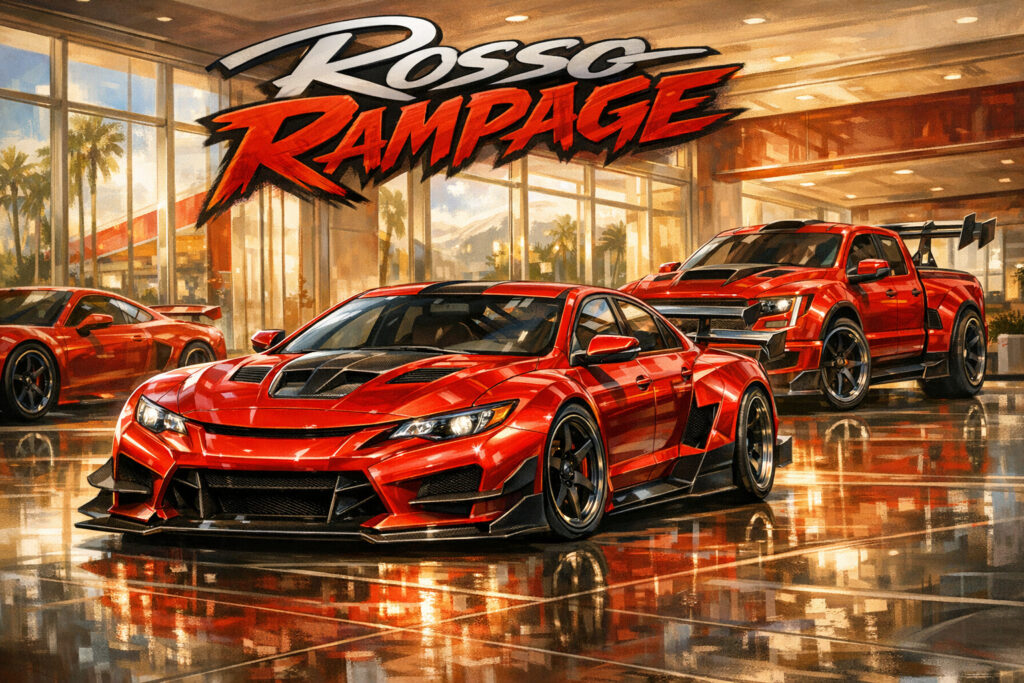
We took some of the most unassuming rides from the past three decades and injected them with a full dose of Ferrari madness — widebodies, wild aero, and powertrains that laugh in the face of factory specs. From a mid-engine Camry that looks ready to lap Nurburgring in Rosso Mirage red, to an alpine-honed F-150 that’s less truck, more hypertruck, these builds juggle identity and insanity with reckless precision.
Explore Wave 49 → 6 BuildsKeep Exploring
The archive is always growing. New releases, waves, and blueprints added regularly.