R289
Rosso Mirage Protocol
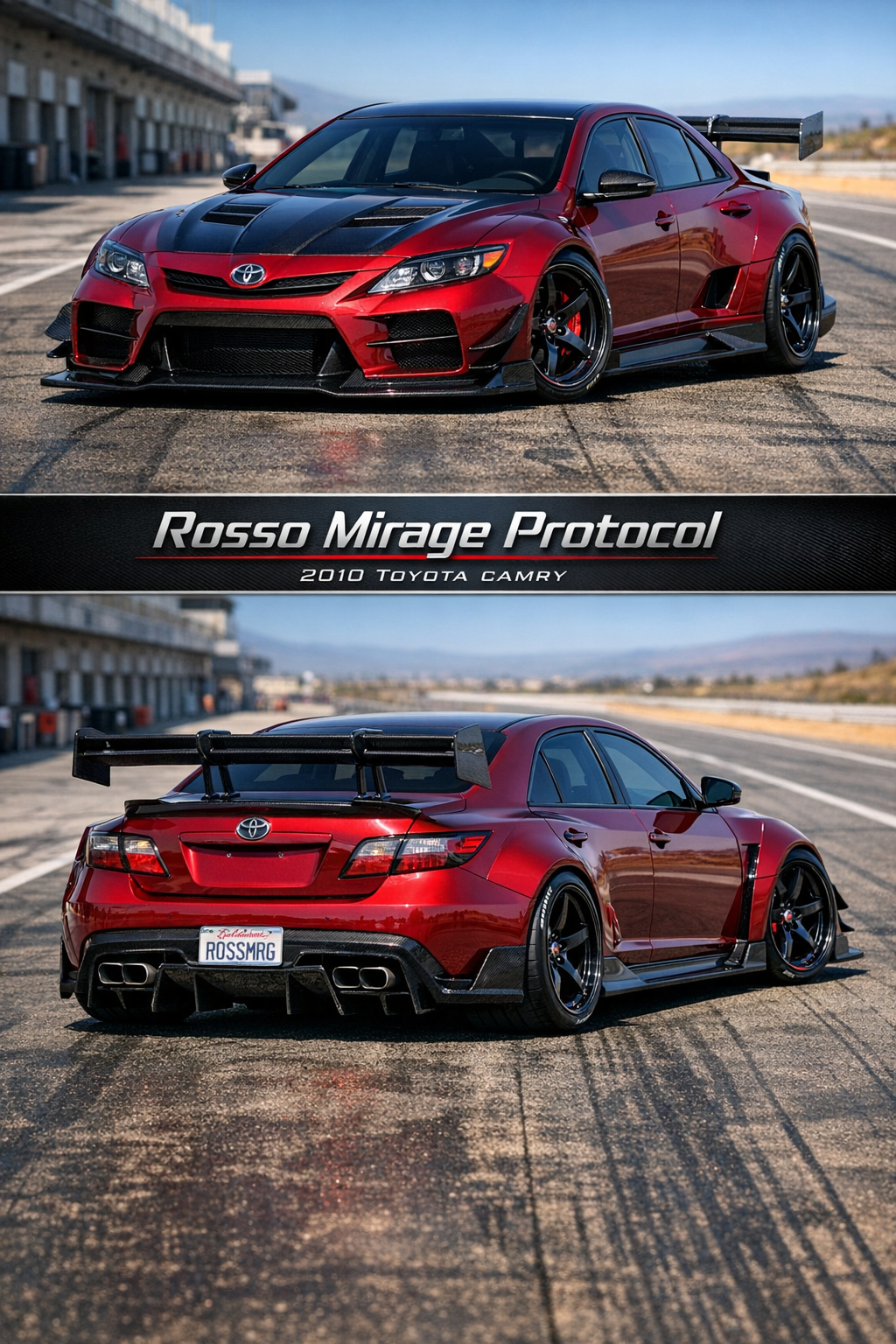
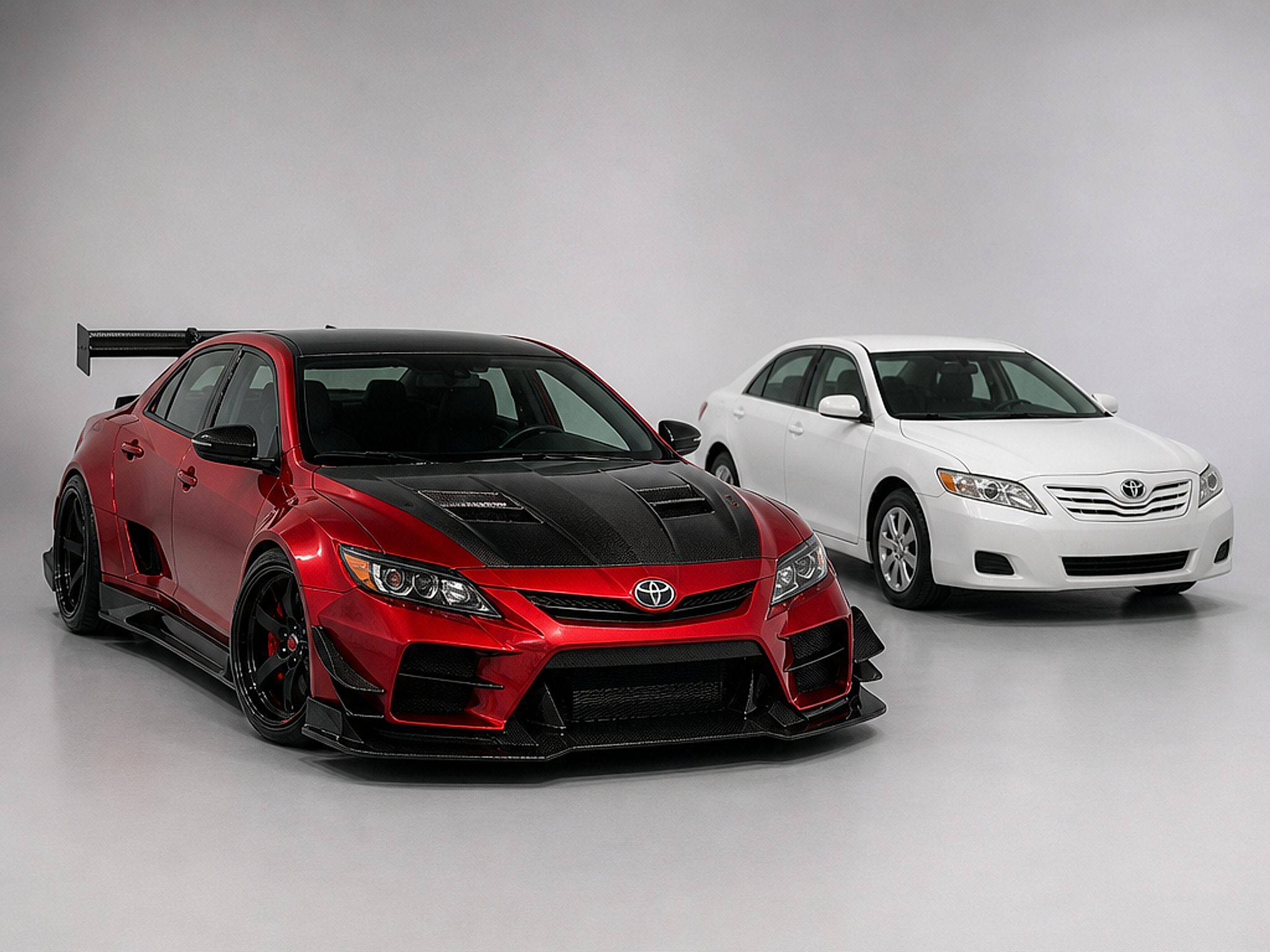
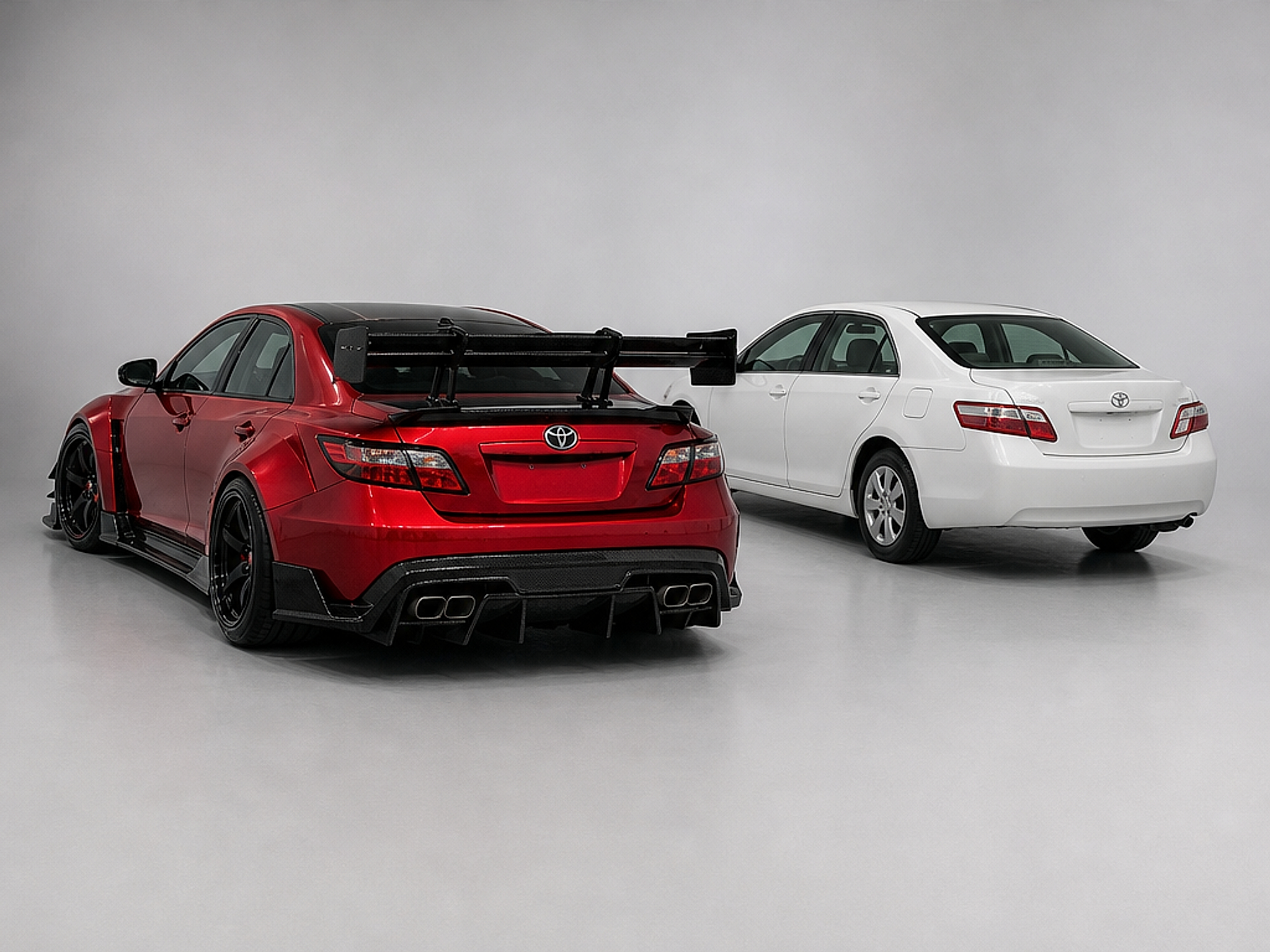
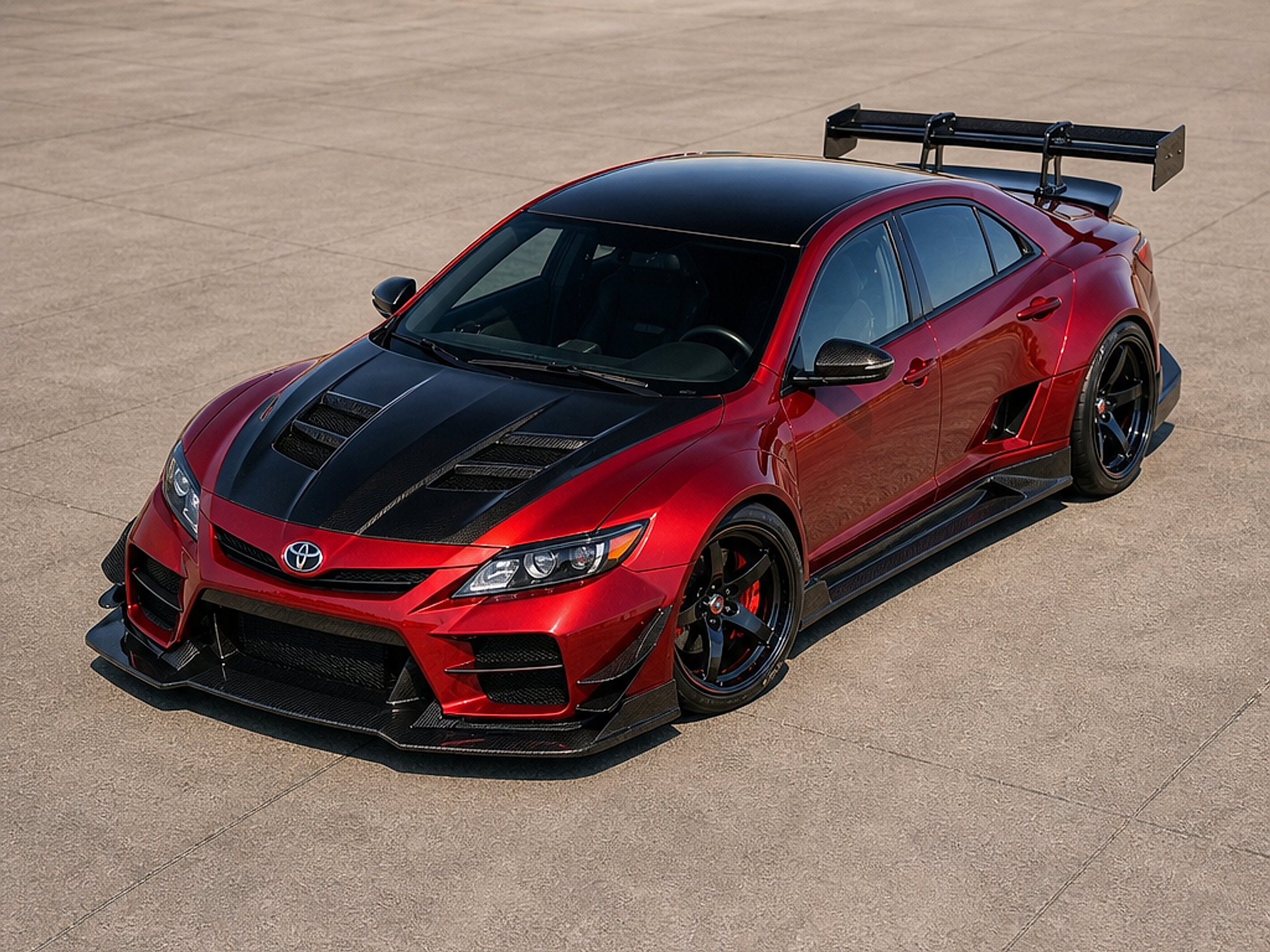
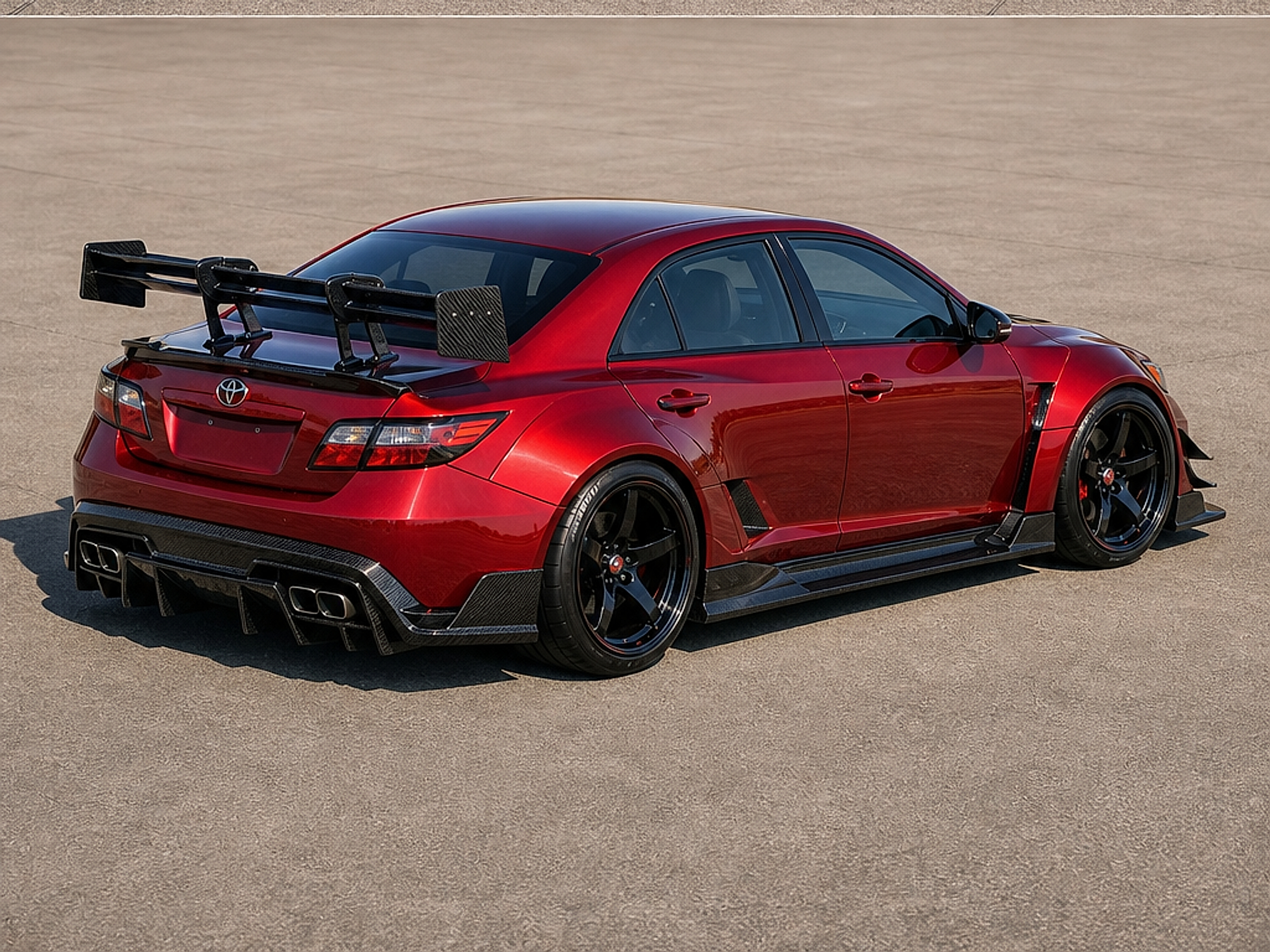
Rosso Mirage Protocol starts with the most invisible car in the pit lane and refuses to apologize for it. The 2010 Camry roofline and glass stay intact—because that’s the punchline—but everything below the beltline is re-authored with front-mid proportions, sidepod cooling, and a rear-track bias that reads more endurance prototype than commuter sedan. The widebody isn’t a “kit”; it’s a re-surfaced shell with stepped trapezoidal front flares, triple-curvature rear quarters, and a track-width increase that forces real suspension geometry decisions.
Under the candy rosso skin, the engineering intent is clear: stabilize the platform at speed, keep temps under control, and move the mass where it belongs. A front-mid V6 feeds a rear transaxle through a carbon shaft, while ducted fender radiators, hood extraction, and a full underfloor system turn the old NPC silhouette into something that can do laps without heat-soaking or washing out the front end. It’s still instantly a Camry from the side—right up until the aero starts working.
Release Image Studies
Image studies from every angle.
Comparison Shots
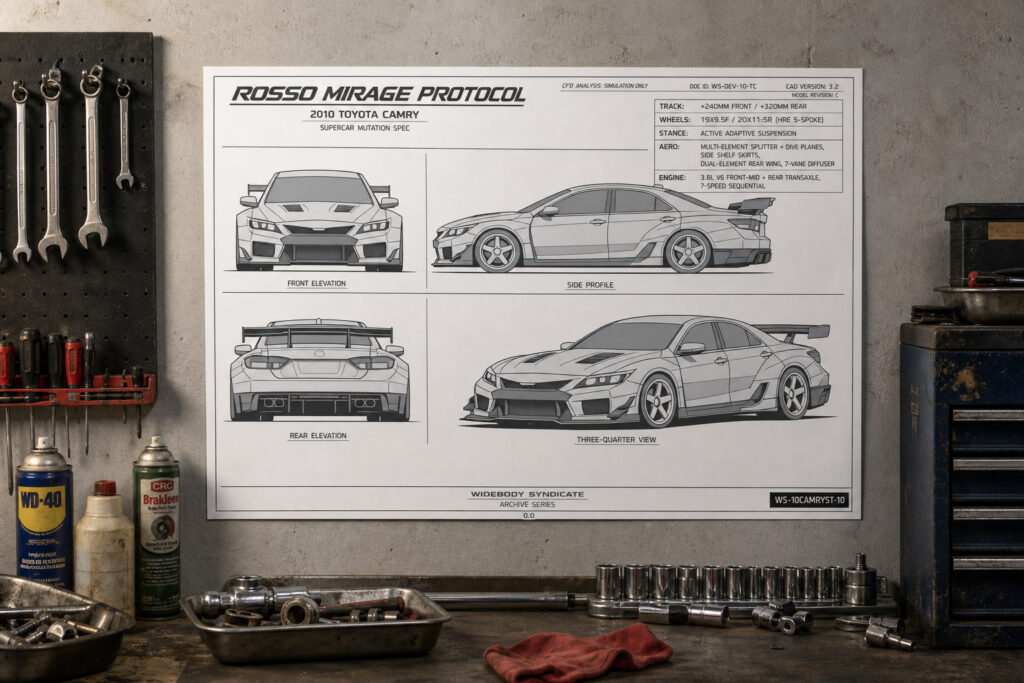
Blueprint / Collector Archive
Engineering Artifacts
The technical study and collectible interpretation of one build, preserved together.
Selected archive goods are available for collectors.
Technical Dossier
Platform
2010 Toyota Camry
The 2010 Toyota Camry represents the quintessential mid-size sedan of its era, blending reliable engineering with a refined, no-nonsense design that helped it dominate the global market. Built on Toyota's well-regarded XV40 platform, the Camry balances everyday practicality with subtle sophistication—featuring a straightforward yet aerodynamic body, a comfortable and spacious interior, and a suspension tuned for composed, predictable handling. Underneath, the chassis is engineered for durability and ease of maintenance, making it a favorite base for enthusiasts looking to transform an unassuming workhorse into something with unexpected presence.
Aero Package
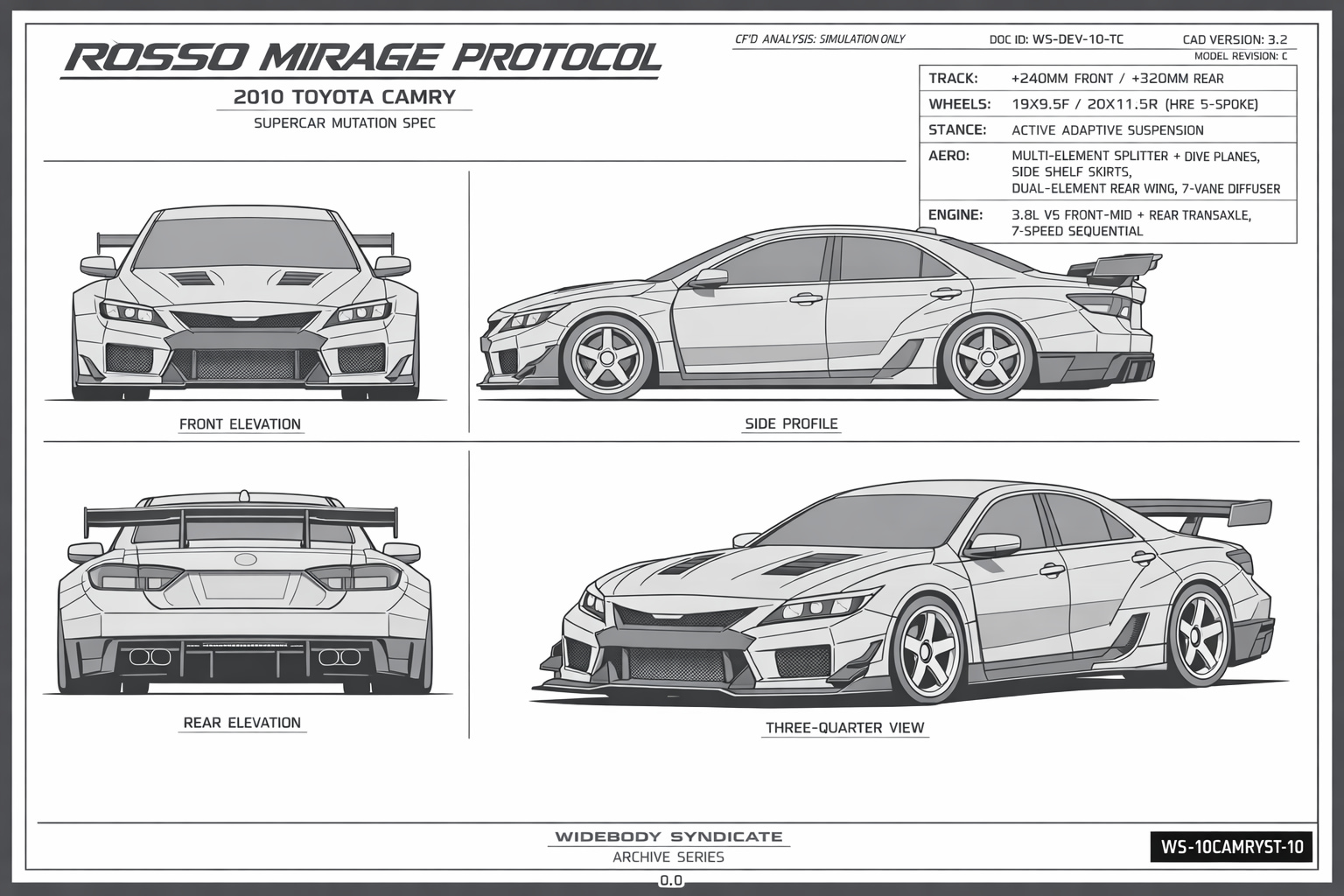
Carbon multi-element front bumper with 200mm splitter
dual dive planes
and corner winglets
Flat underbody shelf integrated into side skirts for ground-effect support
Seven-vane rear diffuser with central exhaust packaging and expansion volume
Dual-element swan-neck rear wing with independent pitch adjustment
Chassis
Shot in a sunlit pit lane, the build reads like an aero test mule that got painted for the archive. Low camera height and a long lens emphasize the stepped fender geometry, the splitter depth, and the wing’s lever arm over the Kamm tail. The rosso candy finish and exposed carbon surfaces make the airflow story easy to read in hard daylight.
Wheels & Tires
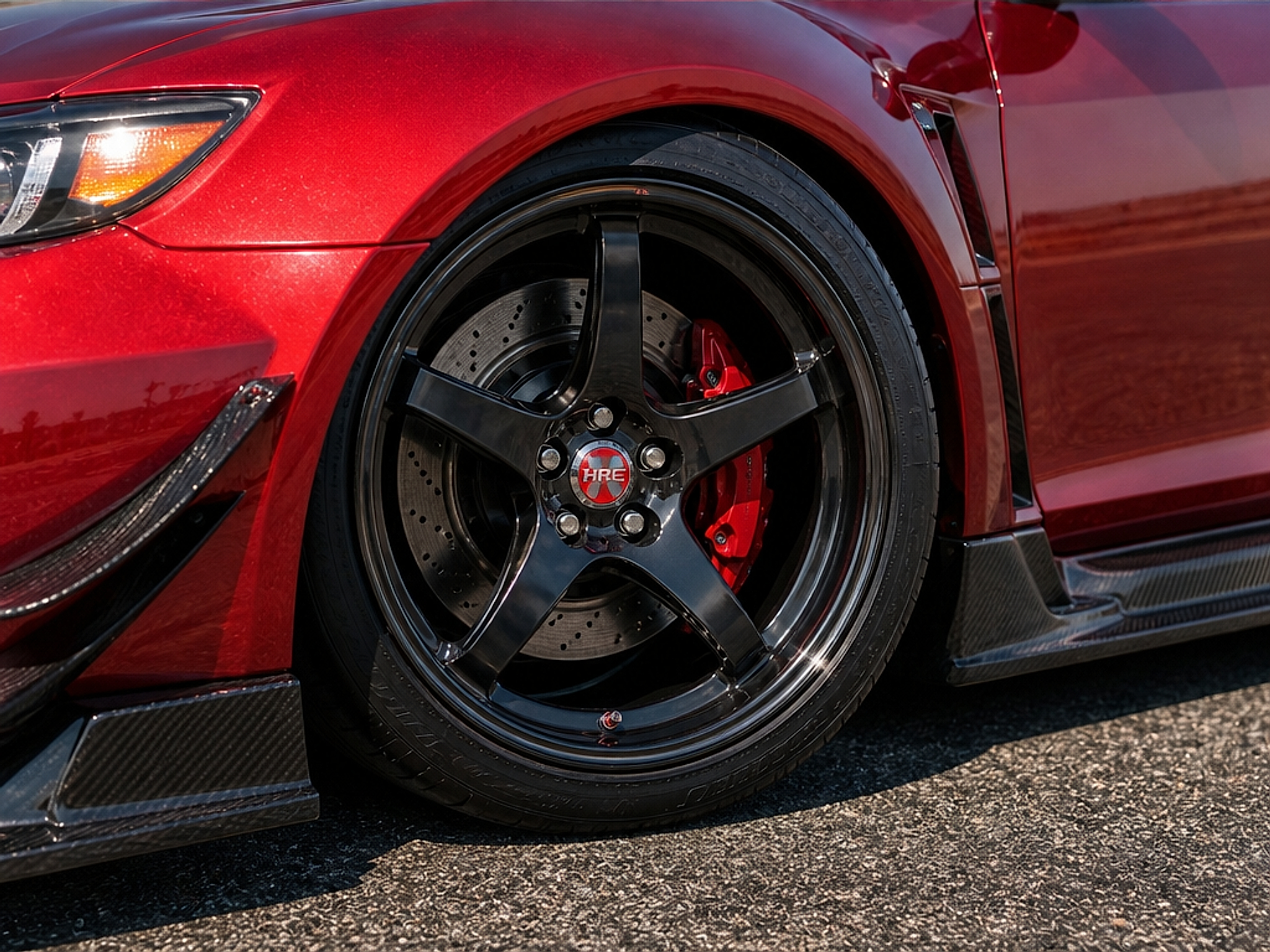
HRE forged 19x9.5 front / 20x11.5 rear
five-spoke with subtle red detailing
Michelin Pilot Sport Cup 2: 295/30ZR19 front
345/30ZR20 rear
Track-width increase: +240mm front
+320mm rear to match tire and aero load
Ride height target: ~60mm front / ~65mm rear with adaptive damping concept
Powertrain
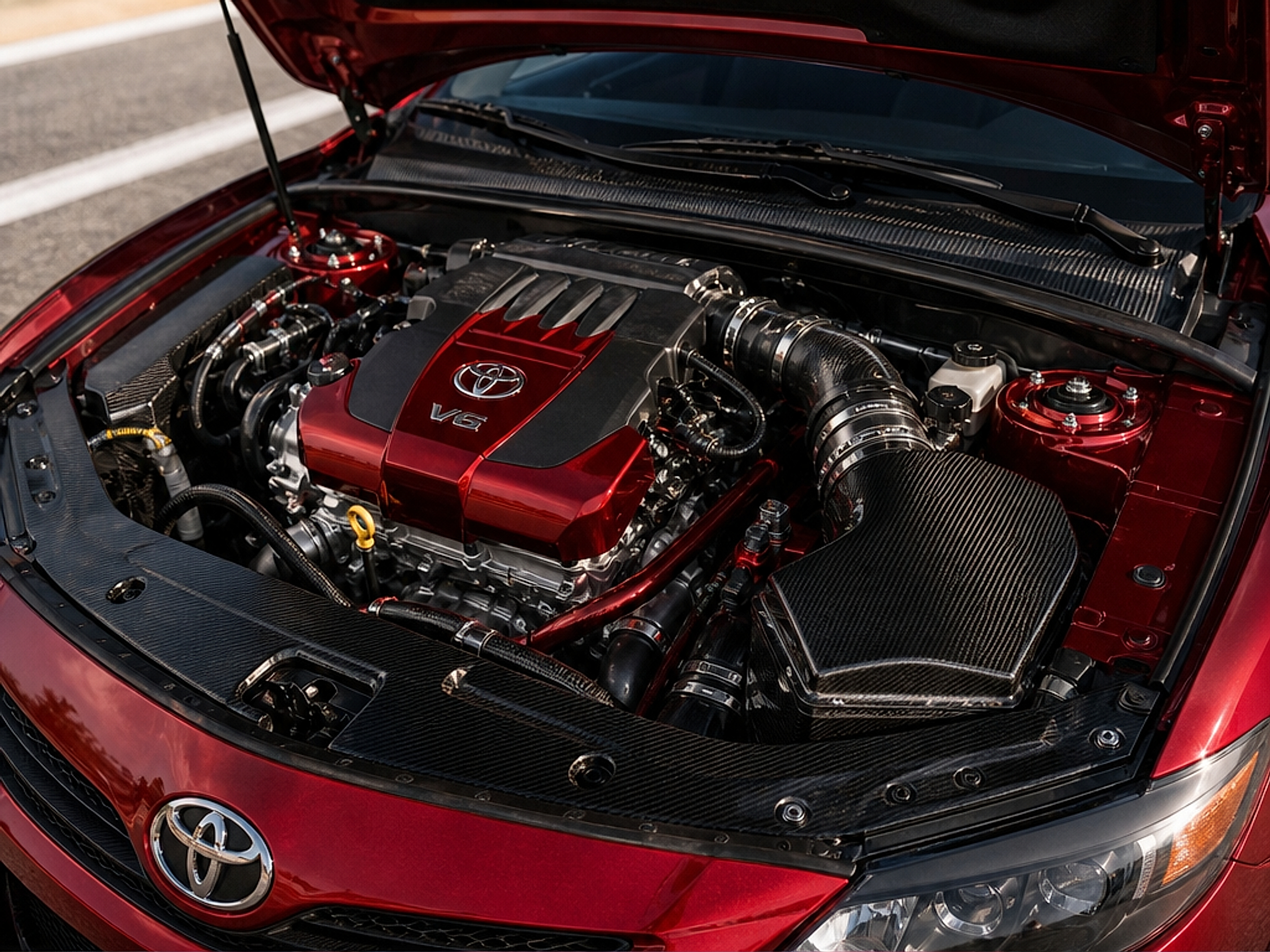
Front-mid 3.8L V6 swap with dry-sump style packaging intent for low CG and sustained lateral load
Rear transaxle RWD layout with carbon fiber driveshaft and 7-speed sequential gearbox concept
Active-valve titanium exhaust routed to central outlets within diffuser plane
Dual fender/sidepod radiator concept with hood extraction to manage pressure and heat
Fabrication Notes
Widened arches require re-skinned quarter panels and door-edge blending; avoid bolt-on seams for airflow cleanliness
Cooling ducting must be sealed (inlet-to-core-to-exit) to prevent wheel-well turbulence and recirculation
Wing pylons and diffuser mounts tied into reinforced rear structure to handle downforce load paths
Front splitter/dive plane mounting points designed for quick service and curb-strike survivability
Design Philosophy
Rosso Mirage Protocol starts with the most invisible car in the pit lane and refuses to apologize for it. The 2010 Camry roofline and glass stay intact—because that’s the punchline—but everything below the beltline is re-authored with front-mid proportions, sidepod cooling, and a rear-track bias that reads more endurance prototype than commuter sedan. The widebody isn’t a “kit”; it’s a re-surfaced shell with stepped trapezoidal front flares, triple-curvature rear quarters, and a track-width increase that forces real suspension geometry decisions.
Under the candy rosso skin, the engineering intent is clear: stabilize the platform at speed, keep temps under control, and move the mass where it belongs. A front-mid V6 feeds a rear transaxle through a carbon shaft, while ducted fender radiators, hood extraction, and a full underfloor system turn the old NPC silhouette into something that can do laps without heat-soaking or washing out the front end. It’s still instantly a Camry from the side—right up until the aero starts working.
▧Platform+
2010 Toyota Camry
The 2010 Toyota Camry represents the quintessential mid-size sedan of its era, blending reliable engineering with a refined, no-nonsense design that helped it dominate the global market. Built on Toyota's well-regarded XV40 platform, the Camry balances everyday practicality with subtle sophistication—featuring a straightforward yet aerodynamic body, a comfortable and spacious interior, and a suspension tuned for composed, predictable handling. Underneath, the chassis is engineered for durability and ease of maintenance, making it a favorite base for enthusiasts looking to transform an unassuming workhorse into something with unexpected presence.
⌘Aero Package+
Carbon multi-element front bumper with 200mm splitter
dual dive planes
and corner winglets
Flat underbody shelf integrated into side skirts for ground-effect support
Seven-vane rear diffuser with central exhaust packaging and expansion volume
Dual-element swan-neck rear wing with independent pitch adjustment
⟡Chassis+
Shot in a sunlit pit lane, the build reads like an aero test mule that got painted for the archive. Low camera height and a long lens emphasize the stepped fender geometry, the splitter depth, and the wing’s lever arm over the Kamm tail. The rosso candy finish and exposed carbon surfaces make the airflow story easy to read in hard daylight.
◎Wheels & Tires+
HRE forged 19x9.5 front / 20x11.5 rear
five-spoke with subtle red detailing
Michelin Pilot Sport Cup 2: 295/30ZR19 front
345/30ZR20 rear
Track-width increase: +240mm front
+320mm rear to match tire and aero load
Ride height target: ~60mm front / ~65mm rear with adaptive damping concept
▤Powertrain+
Front-mid 3.8L V6 swap with dry-sump style packaging intent for low CG and sustained lateral load
Rear transaxle RWD layout with carbon fiber driveshaft and 7-speed sequential gearbox concept
Active-valve titanium exhaust routed to central outlets within diffuser plane
Dual fender/sidepod radiator concept with hood extraction to manage pressure and heat
△Fabrication Notes+
Widened arches require re-skinned quarter panels and door-edge blending; avoid bolt-on seams for airflow cleanliness
Cooling ducting must be sealed (inlet-to-core-to-exit) to prevent wheel-well turbulence and recirculation
Wing pylons and diffuser mounts tied into reinforced rear structure to handle downforce load paths
Front splitter/dive plane mounting points designed for quick service and curb-strike survivability
×Design Philosophy+
Rosso Mirage Protocol starts with the most invisible car in the pit lane and refuses to apologize for it. The 2010 Camry roofline and glass stay intact—because that’s the punchline—but everything below the beltline is re-authored with front-mid proportions, sidepod cooling, and a rear-track bias that reads more endurance prototype than commuter sedan. The widebody isn’t a “kit”; it’s a re-surfaced shell with stepped trapezoidal front flares, triple-curvature rear quarters, and a track-width increase that forces real suspension geometry decisions.
Under the candy rosso skin, the engineering intent is clear: stabilize the platform at speed, keep temps under control, and move the mass where it belongs. A front-mid V6 feeds a rear transaxle through a carbon shaft, while ducted fender radiators, hood extraction, and a full underfloor system turn the old NPC silhouette into something that can do laps without heat-soaking or washing out the front end. It’s still instantly a Camry from the side—right up until the aero starts working.
Part of
Wave 49
Rosso Rampage
We took some of the most unassuming rides from the past three decades and injected them with a full dose of Ferrari madness — widebodies, wild aero, and powertrains that laugh in the face of factory specs. From a mid-engine Camry that looks ready to lap Nurburgring in Rosso Mirage red, to an alpine-honed F-150 that’s less truck, more hypertruck, these builds juggle identity and insanity with reckless precision.
Explore Wave 49 → 6 BuildsKeep Exploring
The archive is always growing. New releases, waves, and blueprints added regularly.