R281
The Merc Loophole
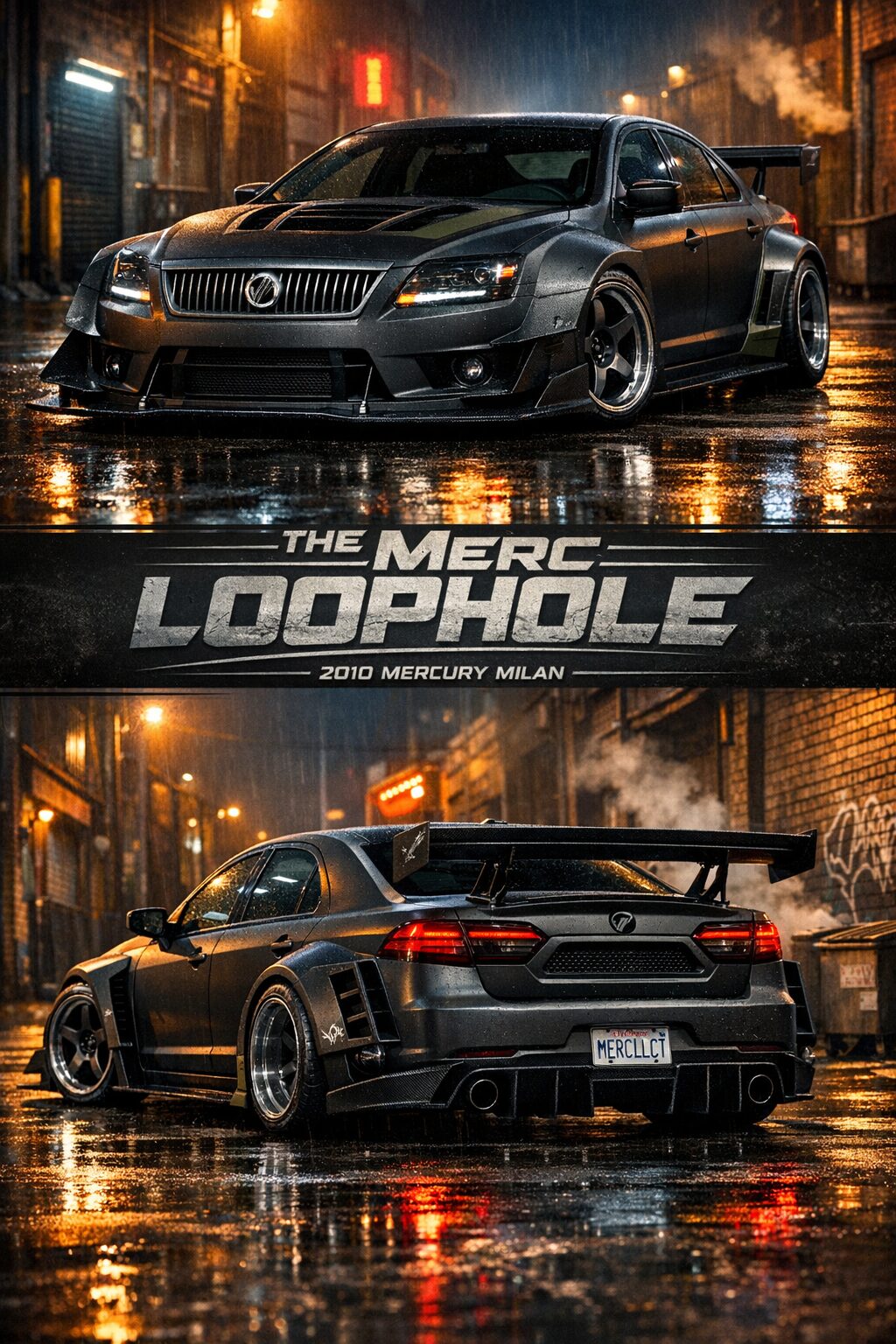
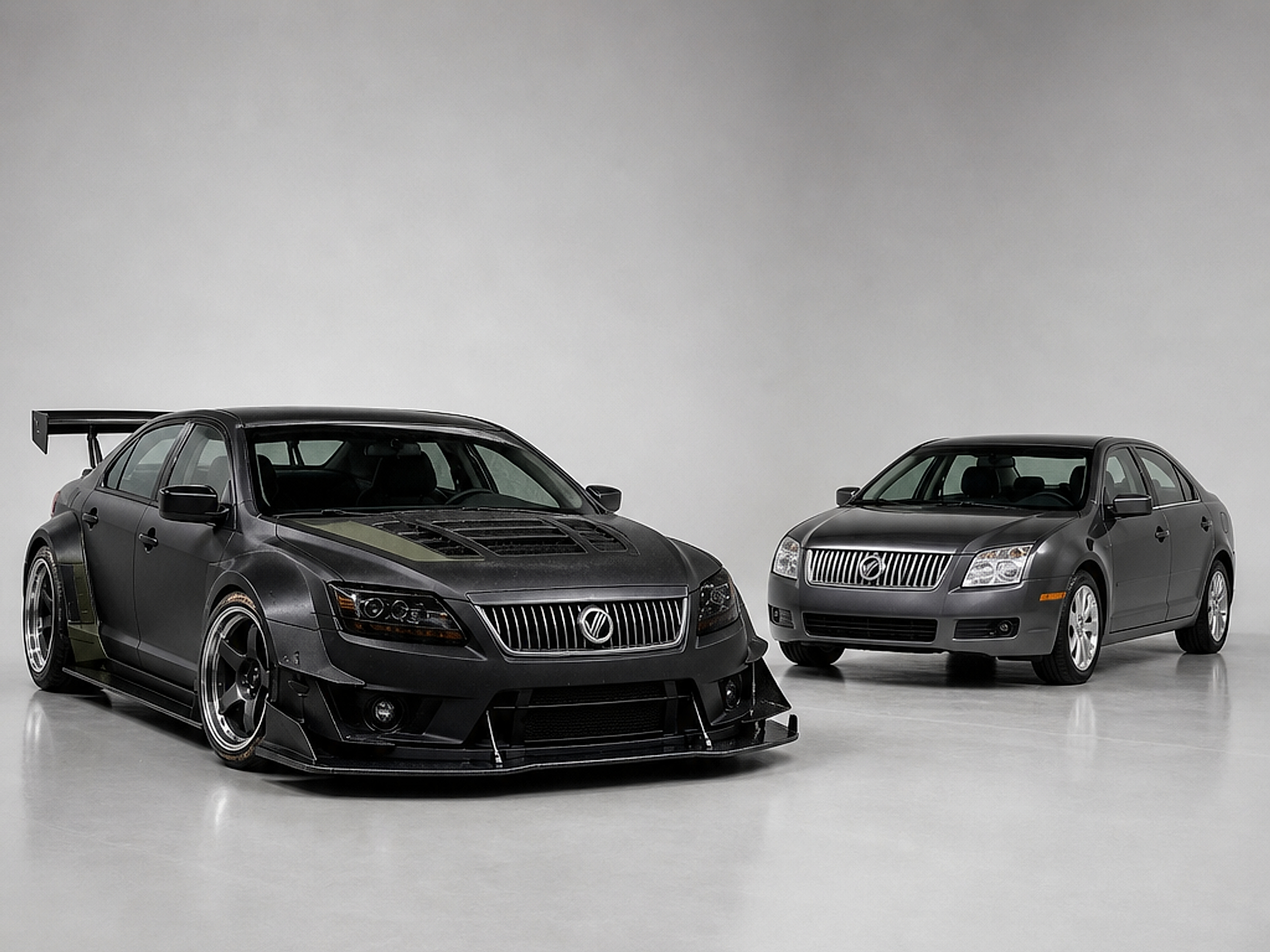
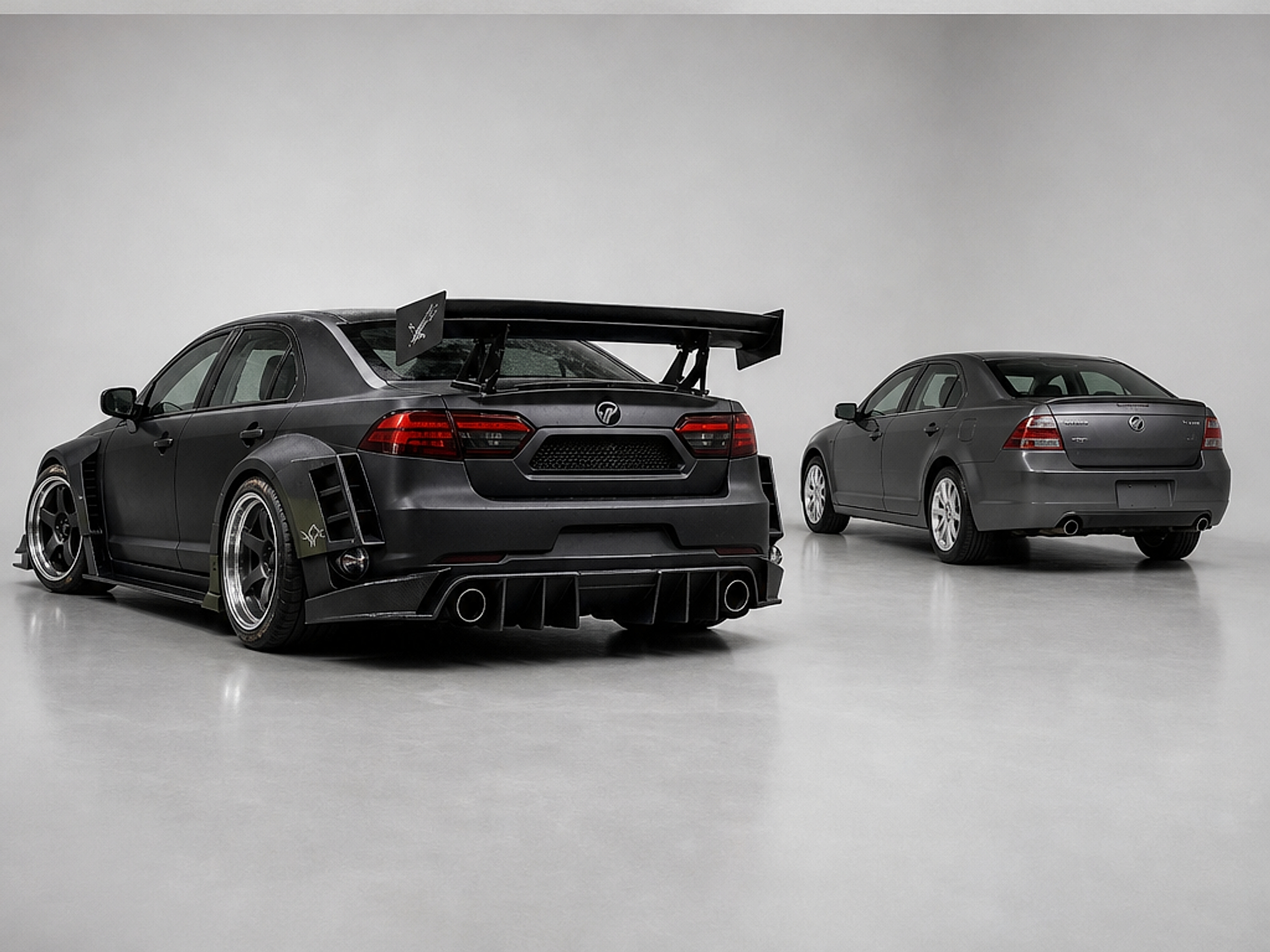
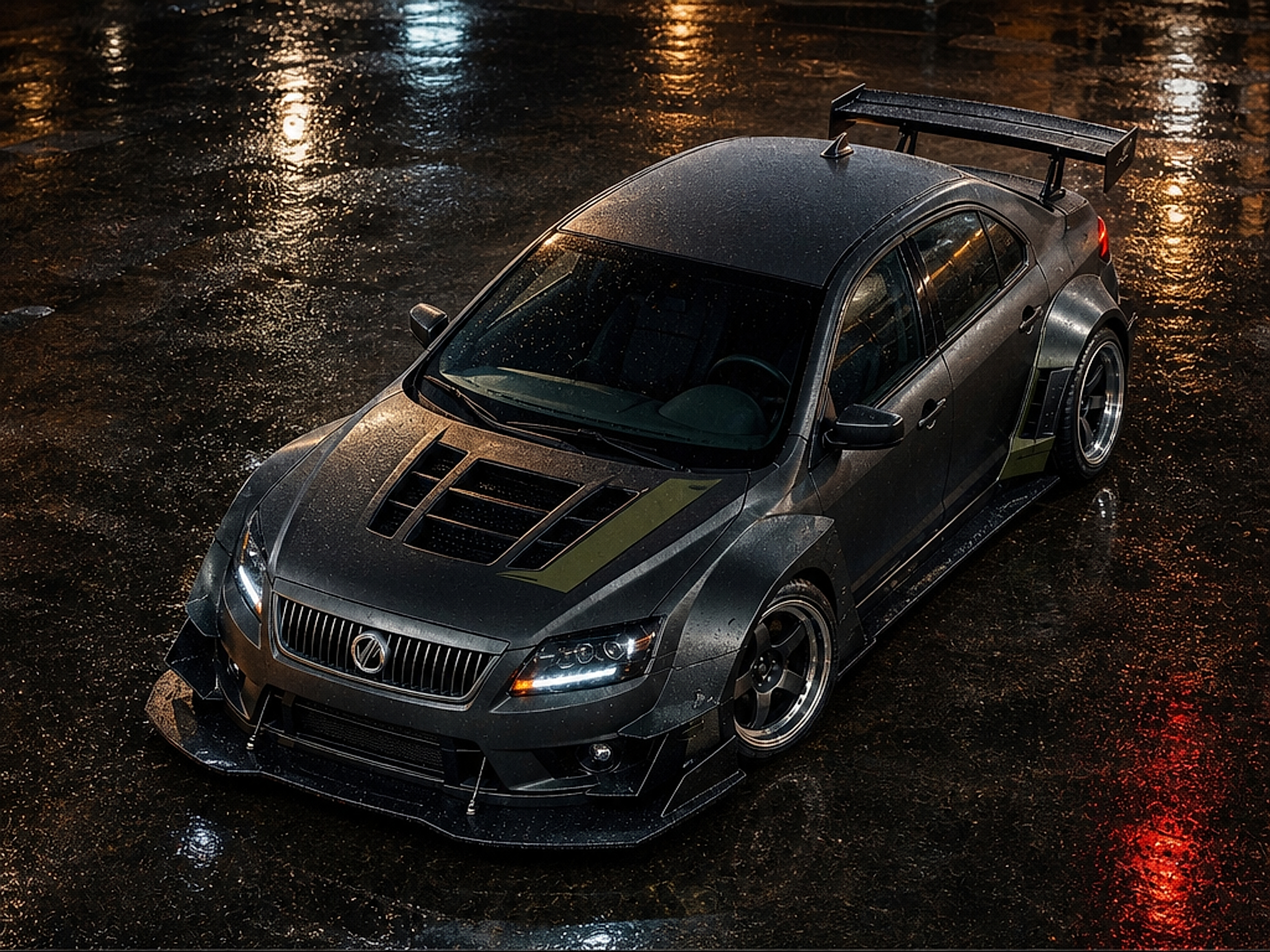
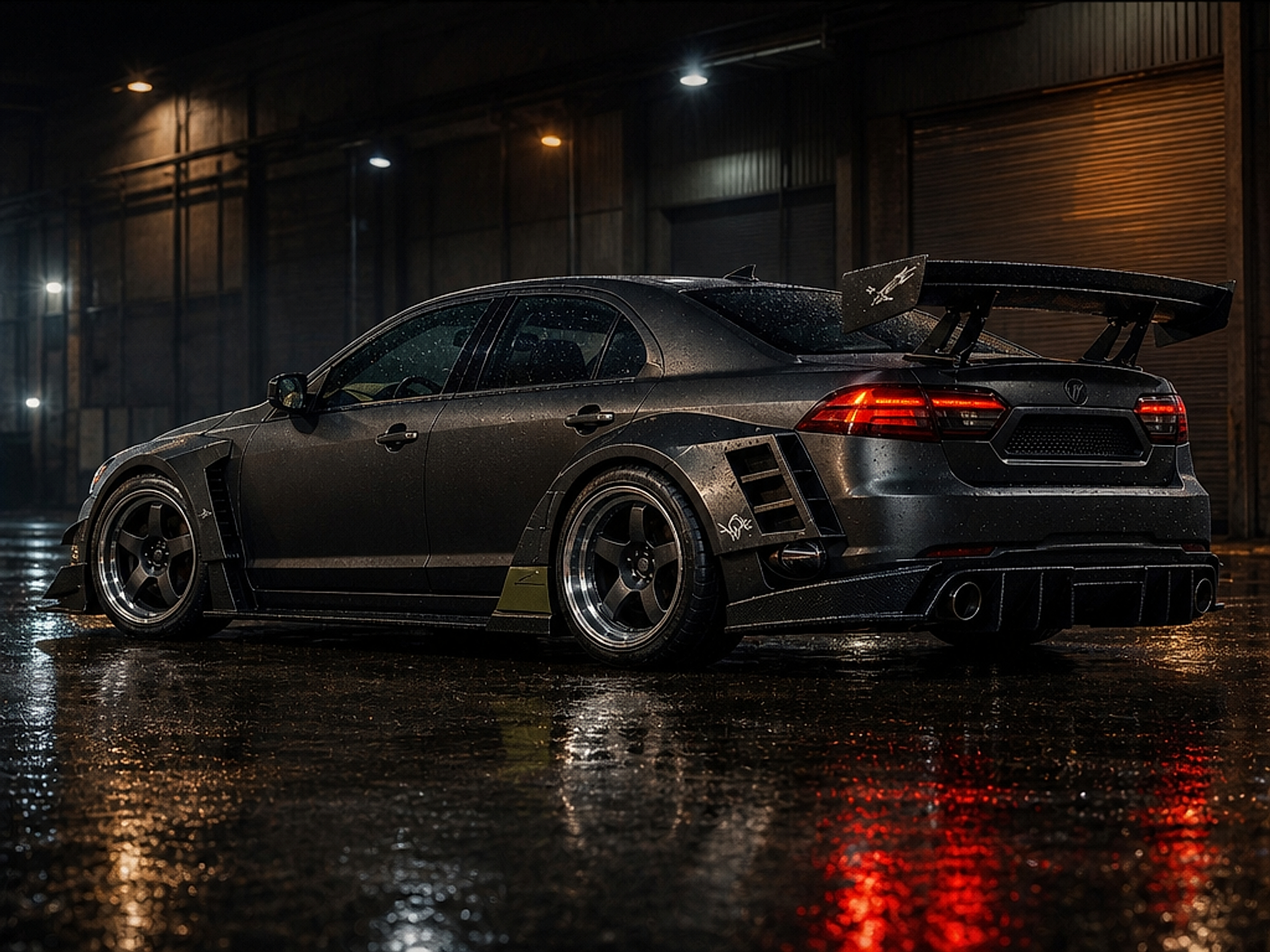
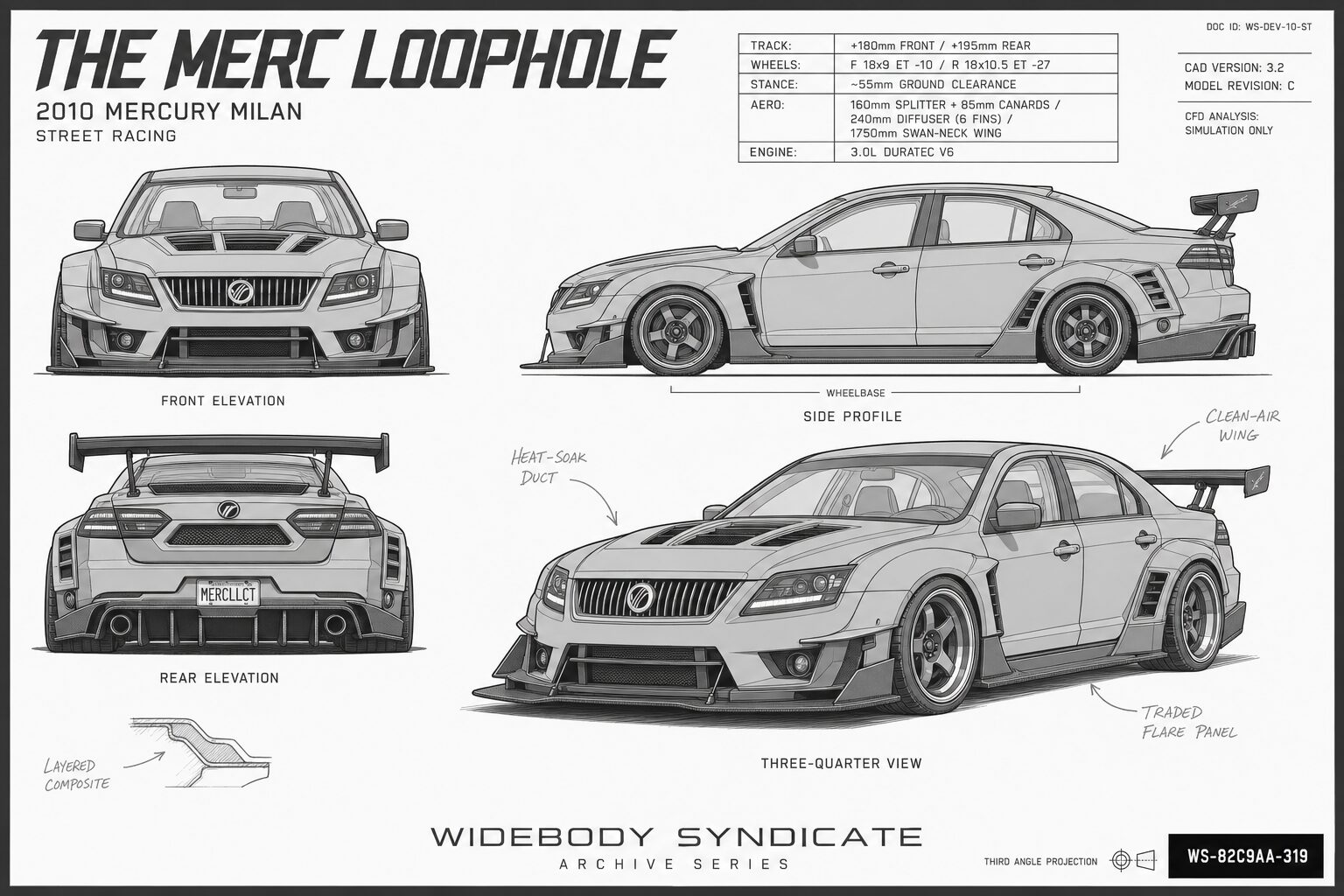
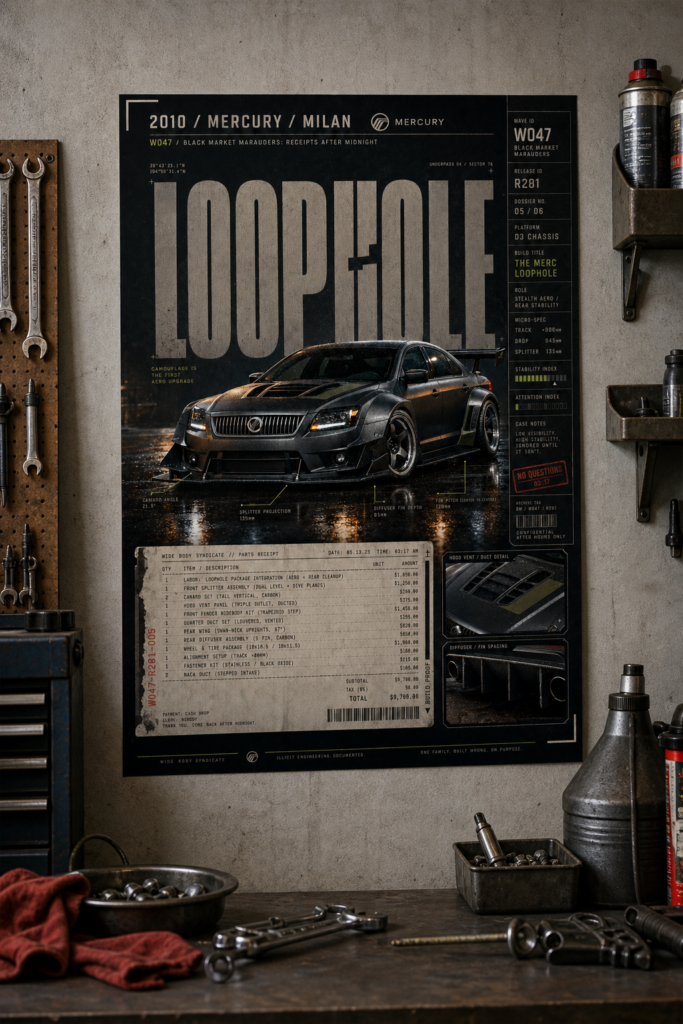
The Merc Loophole starts with a car nobody looks twice at—a 2010 Mercury Milan—and turns it into a parts-counter ghost story. The wide track isn’t cosplay: 180mm up front and 195mm in the rear gives the chassis a real footprint, with composite flares that read like traded panels from three different scenes, then somehow land as one silhouette. The matte black and scattered olive inserts sell the “assembled, not ordered” vibe without losing the Milan’s profile.
Up front, the splitter and tall canards do the obvious work—front bite and stability—while the stepped flare winglets and ducting aim airflow where street cars actually suffer: brakes and heat soak. Out back, the louvered double-layer quarters and deep diffuser clean up the wake, and the swan-neck wing is set high enough to live in clean air. It’s a sedan built like it expects short straights, dirty pavement, and one more run before the cops circle back.
Release Image Studies
Image studies from every angle.
Comparison Shots
Blueprint / Collector Archive
Engineering Artifacts
The technical study and collectible interpretation of one build, preserved together.
A presentation-grade collector artifact created for this release and preserved as part of the Widebody Syndicate archive.
Selected archive goods are available for collectors.
Technical Dossier
Platform
2010 Mercury Milan
Mercury’s Milan is one of those quietly important early-2010s midsize sedans that lived in the space between fleet anonymity and grown-up daily-driver confidence. Under the skin it shares Ford’s CD3 bones with the Fusion, which means a long, low four-door profile, sensible proportions, and a chassis engineered for real-world roads rather than spec-sheet theatrics.
In 2010 form, the Milan represents the end of Mercury’s era: clean surfacing, restrained brightwork, and a deliberately upscale take on a mainstream platform. It’s the kind of base car that does its job without begging for attention—exactly why it works as a cultural time capsule of American commuter design right before everything became an “activity vehicle.”
Aero Package
160mm-projection front splitter with twin vertical carbon canards (85mm tall)
Deep rear diffuser channel with six vertical vanes for underbody stability
Swan-neck mounted carbon rear wing (1750mm span) with adjustable flap
NACA-style front ducting and managed cooling paths for brakes and oil cooler
Chassis
Shot in a rain-soaked industrial alley at night—wet asphalt, harsh neon, and the kind of lighting that makes matte paint look like armor. The 85mm perspective and low camera height emphasize the flare geometry, splitter projection, and the wing sitting high above the hatch line.
Wheels & Tires
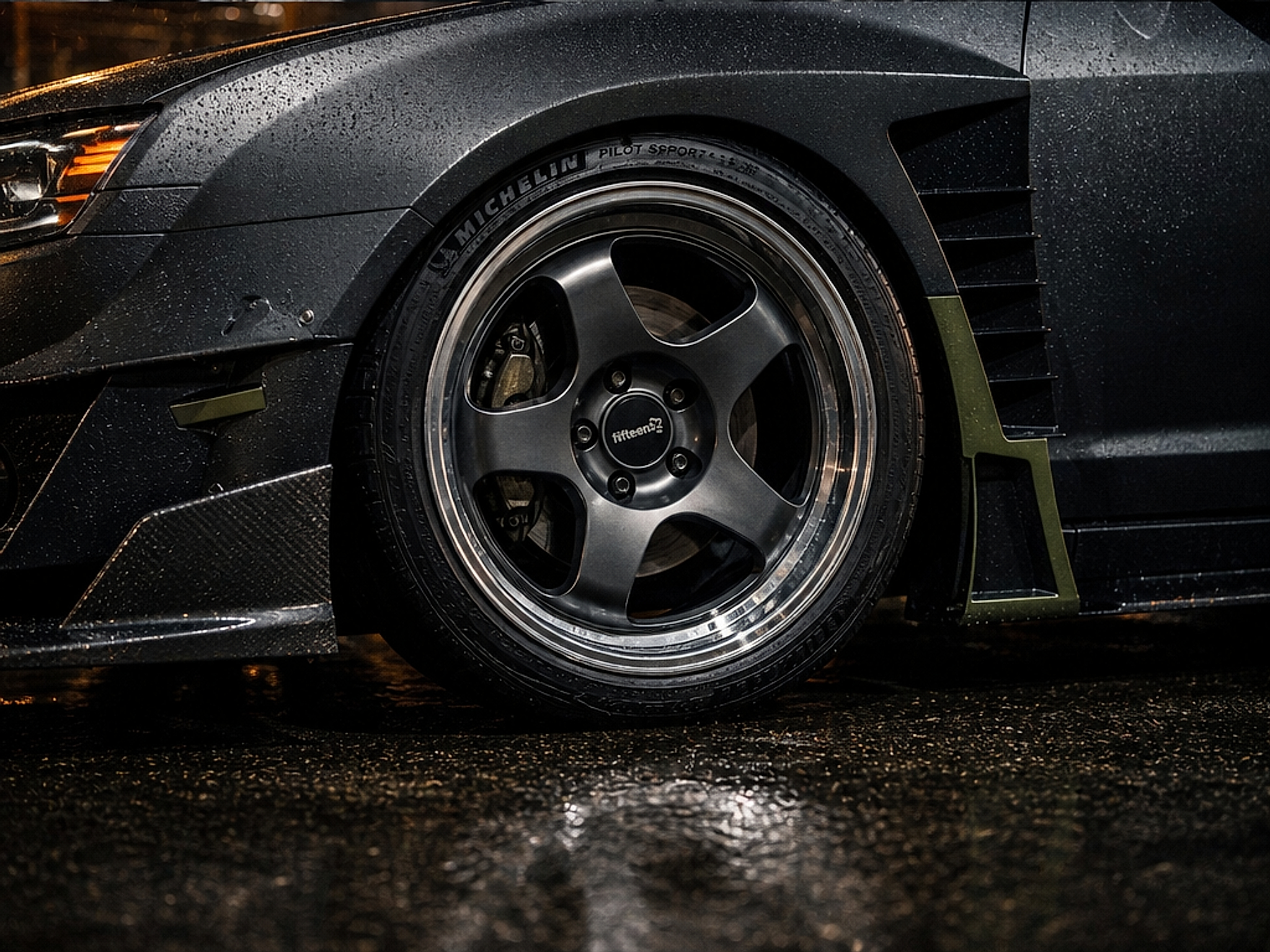
Front: Fifteen52 Tarmac 18x9 ET-10 with Michelin Pilot Sport 4S 265/35ZR18
Rear: Work Meister S1 18x10.5 ET-27 with Yokohama Advan A052 275/35ZR18
Aggressive alignment and coilover damping tuned for low ride height and street compliance
Powertrain
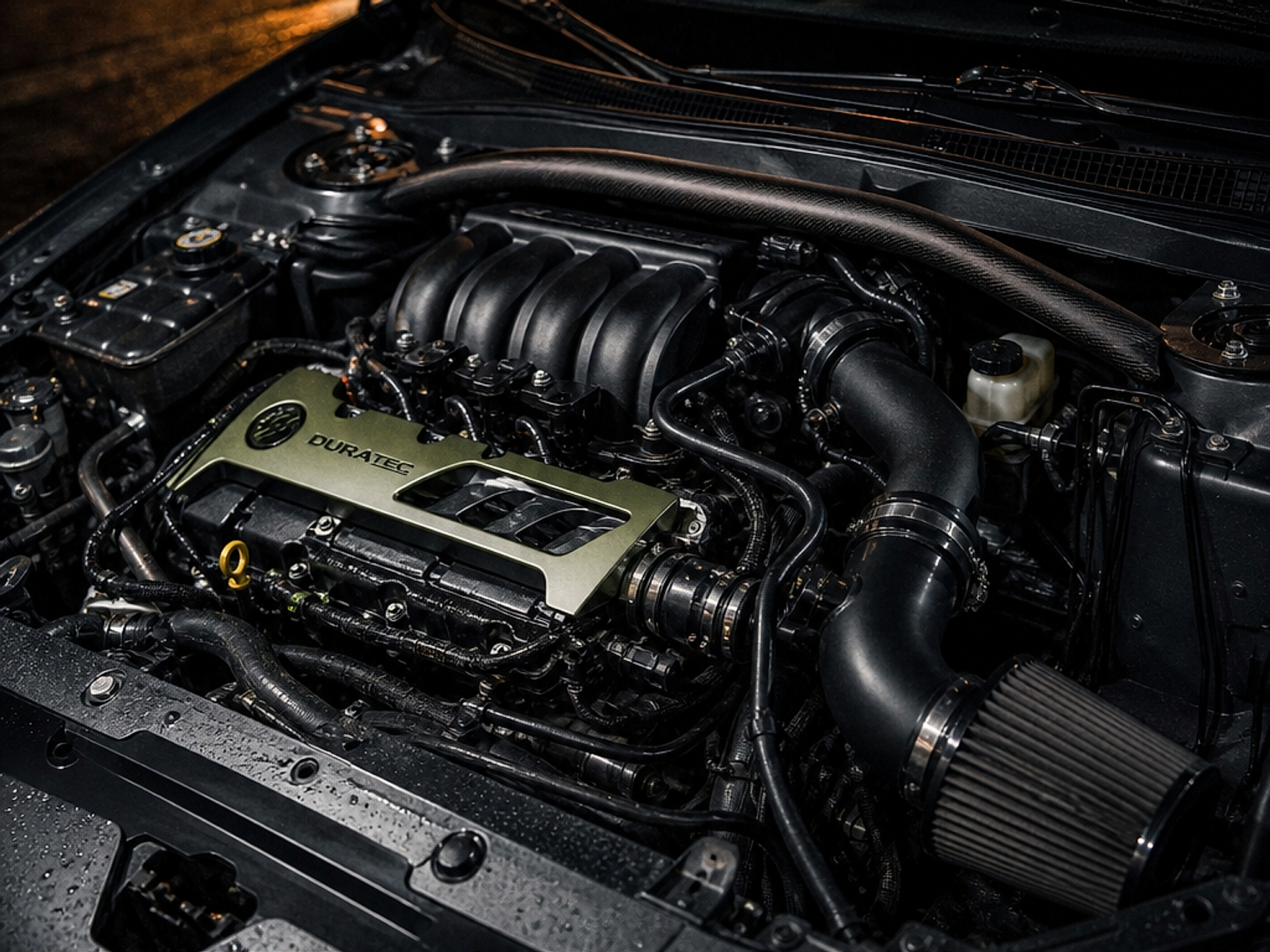
3.0L Duratec V6 kept intact for reliability, upgraded with oil cooling and heat management
Focus on response: intake/exhaust flow, conservative calibration, and strong midrange
Brake ducting and thermal control treated as power adders in stop-and-go street conditions
Fabrication Notes
Composite flare layups blended into OEM body lines to keep the Milan identity readable
Splitter and skirts reinforced with proper mounting points to survive street impacts
Cooling management uses ducting, mesh, and controlled exit paths to reduce heat soak
Externally serviceable piping and quick-release hardware for fast roadside adjustments
Design Philosophy
The Merc Loophole starts with a car nobody looks twice at—a 2010 Mercury Milan—and turns it into a parts-counter ghost story. The wide track isn’t cosplay: 180mm up front and 195mm in the rear gives the chassis a real footprint, with composite flares that read like traded panels from three different scenes, then somehow land as one silhouette. The matte black and scattered olive inserts sell the “assembled, not ordered” vibe without losing the Milan’s profile.
Up front, the splitter and tall canards do the obvious work—front bite and stability—while the stepped flare winglets and ducting aim airflow where street cars actually suffer: brakes and heat soak. Out back, the louvered double-layer quarters and deep diffuser clean up the wake, and the swan-neck wing is set high enough to live in clean air. It’s a sedan built like it expects short straights, dirty pavement, and one more run before the cops circle back.
▧Platform+
2010 Mercury Milan
Mercury’s Milan is one of those quietly important early-2010s midsize sedans that lived in the space between fleet anonymity and grown-up daily-driver confidence. Under the skin it shares Ford’s CD3 bones with the Fusion, which means a long, low four-door profile, sensible proportions, and a chassis engineered for real-world roads rather than spec-sheet theatrics.
In 2010 form, the Milan represents the end of Mercury’s era: clean surfacing, restrained brightwork, and a deliberately upscale take on a mainstream platform. It’s the kind of base car that does its job without begging for attention—exactly why it works as a cultural time capsule of American commuter design right before everything became an “activity vehicle.”
⌘Aero Package+
160mm-projection front splitter with twin vertical carbon canards (85mm tall)
Deep rear diffuser channel with six vertical vanes for underbody stability
Swan-neck mounted carbon rear wing (1750mm span) with adjustable flap
NACA-style front ducting and managed cooling paths for brakes and oil cooler
⟡Chassis+
Shot in a rain-soaked industrial alley at night—wet asphalt, harsh neon, and the kind of lighting that makes matte paint look like armor. The 85mm perspective and low camera height emphasize the flare geometry, splitter projection, and the wing sitting high above the hatch line.
◎Wheels & Tires+
Front: Fifteen52 Tarmac 18x9 ET-10 with Michelin Pilot Sport 4S 265/35ZR18
Rear: Work Meister S1 18x10.5 ET-27 with Yokohama Advan A052 275/35ZR18
Aggressive alignment and coilover damping tuned for low ride height and street compliance
▤Powertrain+
3.0L Duratec V6 kept intact for reliability, upgraded with oil cooling and heat management
Focus on response: intake/exhaust flow, conservative calibration, and strong midrange
Brake ducting and thermal control treated as power adders in stop-and-go street conditions
△Fabrication Notes+
Composite flare layups blended into OEM body lines to keep the Milan identity readable
Splitter and skirts reinforced with proper mounting points to survive street impacts
Cooling management uses ducting, mesh, and controlled exit paths to reduce heat soak
Externally serviceable piping and quick-release hardware for fast roadside adjustments
×Design Philosophy+
The Merc Loophole starts with a car nobody looks twice at—a 2010 Mercury Milan—and turns it into a parts-counter ghost story. The wide track isn’t cosplay: 180mm up front and 195mm in the rear gives the chassis a real footprint, with composite flares that read like traded panels from three different scenes, then somehow land as one silhouette. The matte black and scattered olive inserts sell the “assembled, not ordered” vibe without losing the Milan’s profile.
Up front, the splitter and tall canards do the obvious work—front bite and stability—while the stepped flare winglets and ducting aim airflow where street cars actually suffer: brakes and heat soak. Out back, the louvered double-layer quarters and deep diffuser clean up the wake, and the swan-neck wing is set high enough to live in clean air. It’s a sedan built like it expects short straights, dirty pavement, and one more run before the cops circle back.
Part of
Wave 47
Black Market Marauders
I love a clean build as much as the next nerd, but this batch? This batch is what happens when the parts counter is a guy in an alley with a flashlight and no questions.
Explore Wave 47 → 6 BuildsKeep Exploring
The archive is always growing. New releases, waves, and blueprints added regularly.