

Continue this wave
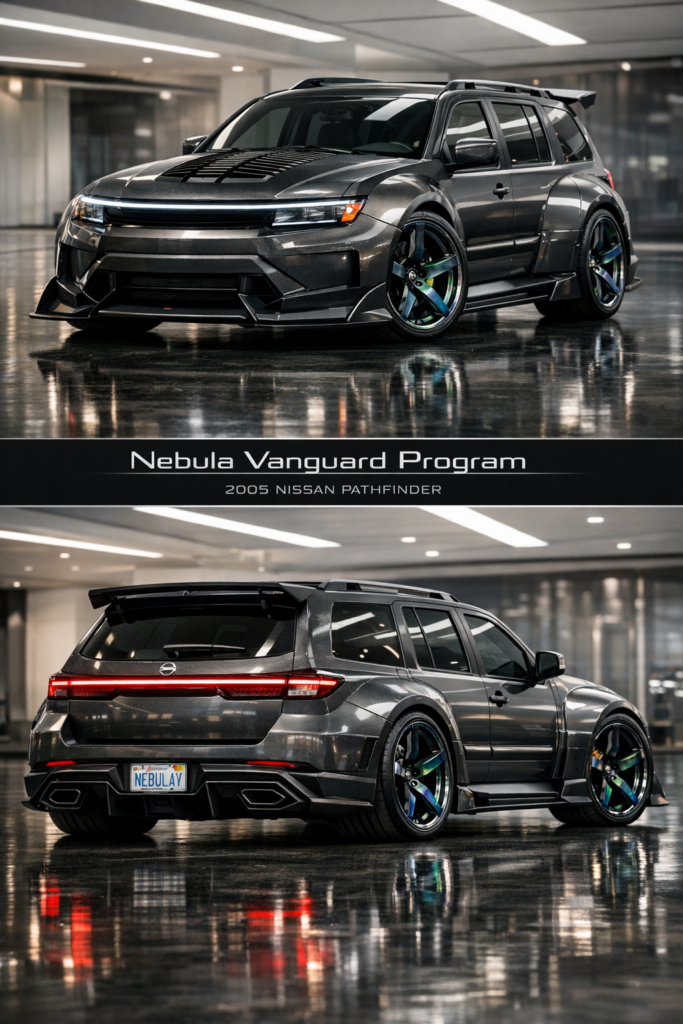
2005 Nissan Pathfinder
6 photos
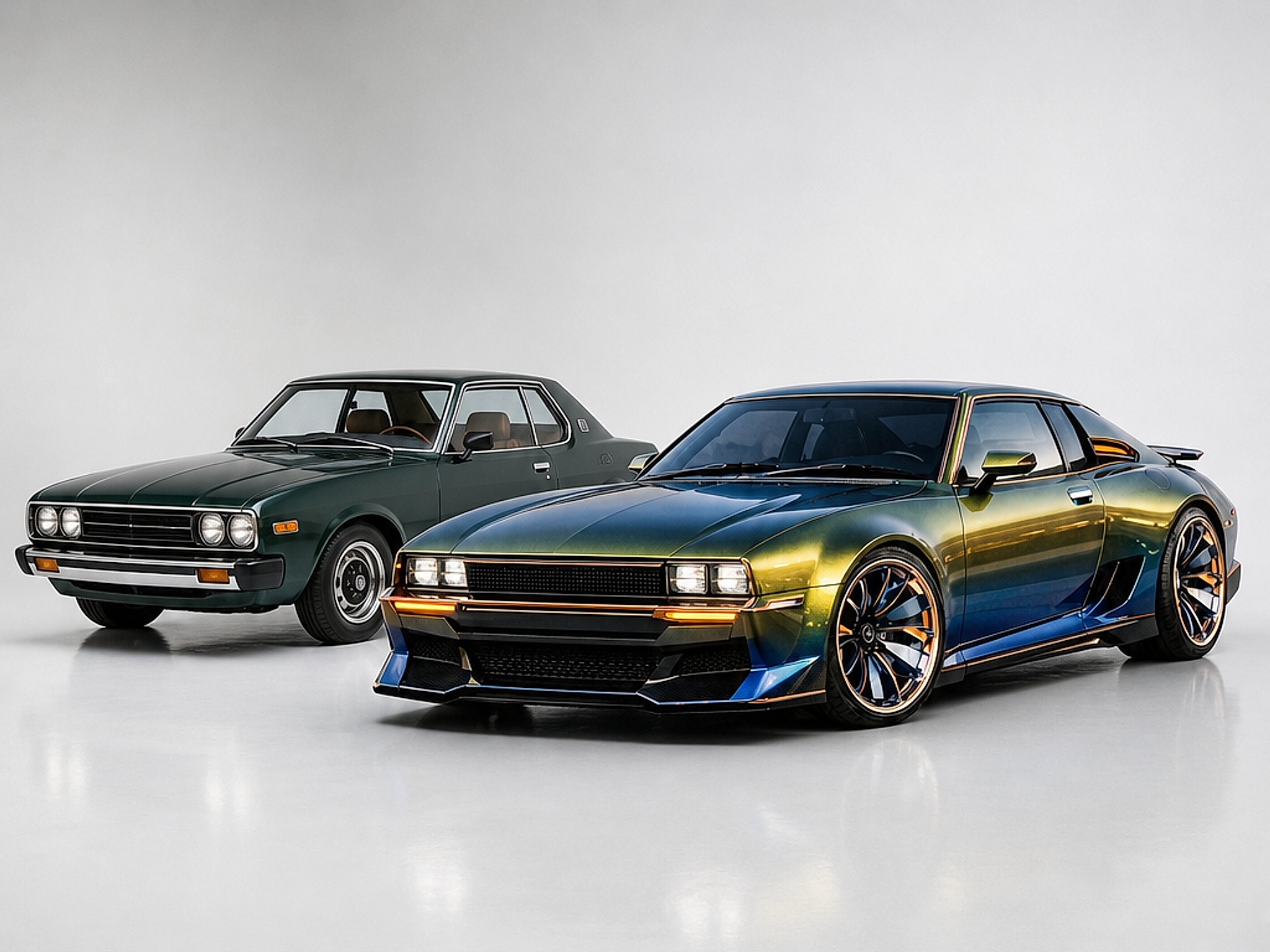
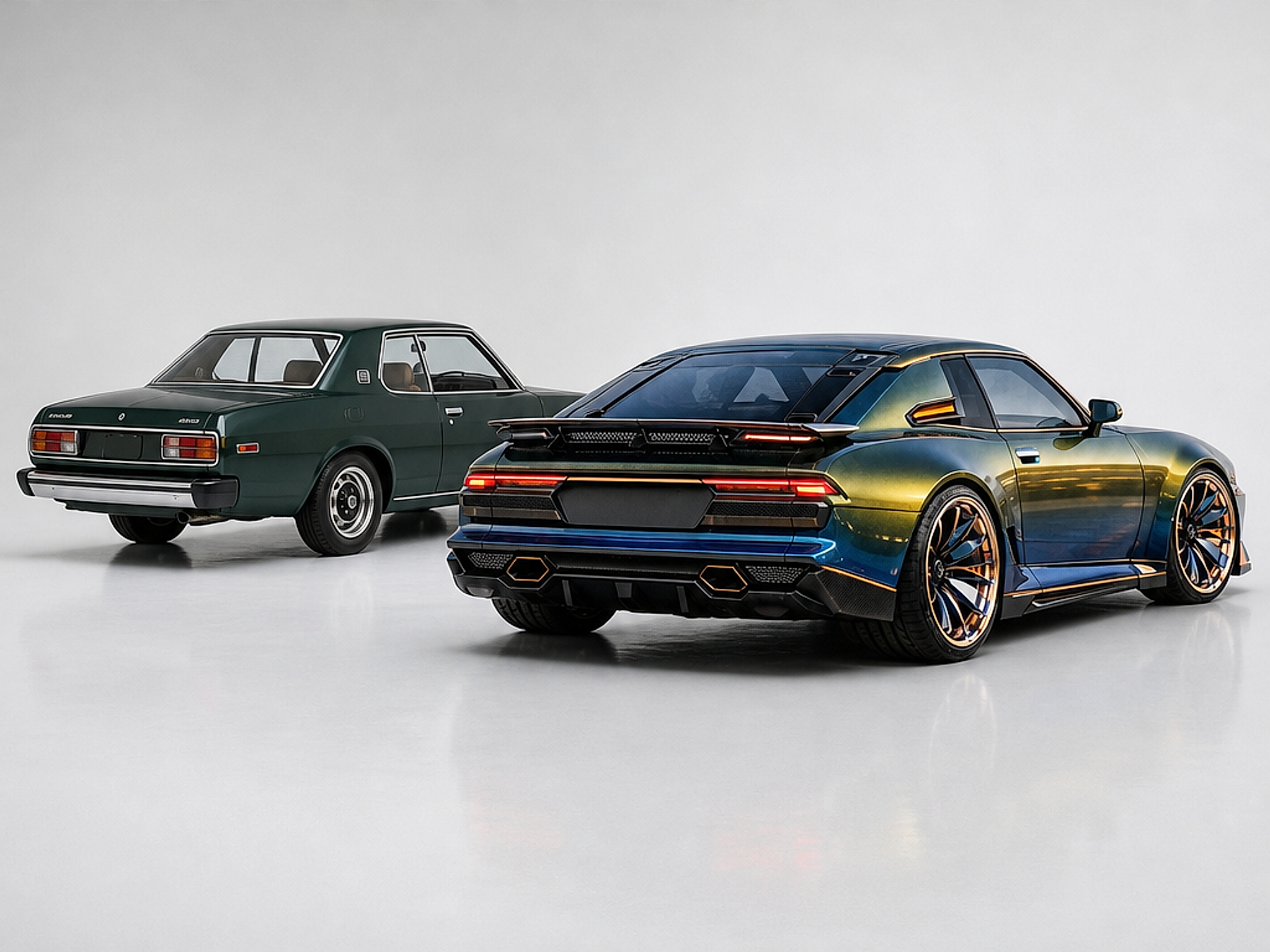
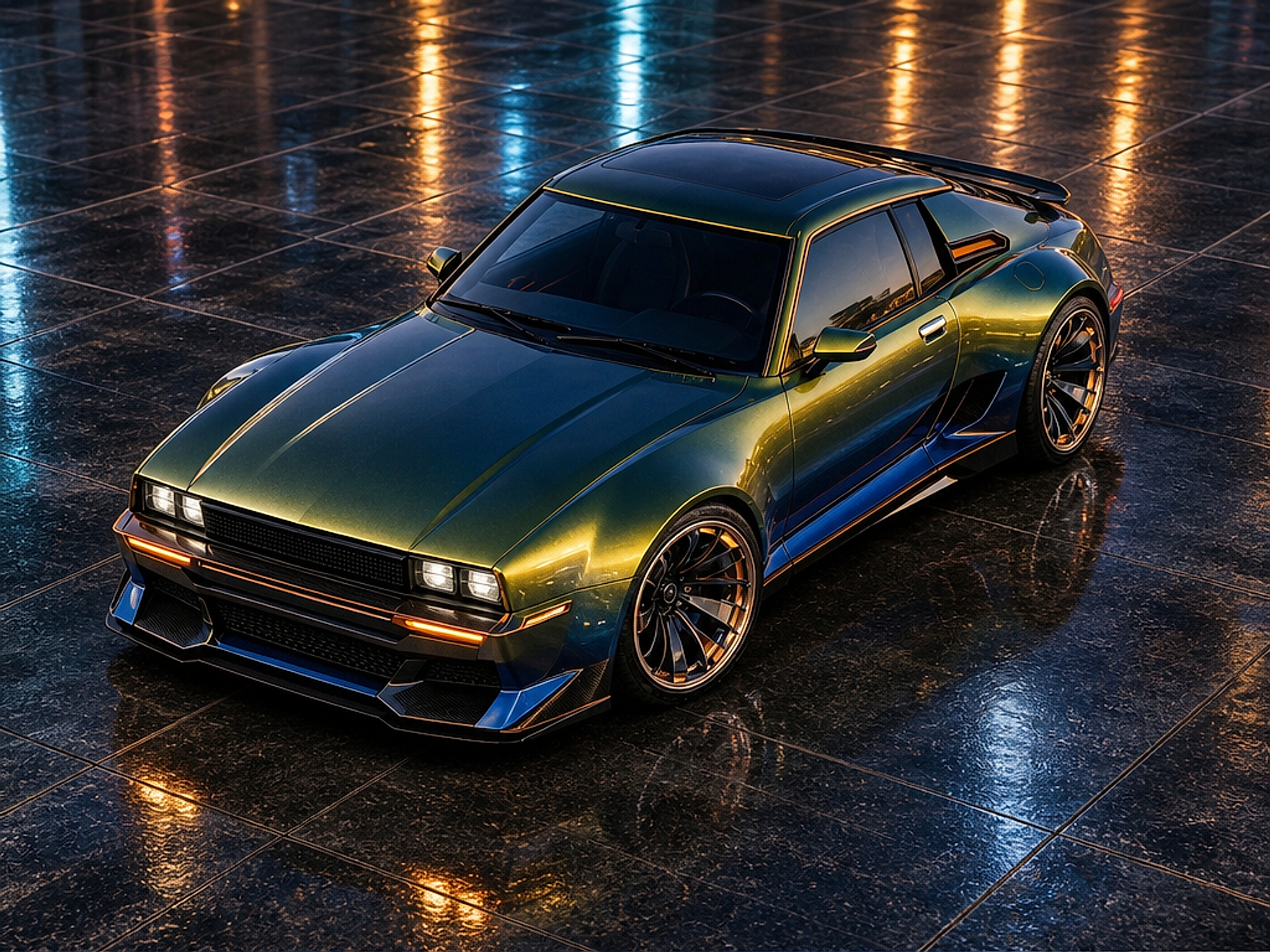
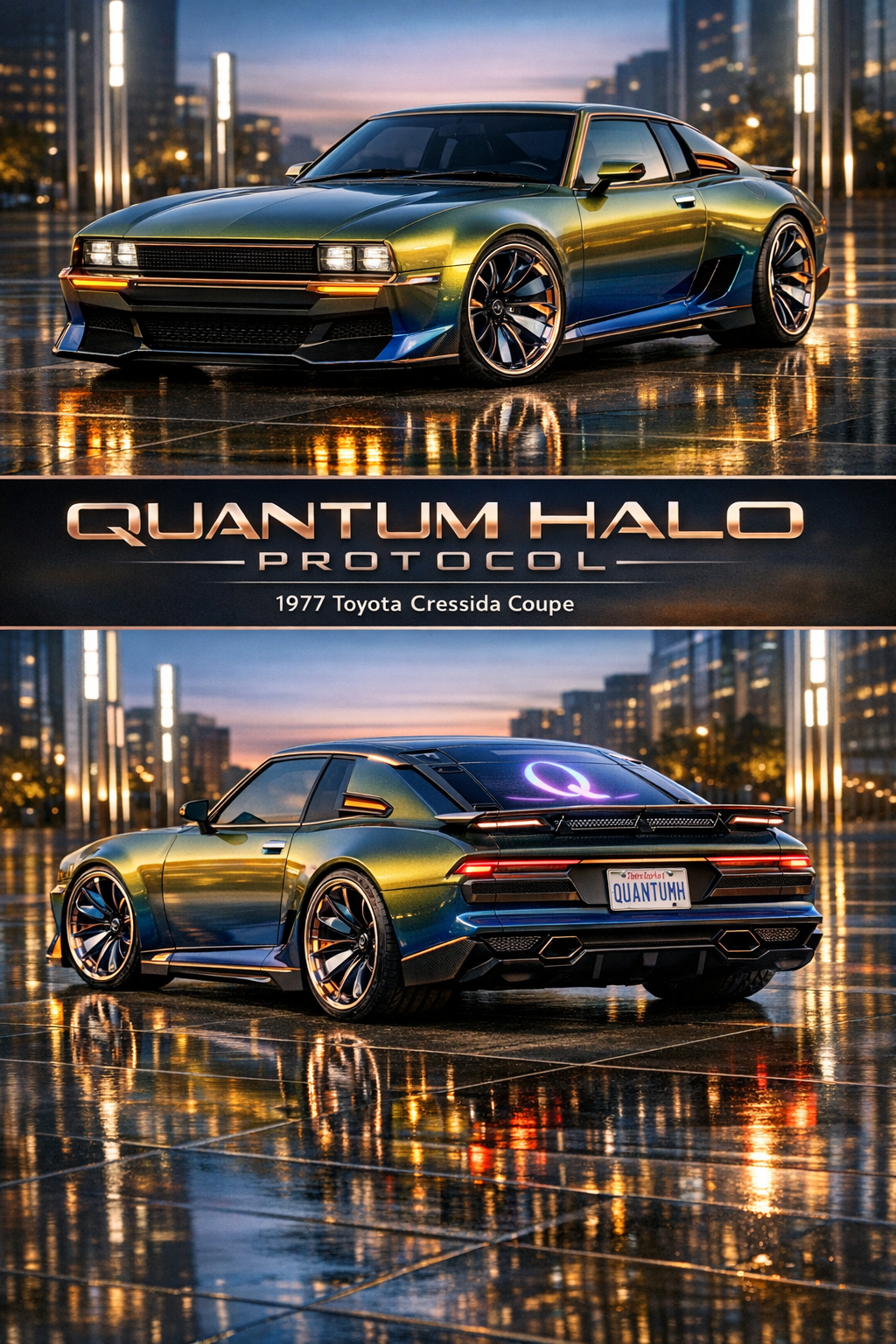
Quantum Halo Protocol treats the ’77 Cressida Coupe like sacred sheetmetal—then dares to repackage it as a wind-tunnel-first halo car. The original roofline and glasshouse stay recognizable, but everything below the beltline becomes a single, flush composite shell: +280 mm front track and +300 mm rear, with concave front sweeps and swollen rear quarters that read like one continuous surface instead of bolt-on aggression.
Under the skin, it’s a packaging exercise as much as a styling one. A fuel-cell stack and high-voltage hardware live where a straight-six once did, fed by roof-to-side air curtains and door-side cooling pods, while active underbody and hatch aero handles stability the way a big wing used to. It’s a Cressida that still looks like a Cressida—until you notice the stance control, the aero seams, and the way the bodywork is doing the work of an entire race car kit.
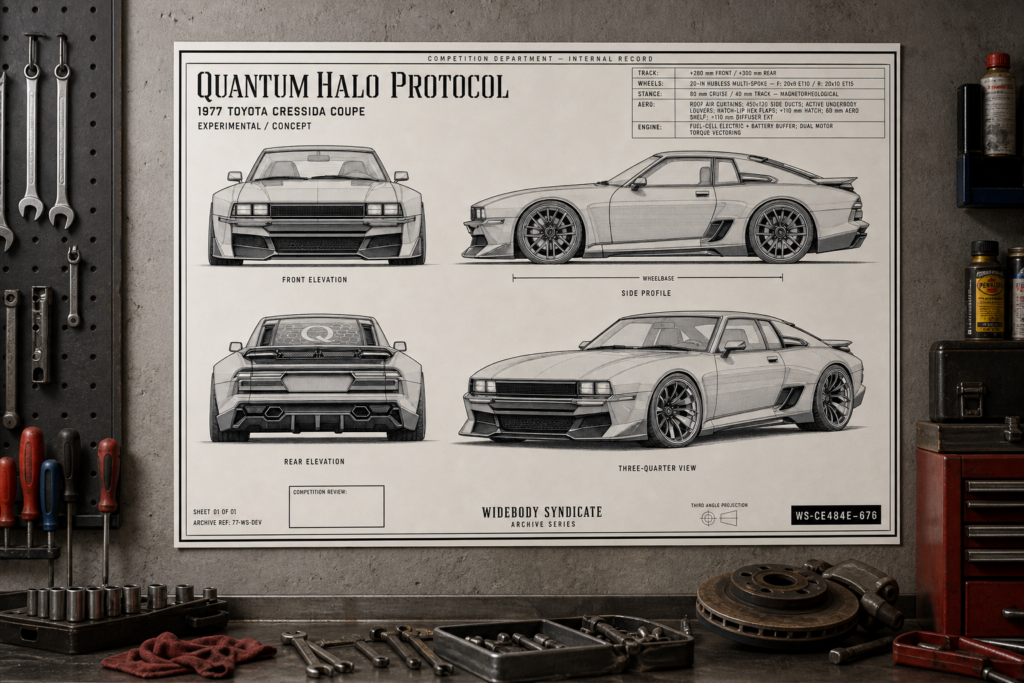
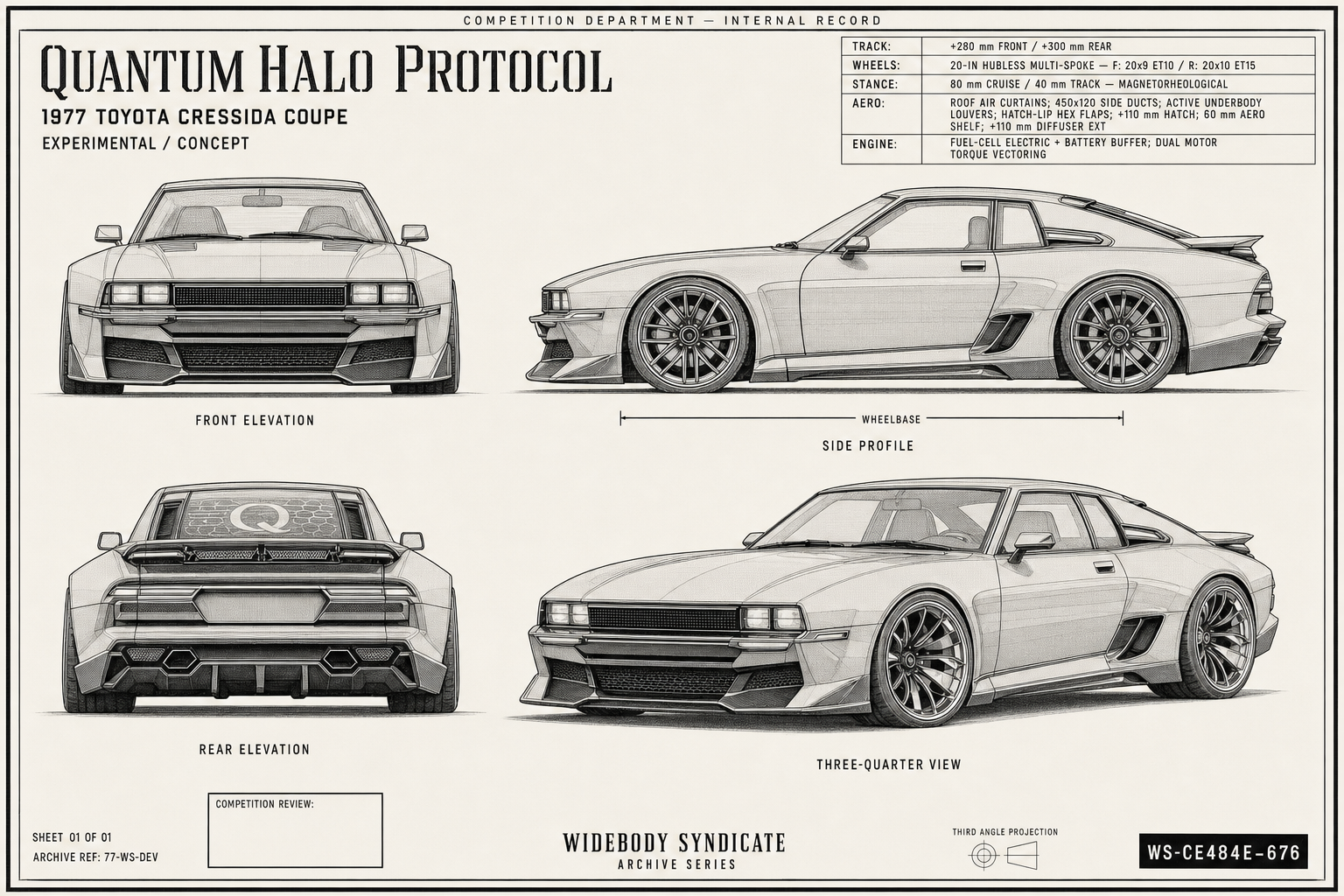 Inspect drawing ↗Open blueprint study →
Fictional engineering concept
1977 Toyota Cressida Coupe
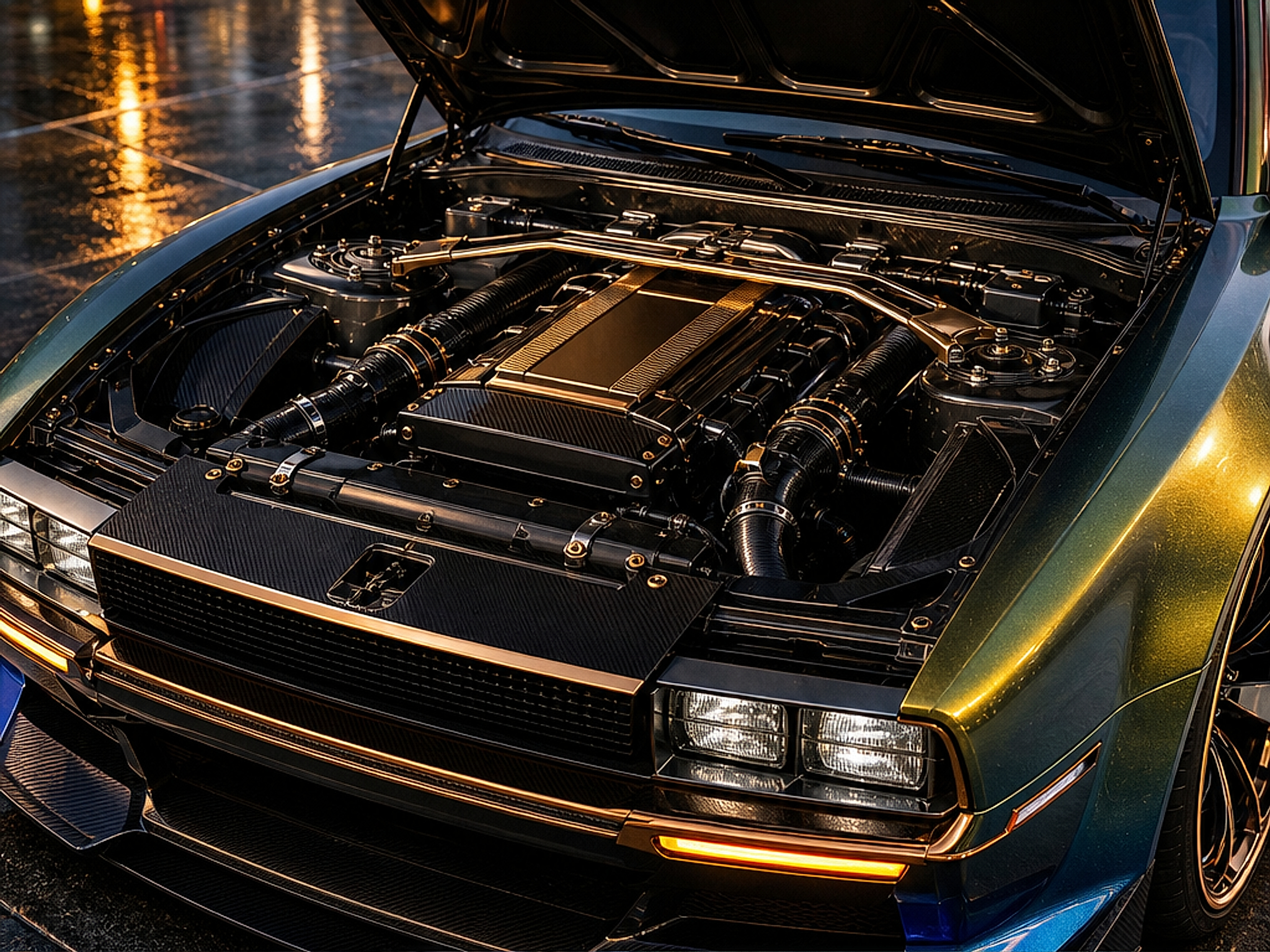
Hydrogen fuel-cell stack up front with battery buffer for transient demand and regen capture
Dual electric drive units calibrated for repeatable sustained output (600 kW system target)
Sidepod-style thermal management ducts integrated into door concaves
High-voltage and cooling routing optimized for low center of gravity and service access
Roof-integrated air curtains feeding 450 mm x 120 mm side intakes for cooling/stack airflow
Flat undertray with stepped rear diffuser section and active louvers
Hatch-lip active aero module with stowable upper/lower flaps (0–250 kg downforce target)
Recessed aero edges and flush hinge detailing to reduce drag when stowed
1977 Toyota Cressida Coupe
20x9 ET10 front forged alloy concept wheels (hubless visual theme)
20x10 ET15 rear
Low-profile performance radials sized to match widened track and brake clearance requirements
Staggered fitment with conservative sidewall stretch to protect turn-in and heat management
Noise/comfort-focused sidewall construction concept to suit street-to-showroom use
Carbon sandwich widebody built as large bonded sections to achieve flush surfacing and consistent shut lines
Front/rear suspension pickup points re-engineered to support the widened track without excessive scrub radius
Active aero packaging reinforced at hatch structure with hidden hardpoints and service panels
Undertray and diffuser designed as modular panels for access to cooling
HV
and aero actuators
Choose an available edition, then select its size and finish.
Continue this wave
2005 Nissan Pathfinder
Different origins. Sacred Cars

1970 Chevrolet Chevelle SS 454
 Continue the exhibition2045 Redevelopment PlatformsWe just finished bolting tomorrow onto yesterday, and yeah, it’s as ridiculous as it sounds.Build 3 of 6↗