









Different origins. Sacred Cars

1970 Chevrolet Chevelle SS 454
18 photos
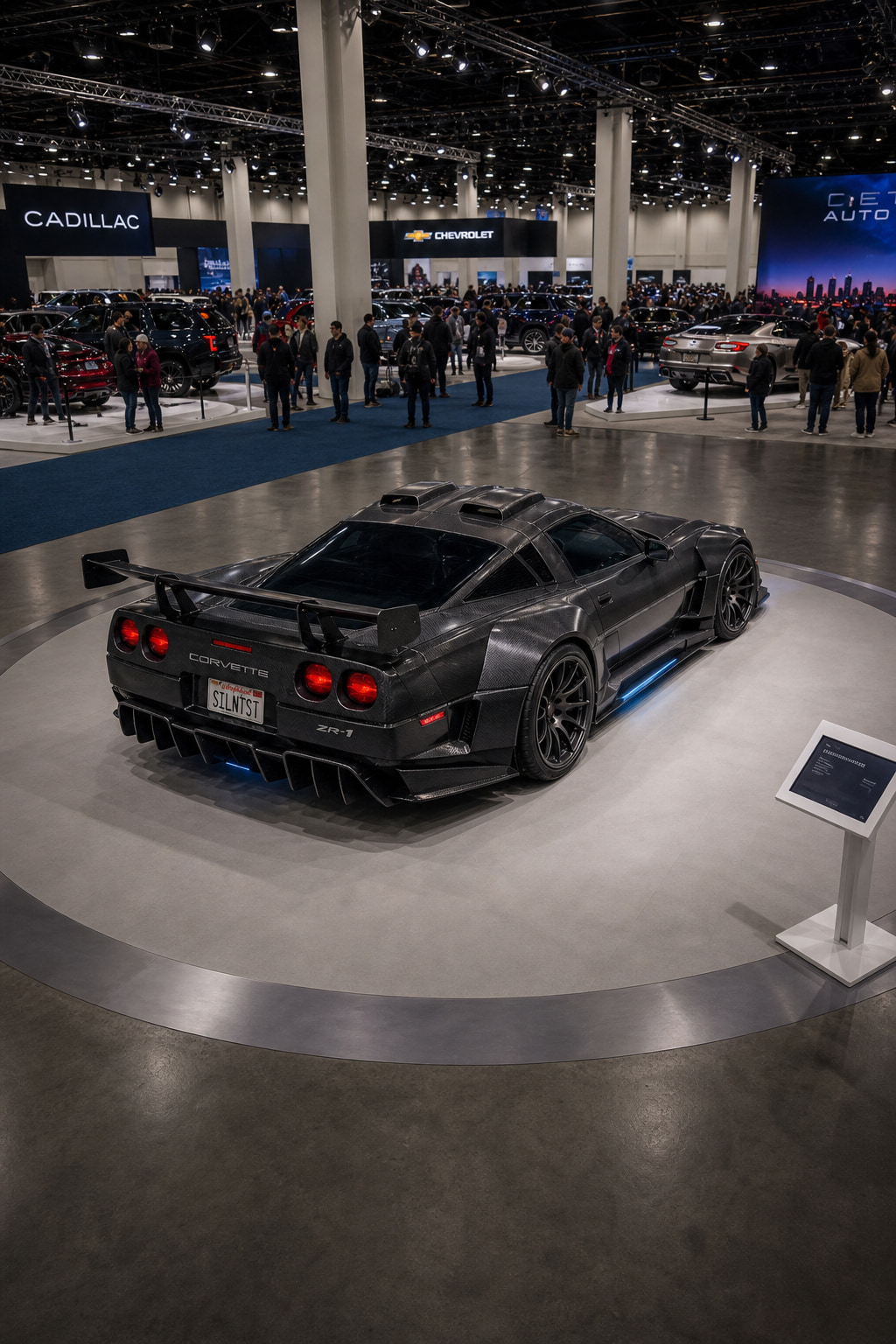
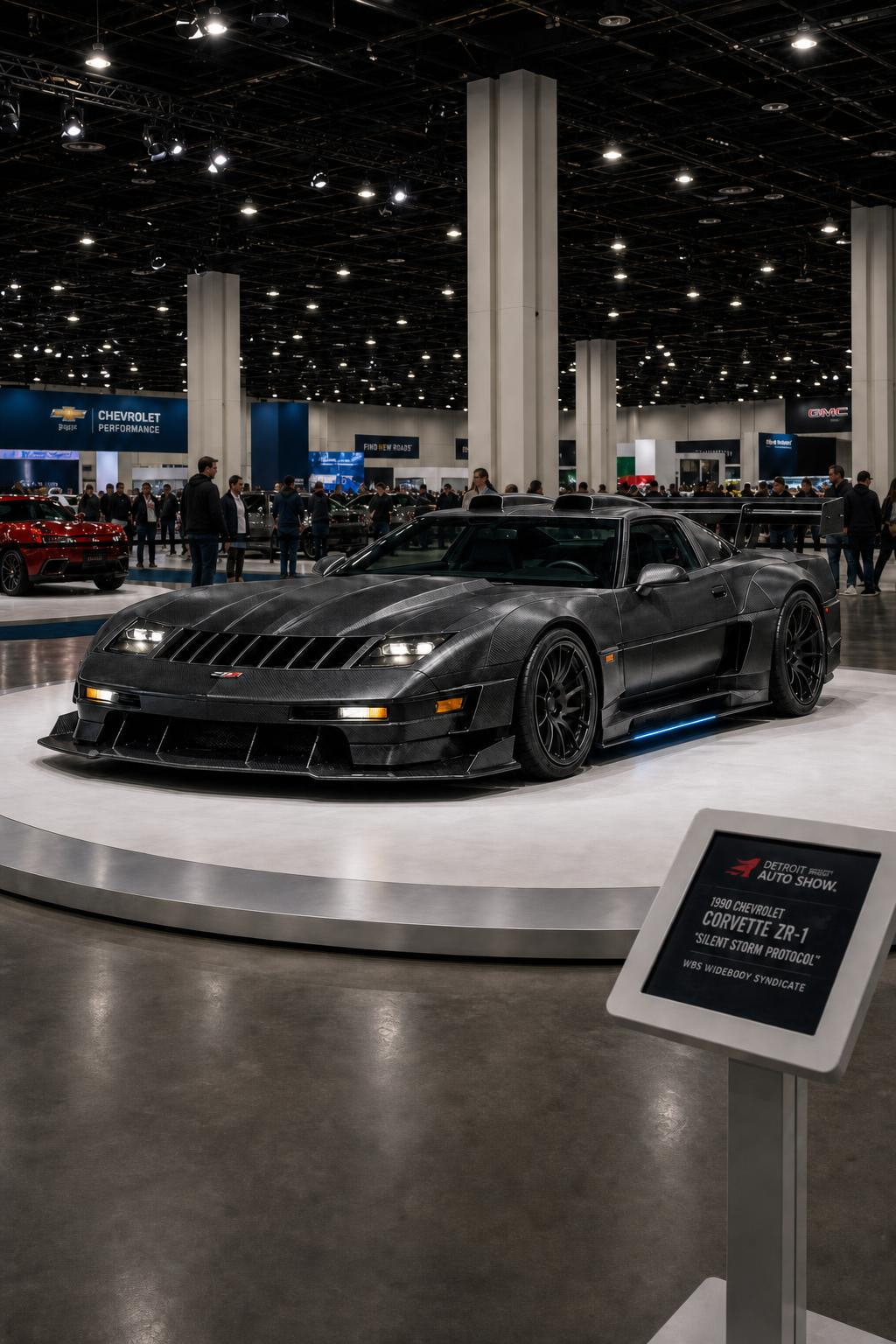
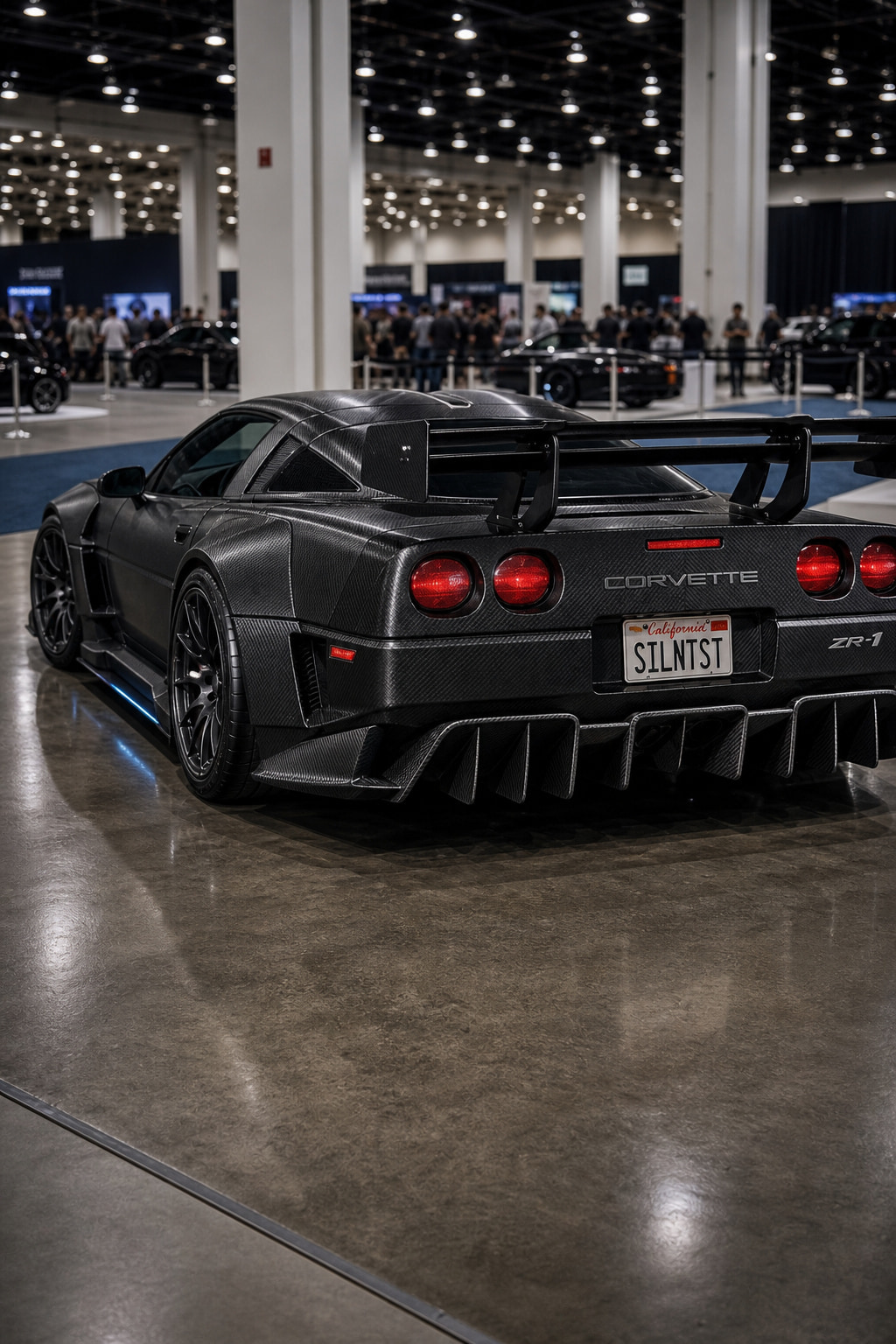
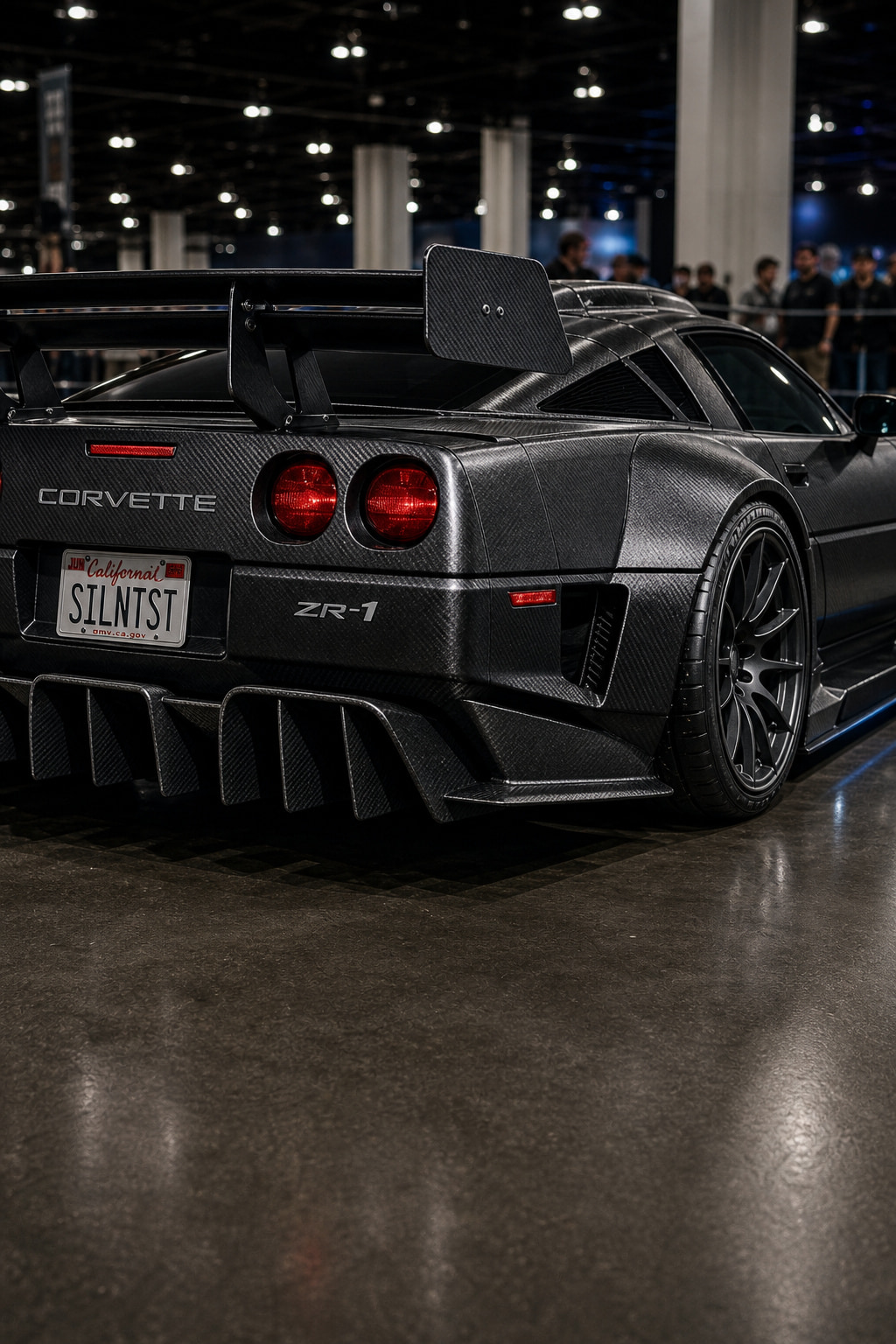
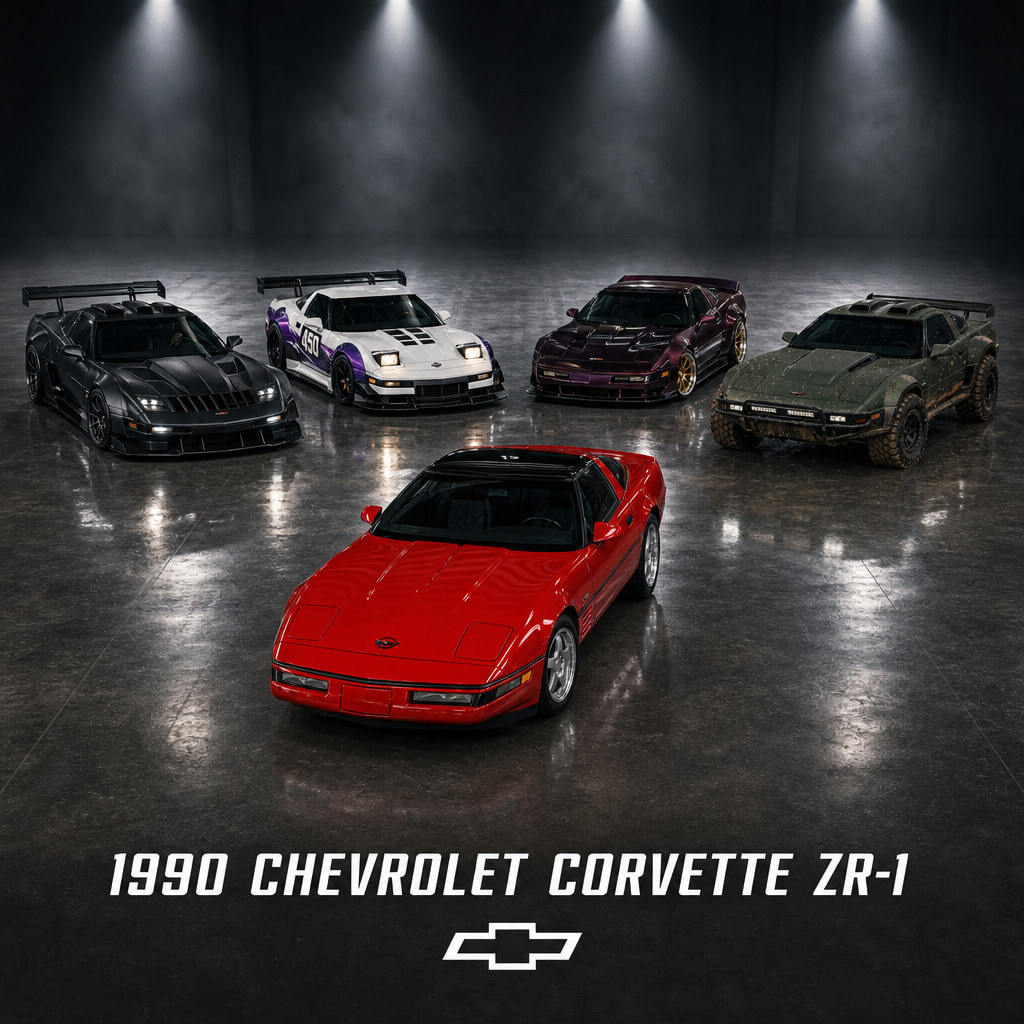
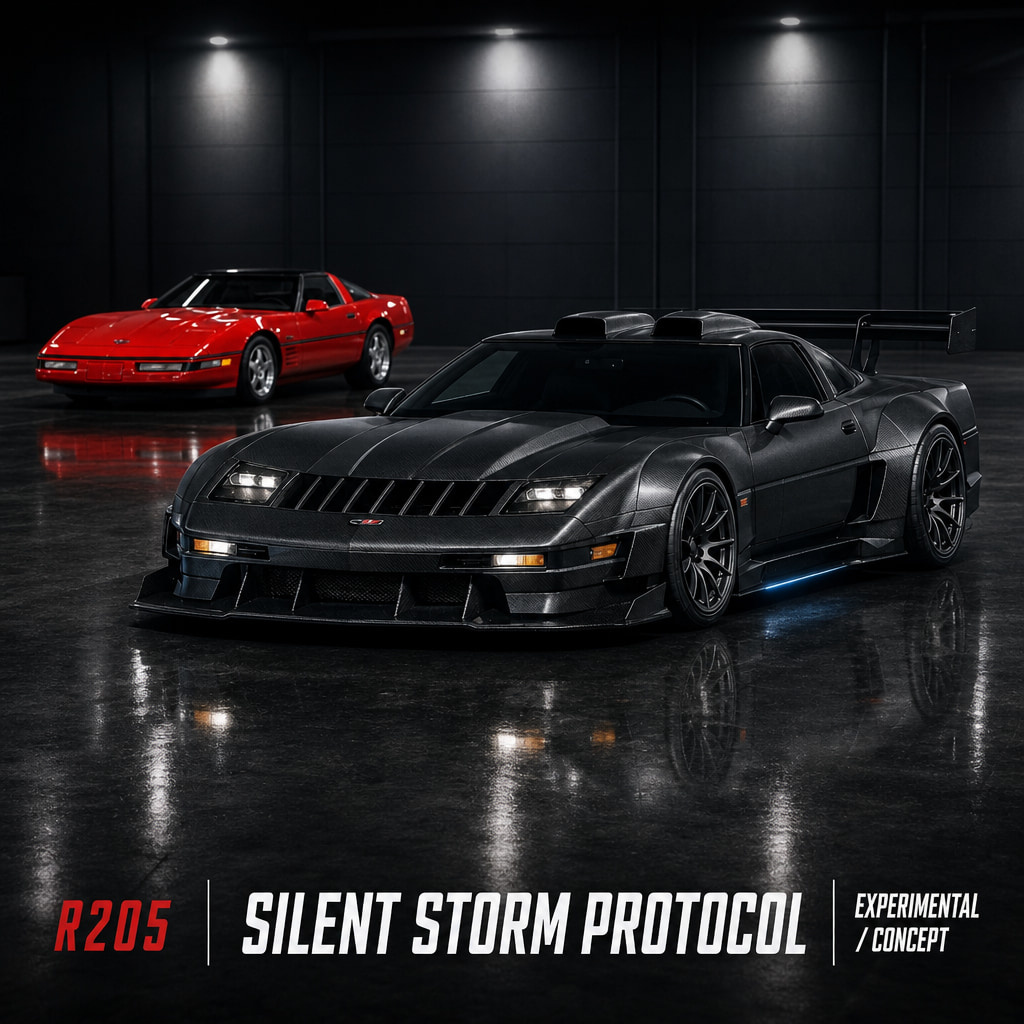
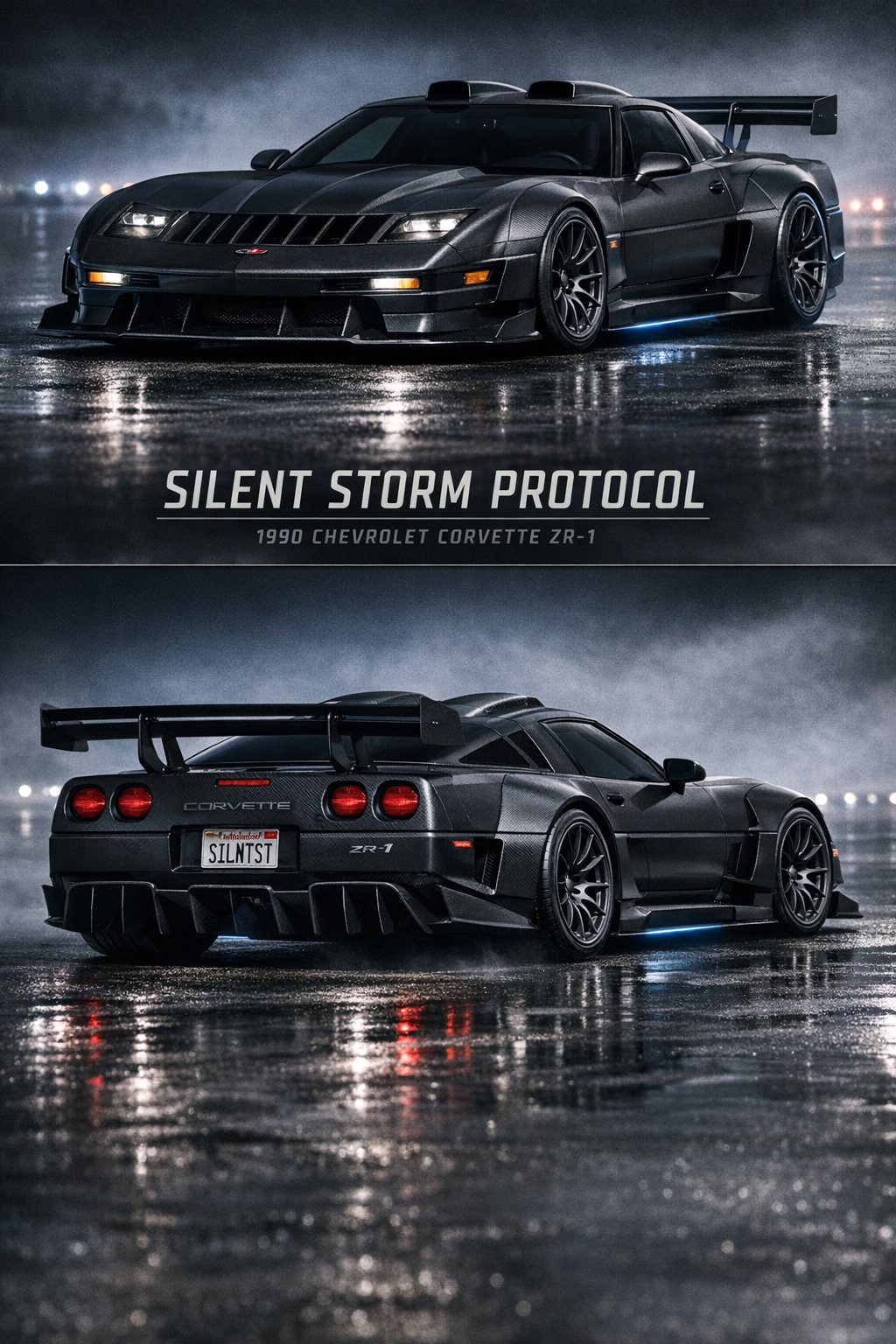
The ZR-1 was the sacred cow of C4 culture—LT5, wide hips, and a chassis that finally let a Corvette run with the world. Silent Storm Protocol treats that reputation as a starting point, not a rule. The body is re-authored around a carbon monocoque with bolt-in subframes, pushing the track out hard and turning the familiar silhouette into a faceted, aero-led shape that reads like a test mule that escaped the wind tunnel.
Under the skin it’s a dual-motor rear drive unit with a front assist motor, batteries pulled into the center and underfloor to keep the polar moment tight. Cooling dictates the design: roof-fed thermal paths, sidepod heat exchangers, and an active front panel that can choose between sealing for drag or opening for heat rejection. It’s not “silent” because it’s gentle—it’s silent because it’s efficient, controlled, and built to stay on pace for hours.
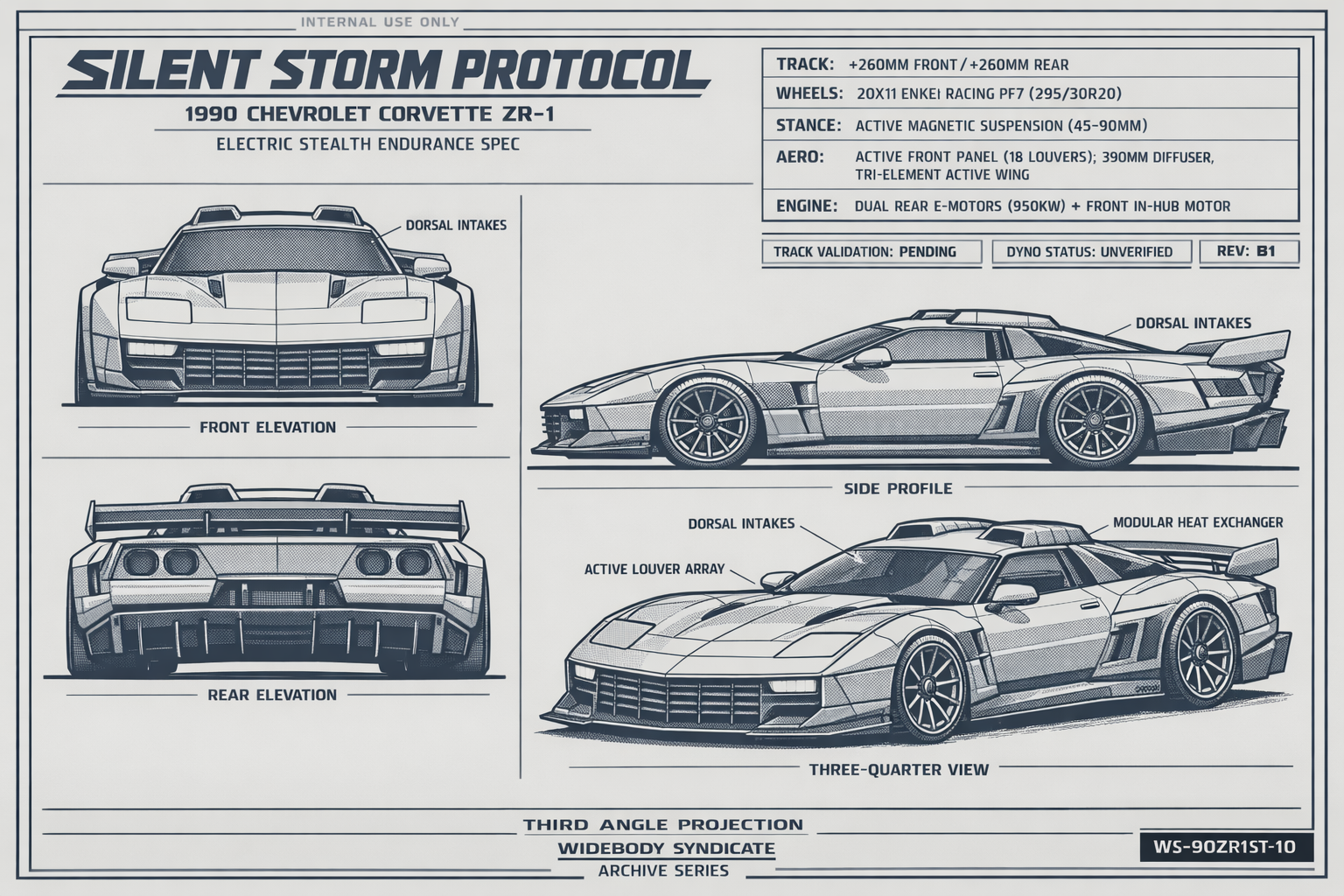 Inspect drawing ↗Open blueprint study →
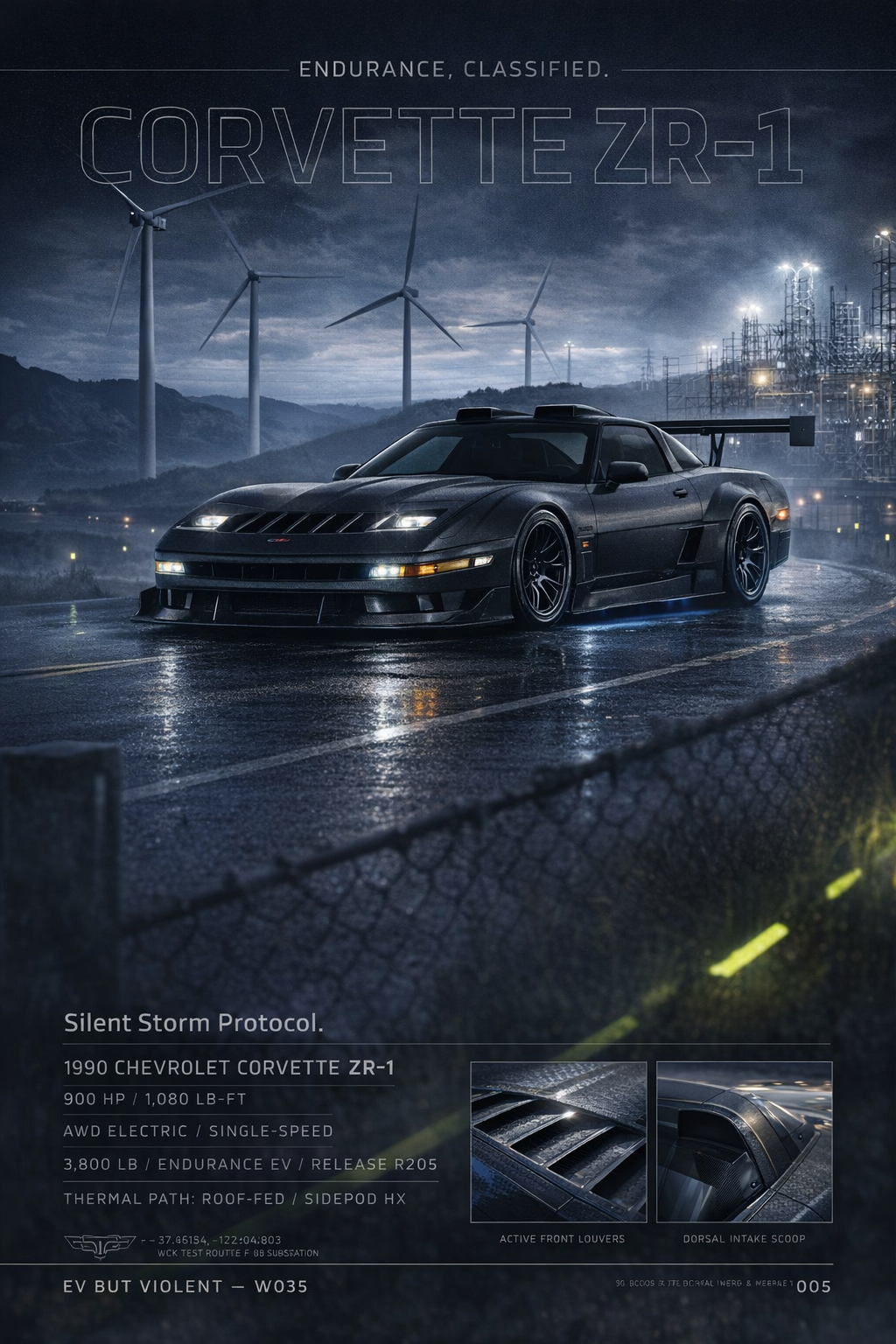 Inspect poster ↗
Fictional engineering concept
1990 Chevrolet Corvette ZR-1
Dual rear electric drive units targeting 950 kW combined output
Front assist motor for torque fill and stability on mixed grip
Central/underfloor battery placement for low CG and reduced polar moment
High-capacity thermal loop using front
sidepod
and roof-fed heat rejection
Endurance calibration focused on repeatability over one-hit peak power
1400mm-wide active front aero panel with 18 adjustable louvers (170mm forward extension)
520x200mm modular sidepod cooling pods with shaded mesh vents
390mm-deep multi-element rear diffuser with electronically controlled fins
1650mm tri-element active rear wing mounted high for clean-air authority
Integrated underbody management with sealed sections to reduce drag and noise
1990 Chevrolet Corvette ZR-1
Enkei Racing PF7 forged 20x11 in a turbine-leaning spoke profile
295/30R20 performance EV-oriented compound tuned for heat and rolling resistance
Widened track (+260mm per axle) to support aero balance and tire load
Big brake and cooling clearance prioritized over visual concavity
Monocoque-to-subframe interfaces designed for service access and crash load paths
Aero panels built as modular assemblies to allow rapid iteration and track testing
Cooling ducting treated as structural packaging
not add-on plumbing
Active aero actuation packaged with redundant position sensing for fail-safe behavior
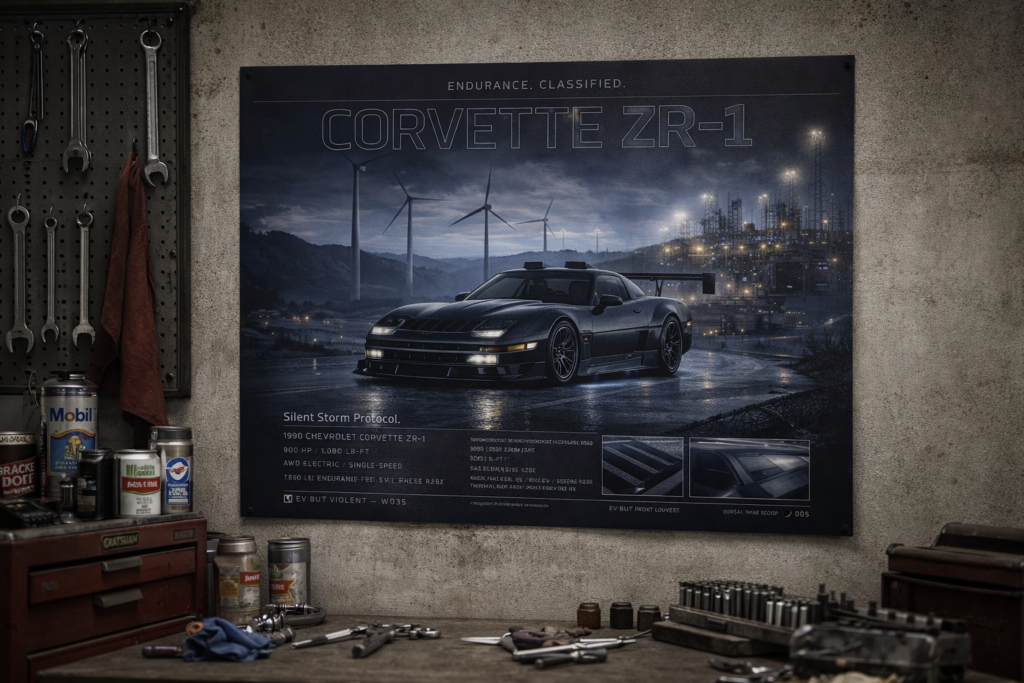
Choose an available edition, then select its size and finish.
Different origins. Sacred Cars
1970 Chevrolet Chevelle SS 454
 Continue the exhibitionEV But ViolentWe just cooked up a batch of electric beasts that stomp the timeline and rewrite what muscle, drift, and hillclimb rides could have been if the juice ran wild a little earlier.Build 6 of 6↗