
R203
Sahara Rift Protocol
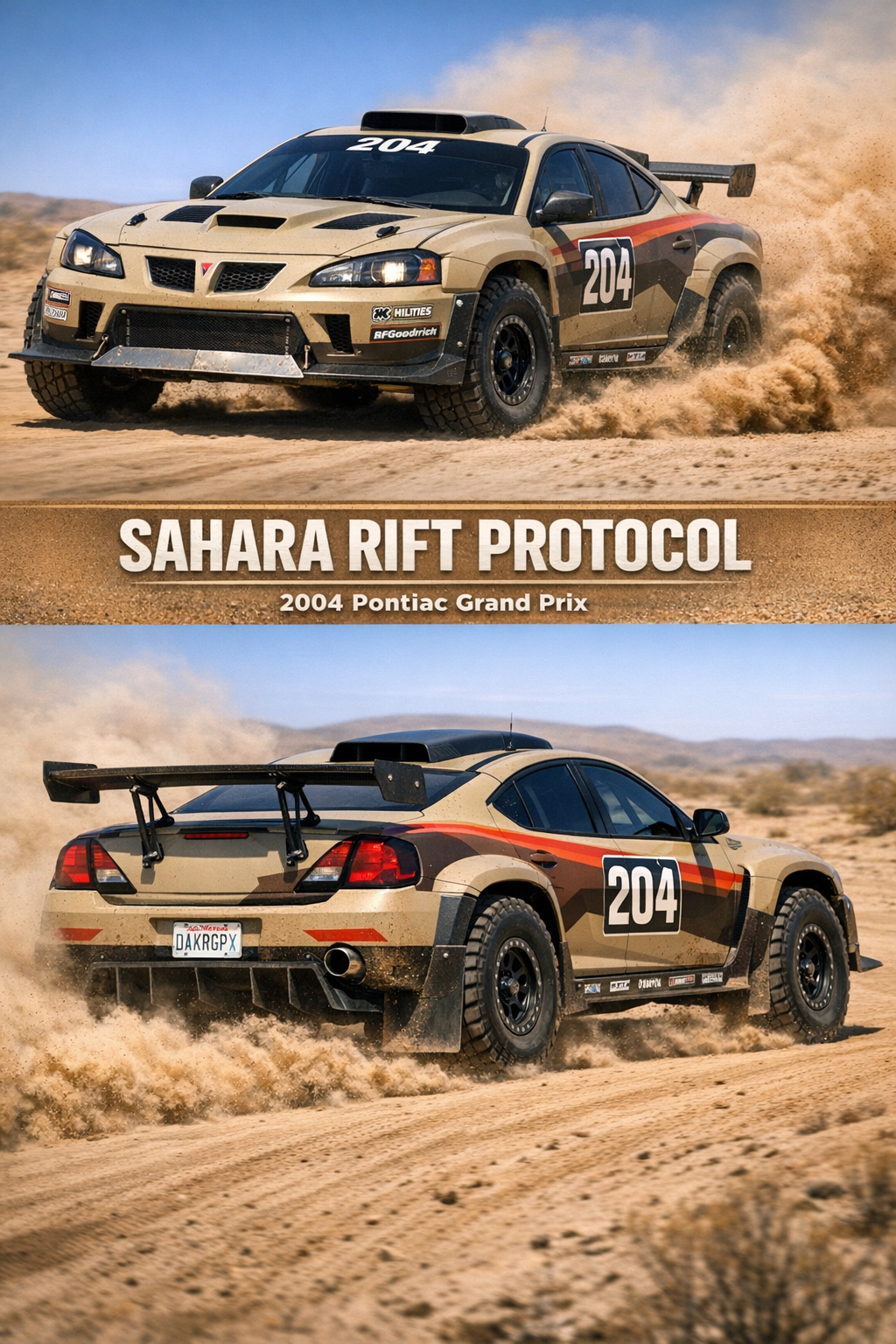
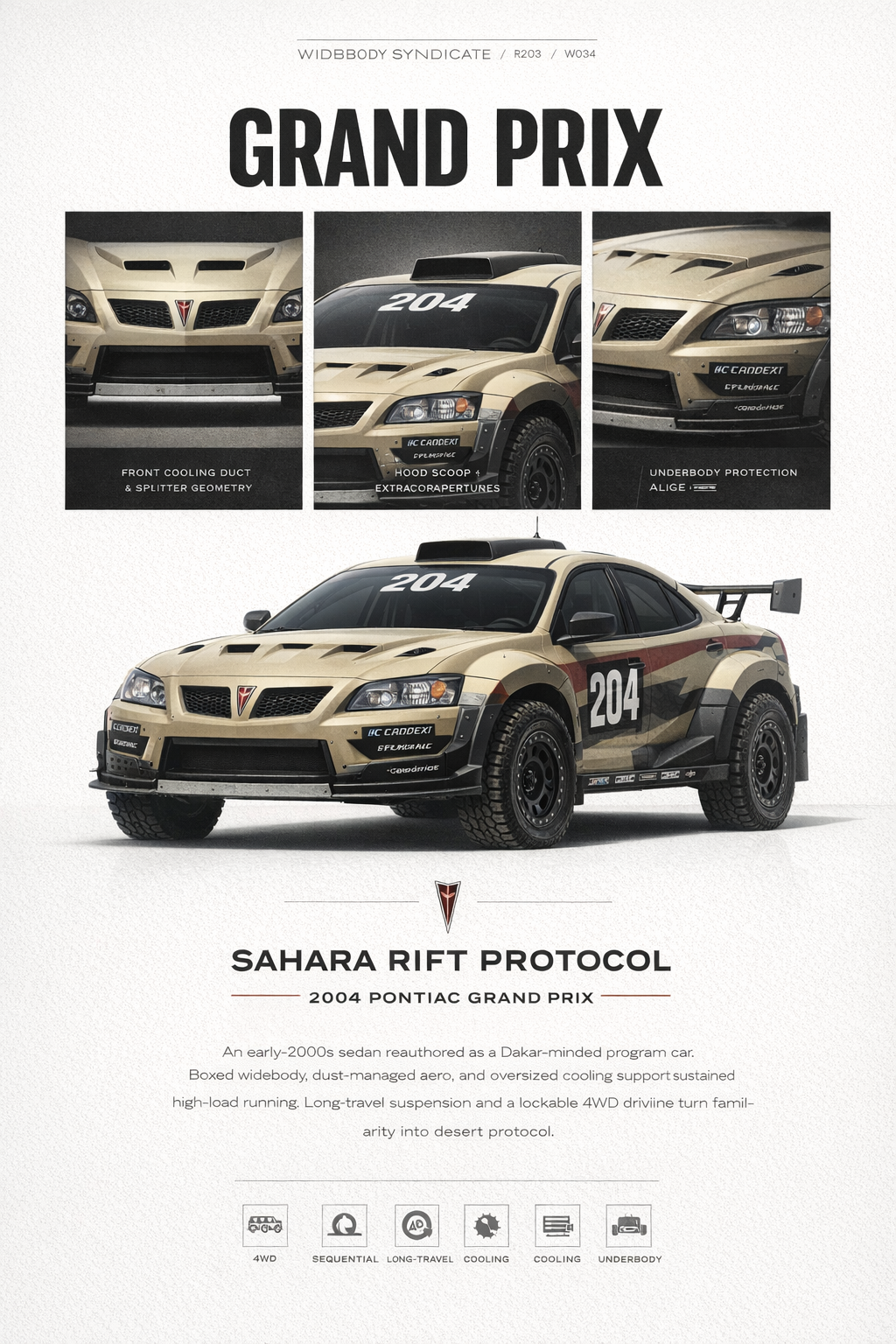
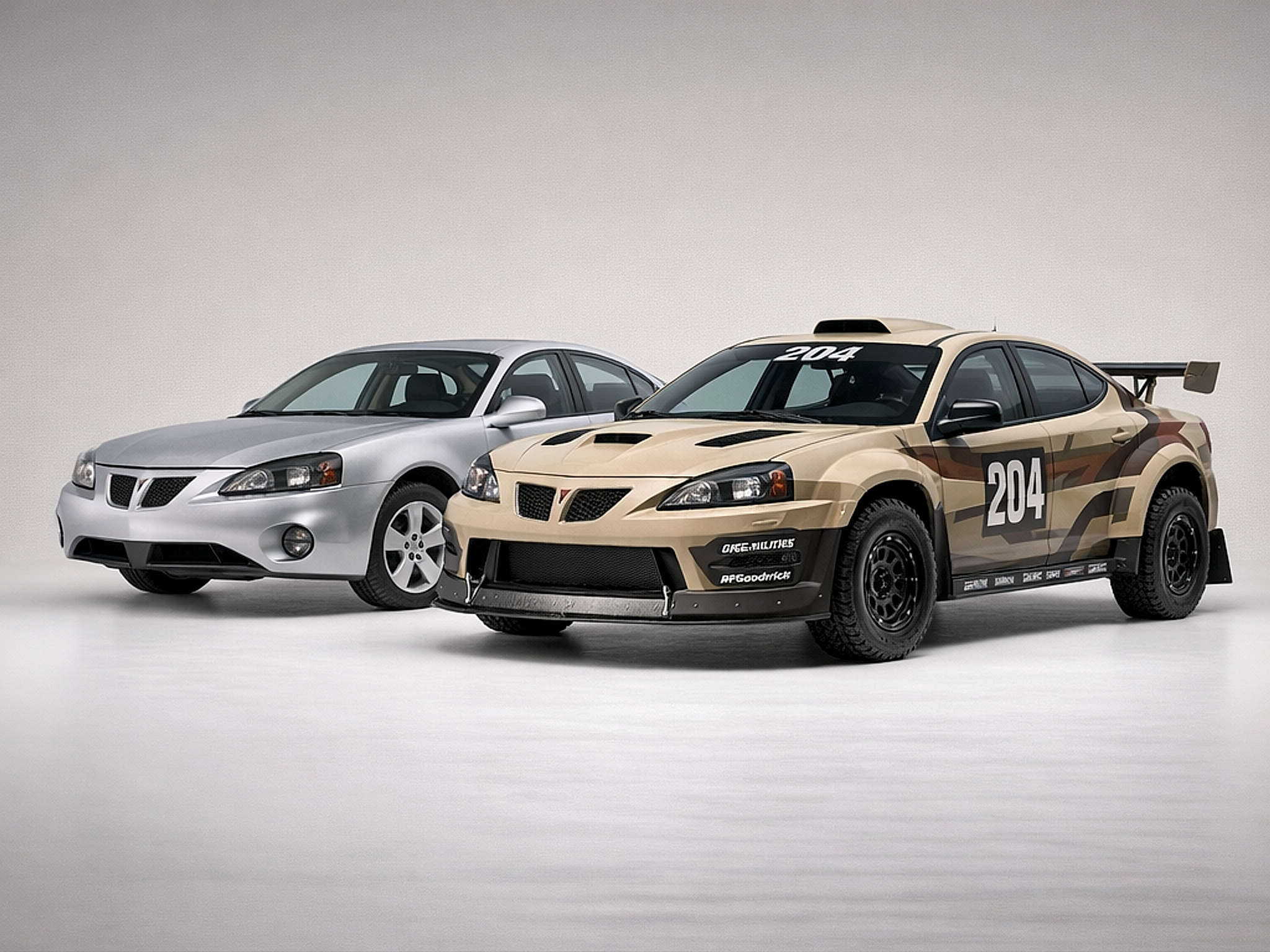
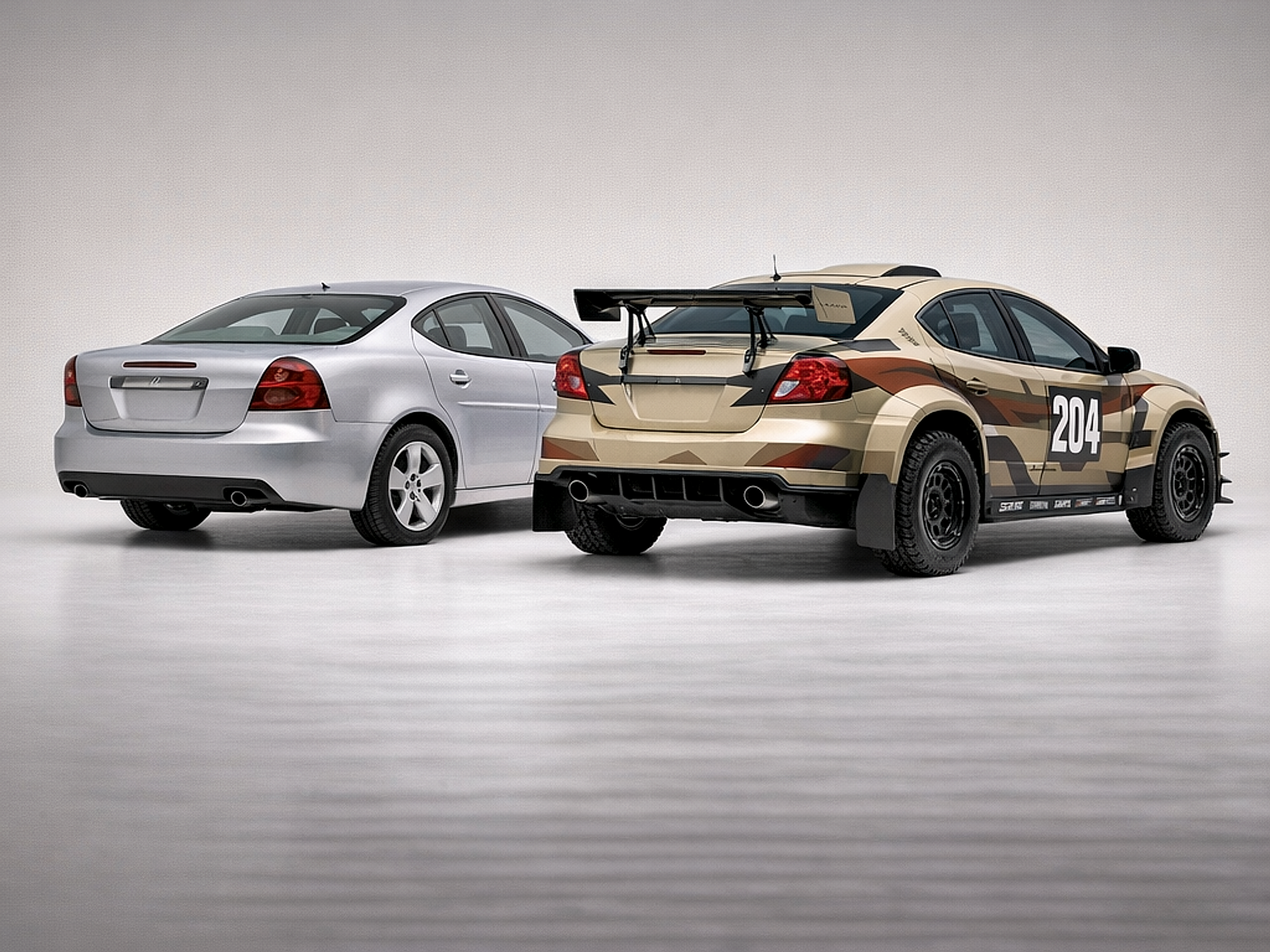
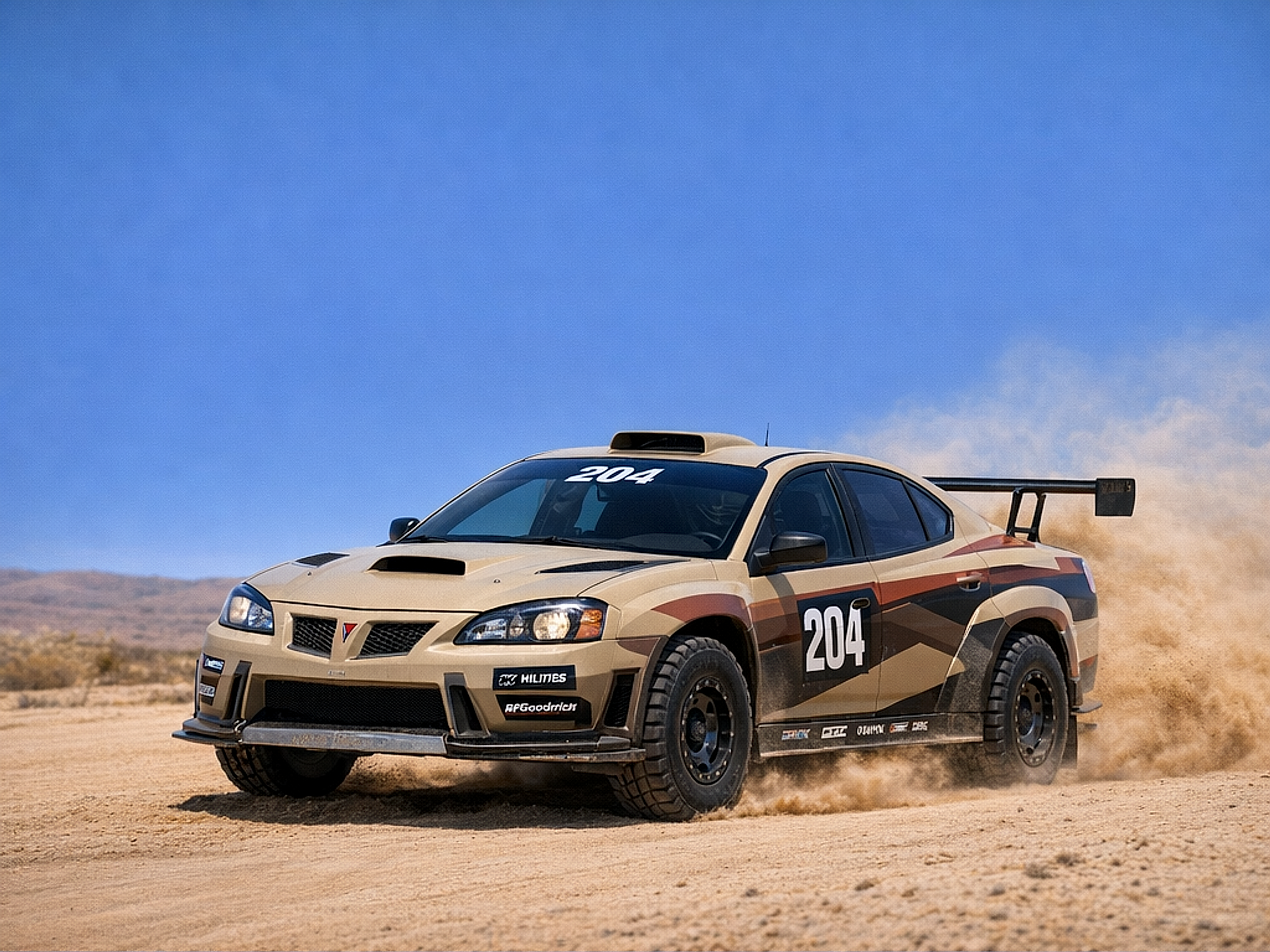
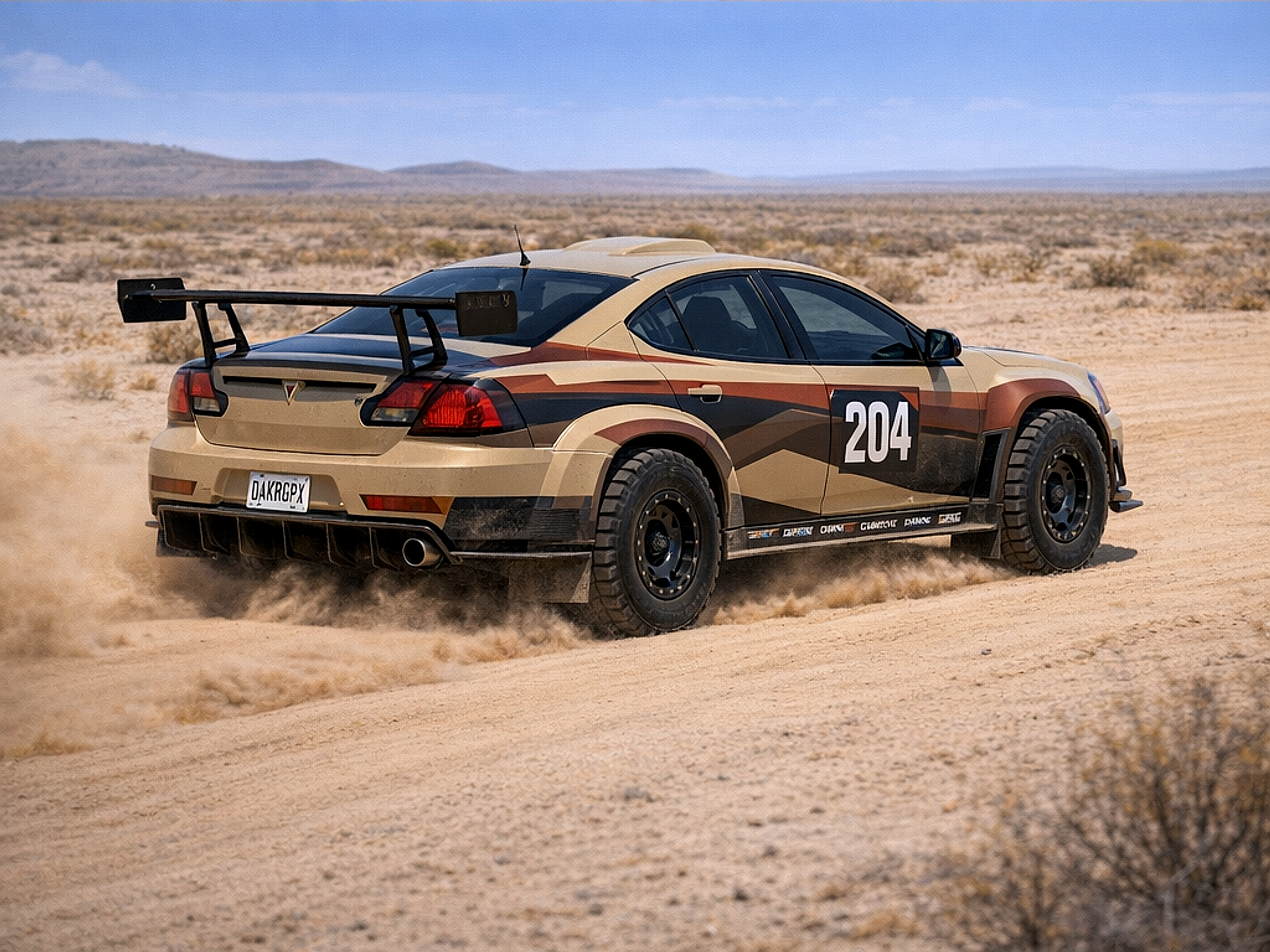
Sahara Rift Protocol takes the early-2000s Grand Prix—normally remembered for front-drive commuting and supercharger whine—and drags it into the Dakar rulebook with a trophy-truck mindset. The recognizable roofline and glass stay, but everything below the beltline becomes purpose-built: composite widebody, boxed flares, a sand-shedding splitter, and cooling apertures sized for sustained high-load running in brutal heat.
Under the skin, the sedan’s street geometry is replaced by long-travel suspension, a widened track, and a full-time 4WD driveline centered around a lockable diff and a 6-speed sequential. It’s the kind of build that reads wrong until you see the engineering: big tire clearance at full articulation, real underbody protection, and airflow management designed for dust, not dyno graphs.
Release Image Studies
Image studies from every angle.
Comparison Shots
Blueprint / Collector Archive
Engineering Artifacts
The technical study and collectible interpretation of one build, preserved together.
Technical Dossier
Platform
2004 Pontiac Grand Prix
The 2004 Pontiac Grand Prix stands as a quintessential mid-2000s American sport sedan, blending everyday practicality with a subtle performance edge. Rooted in GM's W-body platform, the Grand Prix offers a balanced chassis with front-wheel drive and a V6 powertrain that, while unassuming, delivers a comfortable yet engaging drive. Its sharp, aerodynamic profile and characteristic split grille reflect a period of automotive design focused on blending aggressive stance with refined lines — a sleeper platform cherished by enthusiasts looking to explore customization beyond the flashy muscle car archetype.
Aero Package
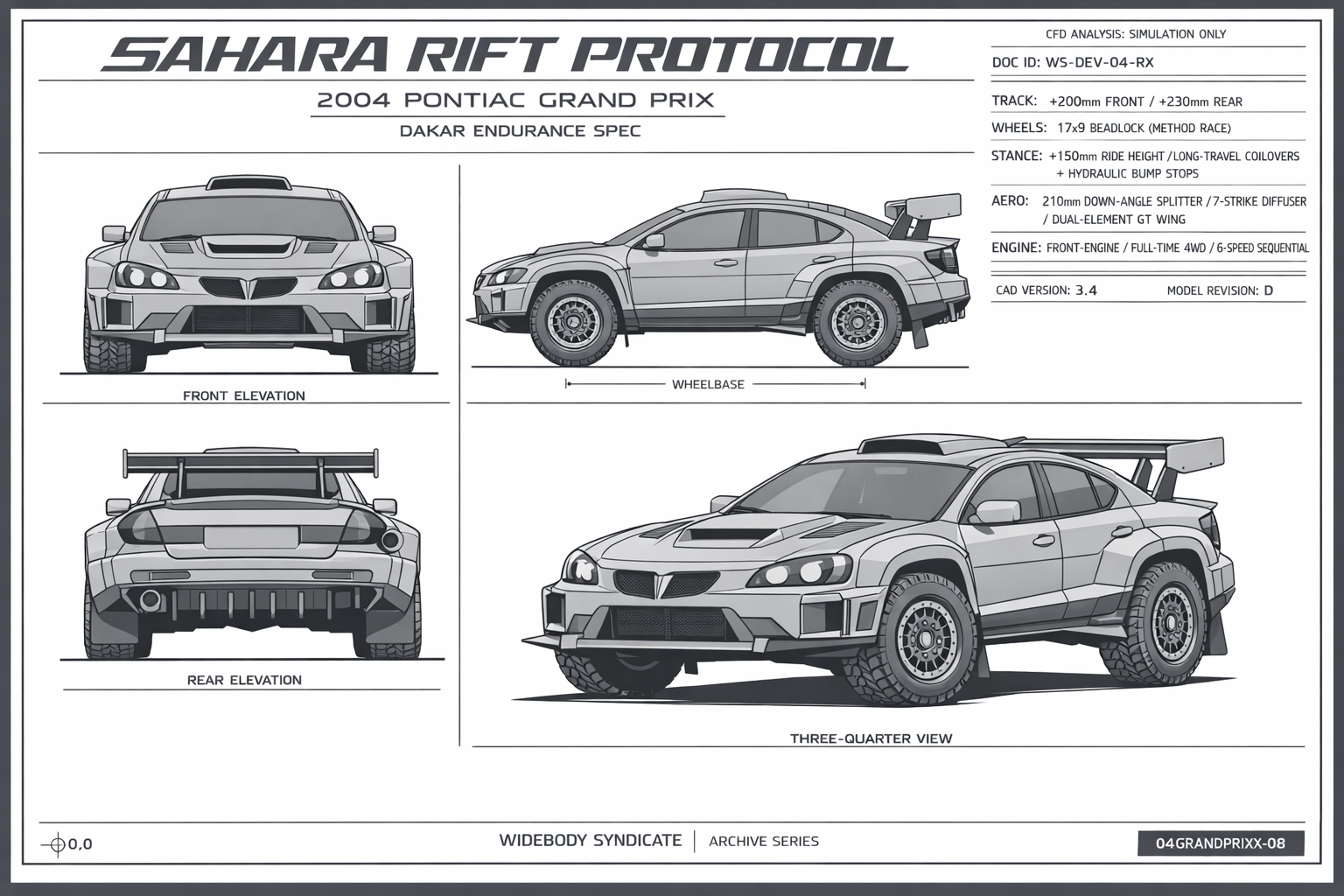
Extruded aluminum sand-deflector splitter extending ~210 mm with reinforced mounts
Carbon hood with raised intake scoop and twin heat-extractor vents
Roof scoop feeding cabin-mounted heat exchangers and fresh-air supply
Rear diffuser panel with multi-strake layout for stability at speed
Dual-element adjustable rear wing on tall swan-neck pylons for high-speed desert balance
Chassis
Set up for Dakar-style endurance stages: long straights that punish cooling, broken high-speed chop that punishes dampers, and soft sand that punishes traction and weight distribution. The package is built to run hard for hours, not look heroic for five minutes.
Wheels & Tires
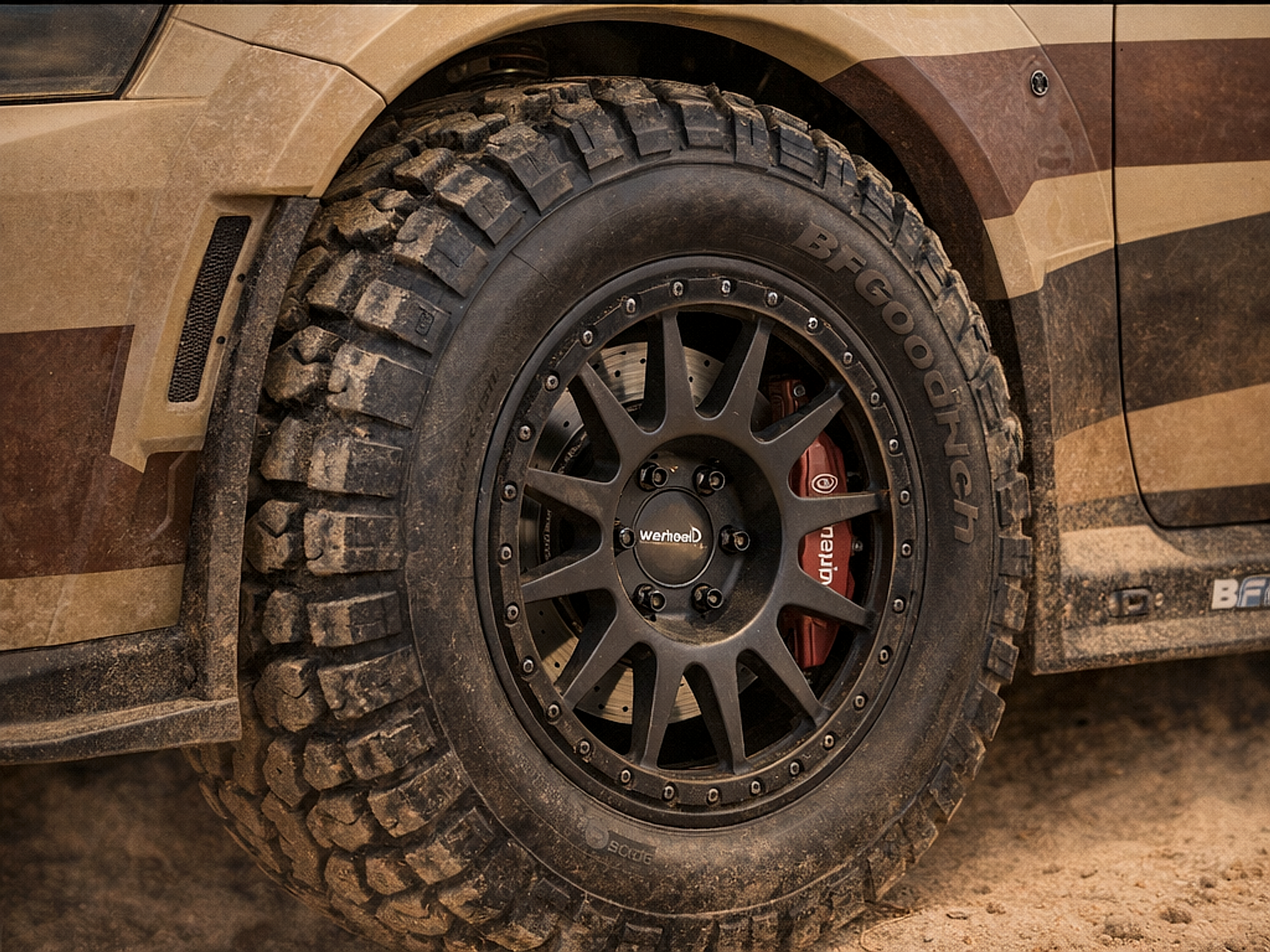
17x9 beadlock-style wheels in matte black (Method Race Wheels-inspired)
375/65R17 BFGoodrich All-Terrain T/A pattern for sand/gravel durability
High-clearance arches with ~35 mm sidewall margin at full bump/lock
Widened track: +200 mm front
+230 mm rear for stability and travel
Powertrain
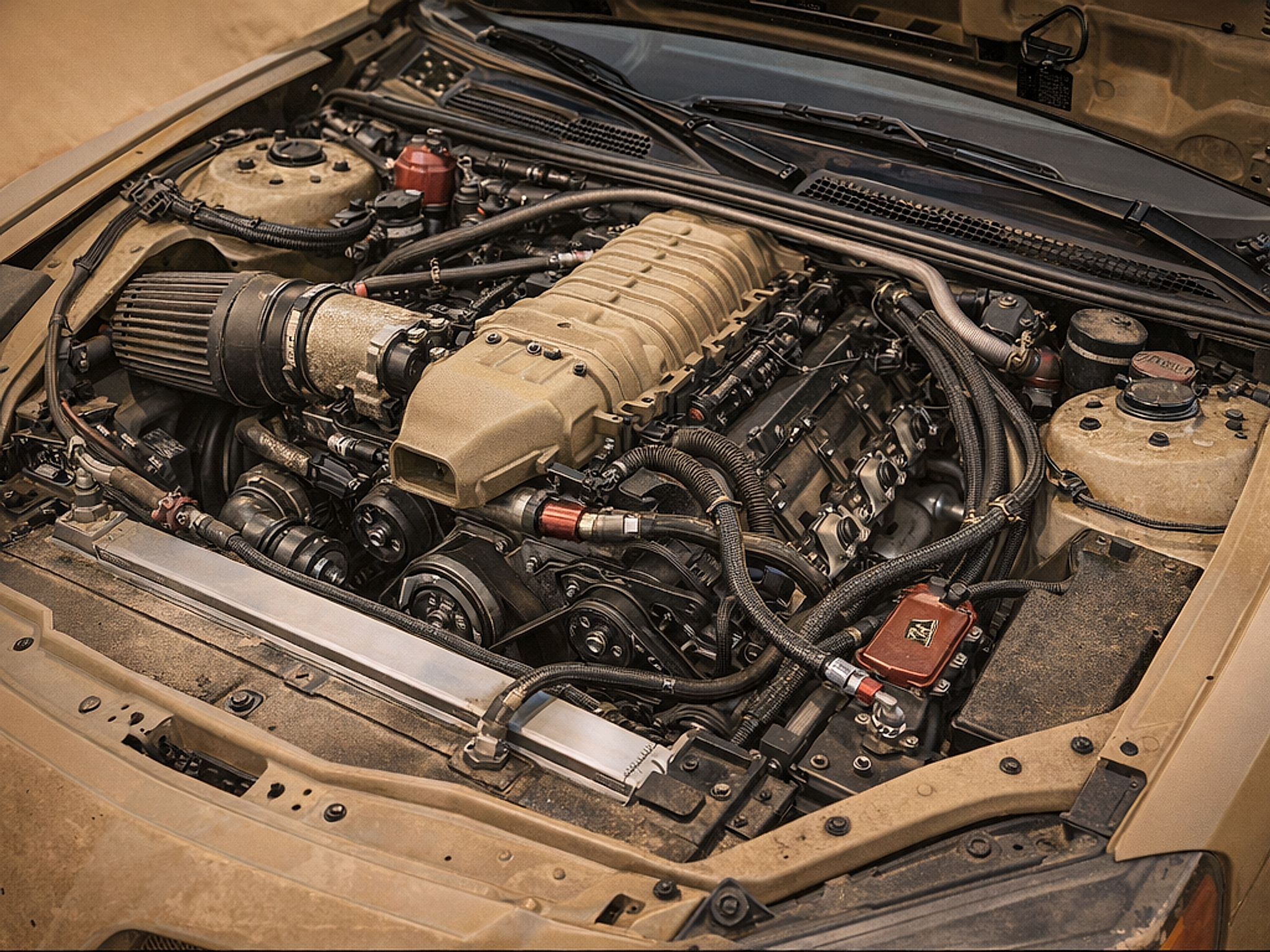
Front-engine layout retained with desert-focused cooling and filtration
6-speed sequential rally gearbox replacing the OEM transaxle architecture
Full-time 4WD with lockable center differential for variable traction
Reinforced driveline and CVs designed for big tire load and heat management
Fabrication Notes
Front crash structure re-engineered to support radiator/intercooler stack and ducted coolers
Multi-piece skid system (engine
gearbox
transfer
rear) with service access panels
Widened suspension pickup points and reinforced subframes to carry long-travel loads
Sealed ducting and dust management: pre-filtered intake path and protected cooler inlets
Steel-reinforced mounts for mudflaps and aero elements to survive repeated impacts
Design Philosophy
Sahara Rift Protocol takes the early-2000s Grand Prix—normally remembered for front-drive commuting and supercharger whine—and drags it into the Dakar rulebook with a trophy-truck mindset. The recognizable roofline and glass stay, but everything below the beltline becomes purpose-built: composite widebody, boxed flares, a sand-shedding splitter, and cooling apertures sized for sustained high-load running in brutal heat.
Under the skin, the sedan’s street geometry is replaced by long-travel suspension, a widened track, and a full-time 4WD driveline centered around a lockable diff and a 6-speed sequential. It’s the kind of build that reads wrong until you see the engineering: big tire clearance at full articulation, real underbody protection, and airflow management designed for dust, not dyno graphs.
▧Platform+
2004 Pontiac Grand Prix
The 2004 Pontiac Grand Prix stands as a quintessential mid-2000s American sport sedan, blending everyday practicality with a subtle performance edge. Rooted in GM's W-body platform, the Grand Prix offers a balanced chassis with front-wheel drive and a V6 powertrain that, while unassuming, delivers a comfortable yet engaging drive. Its sharp, aerodynamic profile and characteristic split grille reflect a period of automotive design focused on blending aggressive stance with refined lines — a sleeper platform cherished by enthusiasts looking to explore customization beyond the flashy muscle car archetype.
⌘Aero Package+
Extruded aluminum sand-deflector splitter extending ~210 mm with reinforced mounts
Carbon hood with raised intake scoop and twin heat-extractor vents
Roof scoop feeding cabin-mounted heat exchangers and fresh-air supply
Rear diffuser panel with multi-strake layout for stability at speed
Dual-element adjustable rear wing on tall swan-neck pylons for high-speed desert balance
⟡Chassis+
Set up for Dakar-style endurance stages: long straights that punish cooling, broken high-speed chop that punishes dampers, and soft sand that punishes traction and weight distribution. The package is built to run hard for hours, not look heroic for five minutes.
◎Wheels & Tires+
17x9 beadlock-style wheels in matte black (Method Race Wheels-inspired)
375/65R17 BFGoodrich All-Terrain T/A pattern for sand/gravel durability
High-clearance arches with ~35 mm sidewall margin at full bump/lock
Widened track: +200 mm front
+230 mm rear for stability and travel
▤Powertrain+
Front-engine layout retained with desert-focused cooling and filtration
6-speed sequential rally gearbox replacing the OEM transaxle architecture
Full-time 4WD with lockable center differential for variable traction
Reinforced driveline and CVs designed for big tire load and heat management
△Fabrication Notes+
Front crash structure re-engineered to support radiator/intercooler stack and ducted coolers
Multi-piece skid system (engine
gearbox
transfer
rear) with service access panels
Widened suspension pickup points and reinforced subframes to carry long-travel loads
Sealed ducting and dust management: pre-filtered intake path and protected cooler inlets
Steel-reinforced mounts for mudflaps and aero elements to survive repeated impacts
×Design Philosophy+
Sahara Rift Protocol takes the early-2000s Grand Prix—normally remembered for front-drive commuting and supercharger whine—and drags it into the Dakar rulebook with a trophy-truck mindset. The recognizable roofline and glass stay, but everything below the beltline becomes purpose-built: composite widebody, boxed flares, a sand-shedding splitter, and cooling apertures sized for sustained high-load running in brutal heat.
Under the skin, the sedan’s street geometry is replaced by long-travel suspension, a widened track, and a full-time 4WD driveline centered around a lockable diff and a 6-speed sequential. It’s the kind of build that reads wrong until you see the engineering: big tire clearance at full articulation, real underbody protection, and airflow management designed for dust, not dyno graphs.
Part of
Wave 34
Rally Everything: Vol. 2
We’re diving headfirst into the wild world where luxury sedans and quirky wagons don battle gear for the unforgiving sands and rocky trails of rally lore. Our garage here just completed a jaw-dropping lineup where British posh meets Baja grit, mid-2000s icon wagons get Dakar-level treatment, and even the Pontiac G6 gets a farmyard makeover fit for dirt conquest.
Explore Wave 34 → 6 BuildsKeep Exploring
The archive is always growing. New releases, waves, and blueprints added regularly.