Media library
6 photos
Media Studies
6 images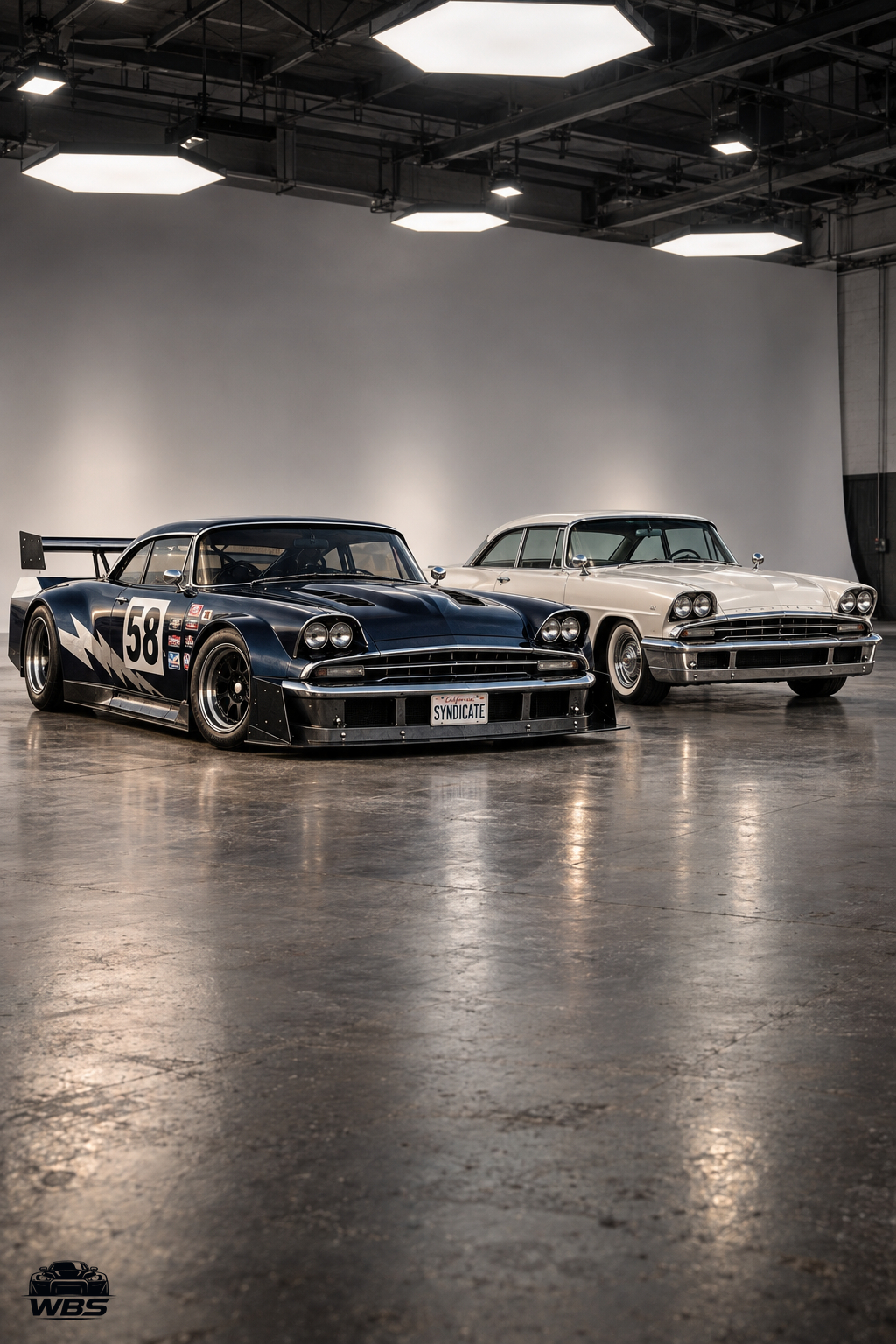
View all 6 images
Story
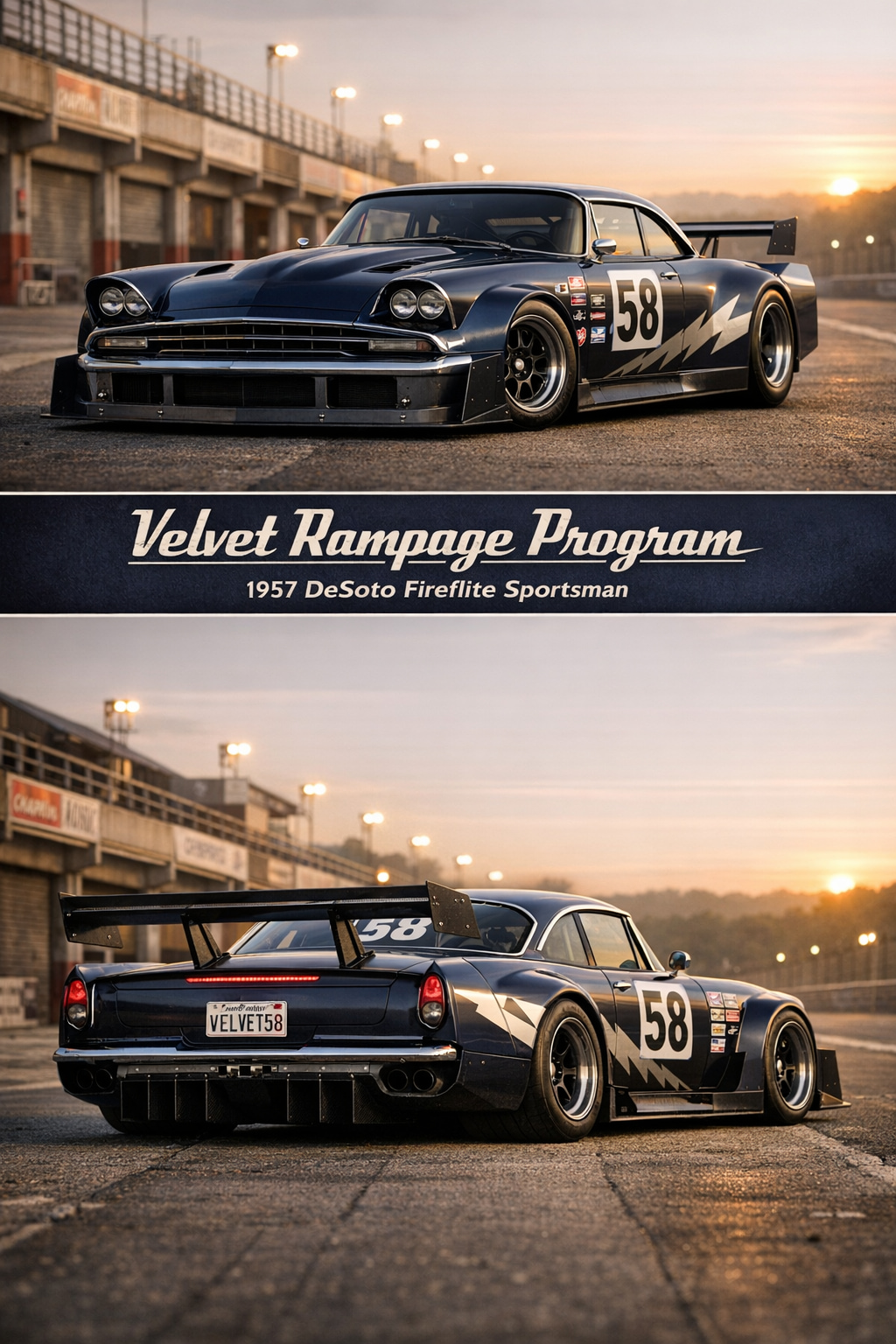
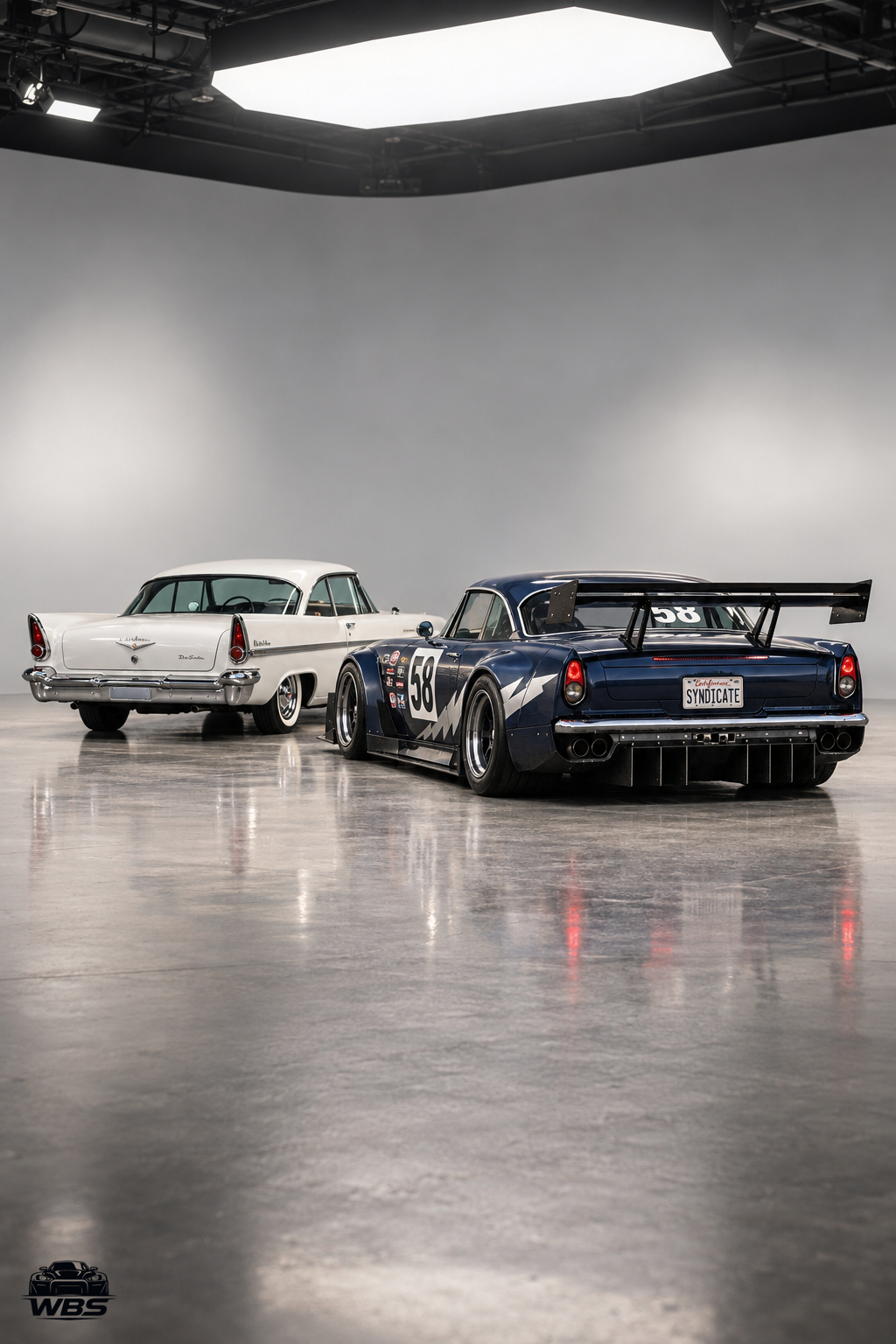
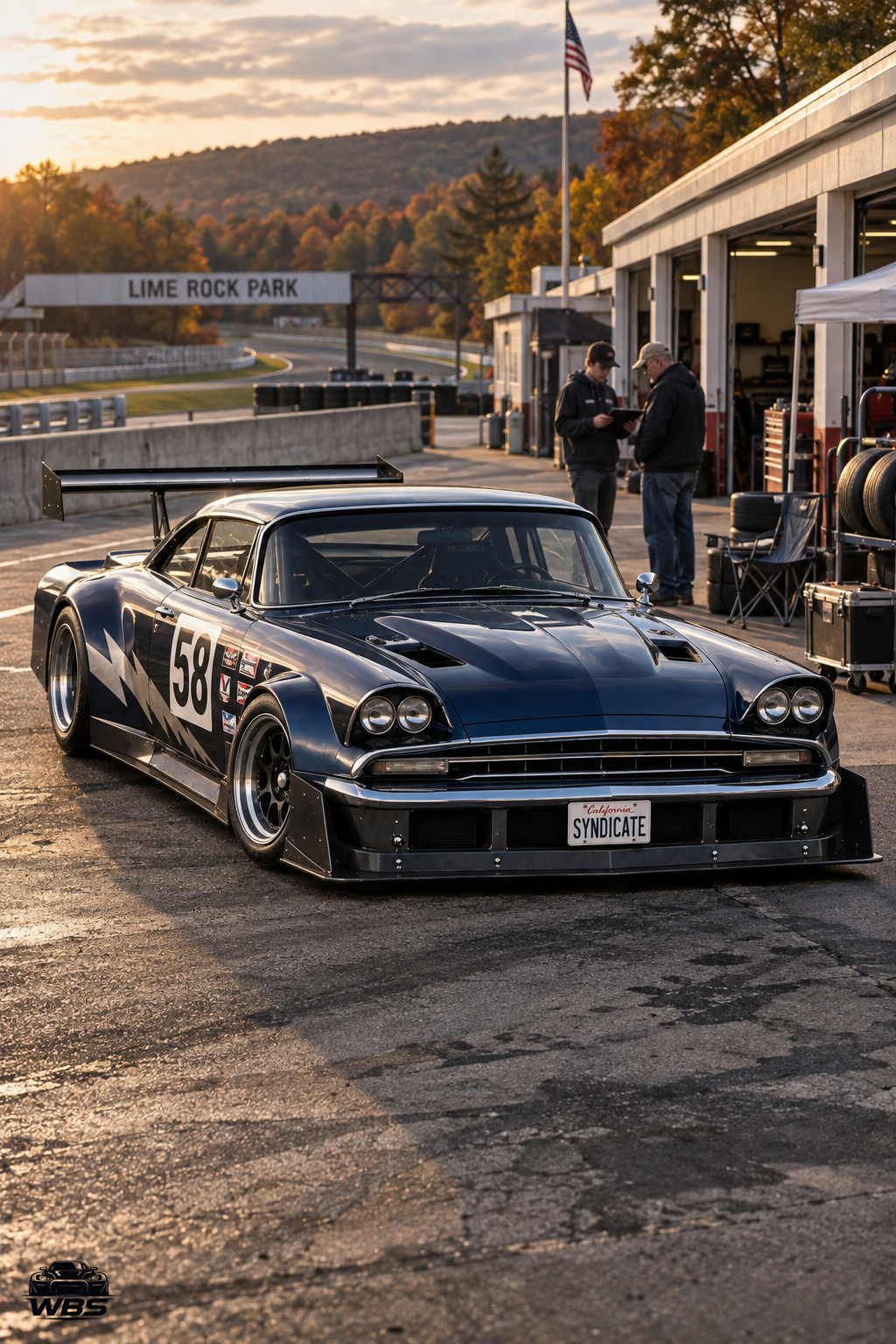
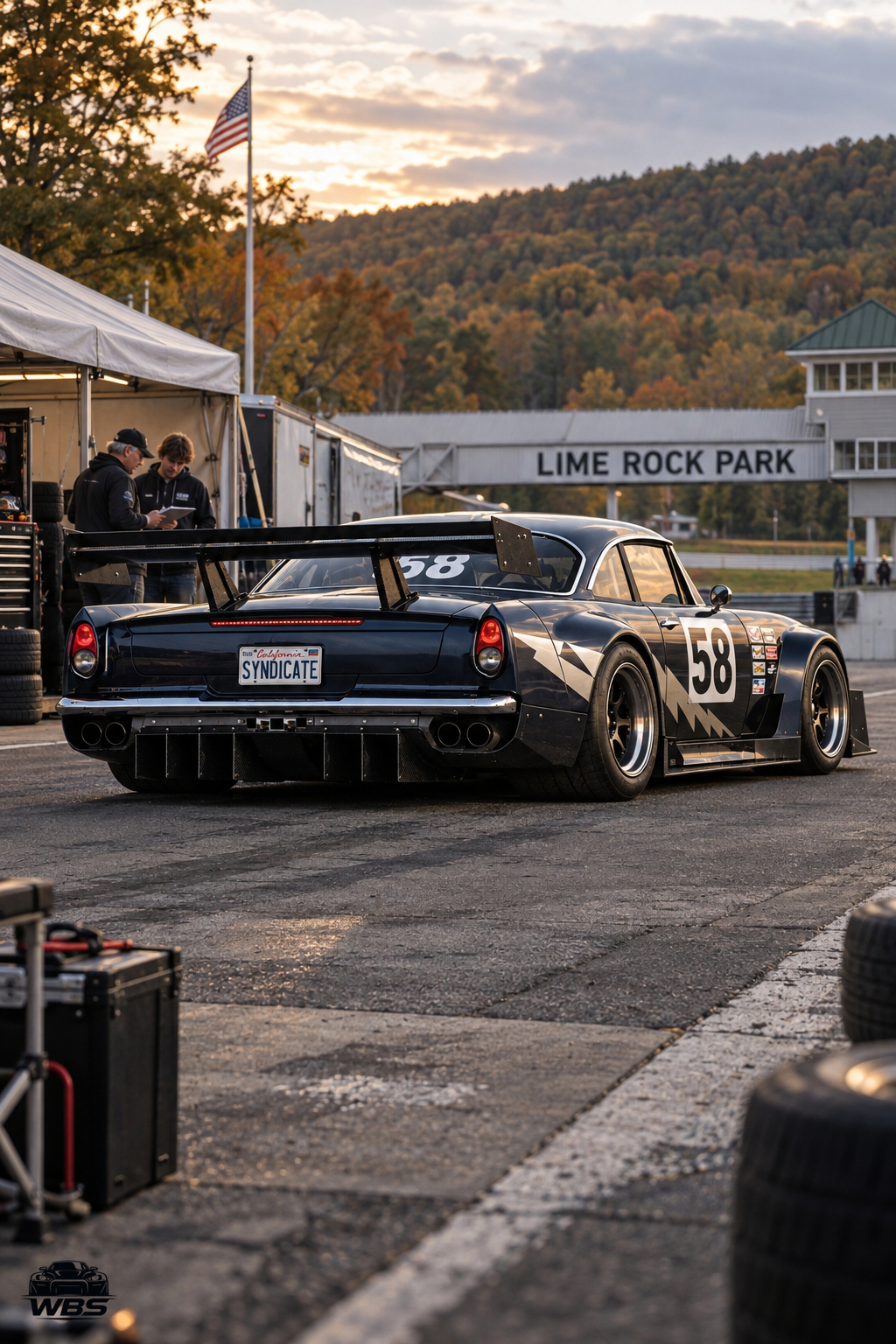
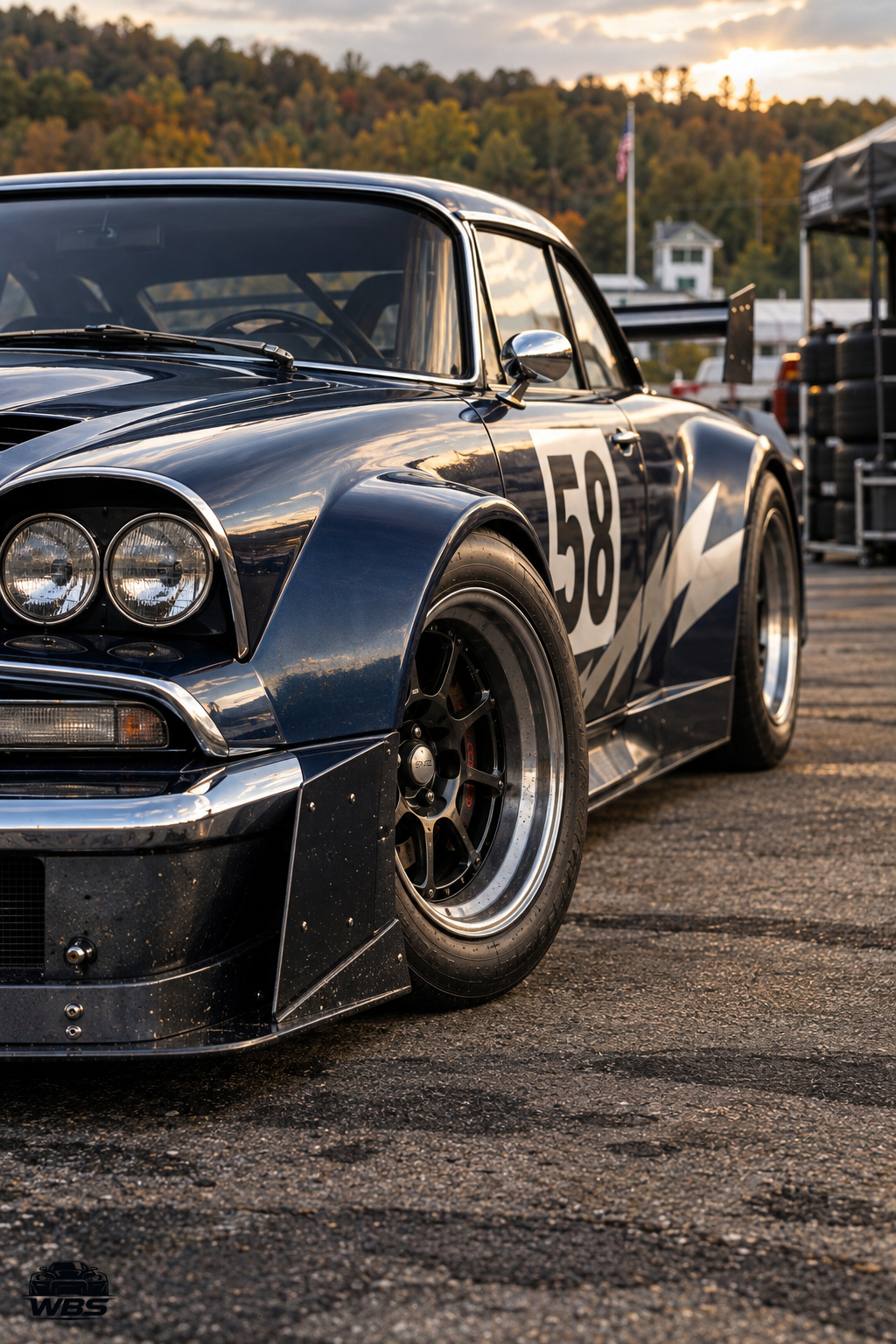
The Fireflite was built to cross continents in comfort; Velvet Rampage gives it a very different brief. Its long 1950s roofline and unmistakable DeSoto face sit above a fabricated race chassis, broad box flares and endurance-sized slicks, finished in satin midnight blue with silver shark-tooth graphics and number 58.
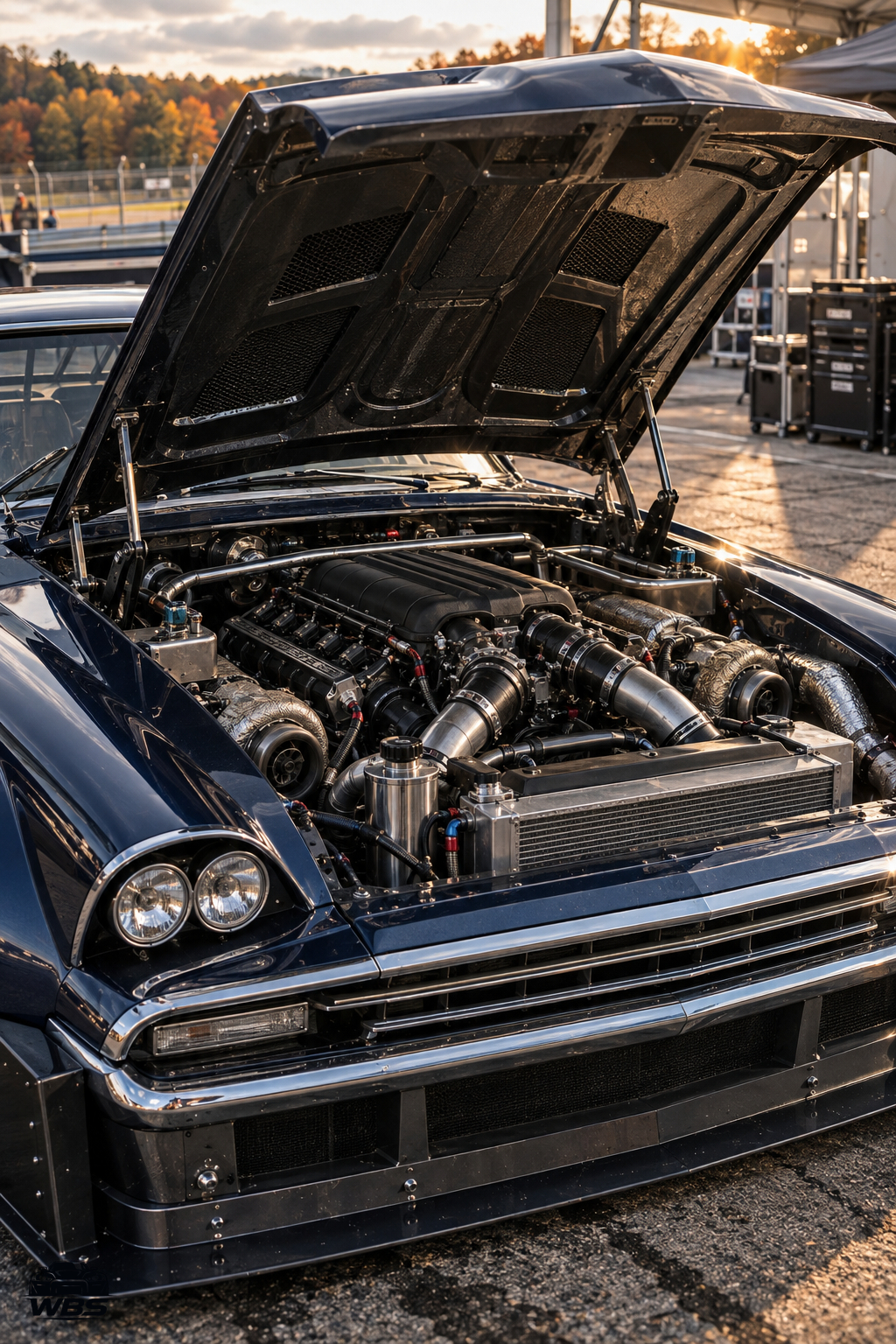
This is a Group 5-inspired silhouette racer, not a claim of period homologation: the original proportions remain, while the structure, suspension and aero are reworked for circuit use. A turbocharged 6.4-liter Hemi, serious cooling and adjustable wing make the unlikely shape feel engineered for long stints, not just a dramatic pit-lane arrival.
Blueprint
The Whitepaper Room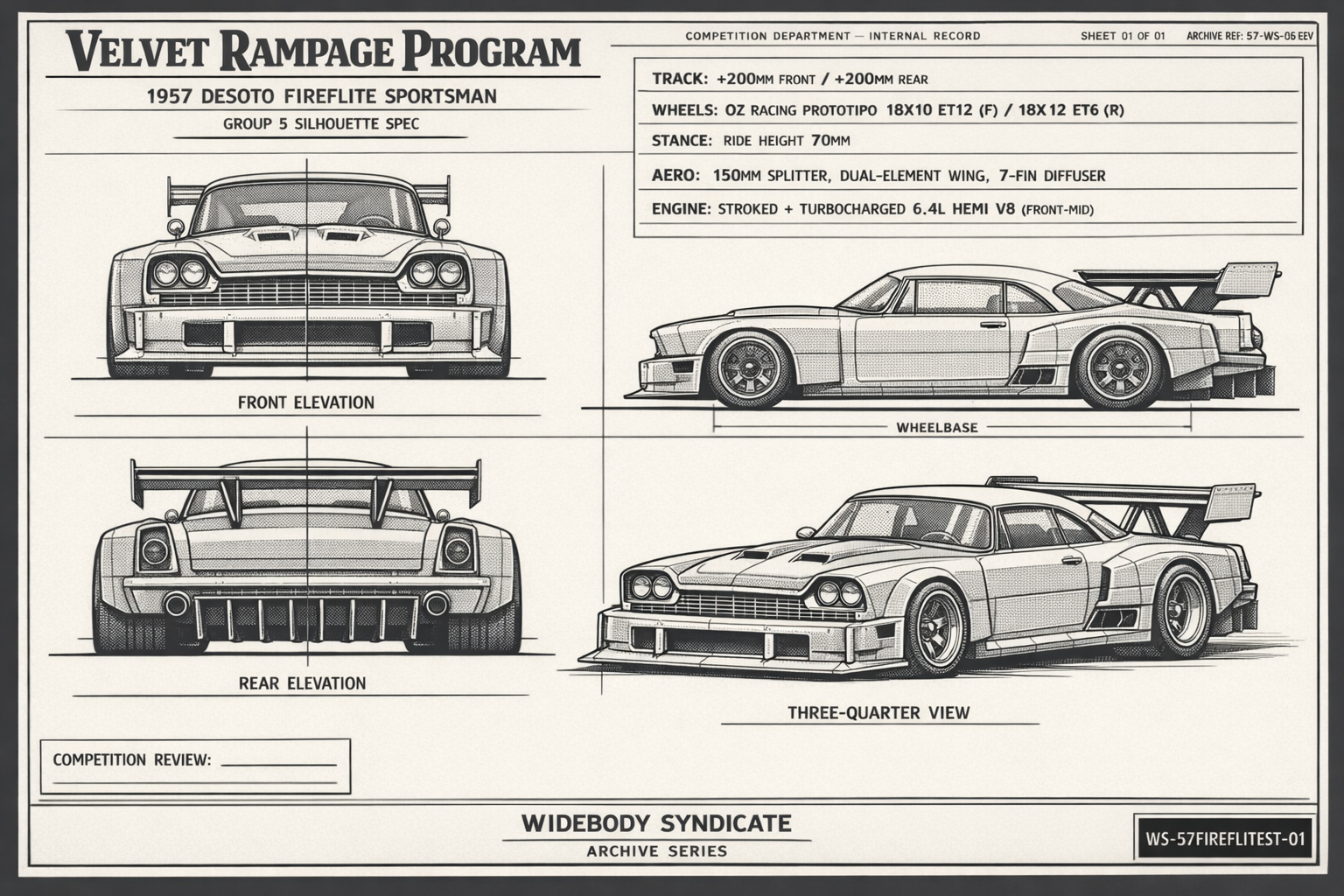 Inspect drawing ↗Open blueprint study →
Collectible Poster
Collector's Edition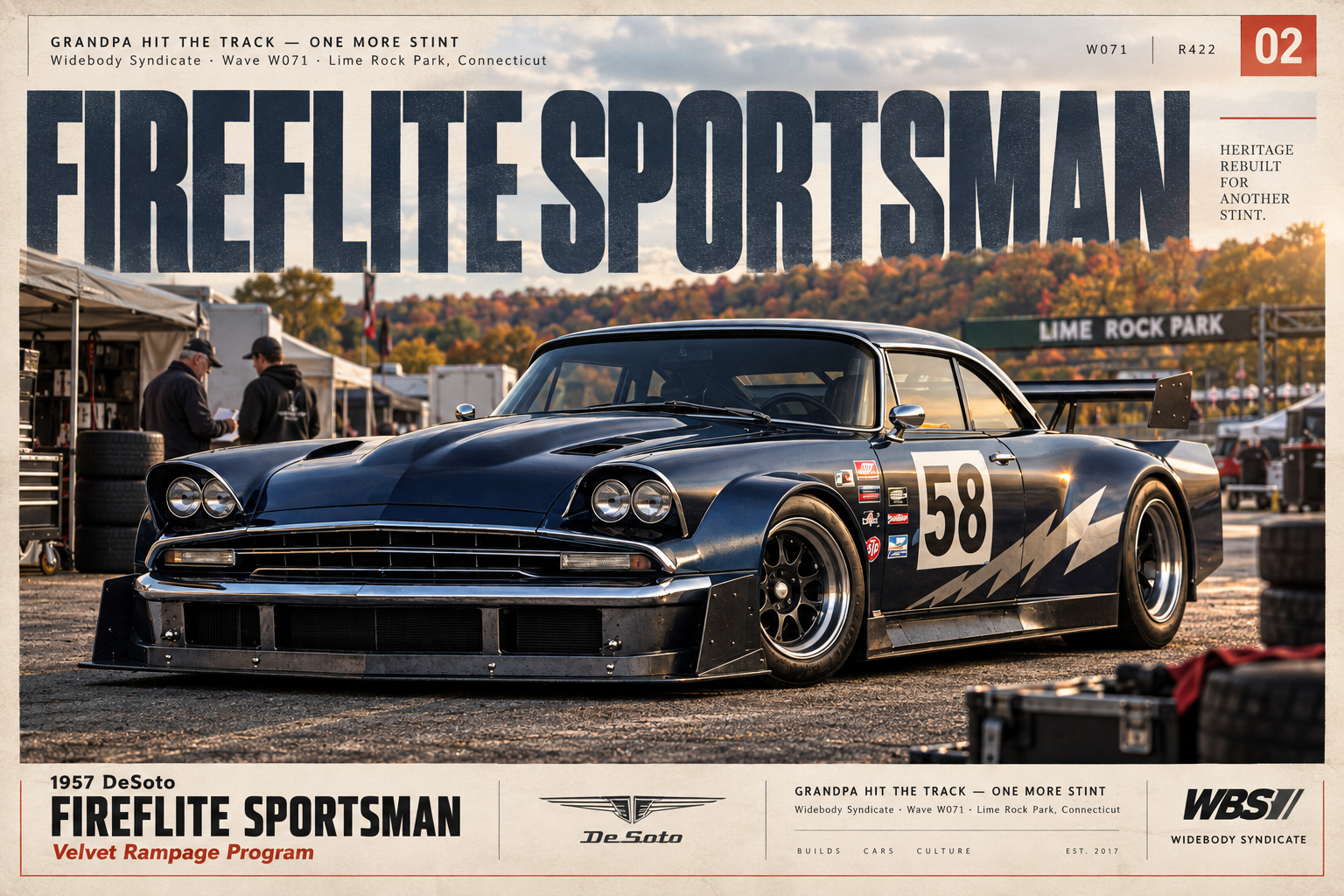 Inspect poster ↗
5-View
One build. Every angle.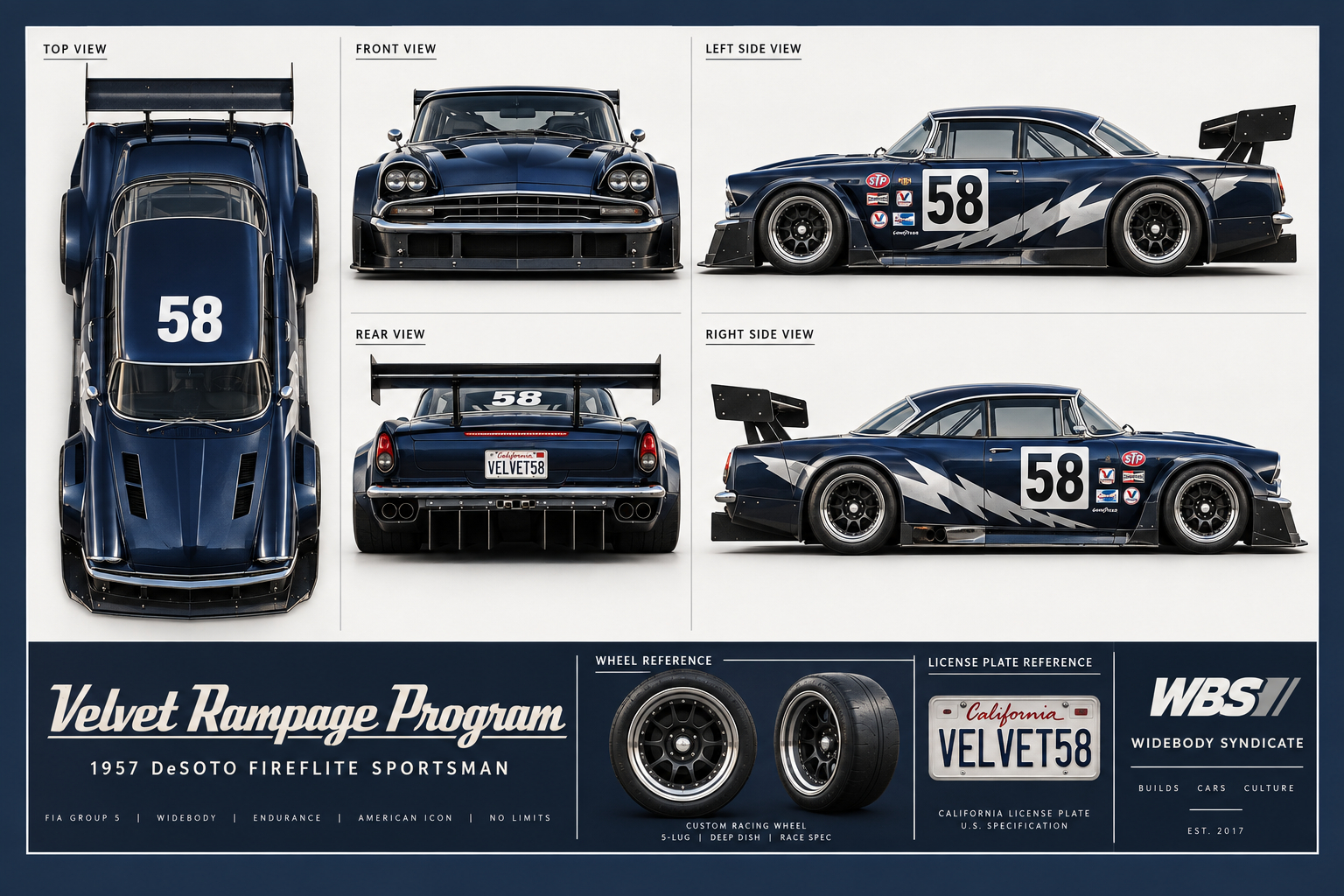 Inspect all five angles ↗
Technical dossier
Fictional engineering concept
Platform
1957 DeSoto Fireflite Sportsman
Powertrain concept
Turbocharged, stroked 6.4-liter Hemi V8 in a front-mid installation.
Purpose-built water and oil cooling fed by sealed front ducts and side-mounted heat exchangers.
Shielded side-exit exhausts clear the rear-quarter cooling outlets.
Aero package
Full-width aluminum splitter with recessed radiator inlets and compact dive planes.
Flat undertray directs airflow toward a rear diffuser with seven vertical fences.
Adjustable two-element rear wing on braced twin pylons.
Ducted front brake cooling and rear-quarter outlets for brake and transmission cooling.
Chassis & stance
1957 DeSoto Fireflite Sportsman
Wheels & tires
Forged OZ Racing Prototipo wheels: 18×10 front, 18×12 rear.
305/45R18 front and 335/45R18 rear endurance slicks.
Wide track and revised suspension geometry provide clearance beneath the fabricated arches.
Fabrication notes
Reinforced chassis and suspension pick-up points support the increased track and slick load.
Hand-formed steel and aluminum flare assemblies follow the stock body’s major contours.
Ducts are boxed and sealed to direct air to radiators, brakes and heat exchangers.
Race safety equipment, including a cage, fuel cell and fire system, is integrated for circuit use.